
The southernmost island in the Nicobar Islands archipelago is the Great Nicobar. Of its 910 square kilometres, a staggering 130 square kilometres is slated for diversion and will be adversely impacted by the Rs 92,000 crore mega project.[1] Its rich biodiversity, according to UNESCO, includes around 650 species of angiosperms, ferns, gymnosperms and bryophytes, many of them rare and endemic species. Recently, the National Green Tribunal held that it is not CRZ-IA (most ecologically sensitive coastal area) paving the way for the construction of a transshipment terminal, an airport, and other infrastructure.[2]
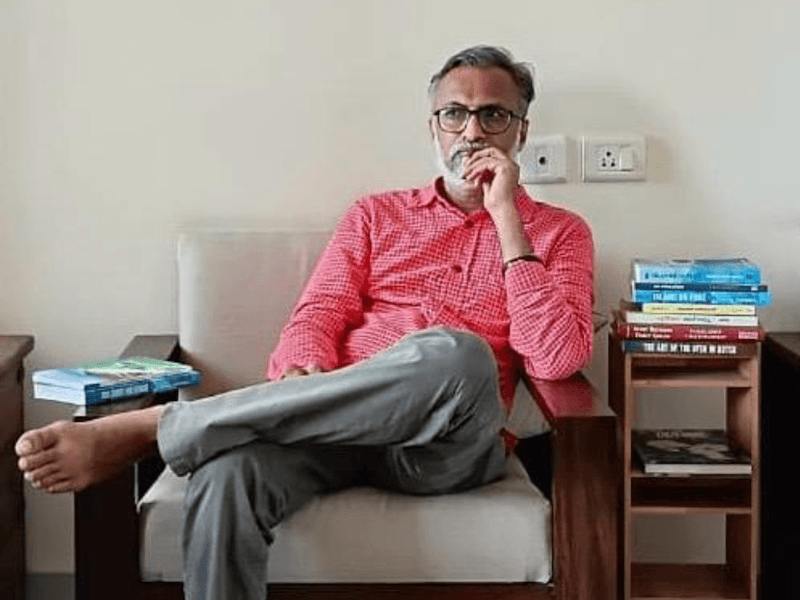
“That forest is an asset at various tangible and intangible levels. But we are signing off a forest much richer, more diverse, a much older and larger forest than the Sanjay Gandhi National Park in Mumbai,” says Pankaj Sekhsaria, researcher and editor of The Great Nicobar Betrayal and Island on Edge – The Great Nicobar Crisis. Working in the Andaman and Nicobar Islands for over 30 years, Sekhsaria is among the few to have focused on the project. Author and editor of six books on the Andaman and Nicobar Islands, he hopes that the unprecedented ecological loss can still be averted; there’s nothing yet “to be reclaimed” but it should not be wiped out. Sekhsaria speaks to Question of Cities about various aspects of the controversial Great Nicobar Project.
What took you to the Nicobar Islands and how did the series of books come along? Why do you title one The Great Nicobar Betrayal?
I have been working in the Andaman and Nicobar Islands for almost 30 years. About five years ago, the Great Nicobar project began. I had a sense of what was happening in those spectacularly beautiful islands. Through friends and our networks, we dove into this massive project; I started writing about it.
The first piece I wrote was for The Hindu.[3] One of the things about the project, not very visible in the media, is the scale of what has been proposed in this deeply sensitive, vulnerable, fragile landscape, and also the speed and coordination with which this massive project has gone ahead. It’s an estimated investment of Rs 92,000 crore, which has escalated 20 percent already in the past four years from Rs 72,000 crore.
In our network, this project looked worrisome. The Great Nicobar is a pristine island of 910 square kilometres, almost 100 percent tropical evergreen forest with indigenous communities, seismically volatile and sensitive. The project details worried us. We started to put together evidence. In two-three years, scholars, journalists, and researchers wrote in the media including in special issues with Frontline and Sanctuary Asia. There was a lot of good researched material, but scattered. I thought it should be a book because a book creates its own narrative and a trajectory. Vaishna Roy, editor of Frontline, was supportive. The Great Nicobar Betrayal[4] has 13-14 researched pieces. Together, the material shows it is a question of betrayal of the islands.
How is it a betrayal?
We debated if ‘betrayal’ is too strong a word but it’s not. If you look at various axes of environmental and ecological concerns, issues of the tribal communities, the legal process and violations, the tectonic vulnerability against the living evidence in the Great Nicobar, you cannot think of any other word but ‘betrayal’.
The project is a betrayal by the government. Let me give examples. The Tribal Welfare Agency is meant to protect the rights of tribal communities but it itself offered to de-notify tribal reserve land and formally hand it over to the project proponents. Then, the recent order of the National Green Tribunal says it’s not CRZ-IA when this turtle nesting season saw the highest number of turtle nests – at least 1,000 – ever recorded here, including of the leatherback. How can this not be CRZ-IA? Classifying this as CRZ-IB is a betrayal, done only so that the port can be allowed.
So, these agencies in the ministries mandated to uphold law have let Great Nicobar down – the National Board for Wildlife, other institutions meant to uphold tribal law, environmental law, wildlife law, the Forest Rights Act, everything. There’s no way to describe it but as a ‘betrayal’. There are now Hindi and Bengali translations of the book; Tamil and Marathi are in production. The mainstream media and online platforms too have written. Westland’s (book publisher) VK Karthika was keen to publish another volume with new writing. So, Island on Edge – The Great Nicobar Crisis was published a few months ago.
Tell us about the tribal communities who live there and the consent process for this project.
This is an interesting and complex question. There are only about 8,000 people on the entire 910 square kilometre island in two main categories. About 7,000 of these are the settlers. Then there are two tribal communities – the Nicobarese and the Shompen tribe which is a small hunter-gatherer tribe living deep in the forests. We know very little about them; they are a largely uncontacted tribe. There’s no conversation with them. So, there cannot be informed consent.
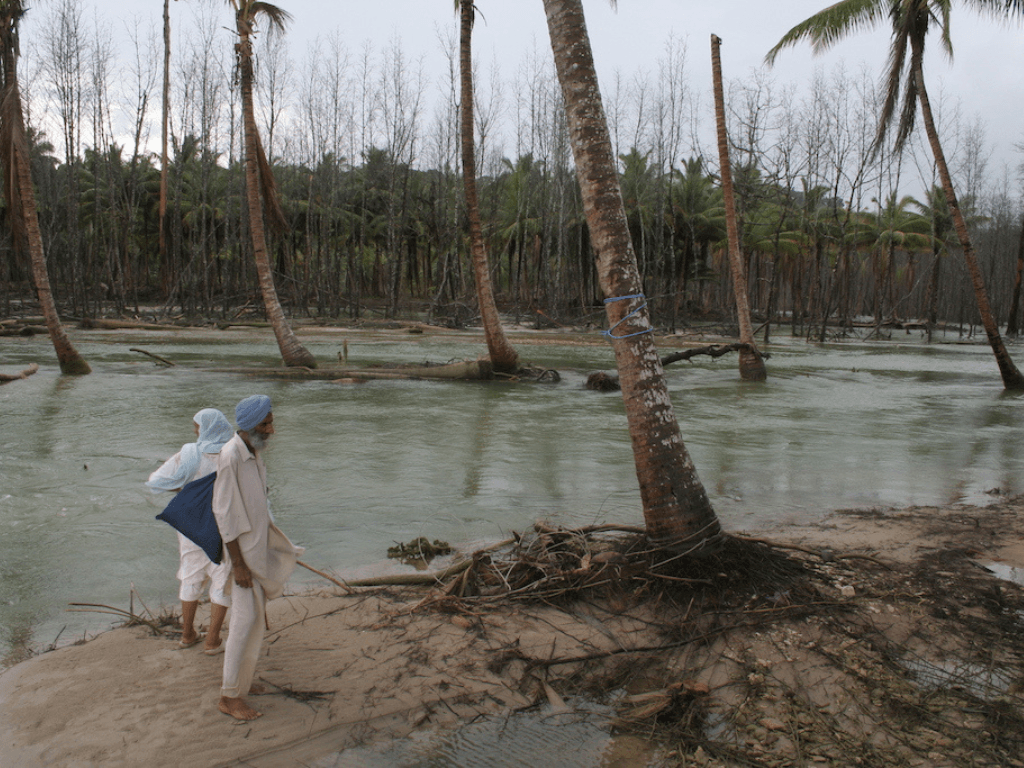
The Nicobarese are about 600-700 people, who have been in touch with the outside world. There are two-three things to be kept in mind. They were very badly hit in the earthquake-tsunami of 2004. As a relief measure, they were moved from their original inhabitation to the administrative headquarters of the island, where they have been for the past 20 years. Many of them want to return to their lands but this is not being facilitated.
On the issue of consent, and this is documented, they did issue a No-Objection Certificate (NOC) in August 2022 but, a couple of months later, wrote to all the authorities concerned that they were withdrawing the NOC because they were not made aware of the scale of the project and that it would take their traditional lands. They held an online press conference recently where they said that they were being pressurised to voluntarily surrender their land for the project.[5]
With the Shompen, as I said, there is no conversation.[6] A NITI Aayog team did an interesting documentation of anthropologists; a small clip in the film shows a Shompen saying clearly to the anthropologists ‘don’t come to our forests, leave our forests alone’.
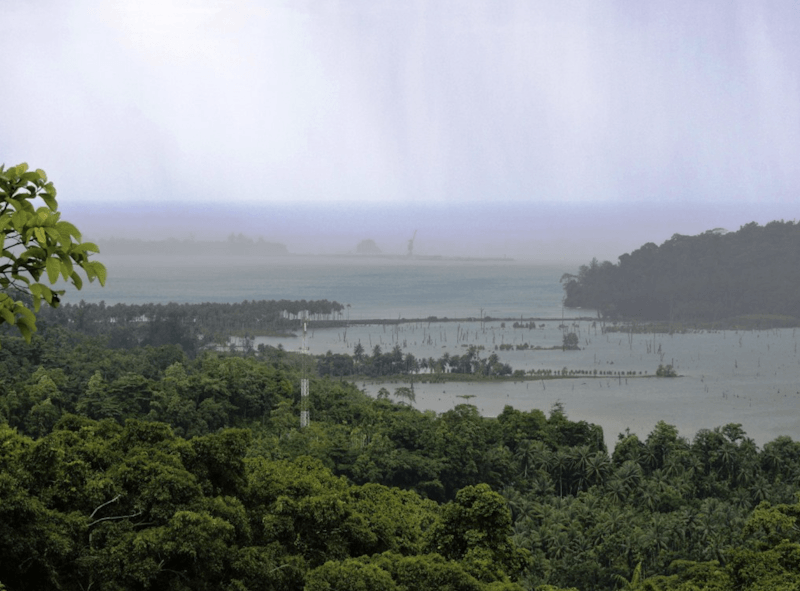
Photo: Wikimedia Commons
Then, how were permissions under the Forest Rights Act given for an unprecedented 130 square kilometres of forest to be decimated?
Under the Forest Rights Act, permissions had to be given to divert more than 130 square kilometers of forest, which entails the cutting of nearly one million trees. This is as per initial government figures but has varied over time raising questions about the reliability of the process and environmental clearance. Ecologists say the one million is a gross underestimate given the richness of the forest and the tree density here; it could be several times that.
The local administration and the Union ministry held that these are tribal lands under the Andaman and Nicobar Protection of Aboriginal Tribes Regulation which protects tribal reserves. So, there’s no need to settle rights or do the FRA process.
But, in 2022, the authorities probably realised that without the FRA clearances, land could not be made available to project proponents. So, the process was completed in less than 20 days and the relevant permissions were granted. What the government said for 14 years ‘need not be done’ was completed in less than three weeks for an evergreen forest spread across 130 square kilometres in an extremely remote area, housing Particularly Vulnerable Tribal Groups (PVTG) like the Shompen. The FRA committees did not have enough tribal representation; somebody else was giving permission on their behalf. The agencies mandated to protect them and their land actually facilitated the land transfer.
Then, there’s the settler community, around 7,000 people, who are supportive of the project. Many of them are ex-servicemen families and were brought here by the Government of India in the 1960-70s. They see the project as infrastructure because they have not got many facilities; their demands are legitimate in many ways but not for a project of this scale. As it stands now, the Great Nicobar project is supposed to bring 3.5 lakh people on an island of 8,000 people. The total population of the entire archipelago of Andaman and Nicobar Islands is around five lakhs. Imagine what will happen to the tribals in Great Nicobar. There is one tribal person now for every 7,000 settlers here. This ratio will become 1:4000. Their land, forest, water, and culture, everything will be deeply impacted.
Port Blair, the capital city of the islands with an estimated population of 1-1.5 lakhs, already has a serious water crisis.[7] In an almost virgin and unexplored island of the Great Nicobar, the project will bring in as many people as is the total population of the entire 600 islands. Where will the water come from, where will the sewage go, where will the food and the energy come from? Moreover, this is sitting on the world’s most active seismic fault. Are we not putting all the people, all the investment, at risk?
Increasingly, there’s an anthropocentric view of development which doesn’t consider ecological integrity, but humans are only a part of the larger ecology. From that perspective, what will be lost if the project comes to be?
It’s a very crucial question. Great Nicobar is an island of great biological diversity. This is the stronghold, for example, of a very unique bird, known as the Nicobar Megapode,[8] not found anywhere else on the planet. There are several rare species of plants; there are butterflies, insects, geckos, crabs, birds, and snakes found only here. A lot of them are not yet catalogued. In just the last five years, with very limited scientific research and fieldwork, Indian scientists have discovered at least 50 new species, which is a significant number. The Great Nicobar is an uncatalogued treasure house, a case of the unknown unknowns.
The other is 130 square kilometres of forest, pristine tropical evergreen forest that’s going to be handed over to the project. This is the stronghold of a very unique bird, known as the Nicobar Megapode, not found anywhere else on the planet. The Galathea Bay, where the turtles nest, has an opening of about three kilometres; the project design blocks it leaving only 300 metres for the turtles; they will not be able to even access their nesting site. Besides, the wave patterns will change. The entire ecology of the bay will change.
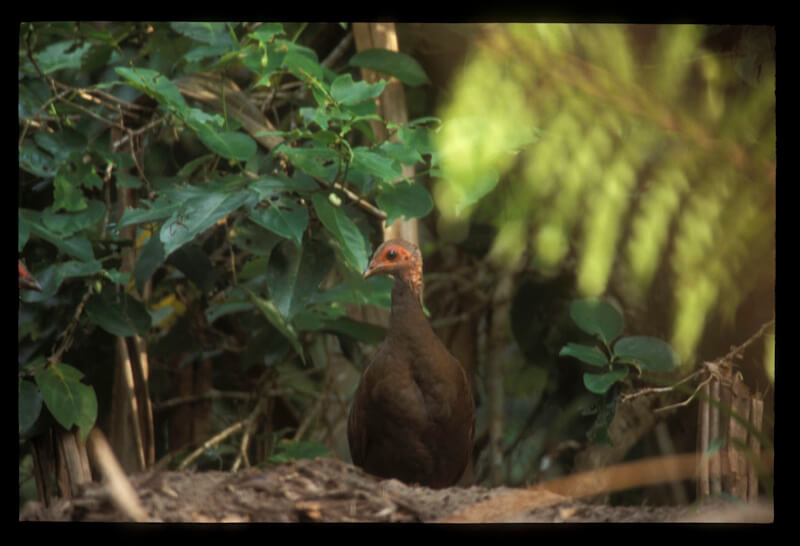
Photo: Pankaj Sekhsaria
What is the tree cover that will be lost?
Island ecosystems are very complex ecosystems. That is why they have large endemics. Great Nicobar is really a dot on the map. If you zoom out of an India map, you cannot even see the Great Nicobar but this is 910 square kilometres of contiguous untouched forest with streams and huge canopies that rise up to 150 feet. Nearly 1,800 species have been recorded here, many endemic to the area.
What is going to be lost? Nearly a million trees. A million. That’s a figure by the project itself but scientists say it could be 10 million trees. Even if they cut down 20 percent of the 130 square kilometres of dense tropical rainforest, we are talking of phenomenal numbers. What are we cutting down all the trees for when we have heat waves, and more than 90 of the world’s 100 hottest cities in India? The compensatory afforestation will happen all the way up in Haryana!
Besides all the staggering loss, the tribal communities risk losing their culture because language and biodiversity are deeply correlated. It’s difficult to imagine the complete impact of what we will lose for this project. The unpredictability of nature is central to the whole argument, especially given the scale and our limited knowledge and understanding of nature’s processes. Because we don’t know what the impacts will be, we should not be taking the risk. That’s the fundamental premise of the precautionary principle.
All the writing and pushback, including the Leader of Opposition Rahul Gandhi going there, brought forth a response. On May 1, the Press Information Bureau issued a note, you must be aware, that this project is of “strategic importance” and it is “sustainable development”. The “strategic importance” part has been highlighted by ex-defence officers too, especially in the Strait of Malacca in the context of China. How would you address that?
The question of strategic importance needs to be seen from the lens of this project, not from the lens of rhetoric. Where is the strategic component in the project? This is a Rs 92,000 crore exclusively commercial project. If you look at the project documents—we have been studying them from day one—you see a Rs 48,000 crore transshipment permit, a commercial operation, as an alternative to Singapore or Hong Kong or Port Colombo. The logic is entirely financial. If it’s a transshipment facility, then it’s clearly a commercial enterprise.
About 130 square kilometres of evergreen forest with rich uncatalogued biodiversity is going to be converted to a new township, a port and airport. Two weeks ago, the draft plan of the Great Nicobar Development Authority showed discotheques and wellness centres; cruise tourism has also been proposed. They propose 10 million passengers/visitors will come to the island because of the airport. There is a contradiction here; none of this has to do with strategic importance. They have offered viability gap funding for the port, which is for a commercial project.
We are not saying strategic importance should not be considered but this is a commercial project. There are multiple voices now saying that the defence and commercial aspects are being conflated; that behind the call of strategic importance is primarily a commercial project. In the past few days, many defence veterans have commented on this in great detail.
Also keep in mind that in 2004, the earthquake that caused the tsunami also caused permanent subsidence of 15 feet in Great Nicobar.[9] The Indira Point lighthouse, which was many metres above the high tide line, today stands in water because of this subsidence. How many know that the islands tilted like a see-saw then? The Andamans went up and the Nicobar saw 15 feet subsidence. What about the risk of such events? Are we not putting at risk the lakhs of people being brought here and the crores that will be spent?
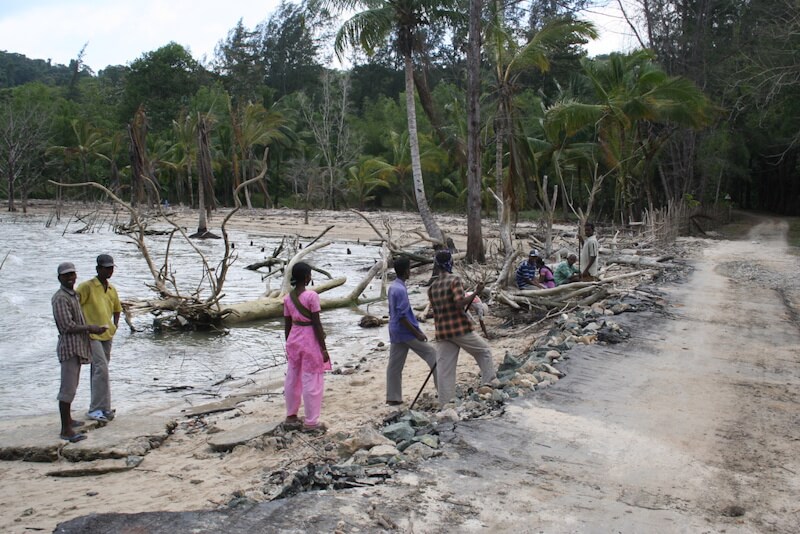
Photo: Pankaj Sekhsaria
When you see the trajectory of the decisions taken, the official momentum behind the project, does it seem a done deal?
The project proponents and the state seem to be keen on it. The environmental clearances have been granted, forest rights clearance has been done, many boxes ticked. But there are serious problems with each of them. Even the NGT has given the go-ahead saying the stretch is not CRZ-IA despite thousands of turtles nesting sites and coral reefs. This is like saying on paper that the Yamuna does not exist in Delhi; because it’s said on paper, does the river cease to flow by the city?
There are still a few clearances pending, including the Stage 2 forest clearance. And there are issues on which it can still be challenged. There are two other aspects—of logistics and cost. Logistically, this is a difficult project to implement because of the complexity of the landscape. Costs are going to increase; already the Rs 72,000 crore has risen to Rs 92,000 crore though nothing has started on the ground. So, it’s not a done deal because it’s still on paper, we have hope in the legal system, and we still have the opportunity to recognise the irreplaceable value of this place.
At this point, there is nothing to be retrieved, nothing to be reclaimed, because it’s still a pristine forest. The Great Nicobar forest is an asset, at various tangible and intangible levels. The project entails the signing off of a forest older, much richer, more diverse and way larger than say the Sanjay Gandhi National Park in Mumbai. Will we sacrifice the full SGNP, wipe it off the map? My hope is that the project proponents and the state will see the sense of the argument we have been making.
What are the different levels still open to resist?
That’s a good question. Much can be done. One is to make ourselves aware; this is absolutely crucial and this is what we are trying to do. Two, those who understand what’s at stake must reach out as individuals and professionals, through social media or journalism, to build public opinion based on facts. The more people know, the stronger the movement will be. That’s the only strength we have.
Three, there is a huge potential and need for continued research and scientific engagement. Even on the Environmental Impact Assessment report, there is no consolidated scientific response yet. Then, economists must look into issues like the traffic projections, cargo assumed, realistic tariffs when other port-nations are already doing great business. Then, there are research gaps to be filled like in the case of the water availability and hydrology of the island. We must also track the compensatory afforestation; the 130 square kilometres of forest decimated in the Great Nicobar will be compensated by 260 square metres in Haryana but whose land is it, is there a forest already?
There are three-four matters by different petitioners in the Calcutta High Court.[10] I hope the courts will respond. Why not hope because we don’t have a choice. We are researchers and citizens; it’s our right to knock on the doors of the courts and we will follow the process. People have a choice and I do think that they will see the fundamental logic, or lack of it, of this project at various levels. Public opinion works.
Cover Photo: The Great Nicobar Island. Credit: Pankaj Sekhsaria