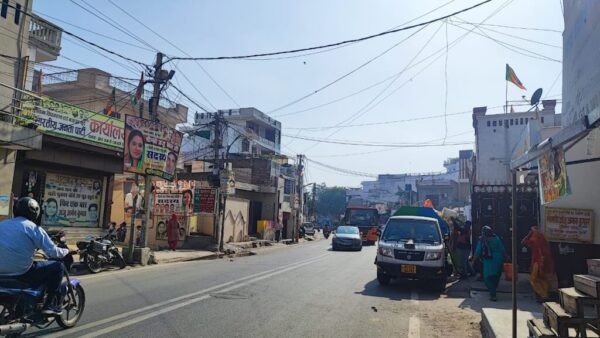

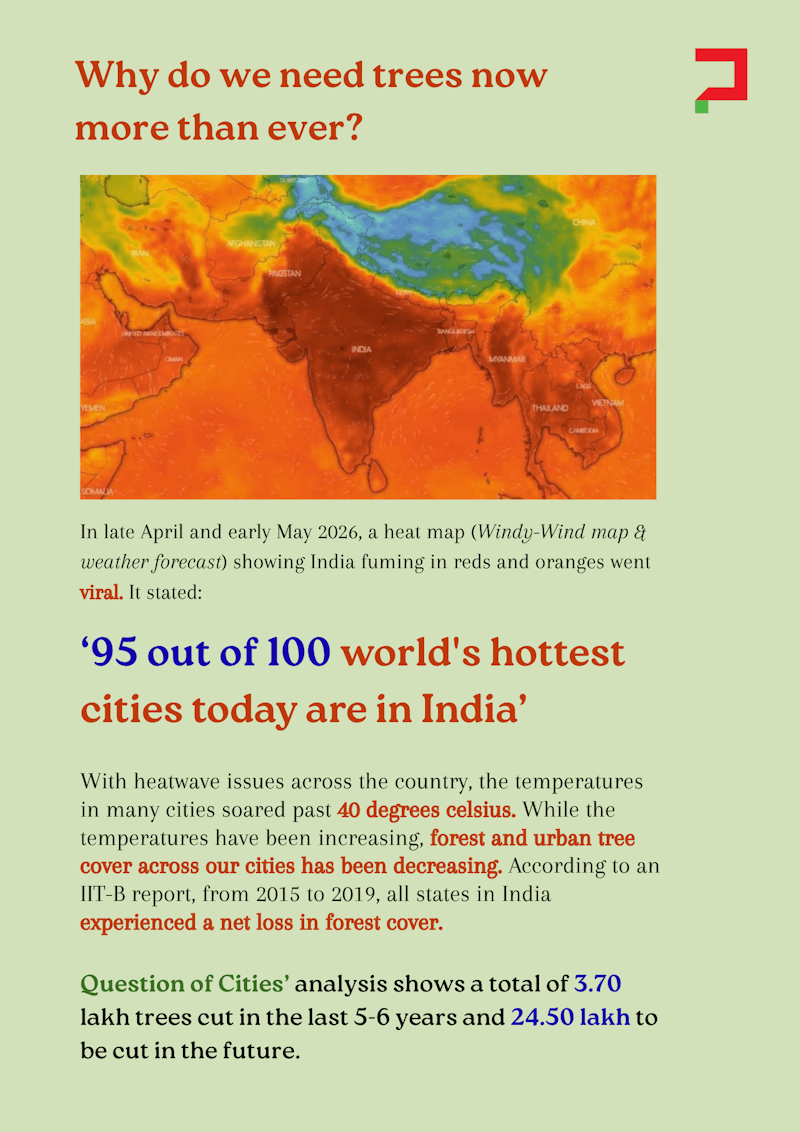
In April-May 2026, a heat map of India went viral. It showed India burning in reds and oranges, with more than 90 of the world’s 100 hottest cities reportedly located in the country. With incidents and stories of heatwave rising across the country, people’s lived realities bore this out. The temperatures in many cities across India soared past 40 degrees Celsius through May. Roads radiated more heat, nights became warmer (a less-discussed cause of heat stress especially in informal settlements), and the usual official restrictions were rolled out.
But there’s a deeper correlation that demands attention. The rising and extreme heat has to do with India’s cities turning into concrete heat traps given the reckless construction all over, with heat-absorbing materials, at the cost of their trees and forests. Across India’s cities, trees have been – and are being – decimated for one development project or another.
Development is welcome but what the massive and unprecedented tree-felling means for heat, air pollution, and the future of our cities is rarely discussed. Tree-felling at this scale is a climate catastrophe.
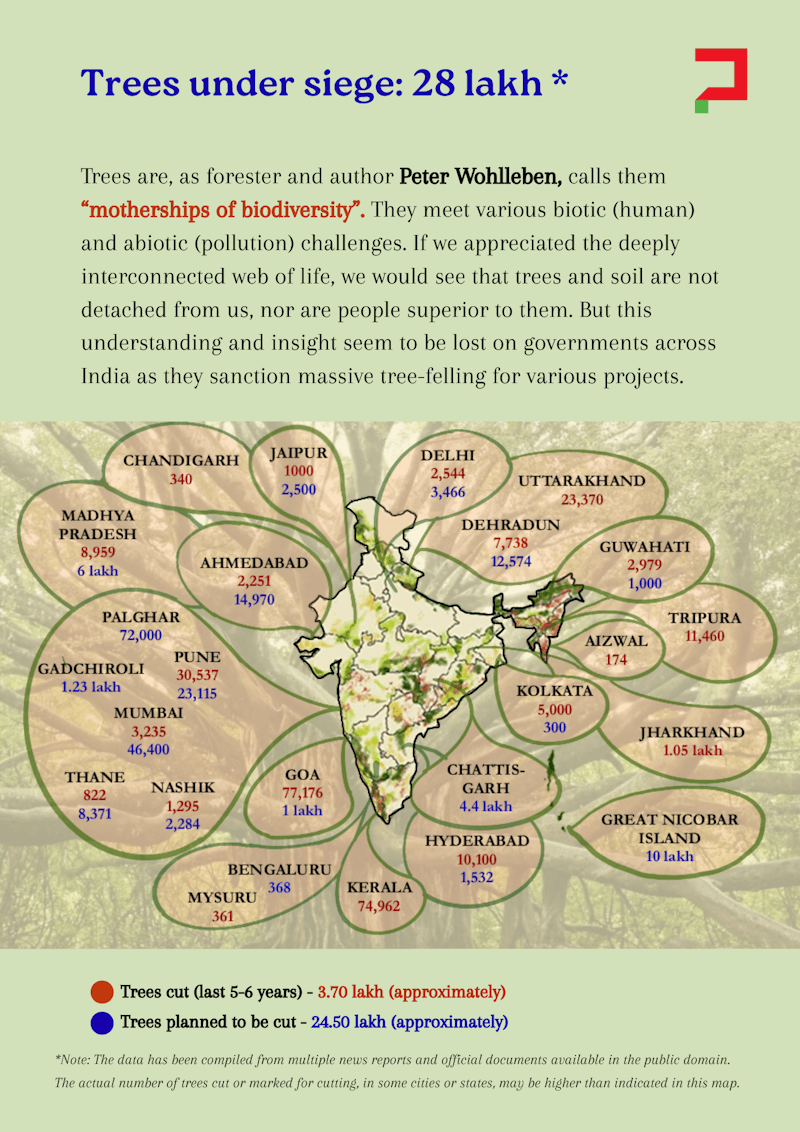
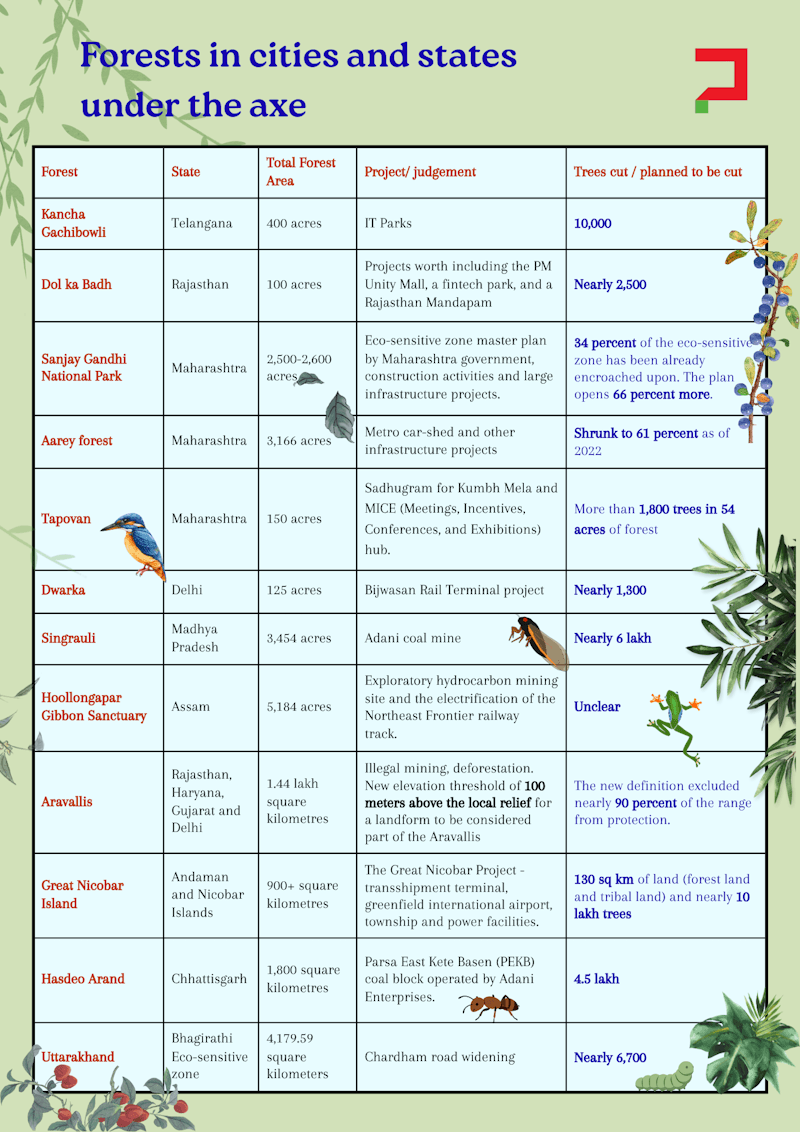
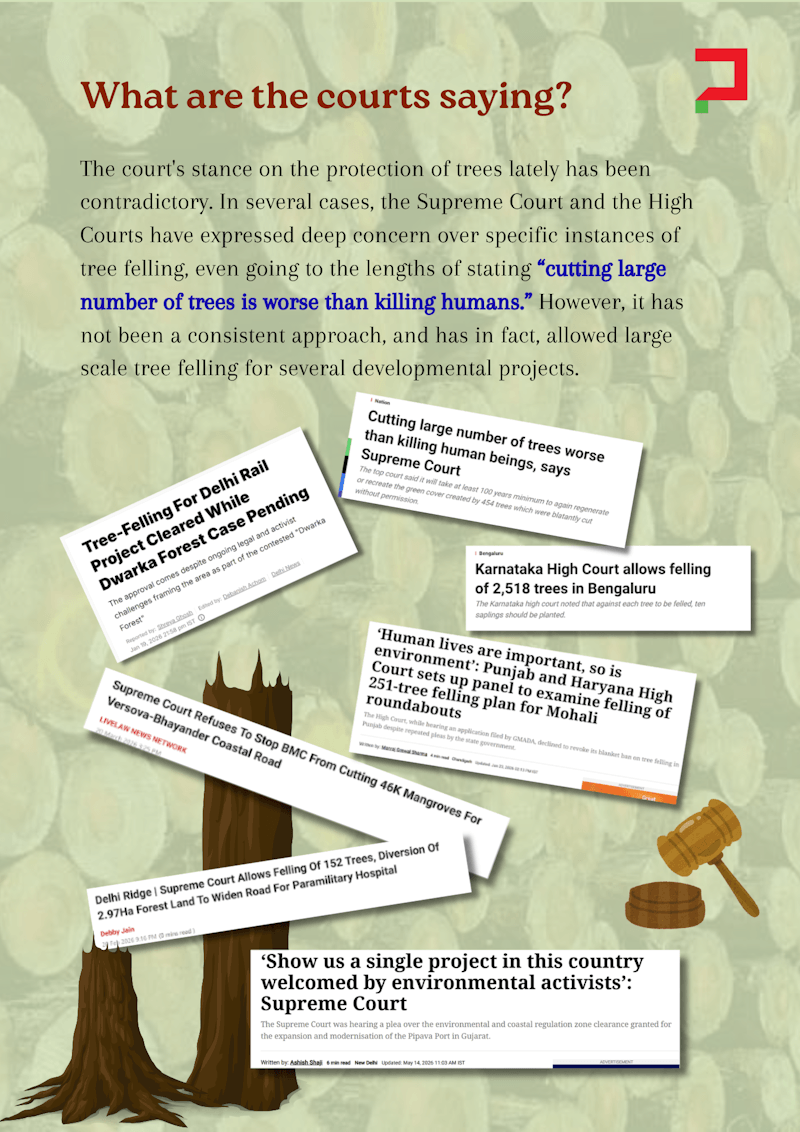
From Delhi’s Ridge and the Aravallis to Hasdeo Arand, Mumbai’s Aarey, the forests of Northeast and the Great Nicobar island, and several cities and states across, lakhs of trees have already been cut or marked for felling to accommodate highways, railways, airports, mining, tourism, and urban expansion projects. Trees are among the most effective natural defences against heat in cities. They cool neighbourhoods, absorb pollution, retain water, protect biodiversity, and make cities more livable. Yet, they are treated as expendable in the blind race for development.
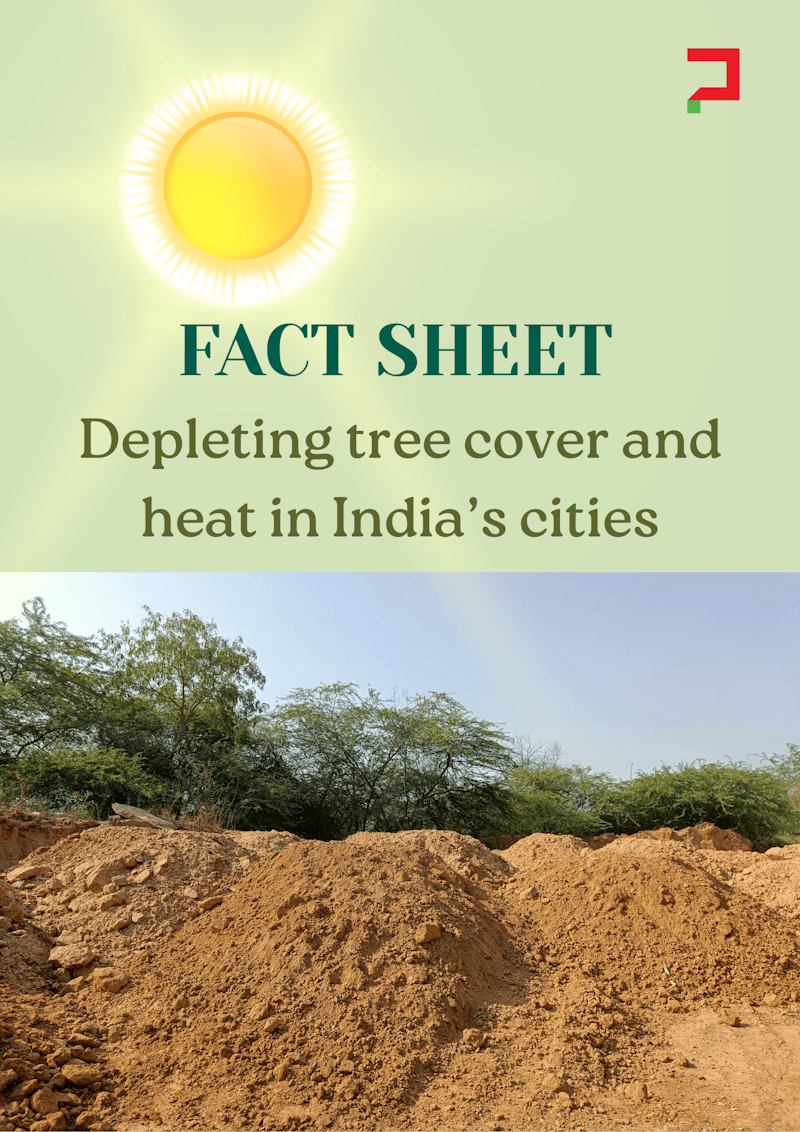
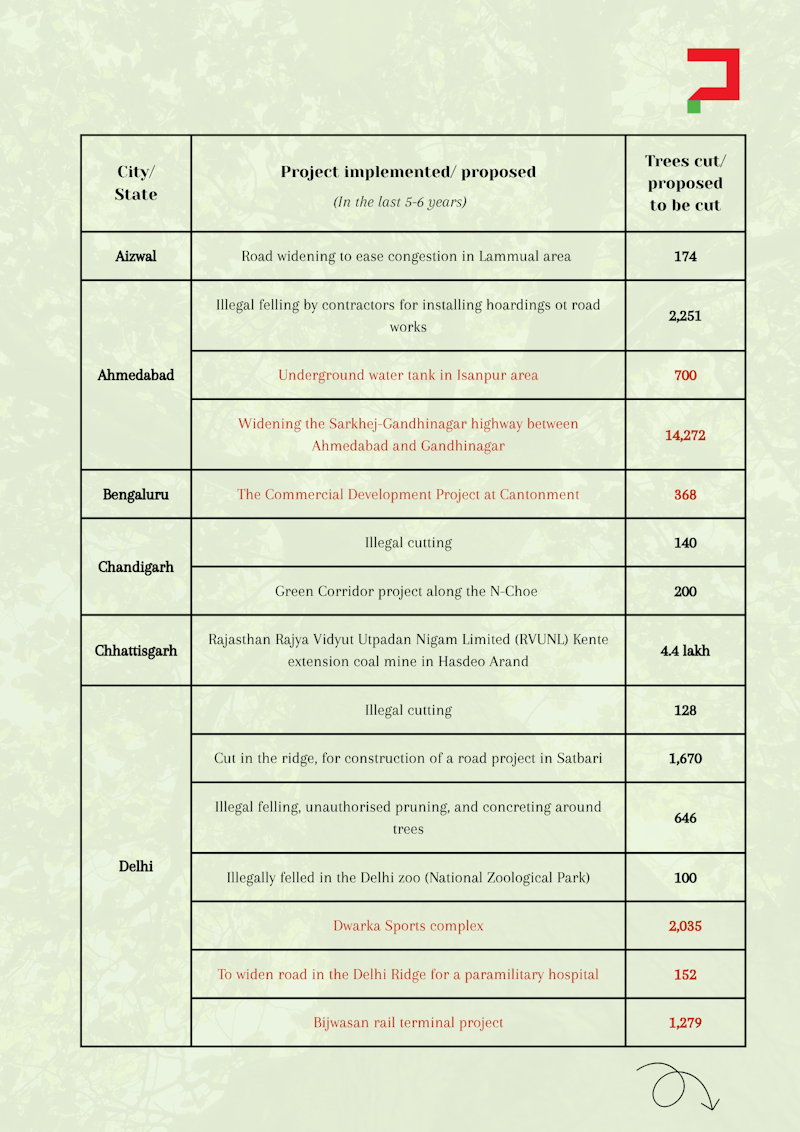
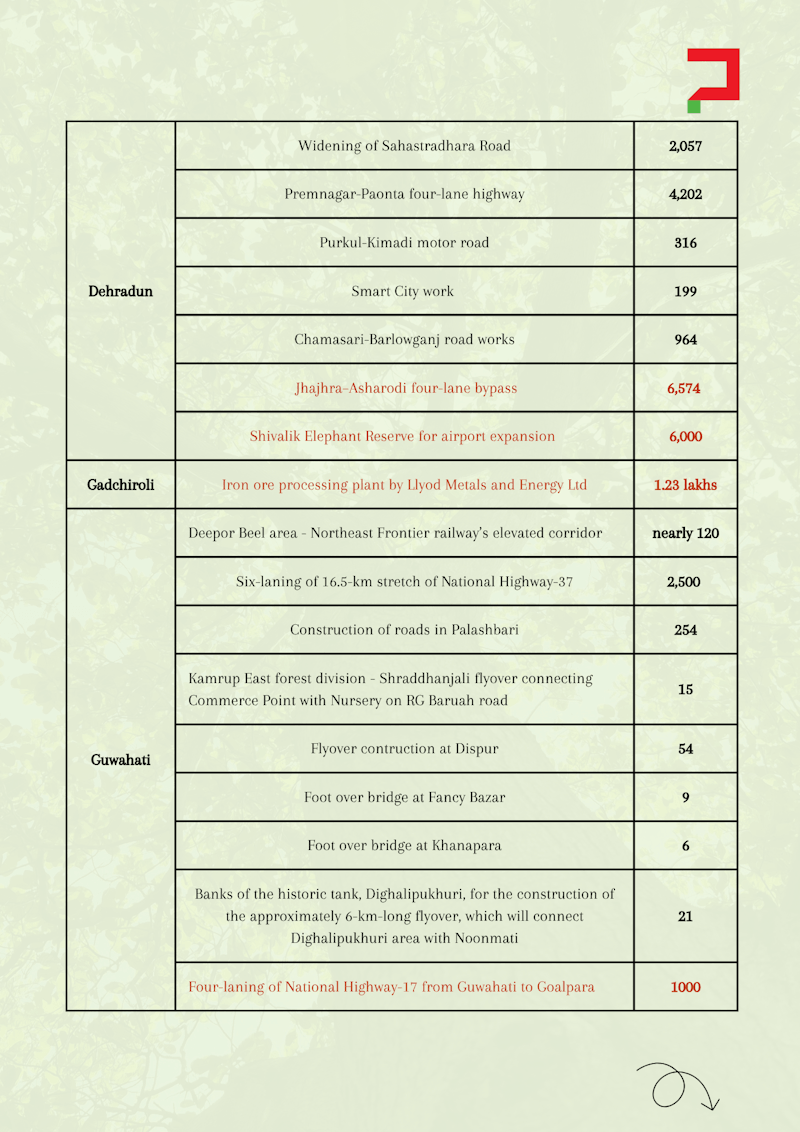
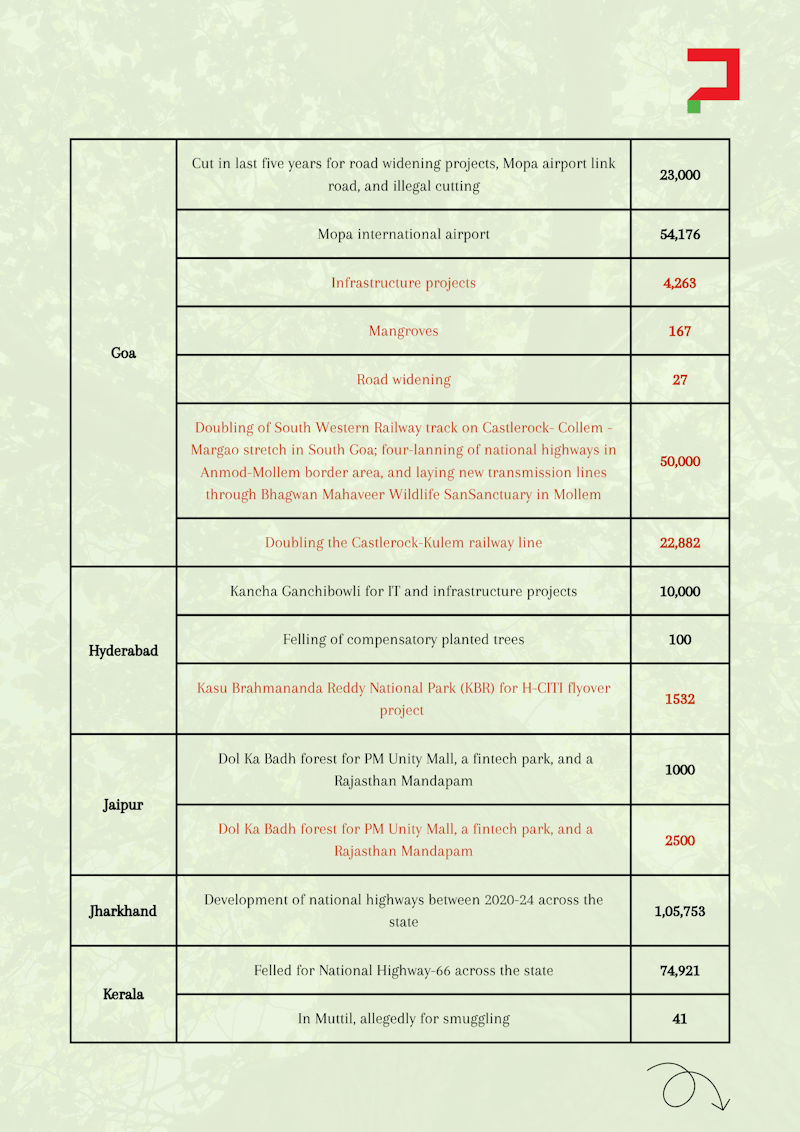
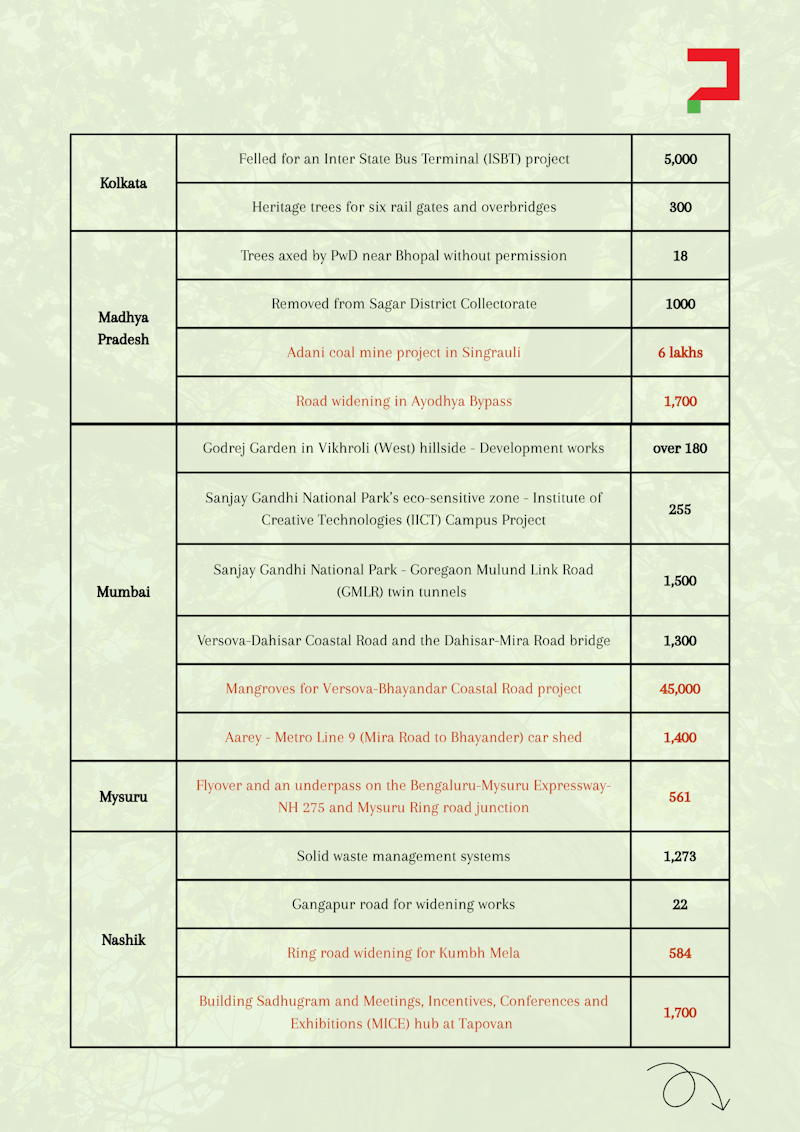
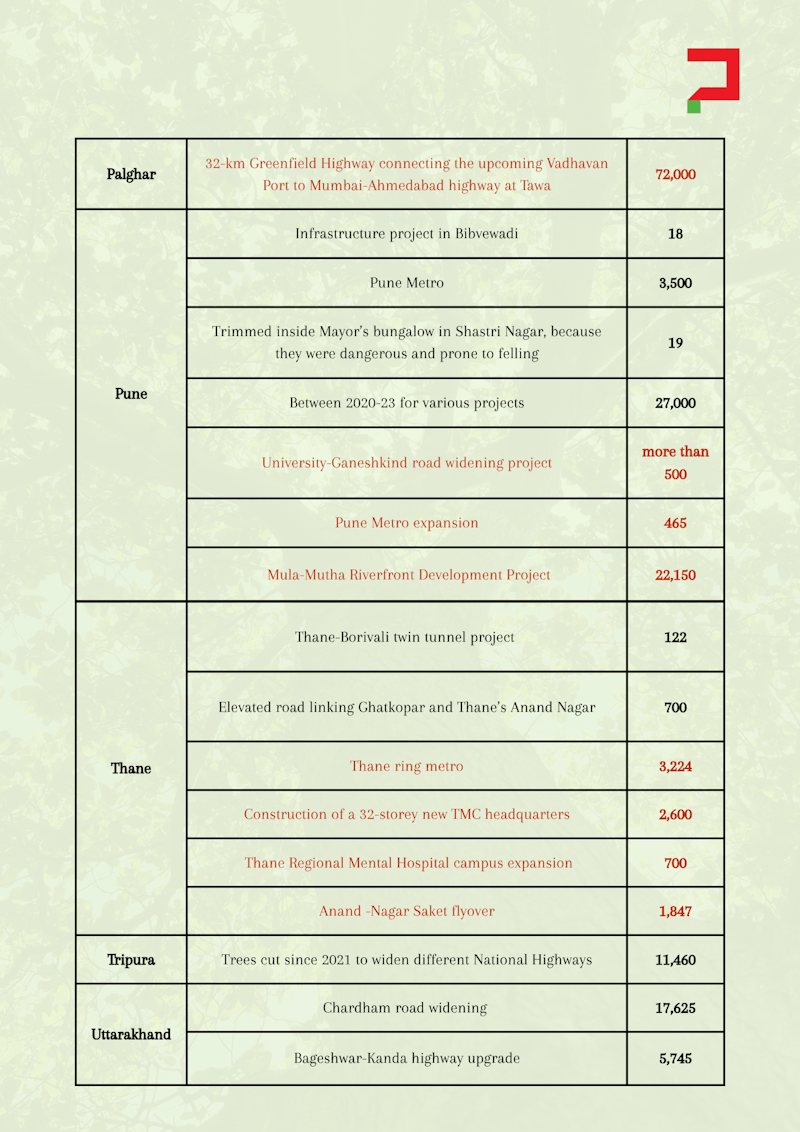
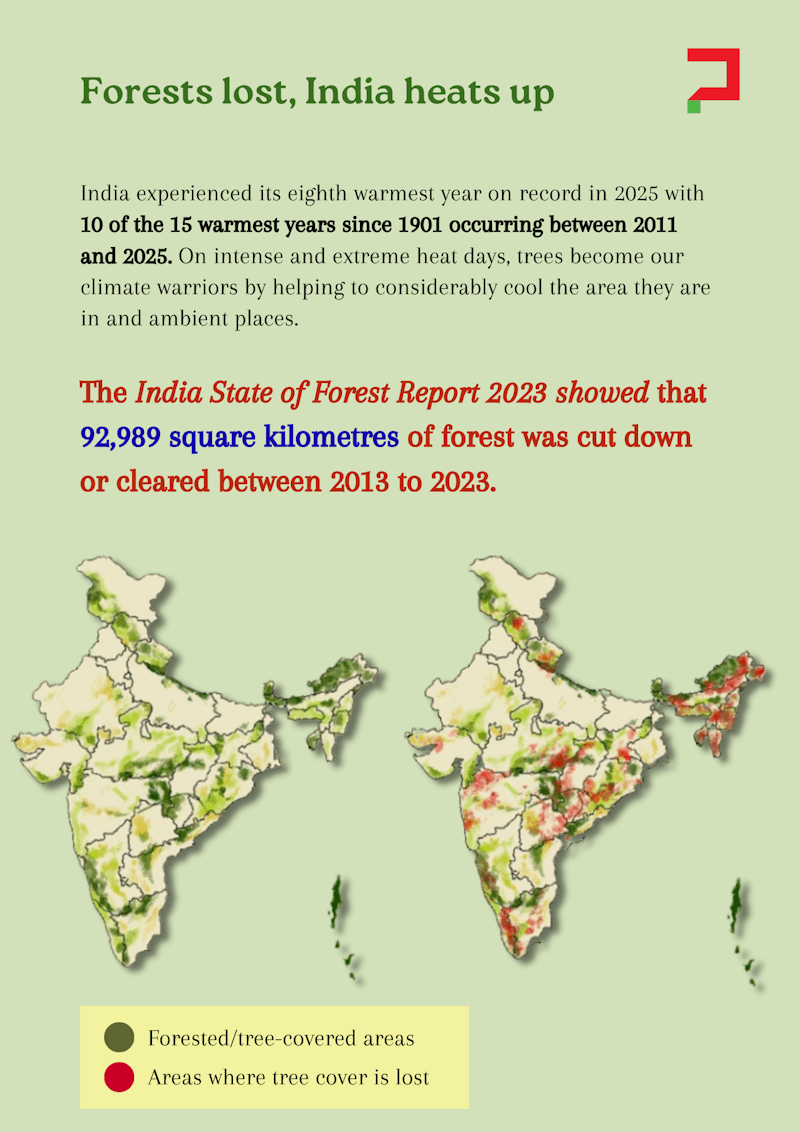
This fact sheet, based on material from multiple sources and analysis by the QOC team, maps the scale of tree loss across India, the projects driving it, and the growing consequences for heat, flooding, air quality as well as urban life.
Nikeita Saraf, a Thane-based architect, illustrator and urban practitioner, is now with Question of Cities. Through her academic years at School of Environment and Architecture, she tried to explore, in various forms, the web of relationships which create space and form the essence of storytelling. Her interests in storytelling and narrative mapping stem from the need to understand people and the methods with which they map the world. Through her everyday practice of illustrating and archiving she intends to explore this further.
Ankita Dhar Karmakar, Multimedia Journalist and Social Media in-charge in Question of Cities, has reported and written at the intersection of gender, cities, and human rights, among other themes. Her work has been featured in several digital publications, national and international. She is the recipient of the 4th South Asia Laadli Media & Advertising Award For Gender Sensitivity and the 14th Laadli Media & Advertising Award For Gender Sensitivity. She holds a Master’s degree in English Literature from Ambedkar University, New Delhi.
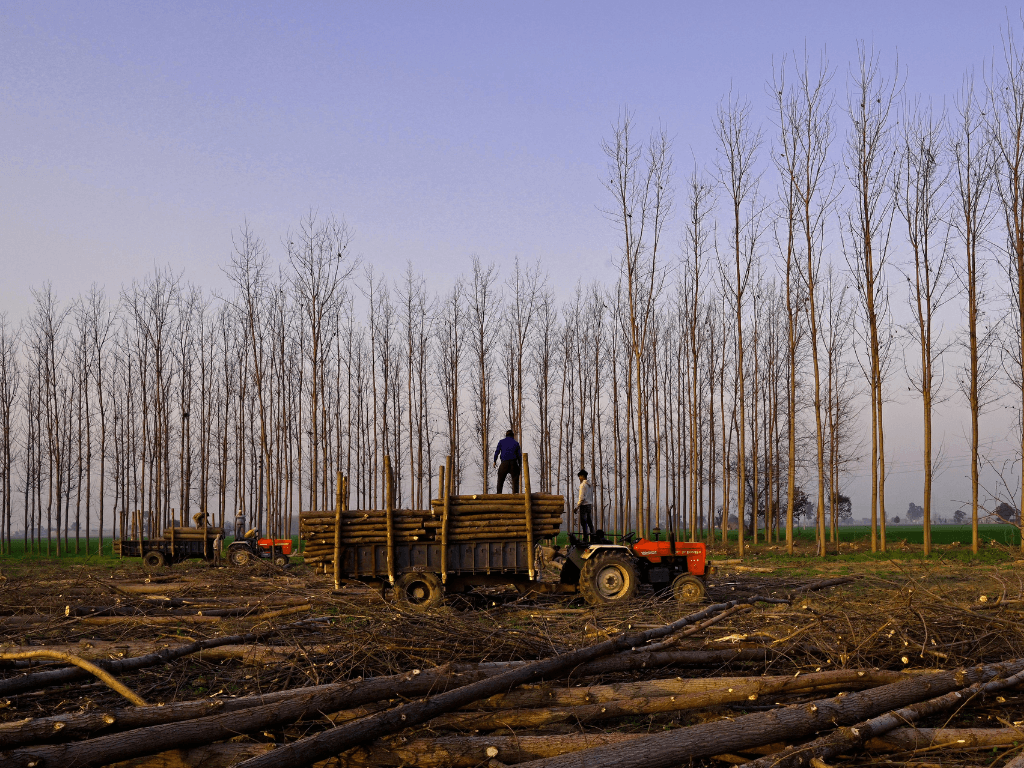
Cover Photo: Logging in Ludhiana, India Credit: Pexels