
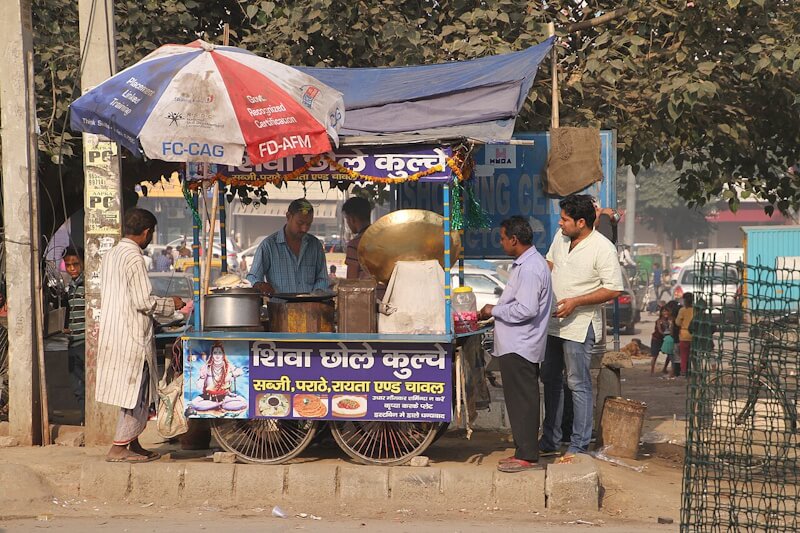
Street vendors are among the most visible segments of the urban informal economy. They are also highly labour-intensive and environmentally exposed, typically working in open public spaces with minimal infrastructure and limited access to basic amenities such as water, sanitation, electricity, shade, or shelter. Also dealing in perishable commodities including fruits, vegetables, and cooked food, they face added risks of stock spoilage and income loss during periods of extreme heat.
For street vendors, the exposure to the heat is continuous, unavoidable, and structurally embedded in the governance, infrastructure availability though street vending is closely tied to localised and low-carbon economic systems. Sourcing goods from nearby suppliers which saves food miles, selling with minimal packaging, and operating through small-scale, demand-based transactions which reduce waste, street vending is naturally environmentally – and economically – efficient but vendors remain precarious and under-protected.
In Delhi, some estimates suggest there are 6,52,000 vendors (Reynoso and Vanek 2024: 3) but conservative figures place them at over 2,50,000. The official surveys capture only around 77,000. Street vendors are deeply embedded in the city’s functioning – there is not a main street without them or a household not procuring goods but they remain significantly unrecognised which impacts their very existence and functioning.
And this is exacerbated in the times of heat. A key policy gap is the exclusion of informal workers, their livelihoods, worksites and participation from mainstream urban planning and existing heat action frameworks. While they are central to a city’s economy and services, they are seldom recognised as valid stakeholders in the planning processes.
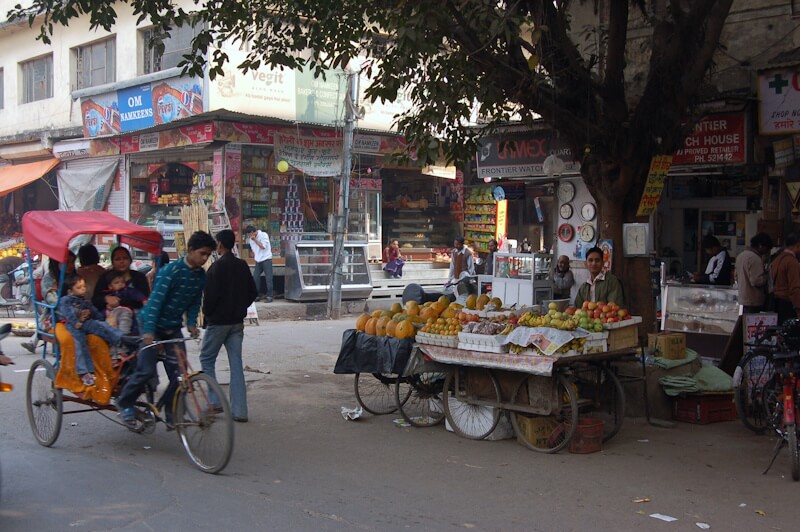
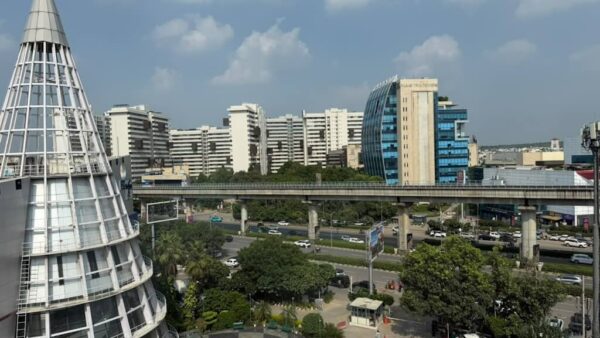
Photo: Bahnfrend/Wikimedia Commons
In this study mapping the impact of heat on vendors, the findings include monetary losses due to heat, structural deficits and near-absence of civic services, extractive governance practices which exacerbate the heat impacts, and evident policy gaps.
Methodology
This study by WIEGO[1] examines the impact of extreme heat on street vendors in Delhi through longitudinal action-research based mixed-methods approach. Around 500 vendors across 17 vending clusters were surveyed in two phases – before and after the peak summer heat of 2025 (March and June) – allowing a comparison of changing conditions. Surveys were designed as short mobile-based questionnaires that vendors could answer directly through voice calls or WhatsApp, minimising third-party influence.
Realising that heat impacts on vendors is not individualised but highly contingent on provision of services, the research included detailed infrastructure mapping of vending sites, assessing access to water, toilets, shade, shelter, and electricity, alongside observations of spatial exposure and working conditions. Discussions with vendors, vendor leaders, climate experts, labour activists, and urban practitioners complemented the surveys and helped situate findings within the broader governance and policy contexts.
The findings are bracketed into three categories: losses, basic services and governance.
Losses due to heat
Extreme heat has direct and compounding impacts on their livelihoods, sharply reducing their ability to work and their earnings. An overwhelming 96 percent of vendors reported a significant decline in customer footfall while 90 percent said they reduced working hours as high temperatures made prolonged outdoor work difficult.
Heat exposure also resulted in major material losses, with 72 percent of vendors reporting damage to stock, particularly perishable goods, further eroding already precarious incomes. Food vendors suffered the most, with 94 percent accounting damages to goods and products compared to 57 percent of non-food vendors and 41 percent of service vendors reporting losses.
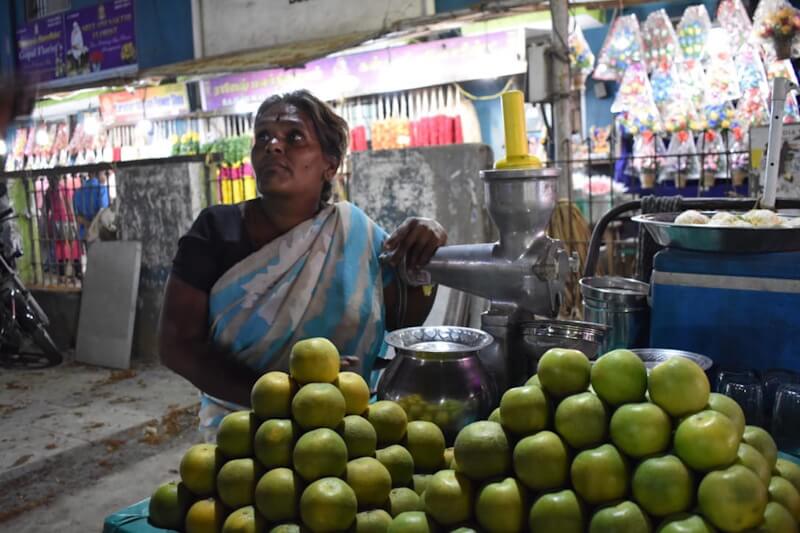
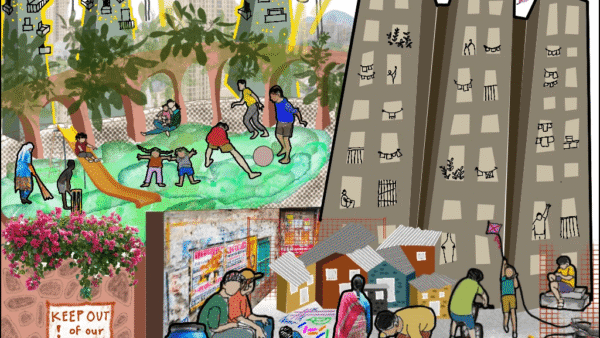
Photo: Adrian Dcruz
The findings also point to increased healthcare expenditures for themselves and families during the heat season. As much as 79 percent of vendors mentioned seeking medical care, representing a four-fold increase from the baseline. Indebtedness rose significantly during the heatwaves, where 80 percent of respondents reported increased debt, double of what was reported before.
Near-absence of basic services
The absence of basic services across vending sites severely constrains vendors’ ability to cope with extreme heat. More than 75 percent of vendors reported that they did not have access to toilets at their workplaces, underscoring the persistent exclusion of vendors from basic sanitation in public spaces. Notably, this persists in spite of the Swachh Bharat Mission that was focused on providing toilets across households and public spaces.
Access to water was even more limited, with 89 percent reporting that they did not have access to free, clean drinking water while street vending. This is of particular concern for food vendors who need water. Buying water added to their financial burden, further jeopardising their precarious livelihoods. The infrastructure mapping also highlighted structural deficits. None of the 17 markets surveyed had municipal water points, forcing vendors to buy or carry water. Many vendors spent around Rs 50 per day on water, while prepared-food vendors in high-footfall locations such as Pragati Maidan Metro Station and Janakpuri spent Rs 100 to 300 daily.
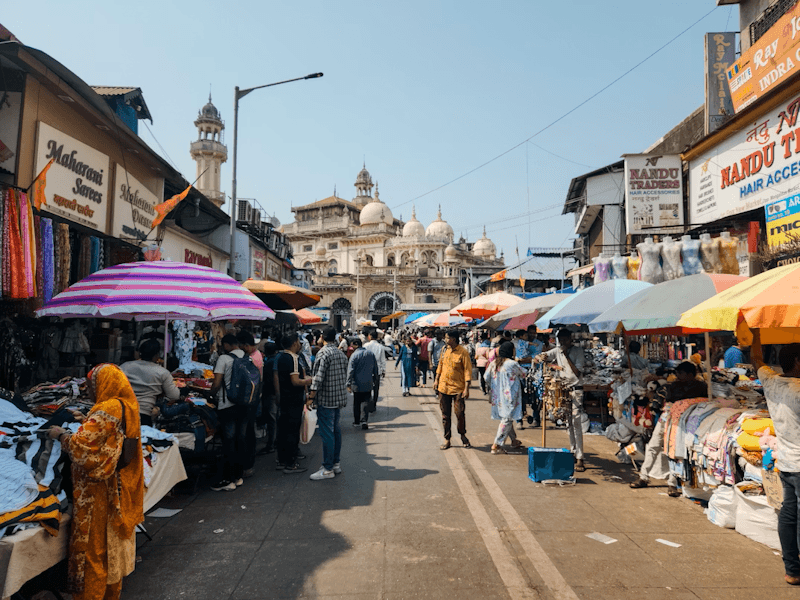
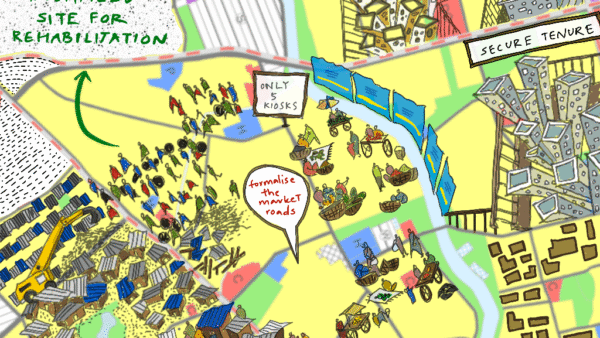
Photo: Zoshua Colah/Unsplash
Toilet access was equally inadequate. Three markets had no public toilets, leading to open defecation; 12 markets depended on pay-and-use facilities charging Rs 2–10 per use and up to Rs 40 for bathing. The access for women was especially limited, with only three to four markets offering (somewhat) usable facilities but these were often unsafe, expensive, or poorly maintained.
Access to shade and shelter was also highly inadequate. Ten markets had some form of self-installed shade including tarpaulins, umbrellas, and wooden structures while the remaining markets had none at all. But municipal restrictions on umbrellas and tarpaulins prevented even this basic protection from heat.
Importantly, all 17 markets functioned on public land – street sides and pavements – but 14 did not have formal recognition under the Street Vendors (Protection of Livelihood and Regulation of Street Vending) Act, 2014, thereby leaving vendors vulnerable to eviction, harassment, and exclusion from basic services.
Extractive governance during heat
Extractive governance practices during periods of extreme heat further intensified street vendors’ vulnerability, worsening the precarious working conditions. They reported high levels of harassment and eviction by police and municipal authorities. More than 65 percent reported harassment – rising 25 percent during the heat period – while evictions increased from 25 percent to 50 percent across the two rounds of the survey.
Evictions resulted in the loss of trading spaces, goods, and daily income which deepened their financial insecurity. These establish how punitive urban governance worsens the conditions of vendors already facing intense heat stress.
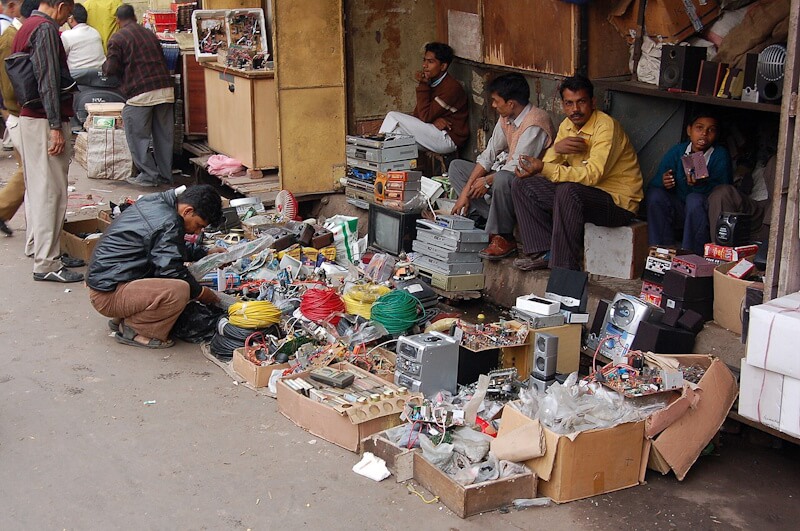
Photo: Bahnfrend/ Wikimedia Commons
Evident policy gaps
The findings point to the substantial economic losses, adverse health impact, and livelihood disruptions due to extreme heat. The reduced working hours, declining customer footfall, damage to goods, rising debt and medical spending show how heat stress contributes to – or deepens – economic insecurity and precarity for a majority of vendors. The findings also attest that the city is not a neutral backdrop but an active contributor to their vulnerability. As pavements and road edges continue to be heat-exposed, the absence of water, toilets, shade, and cooling infrastructure forces them to endure prolonged exposure with minimal protection. Even where infrastructure exists, it is often inaccessible.
Traditionally, urban development prioritises formal infrastructure, mobility and aesthetics; planning still ignores the spatial and occupational realities of informal workers who depend on streets, public spaces, and informal settlements. This exclusion becomes ever more important as heat impacts intensify. Planning systems have remained essentially stagnant and have mostly failed to integrate, among other aspects, heat resistance measures attuned to the demands of outdoor and informal workers. The absence of worker-centred planning, without any scope for their participation and involvement, not only worsens their vulnerability and precarity but also limits their contribution to construct climate-resilient inclusive cities.
Significant policy gaps persist in addressing the impacts of extreme heat on street vendors, reflecting a disconnect between climate planning and everyday urban livelihoods. Heat Action Plans (HAPs) and related climate frameworks prioritise public health responses – focusing on hospitals, schools, and vulnerable populations such as the elderly and children – while giving limited attention to informal workers who are mentioned in passing without specific strategies or protections.
At the same time, informal workspaces remain absent from city planning and design frameworks. There is little consideration of how streets, markets, and vending sites can be adapted to reduce heat exposure. This is compounded by a lack of imagination and provision for basic adaptive infrastructure such as shade, drinking water, and rest spaces. Even where supportive legal frameworks exist, such as the Street Vendors Act, the implementation stays weak with incomplete surveys, irregular functioning of Town Vending Committees, and failure to provide mandated civic amenities.
Finally, social protection systems are still poorly imagined, offering no support to workers coping with heat-induced income loss, health shocks, and rising costs thereby leaving this large segment of the urban workforce effectively unprotected.
Our recommendations
The conditions call for a fundamental shift in how cities understand and respond to heat stress – shifting from a narrow public health framing of heat to one that recognises heat as a labour and urban issue. This requires a coordinated action across the multiple authorities, combining immediate relief, compensation and adaptation support, with long-term structural change. The recommendations:
- Heat must be reframed as a labour issue, not just an environmental or health concern. National and state-level bodies such as the Ministry of Labour and Employment, state Labour Departments, the Ministry of Housing and Urban Affairs should formally recognise heat stress as a workplace hazard for informal workers and develop guidelines on safe working conditions, including basic amenities and compensation for heat-related income loss.
- Heat Action Plans (HAPs) must become worker-centric. The State Disaster Management Authority in every state and city governments should integrate informal workers and street vendors into planning and implementation of the HAPs. This includes mapping informal workspaces, vending zones, re-orienting early warning systems to reach workers, and ensuring that heat responses are designed to protect their livelihoods rather than treat them as passive beneficiaries.
- Urban planning needs to fundamentally shift from its focus on mere infrastructure development and land use planning to include informality and informal livelihoods, to reimagine cities that provide new norms and standards for informal worksites and amenities, with a new language for climate resilience and needs of workers like shade, resting stations, street designs.
No amount of top-down actions by governments will suffice, there must be built-in strategies to include participation, engagement and contribution of workers and communities. Worker collectives and vendors’ unions should be recognised as partners, enablers of change and capable of action on the ground for heat adaptation, with supportive policies that recognise their ingenuity and resourcefulness.
- Cities must invest in basic services infrastructure without which climate adaptation is impossible. Urban local bodies, in coordination with government departments, should prioritise the installation of free and accessible drinking water points, shaded vending zones, low-cost cooling shelters, and gender-responsive sanitation facilities in markets and high-density work areas. These should be treated as essential urban infrastructure, not as temporary or discretionary measures.
- There is an immediate need to strengthen legal protections for vendors and put an end to punitive governance practices that function on the premise of illegality against informal workers. For street vendors, the progressive Street Vendors Act must be effectively implemented with functional Town Vending Committees, proper demarcation of vending zones, and guaranteed provision of amenities. Municipal authorities must halt evictions and harassment, particularly during extreme heat, and re-orient their actions for supportive governance.
- The existing social protection systems need to be expanded and made heat-responsive. Central and state governments should enhance access to income support, health insurance, and emergency financial aid during heatwaves, recognising the combined burden of income loss, rising expenses, and health risks.
- It is an imperative now to realise the state cannot do it by itself and support worker-led adaptation. Worker collectives, unions, and community organisations should be engaged as key partners in designing and implementing heat actions, while investments are made in accessible, localised, and prompt communication systems that reach workers directly.
Heat actions in cities are not only about managing temperatures but about transforming urban systems to support the informal workers who sustain them. Street vendors symbolise a central paradox of contemporary urban economies – they are indispensable to the functioning of cities, yet remain structurally excluded from the protections, infrastructure and recognition that is fundamental to heat action. As one of the most visible segments of the urban informal workers in India’s cities, their experiences reflect the wider vulnerabilities faced by millions of informal workers who sustain the cities through precarious labour.
Shalini Sinha is Asia Strategic Lead, Urban Policies Program, Women in Informal Employment: Globalizing and Organizing (WIEGO)
Aravind Unni is an urban practitioner and researcher working with informal workers and urban communities for inclusion in urban planning and cities.
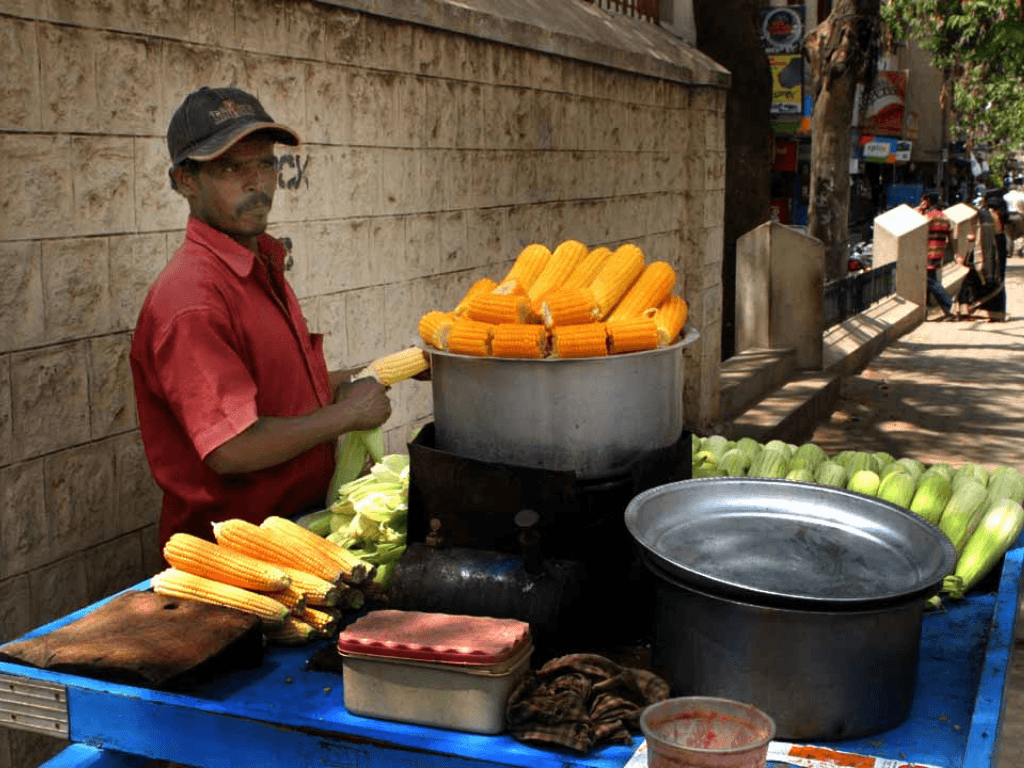
Cover Photo: Maize vendor on a street pavement in India. Credit: Babasteve/Flickr