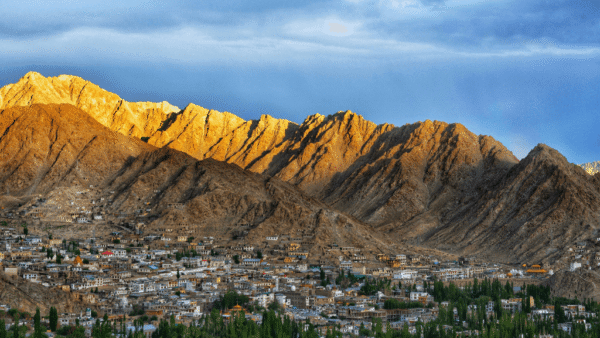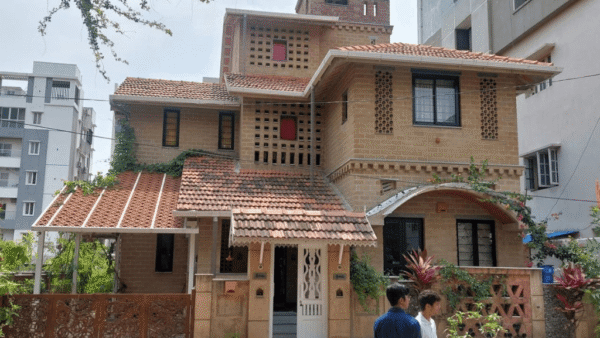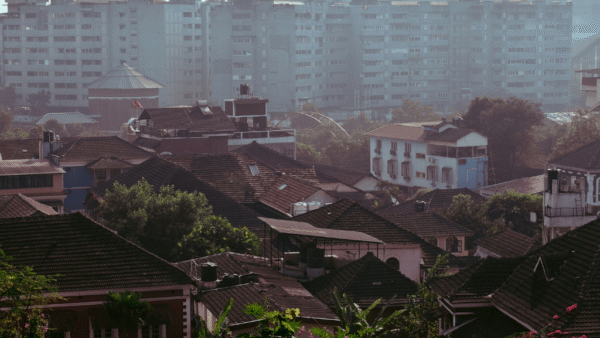
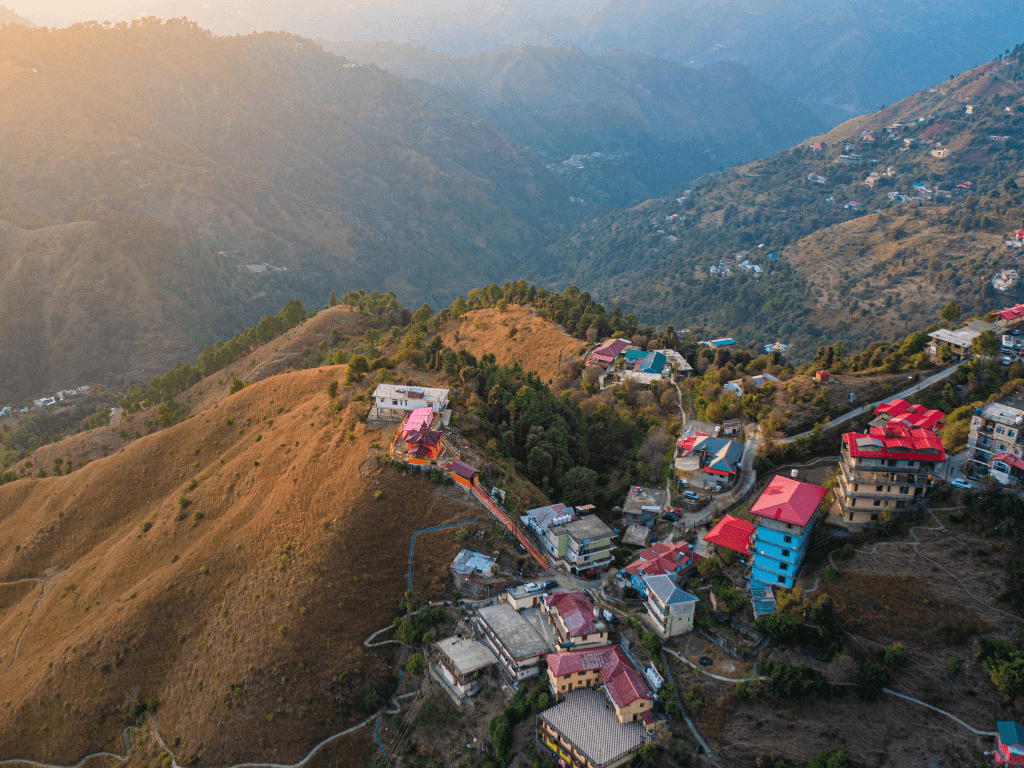

Rome had its famous seven hills, marble aqueducts, and epics. Shimla has seven hills, timber, Mall Road, and the legacy of the British summer capital with promenades and curated views. Over decades, Shimla acquired an urban ego too. People and businesses flocked. The town’s skyline was improvised – hotels on cliffs, apartment blocks stacked like Lego sets, and floors hastily added to both.
Shimla now looks less British, more Jenga, especially along the Mall and the Ridge. Back then, under the Ridge, the British tucked away a massive water system of tunnels, pipes and reservoirs to store and circulate water. The Empire, quite literally, stood on the watershed. Streams and springs from surrounding catchments were diverted into masonry tanks beneath the Ridge where gravity did its thing, the water was then taken down by iron pipes to neighbourhoods. If something went wrong, people at the end of the pipes lugged buckets.
The Mall was, essentially, a lid over the town’s lifeline; the Ridge was the reservoir, the balcony. Water did what it always does, flow downwards, but its availability was decided uphill. For the town called the “Queen of Hills,” it was a monarchical way to lay the plumbing. Despite its colonial-era carefully-engineered system, Shimla has now become infamous for regular water shortages[1] so much that it disrupts the tourist calendar. Taps run dry in peak summer and residents queue with buckets and jerrycans. The town’s relationship with water swings between crisis and improvisation every year now.
On paper, there are new projects and upgrades that sound capable. On the ground, WhatsApp messages ask about the next tanker. The imperial reservoir still exists but is now only one old actor in a crowded, overburdened system that has not figured out how to balance water requirements of visitors, residents, and, importantly, that the streams do not read plans or policy documents. So, there’s permanent anxiety here rather than a royal experience.
Shimla responded the way hill towns do – by writing several sub-plots instead of fixing the story itself. One sub-plot is the sweep of plastic storage tanks on terraces of houses and hotels, each a private reservoir in black, blue or soiled white. They form the improvised water system, less glamorous than the one under the Ridge but more functional. They are wrapped in iron cages, protected by rusted spikes and welded fences, to keep away the langurs and rhesus monkeys that are abundant in this Hanuman-devoted town. Where the monkey god is lovingly worshipped, devotees spend afternoons inventing increasingly imaginative anti-monkey defenses to safeguard their water.
Between the grand reservoir under the Ridge and the many rooftop ones, it is possible to plot Simla’s journey of construction from centralised colonial confidence to anxious domestic ingenuity. We no longer stroll above the water system in quiet authority; we live under it, next to it, and guard it from the monkeys. Somewhere between the Ridge and the rooftops lies the story of a town that was built without a nod to its ecology.
From hairpin bends to riverbanks: Bhuntar, Kullu, Manali
After Shimla, spiraling down a choreography of hairpin bends, the vertical of the mountains turns into the horizontal sprawl of the valley. First comes Bhuntar, then Kullu and finally Manali, each distinct but a string of settlements along the Beas River. Here, there is no singular Mall but bazaars, mandirs, bus stops, apple orchards, and hotels promise both the “river view” and “mountain peace”. If Shimla is a hierarchy of altitude, these are more democratic and continuous ribbons of habitation.
But the river quietly rewrites our illusions of planning and building, tolerating us till it does not. Local wisdom has long insisted that, in the Himalayas, it is safer to live higher up, closer to the clouds, than at the edges of a river. The logic is straightforward: Rivers are generous but only within their moods, and while the land offers conveniences, it also exposes us to every excess of the monsoon. Year after year, floods [2] and cloudbursts remind the valley that the Beas does not enjoy being boxed in by retaining walls, hotels and kiosks. Riverbank structures wash away, highways snap like unruly twigs, and bridges that were labelled as “permanent” in reports discover impermanence.
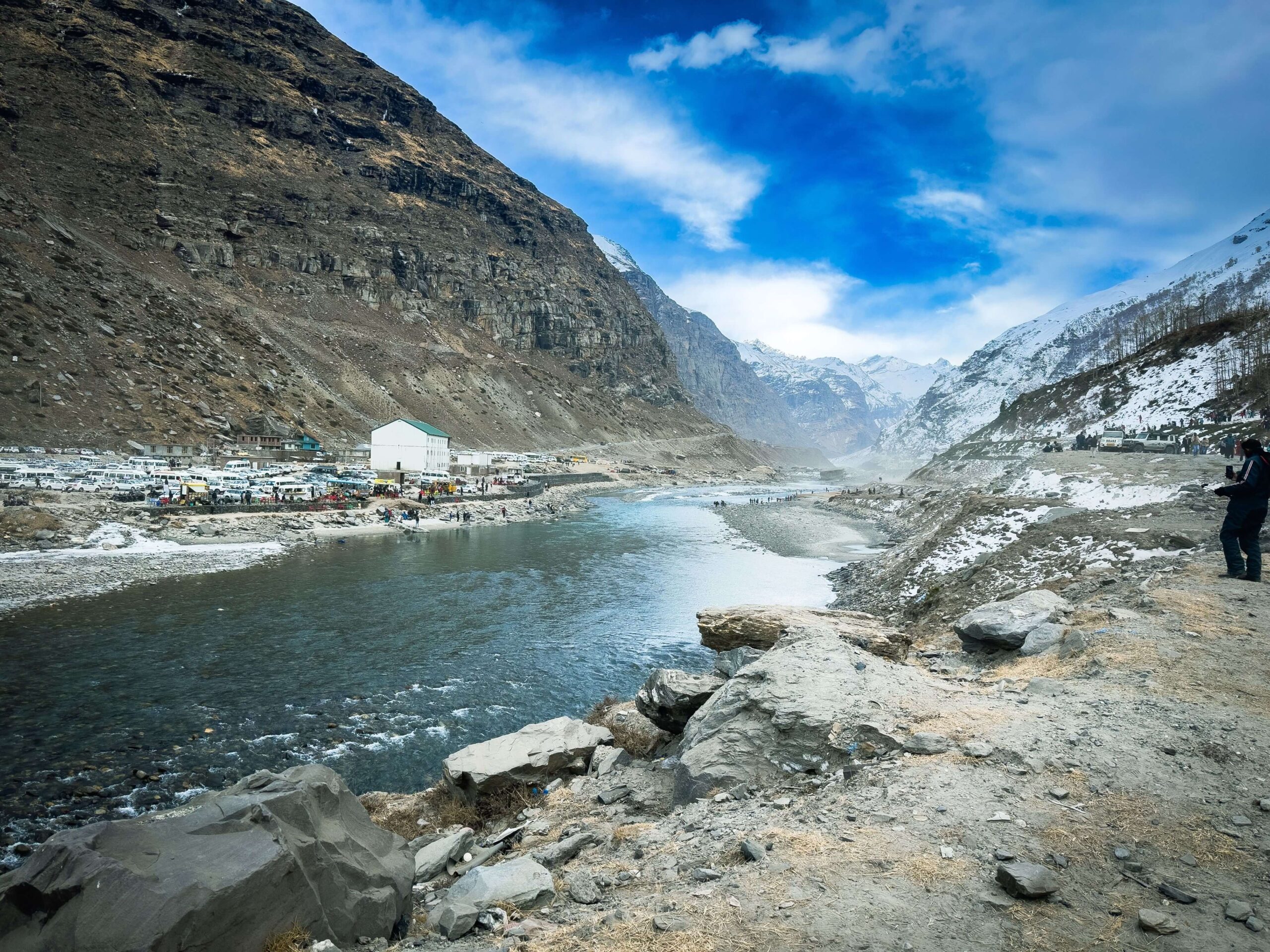
Photo: Rasikka Patil, Pexels
After every such event, news headlines talk about “angry rivers” but the river is merely being itself while we pretend it is a backdrop. The market dances to the tune of the “river view” construction; the river listens to gravity. Kullu valley also hosts the quietly stubborn negotiators in the form of local devis and devtas. Their palanquins travel in procession, halting traffic and construction schedules, tracing older sacred geographies that remember forests, pastures and crossing points. Urban consultants enthusiastically speak of “view corridors” – the protected lines of sight that ensure views of snow peaks without interruption from resorts – but the devtas advise “don’t build here” corridors. Their routes and zones may not look like regulations but they are unwritten planning codes. Displeasing a devta is a risk.
It is surreal that drone cameras and deities both map the landscape, one in pixels and the other in processions, each insisting that certain spaces are non-negotiable and non-buildable. In a sense, the valley has three planners – the river that quietly draws its boundaries and expresses its moods, the devis and devtas in their palanquins marking spaces, and the modern drones and AutoCAD bearers. The valley increasingly goes only by the last one.
And in that shift, the river’s hesitations and the deities’ refusals are rendered invisible – until the next flood, the next landslide, or the next halted palanquin reminds us that some parts of the valley were never ours to redraw.
Vastu Purusha and exclusion
Under Shimla’s Lego-like stacked towers and Kullu’s riverside construction lies another planner, Vastu Purusha or the cosmic entity whose body is imagined as co-extensive with the plot. Tradition has it that when a building is constructed, the being created by Lord Brahma is embedded in the earth with his head, feet and limbs aligned with cardinal directions, and circumambulated daily in the minds and movements of the household; his well-being is tied to the building’s stability.
In the Himalayan context, this acquires extra texture. To think of Vastu Purusha under a cliff-hugging hotel in Shimla or a cottage overlooking the Beas is to recognise the ground as alive and responsive even as civil engineers measure soil-bearing capacity and slope angle. There are plots where “Vastu Purusha will not rest” and invite caution.
The cosmic body might bless the structure and uphold some ecological traditions but social ironies persist. Masons, carpenters and labourers who shape the building often cannot enter the finished house. They carried the bricks and poured the concrete, know the spaces intimately, how the walls were corrected, where the damp patches will show in the monsoon, but after the puja they become the outsiders, merely the migrant workers who are given wages with a polite request to use the back door.
This paradox is a recurring motif in both Shimla and the Kullu valley. It is an irony that in a landscape where gods, cosmic entities, and the mountains are participants in the built form, the humans who carried the materials up the slopes and shaped the structures are granted the least durable presence. Perhaps, the mountains remember them as scar tissue.
The price of ignoring ecology
In the Shimla of stacked apartment blocks and cliff-side hotels, each building appears normal in isolation but together they form a precarious experiment. Every added floor means more pressure on slopes, drains and stairs. For older residents, women managing households, school children, and workers, this translates into lived difficulties. A new block obscures a path that once felt safe, a construction redirects run-off to another’s terrace, and a parking tower swallows breathable open space. Shimla’s colonial heritage and its present co-exist uneasily. The tourist gets to photograph both and caption it “mountain charm”.
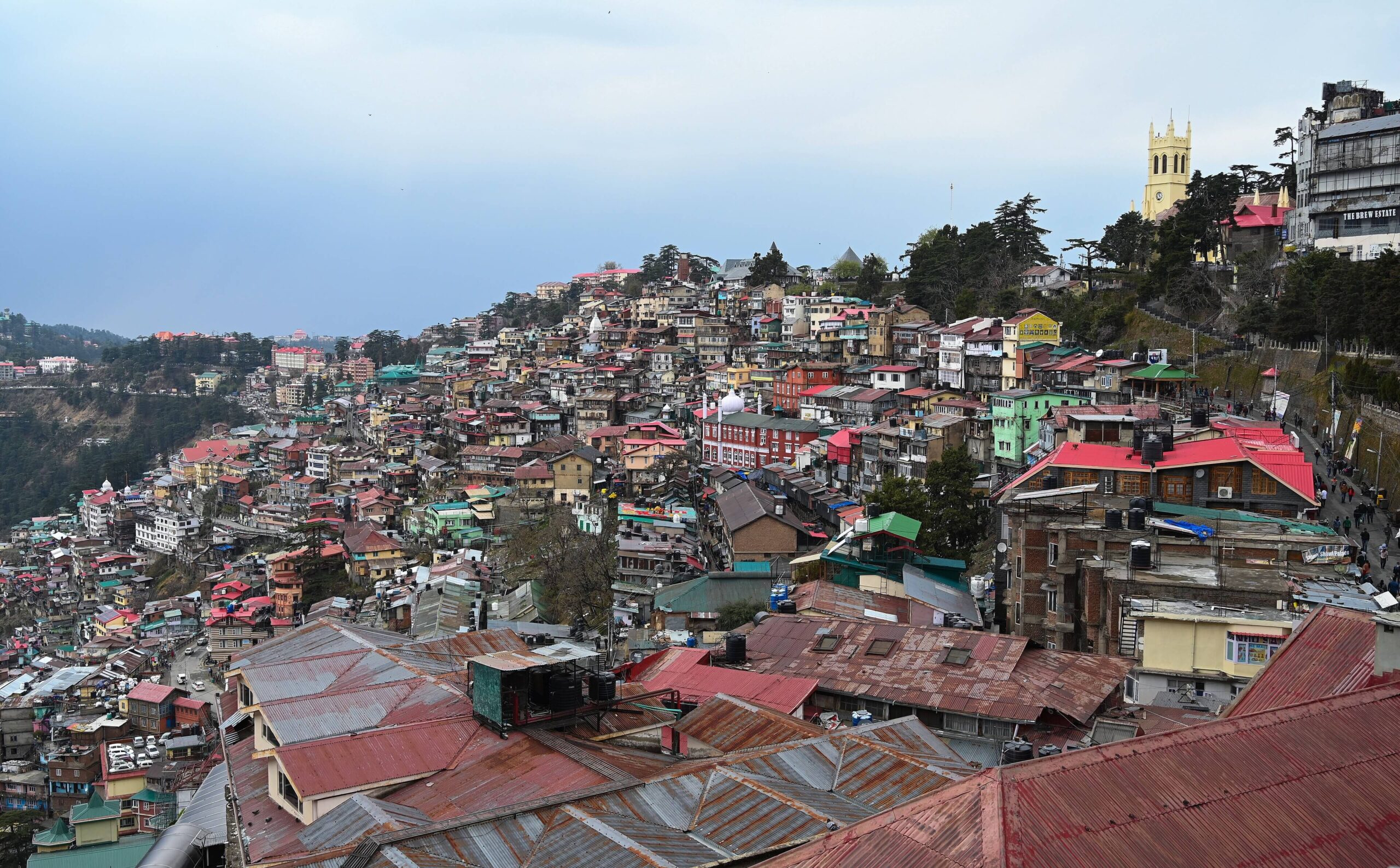
Photo: Wikimedia Commons
If the river, mountain slopes, and gravity are invisible planners, iron is the visible one. Hill cities have fallen in love with metal. It holds up balconies, wraps around tanks, lines staircases, fences off cliffs, guards windows and occasionally acts as a statement piece pretending to be “heritage”. The town looks gift-wrapped in grills or constantly bracing itself. These structures slowly corrode leaving rust stains on walls. The throngs of people on narrow hill roads means engines work harder and the air is enveloped with more emissions. The crisp mountain air, an ecological gift, is now layered with the smell of petrol and diesel.
If we keep building as though Shimla were a flat town and Kullu just another riverfront, we turn both into fragile stage sets rather than places that people can safely live in. Shimla’s construction has loaded the mountains with vertical towers, shaving off slopes for parking, blocking drains; then, there is surprise when landslides, cracks and water shortages arrive. In the Kullu valley, it means pretending the Beas is polite scenery, not an active planner, and watching the monsoon turn it into a corridor of damage. In both towns, the costs are uneven – tourists photograph “mountain charm” and second-home buyers enjoy the views, but working-class neighbourhoods, tenants, and migrant workers live in precarious corners, carry water over the longest distances, and are the first in line when slopes or riverbanks give way.
In this model of development, several basic ecological facts are either sidelined or treated as negotiable. For Shimla, the steep geology of a hill station built along a ridge, its landslide-prone belts, and the role of forests and green belts in holding slopes, and feeding springs should have been non-negotiable. Instead, height limits were relaxed, hillsides chopped down, green belts squeezed, and the planning rarely asked what the mountain could hold. For Kullu, the river shifting, widening, and rearranging its banks, and the memory of older floods, should have defined strict no-build lines. Instead, construction goes right up to the water, boxing in the river with walls and hotels.
Across both, micro-climates are treated as decorative rather than structural, and sacred social geographies like devta routes and commons treated as mere folklore. We imported plains-city models and “smart” templates because they came on modern Power Point Presentations, listened more to AutoCAD than traditional masons, orchardists, or palanquin routes. The result is a development imagination borrowed from the plains, deeply misaligned with ecological limits of mountains.
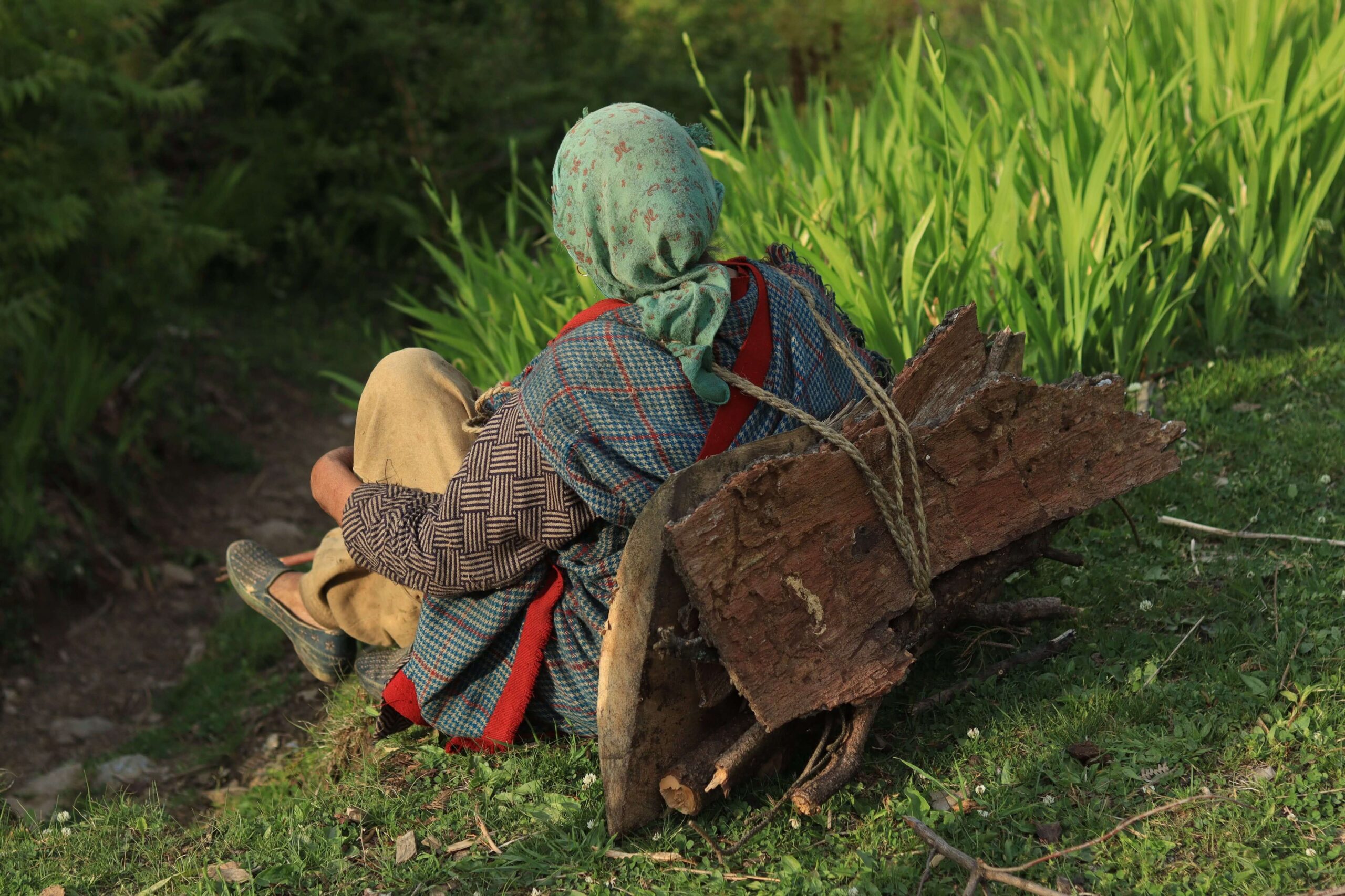
Photo: Mohammad Danish, Pexels
Ecology-based way forward
To align the built environment with the ecology here means we start by accepting that geology and water get the first word, not the last. For Shimla, this means clear and enforced “no-build” and “de-build” zones on unstable slopes, in recharge and forest areas, and a shift from vertical stacking to gentler, low-rise, slope-sensitive forms. It also means treating springs, old masonry tanks, and rainwater as a connected system again, not as inconveniences or replaced with plastic on terraces. For Kullu, it means stepping back from the river, protecting setback lines, not building on active floodplains, and a long-term plan to relocate risky riverside structures. The Beas needs its own workspace, after all.
In both towns, mobility and open space must be re-thought in terms of slope and breadth. This means more ropeways and small public transport, preferably battery- operated; fewer wide cuts into hillsides; more continuous footpaths and stairs; fewer isolated islands of “parking plus building.” Forests, orchards, and commons must be factored in as natural infrastructure that hold the towns.
State planners and municipalities need to rewrite rules so that carrying capacity is more than a paragraph in a report, and water and forest maps inform decisions. Community institutions must be recognised as co-planners. And those of us who teach, write, or work in these mountains must train people to read cracks and floods as feedback from the landscape. The mountains keep sending back corrected drafts of our PPTs and plans. An ecology-based future simply means we stop treating these red marks as negotiable.
Individuals and organisations hold out hope. Dr Tikender Singh Panwar, former deputy mayor of Shimla, among others, constantly speaks and writes[3] that Himalayan urbanism can be more than improvised survival. Since 2020, through the non-profit Himalayan Institute of Cultural and Heritage Studies [4], we have been teaching courses that honour the complexity of mountain life in an interdisciplinary way across anthropology, art, heritage conservation, literature, planning debates and stories of people.
We ask what it means to inhabit a slope, not just to photograph it; what it means to build in a town planned by engineers, rivers, and gods at the same time. These are not grand changes but pragmatic footholds – a policy is tweaked, a neighbourhood committee forms, a reckless project is paused or rerouted, people resist and re-imagine. Yet, the uncomfortable question persists: how should hill towns be built? On paper, with development control regulations, heritage lists, hazard maps, and riverfront guidelines; in practice, it is gravity, water, and local gods that hold sway.
The mountains persistently send feedback; we build as if what they tell us can be ignored. Each time we re-arrange the bricks, the mountains quietly rewrite the plan.
Sonali Gupta, LL.B., Ph.D. (UCLA), is a lawyer and anthropological archaeologist, recognized as India’s first Egyptologist. She is the Founder-Director of the Himalayan Institute of Cultural & Heritage Studies (HICHS), Founding President of the Himalayan Conservation & Preservation Society (HCPS, U.S.), and serves as a Consultant with Communitology, a U.S.-based organization providing expert opinion on legal issues of caste, gender discrimination, and climate-induced migration.
Follow on Instagram @thehichs and www.hichs.org /www.hcpsusa.org
Cover Photo: An aerial view of Shimla. Credits: Ibrahim Bennet, Pexels