
“Garmi had se zyada hogayi hain, bilkul bhi so nahi pate (The heat is unbearable, and sleeping is impossible),” says 35-year-old Jamila, a waste-picker and single-mother, in East Delhi’s Seemapuri. She works up to nine hours every day, including during the peak heat hours in the afternoons, to complete the task of collecting waste from approximately 250 houses every day. She rests for about an hour when she gets back to her home, essentially one room of 6×6 ft, where the floor is like molten lava.
As the night falls over the city, the temperature inside the one-room houses in the low-income settlement of Seemapuri does not drop. This settlement of Bengali Muslim migrant workers has houses made of patiya (stone slabs) which trap heat during the day and release it through the night, compounding the rising night temperatures recorded lately across the city. Delhi’s nights are warmer than ever; houses like that of Jamila make them unbearable. Sleep has become a luxury; restful sleep is a dream.
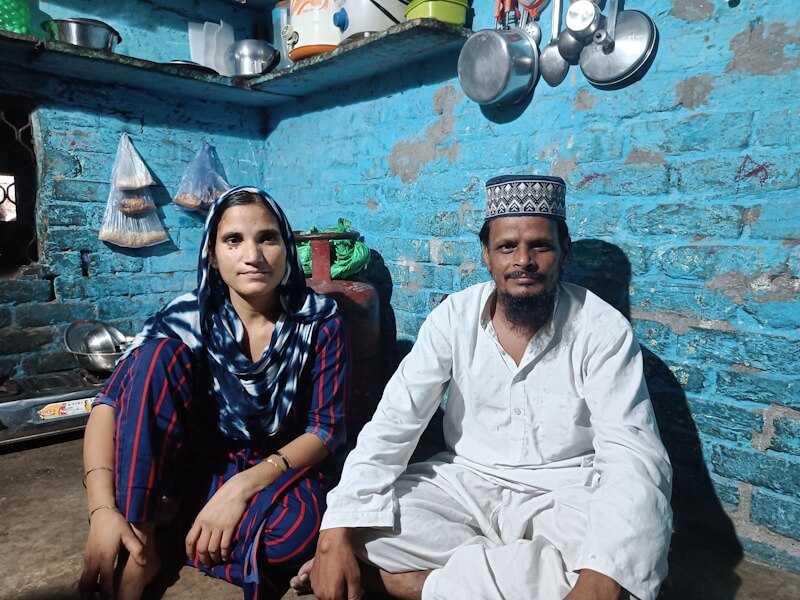
Jamila’s experience in Delhi’s Seemapuri is certainly not unique. In the city itself, similar settlements and slums, all densely-populated and poorly-serviced in terms of amenities, are the same – houses unbearably hot even at night, disrupted sleep, bodies and minds not rested enough to take on the day-time high temperatures[1] which on May 15 crossed 40 degrees Celsius and on May 19 shockingly touched 45.1 degree Celsius. The night readings have been between 31.9[2] and 32.4 degrees Celsius[3] through May – higher than average. Jafreen in Sunder Nagari, East Delhi, rues, “Bacche bilbila rahe hain garmi ke wajah se (Children are so restless in this heat).”
This phenomenon of unusually warm nights, rising night-time temperatures, and declining differences between day and night temperatures is not limited to Delhi. It is seen across India’s cities. On May 25, IMD issued warnings[4] of unusually and hazardous warm nights over Madhya Pradesh, Odisha, Telangana, Uttar Pradesh and parts of Maharashtra. Nights became warmer[5] across 141 cities by an average of 0.53 degrees Celsius every decade between 2003 and 2020. Not surprisingly, researchers found that urbanisation was responsible for 60 percent of the warming trend, especially in Tier-2 cities.
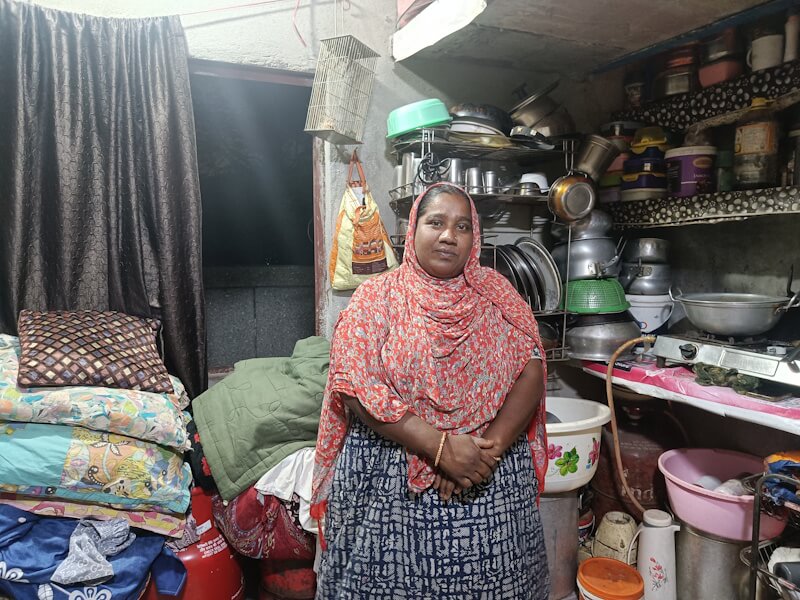
Photo: Ankita Dhar Karmakar
Mumbai’s[6] nights have turned warmer too; and so have Chennai’s. An analysis of the Indian Meteorological Department data by the Council on Energy, Environment and Water (CEEW) showed that ‘unusually warm nights’ in a year more than doubled – from 12 to 26 a year – between 1981-2010 and 2011-2024. In Chennai’s low- and middle-income houses, temperatures[7] often stayed above 34 degrees Celsius hours after sunset and rarely dropped below 31 degrees Celsius.
Unusually warm nights, according to the IMD, are defined as those with night-time minimum temperatures 4.5 to 6.4 degrees Celsius above normal after a severely hot day that registers around or above 40 degrees Celsius.
Night heat is real, urgent. Who bears the cost?
It’s no longer just the brutal day-time heat – and declared heat waves – that’s a public health hazard but also elevated temperatures during nights when the body and mind were meant to recover from the day’s heat stress. Yet, India’s heat management – from Heat Action Plans and government advisories to mitigation measures and on-ground relief like cooling shelters or water kiosks – focus on day-time heat. These show enormous gaps and apathy in implementation but some plans and protocols exist on paper.
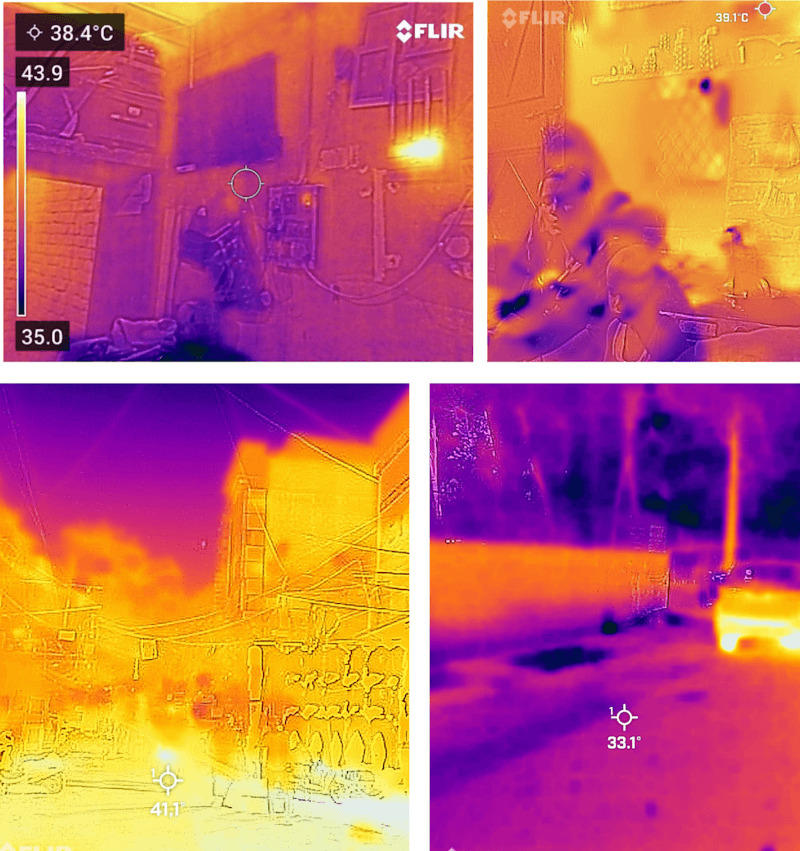
Night heat is yet to make its presence felt in planning documents, government policies, at the ubiquitous heat convenings and workshops, and in advisories. If heat stress has proven to be unequal among people based on their class, types of work, income, caste and gender, then night heat makes the inequality worse. They suffer a double whammy – on the one hand, the night temperature remains high while, on the other hand, most of them are condemned to homes that cannot be cooled enough. They cannot rest. In Jamila’s room, our measurement in mid-May showed night temperature a high 38.4 degrees Celsius at 9 pm; Jafreen’s was worse that night at 39.1 degrees Celsius. Combined with humidity, their bodies would have felt the heat around 42-43 degrees Celsius. Jafreen wakes up so exhausted that she is unable to do daily domestic chores.
As Apekshita Varshney, founder of non-profit Heat Watch told Question of Cities, “Hot nights in cities are up by 32 percent over the last decade. Despite this, most Heat Action Plans remain focused on day-time heatwaves; studies show they lack night-specific thresholds, alerts and response systems even though warm nights prevent physiological recovery from heat stress.”
The burden of rising night heat, like other extreme climatic events, is falling on the marginalised across India’s cities and unequally on some cities than others. People’s access to cooling, both during the day and night, is a matrix of their purchasing power and the availability of cooling measures – there were reports last year of a man in Delhi dying[8] in his slum room that lacked even a fan. Air conditioners, air coolers, tree-lined neighbourhoods, large homes with good ventilation, access to open and green spaces, electricity connections are all determined by affordability; even adequate hydration becomes a question of affordability for outdoor workers.
Cities warming up and heat waves being declared can no longer be about air or day-time temperatures alone. Rising and higher-than-average night temperatures are the silent heat crisis – and the response to this cannot only be individual, it has to be institutional, about how cities are planned and built, what proportion of natural areas are conserved, and how the ones building and keeping cities running live in them. One of the leading causes for heat spikes in cities is the Urban Heat Island effect (UHI), which is higher temperatures in a city than its surrounding areas, by three to four degrees[9] Celsius, caused by increased concretisation that radiates heat through the day and traps heat which is released through the night.
With a lack of robust nation-wide systems to record or track heat-related illnesses in people and the National Disaster Management Authority dragging its feet on adding heatwaves to the list of notified disasters in India, night heat is literally no one’s priority. As India’s cities expand rapidly, informal workers and people in informal settlements are condemned to cramped and hot homes at nights – and poor health. Which bodies bear this cost of urbanisation is the real question.
The dark side of hot nights
The unequal city and building design show in Jamila’s neighbourhood of Seemapuri where many of Delhi’s waste pickers live. There are hardly any green open spaces here offering a respite from the heat or allowing the area to cool down; tiny flats are stacked on top of each other like Lego blocks; buildings have hardly any space between them shutting out light and ventilation; the materials used do not help to cool the houses; and piles of jute sacks with collected waste lie across the settlement trapping the heat and increasing the temperature further.
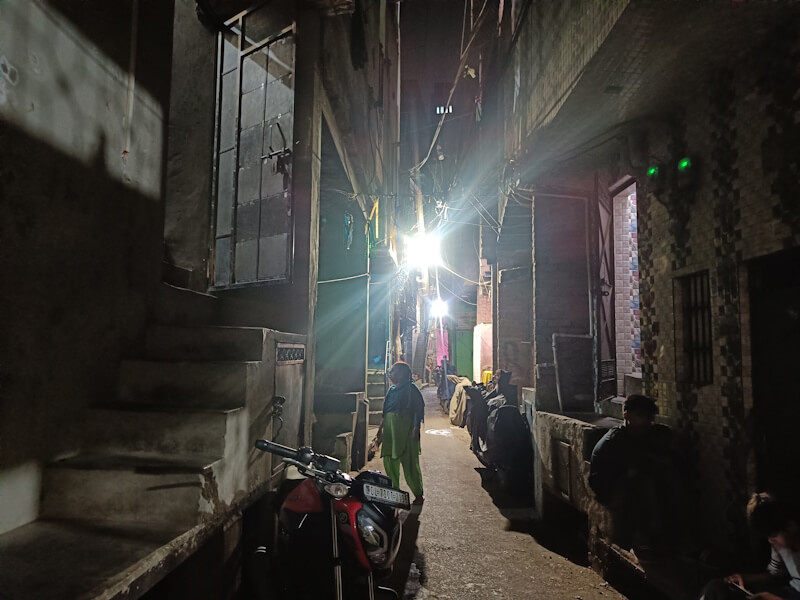
Photo: Ankita Dhar Karmakar
What the hotter nights have stolen from residents here is sleep. Like many others I met, Jarina who is also a waste picker, said, “Garmi ke wajah se bechaini aur ghabrahat bhi hoti hain (The heat causes uneasiness and anxiety too).” Jarina suffers from diabetes and thyroid issues, and has incessant fevers. Her medical issues worsen with the heat, she adds. Sleeping in the open might have brought relief but it is not an option for her. “My children are young and I am a single woman. It’s unsafe,” she rued. Waste pickers tire from climbing floors in buildings to collect waste; they are mostly not allowed to use elevators. Skipping work due to heat stress means loss of pay for the day.
Serious heat-related cases are reflecting in Delhi’s hospitals. On May 22, Ram Manohar Lohia Hospital reported[10] its first two heatstroke cases of the season. Doctors at Indraprastha Apollo Hospital said[11] they have seen a rise in cases of patients with dehydration, headaches, cramps and rashes. Dr Nikita Agarwal, a resident doctor at Lok Nayak Hospital, Delhi, says that May has seen a rise in the footfall of heat-affected patients in the Emergency Ward. “Most are informal workers, vendors who sit in the sun or walk around in the heat,” she says. Dr Amitav Mohanty, Head of Internal Medicine at Apollo Hospital Bhubaneswar, adds that pregnant women and immunocompromised patients face greater risks during extreme heat.
Last summer, HeatWatch[12] reported at least 84 heatstroke deaths in India – mostly of the marginalised but their kin cannot claim compensation because extreme heat is not a notified disaster. Globally,[13] heat-related illnesses are ranked from less or more serious as heat stress, heat cramps, heat exhaustion and heat stroke, each calling for a time-sensitive and adequate response.
When night heat rises and sleep is disturbed, the body cannot recover from daytime heat stress or exhaustion, especially among outdoor workers and those in informal housing; heat stress, doctors say, can rapidly descend into heat strokes. But even heat exhaustion leaves an impact; their ability to work declines and wages drop.[14] To make up for lost wages, many work longer hours on other days, as Jarina and Jamila do. This is true for ASHA workers and garment workers.[15] Gig workers[16] and construction workers have it no better. Yet, none of them have a seat at the planning table or even a voice in how their cities should be built.
Given all this, heat can no longer be discussed in merely meteorological terms; it is a clear and present environmental crisis, a public health emergency, and an urban planning challenge.
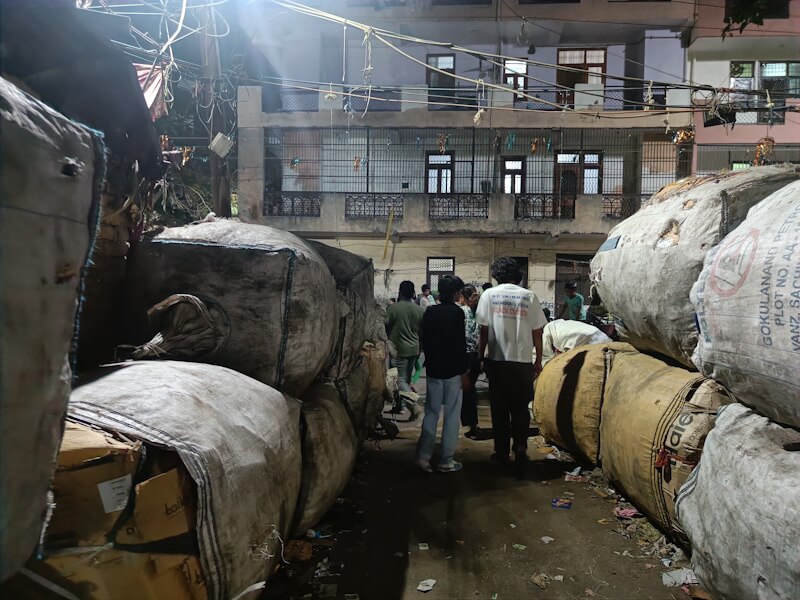
Photo: Ankita Dhar Karmakar
How unequal the night heat
A 2025 study[17] by Artha Global showed, among other things, that a rise in green cover between 3-11 percent lowered the experienced heat by one degree Celsius. We saw this unfold as we trekked, after Seemapuri and Sunder Nagri, posh neighbourhoods in south Delhi like Safdarjung Development Area (SDA) and Hauz Khas with their gated societies, low density, wide open layouts, dense tree cover, parks and open spaces. We used the same thermal camera. In SDA, the surface temperature of roads was between 33 and 36 degrees Celsius; in Sunder Nagri, it was between 39 and 41 degrees Celsius.
Around 36 degrees Celsius is hot too but the SDA residents are better equipped to deal with it than Sunder Nagri residents with 41 degrees Celsius. In another ground-check, India Today compared[18] areas, between April 1 and May 16, and found the average land surface temperature was 37 degrees Celsius in Vasant Kunj but nearly 44 degrees Celsius around the same time in Mahipalpur.
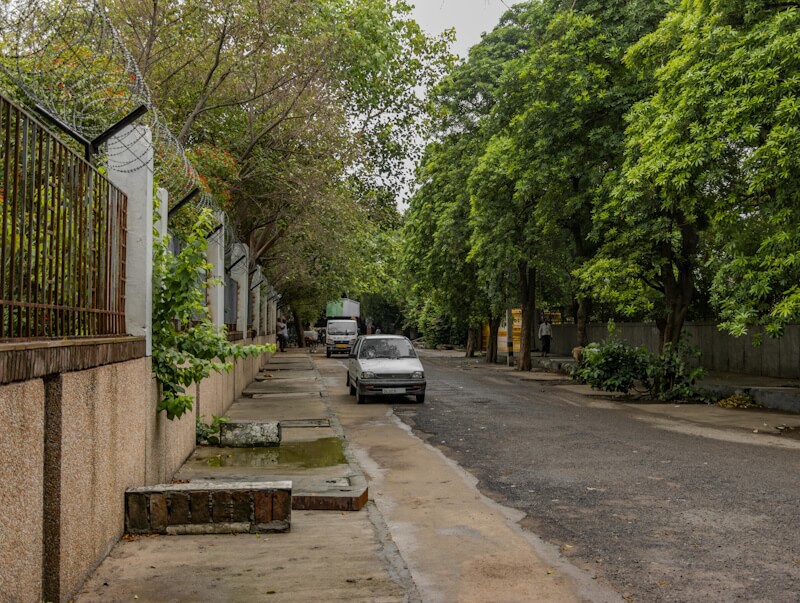
Photo: Pexels
Given the heat metrics, including at night, people’s time-tested and traditional cooling methods yield little relief. In Sunder Nagri, Shahana, a home-based worker who stitches shiny beads on frocks, is forced to work outside her one-room rented home. She recalls that it was equally hot in Uttar Pradesh’s Badaun, where she hails from, but there were more open spaces: “Raat ko charpai pe baith jaate the, chatt pe jaate the, gappe marte the, waqt kat jaata tha,” (We would sit on a cot on the terrace at night, time flew as we chatted).”
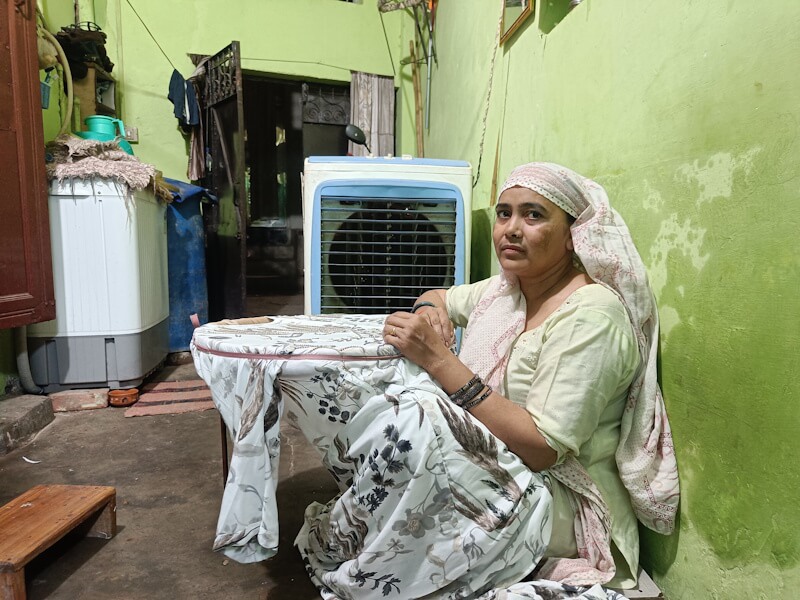
Photo: Ankita Dhar Karmakar
Ways forward
While more than 130 cities[19] in India have Heat Action Plans, experts say they remain guiding documents with no statutory backing or mandated power of implementation. Even if they did, night heat must be made an important aspect of heat management in every city and state, they add. “Some Plans like Delhi’s mention night shelters but without clear triggers, standards or enforcement,” says Varshney, “HAPs must move beyond daytime metrics and incorporate night-specific responses.”
Fundamentally, experts call for recognition of night heat as a separate but connected issue to day heat and, therefore, layered mitigation strategies. This must begin at the planning stage itself where Development Plans or Master Plans have heat mapping (besides flood mapping) and a separate night heat mapping for the city. Also, HAPs that do include night heat have poor implementation; HAPs are usually city-level documents while evidence shows that heat and floods are experienced differently across a city. “The biggest challenge is that most plans are treated as seasonal advisory documents rather than implementation frameworks…there’s little institutional accountability for reducing heat risk on the ground,” points out Aakiz Farooq, Climate and Energy Campaigner, Greenpeace India.
The Delhi government’s Heat Wave Action Plan of 2026[20] promises a network of cooling zones, shaded spaces with fans, coolers, drinking water and ORS packets. However, in a city of 2.3 crore,[21] only one[22] such cooling zone exists in Jama Masjid. “But these Plans do not have much on night heat thresholds, hot-night alerts, targeted protection for people sleeping in heat-stressed homes, or systematic monitoring of indoor night temperatures,” says Farooq. Adds Ruhie Kumar, co-founder of Heatwave Action Coalition, “While Delhi and Thane HAPs mention night heat and cooling infrastructure, the rapidity of real estate construction hardly leaves any green or open space for solutions.”
For millions like Jamila, the Plans matter little, so do terminologies like night heat and unusually warm nights. They need cooler nights at home – and sleep.
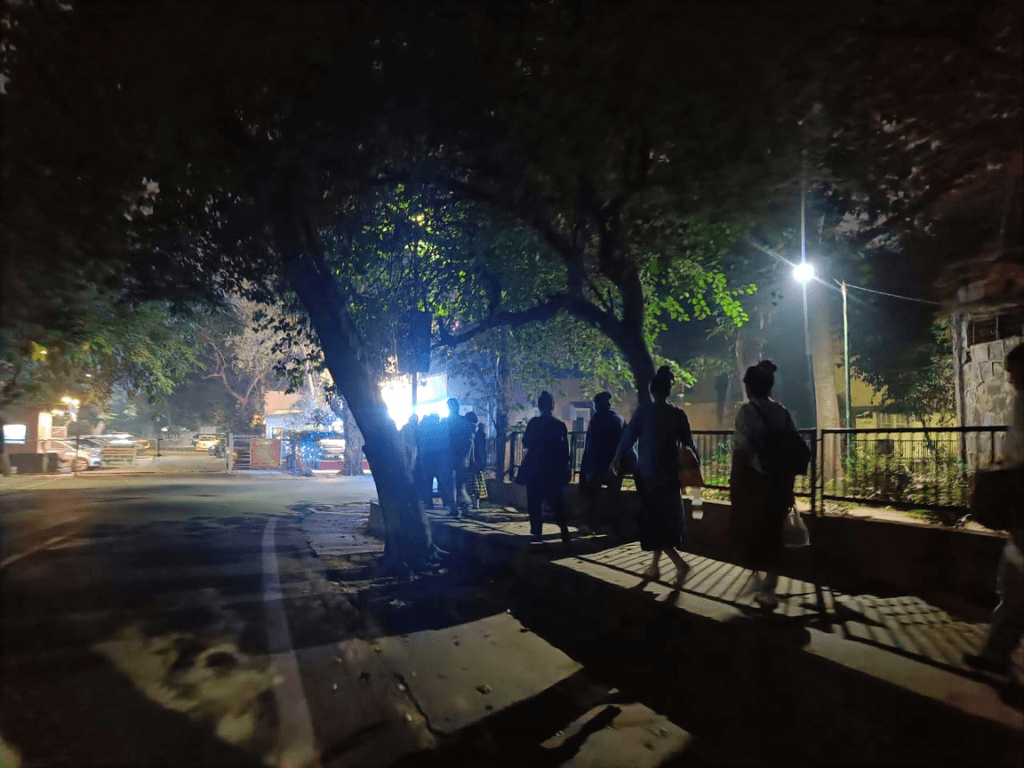
Cover Photo: A group of women walking at night in Sarita Vihar. Credit: QoC File
Ankita Dhar Karmakar, Multimedia Journalist and Social Media in-charge in Question of Cities, has reported and written at the intersection of gender, cities, and human rights, among other themes. Her work has been featured in several digital publications, national and international. She is the recipient of the 4th South Asia Laadli Media & Advertising Award For Gender Sensitivity and the 14th Laadli Media & Advertising Award For Gender Sensitivity. She holds a Master’s degree in English Literature from Ambedkar University, New Delhi.