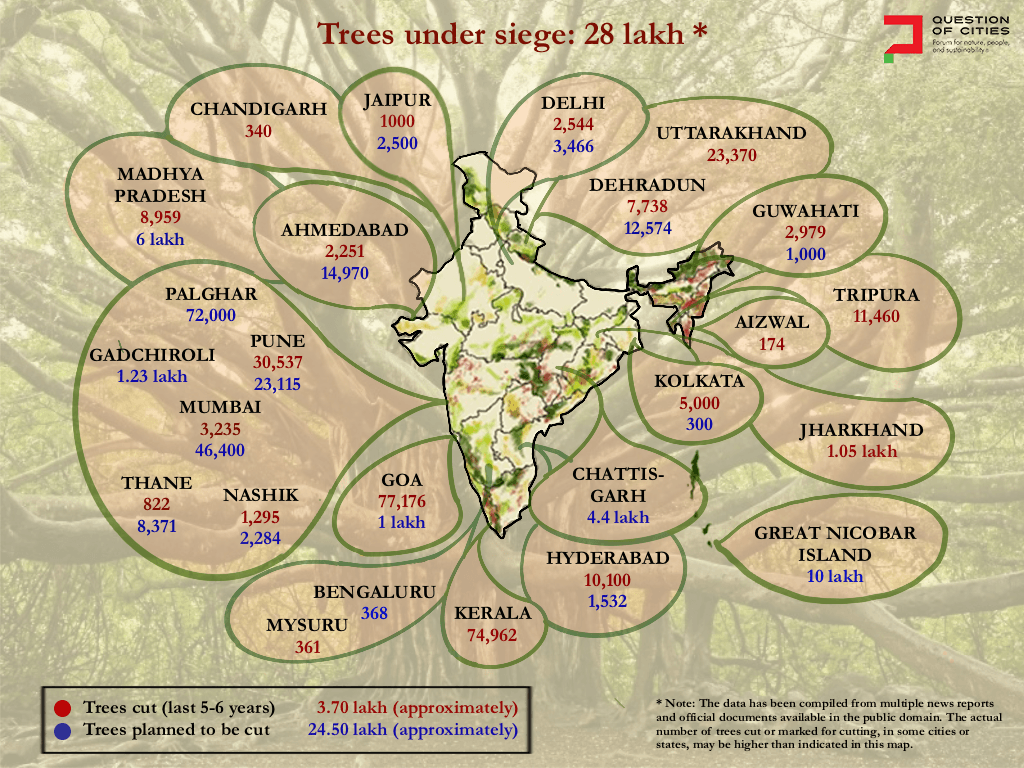

In the annals of India’s history, this era will rank as one of the most brutal, deliberate and short-sighted approaches to natural areas, especially trees, forests and water bodies. From the dense forests of Hasdeo Arand[1] in the heart of the country to the pristine forests of the Great Nicobar island,[2] across cities from Mumbai[3] and Jaipur[4] to Delhi[5] and Hyderabad[6], Guwahati[7] and Dehradun[8] and beyond, trees are being cut with no thought of tomorrow.
Acres and acres of tree covers are being hacked, ironically, with the permission of governments and the courts. Hundreds and thousands of trees are marked with numbers – like prisoners in fascist regimes numbered for the gas chambers – for the axe to fall. In the Great Nicobar, the forest area equivalent to nearly 38 percent of Mumbai would be wiped out by one project.
Simply put, India is at war with its trees and forests. An all-out war in the name of infrastructure projects, urban development, energy security and any phrase that makes the mass killing of trees look acceptable – even necessary. This war cannot end well for us or for generations to come.
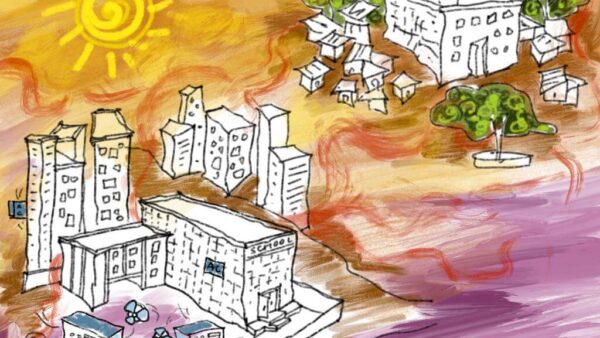
Before the future arrives, in 2026 itself, the map of India has shown up in various shades of deep orange to a frightening red indicating extreme heat. More than 90 of the world’s 100 hottest cities[9] were listed in India earlier this month, a dubious distinction by itself.
Recent research[10] that includes several Indian cities projects that the mean urban temperatures may rise by an additional 45 percent compared to surrounding rural areas. India’s cities, warmer than earlier, are set to get hotter than ever. Delhi-NCR, Mumbai-MMR, Chennai, all. Night temperatures in Ahmedabad were nearly 4 degrees Celsius[11] higher than surrounding green or open areas. Hyderabad has registered above 40 degrees Celsius[12] on several days this summer with localised spikes up to 45 degrees Celsius. Goa – everyone’s favourite cool destination – consistently showed 36 degrees Celsius with a feels-like temperature touching an alarming 47 degrees Celsius.[13]
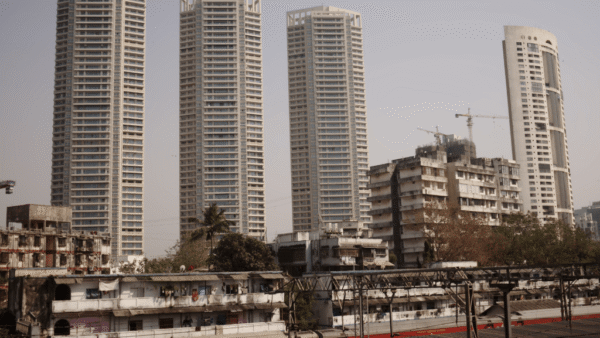
In every city, rapid urbanisation has claimed tens of hundreds of trees – a staggering 54,176 trees[14] were hacked down in 2021 for Goa’s Mopa international airport alone – and were replaced with concrete structures and glass surfaces that trap heat, and a glut of air-conditioners that emit more heat. The term Urban Heat Island (UHI) has become a part of people’s conversations now.
In virtually every city, people have understood the relationship between the unprecedented loss of trees and the rising heat, besides worsening air pollution and related issues. Whether in Sijimali-Kantamal in Odisha’s forests where tribals put up a spirited fight,[15] in Mumbai where 45,675 of 60,000 mangroves are ear-marked for felling[16] or Pune’s ill-advised Mula-Mutha riverfront project which could devour anywhere from 3,110 to 22,150 trees[17] by the time it is completed, people have taken up cudgels for trees and forests. The protests against the felling of nearly 2,000 trees in Hyderabad’s 390-acre KBR National Park[18] for seven flyovers and underpasses even saw FIRs being filed against 10 activists[19] this week.
People of all persuasions and backgrounds, people with little means and time, educated or not, have all understood the significance of trees and forests – in their lives, in cities, and for the balance in nature. They know that more trees mean cooler neighbourhoods, cleaner air, less flooding in the monsoon, richer biodiversity, and improved quality of life for many. Mature and ancient trees, they understand, are the living heritage of cities, old and pristine forests are nature’s balm for human excesses.
Because they understand, they have mounted repeated and ongoing agitations in the face of all odds and police crackdowns, sometimes engaging with authorities across the room, and at other times, facing them on the ground. These need to be mass movements but it cannot be denied that, where trees and forests are threatened, the vibrant movements are the only guardrail.
If people get it, why don’t governments and courts?
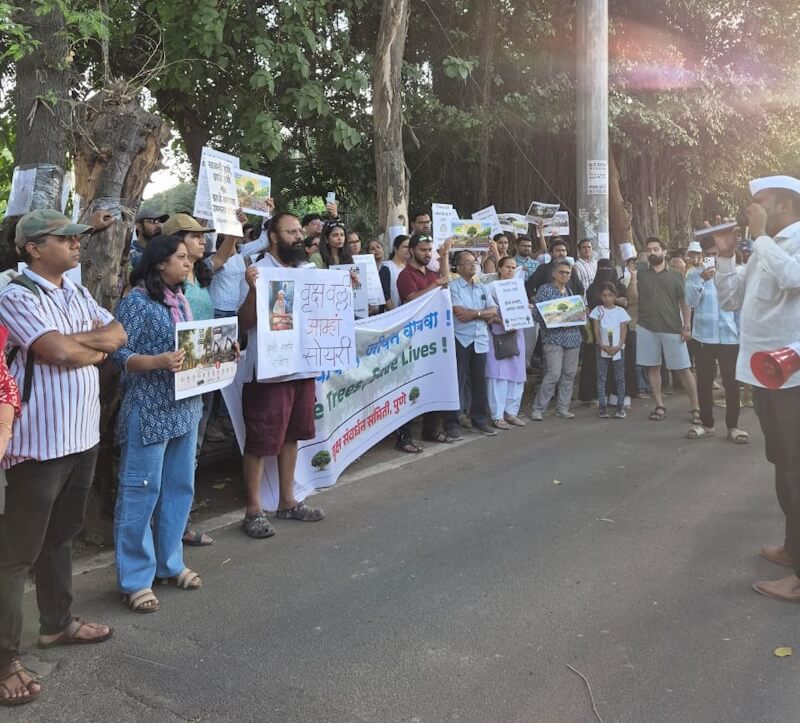
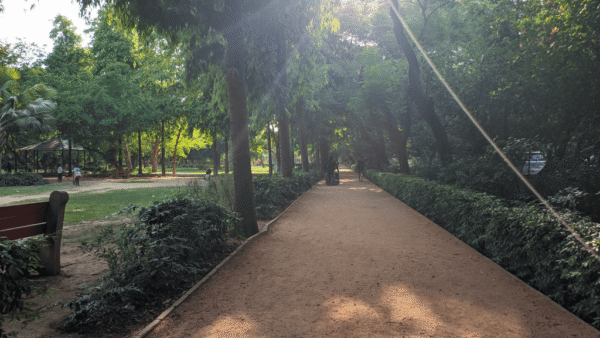
Photo: Damini Mahajan
Calling out governments and the courts
Why are governments planning mega projects – from transhipment terminal and airport in the Great Nicobar to fintech park and PM Unity Mall in Jaipur’s Dol ka Badh – and issuing permissions left-right-centre for felling trees and entire forests? When activists engage with officials of the concerned Tree Authority or municipal departments about permissions, there are no cogent answers whether in Pune or Dehradun or Hyderabad.
There is not a single central legislation for the protection of trees on the lines of laws protecting forests (Forest Conservation Act)[20], the environment (Environment Protection Act, 1986),[21] and wildlife (The Wildlife Protection Act, 1972).[22] The law to protect trees is in the domain of states; many have enacted it, a few have not. There’s the Maharashtra (Urban Areas) Protection and Preservation of Trees Act of 1975[23], the Karnataka Preservation of Trees Act (1976)[24], the Uttar Pradesh Protection of Trees in Rural and Hill Areas Act (1976)[25], the Goa, Daman and Diu Preservation of Trees Act (1984)[26] and the Delhi Preservation of Trees Act (1994)[27]
Even when the law exists, the lacuna allows tree felling. The lacuna is in the very structure. For instance, Section 8 of the Maharashtra Act requires a written application to cut a tree; the application must include a description of the tree with site details and justification for its removal, the Tree Officer then conducts a public hearing besides physically inspection, and if a significant number of trees are to be cut the application must include alternative design plans.
Activists in Pune have been vocal about the last part; if the road widening, metro expansion and riverfront development are slated to devour thousands of trees, the law requires that alternative designs with fewer trees cut are provided, they argue. The Tree Officer did not demand these nor had an answer. Even if the Officer were to raise objections, the power structure is such that he/she comes into the picture after the project has been approved at multiple levels, including sometimes by the Chief Minister, leaving little room for dissent. All that’s left to do is rubber-stamp the approval.
In every city that Question of Cities studied, the Tree Authority or Tree Officer has been, ironically, clearing the path for trees to be felled instead of protecting them.
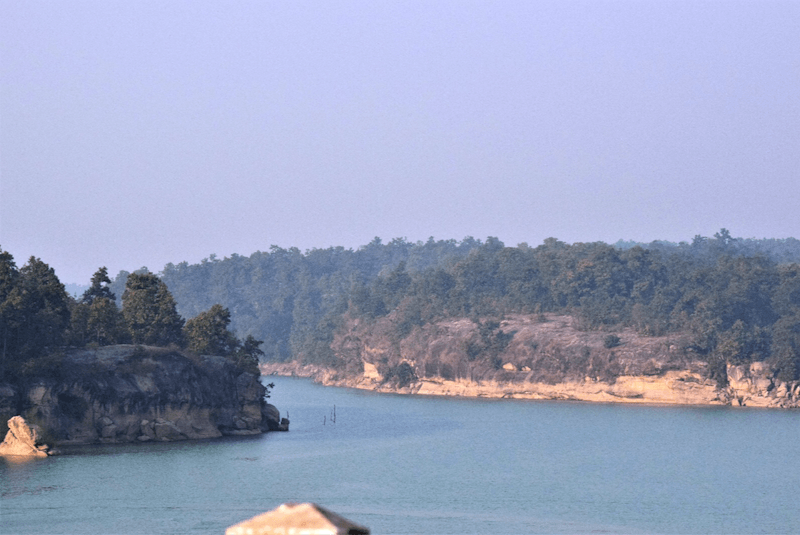
Photo: Wikimedia Commons
The judiciary can ideally provide the democratic check-and-balance. But India’s courts appear to be mostly back the tree-felling and forest-clearing, largely accepting incomplete or incorrect Environmental Impact Assessment reports from project authorities, only occasionally rising to protect the Aravallis or another stretch somewhere.
Just this week, the Supreme Court questioned the credibility of tree protectors. In the plea against the expansion of the Pipavav port in Gujarat, a bench led by Chief Justice Surya Kant stated[28]: “You want to stall everything in the name of the environment…Show us one project where these environmentalists have said we welcome this.” With these few words, it undermined decades of jurisprudence that recognised environmental protection as a part of the constitutional Right to Life and virtually overturned the former CJI DY Chandrachud’s assertion[29] of Right to Environment.
Moreover, by disparagingly saying “green lobby,” the SC confirmed the wrong perception – widely held in governments, corporates, and sections of society – that people’s ecological scrutiny or opposition stalls or obstructs development. Nothing could be farther from the truth. The people standing up for trees are, in fact, doing the work of governments who fail to act as the custodians of natural wealth. They are not stalling development but asking basic questions – is this project essential, are there no other ways of executing it without sacrificing thousands of trees?
Occasionally, the courts have stood for trees. The Delhi HC recently stayed[30] tree pruning without appropriate permissions. The National Green Tribunal also recently pulled up officials in Barnala over illegal tree-felling.[31]
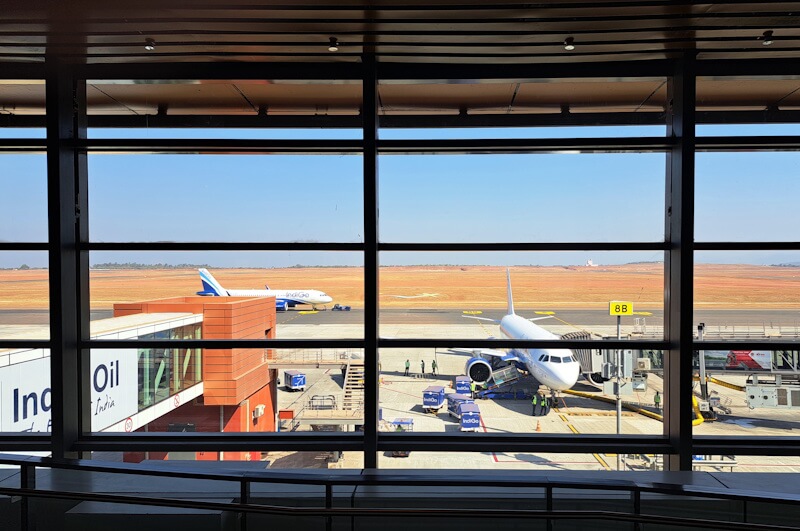
Photo: Wikimedia Commons
The different strokes for different folks’ approach is sometimes political too. The Leader of Opposition in the Lok Sabha, Rahul Gandhi (Congress) travelled all the way to the Great Nicobar to shoot videos[32] and register his protest at the cutting of the 130 square kilometres of the forest. The Union government scrambled to justify the project. However, the 2,000 trees in Hyderabad’s KBR are being cut under the watch of the Congress government.
It cannot be that governments and the courts are not aware of the importance of trees; they refuse to acknowledge the need to preserve trees. And governments are happy to push projects in ‘public interest’ or ‘strategic interest’ paving the way for private capital to run amuck at the cost of the environment. What is strategic about the commercial project in the Great Nicobar? What is the public interest in the Versova-Bhayander coastal road in Mumbai when less than 10 percent in the city use cars and barely half of this will use the road? What is the public interest of a fintech park in Jaipur’s Dol ka Badh? How did Goa’s Mopa airport or Dehradun’s new airport become public interest projects but the trees – 54,176 and 9,000 trees cut respectively – did not?
Dismal scene but ways forward
In A War Without End[33] author Ursula K. Le Guin wrote: “The exercise of imagination is dangerous to those who profit from the way things are because it has the power to show that the way things are is not permanent, not universal, not necessary”.
Is it possible to imagine India’s cities progress and offer a better quality of life to all without sacrificing hundreds and thousands of trees, or do the charade of transplanting them when studies have shown the survival rate is less 40 percent? Indeed, that would be or should be the only way forward.
Urbanisation does not have to mean mass destruction of forests, trees and water bodies. Questioning projects that come with heavy and unsustainable ecological costs does not mean stalling development; this economy-versus-ecology binary belongs to the 1980-90s. People fighting to save trees – or demand clean air – should not attract police criminal charges.
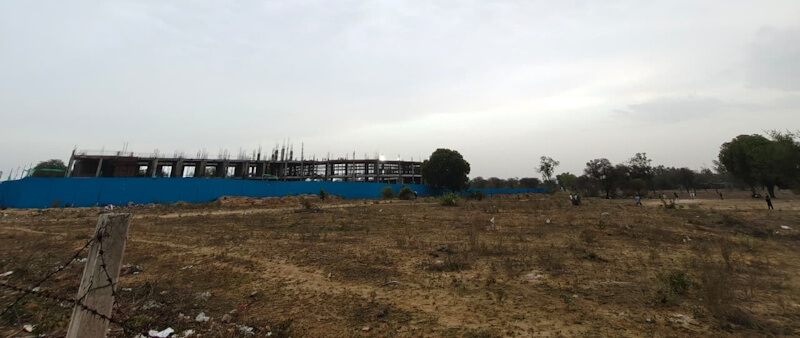
Photo: Shaurya Goyal
A beginning must be made to recognise, map and count the trees in every neighbourhood of a city, and this could well be the starting point of the new imagination. Understanding the role of trees everywhere and mangroves in coastal cities must be made mandatory for all project proponents; safeguarding these must be mandated into the Confidential Reports of bureaucrats who sign off on tree-felling. Essentially, people in power must be invested in saving – not cutting down – trees and forests.
This is a long haul from today’s realities in which Mumbai’s builders are allowed by rules to construct on every inch of a plot without leaving space for trees along its border, or the need for the PM Unity Mall in Jaipur is not cogently explained but it’s argued that the Dol ka Badh grew as a forest on government land left vacant for years.
India’s cities were not always like this – at war with their trees and forests. It does not have to be so. As temperatures rise and the number of hottest days in a year increase, cities should secure their tree cover to prevent heat stress and fatalities. A 2023 study by the World Resources Institute[34] pointed to a definitive relationship; almost 40 percent of the 6,700 urban heat deaths in Europe could have been prevented if cities increased tree cover to 30 percent of their land area.
Cities around the world have walked in the reverse direction – and are greener, healthier, cooler for it. Paris leads the charts. In barely a decade, under the imaginative Mayor Anne Hidalgo, it replaced busy concrete squares, including 2,500 square metres opposite the City Hall, with urban forests having trees 10 metres tall[35]; removed nearly 6,000 parking spots and replaced them with walking paths and trees; and plans to have 1,70,000 trees by 2030.
The 3-30-300 rule is fast gaining ground; three trees that you can see from home, 30 percent tree canopy cover in the neighborhood, and live within 300 metres of a green space. This April, New York City drew up a plan[36] to increase its canopy coverage to 30 percent by 2040. The plan includes planting more trees in heat-vulnerable areas, expanding tree coverage in public housing and streets, and adding shade to public spaces and bus stops. Other international cities too are greening themselves.
In Mumbai, local politicians are stringing up green cloth banners overhead to “provide cooling for the public” while Delhi government has put up “cooling zones at Red Fort[37] and other areas with cold towels on service. Cutting down massive numbers of trees, denuding vast areas of cities, and then providing “cooling stations” would be laughable if it were not so dystopian. Trees are life; as Sir Patrick Geddes, Scottish biologist and planner who worked in India, said, “By Leaves, We Live”.
Cover illustration: A map of the vast numbers of trees axed and to be cut across India. Illustration: Nikeita Saraf