
After years of uncertainty, Delhi finally has a new master plan[1]. The Draft Master Plan for Delhi 2041 was opened for public comment in June 2021 and the Delhi Development Authority cleared it in February 2023. However, it had not received final assent from the Central Government. Its successor, the Delhi Master Plan 2047, was notified in August 2026 with a proposed horizon aligned with the Government of India’s Viksit Bharat 2047[2] timeline.
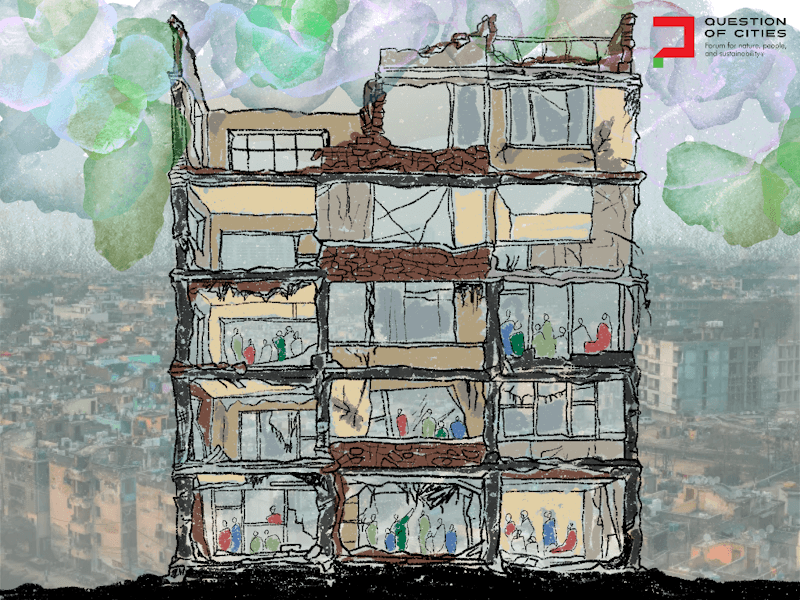
Within weeks of the notification, seven people died when a PG building collapsed in Satya Niketan[3]. Initial reports found that the floors and basement of this building were altered well beyond what was legally permissible. The area, like much of the city, had absorbed a large informal rental economy that the planning system has never quite accounted for. It raised uncomfortable questions about how urban planning actually operates in Delhi, and who it is built to serve. This essay looks at how the new Master Plan engages with the question of inclusion, specifically on informal housing and livelihoods.
The limits of public participation
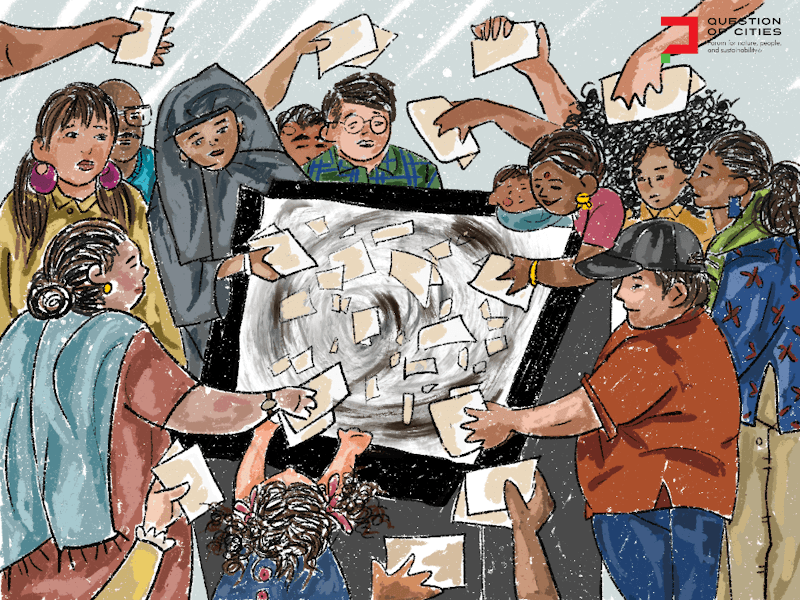
The Master Plan is the key instrument of urban planning in India. It carries the force of law and determines what activities are permitted where, governs land use, reserves land for public purposes, and sets building regulations. Like most major Indian cities, planning authority in Delhi rests with a bureaucratic Development Authority rather than the elected municipal government[4]. Under the Delhi Development Act, 1957[5], the DDA’s mandate is to “promote and secure the development of Delhi according to plan.” Since land falls outside the jurisdiction of the Government of Delhi, the DDA answers solely to the Central Government.
Section 10 of the DDA Act, 1957, requires the DDA to prepare a draft plan, publish it, and invite objections and suggestions. After considering these, it finalises the plan and submits it to the Central Government, which may approve it or send it back for a redraft. While preparing the Draft Master Plan for Delhi 2041[6] (DMP 2041), the DDA went further than the law mandates, holding consultations with select interest groups. A coalition of organisations, activists, academics, and community groups, organised as the Main Bhi Dilli campaign, worked to bring the concerns of informal workers and other marginalised groups into the plan[7] and contributed close to 25,000 of the roughly 34,000 objections and suggestions that the DDA received.
However, after the draft was cleared in 2023, there was no further public consultation. Instead, the MDP 2047 cited the consultations carried out, including public suggestions heard by a Board of Enquiry set up by the DDA. Feedback gathered at that stage for the DMP 2041 was treated as applicable to the new plan, since it has been technically framed as a modification of the earlier draft. The plan additionally cites consultation with experts and “continuous engagements” with civil society organisations, resident welfare associations, and citizens.
Under this approach though, public feedback operates within a black box. It is left to the discretion of planning authorities to decide what inputs, if any, merit consideration. At present, there are no mechanisms to ensure public feedback is actually incorporated into a final plan[8]. This model amounts to merely informing the public rather than consulting or engaging with them, and so falls toward the lower rungs of Arnstein’s “Ladder of Citizen Participation”[9] (1969). By depending entirely on officials’ willingness to engage with the feedback, public participation in itself is effectively rendered toothless.
The question of informal housing
One of the flagship propositions of DMP 2047 is the construction of 40 lakh new homes. This includes in-situ rehabilitation of slums and jhuggi-jhopri (JJ) clusters, as well as regeneration of unauthorised colonies. The stated goal is to offer safe, dignified, and affordable housing alongside adequate social infrastructure. The plan acknowledges the spatial connection between housing and employment, noting that 85 percent of the city’s population belongs to low- and middle-income segments. It also recognises the importance of rental housing, particularly for Delhi’s large migrant population.
The document links the proliferation of unauthorised colonies, slums, and dense urban villages to the rise of expensive formal housing. This is offered as justification for closing the housing supply gap, a task the private sector is expected to lead. The plan also concedes that existing resettlement measures have often failed, citing “issues of accessibility, lack of adequate services and poor quality of construction” in resettlement colonies.
On this basis, the DMP 2047 sets out a three-pronged housing strategy: (i) creating new housing stock, including affordable units; (ii) regenerating and upgrading existing housing areas; and (iii) promoting affordable rental housing. For unplanned settlements specifically, the approach differs by category. Unauthorised colonies are to see improved infrastructure, land pooling, and regularisation under the 2019 Property Rights Regulations[10], with regeneration schemes prepared by developers or resident associations. Urban villages are offered flexible area improvement plans developed in consultation with residents, in recognition that a top-down planning approach in these spaces have not been particularly effective thus far.
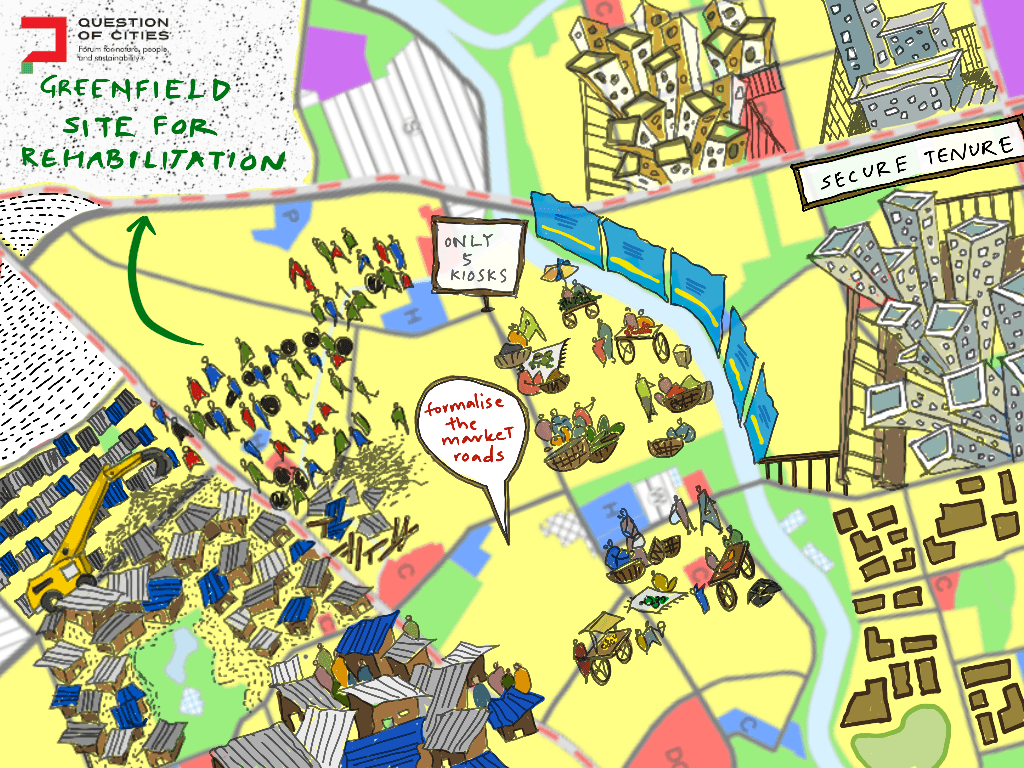
Amongst informal housing categories, JJ clusters and slums face the narrowest path. Only notified clusters qualify for in-situ rehabilitation while settlements on ecologically sensitive land, recreational areas, or railway safety zones are excluded outright. Where rehabilitation is not feasible, relocation or clubbing with other schemes is proposed, though the conditions for in-situ upgradation remain unspecified.
These provisions show a plan willing to recognise informality as a lasting feature of Delhi’s landscape instead of a problem to be planned out of existence. But recognition does not carry through evenly to remedy. The instruments on offer such as land pooling, regularisation, and upgradation are reserved largely for unauthorised colonies, home to Delhi’s lower-middle class. The poorest residents, in slums and JJ clusters, are offered only in-situ rehabilitation, one that has a thin record of success so far[11]. In effect, the Plan builds a hierarchy of ‘deservingness’ into its housing framework, one that perpetuates existing class divisions among informal housing.
Further, eligibility for in-situ rehabilitation is restricted to “notified” JJ clusters. The Delhi Urban Shelter Improvement Board (DUSIB) has identified 675 such clusters, but it remains unclear whether they are notified[12] under the DUSIB Act, 2010[13]. It leaves the door open to continued forced evictions, a go-to solution in Delhi: the city accounted for 2.8 lakh of India’s 5 lakh recorded evictions in 2023[14].
Recognition of informal livelihoods
The DMP 2047 treats education, skilling and employment as central to Delhi’s development, and explicitly includes the informal sector in this framing. Street vendors are to be accommodated through vending zones created by urban local bodies on the recommendation of Town Vending Committees, in line with the Street Vendors Act, 2014[15], with childcare and public conveniences specified for female workers. This marks progress given that vending zones tied explicitly to the Street Vendors Act were absent from the Draft Plan 2041.
Informal units more broadly are permitted across a range of sites, from shopping centres and government offices to parks, hospitals and bus terminals, each with a fixed cap on the number of units allowed. Informal waste workers are recognised through the Solid Waste Management Rules, 2026[16], with local bodies tasked with integrating them and ensuring safe working conditions. Engagement with waste pickers under the Solid Waste Management Rules and the acknowledgement of home-based work are rare for a Master Plan. The plan also draws a link between housing and livelihood, calling for more worker housing for informal sector employees. But the approach still relies heavily on hyper-specific quotas: five kiosks per hospital plot, five per 10,000 square metres of floor area in a wholesale market. The specificity risks imposing a rigid, top-down logic on livelihoods that are inherently dynamic.
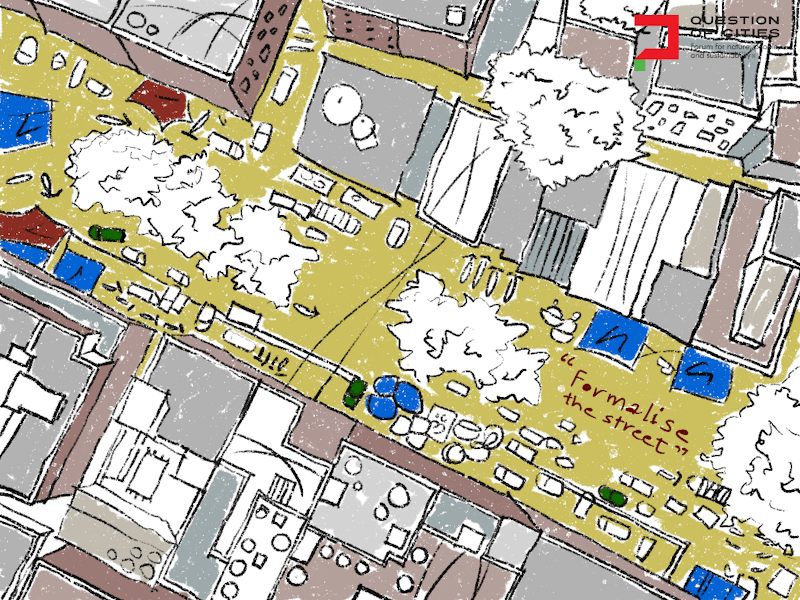
A further concern lies in the plan’s push for Transit Oriented Development. Local streets narrower than 12 metres are to be pedestrianised, with no mention of the informal units that may occupy them. Multi-utility zones are similarly framed around walkability first, calling for removal of “encroachment, illegal parking, unauthorised structures…on priority basis.” With a recent Supreme Court’s recent judgement stating safe footpaths to be a fundamental right[17] already intensifying anti-encroachment drives against vendors[18], this framing risks deepening the same vulnerabilities in the informal domain that the plan claims to address.
Conclusion
It is undeniable that the DMP 2047 addresses informal settlements and livelihoods to a larger extent than previous plans for Delhi, or other cities for that matter. It sets targets for affordable housing and recognises informality of housing and labour. However, several challenges remain.
For one, housing support narrows as need grows — unauthorised colonies get land pooling and regularisation, urban villages get flexible area improvement plans, while JJ clusters which are home to the poorest get only in-situ rehabilitation, with no ownership rights. A fair question is whether DMP 2021 has actually guided the city’s growth over two decades, or whether Delhi simply expanded despite it. This was never really settled before the DDA moved on to draft the next plan. The DMP 2047 risks the same fate, specifically on informal housing.
The document mentions local area plans and zonal plans, but does not relinquish control at the ward or neighbourhood level for participatory planning (as is recommended by relevant planning guidelines[19]). That allocation is folded into broader development control norms and land pooling schemes instead, with no specific commitment attached. In turn, the plan risks allowing existing forms of informal development to continue proliferating without addressing the larger issue of a lack of dignified housing spaces in the city.
The Satya Niketan collapse shows the cost of ignoring such planning gaps in Delhi. It follows a familiar pattern — where bylaws and safety provisions are ignored — as building owners know that students, migrants and informal workers have little choice but to accept these living arrangements. The official response was unfortunately all-too-predictable, in the form of demolitions, suspensions and committees that do little to address why people are pushed into such buildings in the first place.
The DMP 2047 is remarkable in some ways for how much of Delhi’s informality it acknowledges. Slums, unauthorised colonies, urban villages, vendors, waste workers and home-based workers all find a place but the recognition should extend further. Rehabilitation eligibility needs to widen beyond notified JJ clusters, so the poorest are not shut out by a definition the plan never clarifies. Land pooling and regularisation should apply consistently across all types of informal housing, beyond unauthorised colonies. Relocation should be a last resort, and should come with access to livelihoods and essential services such as water and sanitation. Pedestrianisation and redevelopment projects should require livelihood-impact assessments and consultations with the informal workers they affect.
Inclusive language is only the first step. The harder test is whether the plan can be enforced and matched with what happens on the ground. Earlier Master Plans give little reason for confidence. The 2021 plan promised EWS housing which never arrived at scale; bastis grew in the gap. Too often, a Master Plan works as a “negative” legal instrument, used against those who disobey it and who tend to be selectively targeted.
It needs to work as a “positive” instrument that helps everyone, especially the marginalised, to pursue their social and economic goals. This calls for clear inclusion targets such as a defined share of land for EWS housing, along with transparent implementation and accessible grievance mechanisms. Without these, the DMP 2047 risks leaving its recognition of informality on paper while existing inequalities deepen through exclusionary planning decisions.
As Delhi moves toward its Viksit Bharat vision, a large share of the city continues to live and work informally, often in settlements the plan barely recognises. While the Census 2011 put only slums at about 15.7 percent of the population, wider definitions of informal settlements that include the JJ clusters, resettlement colonies and unauthorised colonies places this at 28 percent, or some even higher at around 40 percent, all facing significant “shelter poverty” as economists Abhijit Banerjee, Rohini Pande and Michael Walton termed it.[20] Any serious attempt at planning Delhi’s future needs to place their claims to the city at its centre, rather than respond to them only when a crisis forces the issue.
Mathew Idiculla is an independent legal consultant, and a Doctoral Scholar and Teaching Fellow at the Faculty of Law & Justice, University of New South Wales (UNSW), Sydney. His interests lie in democracy, federalism, and constitutionalism, particularly in the context of cities and local governance. For over 14 years, he has engaged with urban law and policy through academic research, legal consultancy, policy engagement, public advocacy, and popular writing.
Shoubhik Chatterjee is a student of Master’s in Public Policy at National Law School of India University, Bengaluru. Inquisitive about questions of spatial inequalities in our cityscapes, his work focuses on sustainable mobility, affordable urban housing and informal livelihoods.
All illustrations: Nikeita Saraf