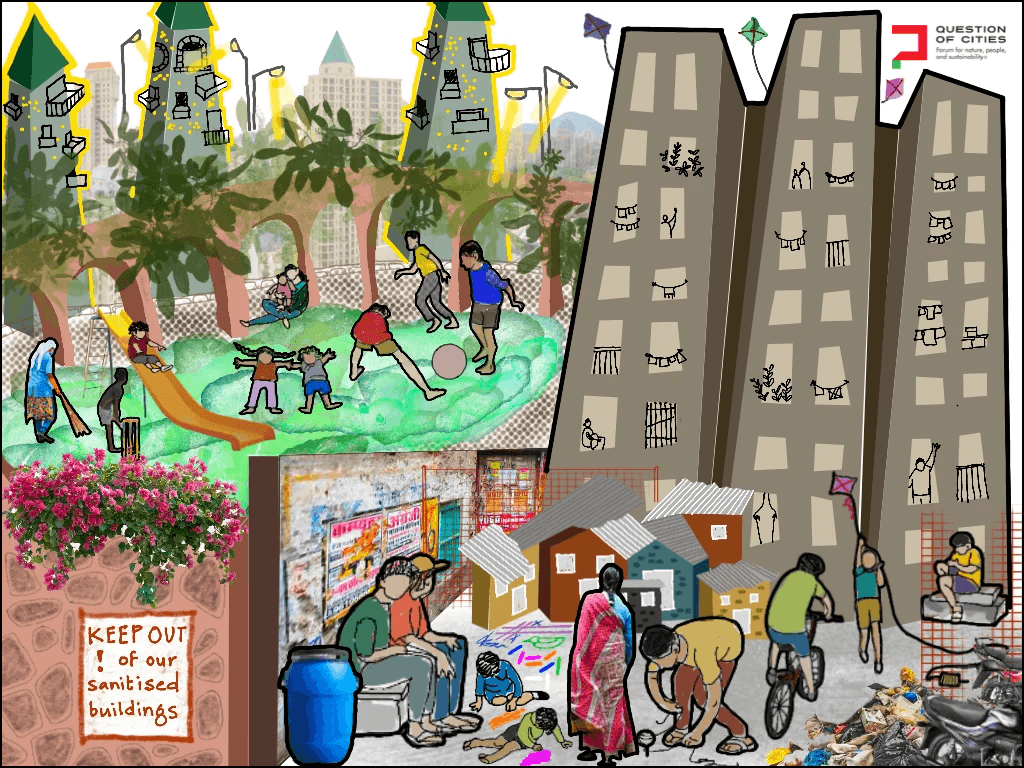

If cities are seen as amalgamations of neighbourhoods and localities, then it is not difficult to see which ones amongst them are inclusive and which are exclusive. Some parts of cities are planned or designed so that they house and nurture wealth, class and exclusivity to a point where people-like-them (the others, not of that class and exclusive status) are unwelcome. This is a negation of the oft-repeated assertion that cities and towns are sites of transformation and equality, popularised by economist and Dalit icon Dr BR Ambedkar in the Indian context who exhorted fellow Dalits to leave the “narrow-minded villages”.
Studies have shown that spatial segregation persists in almost all major cities and towns. It may well have deepened. But segregation is not limited to wealth or caste alone; religious-based segregation in cities was pointed out back in 2002 by urban scholar Prof. Darshana Mahadevia. The disadvantaged tend to be concentrated in certain geographies of cities and towns, characterised by sub-par living conditions, slum housing, high densities, and poor or absent basic civic services. But even in well-serviced areas, certain cohorts like children and the physically challenged find urban spaces to be non-inclusive for play or day-to-day life respectively.
This curation of reports showcases the work done on this theme and the next steps that are possible to make cities less exclusionary, more inclusive.
On Call in a Burning City: How Extreme Heat Is Reshaping Women’s Platform Work in Delhi NCR
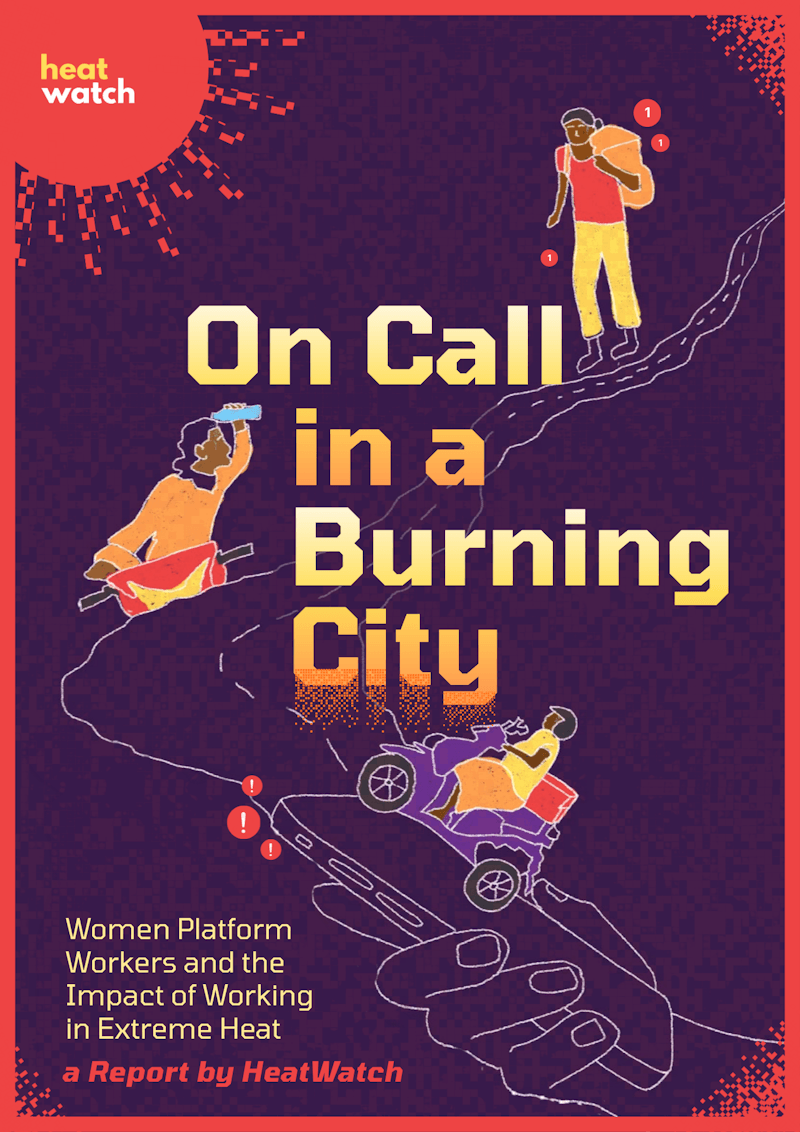
Delhi’s summers have grown longer, hotter, and more hazardous with each passing year. While everyone feels its brunt, outdoor workers are the most affected. Among them, women platform workers absorb the costs of extreme heat while being on the road, with little to no amenities to support their needs for water, rest or sanitation and no institutional protection. On Call in a Burning City, a new report by HeatWatch[1] in July 2026, brings home the point that for women in beauty services, domestic work, food delivery, e-commerce, and ride-hailing, heat is not just a climate issue but also a major labour rights, gender, health, and urban infrastructure crisis.
The methodology and report findings reflect on consultations with researchers, practitioners, and worker representatives, a baseline survey of 26 women before peak summer, a focus group discussion with beauty-platform workers, and a summer survey of 100 women across Delhi-NCR. While heat is at its peak during noon, the report captures heat exposure across the full working day, including travel between jobs, waiting for bookings, carrying equipment, and working inside customers’ homes where ventilation, water, cooling, and toilet access are uncertain. Along with these risks, there are also additional concerns over customer misbehavior, heating up of the phones, unpaid care responsibilities, mandatory synthetic or dark uniforms that worsen sweating, discomfort, and skin irritation, compounded by unsafe waiting spaces and limited access to toilets.
The findings pointed out how platforms work, usually projected to be flexible, are actually quite the opposite. App-based systems of booking allocation, ratings, incentives, cancellation rules, and customer expectations restrict workers’ ability to slow down, take a break, reject a distant task, or stop when they feel unwell. Basic facilities are also frequently unavailable – 27 percent of respondents said clean drinking water was hardly ever or never available, 43 percent said the same for toilets, 48 percent for rest spaces, and 51 percent for shaded seating.
As high as 71 percent women worked all seven days of the week during summer, an equal percentage reported a fall in income during summer, and 89 percent reported borrowing or delaying payment or cutting household expenditure to cope with summer-related financial pressures. The report has recommendations for governments and platforms for safer and more comfortable experiences of working like recognising heat as an occupational hazard, rolling back the “service in seven minutes”, and establishing gender-sensitive platform-worker hubs among others.
State of Play: Children’s Everyday Experiences of Play and the Right to Play in Maharashtra, India
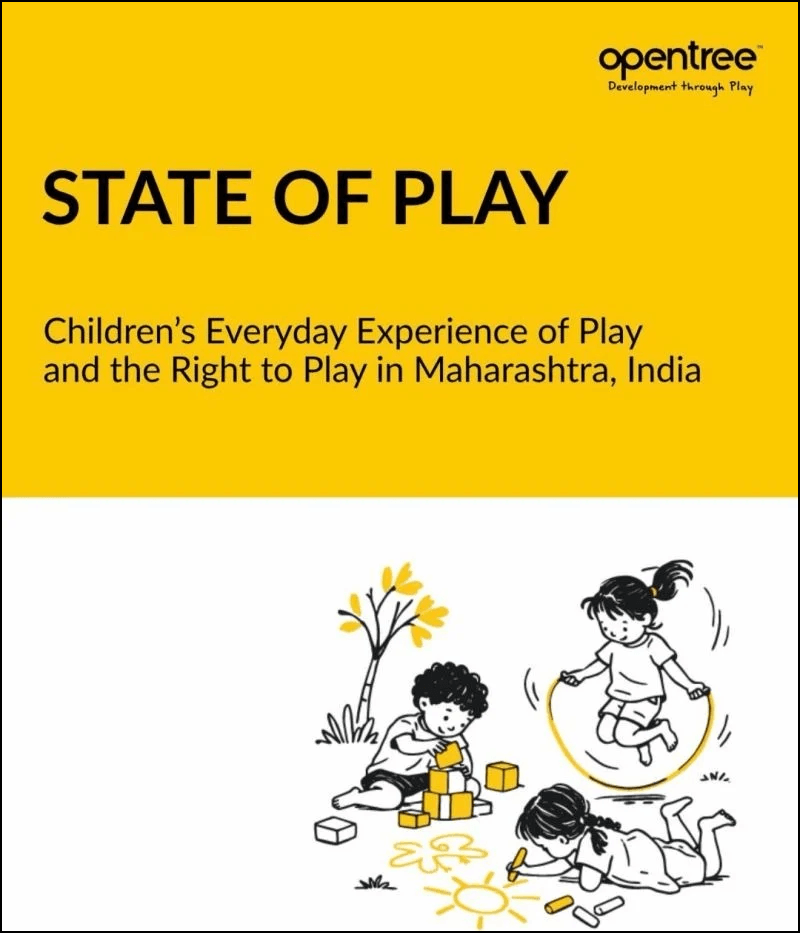
The State of Play: Children’s Everyday Experiences of Play and the Right to Play in Maharashtra, India report published in April 2026 by The Opentree Foundation[2] affirms that play is a language for a child to communicate and explore. Play is not only beneficial but, in principle, a child’s right and important for children’s well-being and development. The findings show that play is present in most children’s lives but is consistently restricted by age, gender, geography, and the pressures of adults.
The age x gender breakdown shows that older girls experience the sharpest reduction – about 35 percent of older girls play for less than an hour a day compared to around 14 percent of older boys. Older children, especially girls, experience reduced play time, more restrictions on where they can play, and greater conditionality linked to academics, safety concerns, and social norms. Instead of treating play as a single activity, the study examines it as an ecosystem shaped by access conditions, adult practices, and broader social and institutional structures. The findings are intended for organisations working on child development, education, or well-being that need grounded data rather than generalisations.
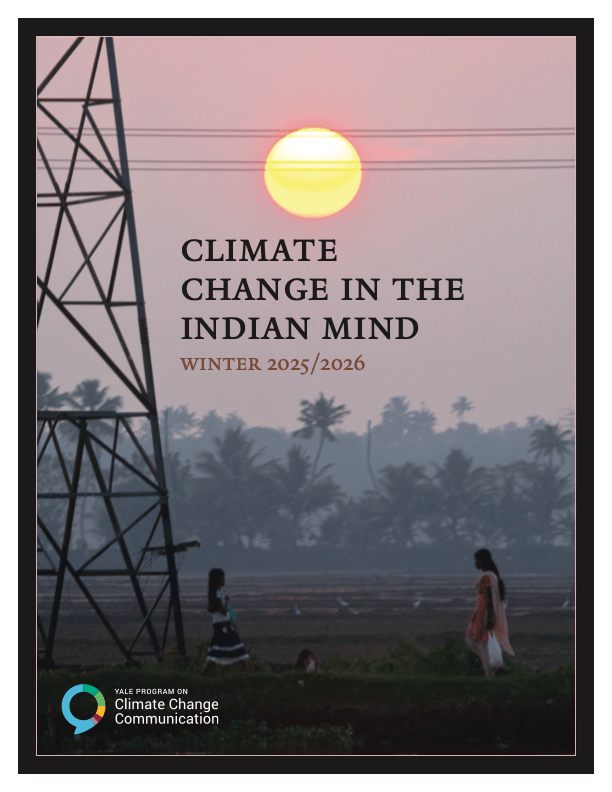
Climate change in the Indian mind, Winter 2025/2026
Heatwaves have intensified over the last four decades, with average summer maximum temperatures rising by approximately 1 degree Celsius between 1981 and 2020. Heatwave hotspots have expanded by about 1.5 times between 1981–2000 and 2001–2020, shifting from the Gangetic plains and central India to large parts of peninsular, eastern, western, and southeastern India.
The Yale Program on Climate Change Communication and the Centre for Voting Opinion & Trends in Election Research (CVoter)[3] conducted a nationally representative survey of 5,427 Indian adults to investigate current public climate change awareness, beliefs, attitudes, policy support, behaviour, and self-reported vulnerability to extreme weather events. The report, Climate change in the Indian mind, Winter 2025/2026 is based on their sixth nationally representative survey in India, conducted between December 2025 and February 2026, enabling them to track changes in public responses over time since the first study in 2011. Here are some of the findings:
- A large majority of Indians (84 percent) say they think global warming is happening
- 78 percent of Indians say the Government of India should be doing more to address global warming
- 86 percent favour the government’s commitment to reduce India’s carbon pollution to nearly zero by 2070
- 58 percent say transitioning from coal to wind and solar energy for electricity will decrease air pollution while 56 percent say doing so will increase jobs in India
- 82 percent favour banning the construction of new coal power plants, closing existing ones, and replacing them with solar and wind energy
The research is intended to contribute to both scientific and public understanding and dialogue about these issues and provide useful information for Indians working in the climate space.
Pathways to inclusion of waste pickers: Exploring various models from Indian cities
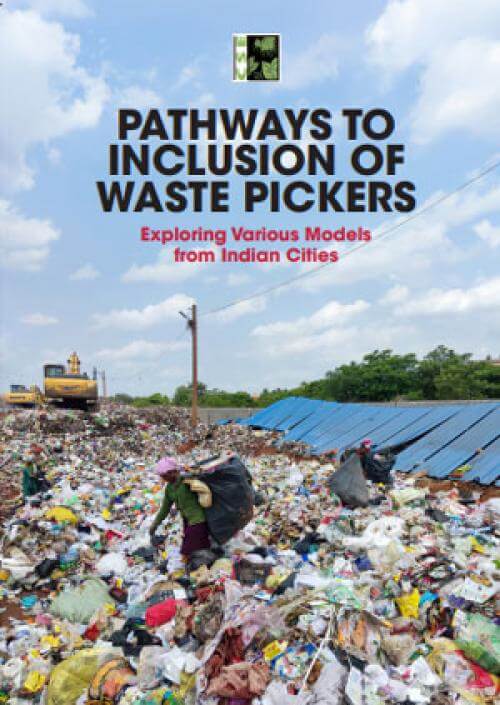
The report, Pathways to inclusion of waste pickers: Experiencing various models from Indian cities, published in August 2025 by the Centre for Science and Environment (CSE)[4] offers an in-depth exploration of diverse models for the inclusion of informal waste pickers in urban solid waste management systems across Indian cities, capturing a broad spectrum ranging from cooperative-led systems to Self Help Groups-operated units and formalised roles within the municipal system. Its key insights are that legal mandates under the Solid Waste Management Rules 2016 have not translated into actionable city-level policies. Identification of waste pickers remains inconsistent, and the most critical aspect for their livelihood—access to waste—continues to be denied.
The contribution of informal waste workers to global recycling efforts is often overlooked although they are responsible for recycling approximately 60 percent of all plastic materials worldwide. In 2016 alone, it was estimated that they collected around 27 million metric tonnes of plastic waste, diverting it from landfills and oceans. The study highlights that effective inclusion goes beyond formalisation, emphasising the need to preserve existing livelihoods while providing social security, dignity, and agency. Examining the current landscape, existing policies, and gaps within the system, the study highlights the scope and need for reforms, and presents practical and replicable examples that can serve as a reference for stakeholders, including urban local bodies and private practitioners.
A Place to Call Home: Access to Housing for Trans Persons in India
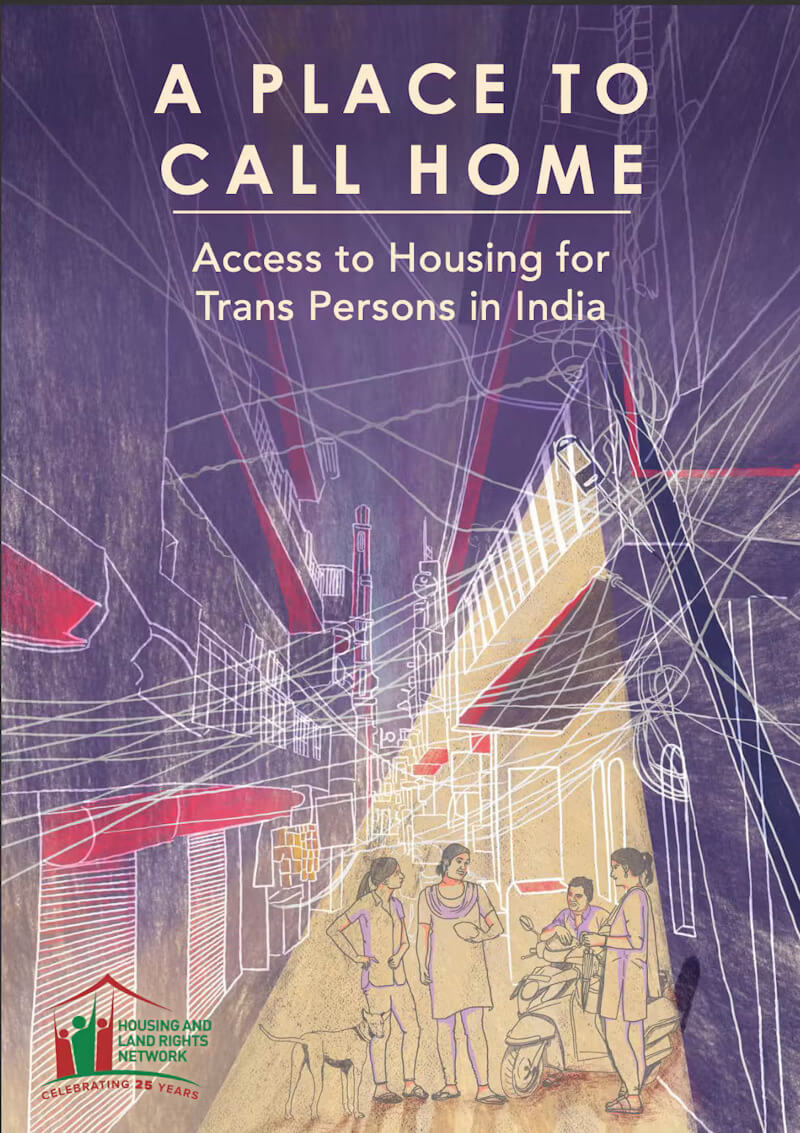
Transgender persons face multiple barriers and challenges in accessing housing, depending on the intersecting axes of caste, economic status, religion, geography profession, education level, age, disability, and, assimilability, among others. Delhi-based Housing and Land Rights Network (HLRN)[5] embarked upon a pilot study, in 2023, of transgender persons living in shelters and in homelessness. The purpose was to gain an understanding of the specific challenges that transgender persons deal with access to housing.
The report, A Place to Call Home: Access to Housing for Trans Persons in India, published in November 2024, combines the findings from the interviews with a comprehensive analysis of laws and policies that govern this access, examining the access to housing for transgender persons in India, particularly, for those from low and middle income groups in urban areas, to understand the adequacy of the existing legal and policy framework governing housing for trans persons, to identify the barriers that prevent them from availing safe and secure housing options, and to suggest measures to ensure the full implementation of their right to adequate housing.
The report also makes recommendations, drawing upon suggestions received from the interviewees, and the challenges identified in the course of the study. Some of them are providing transgender persons with ownership of housing, subsidised or low-cost housing, ensure that any new project or scheme to provide housing to trans persons does not perpetuate further socio-spatial segregation, implementing and increasing units under the Garima Gruh scheme while avoiding a paternalistic approach, security in terms of basic amenities, documentation, and legislations and security of tenure.
Cover illustration: Nikeita Saraf