
Nandini, a former private school teacher, lives in an “unfit” quarter of the Bhilai Township with her unemployed husband and a daughter. A makeshift cloth door marks the entrance to her ‘home’ and cardboard has replaced glass in the windows. This unauthorised housing for Nandini and her family once used to be employee housing for the workers of the Bhilai Steel Plant (BSP), among the first of the steel plants in the newly-independent India. Lakshmi and Gita, her neighbours, were evicted in May last year and relocated to another unauthorised settlement near the power house.
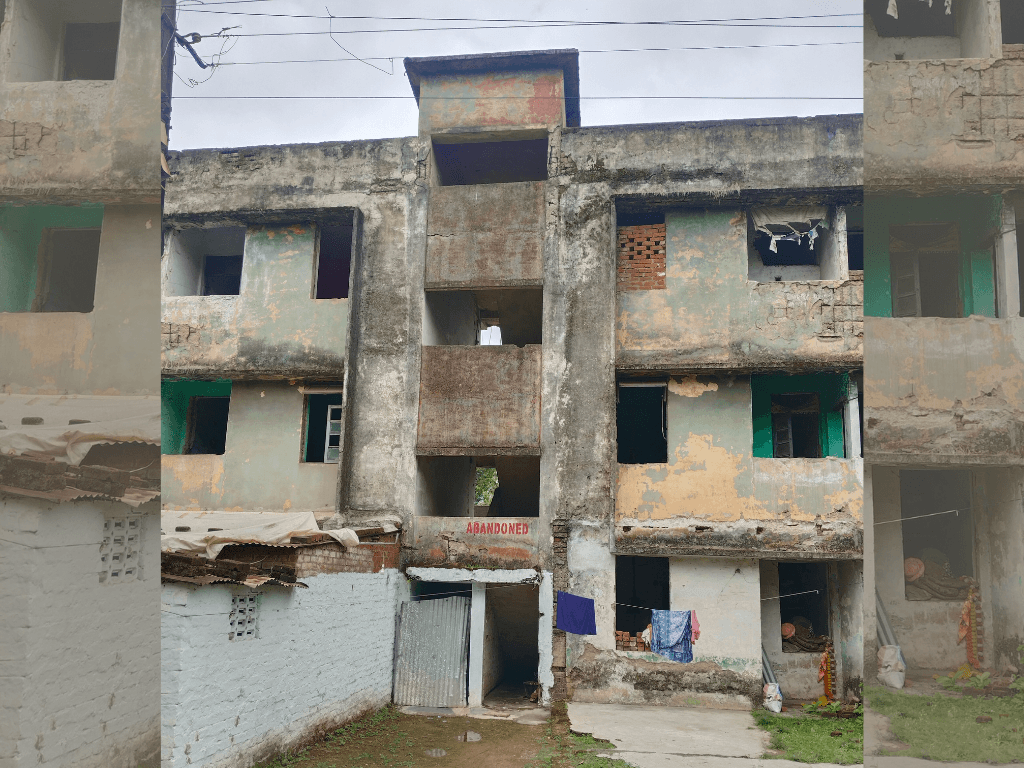
Bhilai Township, built around the steel plant that was described by the then Prime Minister Jawaharlal Nehru as a “temple of modern India,” was a planned industrial steel city in Chhattisgarh’s Durg district. Lately, it has had private cement, steel and power plants, and the population of Bhilai is now more than 6,28,000. But in the Township itself, located in the heart of Bhilai Nagar, the rapidly decreasing workers’ population of the steel plant has meant abandoned buildings and spaces. The grid of Sector 6 is littered with housing complexes that have the word “ABANDONED” stencilled on them in red.
The Bhilai Steel Plant started as a massive industrial endeavour in collaboration with the U.S.S.R. in 1955; its production target increased from 1.95 million tonnes in 1961 to four million tonnes in the 1980s. The township of 16 sectors housed 18,000 workers in 1961 whose strength rose to 65,000 in the 1980s. Today in 2026, driven by factors such as fundamental shifts in India’s Public Sector Undertaking and consequently in employment practices, among others, the number of workers living here has fallen to 13,000.
The numbers paint a stark picture about India’s shift from permanent industrial employment to contractual labour. Non-BSP employees— contract workers, outsourced staff, and daily-wage labourers—who once accounted for merely 10 percent of the workforce at the century’s start have now grown to 80 percent. This is not unique to Bhilai.
A comparison across India’s major public sector steel plants reveals a similar trajectory. The worker population in the Durgapur Steel Plant dipped from 35,000 in the 1960-70s to 12,100 in 2024.1 The Rourkela Steel Plant went from 4,000 workers to 39,000 in 1982 which shrunk to 15,000 in 2014.2 In Jamshedpur Steel Works, the worker population started with 18,675 in 1917 rising to 40,000 in 1992 but dropped to 16,000 in 2015. More than 60 percent comprise non-permanent employees.3
What distinguishes Bhilai is the scale of its Township infrastructure: Housing, schools, hospitals all built for a permanent workforce but employment conditions have fundamentally changed since. The shift in land-use was highlighted by brochures of the mid-2000s. As the Sustainability Report of 2014-15 noted, the plant had increased its space to 3,248.9 hectares while the Township space had declined. The Census of 2011 mentioned that the total vacant houses in Bhilai Nagar stood at 27,458. The number of houses in a dilapidated condition was 5,108.
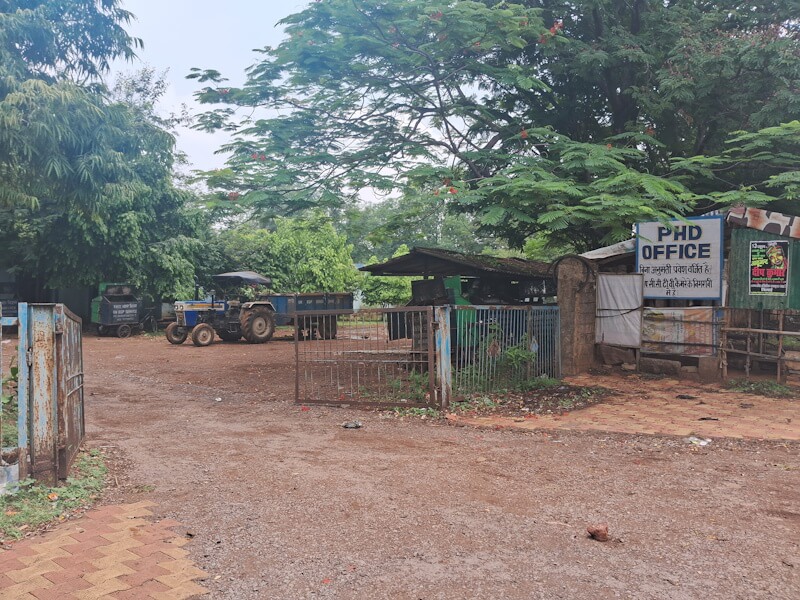
Photo: Sourav Bhattacharya
The aftermath and re-use
Far from Nehru’s vision of a modern industrial city, the township lies abandoned and partly demolished. But this story of abandonment found in policy documents misses how the spaces are currently used by informal workers, contract labourers, small vendors, and service workers who sustain the operations of the plant and its industrial area. BSP workers lived in this housing as a labour right; these people are here because they cannot access any other housing.
Without any official categorisation available, abandonment exists in various phases. Housing was a legally-mandated service provided by the steel plant to its employees under the contract. An Agreement places the Steel Authority of India Ltd Board as the highest authority, under the union Ministry of Steel; the BSP CEO reports to the SAIL Board Chairperson. Housing comes under the purview of the BSP’s Civil Department, which takes care of the residential complexes and handles maintenance and complaints, conducts surveys, and assigns categories of ‘Abandoned’ or ‘Unfit’ for re-possession or demolition. These actions are then undertaken by the maintenance offices located in the four zones in the township.
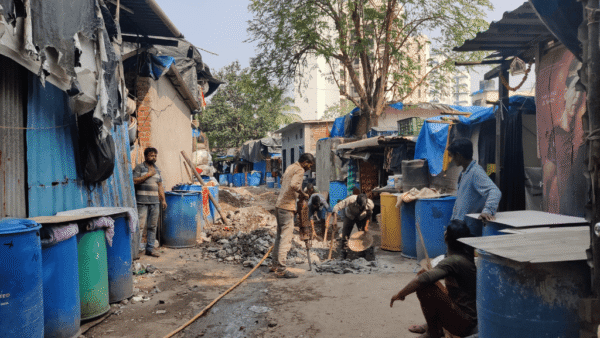
Saroj Jha, zonal manager of Zone Two, mentions how residential buildings develop structural defects from ageing or auto-construction; employees living there relocated, making them conducive to squatting. Some workers have relocated to the newly-built quarters and better housing. In the older once-thriving dwellings, the walls lie broken down, and doors and windows removed. These abandoned mid-rise buildings, with free amenities like water and electricity, are occupied informally by outsiders, informal workers, and petty shop vendors in the vicinity after paying a nominal fee to brokers.
The Nakhra Committee Report (1966) and the World Bank Report (1983) referred to a shortage of housing, land unavailability, and increasing informality, with slums emerging to sustain the Township. A house-leasing scheme launched from 2001 to 2003 attempted to release land assets to employees, ex-employees, and the families of deceased employees on a lease of up to 30-33 years, which led to some formal occupancy. However, vacancy has persisted in the township.
Due to the nature of the leases, the complexes here cannot be demolished but former workers, spouses and their children have to sign a contract removing any liability to the management in case of injury or accident. Instances of sub-letting by some formal occupants to third parties have been observed. These complexes have often seen eviction drives by the Enforcement Directorate with the help of police, who remove windows and doors to discourage further habitation.
The steel plant acts as the developer, planner, manager, landlord and enforcer of the Township, paving the way for workers to move to its edges while providing housing as part of workers’ rights. Its oldest dilapidated dwellings built for workers now house others who face eviction.
Present state
Van Bahadur Singh, the General Secretary of the India National Trade Union Congress (INTUC), reminisces about the multi-storey complexes of Sector 6. These, referred to as ‘2B Types’, were once sought-after residences among workers. They now exist in various states of disrepair, tagged either “Unfit” or “Abandoned” blocks as G+1 and G+2 buildings. Some developed faults due to ageing while others were rendered unlivable due to the seepage of water through the dermal roofs which were constructed for the hot climate.
Eventually, families from poor socio-economic backgrounds who lacked social networks or suffered misfortune occupied these spaces. Street vendors and informal workers in petty businesses took up habitation here as it was near their workplace.
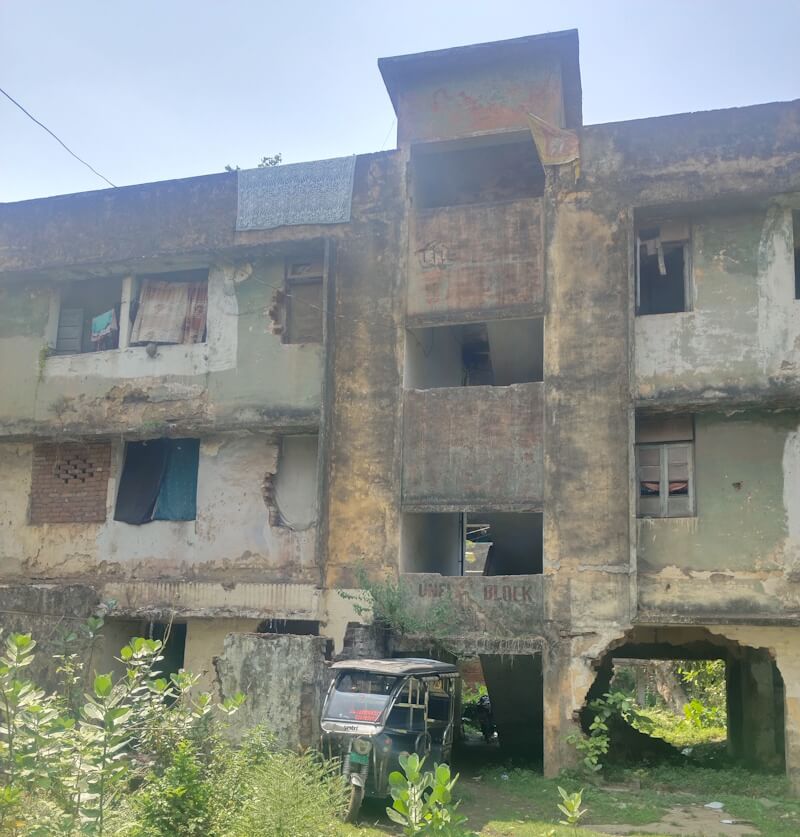
Photo: Sourav Bhattacharya
Human activity does not cease when places fall into disuse. The old schools and health centres have been turned into government offices, shedding their purpose but harbouring the furniture and rooms – not re-designed but re-used. Those with structural instability follow the process of categorisation, demolition and eviction. A brochure by the state government’s PR Department published in the mid-2000s mentions 48 government schools with 900 teaching staff and 34,163 students. K.K. Verma at the CSR Office remembers how these once-prestigious institutes started closing one by one as the Bhilai Steel Plant workforce declined and private schools and clinics entered the city. A girls’ senior secondary school and a primary English-medium school were vacated a few years ago. The Public Health and CSR departments now occupy these spaces; the classroom furniture is stacked outside. A BSP Health Centre in Sector 3 was converted into a Border Security Force camp before becoming the office of the INTUC.
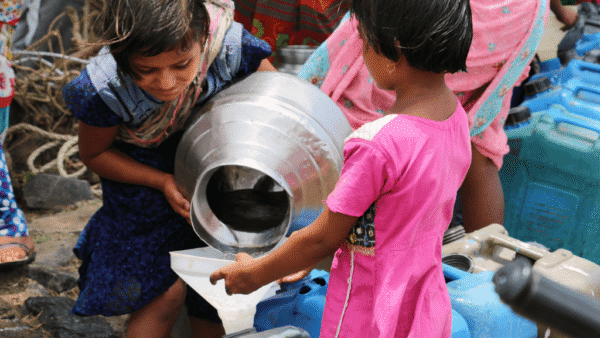
This tells the story of the transition of a planned community into a landscape of both abandonment and inventive re-use. The infrastructure developed in the township of the ‘temple’ began to slowly feel the loss of workers, their families and their aspirations. The story of the declining population of workers was starkly visible in these abandoned or leftover spaces. A few workers and their families stayed back, out of compulsion or lack of options. They have had to deal with water seepage, falling roofs, and water-logging in and outside the quarters. For the informal workers who took up residence here, the threat of eviction always looms large. Central government urban improvement schemes like JNNURM and PMAY are unavailable in the township; the Nagar Nigam is restricted by the lack of jurisdiction and the presence of the steel plant management.
Residents like Umesh, a shop owner, is the son of the steel plant worker who had taken a lease here in 2002. The leases cost around Rs 500 for 400 square feet, according to the union INTUC, and are available because the allottees purchase another home outside the township and rent these. The quarters, usually on ground floors, have been expanded to cover pavements with iron gates, which attracts a penalty of up to Rs 30 lakh. These original residents, frustrated, often write complaints to the Civil Department requesting eviction of the lessees and squatters. Stories of re-purposing the old buildings and resilience of occupants exist in this ‘mini-India’.
Union representatives talk at length about the collapse of permanent employment in Bhilai and what workers do to survive in the current economy. Some have relocated to nearby Durg and Raipur, where private sector jobs and smaller industrial units offer employment – but without housing. Skilled workers from the steel plant found work in the private sector, thereby losing the housing benefit. Others have opened small businesses like electrical repair services and provision stores in the township.
After abandonment
The story of Bhilai township is ultimately about the decline of formal employee housing as well as the capacity of informal workers to create survival strategies within the formal framework that was not meant for them. Formal residents like Umesh express repeated frustration in their complaints to the Civil Department requesting the eviction of squatters. Here, workers police other under-privileged, the formal defending their position against the informal.
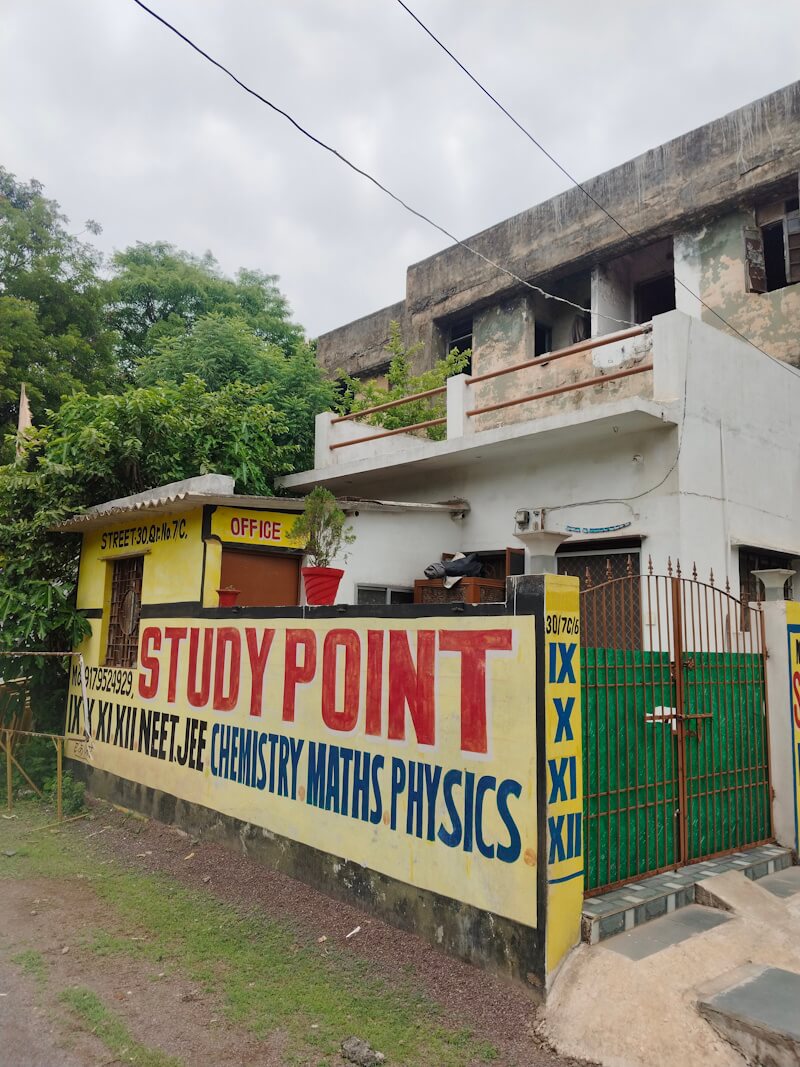
Photo: Sourav Bhattacharya
Despite all such efforts, the informal persists – the people repair, consolidate, and make the structures that management has written off liveable in their own ways. The physical risks of such structures are found in the form of falling debris and stagnant pools of water that act as breeding grounds for mosquitoes. Eviction drives without the scope of alternative accommodation simply shift the problem out of visible sight. The gap between institutional capacity and the ground reality remains.
The BSP management operates within frameworks that are designed for a different model of employment, balancing concerns like safety and liability. The local government acknowledges the housing crisis but lacks jurisdiction over the Township land. Workers’ unions give a voice to the steadily-diminishing numbers of permanent employees while the informal workers have no comparable institutional mouthpieces, all leading to a situation where formal residents defend their stability while informal occupants struggle for basic shelter.
What emerges in this limbo are stories that are deeply human. Families like that of Nandini’s who occupy the abandoned buildings, reconfigure their surroundings and quietly make liveable the spaces that official categories have written off. The transformation of industrial employment has outstripped the transformation of the social infrastructure built around it, leaving workers to bridge that gap themselves. In the abandoned quarters of Bhilai, informal workers have created a fragile form of belonging within frameworks that were never designed to include them, which speaks to the persistence of people making shelter and livelihood in the spaces that structural change has left behind.
References
- S. Parasuraman, The Development Dilemma: Displacement in India (Macmillan Press Ltc, 1999), 110; See,
- Rajkishor Meher, “The Social and Ecological Effects of Industrialisation in a Tribal Region: The Case of the Rourkela Steel Plant,” Contributions to Indian Sociology 37, no. 3 (October 2003): 452, ; Christian Strümpell, “Struggles about Class and Adivasi-Ness in an Eastern Indian Steel Plant,” Modern Asian Studies 56, no. 5 (September 2022): 1708,
- Amita Sinha and Jatinder Singh, “Jamshedpur: An Ideal Industrial City of India,” essay, in Million Cities of India: Growth Dynamics, Internal Structure, Quality of Life and Planning Perspective, ed. R P Misra, vol. 3 (New Delhi, India: Concept Publishing Company Pvt. Ltd., 2019), 339; Audit Report 2022: Tata Steel Limited, Jamshedpur; Vinay Kumar, “Whither Workers in India? ,” essay, in Socio-Economic Change and the Broad-Basing Process in India, ed. M. V. Nadkarni (Abingdon, Oxon: Routledge, 2020), 110.
- M. Mazereeuw, M. Ojha, and A. Barve, “Migrant Informalities of Indian Steel Towns: Planning Lessons from Rourkela, Bhilai and Durgapur”, Environment and Urbanization ASIA 8, no. 1 (March 2017): 78.
- Government of India, P.I.B. (2001, October 10). SAIL’s revised house leasing scheme. Retrieved 13 June 2025, from
Dipannita Mandal is a Doctoral scholar in the Department of Liberal Arts at the Indian Institute of Technology Bhilai. She has a background in general science with a special interest in geology, and English literature, which has converted into an interest in the intersection of urbanity, cultural theory, and industrial environments.
Sourav Bhattacharya is a Research Assistant at the Centre for Studies on Culture, Language, and Traditions, Indian Institute of Technology Bhilai. He has a Masters in History, and was an Urban Fellow at the Indian Institute for Human Settlements, Bengaluru. His research focuses on examining the materiality and politics of urban spaces through the lens of planning and governance.
Cover photo: An abandoned building in Bhilai township. Credit: Sourav Bhattacharya