
Pick up any summer afternoon on a weekday on Golf Course Extension Road and you would find construction workers climbing down from the scaffolding for their lunch break. The first thing they do is to try to find a place to sit down.
The shed behind the construction site meant for them, they say, is crowded and airless. Across the road is a gated condominium with the standard guard-house and a clipped lawn; people know better than to even accidentally wander in this open space. The footpath is a narrow ledge of half-broken tiles; vehicles zoom past it. Construction workers do what almost every other worker in Gurugram does – squat in the shade of a boundary wall, waiting for the brutal summer temperature to drop. It will be long after the sun sets.
A few kilometres away, in a now-ubiquitous gated complex, a woman in her mid-20s cooks for three households and manages to eke out approximately half an hour between the second and the third. She has asked in the second house if she could stay back for a while to rest, given that her employer was a woman who, she says, is a narivaadi who campaigns and organises meetings in her drawing room. But she was given reasons why she could not stay beyond work hours. In the gated complex where the cleaning and cooking staff must use only the service elevator, she cannot even wait in the lobby. There are no benches and washrooms. Residents prefer that the staff leave immediately after they finish work. And given the way that the city was built, there are barely any tea stalls within walking distances.
Both these incidents, authentic but names withheld, seem mundane – in fact, they have been normalised – but this is exactly why the issue of exclusion of the working class should be written and talked about. The working class in Gurugram is seldom thrown out in the literal sense. Why do they have to be? The manner in which the city has been designed or, more accurately, for whom it has been designed and what it lacks in its built environment for those who keep the city running is the story of who has been excluded.
For the workers, there is never any room; it was designed this way. Even for less-privileged residents living in a complex, it seems. In September, the district registrar had to step in to direct the RWA of a posh complex that it could not restrict access to the society’s central park, internal pathways, and common facilities to Economically Weaker Section families in other towers of the complex.[1]
Gurugram has the highest vehicle ownership rate in India, at around 24 percent, leaving Mumbai and Delhi far behind.[2] But it has pathetic public transport, an abysmally low walkability score for a newly-designed city, and nearly of its traffic deaths every year are pedestrians, the people who must walk to work and in between spaces.[3]
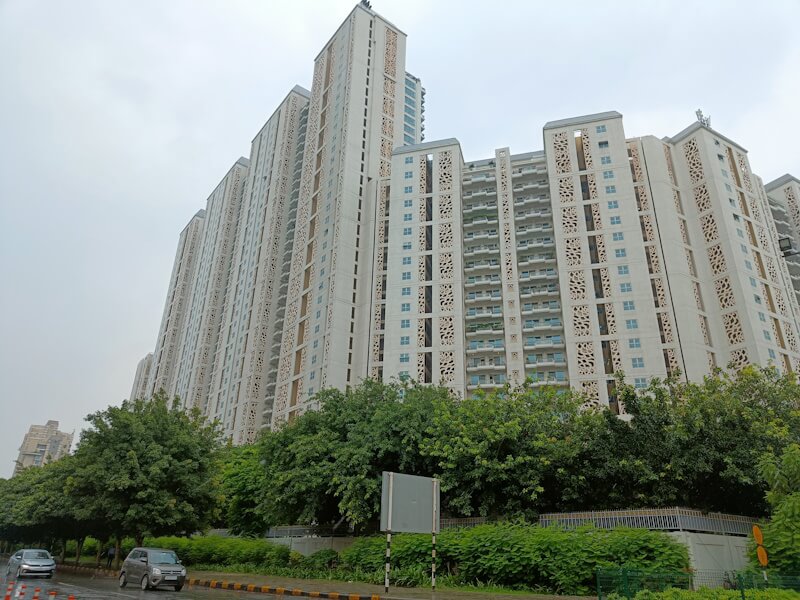
Photo: Ankita Dhar Karmakar
The bold experiment of city-making – for a few
Gurugram is often cited as an example of the nation’s bold experiment in private urbanism. But it was never a liveable city for all, according to this opinion.[4] It was when the Delhi Development Authority secured almost absolute control of land in the national capital that private developers began to scan past the borders. The Development and Regulation of Urban Areas Act of 1975 in Haryana ensured that the state could license private entities to build on farmland. The DLF group became one of the largest at work here. It did not come out of nowhere; it had laid out several neighbourhoods in Delhi before the land was institutionalised.
The group and its competitors treated Gurugram as if it were a jigsaw, arranging the pieces of housing enclaves, office towers, malls and golf courses. The larger picture that emerged was of isolated islands of exclusivity connected to each other through highways. Around 47 percent of Gurugram, around 83,700 acres, is planned to have residential development, according to the Gurugram Master Plan 2031.
In the essay, In India, Dynamism Wrestles with Dysfunction[5], American journalist Jim Yardley opines about the corporate campuses settled on lands in the absence of city-wide systems, a gap that was filled by virtue of the capital that those inhabiting the posh complexes and corporations possess. What the state did not provide was taken up by private substitutes in the form of diesel generators, borewells, private security and so on but only within the confines of their compound walls.
Urban governance, let alone planning, was postponed. There was no municipal corporation until 2008 and the Gurugram Metropolitan Development Authority did not exist before 2017.[6] Gurugram was, on ground, not a bold experiment in city-making but seen as a magnet for concentration of capital and its consumption. This approach structured the spatial grammar which is visible in this ‘city’ of gated societies, corporate complexes, malls, and expressways. The working class never figured in the imagination of the people commanding the capital or, to an extent, planning the city.
Even as workers spilt blood and sweat to build the city and, later, keep it running, they were never meant to be in it. Only their labour was welcome. Most of the informal workers are pushed to live in Lal Dora lands or parts of urban villages such as Sikanderpur, Chakkarpur, and Wazirpur where the locally powerful build dense and under-serviced multi-storey rooms to rent out to migrant workers.
Deliberate designs of the past continue into the future
The Town and Country Planning Department by the Government of Haryana has unveiled the Final Development Plan of Gurugram, 2031.[7] The plan neatly divides it into different sectors, assigns land uses, and meticulously fixes the width of roads. But, for a plan so elaborate, it barely mentions footpaths or public toilets. Was it merely oversight or deliberate omission? The guiding principle, it appears, was to plan for spaces and people who can add value in monetary terms – nothing more and no one else. Of course, there has never been an ideal imagination of a public space even in neighbouring New Delhi but it has been there nominally so, and, in comparison to Gurugram, significantly more.
Roads adjacent to authorised residential complexes are usually maintained by the Resident Welfare Associations (RWAs) or private developers before being formally handed over to the Municipal Corporation, a long-winding process. But the arterial corridors come under the purview of the Gurugram Metropolitan Development Authority, local streets are with the corporation while national highways are of the Central Government. Within these demarcations, accountability gets hidden. A working-class person waiting outside a residential complex can be on a piece of land of any of these entities and, sometimes, it depends which side of the curb she/he is on.
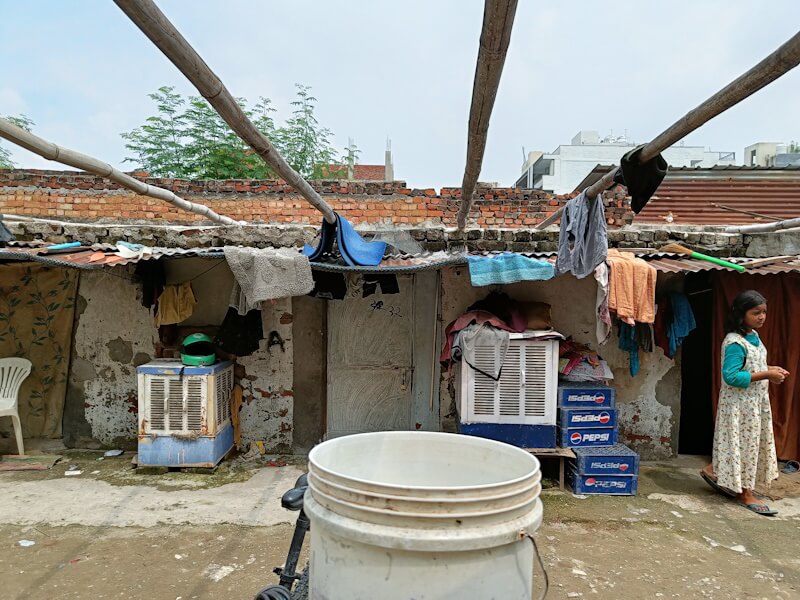
Photo: Ankita Dhar Karmakar
The planning of Gurugram has been called ‘flexible planning’ by author Shubhra Gururani or rules renegotiated to promote development. But to whose benefit, is a question never asked, or never supposed to be asked. In fact, it does not need to be asked since it is well understood by everyone involved in this kind of city-making.
Who must seek permission to use space?
Gurugram lacks ‘third spaces,’ the in-between places between home and work where anyone can simply exist without having to cite reasons or pay to use. But for a city that was built on the core idea of capitalist consumption, such spaces hold no value; they are simply not welcome. So, the non-white-collared workers must either be in their sub-par small homes or at work, when not in transit. They are excluded from spaces to simply exist in – by design and purpose.
While New Delhi is often romanticised as a better alternative than Delhi, it too has its drawbacks. However, it has to be taken into account that at least, the Master Plan 2047 acknowledges the informal sector as a planning category, albeit without the regulations that protect the sector or those who work in it. The Streets Vendors Act of 2014[8] obligates cities to form town vending committees while India’s labour laws required construction employers to provide places to rest as well as safe drinking water since 1996.
However, it is evident even to a passerby that these are seldom implemented. Law on urban planning manages to set down, on paper, the principle of participatory planning. Obviously, this extends to Gurugram too. But the roadblocks include the fact that the city itself was engineered into existence primarily by the formation of private colonies, with little to no public land where these public claims could be honoured. Private players are indifferent to these claims. In this scenario, the working class may have rights to the city on paper but they are forced to live always seeking permission to use spaces, being asked to leave, being shooed away or given dirty stares, and from the guards nodding at the gate to domestic and delivery workers being strictly monitored for which lifts they take and where they dare to linger.
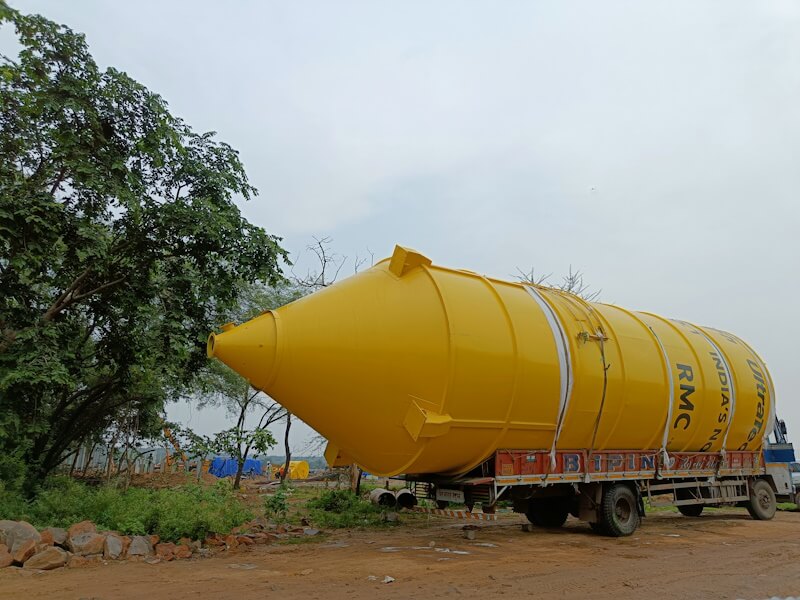
Photo: Ankita Dhar Karmakar
The pattern has been cemented over the years. This was seen after Covid-19 lockdown restrictions were eased when some RWA bans[9] kept domestic workers out of housing societies and a few residents who wanted them back were threatened with legal action. Residential complexes with separate lifts for staff have been so normalised now that few well-meaning people think it’s absurd and offensive. And some complexes do not even have lifts for them to begin with. India has also not ratified the International Labour Organisation’s Domestic Workers Convention which would bring household work into the ambit of formal employment.
Author Sanjay Srivastava, in Entangled Urbanism[10] looks at how the drive for a ‘world-class lifestyle’ in Gurugram has depended on creating exclusive spaces that keep the working class out, where they do not even appear to be seen in everyday life. Urban geographer Thomas Cowan, in his 2018 study for the London School of Economics and Political Science (LSE) asserted that “Gurgaon’s spectacular urbanisation has been fundamentally underpinned by an uneven process of land acquisition, exemption and agrarian transformation”. This forces the working-class into exploitation in the urban villages, creating something of a ‘secondary city’.
To re-imagine, acknowledge what’s wrong
The planners designing cities today often design them based on the requirements they are expected to meet, which comes from a place of accumulating capital and accommodating people who can afford it, while those who cannot, are seldom recognised as citizens in full capacity.
We could reimagine the same summer afternoon in a city where construction workers would only have to walk a few metres to find a covered shelter on the sector road, a shelter with a seating arrangement and drinking water and an accessible toilet. RWAs could have a waiting area for the domestic and delivery workers not as obligations but as rules set down – and implemented – in Occupancy Certificates. Tea stall vendors can have space in public places and parks where weekly meetings can take place.
Of course, the mere idea of this seems far-fetched to many but, perhaps, that is because we are habituated to seeing cities left to their own devices and the citizens either having to make do for themselves, if they can afford it. But really, it is nothing more than a few benches and toilets, public taps, walkable footpaths, and spaces that are accessible to all. None of this should be impossible for institutions with multi-crore budgets and grand urbanisation plans. But the motivating factor is who do these serve?
In the words of David Harvey, the Right to the City can be viewed as “a right to change ourselves by changing the city.”[11] In Gurugram, the change could start by acknowledgement that things are wrong, and we have ignored them for far too long. Those who keep the city functional but hesitantly rest at boundary walls belong here too.
Ankush Pal is a sociologist and writer based in New Delhi, working on urban inequality, public space, caste and informal labour in South Asia. He holds an MSc in Sociology from the London School of Economics, where his dissertation examined elite encroachments of public space in Indian cities. He has conducted fieldwork with informal workers, including waste pickers on the peripheries of Delhi.
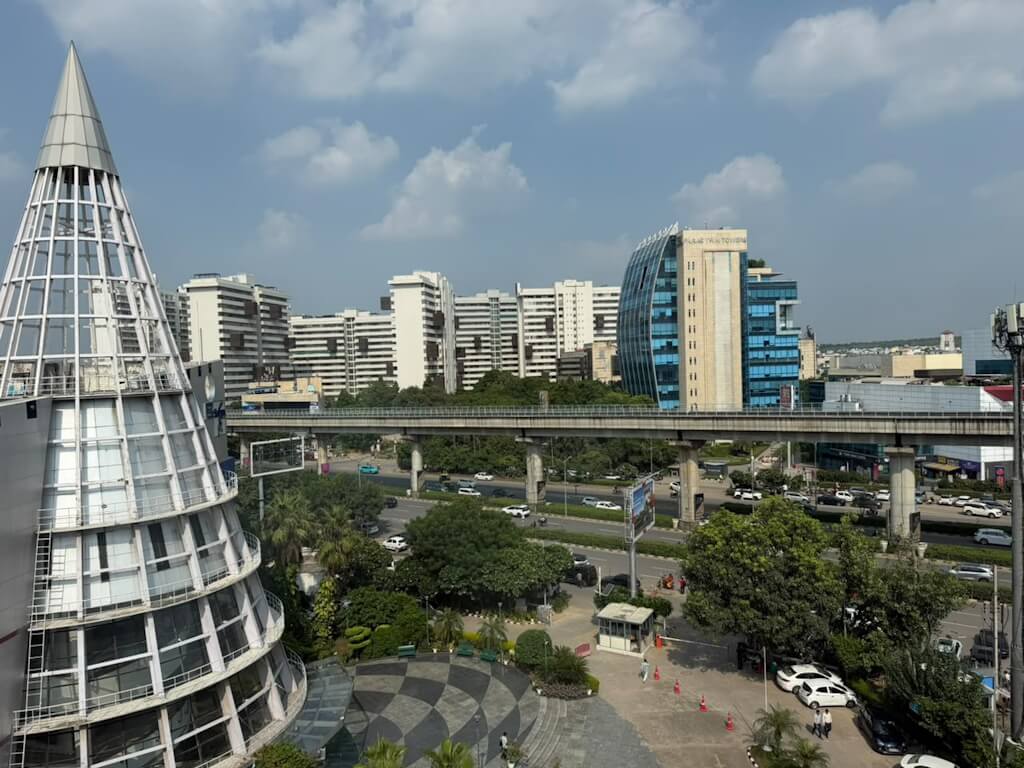
Cover Photo: Golf Course Extension in Gurugram. Credits: Anam