
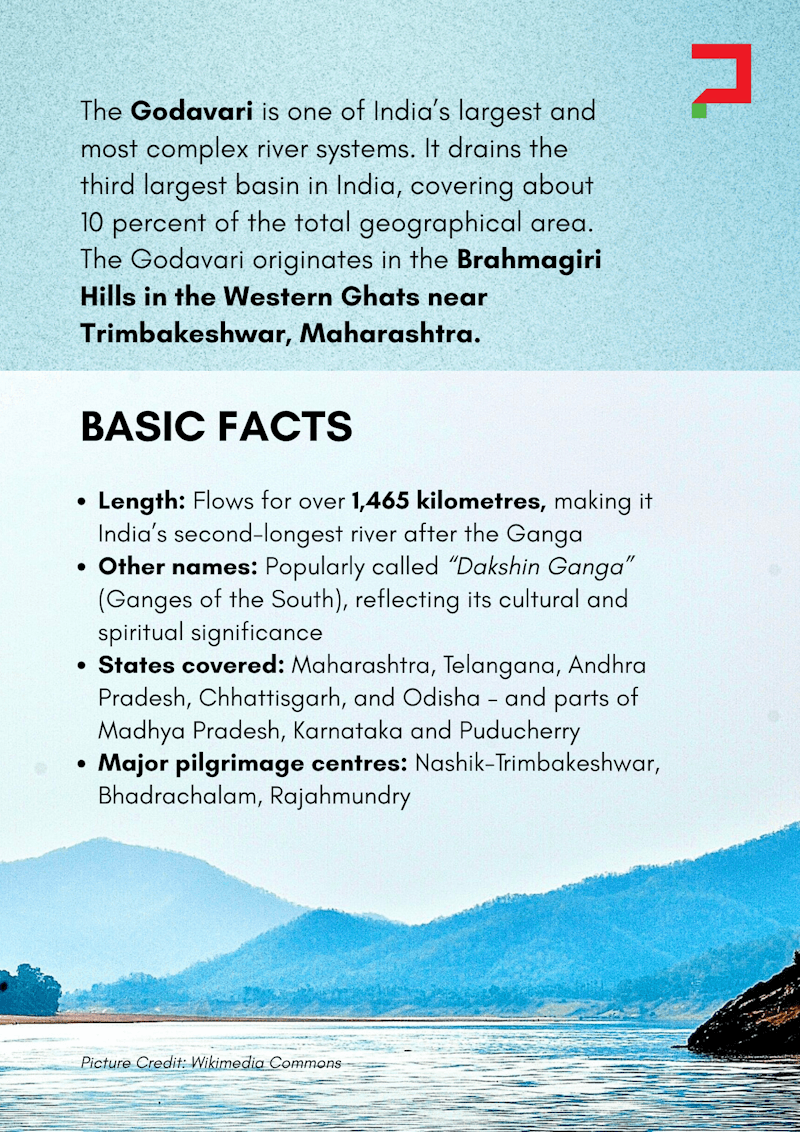
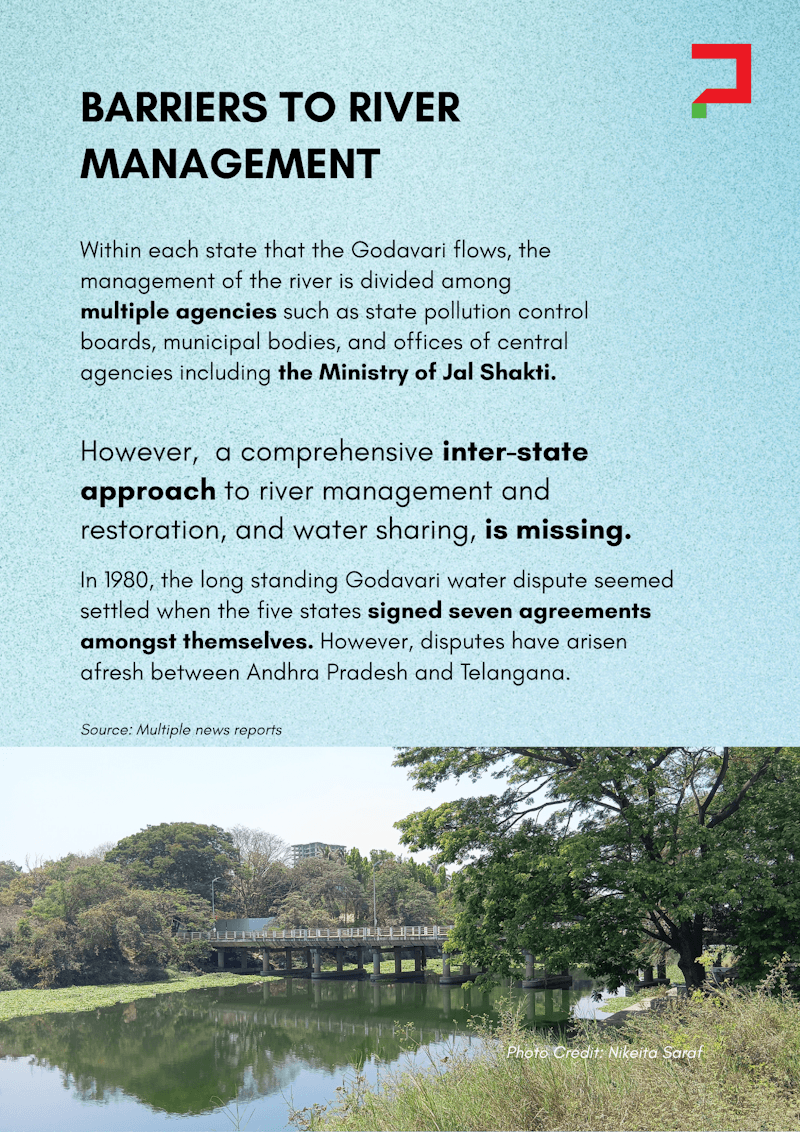
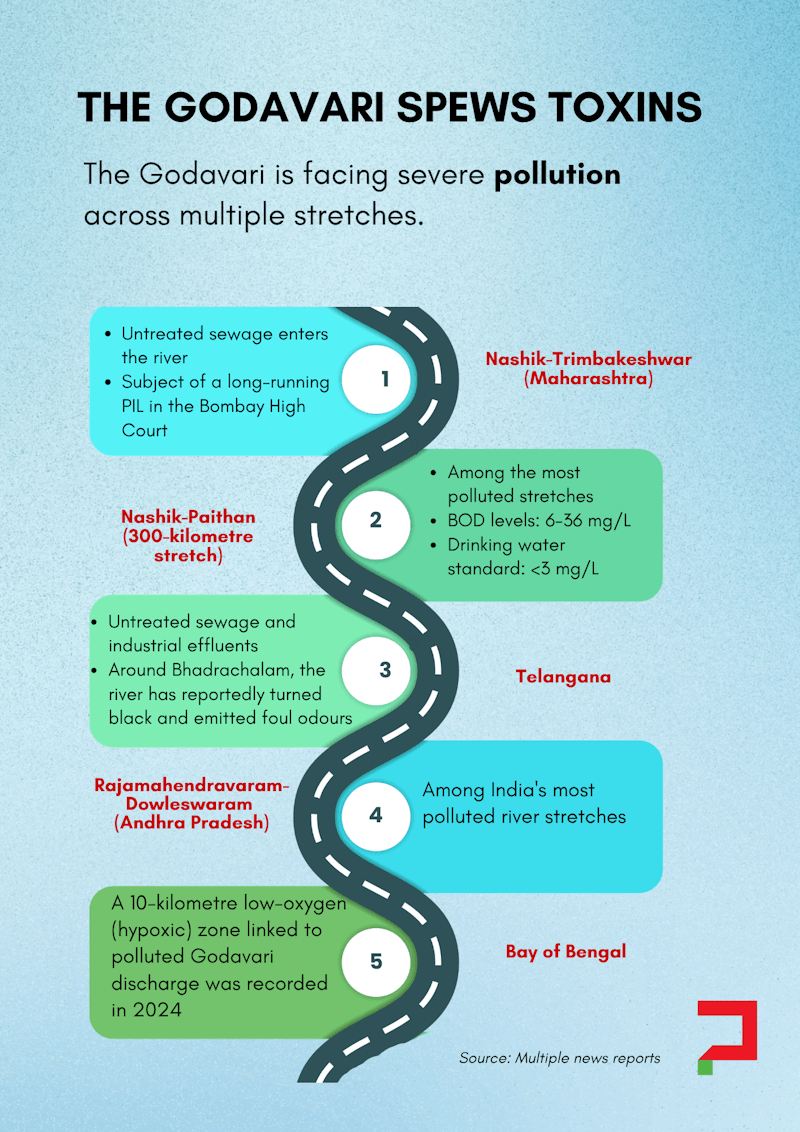
The Godavari is India’s second longest river after the Ganga. The river, which passes through five states – Maharashtra, Telangana, Andhra Pradesh, Chhattisgarh, and Odisha – and parts of Madhya Pradesh, Karnataka and Puducherry and sustains millions of people, has been central to their livelihoods, culture, and pilgrimage. Today, the river faces a mounting ecological crisis – deeply polluted and fragmented in the way it is governed in each state, the rising pollution and construction on its floodplains, including for riverfront development, it faces a threat to its ecology and existence.
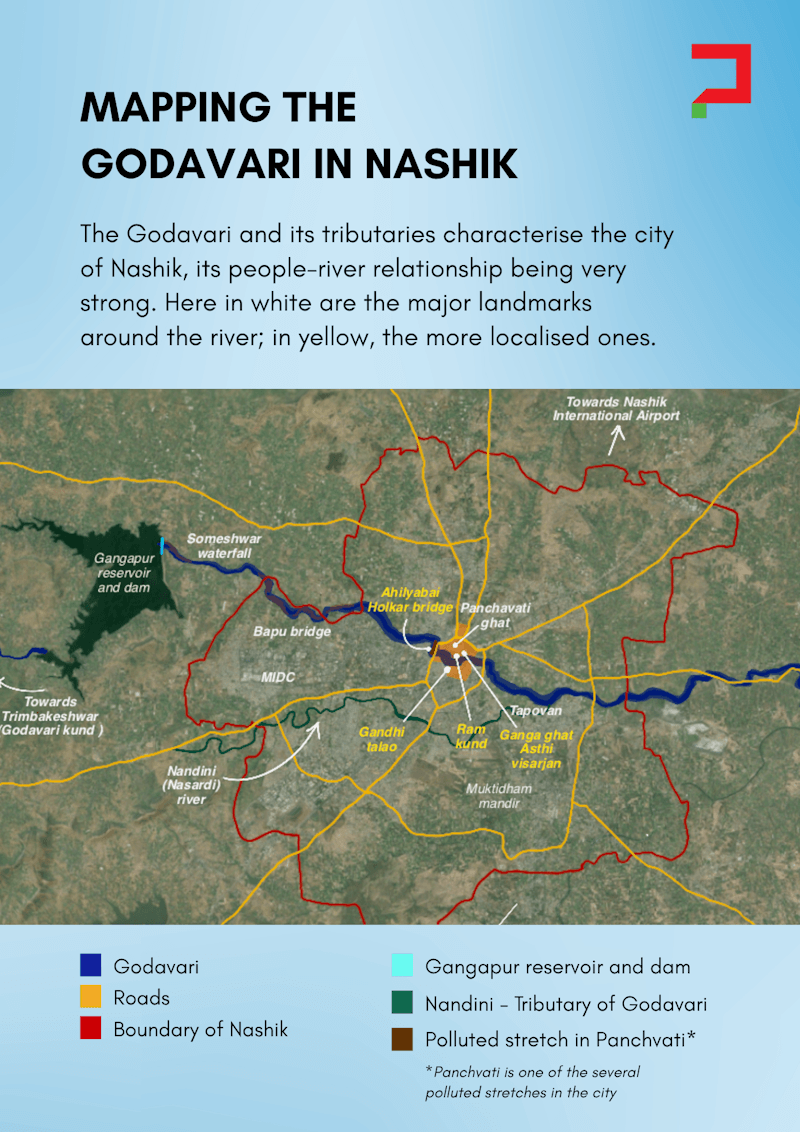
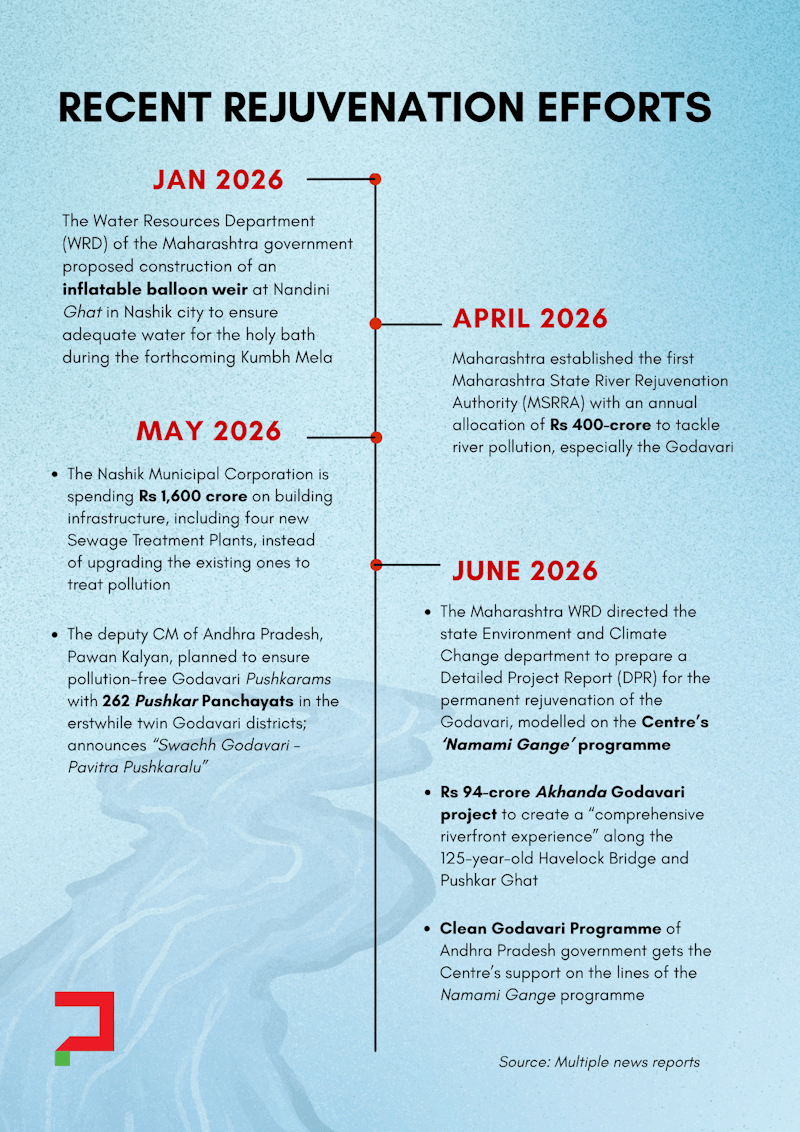
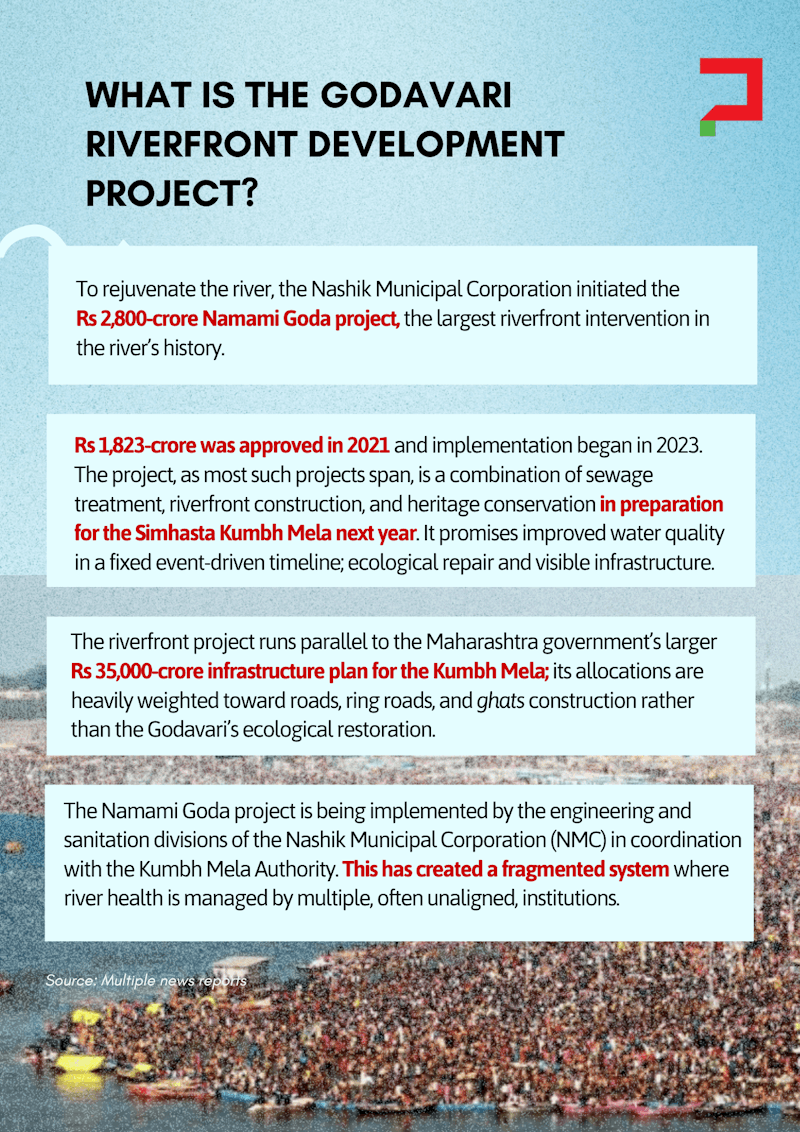
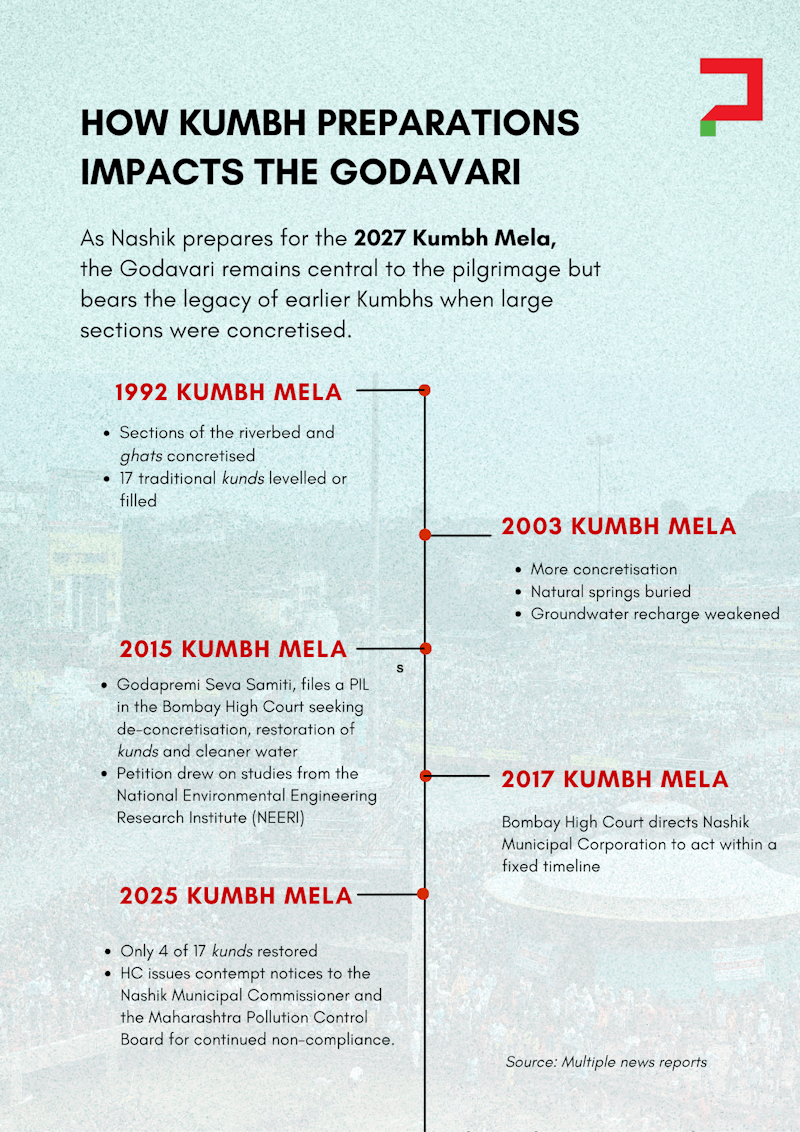
As Nashik prepares for the Kumbh Mela in 2027, the 20-kilometres of the Godavari passing through the historical city are once again in focus. The Kumbh Mela has a state government budget of Rs 35,000 crore to boost infrastructure, and the Nashik Municipal Corporation is spending Rs 1,600 crore on building infrastructure including four new Sewage Treatment Plants for the river.
This Fact Sheet traces the river’s journey, the challenges it faces, and the restoration efforts taken so far to revive the river. Through this, we ask whether current interventions are restoring the river’s ecology or merely reshaping its banks.
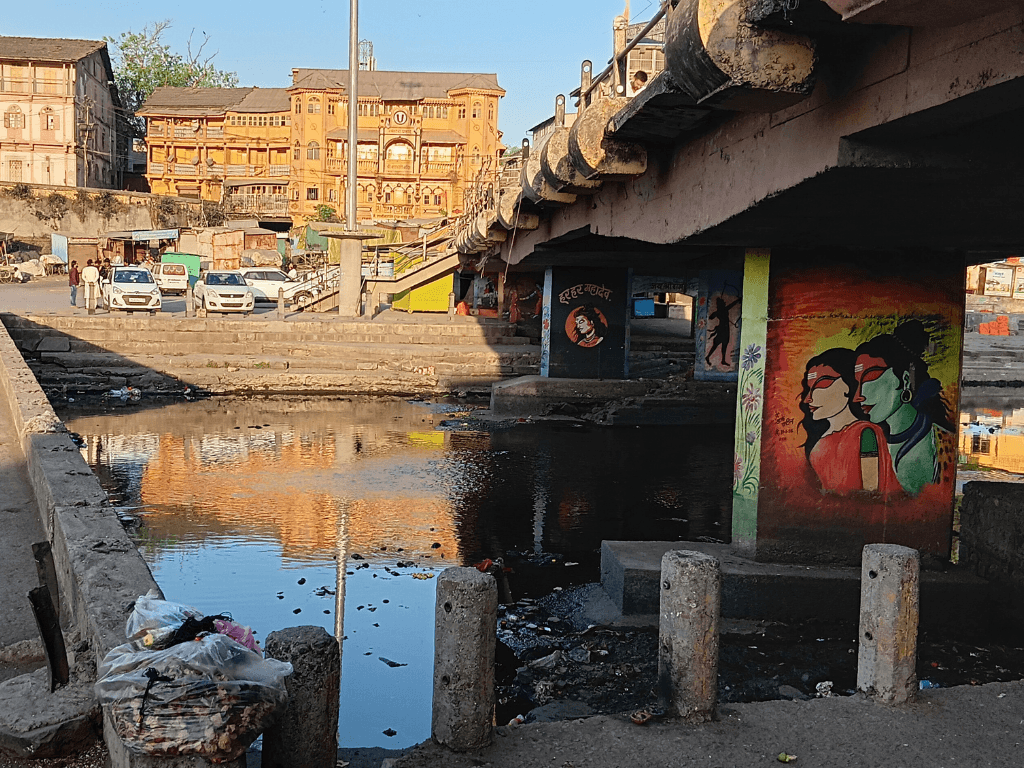
Cover photo: A snapshot of Ramkund in Panchvati, Nashik. Credit: Nikeita Saraf