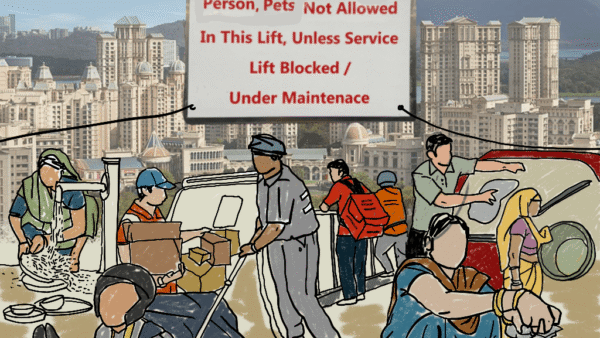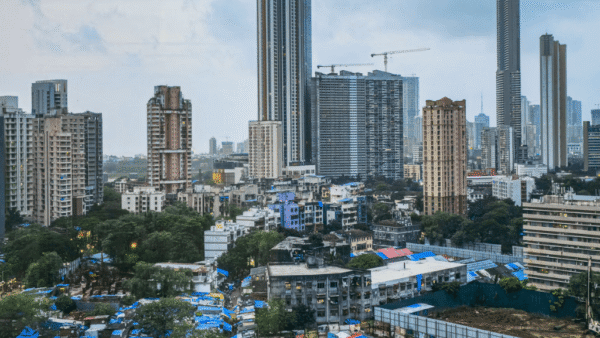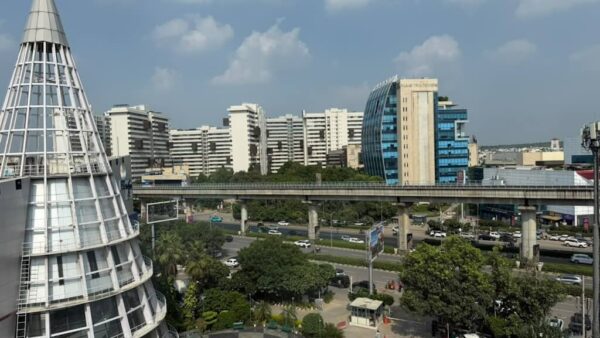
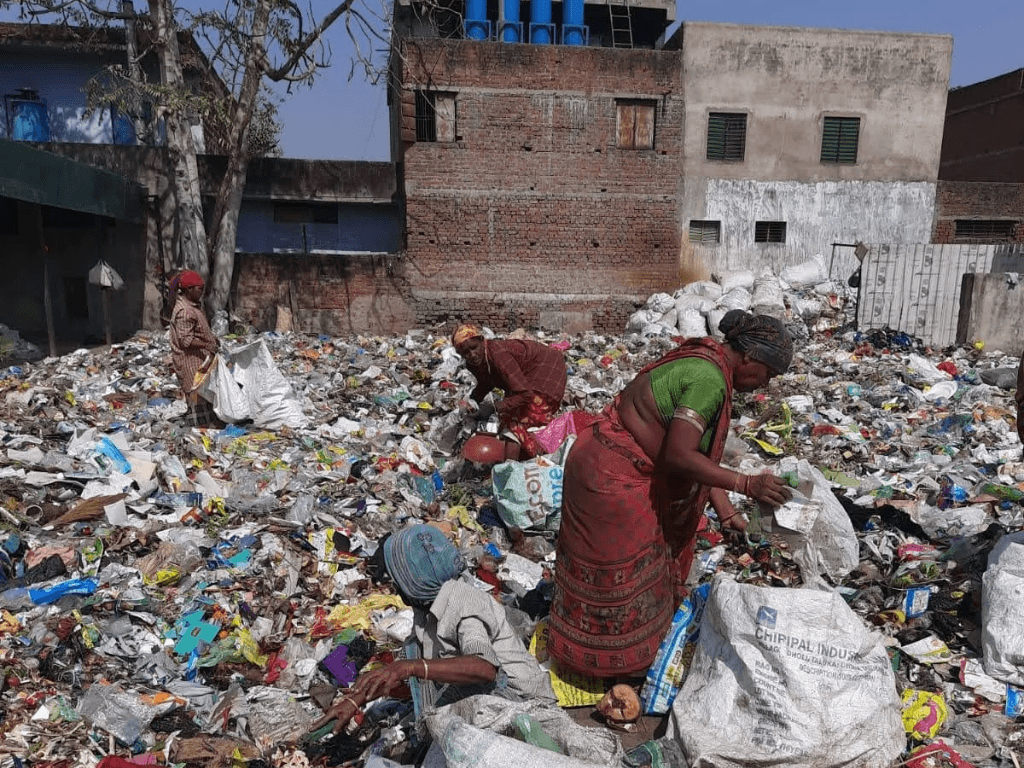

Waste and urbanisation share a deep bond. The rise in urbanisation has made waste disposal a complex issue. In villages, organic waste is easily managed by feeding it to animals or leaving it to decompose in the soil. As rural areas urbanise, this option recedes. Urban local bodies, at high expenditures and causing massive emissions, collect waste and transport it over long distances to landfills on the outskirts of cities. The urban-waste connection is so strong that it is officially called ‘municipal solid waste’; the rules were called the Municipal Solid Waste (Management and Handling) Rules, 2000. For nearly 16 years, there was no ‘rural’ version of the Rules.
Waste has been an urban challenge, arising because of urbanisation. This has been historically so. Records from 500 BC show waste being a governance challenge in ancient Rome. Households produced solid waste such as food scraps, broken pottery, ash, and discarded textiles or tools; local industries had debris; tanneries spewed by-products; construction generated rubble; and ‘liquid’ or ‘human’ waste of residents piled up in private homes and public latrines. Most of it, dumped in the streets and alleys, had to be collected by authorities and transported outside the city.
Around 320 BC, Athens passed a law banning the throwing of waste in streets, and a system of waste removal began to evolve in Greece and cities of the eastern Mediterranean. As European cities grew, accumulated waste led to diseases. The devastating pandemic of bubonic plague (1346-1353) across Europe and Asia, resulting in the death of an estimated 25 to 50 million is remembered as the Black Death. Among other things, it led to greater interest in sanitation and waste management.
Centuries later, the industrial revolution and urbanisation led to a large number of people living close to each other in built environments. This meant that waste could not be simply fed to animals or discarded in the soil nearby. Consequently, waste collection, transportation and disposal systems began to be shaped. In 1751, Corbyn Morris, a government official and economist proposed a unified public authority to manage London’s waste as it was turning into a public health hazard.
London became the first city to organise a municipal solid waste management system, with “dust yards” where “dustmen” sorted soot, ash, bones, broken pottery and glass, and scrap metal for resale. However, this was not sufficient to avert public health crises, especially the cholera outbreaks. In 1855, the Metropolitan Board of Works[1] was created as the first city-wide authority to collect, transport, and dispose waste in landfills.
A similar system was introduced in colonial Bombay where the plague of 1896-97 led to the evolution of a system of waste management and urban planning. Gradually, this approach spread. Today, India’s cities generate approximately 70 million tonnes of waste annually – all left to municipalities to manage. This, as in ancient Rome, still means collecting, transporting and dumping in landfills outside the city. The Solid Waste Management Rules (2016), the recently notified Rules of 2026, and the nation-wide Swachh Bharat Mission have not changed this template significantly.
This leads to at least two grave injustices. First, urban residents are removed from the consequences of their waste production while those living on the city’s outskirts – often the marginalised and the poor – have to put up with mountains of stinking trash, breathe polluted air, drink contaminated water, and suffer diseases and infections. Second, those who sort waste in cities – also the marginalised and the poor – have been largely left out of the waste management discussions and formal strategies in urban plans; the built environment makes little to no space for them.

The people behind waste disposal
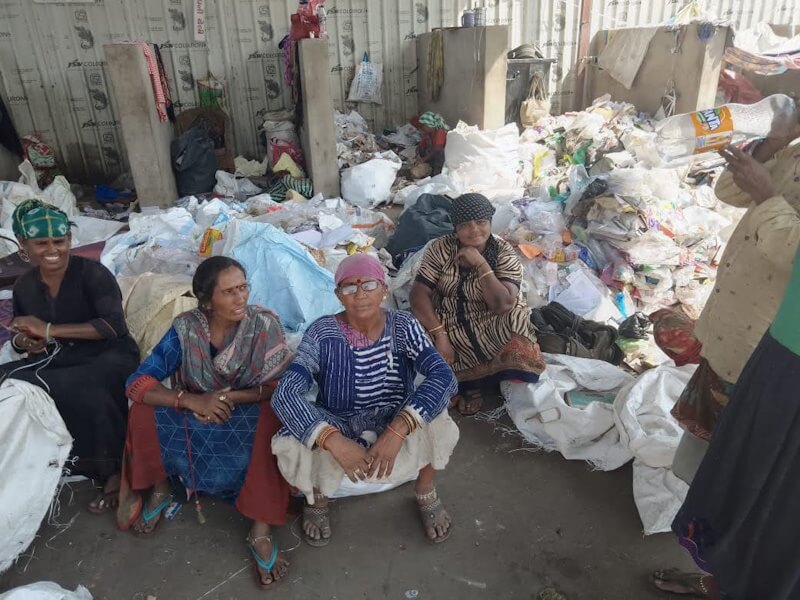
Whether in ancient Rome and Athens, London or cities in India, certain communities have always sifted through the waste, separating and recovering items for recycling. 18th century London called them ‘dustmen’. India calls them waste pickers or rag pickers.
Across the country, an estimated 3 to 5 million of them sort through the trash on the streets, in municipal garbage bins, and landfills that are garbage mountains. Along with other waste workers – kabadiwalas/raddiwalas or waste buyers, scrap dealers, recyclers – informal waste pickers recover about 60-70 percent of urban recyclable waste and handle up to 70-80 percent of plastic recycling.[2] [3] Yet, despite the services they provide, they are marginalised and excluded by society, in the prevailing planning and building frameworks.
Caste and gender worsen the marginalisation. They are bullied and harassed by upper castes, targeted by the police, their children not allowed in schools, they lack proper housing, and face occupational health and safety hazards leading to frequent injuries, accidents, disease and infections. Decades of efforts by collectives of waste pickers in India and across the world have led to significant improvements. Identification, enumeration, registration of waste pickers and provision of identity cards is now mandated by policy. But there is a gap between policy and practice.
Women waste pickers have it worse. Besides the marginalisation, they face a high risk of sexual harassment and violence. While women comprise a large share of waste pickers, their numbers fall higher up in the value chain; the kabadiwalas, scrap dealers, and recyclers are mostly men.
Sustainable waste management
The path ahead, therefore, is a transition towards a sustainable waste management system that has land and budget allocated in plans for the built environment. But what should this transition look like and how would it include the informal waste workers? Can their skills and experience be adapted, can their working conditions improve? In other words, can the transition be ‘just’?
The International Labour Organisation defines[4] just transition as “greening the economy in a way that is as fair and inclusive as possible to everyone concerned, creating decent work opportunities and leaving no one behind.” The United Nations’ Committee for Development Policy defines it “as ensuring that no one is left behind or pushed behind in the transition to low-carbon and environmentally sustainable economies and societies”.[5]
What would just transition look like in the context of waste management and what would be the role of institutions that govern built environments in facilitating it? The study conducted by this author and commissioned by the ILO[6] explored two case studies – from Pune and Ahmedabad – and broadly found that a just transition is possible though there are several political and administrative challenges.
Case studies
Pune: The Pune Municipal Corporation mandates that establishments such as educational institutions, official complexes, and large housing societies process their organic waste, and offers incentives for it. This calls upon builders and institutions to provide space in the layout for composting and for waste pickers to sort dry waste.
Ahmedabad: The city still continues with a centralised waste management system in which all waste is collected and transported to a landfill. The local body does not require institutions or complexes to either compost wet waste or provide space for composting or sorting of dry waste.
The Pune model has been found[7] to have lower collection costs, higher rates of recycling, generation of green jobs and inclusion and upliftment of those traditionally engaged in informal waste work. This provides the base for a just transition to a more sustainable and climate-sensitive waste management strategy.
Principles of just transition
Based on the above mentioned study, we can arrive at the following five principles for just transitions in Solid Waste Management in India:
- Collectivisation: As informal waste workers get further marginalised by the increasingly corporatised, mechanised and centralised systems of waste management, the Pune and Ahmedabad experiences show the gains of collectivisation. Unionising facilitates collective action for dignity, recognition, and inclusion in the formal waste management system.
Pune’s waste pickers were collectivised through the Kagad Kach Patra Kashtakari Panchayat (KKPKP), the union inspired by social activist Baba Adhav and registered in 1993. The union had 10,500 waste pickers as members (Chikarmane et. al. 2019). Similarly, Ahmedabad’s waste pickers have been collectivised by SEWA since the 1970s with nearly 30,000 members. These collectives have not only advocated the rights of waste pickers but also supported them to access entitlements such as children’s education, fair rates for scrap, medical insurance and so on.
- Integration into formal waste management systems: A sustainable transition should lead to the end of open dumps and landfills. Today, these sites are literally the ‘offices’ or workspaces of waste pickers. If the transition has to be just, Pune’s experience shows that it must integrate existing waste pickers in door-to-door collection of segregated waste, operation of dry waste collection centres, material recovery facilities and related activities.
This would lead to their protection as well as an improvement in their livelihoods, regular incomes, better occupational health and safety conditions. Pune also formed a cooperative of waste pickers called SWaCH, in 2007,[8] with the KKPKP collaborating with the Pune Municipal Corporation. The union members were trained for more mainstream or formal roles as door-to-door waste collectors. As per information provided by SWaCH, nearly 3,652 SWaCH members now collect nearly 700 tonnes of waste from nearly a million households, sort it in the sheds provided, and store the dry waste till it can be sold to scrap dealers. In Ahmedabad, SEWA members used to run Refuse Transfer Stations and Material Recovery Facilities, and were doing door-to-door collection of waste (it has stopped now).

- Decentralised processing of organic waste: Organic or bio-degradable waste is the largest component of waste across India, comprising over 51 percent[9] of urban solid waste. This can be used to produce biogas, compost, organic briquettes but most of it ends up in landfills.
Ahmedabad has policies that mandate the use of organic waste in certain products but the lack of enforcement means that it is mixed with other waste and ends up in landfills. In Pune, however, the policy and institutional framework are better aligned to realise its value. Most organic waste is used to produce either compost or biogas. Nearly 300 SWaCH members compost nearly 150 tonnes of organic waste per day.
This has been done through policy instruments and a mix of penalties and incentives. PMC’s Solid Waste Management department sends notices to bulk generators (apartment complexes, schools, colleges, office campuses, IT parks) producing 100 kg per day or more of wet garbage to compost on-site. If they fail to comply, it either stops collecting their wet garbage or fines them. The PMC also provides property tax rebates. And the biogas or composting plants set up within municipal wards mean that most organic waste is processed locally.
This requires urban plans and builders to allocate space for processing and sorting of waste, as well as municipalities to enforce the rules made. Cities see space provisions as a challenge but they have sufficient space for car parking. There is also the NIMBY problem where some institutions do not want it ‘in my backyard’ for the fear of foul smell and unpleasant sight. This is where strong regulation and timely enforcement helps.
In Ahmedabad, as in most cities, such regulations and enforcement are missing. The only spaces for waste are a few sorting centres – around 12 each of Material Recovery Facilities and Refuse Transfer Stations (Delhi calls them dhalaos) where waste is transferred from smaller vehicles engaged in door-to-door collection to larger vehicles which transport it to landfills located on the margins of the city.
- Enabling waste pickers to move up the value chain: In Ahmedabad, SEWA set up a Value Creation Centre which has nearly 700 members sorting waste into 36 categories before selling it. The fine sorting earns a higher rate. SEWA’s skill workshops train workers to make products such as stationery and jewellery from waste paper. Similarly, in Pune, KKPKP members run scrap shops which ensures that women not only earn an income but also get higher rates for scrap brought here.
- Disincentives for non-recyclable materials: A large and growing proportion of waste materials are non-recyclable and necessarily end up in landfills. Non-recyclable Multi-Layered Plastics used in chips packets, toothpaste tubes, milk and juice cartons, gutkha and shampoo sachets comprise nearly 40 percent[10] of plastic waste. Similarly, sanitary waste, many textiles and footwear are also largely non-recyclable.
A just transition to a sustainable waste management system would require that these materials are phased out or manufacturers are made responsible for their environmentally safe disposal. In Pune, nearly 8 Tonnes of Multi-Layered Plastic is generated every day, of which only 3.2 Tonnes is being segregated and processed.

Challenges ahead
If these principles are followed, there can be sustainable waste management with just transition but there are various challenges.
The first is psychological. The decentralised, waste picker-led system looks messy unlike the corporate, mechanised, and technologically-advanced systems. The second challenge is political. Privatisation and corporatisation of waste management usually involves large contracts and budgets as opposed to waste picker-led systems which are unlikely to yield any financial kickbacks.
The third is administrative. The waste picker-led decentralised approach requires local governments to draft and enforce policies that impact the built environment and utilisation of land/space. Monitoring has to be done regularly. Privatising operations allows local governments to do minimum work.
Sustainable waste management and just transition need not only hard work but also difficult decisions of land use so that waste workers have space in the built environment. Are India’s cities ready for this?
Note: The observations are based on the study “Green Jobs in Waste Value Chain: A diagnostic study of Pune and Ahmedabad” by the Intern. This predominant and largely informal waste management system across India, as in many countries, is clearly unsustainable in socio-economic and environmental terms. Most of the waste ends up dumped or burned in landfills which turn into breeding grounds for diseases and pollution sites with large quantities of methane emissions. This mis-management of waste is responsible for nearly 20 percent of methane production globally[11] and about a rise in global temperatures. The volumes of urban waste are rapidly rising; for example, Delhi’s daily municipal solid waste was roughly 9,500–10,000 tonnes per day in 2014 and is now 13,000–13,500 tonnes per day.[12]
Anjor Bhaskar, MSc (Econ.) From University of Warwick and a PhD from TISS, Mumbai, is a faculty at Azim Premji University and founder of Dialogues on Democracy and Development (DoD). He integrates teaching, research, policy and civic action for planetary citizenship founded on principles of democracy and the consciousness that the lives of all species are interconnected with the environment that supports all life.
All photos by the author.