
When Kamal Lal opened the website of the Election Commission of India (ECI) to check the draft electoral rolls, a part of the nationwide Special Intensive Revision (SIR), he found his name missing. Lal had voted in most of the past elections. A resident of Bela Estate, a Jhuggi-Jhopdi (JJ) cluster on the floodplains of Yamuna River, Lal was not alone. An astounding 728 of 729 voters in the cluster had been deleted.[1]
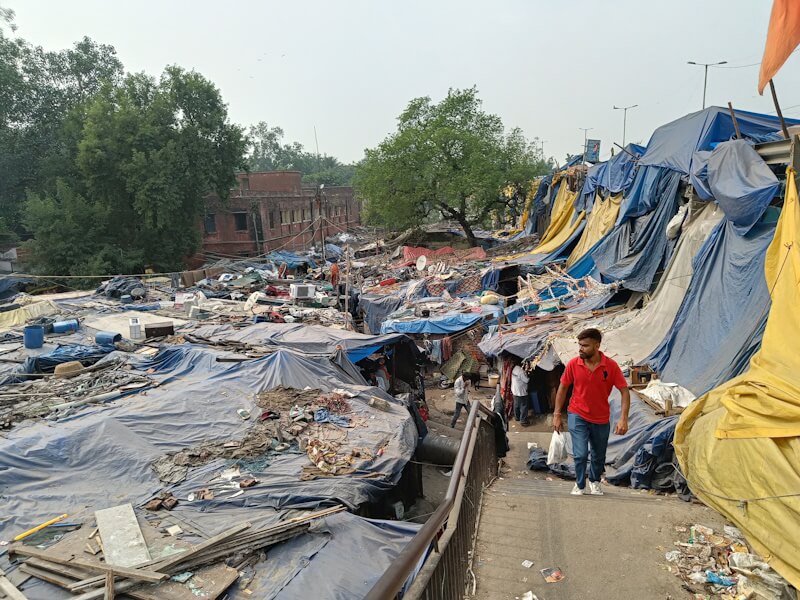
Bela Estate is not easy to reach. From the Geeta Colony flyover, across spaces in the roads and down the uneven rocks, green fields with a handful of charpais come into view. The informal settlement has seen frequent demolitions. Falling under Phase I of the Yamuna Riverfront Development Plan of the Delhi Development Authority, the area now has the Golden Jubilee Park (Swarna Jayanti Park).[2] But over the past decade, the authorities have targeted the JJ cluster that’s been around for 70 years, and courts[3] have repeatedly ruled against residents’ pleas for compensation and rehabilitation. They did not anticipate that they would be excluded from their franchise too.
Bela Estate is a microcosm of the story of voter deletions unfolding in informal settlements across Delhi. For residents who have lived and farmed here for generations but are labelled encroachers, and whose presence[4] has been linked to river pollution, exclusion of various kinds has been a constant refrain. Yet, the deletion from the SIR hit them hard. Besides being an assault on their constitutional right to vote, it carries the portents of a more precarious future because their access to several government schemes depends on their ability to produce voter cards and show history in the location. Many like Dhruv Nath Jha know this. “SIR is only an excuse,” he rues, “They want to remove us, but we will not leave.”
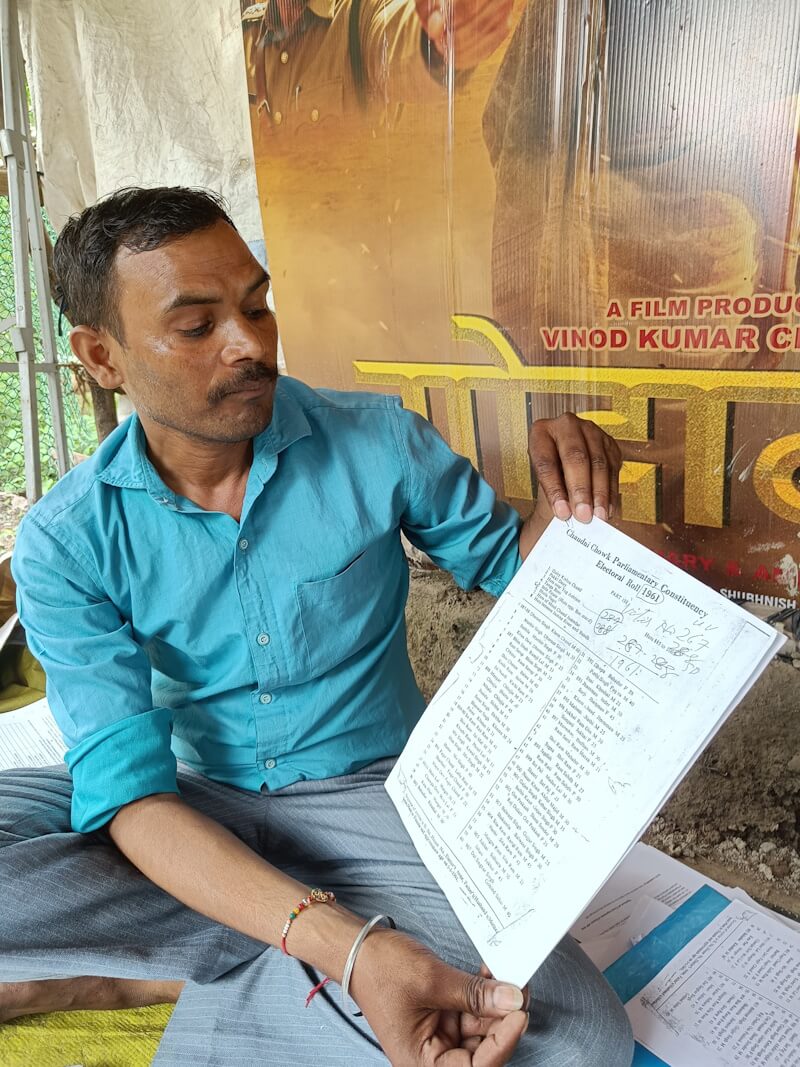
Bela Estate has seen a spate of evictions and demolitions since 2006.[5] Jha remembers that between 2006 and 2010 there was “a reign of terror unleashed by the Delhi Police” during which residents, including children, saw “tractors crush our homes, utensils and belongings, sometimes in the dead of the night.” As recently as September 25, parts of the settlement faced another round of demolition.[6] Ironically, only a week before that, the Electoral Registration Officer had come to verify the address that residents had submitted in Form 6.
The controversial Form 6 is meant to register new voters. For residents of Bela Estate, submitting it to get back on the electoral rolls effectively erases their history in the location – and their claim to rehabilitation – but as excluded voters, they had no choice.
The Bela Estate story repeated in Chilla Khadar and Pul Mithai; sections of the media found such deletions in other JJ clusters, low-income neighbourhoods, and migrant workers’ bastis too. While Delhi-NCR registered a high number of deletions of voters in the country – about 33 percent of its 1.45 crore struck off the rolls and 21 percent served notices asking why they should not be deleted – the axe seems to have fallen the hardest on the marginalised people in informal settlements in some of the most precarious parts. Southeast Delhi saw over 43 percent voters deleted from the rolls; in it, Tughlakabad showed 47.8 percent, according to this report.[7]
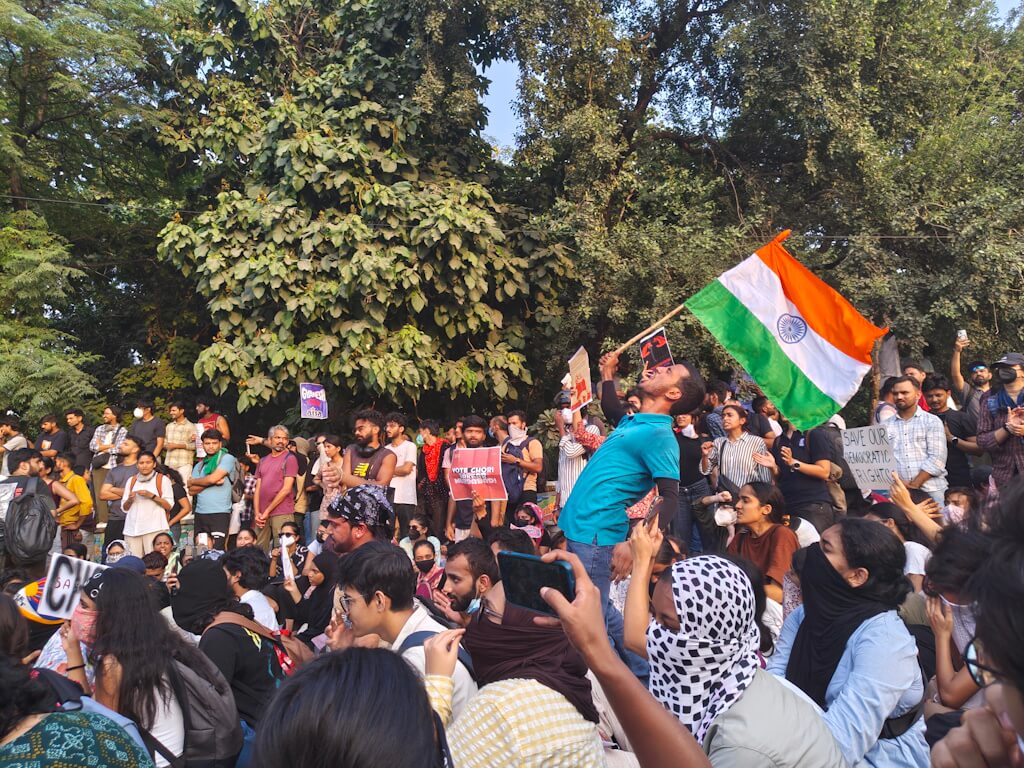
If this was merely coincidental, it would still be egregious, but if there was a pattern to the deletions linked to people’s habitats, it should widen the scope of the anti-ECI protests.[8] While causation may be difficult to establish – that maximum voters were deleted from booths because these were predominantly in JJ clusters or low-income or minority neighbourhoods – the correlation is hard to ignore. In an investigation in September, The Reporters Collective[9] found 29 booths in marginalised areas where the deletions had were more than 70 percent of voters and nine of them, in localities where the authorities had demolished homes, had a staggering 87.87 percent deletions.
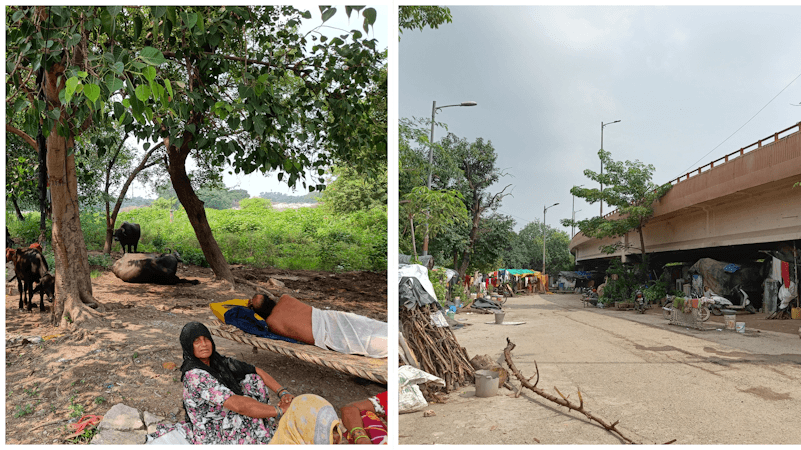
Informal settlements, the built environment in which millions somehow hold their lives every day, seem to have determined whether people will have the right to vote. The continuing precarity of these settlements, the repeated acts or threats of demolition, the label of ‘encroachers’ thrust on them, the many exclusions built into these places, and the manner of SIR all seem to have played a part in the residents bearing a disproportionate burden of being disenfranchised. The built form became a convenient way to erase the right to vote of people in it.
In Bela Estate, election officials themselves attributed the deletions[10] to the built form; they referred to its changing physical status after agricultural work was discontinued in 2021 and sections were demolished in 2023 which, in official records, showed people no longer residing there. But residents like Jha and many others say they never left their homes and have even voted in the last elections.
Pockets of exclusion
Chilla Khadar, on the eastern banks of Yamuna, also an informal settlement like Bela Estate saw the latest round of demolitions[11] on September 25. The bulldozers tore into the settlement a day before residents were to appear before the ECI officers for a hearing to have their names reinstated in the draft rolls. Many were forced to gather the entrails of their homes. In Pul Mithai, a JJ cluster in Chandni Chowk Assembly constituency, 668 voters found themselves struck off but many told Question of Cities that Booth Level Officers had not even come to collect their enumeration forms; a few were unaware of the SIR process itself. Few can afford the time it takes to reinstate names on the rolls.
The large-scale deletions in Southeast Delhi – an area with predominantly low-income neighbourhoods, clusters of migrant workers, and Muslims – have been recorded by media like Maktoob.[12] The area saw the highest rate of exclusion of voters in Delhi-NCR – 43.6 percent. Voter deletion of a mere two percent and above in a single booth, according to the ECI’s own guidelines, should be considered suspicious and cross-verified personally by officers.
In Madrasi Camp, near Barapullah Drain in south Delhi’s Jangpura, The Reporters Collective found that 181 of 370 families had shifted to a nearby location when their settlement was demolished, but many of their names had been deleted. “Several of them had been relocated by the government to new addresses. Yet the ECI did not accept their credentials and removed them,” the publication pointed out.
In Jailorwala Bagh JJ cluster, demolished in June 2025 and a part of Wazirpur Assembly constituency, “more than 80 percent of the voters previously registered in this booth (44) are missing from the draft roll,” while families told the publication that their applications for flats under the Pradhan Mantri Awas Yojana had been rejected because their voter cards were “not verified” and names could not be found in the electoral rolls till 2015 which was the cut-off date.[13]
In Southeast Delhi, most of those whose names were deleted from the rolls were shown as “absent” or “shifted” although, in many cases, people continue to live there.[14] Tughlakabad in this area has witnessed several demolitions[15] and has also recorded among the highest number of deletions in Delhi with 99,033[16] missing from the draft electoral rolls.
The cases of exclusion in informal settlements fall into certain patterns – JJ clusters that were demolished but re-settled by the poorest, unauthorised colonies or clusters where voters have cast their ballot several times, residents who relocated voluntarily and in some cases voters who had been rehabilitated by the authorities themselves. The ECI does not offer clear explanations for these deletions but asks people to fill Form 6 – as first-time voters.
“These exclusions may be concentrated in certain areas because of how the system is structured,” explains Sagrika Rajora, lawyer, researcher and trade union activist who is also associated with Voter Adhikar Manch, “In gated localities such as Vasant Kunj, for instance, well-established Residents’ Welfare Associations (RWAs) maintain lists of residents whose names appear on the draft electoral roll and the ASDD list. There is a regular communication between residents, RWAs and Booth Level Officers (BLOs), creating a system of support for people from relatively well-off families. This does not mean that arbitrary deletions or exclusions have not occurred in these areas but the system makes it easier for people who are literate, relatively well-off and have access to networks such as RWAs to obtain forms, navigate technical requirements and seek assistance.”
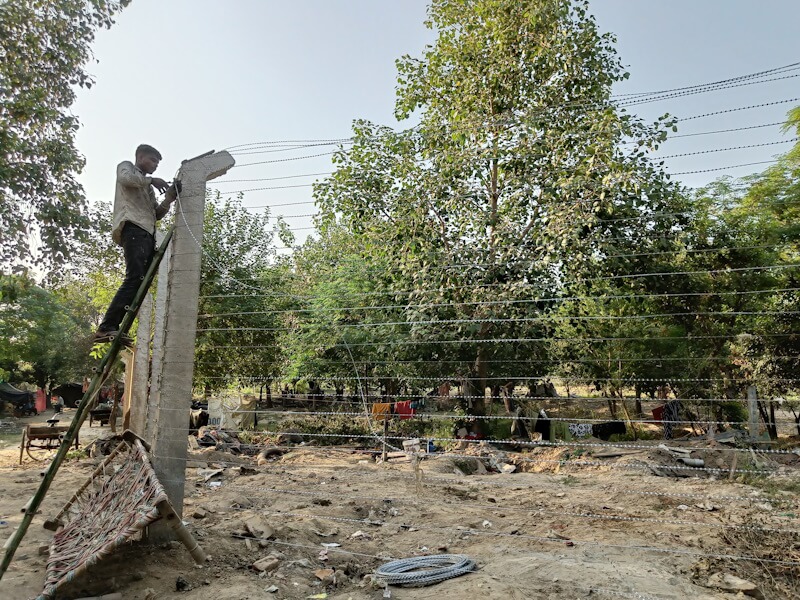
Yamuna restoration and voter deletions
In the Yamuna floodplain area of Bela Estate and Chilla Khadar, where deletions have been almost en masse, it is a cruel joke that the Yamuna Riverfront Development Project is underway. This area was tagged Zone O in Delhi’s Master Plan[17] which means an ecologically sensitive zone where, ideally, construction is not allowed. The informal settlements existing there for decades were deemed illegitimate and demolished – and this used to delete voters from the electoral rolls – while new construction and concretisation for the riverfront was approved.
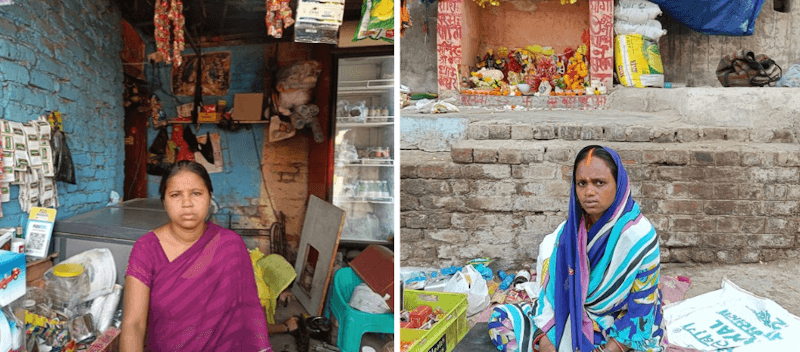
Maya Devi, a domestic worker who has lived here for years, says she received an enumeration form during the SIR, but despite calling her BLO, no one came to collect it. She has been marked as “permanently shifted” but she, like many others, still lives here. “Humein idhar se nikaalne ki koshish kar rahe hain, hamari jhuggiyan baar baar todte rehte hain? Ek jhuggi banane mein kam se kam Rs 6,000-7,000 lagte hai. (They are probably removing us from here, our jhuggis are demolished again and again. It takes Rs 6,000-7,000 to make one),” she says.
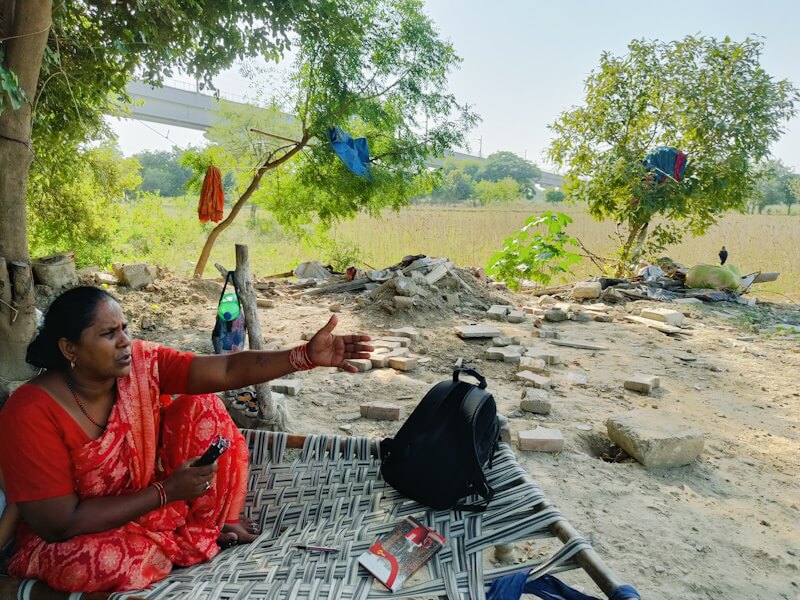
The area’s polling booth has been in Mayur Vihar Phase I, under the Patparganj Assembly constituency, where the ECI says 1,057[18] voters have been deleted while work is underway for Mayur Nature Park, a Rs 136 crore project and a part of the riverfront development. In both Bela Estate and Chilla Khadar, the DDA sought to clear settlements to “restore” the river’s ecology. Residents worry about restoring their voting rights. Despite the Delhi High Court’s intervention in May 2026[19] houses have been bulldozed here.[20]
The state’s vision for the river is a classic case of bourgeois environmentalism, as sociologist Amita Baviskar put it; this is now being used to upend the informal settlements and their informality on this land used to deny their right to vote. But informality, as scholars have argued, is not merely a condition of the structures people build or live, but a product of how the state recognises them, regulates the structures or denies regulation, and uses this to exclude them.
Right to vote means, virtually, right to life
With their names deleted from the electoral rolls, people’s claims to entitlements and schemes have come under a cloud too. In Pul Mithai, the Railways demolished around 45 JJs in December 2017 leaving 400 people homeless. In March 2019, the court[21] recorded the residents’ plea that they had not been rehabilitated under Delhi’s Slum and JJ Rehabilitation and Relocation Policy, and called on the authorities to ensure adequate shelter for the displaced. The cluster remains suspended between eviction and the promise of rehabilitation but, now as hundreds of names were excluded from the electoral rolls, residents are more apprehensive.
Subodh Kumar, a resident who received an ECI notice because his parents were not mapped to the 2002 SIR, says he wanted to join the protest against the anti-CEC protests in Delhi but chose not to. “What if the state later targets me and demolishes my house here? What will I have left then,” he wonders. Others ask if the deletions mean their “ration and pension” would be affected too. If so much in our lives depends on our voter cards, “how should I feed my children,” a resident here wanted to know; his name has been placed in the dreaded ASDD (Absent, Shifted, Dead, Duplicate) list.
“As some studies have shown, Delhi’s informal housing has been a major axis of exclusion during the SIR process. If some are excluded, that becomes the basis for not granting rehabilitation in case their slums are demolished,” says Akash Bhattacharjee, historian and trade unionist, associated also with Voter Adhikar Manch, “So one form of exclusion adds to another, and increases people’s instability, precarity, displacement, and deprivation of various rights and entitlements that people have.”
For lakhs like Kamal Lal and Dhruv Nath Jha, exclusion now carries an added layer of precariousness; without valid voter cards, they cannot even claim the little that the state had to offer them.
Ankita Dhar Karmakar, Multimedia Journalist and Social Media in-charge at Question of Cities, has reported and written at the intersection of gender, cities, and human rights, among other themes. Her work has been featured in several digital publications, national and international. She is the recipient of the 4th South Asia Laadli Media & Advertising Award For Gender Sensitivity and the 14th Laadli Media & Advertising Award For Gender Sensitivity. She holds a Master’s degree in English Literature from Ambedkar University, New Delhi.
All photos: Ankita Dhar Karmakar