
When the sea disintegrates and land spills over, who must speak for the Manta Rays or the Mandrill? Who speaks for the entire living ecosystems destroyed, replaced and re-instituted as monochromatic green, engineered climate solutions? Who must trade off their social, economic and ecological existences to make space for ‘urban-development’ and ‘urban greening’?
Answering these questions requires reckoning with our history, our goals and ideals for our cities, and the future we wish to build. As we build or rebuild our cities at a rapid pace, it is important to reconsider what constitutes a ‘Smart’ or ‘green’ city. In the guise of conservation, if green re-generation risks entrenching the existing distributional and recognitional inequalities, one must ask: who or what species does the solution offer justice to? What is more or less just and who gets to define it?
Multispecies justice (MSJ)[1] approach attempts to answer these questions by recognising the fact that an urban space is only human-made and human-based. Human beings, a part of whichever ecosystems they inhabit, are deeply interconnected with a host of other species, in isolation of which they cannot hope to survive. Yet, this alchemic interconnectedness between humans and non-humans is either poorly represented or not represented at all in urban planning, giving rise to ecological justice issues.
When unearthing these conversations, we must contend with tensions between ‘industrial urbanisation’ and ‘ecologically-conscious development’ and other strands of similar contentions. In this endeavour, Shillong offers itself as a unique place of inquiry and entry point.
Shillong booming
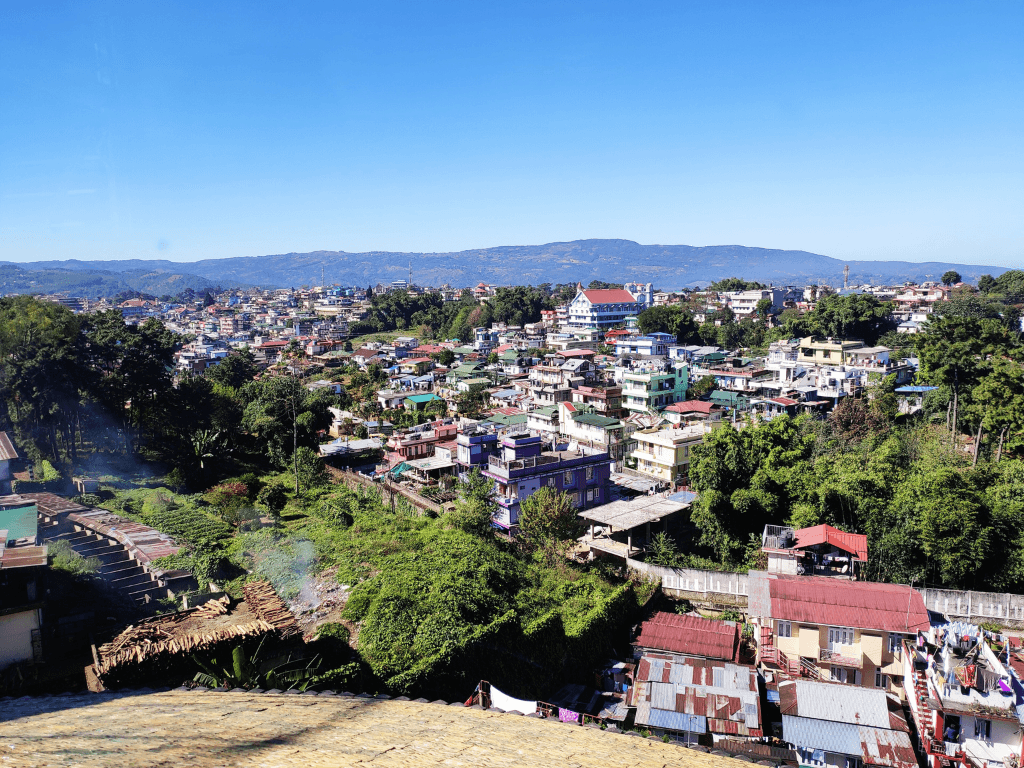
The planning of Shillong began with the British, based on available records. Since then, Shillong has been cast as the Khasi, colonial, post-independent, and now Smart City. Since it was selected as one of the 100 cities in the Smart Cities Mission in June 2018, 17 projects worth Rs 770 crore[2] were awarded for smart roads, multi-level car parks, traffic management systems, commercial complexes and retrofitting of the city centre across 365 acres of the Area Based Development, according to the Shillong Smart City Limited set up in 2019.
The language of the proposals was very alluring. It promised a clean, green and modern city of the new age. The proposals were developed in consonance with Shillong’s urban growth which saw a spurt between 1993 and 2023; settlement areas in the city ballooned from 6.4 percent to 17.36 percent of its total area.[3] This means that there was a continuous and rising pressure on the forest cover, agricultural land and wetlands. The pressure came from the expanding built-up areas in patterns of scattered, unregulated development interspersed with undeveloped land, which researchers at North-Eastern Hill University describe as “frog-leap development”.[4]
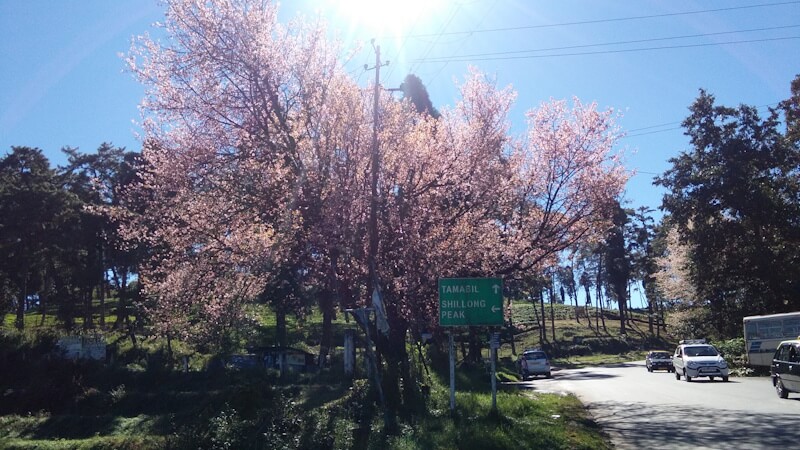
An RTI filed by civil rights activist Agnes Kharshiing has documented that the state government was relegated to a land agent, merely buying land from dubious landowners under shady terms and conditions, displacing indigenous farmers and residents, then parcelling it to bureaucrats and developers.[5] The Meghalaya Transfer of Land (Regulation) Act, 1971, which prevents the sale of tribal land to non-tribals, Kharshiing found, holds diminished meaning in the New Shillong Township which raises several questions about who and what the legislation is designed to protect if indigenous land tenure becomes difficult to enforce precisely in the areas undergoing the most rapid transformation. Who is the smart city being built for, and against what?
The Smart City Mission functions as a Special Purpose Vehicle – Shillong Smart City Limited – an entity outside of the municipal structure and the Dorbar Shnong too. It does not address or speak on collective land ownership or the relational ecology that the Dorbar Shnong practices; their goals are entirely different. The Mission relies on title deeds, survey reports, and Development Control Regulations standardised across cities. Dorbar Shnong uses sanads, customary laws, and communal consultations.
The one-size-fits-all approach has brought in objections from residents, civil society, and street vendors about their lack of participation in planning. They went to the court, spoke in community forums, and wrote in local dailies. Street vendors’ associations, residents, organisations have put up resistance.[6] As former bureaucrat Toki Blah puts it, “the community was not taken into confidence before planning the Smart City projects.”[7]
A wealth of species threatened
Behind the currents of development lies an age-old story about what Shillong has held for eons now. Locally known as Law Kyntang or Law Lyngdoh, Shillong and the wider Meghalaya highlands hold one of the most significant and concentrated sacred groves in India. A study across 79 sacred groves in Meghalaya documented over 514 species within them — lichens, orchids, ferns, medicinal plants, birds, insects, the entire entangled architecture of forests that have never been monoculture, never been “managed” in the sense that urban greening projects envision (Tiwari, Barik & Tripathi, 1998).[8]
These groves are living arrangements held and conserved by communities and governed by customs and beliefs that sustained these groves with practices predating management in the modern sense. The governance of these groves is under the Khasi village council known as the Dorbar Shnong. Under traditional Khasi land tenure, Ri Raid, community land is held collectively, managed by the Dorbar Shnong in accordance with customary law.[9]

The governance of preservation is premised on webs of relationality between land, water, air, and other beings that enter and thrive in the ecosystem. The law honours and protects it. In neighbourhoods like Lawjynriew and Madanrting, Dorbar Shnongs continue to oversee spring protection, forest preservation, and water distribution through what one study describes as a polycentric governance model.[10]
To even conceive of losing the community, the laws, customs and sacred rituals performed at Lum-Shyllong, the sacred peak anchoring Khasi cosmology to the logic of development and urbanisation, means losing the grammar through which a community understands its place in the world and the unmaking of an old, relational web that has sustained not only the ecosystem and environment in a botanical sense, but human settlements around it as well.
And yet Khasi villages absorbed into the Shillong Urban Agglomeration without adequate planning lack basic infrastructure, reflecting what researchers describe as chaotic urbanisation.[11] There is documentation of less fresh air, rising temperature and water scarcity.[12]
Applying the MSJ lens
To unfold the tensions enveloping Shillong all at once, Multispecies justice (MSJ) offers a framework of understanding. It not only considers the justice of humans and other animals but also that of the trees, forests, rivers, soils, mountains and all that lives and breathes. Species, all of them, not only aid to raise the value and experience of life in congruent spaces but are also extremely critical in restoring balances tipped over by climate change.
This shift in mindset, from us and them which is used to justify current anthropocentric framings of development to a more pluri-centric approach of justice gave rise to the concept of multi-species justice. MSJ emphasises the relational webs in which they exist and their inextricable connection to the places in which they are located, thus challenging the conventional boundaries that exclude other species from justice frameworks due to their inability to make their needs known. It is we who have hollowed their houses. It is we who fail to communicate with them.
If they do not speak in words we comprehend, how shall we listen to them? How do we reframe our definitions on papers and redesign the lanes of cities to make space? How do we extend our understanding of what it means to live in harmony with the world, all of it? MSJ answers this issue of ecological justice in a myriad of ways. By making space for ecological communities, rivers and waters, by reinstating indigenous approaches to ecological governance, enabling intersectional efforts to green existing grey infrastructure and supporting community-based cultural and political institutions advocating for ‘socioecological self-determination’.
What is striking about Shillong is that the question that MSJ asks of governing the city in recognition of its multispecies character, already has a partial answer embedded in its own institutions. The Dorbar Shnong, the Ri Raid, the Law Kyntang all represent governance arrangements that hold human and non-human relations together without naming them as such.
The sweetest account for MSJ through recognition and procedural justice pathways, which in one way can manifest as socio-ecological self-determination of varied species is found in the City of Curridabat in Costa Rica[13], which in popular imagination is now called Ciudad Dulce, Spanish for Sweet City. Marred with deep social inequalities, climate change, informalisation of urban living spaces, loss of biodiversity and various other challenges, it envisioned a pathway to renewal and reprisal in sensitivity and receptiveness towards all species as fundamental to transforming the well-being of people and living beings.
It was the first to recognise the rights of a citizen for pollinators, earthworms, drops of water, guitite (flowering plant), hummingbirds and other species including humans entangled in a web[14] that creates and sustains a healthy and happy city. This recognition manifested in the re-designed streets and neighbourhoods with native flowering plants lining sidewalks, an element of “biological corridors” created across the city. The participatory re-design approach with local stakeholders re-imagined 21 such neighbourhoods.[15] These are living examples of “MSJ integrated urban ecosystems” where local residents asked questions about their own streets and squares, became stewards of ecosystems that they helped design, and saw their gardens and common spaces woven into a city-wide network of living infrastructure.
The city, in this manner, took into account the needs and justice outcomes of the concerned species asking questions like ‘how are native bees, the pollinators, experiencing the city’ ‘how can the solution improve multispecies wellbeing in the future’. This co-learning and experiential model not only created a socio-environmental and urbanistic base for development and urban sustainability, but laid a political and ethical vision for policy and innovation rooted in mutual recognition of the value of all forms of life. Whether Shillong’s own indigenous governance arrangements might be that foundation is a question the Smart City Mission has not yet found enough reason to ask.
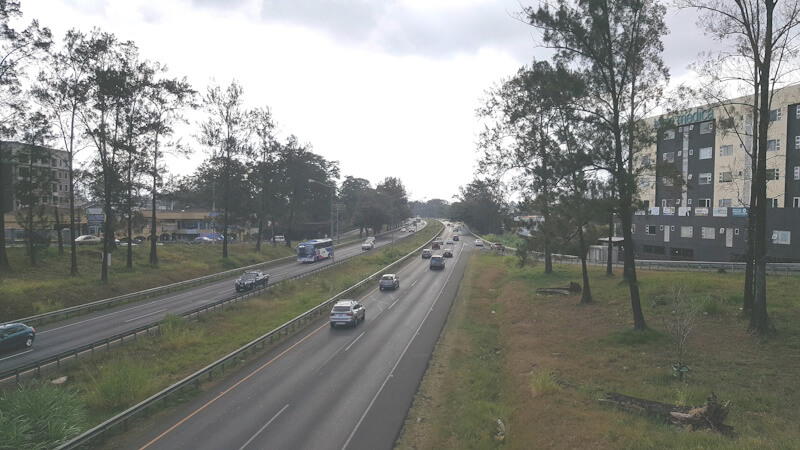
In imagining development through MSJ, it must be recognised that MSJ doesn’t advocate a return to the past path of development. It recognises that cities change, as they must. The question it rather focuses on is what it means to plan a city when the governance systems and ecological arrangements sustaining the ecology and community are not legible to the planner. It seeks to understand the language of green that development postulates and why it fails to recognise the groves there already.
It imagines Dorbar Shnong as the governance foundation for planning a smart city, sacred groves as the ecological and ethical anchor of all decisions about development rather than a resource about which decisions will be made, the Umaim river and its catchment all with stakes and a say in the city’s design and future. These questions and visions are not represented in the city and its planning does not have the language to formulate it, and this is the most urgent work to be done.
In Curridabat, now the children, who know planning is not only for humans, but for other living beings too, are capable to speaking in “a language that is capable of prompting recognition of similarity and responsibility, between embodied, social creatures”
When we revisit the question, who must speak for these beings, the living ecosystems they inhabit, we understand that they can speak for themselves, when we extend the boundaries of our language of justice to include the language of nature, which lives and breathes and perseveres just as we do. If urban planning learns to listen to what a city already knows about itself, what kind of city might we begin to imagine? If only we tried.
References:
1 and 13. Raymond, C. M., Rautio, P., Fagerholm, N., Buijs, A. E., He, S., Lange, E., & Andersson, E. (2025). Applying multispecies justice in nature-based solutions and urban sustainability planning: Tensions and prospects. NPJ Urban Sustainability, 5(2).
2. IPE Global. (n.d.). Project management consultant to design, develop, manage and implement Smart City projects in Shillong.
3 and 4. Kharpran, F. P., & Purkayastha, S. (2024). Urban dynamics and urban sprawl in hill stations of India: a case study of Shillong city. Acta Geographica Debrecina Landscape & Environment Series, 18(2), 1–10.
5. Xaxa, A. (2018). Contested urban development in Shillong. Medium.
6. IDRO Online. (2026, February 13). Claiming a hawking corner in smart Shillong.
7. Shillong Times. (2025, April 25). Shillong, the Smart City project and the main stakeholder, the public.
8. Tiwari, B. K., Barik, S. K., & Tripathi, R. S. (1998). Biodiversity value, status and strategies for conservation of sacred groves of Meghalaya, India. Ecosystem Health, 4(1).
9. Shillong Times. (2024, October 17). Governance of Dorbar Shnong and powers of Rangbah Shnong in the modern world.
10. Kharmylliem, B. (2025). Securing Shillong’s water future: the role of indigenous institutions. Journal of Environmental Studies and Sciences.
11. Meghalayan Express. (2025, January 8). Shillong faces severe ecological strain from urban expansion.
12. Shillong Times. (2026, April 5). From pines to pavement: the changing face of Shillong.
13, 14 and 15. Urban Nature Atlas. (n.d.). Sweet City: a city modelling approach for pollination.
Satakshi Gupta is an MSc student in Climate Science and Policy at TERI School of Advanced Studies, New Delhi, and holds a BA in Economics (Honours) from Shri Ram College of Commerce, University of Delhi. Her interests span political ecology, climate governance and questions of justice. Through her research and writing, a blend of scholarship and imagination, she hopes to contribute to a more just and ecologically conscious conversation about cities.
All photos: Wikimedia Commons