
Eighty-year-old Lakshmi Devi arranges earthen pots on a strip of pavement in the harsh summer of Ambala and settles in for a 12-hour vending. A good sale every day would allow her grandchildren to go to English-medium schools because they should be “educated (and) not end up like me,” she says, adjusting her meagre belongings in the bag that includes her medicines for diabetes, blood pressure, and angina. “I have to earn, I have to provide,” she says, sometimes seeking the shade of a tree nearby and fanning herself.
In Ambala, the mid-size city in Haryana, Shakuntala (she uses her first name only), 58, travels from Ugada village, near Ambala Cantt., to cook and clean in the city’s homes. Her son drops her halfway on his bicycle, but she still has to walk for three kilometres to reach her workplace. The harsh summer and monsoon months make commuting difficult and she loses up to a third of her modest income of Rs12,000 a month. If the heat makes her sick and she takes leave, her pay is cut. If any person in her family falls ill, the cost of care forces her to borrow between Rs 500 and Rs 1,000 a day. “Main khud bimar pad jaati hoon, phir bhi ghar mein dekhbhal karti hoon. (I fall sick but I have to care for everyone at home.)” She and her husband, also a daily wage earner, have no savings.
Laxmi and Shakuntala are only two of the women workers in one city among the nearly 168 million women[1] who work in the informal sector in India’s cities as street vendors, domestic workers, construction labourers, home-based workers, waste-pickers and caregivers. They form a pillar of the very foundation of city life, tending to homes, and keeping markets and services functioning day after day. However, more than 80 percent of them have no contracts, no social protection, and no safety nets[2]. They are typically paid about 20 percent less than men[3] doing similar work, they shoulder a double burden of paid and unpaid work in their homes, and face heightened risks[4] during disasters. The latest Periodic Labour Force Survey (PLFS) data[5] shows that in self-employment, where most informal women work, women earn just 36 percent of what men earn.
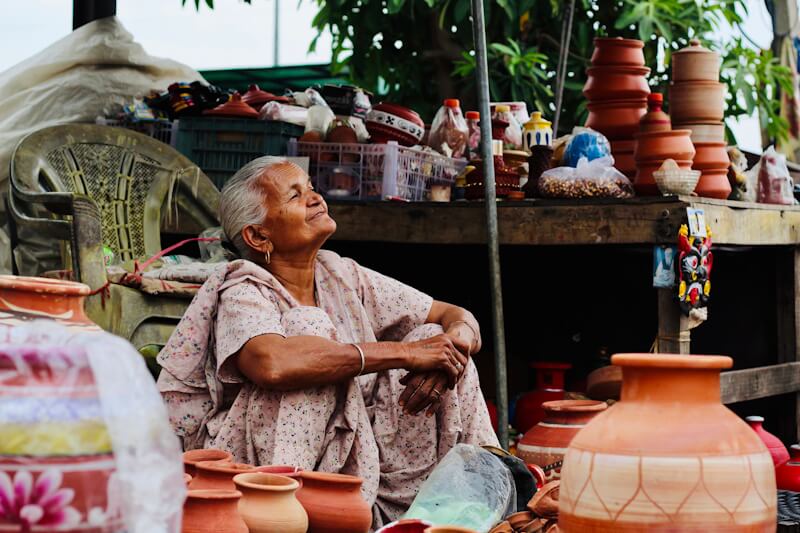
Photo: Shilpi Bhardwaj
This is not incidental. Instead, it reflects the systemic gaps in women’s informal work, their protection, and the lack of opportunity. These inequities have always defined women’s place in India’s economy but climate change is now magnifying them in ways that are both visible and invisible. Rising temperatures, floods, and food inflation are no longer distant environmental concerns; they are daily realities that multiply unpaid labour, widen wage gaps, and increase occupational insecurity.
For the millions of women in India’s cities, the result is a crisis that is economic as much as environmental, exposing how fragile our social and gender safety nets truly are.
Why women carry higher burdens
The impact of climate-related extreme weather events is, of course, felt by millions of men in the informal sector too but the burden is unequal – women workers carry a higher burden. When temperatures rise and cities flood off the charts, women battle these during work hours as well as spend longer hours for their homes, queuing for less-available water, managing higher electricity bills or hospital visits, and eking out time to care for ill family members[6]. This often means they lose valuable work hours, and often their own health, to climate stress[7] raising their burden.
Globally, women perform over three-quarters of all unpaid care work; in Asia and the Pacific, this is 80 percent[8]. If women’s unpaid care were also counted, it would add an estimated Rs 22.5 lakh crore to India’s economy, about 7 percent of the GDP[9]. While global studies[10] show that GDP growth declines between 1.7 and 2.5 percent for every degree Celsius increase in temperature, the losses are far steeper in India’s poorer states and districts, where it can reach as high as 4.7 percent.
A 28-year-old waste picker and mother of three, who requested anonymity, wakes at 4 every morning, cooks for her family, leaves by 6am, walks 15-20 kilometres through markets and waste spots in Ambala, and collects recyclables from Baldev Nagar to Manav Chowk. “Jaldi nahi gayi toh achha maal koi aur utha leta hai (If I don’t go early, someone else picks up the good waste.)” In the hottest months, she feels dizzy and weak. Missing a single day reduces her earnings by Rs 500. Heat and dehydration slow her down; she loses out on collecting a few hundred rupees’ worth of waste. When it rains, wet and soiled waste becomes nearly impossible to sort. “Ek din ka nuksaan bhi bahut bada hota hai (Even one day’s loss is a very big one.)”
The waste picker is not an exception. Across India’s informal workforce, women report a measurable dip in earnings during peak summer months, with some reporting up to a 30 percent decline in output[11]. According to a 2022 study, 43 percent of home-based workers reported an income decline due to climate stress[12]. Another study on informal workers found that each one-degree Celsius rise in temperature leads to a 13 percent drop in gross earnings and a 19 percent decline in net income[13]. A 45-year-old farm worker from Tharwa village, Ambala, like other informal workers, bears the brunt of extreme weather events. She cuts wheat and collects husk for her livestock as part of a barter system. When floods destroy a crop, she loses a year’s worth of fodder and is forced to spend money buying grain while managing flood-related illness, loss, and damage. “Jis saal fasal doob jaati hai, mera 15-20 hazaar ka kharcha badh jata hai (When the crops are lost to floods, my expenses increase by Rs 15,000–20,000.)”
There is no relief, no insurance for farm workers like her. The gender wage gap in Haryana has persisted across decades[14]. The women interviewed for this essay work not because opportunity opened up, but because necessity left them with no alternative.
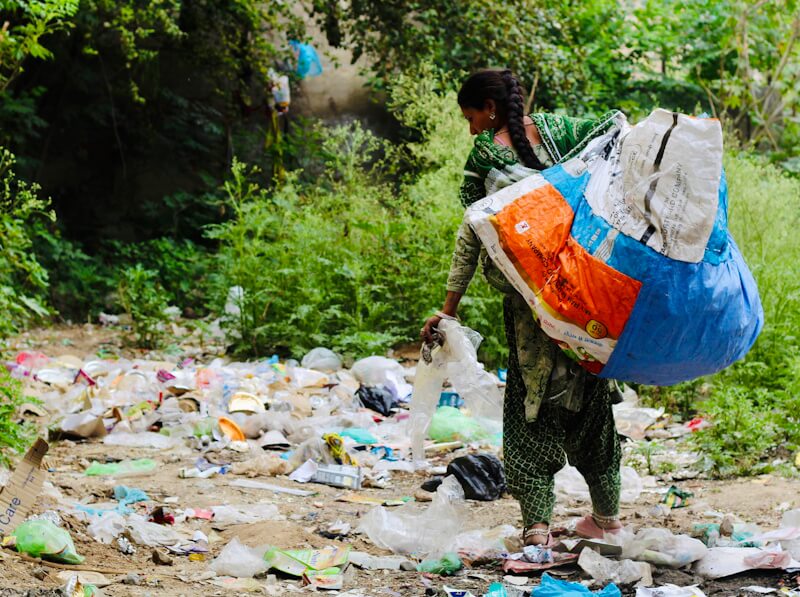
Photo: Shilpi Bhardwaj
A blind spot in adaptation policy
According to the World Economic Forum 2024 Global Gender Gap Report[15], India is among the world’s most unequal economies on gender participation, with an economic gender parity score of just 39.8 percent, one of the lowest globally. As India’s workforce shifted[16] toward non-farm activities through the 2000s, with an employment growth rate of just 2.5 million per year between 2004-05 and 2011-12, women were consistently left behind.
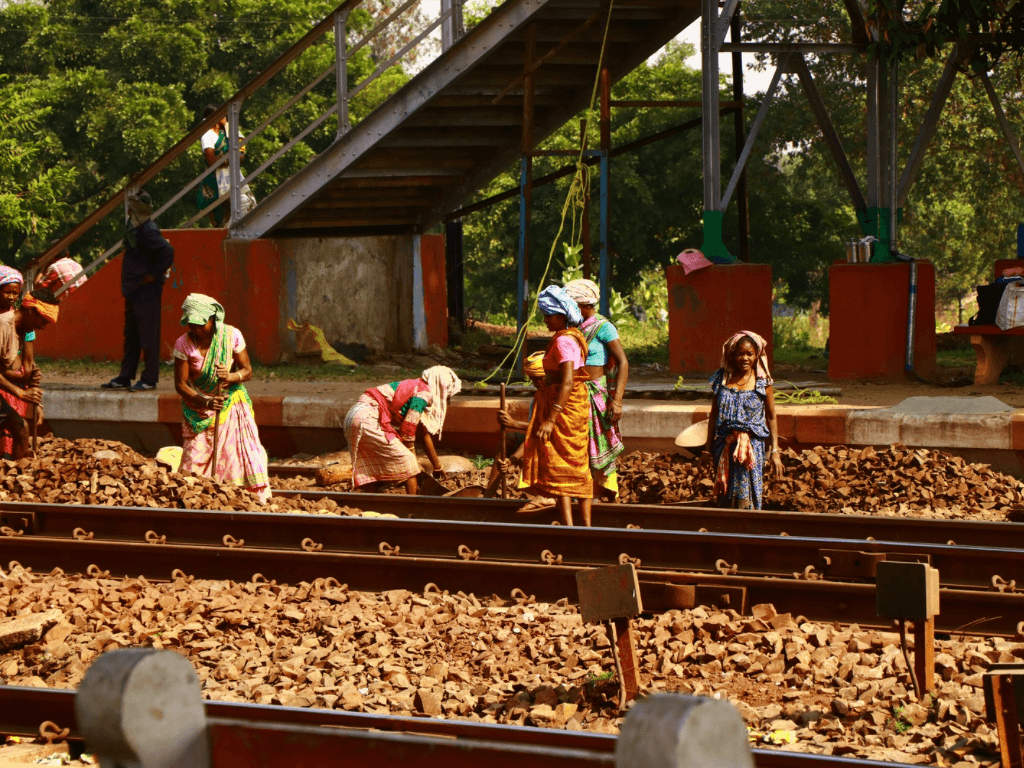
A 48-year-old contract worker, who also requested anonymity, begins cleaning roads at 6 o’clock every morning , after walking five kilometres to reach the workspot, and is allowed only a five-minute break every hour to drink water and rest. If she falls sick and is away from work for more than four days of a month, she is fired. “Bimar ho, chahe garmi ho ya toofan, aana padta hai. Baarish mein bhi attendance deni padti hai, chahe kaam ho ya na ho. (Sick or not, whether it’s a heatwave or a storm, we have to come. Even in the rain we have to mark attendance, whether there is work or not.)”
Her insecurity runs deeper. With every new contractor, rules change without warning. “I heard someone say they don’t want to keep women over 45 anymore,” she says, “Nothing has happened yet, but our papers were collected. Where can we go for help? I have no savings. My husband is no more.” She is paid around Rs 16,000 a month while her male counterparts get Rs 18,000 a month.
For women like her, there is no threshold at which the conditions become too difficult and the system steps in. She works through the punishing heat till her body, worn down by years of housework, care work, and labour with no rest, can plough through. She has never heard of a Heat Action Plan. No official has reached out to her; no scheme has benefitted her. The economy requires her presence but offers little in return. India’s climate policies have consistently failed to respond to what women in the informal spaces experience every day. The National Action Plan on Climate Change (NAPCC) and most State Action Plans on climate acknowledge gender vulnerability, but few translate this recognition into measurable outcomes[17]. In practice, gender inclusion remains more symbolic than substantive. Few plans incorporate gender-disaggregated data, dedicated budgets, or institutional mechanisms to address women’s specific climate vulnerabilities[18].
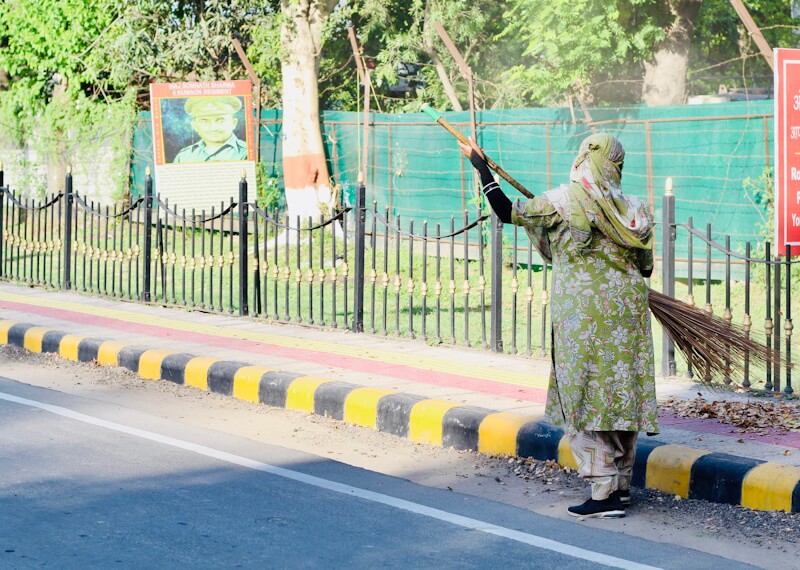
Photo: Shilpi Bhardwaj
This tends to portray women simplistically as a vulnerable category rather than as active participants, leaders and agents of change in climate adaptation. A review[19] of 28 State Action Plans on Climate Change revealed wide disparities in how gender is addressed: 12 states do not mention gender at all while most others treat women as passive victims rather than active agents of resilience. Few states have moved beyond token mentions to adopt gender-transformative approaches that challenge unequal resource distribution or institutional barriers. Importantly, almost none integrate gender systematically through planning, implementation, and evaluation stages[20].
Heat Action Plans seldom account for domestic workers or street vendors, whose exposure is continuous and unregulated[21]. Relief schemes are designed and delivered through formal employment channels, leaving informal workers, especially women, outside their reach. As a result, climate resilience investments often bypass those who are already adapting in real time, using hard-won survival strategies to keep households and neighbourhoods functioning.
A framework for inclusion
Bridging this gap requires recognising women not merely as beneficiaries but as co-creators of climate resilience. Evidence[22] shows that when women participate meaningfully in environmental decision-making, outcomes improve. Projects become more sustainable, communities adapt faster, become economically stable, and resources are managed more equitably.
In Maharashtra, women-led self-help groups have taken charge of mangrove restoration and climate-resilient livelihoods–-training in crab farming, creating local enterprises, and earning steady incomes while protecting ecosystems[23]. Cooperatives like SWaCH[24] in Pune and Hasiru Dala[25] in Bengaluru have shown how women-led waste systems can strengthen both environmental outcomes and economic security. By integrating waste recovery into local value chains, these groups have advanced circular economy practices, lowered the city’s ecological footprint, and provided reliable livelihoods for marginalised workers. The Kagad Kach Patra Kashtakari Panchayat supports waste pickers through collective bargaining, helping women in this informal sector gain access to fair wages, health insurance, and financial independence[26]. These changes contribute to an improvement in children’s education and family nutrition.
Women’s[27] economic empowerment is closely tied to environmental sustainability. When women gain access to education, financial resources, and decision-making power, they tend to adopt and promote sustainable practices. Studies show that economically empowered women are more likely to engage in green entrepreneurship, support environmental policies, and manage natural resources efficiently[28]. They also make more eco-conscious consumer choices, using their financial independence to prioritise sustainability[29].
Photo: Wikimedia Commons
Ways forward
Climate governance must shift from planning for women to planning with women. This means mandating representation of informal women workers in city-level climate governance, from ward committees to disaster-management authorities. Every adaptation scheme, whether on housing, transport, or urban cooling should undergo a gender impact audit. Climate finance must flow directly to women-led cooperatives and self-help groups already managing environmental risks at the grassroots.
Climate action plans must also focus on investing in social infrastructure. Facilities such as cooling centres for street vendors, childcare near construction sites, or guaranteed water access for workers are as vital to resilience as solar grids or green buildings. A resilient social infrastructure will reduce the impact of climate shocks and boost adaptive capacity.
When women’s contributions and vulnerabilities are overlooked in climate adaptation plans, it weakens the broader social and economic systems that underpin resilience. Recognising informal work, especially of women, as a core adaptation priority is not just a question of equity; it is essential to building a climate policy that is both effective and humane.
Shilpi Bhardwaj is a Behaviour Research Associate at Transitions Research, where she works at the intersection of cognitive science, sustainability, and behaviour change. Her research explores how insights from cognitive and social sciences can support transitions toward environmentally sustainable practices, with a focus on areas such as waste, energy, circular economy and low-carbon living. She draws on both qualitative and quantitative methods, with a particular interest in socially grounded approaches to behaviour change. She holds an MSc in Cognitive Science. She has also contributed to the GRACE project at the George Institute for Global Health, a multi-country initiative focused on gender-responsive research and advocacy.
Cover photo: Wikimedia Commons