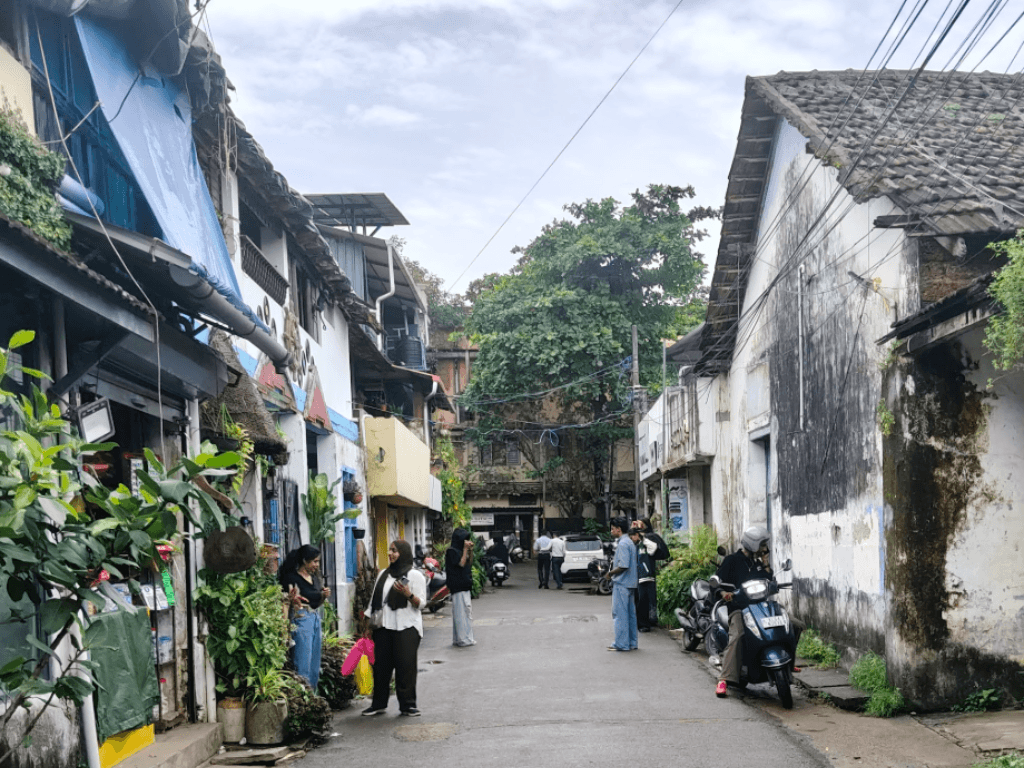

On weekends, and sometimes even on weekdays, Gujarati Street in Kozhikode looks different and crowded. Even its entry, characterised by wall art, refurbished buildings, and beautifully curated storefronts, contrasts sharply with the other beachfront streets with an almost “European-style” appearance, according to an entrepreneur who runs an artisanal textile store in the street.
Scroll through Instagram reels or YouTube videos of Kozhikode, and Gujarati Street keeps coming up as one of the most attractive and “Instagrammable” spots in the city. The young stroll down the street, clicking photos in front of the painted walls and curated storefronts. Some of the wall drawings metaphorically illustrate the contemporary lifestyles and desires of youth, such as travelling, wearing trendy clothes, and riding modified vehicles. The former warehouses, now renovated, have turned into tattoo studios, antique cafes, artisanal clothing stores, and so on.
There are still a few houses built by the Gujarati community; most of the time, the men of the community sit on their verandahs, chatting and watching the young smoke cigarettes and perform bike stunts. If you walk around this young crowd, you can hear conversations about community events, food, fashion, and photography. According to social media and popular narratives, Gujarati Street is being celebrated and envisioned as an “art street”, a cultural hub where artists, entrepreneurs, and enthusiasts come together.
Hundreds of years ago, Gujarati traders came to Kozhikode to do business and settled near Big Bazaar (Valiyangadi), the city’s commercial centre. This is how Gujarati Street came to be. They lived in the same warehouse (Pandikashala) which was also used to store the commodities. Community life flourished in these spaces layered with commerce, affection, and friendship. Over time, the traditional trading networks declined, leading to the migration of the community back to their native land. The transformation and establishment of the Gujarati Street as an ‘art street’ is considered a rebirth of the street, while crediting broader urban restructuring processes. A new heritage-cultural entrepreneurship has emerged on this street, repurposing the walls and other built-in structures into aesthetically pleasing establishments.
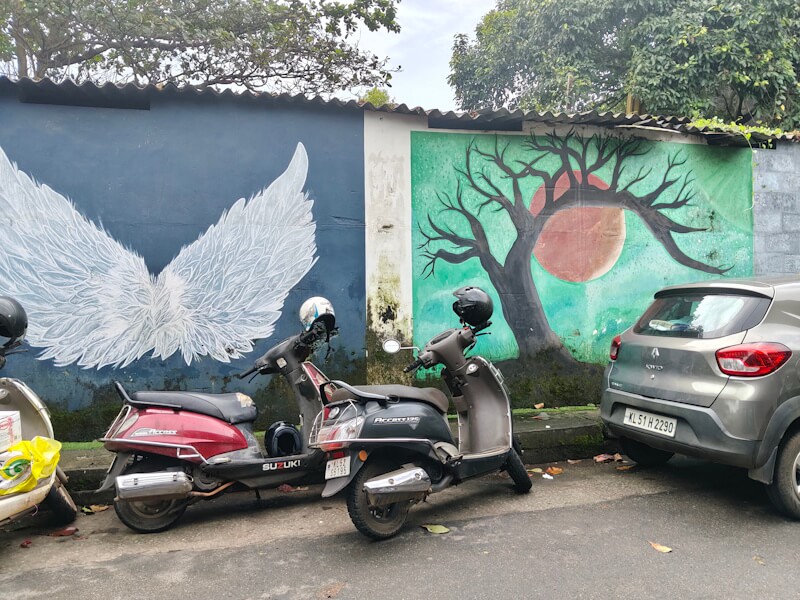
Placing the Gujarati Street within the broader neoliberal transformations, this essay critically examines the street’s restructuring and argues that they are not merely aesthetic or economic. Through ethnographic fieldwork, it investigates how the physical environment of Gujarati Street is altered, both literally and symbolically, to produce certain forms of belonging, and asks who benefits from the street’s transformation into an art space, who has access to it, and who is quietly shut out.
Central to this inquiry is the persistent aspiration of many urban actors who own some kind of entity on the street and constantly think about curating the street and space for those who “understand art”. Such urban imaginaries are shaping and reshaping the street, directly or indirectly, rather than treating it as a mere cultural preference, as they also determine the socio-cultural relations and belonging in the street. New forms of visibility, access, and belonging are produced in the street through those renovated warehouses, meanings attached to art, and curated cultural experiences. The Gujarati street offers an analytical framework to understand how contemporary urban redevelopment relies on culture and aesthetics, benefits a particular public, and defines different types of urban citizenship.
Commercial street to art and cultural enclave
In the past, Gujarati Street had a significant impact on Kozhikode’s commercial landscape and was closely tied to the city’s identity as a mercantile hub. Due to the Gujarati-settled communities and their enduring connections with the Zamorin, the street developed into an important centre for the spice trade and other commercial activities.
The characteristic warehouse-cum-office-cum-residential structures that served as both commercial hubs and establishments coordinating daily community life and kinship ties were at the centre of the street. This close integration of economic, social, and cultural functions was reflected in the built environment: daily interactions linked merchants, workers, and residents to broader regional and maritime trade networks; warehouses served as shared spaces; and commercial transactions and harmony flourished among diverse communities (Parekh n.d).
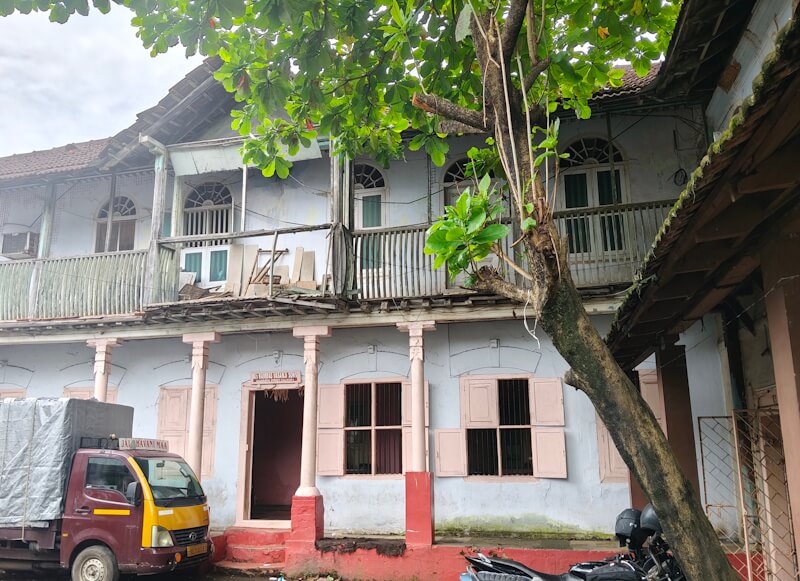
The street has now seen the emergence of a different landscape. Entrepreneurs, artists, architects, and other enthusiasts were attracted to the Gujarati Street as warehouses and premises were renovated, while mercantile operations declined and most Gujarati families migrated. The street is now known for its historic architecture, which adds aesthetic qualities and cultural potential. Gujarati Street’s warehouses have taken on new identities and roles. This change is especially evident in spaces like Design Ashram and Gudham Art Cafe. The latter, which operates in a renovated warehouse, is considered to have brought revolutionary changes to branding Gujarati Street as an ‘art street’. The Gudham Cafe, spread over two floors, has a cafe on the ground floor and displays artefacts, sculptures, paintings, and other showpieces on the first floor.
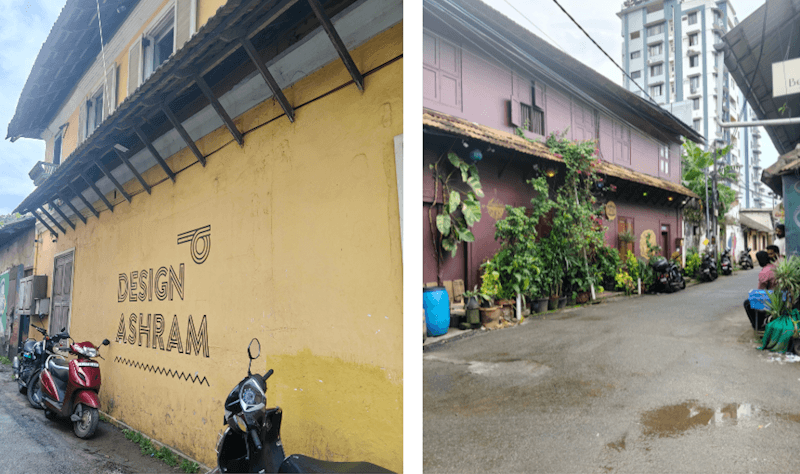
These artefacts have been collected from different parts of the world, and people purchase tickets to view them. Similarly, Design Ashram, located next to the Gudham Cafe, is considered the hub of artistic expression and cultural experiences, hosting a range of workshops, events, plays, and concerts. Most of the events are ticketed, hence curating the cultural experiences. Here, culture itself has been turned into products that can be marketed and consumed (City Heritage 2025).
Both Gudham Cafe and Design Ashram brand themselves as pioneers who transformed Gujarati Street, stimulating the growth of other cultural entrepreneurial initiatives, such as tattoo studios, cafes, artisanal clothing stores, and baking stores. They partnered, hosted events together, and sometimes advertised each other on social media to attract audiences. Mostly, they attracted a similar strata and profile of audiences showing up for every event. Gujarati Street has been identified as a creative hub where culture, art, and heritage are created and coexist.
In addition, social media plays a major role in driving and sustaining this transformation. Carefully chosen snippets of workshops, exhibitions, cafes, and beautiful interiors are shared on social media, even through paid content creation, and made to go viral, taking the story far and wide. These depictions actively contribute to cementing the modern urban imagination of Gujarati Street as a creative and cultural avenue. Through this mode, specific cultural publics who can purchase tickets and feel represented in the events and conversations are invited.
Gujarati Street’s transition is indicative of a broader trend in modern urban development, in which placemaking and regeneration emphasise cultural experience, innovation, and tradition. Aesthetics increasingly serve as a source of urban value in contemporary times (Zukin 1995). The value of space in Gujarati Street is now derived primarily from its ability to attract tourists, customers, and a culturally valued audience. Rebuilding warehouses signifies the establishment of a creative landscape centered on consumption, experience, and cultural differentiation, which also shapes and reshapes social interactions.
Creation of an exclusive public space
Conversing with entrepreneurs, who have established themselves on the streets and are considered visionaries of Gujarati Street, has revealed a recurring idea: the desire to create a space for people who “understand art”. This desire, though articulated in many ways, demonstrated a common vision of the street’s imaginary and its intended audience. Increasingly, art served as a marker for defining a public, drawing a clear distinction between desirable and undesirable publics rather than being considered solely as creativity or self-expression.
This contrast was made clear by a handcrafted clothing entrepreneur. They stated that they would not welcome “walk-ins of common people” into their store, which sells handcrafted clothing sourced directly from artists and is unaffordable for them, as their products were not intended for them. Their distinction and exclusion were more than just financial. They also stressed that the built-in aesthetics and the curated storefront – designed to attract only a certain public – would prevent the common population from entering the store, thinking it is barely affordable.
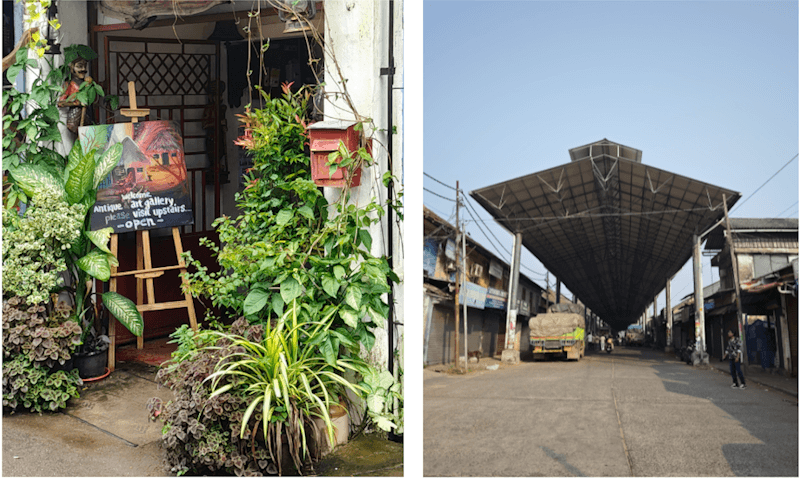
The desire to produce and sustain a curated public and their choices were seen throughout the street. A tattoo artist discussed turning the entire commercial stretch, starting at Big Bazaar, into an art street that could serve as Kozhikode’s cultural identity and attract artists, tourists, and creative professionals. He observed that with all urban transformation getting accelerated, the Big Bazaar is slowly facing its ‘natural death’, and it’s high time the market was restructured and made into an exclusive stretch for art and culture-based place-making. These stories and observations signify that ‘art’ is not just a creative attempt to redefine a mercantile landscape but also a language that defines accessibility, legitimacy and belonging.
However, listening to those who navigate the streets daily confirms the earlier idea of curated publics. Groups of teens and headload workers in Big Bazaar using the roadway revealed a different attitude toward the street. Because “everyone knows this place now”, Gujarati Street has grown into a significant gathering spot for youth who spend time in groups, frequently visit with friends, and take photos for social media. For headload workers, it’s a space in the new Calicut and does not signify anything of their times, especially friendship gatherings and events. One group said, “We can’t afford to go to the cafés because they charge too much.” Even though they made frequent use of the street’s public areas, many of the initiatives that shaped the street’s new character were unaffordable.
Some entrepreneurs have concerns about groups of young people congregating on the street, smoking, and riding motorcycles through the neighbourhood, which deters the desired public from using the space. These issues highlight how certain forms of public presence are presented as incompatible with the street’s respected identity. Therefore, the issue of belonging involves more than just access; it also concerns which individuals and their participation are deemed suitable for developing an art street and sustaining its new identity.
The aspirational Biennale model and neoliberal urban imaginaries
The tale of Gujarati Street’s transformation, or of any art street, could be about creating a certain urban future in which built structures and social relations shape and reshape one another on the basis of accessibility, participation, and belonging (Lefebvre 1991). The one urban transformation model frequently looked up to, talked about, and aspired to by entrepreneurs and art enthusiasts on Gujarati Street is the Kochi-Muziris Biennale and Fort Kochi. Most of them envisage the Biennale as more than an art festival and as a symbolic representation of urban transformation, converging heritage, arts, and cultural consumption, ultimately boosting tourism and the local identity.
Entrepreneurs and cultural enthusiasts often assume such spaces as “distinct spaces” where people purposefully engage with and immerse themselves in artistic practices and cultural consumption rather than just loitering. Kochi Biennale also highlighted the complexities of viewing such urban arts festivals and spaces through the lens of culture-driven urban change. Even though the Biennale has raised global visibility, selective forms of access, engagement, and involvement still prevail (Malavika and Harikrishnan 2026).
Gujarati Street depicts the same story. As art becomes a language that legitimises specific publics and lifestyles, heritage architecture becomes a tool for branding. Building an ‘art street’ signifies building a public. Although access to the street is quite open, participation in art cafes, visits to antique stores, and attendance at different events all depend on the cultural capital, economic privilege, and aesthetic sense one possesses. Visibility, experience, tourism, and consumption are the sources of urban value. The city itself becomes a commodity.
Thus, the idea of building an “art street” poses an issue that goes beyond Kozhikode. Who gains from these changes, and who is left on the peripheries as cities increasingly rely on art, heritage, and culture as an avenue for development? Gujarati Street serves as an example of how art streets actively shape urban transformation rather than just reflecting it. By doing this, they not only decide how spaces are rebuilt but also whose presence, navigation, and visibility shape the urban future. Gujarati Street’s transformation into an art street thus describes the politics of belonging in the city and stands as a representation to all of its contemporaries.
References:
- “Gujarati Street, Kozhikode: A Living Canvas of Culture, Creativity, and Community | City Heritage – Wheels to Wisdom | Heritage Experience & Expeditions.” City Heritage . Accessed June 23, 2026.
- Lefebvre, Henri. The Production of Space. Translated by Donald Nicholson-Smith. Oxford, England: Blackwell, 1991.
- Malavika, P. S., and Hari Krishnan D. “A Study on Public Engagement and Cultural Impact of the Kochi-Muziris Biennale.” ShodhVichar: Journal of Media and Mass Communication 2, no. 1 (May 28, 2026): 79–83.
- Parekh, Trisha. “The Study of a Hundred-Year-Old Gujarati Settlement in Calicut,” n.d.
- Zukin, Sharon. The cultures of cities. Malden, Mass: Blackwell Publishers, 1995.
Anjana S is a PhD scholar in Development Studies at the Tata Institute of Social Sciences, Mumbai. Her research focuses on everydayness in the gendered socio-spatial processes of contemporary Kozhikode city, exploring how practices of labour, leisure, consumption, and belonging shape urban life. She is also the Malayalam editor of Ala (https://alablog.in/), a Kerala studies blog.
All photos by Anjana S