
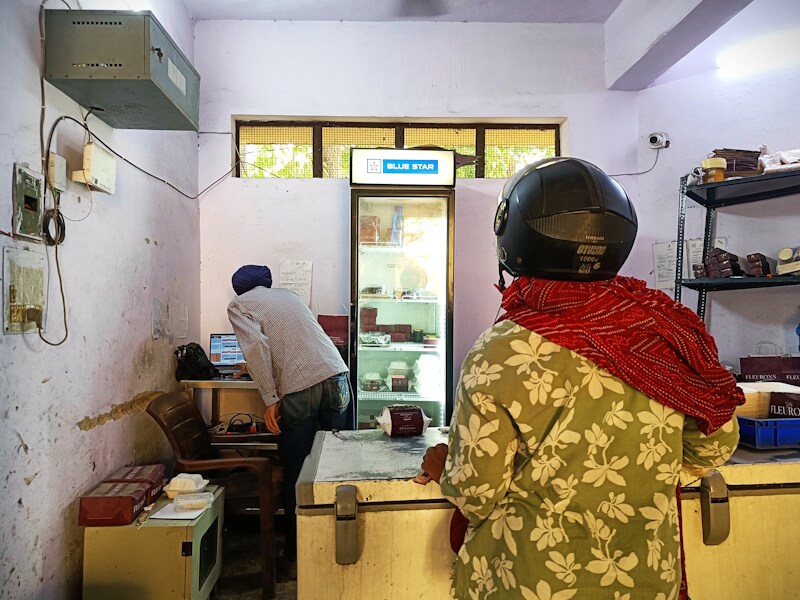
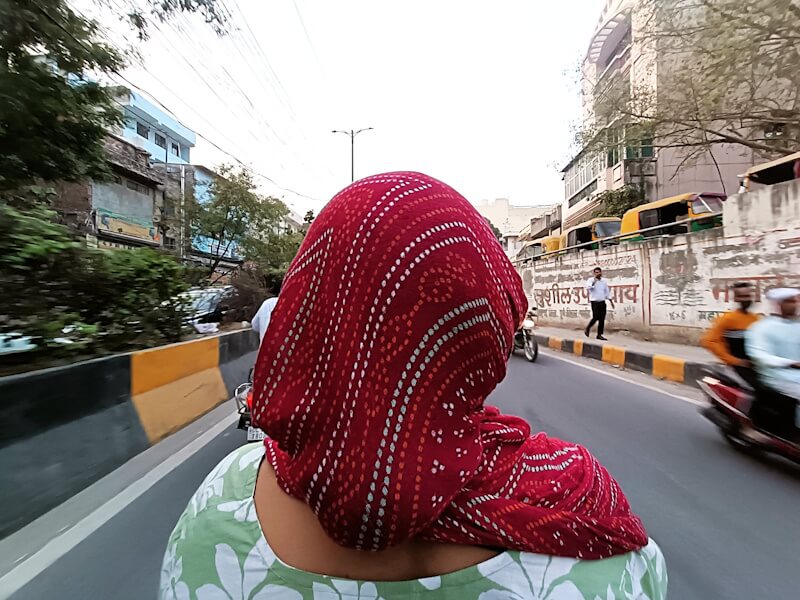
Just past noon in East Delhi’s Krishna Nagar, Lata Bharadwaj, a gig worker with Zomato, logs into her phone and waits for the first order of the day. The April heat at 42 degrees Celsius[1] is already unforgiving. We meet; there is not much time for pleasantries. Lata has a dupatta tied on her head, partially covering her face. She gets the first notification of the day. Two orders from a nearby restaurant in Krishna Nagar Market. She taps to accept. We rush headfirst into the traffic, I ride pillion with her.
In Delhi, women like Lata are a minority in food delivery, a workforce dominated by men,[2] but their work and concerns are not exactly the same. A NITI Aayog report[3] estimated 7.7 million workers in the gig economy in 2020-21 and projected this to be 23.5 million by 2030. Women make between 10[4] and 28[5] percent of the workforce. It offers them flexibility to wrap their work around their domestic demands. Lata attests to this. She has moved between Porter, Swiggy and Zomato in the past three years.
On the ground, however, it is not as simple. That flexibility is qualified by timed gigs, targets, incentives, low pay, arbitrary blocking of IDs, opaque rating systems, and the lack of safety and grievance redressal mechanisms. For a 10-kilometre order, Lata receives only Rs 55; her time spent waiting at restaurants, returning from far-off deliveries, or dealing with delays go unpaid. “There is flexibility in choosing time but there is no stable income. It’s like a full-time job without security,” says Nitesh Das, organising secretary of Gig Workers Association (GigWA).
Since 2021,[6] Zomato has advocated for including more women into its fleet. In 2021, only 0.5 percent of its delivery partners were women; by 2025,[7] this number ranged between 15 and 29 percent. They are slated to receive[8] additional benefits like a two-day income cover during menstruation, maternity insurance, and scholarships for children. For Lata, these have not always trumped the precarities of the work.
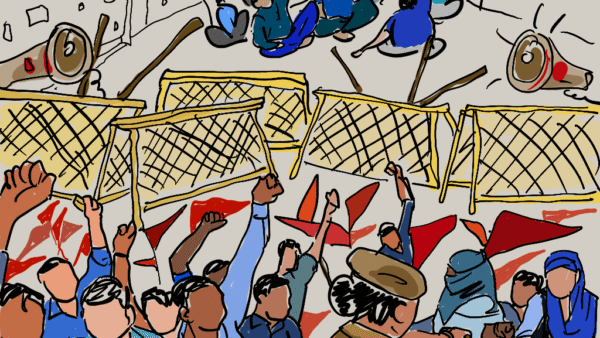
In January, nearly 35,000 gig workers switched[9] off their phones in protest; women gig workers forming a large part of it. To understand the life of a woman gig worker and the demands on her, we shadowed Lata for nearly nine hours from 1pm on April 24, a sweltering day. Her route took us through Krishna Nagar, Shahdara, Laxmi Nagar, Preet Vihar, Karkardooma, Anand Vihar, Nirman Vihar, and surrounding neighbourhoods.
What the day pays
“Itne mein hamara kya hoga?”
Delivery riders earn based on the rate of an order they successfully deliver. These are not uniform, says Lata, “an order costs Rs 20 or Rs 60-70.” The base pay, for most riders, is unsustainable which is why incentives matter. “We get incentives on a gig system – each gig is a time line, two hours make one gig, if we complete five gigs a day, we get the incentive,” she explains. The incentives range between Rs 233 and Rs 260 per gig for Zomato. She finds it inadequate.
Platforms have “comeback” offers to attract riders back, which Lata used. Six months back, she had switched to Swiggy for better rates but found her ID arbitrarily blocked, and returned to Zomato with this offer. The “comeback” rates are good but they drop soon, she says wondering if she should hop back to Swiggy.
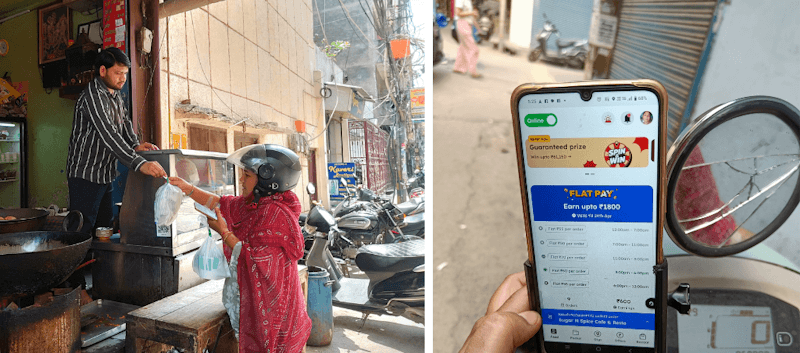
Today, there’s a “Flat Pay” offer which sets fixed rates at fixed time slots for orders. For every three-four hours, it ranges between Rs 50 and Rs 70 per order. The highest is in the 11 am to 3 pm slot. By the end of the day, Lata completes 20 orders and earns Rs 1,216 which is her daily average. It’s roughly Rs 28,800 a month, close to what Zomato CEO Deepinder Goyal said riders earn.[10]
However, this does not factor in the hidden costs. For Lata, this is Rs 300 every day for petrol, Rs 350 a month for phone recharge, and approximately Rs 2,400 for the two-wheeler maintenance. This leaves her with Rs 18,850 a month, well below Delhi’s minimum[11] wage for skilled workers. Swiggy brought in more, she says, but there was greater pressure to complete orders to earn it.
Her experience with Swiggy has been better. Completing 25-30 orders in 11 hours can earn her an incentive of Rs 355-465, taking her daily earnings to around Rs 1,500-1,600. But reaching that target is not possible every day.
On this day, Lata completed 20 orders, each taking 30-40 minutes depending on traffic, distance and restaurant delays – without proper breaks. To hit 30 orders, she would need to complete each delivery in roughly 22 minutes, assuming no disruptions such as phone overheating. Once, she was delayed because the order was out of her zone; her ID was immediately turned off.
Gender at play
“Log jab dekhte hain ki female rider hain toh kehte hai “Wow very nice. We are very proud of you.” Zomato bhi itni badi badi baatein karti hain. Par hamari koi nahi sunta.”
Lata talks about the challenges in her work.
Two and a half years ago, Lata learned about this work from a neighbour who was a gig worker herself. “Initially, I was excited. Heat, rain, winter did not matter. But it’s not worth it. I discourage women now from joining,” she says.
While gig work is opening doors[12] for women due to its flexibility, at a time when female labour force participation continues to decline, the reality is more complicated than that, says Aditi Surie, faculty at the Indian Institute of Human Settlements (IIHS) who researches digital labour platforms. “There is a mismatch in how flexibility is understood. Women want control over their working hours, so they can balance other responsibilities. Platforms, however, offer work based on consumer demand.”
This mismatch comes with the inescapable issue of safety, especially at night. The risks increase after dark but the expectations from the app do not. Lata usually works between 12 noon and 11 pm; sometimes, beyond that. She has requested the platform several times to exempt women from delivering to the doorstep and have customers collect from the gate or reception – to no avail. “Ladies upar nahi jaani chahiye itne raat ko kisi ke ghar,” she shrugs.
Two months back, while delivering for Swiggy, Lata refused a door delivery at 11.30 pm to seemingly drunk men. They insisted she come; when she refused, they told her they would have slapped her if she was a man. She called Support who insisted she complete the door delivery. She did not yield. The men did not collect the order. Her ID was immediately blocked. The platforms are only bothered about customers, not us, she sighs. (We have reached out to Swiggy regarding this claim and will update when we have a response.)
The safety issue is why women’s presence in ride-hailing and food delivery remains limited, says Nitesh Das. It is also because the work is expensive, adds Rikta Krishnaswamy, of the Rajdhani App-Based Workers’ Union, “Women need a good phone that can last 10 hours or a power bank, phone data, a vehicle and licence. Then, they have to pay the onboarding cost for clothes and the box.”
Despite the constraints, Surie says workers are drawn to the platforms: “The platform economy is reshaping the urban informal economy. Many jobs are now repackaged and mediated through an app and more people are choosing these apps because it takes them away from caste-class discrimination. Domestic workers, for example, can be belittled, women find some degree of organised interaction in app-based work. So, workers are willing to accept algorithmic control.”
Riding through the heat
“Dekho baj gaya order”
It will be 3pm soon and the “Flat Pay” rate will end. It’s also the peak of afternoon heat. But we race on Lata’s two-wheeler to complete two orders. She makes Rs 140. The Delhi sun is relentless. She gets an alert of her phone overheating, quickly taps it to switch to dark mode, and continues on water and hope.
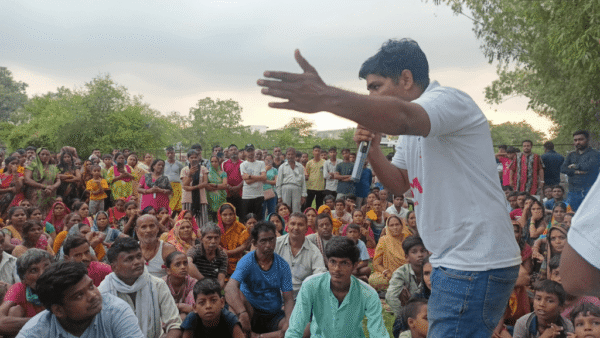
The Gig and Platform Services Union (GIPSWU) wrote to the Delhi government to suspend[13] work for platform workers between 12 noon and 3 pm; Delhi’s Heat Action Plan covers them too but “none of this is adhered to by the companies,” says Krishnaswamy. It means thousands like Lata must simply brace themselves. She moves around with a bottle of water and scouts restaurants with a water cooler to refill it.
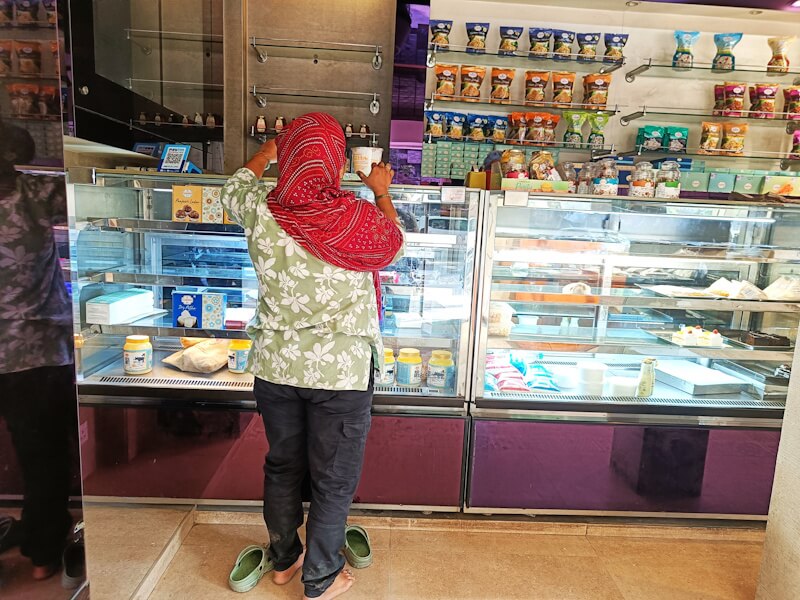
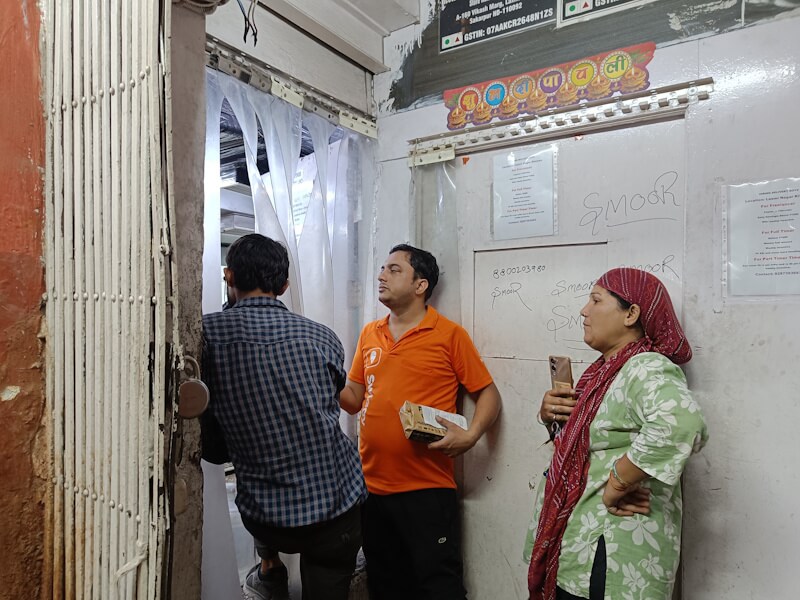
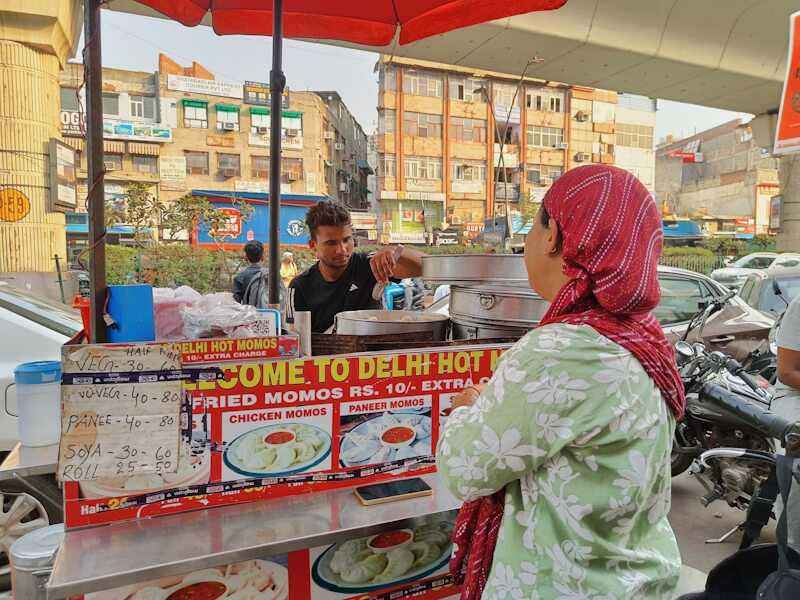
The heat demands breaks, which is a luxury. There are no designated spaces or cool shelters across the city for them to escape the brutal heat. Through the afternoon, Lata and I wait in the open outside restaurants, helmets in hand, for orders to be called. Only once, she dared to collect the order a few minutes after it was called ‘ready’ to catch her breath and drink water.
For women on the move, the lack of restrooms means less hydration in the heat. In the nine hours, the only public toilet we came across was a Delhi Nagar Nigam facility in Preet Vihar. Else, it was searching for one at a petrol pump or requesting a restaurant to use. The Delhi government announced[14] plans to set up rest facilities for gig workers but, as Nirmal Gorana, National Coordinator with GIPSWU, says, “there is little clarity on implementation”.
Lack of Support
“Hamari koi sunwai nahi hoti”
Along the route, in Laxmi Nagar, Lata and I sight a Zomato recruitment van. She catches up with it, hails it down, and seeks a clarification. Her internal rating dropped to 72 in the past few days – she is clueless why – which will reduce the rate she earns. The men in the van ask her to speak to her “TL”. Lata is frustrated. “Our Team Leader (TL) is our point of contact. But they are either unavailable or they have no resolution.”
Like Lata at this point, many gig workers feel they are entirely on their own once on the road. Two days back, she fell off her two-wheeler while on an order and injured her arm, but continued to work to complete the shift. Does she know that Zomato offers[15] accident and medical insurance? Yes, she says, but when she helped a fellow worker file claims, it did not materialise.
Zomato also has an accelerated safety response feature[16] that automatically detects crashes through the rider’s app and allows it to dispatch an ambulance. In Lata’s accident, she says no such thing happened. Pooja, a fellow worker, left Zomato this month after four years when she was treated rudely by a restaurant’s staff. A complaint to Zomato Support was in vain. “It’s like we are on our own,” she says, “all we have is a TL and nothing else.” (We have sought Zomato’s response, it will be included when received.)
On record, as is known, app-based riders like Lata and Pooja are not employees but independent “partners,” which Krishnaswamy says allows platforms to function with little obligation towards them. Unions have also pointed out this limits workers’ access to statutory benefits such as Provident Fund, health insurance, and paid leave. In November[17] 2025, the Code on Social Security included gig and platform workers in its ambit but the framework stops short of recognising them as employees.
Deepinder Goyal, CEO of Zomato said that[18] “demanding full-time employee benefits like PF or guaranteed salaries for gig roles doesn’t align with what the model is built for.” The model itself – a multi-crore gig economy that generated Rs 12 lakh crore[19] in 2023-24, is built on low pay, difficult working conditions and terms that place most risks on workers.
It’s a hard day’s night
At 9:30 pm, Lata gets an order whose address is unclear. She calls the customer. It’s a long conversation. Time is lost. “Location sahi nahi hain,” Lata mutters but we finally complete the order. The customer does not even acknowledge us. This is routine for Lata, to be seen as a robot, not as a human.
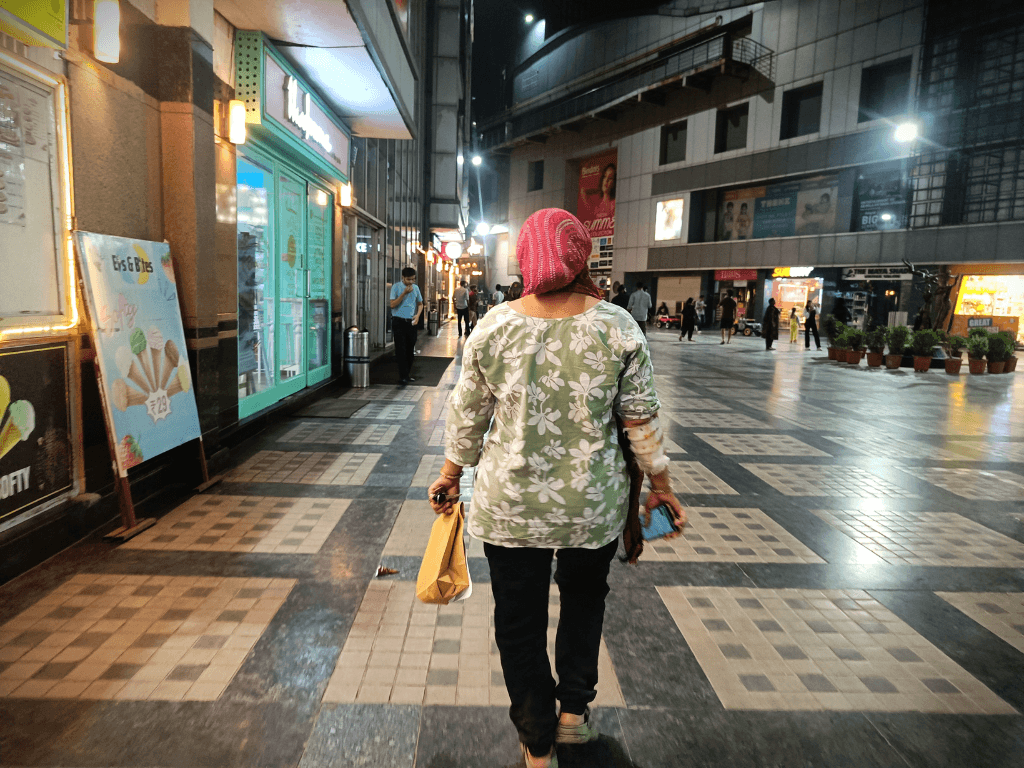
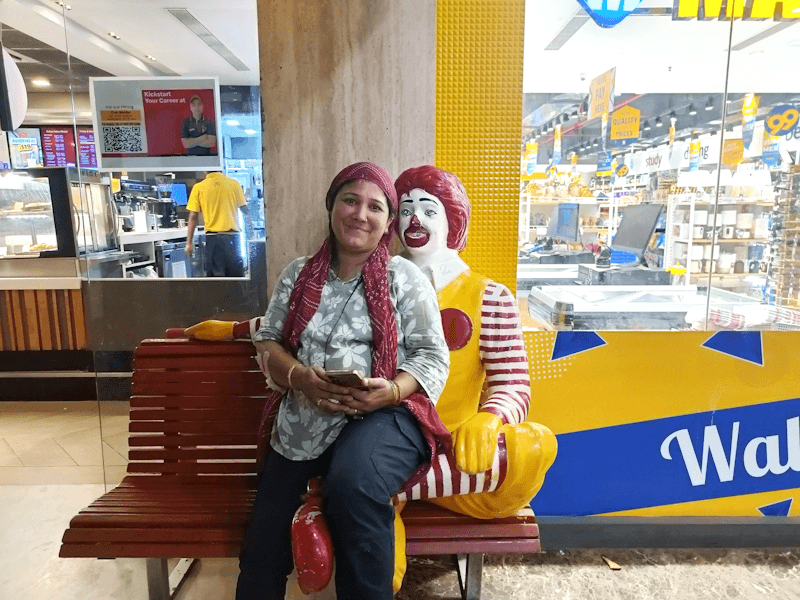
By now, Lata is completely exhausted. She adjusts her dupatta, stretches her feet on the two-wheeler, and smiles at me weakly: “Aap bhi thak gaye honge.” Indeed, I am but I get to rest the next day; she does not. We make a pit stop at the nearby mall to catch our breath and she advises me to learn to ride a two-wheeler. It has helped her get close to her dream which is graduating to driving a bus, like her husband does.
Lata takes a few minutes for a quick call with a friend. Being out in the dark has blunted her fear of being alone but the exhaustion never leaves her. She will be back on Delhi’s roads tomorrow. A glass of haldi doodh and a good night’s sleep is what I need, she says zooming away into the night.
Ankita Dhar Karmakar, Multimedia Journalist and Social Media in-charge in Question of Cities, has reported and written at the intersection of gender, cities, and human rights, among other themes. Her work has been featured in several digital publications, national and international. She is the recipient of the 4th South Asia Laadli Media & Advertising Award For Gender Sensitivity and the 14th Laadli Media & Advertising Award For Gender Sensitivity. She holds a Master’s degree in English Literature from Ambedkar University, New Delhi
All photos by Ankita Dhar Karmakar.