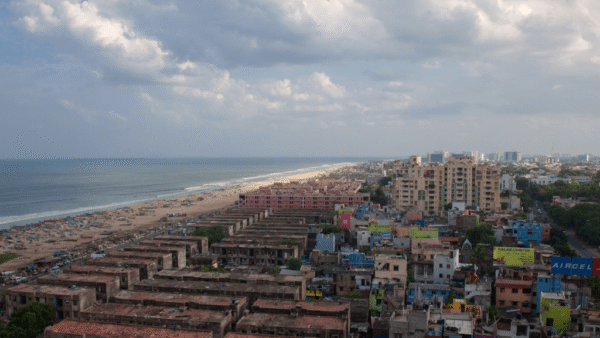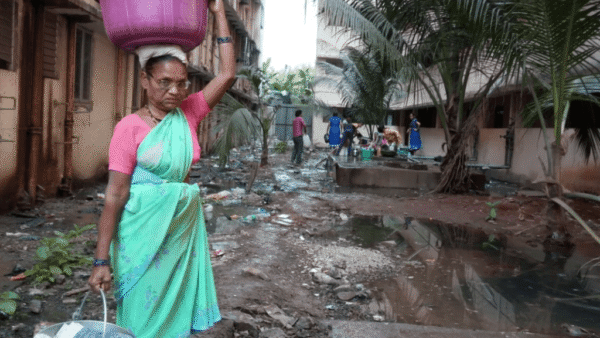
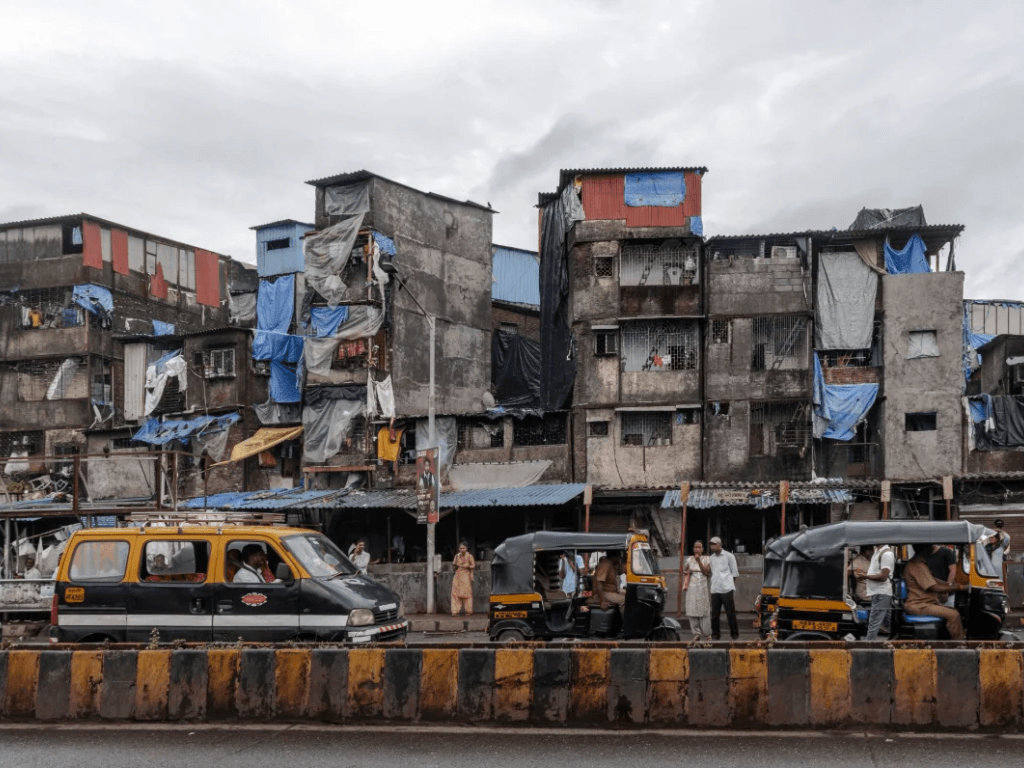

Around 13 resettlement colonies in Mumbai’s margins, the north-eastern suburbs comprising the civic M-East ward, house thousands of people who were displaced by government infrastructure projects across the city and resettled here. This ward also has the highly toxic Deonar landfill, India’s largest and oldest dumping ground, besides a host of polluting industries and abysmal civic facilities.
In terms of pin codes, this is the city’s least-preferred area. Residents resettled here live in, what might be called, a lesser city – densely packed buildings, crumbling houses, lack of amenities, unhygienic surroundings and more, forcing them into a life of struggle and hardships not unlike the slums they left behind. For many, the resettlement also meant a loss of livelihood or higher travel expenses.
The two study reports, in focus here and both launched this year in Mumbai, highlight the burden of resettlement on residents as well as the city. The YUVA report ‘25 Years Later: Infrastructure Conditions of R&R Housing in Mumbai’[1] details the post-resettlement issues after all these years stemming from a lack of policy, and leading to a systematic deterioration of resettlement and rehabilitation buildings and colonies which anyway had minimal resources and lacked institutional support for maintenance. The 29-page study, ‘Towering Crisis — The City We Are Rebuilding’[2] by NatConnect Foundation looks at the rapid urban growth that is putting immense pressure on ecology, open spaces and infrastructure, and how redevelopment is increasing the water and housing crisis.
25 Years Later: Infrastructure Conditions of R&R Housing in Mumbai (August 2026)
This timely study, by Youth for Unity and Voluntary Action (YUVA), a nonprofit development and rights-based organisation, focuses on a lesser-discussed aspect of resettlement and rehabilitation (R&R) – the conditions of infrastructure and colonies years later.
The study details out that “the current institutional framework for creation and allotment of Project Affected Persons (PAP) tenements is governed, inter alia, by provisions of the Maharashtra Slum Areas (Improvement, Clearance and Redevelopment) Act, 1971, the MR&TP Act 1966, the Development Control Regulations (DCR 1991 and DCPR, 2034), and the Mumbai Metropolitan Region Development Authority Act, 1974, (but) when the construction for housing for PAPs was included as part of the Slum Rehabilitation Scheme (SRS) in the late 1990s, the authority for approval of such schemes rested solely with the Slum Rehabilitation Authority (SRA).”
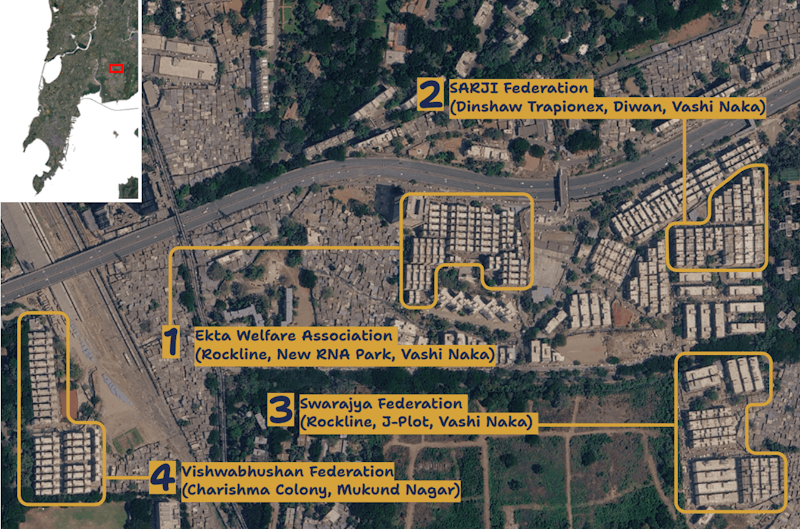
Photo: ‘25 Years Later: Infrastructure Conditions of R&R Housing in Mumbai’
To examine the impact of relocation and resettlement 25 years later, the study surveyed 38 R&R co-operative housing societies (CHSs), covering 53 residential buildings and three federations in Vashi Naka (M-East Ward) and Mukund Nagar (M-West Ward) in Chembur. Its research questions were: To assess the extent of repair and maintenance work required, and the adequacy of the one-time repair work (being) carried out by MMRDA at the building level; to highlight the built condition of individual tenements; and to understand the challenges faced in running a CHS and a federation. The methodology included survey, interviews, Focus Group Discussions, photographs, and analysis of financial audit reports of CHSs.
The study found many residents unable to afford structural maintenance of their homes; for those who did manage to undertake significant internal repairs of their homes, issues resurfaced due to the poor structural quality of the building. The average age of buildings was 19-20 years but they are in a state of disrepair; colonies are plagued with poor infrastructure and services. Rehabilitation housing had meant only the allocation of a tenement while questions remained unaddressed about who would pay for the long-term maintenance of buildings, residents’ participation and capacity to form CHSs and manage the space, and clarity on who would be responsible for maintaining common infrastructure.
The study highlights the common problems of falling plaster and concrete, water leakages into buildings and homes, insufficient capacity of drainage and sewage lines, cracks in pillars and beams, non-functioning lifts among others. It suggests a timeline to complete repairs and redevelopment. Some of the buildings, after structural audits, were found to be unstable which raised questions about the safety of lives of the occupants of these buildings.
Besides this, the study found 204 R&R tenements within buildings that were unallotted and not used. This is critical in Mumbai’s R&R colonies. “Data obtained under Right to Information Act, 2005 shows that in 2022–23, the MMRDA had 6,354 vacant Project Affected Persons (PAPs) tenements for upcoming rehabilitation needs; a large number (40 percent) of these were in the M-East ward or in the cities of Panvel, Thane and Mira-Bhayander (20 percent)… A total of 7,694 PAP tenements of the BMC had been lying vacant for decades and now have been rendered uninhabitable (Kothari and Joseph, 2023),” the study points out.
It is “clear that the policy and institutional framework governing post-allocation subject matters in the PAP scheme, comprises a patchwork of legal provisions and institutional arrangement without clear division of responsibilities and allocation of resources to discharge them. Largely, things have been left to be managed by the PAPs and institutions they are required to or urged to form, unmindful of the fact that in the complicated web of actors involved in the whole process, they are the most resource-deprived and lack institutional and technological capacities the most,” the study infers and calls for, urgently, a comprehensive policy on post-allocation maintenance and operation of PAP housing infrastructure.”
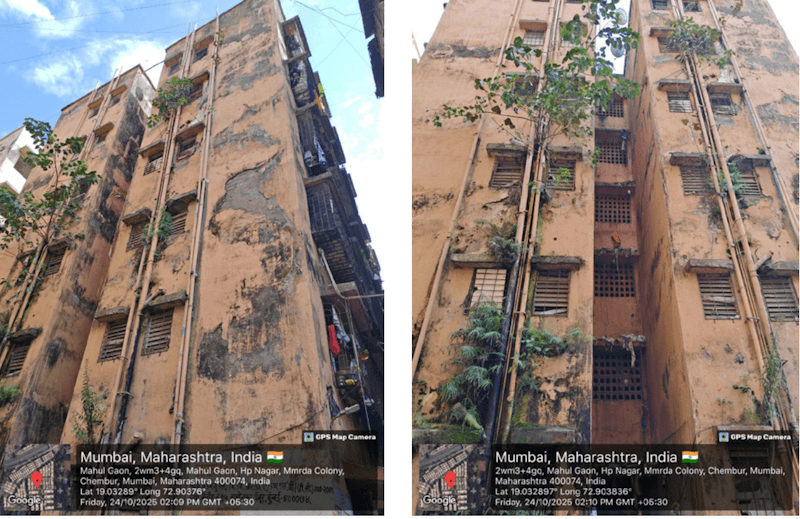
Photo: ‘25 Years Later: Infrastructure Conditions of R&R Housing in Mumbai’
This, its authors suggest, should provide at the minimum the handing over of all such colonies to the BMC which should take over the responsibility of development and maintenance of the common amenities; the state government should constitute a coordination committee to oversee the process of leasing of land to CHS federations on a 99-year lease; the BMC must use the infrastructure development charges which was supposed to be paid by the developers for maintenance; and there should be clarity and clarifications on property tax provisions applicable to these CHSs.
The state government, it recommends, should clearly define the timelines for repairs of R&R buildings found to be structurally unstable; and create a state-level fund for supplementing finances of these CHSs whose resources are inadequate for undertaking major repairs. The Project Implementation Agencies should conduct structural audits of the buildings under their purview and undertake necessary repair work; make provisions for extended defect liability of the private developers undertaking PAP schemes; create a time-bound mechanism for allotment of vacant units; and formally allot all temporary allotted tenements to current occupiers with required documents.
The issues identified have led its authors to call for a policy post-allotment and an institutional response. While these are not misplaced, questions about the willingness and enhancing capabilities of residents to manage their own spaces do deserve attention too.
Towering Crisis — The City We Are Rebuilding (October 2026)
In redeveloping buildings and resettling Project-Affected People, little to no thought is given to the carrying capacity of the areas where resettlement is carried out, let alone their suitability. “If the Mumbai Metropolitan Region (MMR) is adding substantial built floor space and density, can the systems beneath and around those buildings expand at the same pace? Water, electricity, cooling, fire response, roads, public transport, sewerage, waste, schools, healthcare, groundwater, wetlands, mangroves, salt pans, open spaces and coastal resilience are the systems that make the built city function,” states the NatConnect Foundation Research & Policy Paper.
This too is an aspect less-discussed at symposiums and conferences, but will demand attention as Mumbai and the rest of MMR rapidly expand their built environment, impacting its carrying capacity.
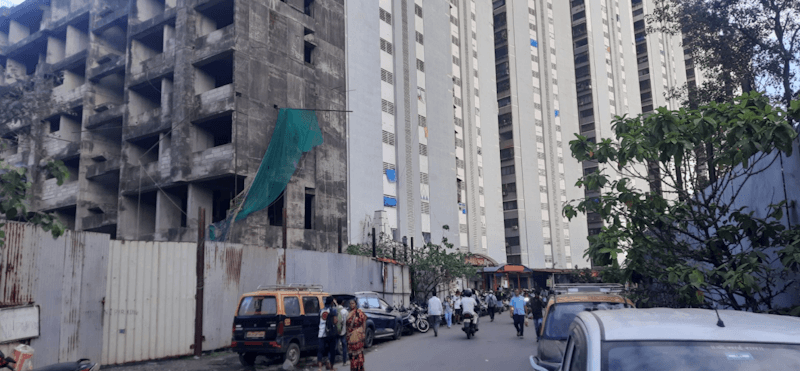
Photo: QoC File
The Paper cites that the MMR is now a 6,328 square kilometre metropolitan planning geography extending across parts of Mumbai city and suburban, Thane, Raigad and Palghar districts, with nearly nine municipal corporations, many urban local bodies, and a large rural hinterland.
This, it adds, is one of India’s largest residential markets; in its first quarter 2026 assessment, ANAROCK recorded around 32 percent of new supply across India’s top seven cities in the MMR and according to JLL’s September 2026 assessment, redevelopment accounted for 15 percent of all housing sales in the first half of 2026 in Mumbai and about 10.3 percent of housing launches in 2025–26. However, “housing is not liveable in isolation. Every additional household brings demand for schools, childcare, primary healthcare, hospitals, pharmacies, elderly care, recreation and emergency services,” the Paper points out.
During a discussion on the report, BN Kumar, director, NatConnect Foundation said that a “city cannot claim progress merely because it builds upwards. It must build resilience into every floor, every neighbourhood and every infrastructure decision.”[3] The Paper proposes a shift from project-by-project approval to metropolitan system planning: Measure the cumulative load, map the receiving infrastructure, identify the natural systems performing infrastructure functions, and publish the residual risk. These well-grounded points must be discussed more in the public and academic discourse over development and redevelopment in not only Mumbai but across the MMR.
The Slum Rehabilitation Authority (SRA) scheme, the Paper stated, must do more than just building rehabilitation tenements. “The free-sale component can add substantial floor space and bring additional households, vehicles, water consumption, electricity demand, sewage generation, waste and service requirements into the same infrastructure catchment. The same principle applies to conventional redevelopment, although the mechanism is different. Existing occupants may return to larger homes, while the additional sale component creates incremental demand. A project should therefore be assessed on its total post-redevelopment load, not simply on the number of original households being rehabilitated or rehoused.”
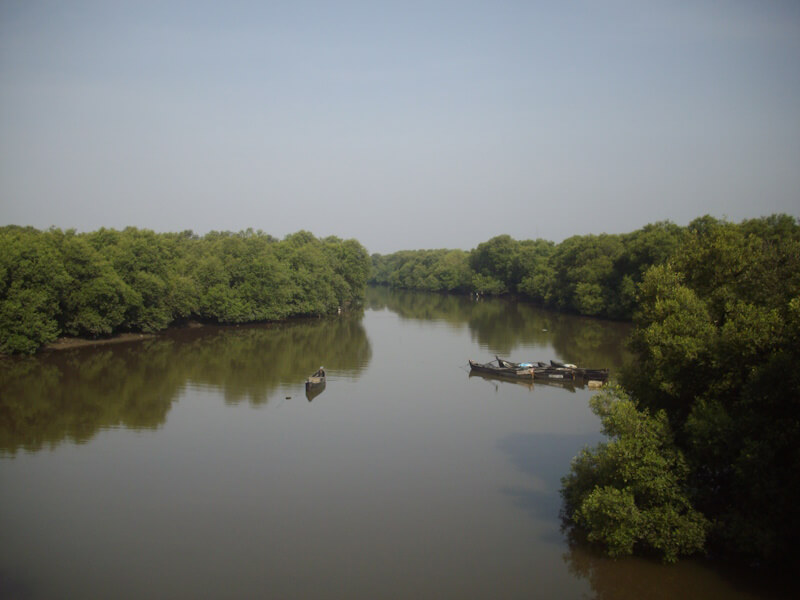
Photo: Wikimedia Commons
The Paper does not argue against redevelopment, rather it asks whether the MMR is measuring the full system cost of redevelopment and whether infrastructure capacity, affordability, climate resilience and liveability are being considered alongside floor space, connectivity and land value. Unlike many academic papers, it draws out the interconnections between the housing stock being built across the MMR and the ecology that is threatened or disrupted by it.
“Mumbai cannot build over the systems that protect it. Wetlands, mangroves, salt pans, mudflats, floodplains, mature trees, open spaces, permeable soil and groundwater are not vacant land waiting for a higher economic use. They are components of the metropolitan life-support system. The environmental crisis ahead is therefore not merely a conservation crisis. It is a civic, infrastructure, public-health and economic crisis. If those natural systems are weakened, the city will have to spend more to reproduce their functions through drains, pumping, water augmentation, cooling, flood protection, disaster response and ecological restoration,” the Paper points out.
Kumar opines that all urban planners are ignoring the rising sea levels while liberally allotting Floor Space Index (FSI) up to six and even 13. “At this rate, MMR will become unlivable in five years and is bound to collapse by 2050,” he warns. The Paper draws attention to the less-discussed aspect of the carrying capacity of our urban centres – and makes for important reading.
Cover photo: Roman Saeinko/ Pexels