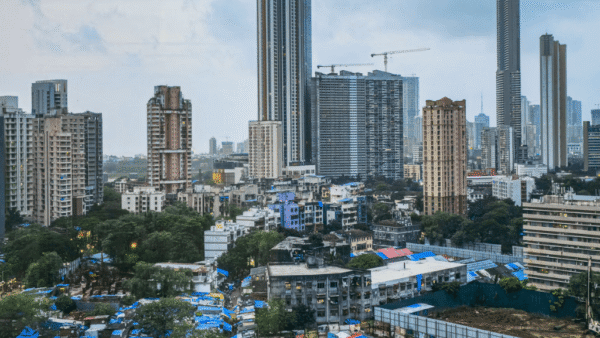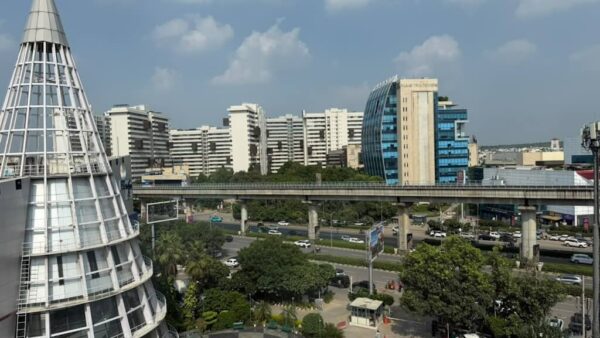


Mumbai is famously known as “the city that never sleeps”, where lights are on nearly 24×7. The city is also preparing for an energy-intensive future, with efforts such as the Mumbai Climate Action Plan 2022[1] and dedicated transmission lines for clean energy supply.[2] On the one hand, there is an increased electricity demand due to a number of factors such as expanding infrastructure, higher Floor Space Index, and higher need for air conditioning amid more frequent and severe heat waves. On the other hand, the economic activity of Mumbai has seen a shift in character from industrial to services and is now opening up to the emerging AI industry. Mumbai and Mumbai Metropolitan Region (MMR) today host more than half of India’s data centre capacity,[3] consuming hundreds of megawatts of electricity to sustain the country’s digital economy.
Such energy demand and the claims to service it give the impression that, at least for Mumbai, electricity is neither scarce nor unavailable. Yet, an estimated 20 percent of households in informal settlements live without legal electricity meters. Where electricity and power are embedded in every aspect of modern life, it is almost inconceivable that tens of thousands of households continue to live in the dark. This exclusion remains mostly invisible including in discussions on Mumbai’s infrastructural inequality.
Our on-ground engagement with eight informal settlements across Mumbai since August 2025 highlights the continuing struggle for legal electricity connections. This essay explores the struggle of one such settlement in Mankhurd for legal electricity connections, which echoes the broader experience of informal settlements across the city.
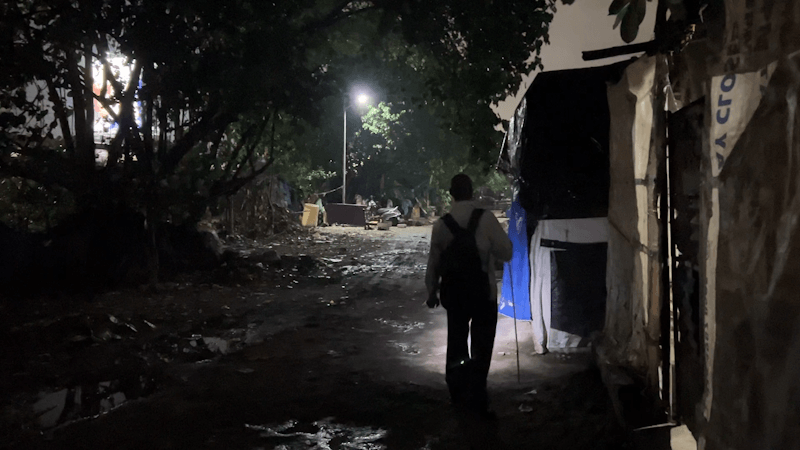
Photo: Authors
The settlement under discussion was established 25 years ago in Mankhurd, after predominantly Dalit and Muslim residents were relocated through a government-supported rehabilitation process. Today, nearly 180 families reside there. Residents possess Aadhaar cards, voter identity cards, ration cards and other government-issued documents formally recording this address. The settlement also has access to municipal water supply. Yet, despite talks with elected politicians, state bodies, exploring parallel licensing options, and repeated applications and an express willingness to pay, legal electricity connections and meters remain elusive to this settlement.
The question of electricity has become a question of land
A major obstacle for the settlement in procuring a formal electricity connection was the demand of a No Objection Certificate (NOC) from its institutional landowner. Much like other basic utility services such as water supply, streetlights or sewerage networks, electricity is materially embedded with land. Every electricity connection relies on physical infrastructure like feeder pillars, transformers and underground cables. The built environment of utilities depends on the land it occupies, over and under the ground.
In the specific context of informal settlements, where residents are not land owners, this dependence on land is at the centre of an oft-raised question by electricity distribution companies (discoms) – how can an electricity connection be provided if it requires digging through someone else’s land? This obstacle is not a new one, and has historically shaped struggles over basic services in Mumbai, most prominently the struggle for access to water.
Informal settlements which occupy land without formal tenure are deemed illegal by the state, and pursuing networked infrastructure is sometimes construed as an avenue through which communities embed their rights to the land. On account of this, applications for NOC from government bodies are met with threats of house demolition, an experience that was reinforced by several land-owning bodies that were approached by representatives of informal settlements. Residents, irrespective of the status of slum protection, are increasingly being told, directly or indirectly, that their existence in these settlements are a sufficient allowance of rights, and any further demands are met with thinly-veiled threats.
While formal electricity access expanded across many informal settlements in Mumbai through 2000 and 2022,[4] the present moment suggests a reversal of this trajectory for the most marginalised settlements. With the state’s recent hardening stance towards slums and increased demolitions, gaining legal connections is substantially more difficult for settlements that were previously left off the formal grid.
The cyclical experience of applying for electricity connections, submitting the required legal documents, expressing willingness to pay the related bills and charges, only to be denied legal supply is not unique to the settlement in Mankhurd. It is seen across struggles for formal electricity connections from settlements located on railway, municipal, collector, forest, salt pan and port lands, and also from residents on upper floors of informal homes, which are excluded from rehabilitation policies.
An informal means of access to a basic right
Given the dismal outcomes of the electricity connection application process and the necessity of electricity in everyday life, residents in informal settlements are forced to purchase electricity through informal means. This informal access is very commonly associated with theft by them across discourse at the discom, state and public levels. It is important to note that, as per discom reports on thefts, it is the commercial establishments and industrial consumers that contribute to a significant portion of such losses.[5]
The losses arising from informal housing use could easily have been a revenue stream by simply legalising the connections when people repeatedly apply. Conflating organised commercial theft with informal access by households excluded from legal supply obfuscates the structural conditions through which exclusion is produced.
Photo: Wikimedia Commons
Since informal access to electricity is dependent on middlemen illegally tapping wires, households reliant on such supply pay hefty sums, with no recourse in the event of unreliable supply, unfair billing or any grievance redressal. We found that, on ground, residents reliant on informal access routinely pay Rs 600 to Rs 1200, on average, every month for barely six to 12 hours of electricity a day, while consuming less than 100 units per household.
In March 2026, the settlement in Mankhurd experienced an electricity cut for eight consecutive days due to a dispute between two local informal electricity suppliers. Children studied for exams at their friends’ homes, with candles and torches, and at nearby railway stations. Everyday tasks such as cooking, going to the toilet, and studying became impossible after sundown, particularly impacting women, children and the elderly. However, households simply cannot stop using electricity. Phones must be charged, children must study, food must be cooked and fans are essential during intense summers. Exploiting this, shopkeepers along the main road began charging Rs 10 merely to charge mobile phones during the eight-day power cut.
The denial of formal electricity connections results in the production of an informal electricity market, without sufficient safeguards for consumers.
Strained formal recourse in the quest for formal electricity access
With the mounting problems of the settlement in Mankhurd without formal electricity connections and little progress towards procuring it through other avenues, we registered a complaint with the Consumer Grievance Redressal Forum seeking legal connections. The complaint challenged the need for land owner NOC and sought to establish two major pillars: i) establishing electricity as a part of the fundamental Right to Life and dignity and ii) holding the discom to universal supply obligations in its license area, as mandated in the Electricity Act 2003.
While the NOC has recently featured in the list of documents required by private discoms for a new connection, this is in contravention of Maharashtra’s Electricity Supply Code 2021. It is also significantly different from the practice undertaken by state discoms. In addition to the NOC not being mandated by the state discom for a new connection, the proof of occupation documents are further relaxed for “slum areas” where if none of the listed documents are available, an affidavit on a stamp paper of Rs 200 is deemed sufficient. There is significant legal precedence that direct discoms to release electricity connection to slum areas without ownership/legal occupancy proof.
In the landmark Chameli Singh v. State of UP (1995), the Supreme Court recognised the Right to Shelter as part of the Right to Life under Article 21 of the Constitution, explicitly including access to electricity within its scope, and this position has been repeatedly upheld in other judgments.[6] Closer home, in a matter before the same Consumer Grievance Redressal Forum (CGRF), it referred to other decisions where courts have consistently held that electricity is a basic amenity, and held that discoms do not have the power to seek additional documents, such as NOC, as a condition for processing an application for a new connection.
Climate burdens and planning priorities
The settlement in Mankhurd has taken various steps towards procuring a formal electricity connection over the course of several years, without any tenable immediate resolution. Even as it does so, the residents of this informal settlement, and many others like it, have had to face the onslaught of increasingly extreme climate events.

Photo: Wikimedia Commons
Mumbai’s informal settlements are already 5–6 degrees Celsius warmer than neighbouring housing societies, with 37 percent of the city’s households under metal roofs facing elevated heat risk.[7] These communities bear the disproportionate brunt of extreme heat, while simultaneously being denied one of the most basic forms of climate adaptation – the ability to operate a fan.
The economic cost of electricity insecurity on households is measurable. A study tracking nearly 400 informal workers found that there was a nearly 40 percent income drop during peak heat period.[8] Given that a significant portion of settlements in informal settlements are engaged in informal labour, denying households in informal settlements a legal electricity connection is, under conditions of worsening heat, also denying the most basic buffer against livelihood collapse.
This struggle for household electricity amid excesses raises questions on justice and planning priorities. The state government positions Mumbai and MMR as global destinations for energy intensive investment, including data centres.[9] Mumbai today already hosts over half of India’s data centre capacity[10] and the state government has already classified data centres as essential services, granting them permanent electricity duty exemptions, tariff subsidies, and priority grid access under the 2023 IT & ITES Policy.[11]
Against this backdrop, the denial of legal connections to households that have applied repeatedly is not administrative negligence; it is a planning choice, bordering on deliberate denial of an essential good and, thereby, deepening the existing inequalities. This way, the consequences of climate change fall hardest on those least responsible for the city’s energy appetite and climate change.
Unequal distribution of city’s built environment
We are re-entering a period when the removal of slums have intensified[12] and the hard-won rights that informal settlements had has once again come under question. At such times, taking a lesson from previous struggles, residents of the settlement in Mankhurd are exploring multiple avenues to secure their rights – meeting elected representatives, pressure campaigns, and approaching regulatory and legal avenues. Their demand is simple – provide electricity as a right and not be penalised for it.
In August 2026, the complaint was withdrawn from the CGRF following discom’s commitment to install meters and release electricity connection to the settlement. Although the discom has commenced installation of connections and several households have started receiving formal electricity supply, people have had to live through the prolonged reality of denied formal electricity access, much like several other informal settlements across the city that are yet to get formal electricity connections.
This includes informal electricity connections, hefty bills, unreliable supply, safety concerns, threats to life and livelihood, and no redressal for any grievance. The informality in electricity access that develops in this context is not unlawful behaviour, but a reflection of administrative decisions that prevent lawful access. By denying legal electricity to informal settlements that repeatedly apply and demonstrate readiness to pay, the state produces the very informality that it subsequently characterises as illegal.
Such struggle for electricity access in Mumbai, at a time when data centres are nearly assured of electricity supply, is not merely about availability. It is about unequal and unjust distribution of the city’s built environment, which reflects political choices about whose needs are considered legitimate – and who can be ignored.
Sanjana Krishnan is an urban researcher, working with communities in Mumbai on issues of housing rights and electricity.
Abhishek, a video editor, is the convener of Public Place. He started Economic and Political Weekly’s podcast, Research Radio, where he served as host and editor.
C Sheth is a researcher interested in issues of access and affordability.
The authors would also like to acknowledge the helpful research and comments by Y Sharma and M Chirayil.
Cover photo: Without electricity, children have no option but to study by candlelight. Credit: Abhishek