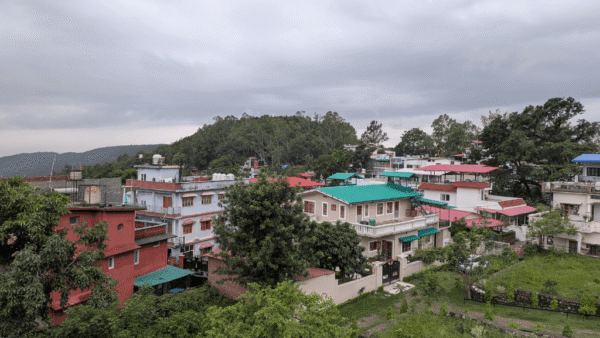

On Fort Road, in the heart of Leh, a seven-storey concrete frame climbs behind a lattice of scaffolding and green safety nets with grey columns, raw brick infill, floor stacked up at a pace not seen here. Ten kilometres away in Saboo, a two-storey mud house stands under a yellowing willow, its rammed-earth walls smooth and unbroken, still holding the day’s sun long after the air has dropped below the freezing mark.
The buildings belong to the same city but reflect entirely different ideas. The city cannot plead necessity: Leh is one of the largest districts in India by area but among the most sparsely populated. Land is one thing this cold desert has in abundance. The verticality is not a response to scarcity; it is a response to capital.
Leh faces a dilemma and a design decision: whether to build a city as it always has, coherent with climate and geography, or conform to a standardised development model imported from the plains. It is pulled between a harsh climate and a fragile ecology that rewards restraint, and a tourism economy and a newly created Union Territory whose time-bound funds reward speed.
This essay argues that Leh’s turn towards the concrete is not modernisation but a miscalibration. It is a failure to recognise that climate appropriate architecture was already prevalent here and, worse, the singular absence of local masons, architects and residents who are kept out of the design of their own city.
What Leh already knew
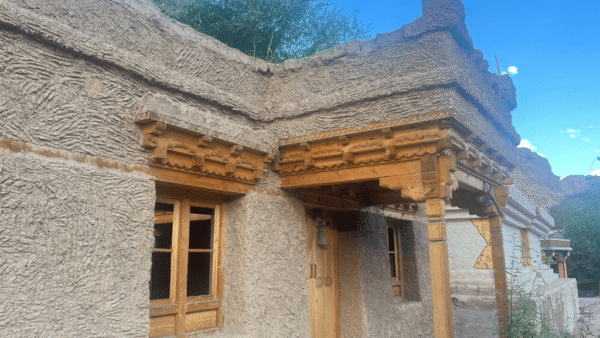
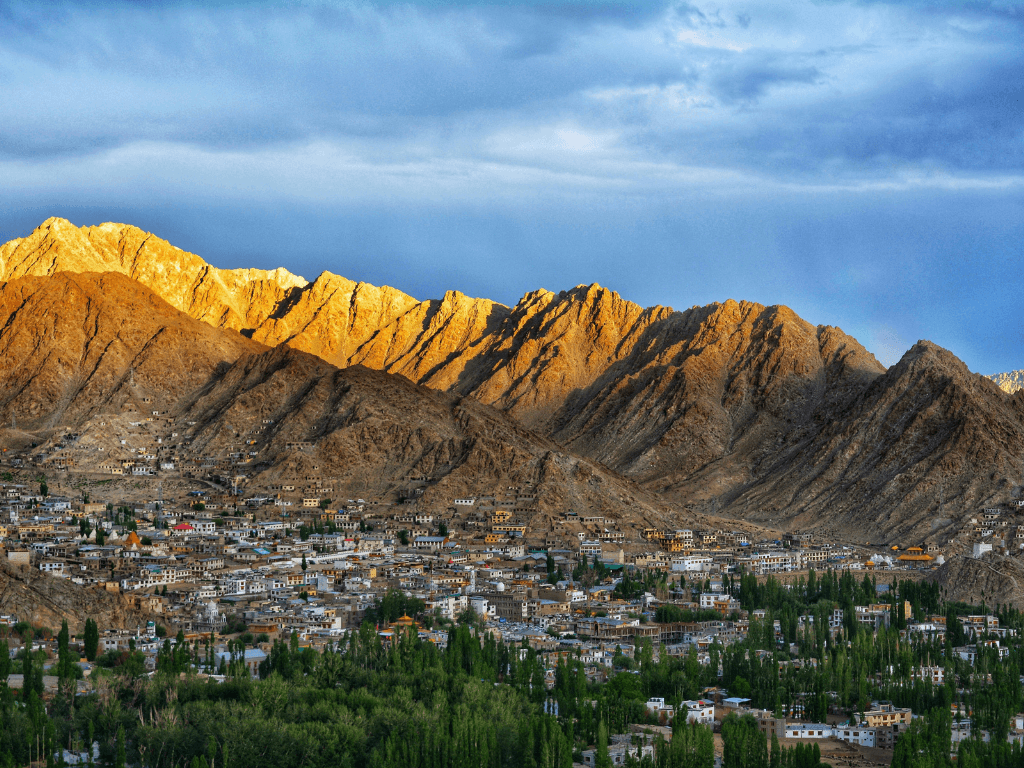
At 3,524 metres above sea level, in the rain shadow side of the Himalayas, Leh developed a precisely calibrated vernacular architecture unique to the cold desert. In the traditional house, walls are made of rammed earth (paksha) or sun-dried mud brick because, at such a high altitude, thermal mass is the only reliable heating system.
The orientation of the house is universal and deliberate. The rabsal – the projecting, south-facing large window characteristic of Ladakhi domestic architecture – maximises winter solar gain while shading the interiors in summer. The flat mud roof doubles as a drying space for fodder and apricots; its clay compacted soil helps insulate the house. Dry composting toilets returned waste to the fields in a region with almost no water to spare; ground floors shared with livestock added animal warmth to the building’s thermal budget.
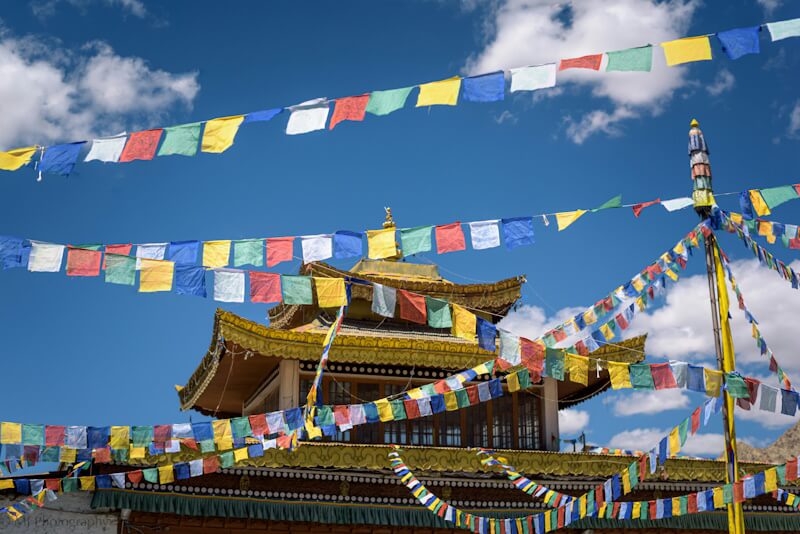
Photo: Unsplash
None of this was picturesque. It was an accumulated, tested response to the scarcity of water, fuel and warmth or what architectural theorist Kenneth Frampton called critical regionalism[1] – a building that refuses the placeless model and, instead, responds to the climate, topography and light. The masons who carried this knowledge could read the soil with their hands.
The concrete turn: Status, standardisation, and speed
Leh was a well-kept secret from regular tourists. Around the year 2000, domestic tourists began arriving; the popularity of the Bollywood film 3 Idiots in 2009 turned the trickle into a flood. Leh opened its gates not only to tourists but also to capital. As David Harvey, well-known academic and urban scholar, argues, when capital faces a crisis of over-accumulation, the surplus nowhere profitable to go, resolves it by opening new geographical frontiers and re-directing investment into the built environment of previously inaccessible places.
In Leh, this capital took the form of hotels, built at an unprecedented pace, largely in a spring-fed and canal-irrigated ecological niche. According to the district administration, Leh district now has 317 hotels, 691 guest houses, and 1,055 homestays.[2] Hence the joke now: Asked what Leh grows and locals retort “hotels with ‘modern’ amenities”.
What followed was not planned or designed in any meaningful sense. It was, to quote philosopher and sociologist Henri Lefebvre, the production of abstract space – space stripped of use value and re-organised around exchange value. The concrete-block hotel spread across Leh’s periphery is a unit of investment, a bankable asset, a commodity indifferent to climate and culture, identical whether it stands in Leh or anywhere else in India. The sameness is the point, for the tourist who expects a certain kind of room, and to a lender who expects the collateral.
The tourists keep coming. Official figures recorded 1,17,546 arrivals between January and May 2026, a 43.65 percent year-on-year increase.[3] High ceilings, wide windows, and ever-bigger rooms are now read as prosperity. In Leh’s climate, they are thermal illiteracy with a mortgage.
Photo: Unsplash
How fund cycles design Leh
On October 31, 2019, Ladakh became a Union Territory and public money began arriving on a new scale. The central allocation rose 32 percent in a single year, in 2024-25, to touch Rs 5,958 crore[4] before easing to Rs 4,869 crores in the following fiscal.[5]
The structure of this money matters more than its size. Allocations are time-bound. Capital not spent within the financial year can be cut or re-allocated by the Union Ministry of Finance. A fund cycle that punishes slowness selects its own architecture. Reinforced cement concrete (RCC) has a supply chain, a contractor ecosystem, and a standard schedule of rates. It can be ordered, poured, and certified before deadlines. Rammed earth is slow craft, seasonal, labour-intensive, and dependent on masons rather than contractors. Concrete wins before any drawing is made.
By concentrating even routine financial approvals in New Delhi, the new system widens the distance between local needs and decision-making, undermining local agency and knowledge. The market rewards speed; the state requires it. And the standardised block – industrial, monotonous, endlessly repeated – becomes not one option among many but the only thing the system knows how to deliver.
Standardised schemes and lost knowledge
Leh has experienced a massive increase in public infrastructure to accommodate the new departmental offices of UT of Ladakh. The government buildings that re-shaped Leh’s fabric have typologies of the Pradhan Mantri Awas Yojana housing, university classrooms, and department offices. These are exercises in what political scientist and anthropologist James C. Scott, in Seeing Like a State called high-modernist legibility, that is designed elsewhere by engineers and planners who have not experienced a full seasonal variation in Ladakh.
Such schemes do not merely ignore local knowledge but eventually destroy it. The mason who knows the compression strength and quality of local soil by touch, who builds a wall to a thickness that every winter confirms, who can read a south-facing room cannot transfer this practical, embodied knowledge into a specification sheet. Concrete replaces mud because it fits a purchase order and local mud does not. Masons who retire take their knowledge with them; the loss is not only material but epistemic. This is Leh’s ‘Le Corbusier moment’ – the Chandigarh-like appearance.
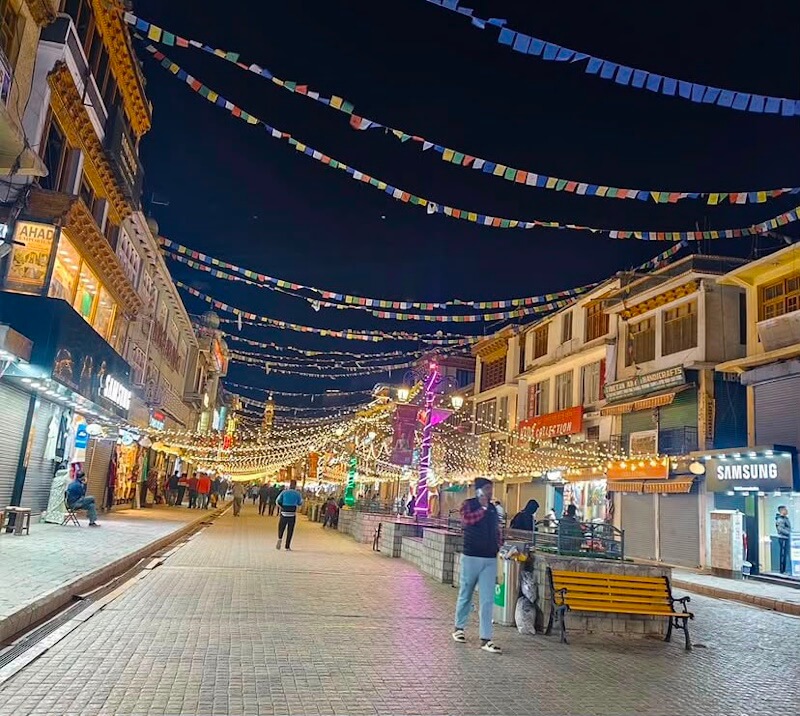
Photo: Adina Ara
The same logic prevails about surfaces. Under the beautification programme, the main bazaar has been re-cobbled and pedestrianised to suit tourists. It is, in Lefebvre’s terms, a representation of space rather than lived space, an image of development that the state projects regardless of what the city needs. Older residents remember vegetable sellers lining both sides of the market and dry-fruit sellers at its end; they have been moved to the periphery. Leh is no longer lived; only consumed. An object for visitors desiring the picturesque spectacle.
The costs
The thermal failure is the most immediate. The RCC holds far less heat than rammed earth and sheds it rapidly after sunset. From October to May, a concrete house needs an LPG or electric heater, or a bukhari, running for months to keep rooms warm and habitable. The traditional houses needed only the thab, the earthen kitchen stove that simultaneously cooked and heated. This energy burden falls hardest on families of modest means who were persuaded into concrete as an ‘improvement’. The result is a population colder, poorer, and more dependent on imported fuel than generations that lived here.
The water math gets worse. Flush toilets have replaced or displaced dry compost toilets that had no water stress and converted the waste into fertiliser. In 2014, Ladakh Ecological Development Group found 375 hotels and guesthouses extracting 8,52,000 liters of water per day.[6] Borewells, just 10 in 1997, numbered a staggering 2,659 in 2020,[7] and the springs around the town are drying as the water table drops. This is slow, cumulative, invisible harm.
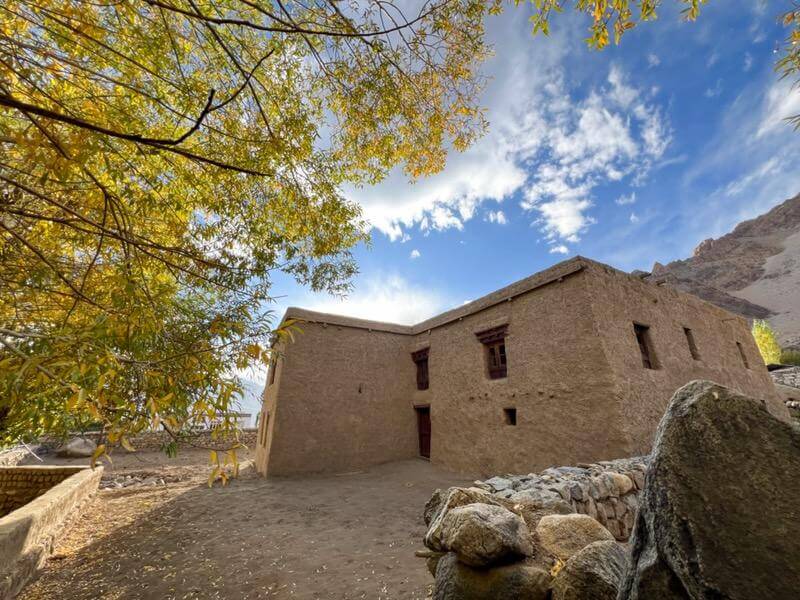
Photo: Adina Ara
Add seismic risk. Ladakh lies in Seismic Zone IV, and while the flexible mud-and-timber (poplar) vernacular has a long record of absorbing shocks, the RCC frames – hastily built, poorly detailed – can fail catastrophically. This cold desert’s natural resources do not have the carrying capacity.
A climate-coherent Leh
What would Leh look like if local knowledge could return to the drawing table? The Leh City Climate Action Plan,[8] concedes that buildings account for 64 percent of Leh’s emissions, that government buildings burn 80 percent of their electricity on winter heating, and that newly developed houses shade each other out of the winter sun.
The remedies, it suggests, lie in wall insulation, double glazing, heat pumps, “planning regulations to maximise passive solar potential”. This amounts to buying exactly what the paksha wall and the rabsal provided free. The plan, drafted within national frameworks, never once mentions rammed earth, vernacular construction, or local materials. The correction it recommends already exists. The SECMOL campus in Phey, made of rammed earth and passive solar design, keeps students warm through minus 20 degree winters without imported fuel; it won the Terra Award for earthen architecture in 2016.[9] Sonam Wangchuk’s ice stupas, first prototyped in 2014, store winter stream water in conical glaciers for spring planting. These are not heritage projects but contemporary local engineering. And proof that vernacular can be hybridised rather than abandoned: stabilised compressed earth blocks, solar-gain glazing on the rabsal principle, earth walls with modern seismic detailing.
Scaling it requires inverting the incentives for the standardised block, codes and lending that reward measured thermal performance, public procurement that gives mud a purchase order, starting with the government’s own heat-hungry buildings, apprenticeships that pay young Ladakhis to learn from the last masons who read soil by hand, and density ceilings set by the cold desert’s water budget. Above all, participation. Masons, residents and local architects should be in the design process, not consulted after drawings are stamped. This is the Right to the City as Lefebvre and Harvey meant it, not merely the right to be housed in whatever capital and the state deliver, but collective power to decide.
The room where Leh is decided
Walk through the main bazaar today; the substitution is complete. Every failure this essay has counted – thermal, seismic, hydrological, social – is visible and all of them explained as a problem of materials. Concrete is not the problem; a certain way of making decisions is. At every step of the process – when the contractor prices the job from his standard rate list, when the housing scheme comes as a ready-made floor plan, when officials rush to spend the budget before the year closes, when the city writes its climate plan – the old mason is never offered a chair. This absence is the design flaw. A city being decided by everyone except the people who know how to build it.
So, what a climate-coherent Leh would look like is not architectural but procedural. It looks like a room. A room where the building code is argued by people who have wintered here, where an earth wall counts as an asset on a bank’s ledger, where an apprentice learns paksha because the government is its paying client. The knowledge is intact, the proof is standing at Phey, and the money is already flowing.
What Leh lacks is not the capacity to build a climate-coherent city, rather an invitation for its people to design their own. Until that seat is filled, every crore spent will keep the building on schedule but against the climate. The frame on Fort Road will be topped out by next season; the century-old mud house in Saboo will hold its warmth. Which of them is Leh’s future is a question the city has not been allowed to answer.
Adina Ara holds a PhD in Economics from the Centre for Economic Studies and Planning, Jawaharlal Nehru University (JNU). Her research interests lie at the intersection of development economics, livelihoods, and social capital, with a focus on the Trans-Himalayan region of Ladakh. Drawing on extensive fieldwork across Ladakh, she has presented her work on how expanding market economies are re-shaping traditional institutions and co-operative behaviour of the pastoral-nomadic community of Changthang, Ladakh. Her broader research agenda explores the intersection of economic change and community resilience in fragile mountain ecosystems.
Sabiha Baig is a gender geographer based in Bengaluru. She holds a PhD in Geography from Jawaharlal Nehru University (JNU). Her work sits at the intersection of gender, transport, and urban life, with a particular interest in how cities shape and constrain who is free to move. Her research examines the gender-blind assumptions embedded in urban and transport policy, and the uneven ways in which climate change affects women’s mobility and everyday lives. She has worked with WRI India and the National Institute of Urban Affairs, and her writing appears in academic and policy publications.
Cover photo: Unsplash