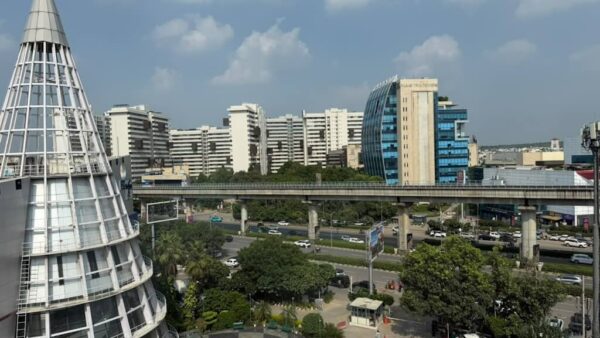

Public spaces are an important feature of a city. They determine how liveable and healthy a city is, and the people-centric approach makes cities inclusive. Who defines them, who allocates land in cities for public spaces, who deliberates and decides on their designs and how, are issues that are coming to the front and centre of urban planning and design as informality in work and living are seen as intrinsic to cities. At the core, informal work and settlements or informality in any form do not make it to formal urban plans and design documents. Informal workers are left to fend for space themselves, people in informal settlements are seen as ‘encroachers’ and live in constant fear of eviction.
Intentional placemaking reflecting the needs and use of public spaces by informal workers can make a difference, says Saleha Sapra, leading to Delhi becoming more inclusive and people-centric. Rashee Mehra, reading the recently released Delhi Master Plan 2047, advocates for a more open plan that can provide housing for all, especially the marginalised with specific allocations for the Economically Weaker Sections.
‘Understand who public spaces belong to, who they are designed for’
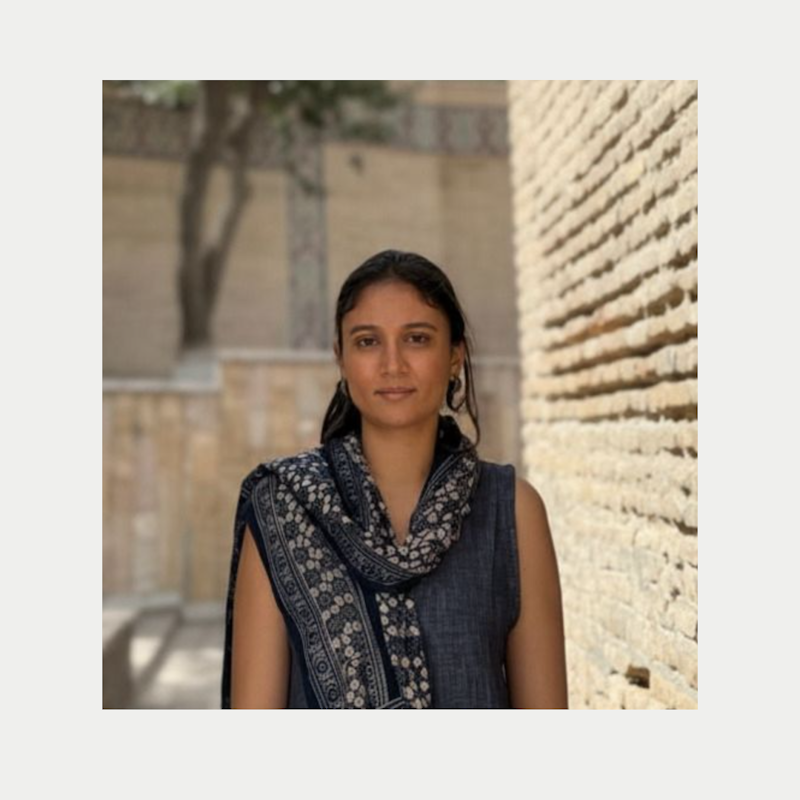
Saleha Sapra
Urban geographer, researcher, co-founder of City Sabha
With a Master’s degree in Urbanisation and Development from the London School of Economics, Saleha’s work sits at the intersection of gender, governance and climate justice. She is the
co-founder of City Sabha, a social enterprise that works with marginalised communities and urban local bodies to foreground urban inequalities and make governance more accountable and inclusive. With over a decade of experience, Saleha has designed, implemented, and monitored urban planning and development programmes that integrate gender, governance, mobility, climate, and health.
Much of your work revolves around placemaking as an urban design and planning tool. Could you tell us more about it?
Placemaking is a western concept and, at its core, an act of resistance, of creating people-friendly environments, of activation, rejuvenation, beautification. The way it has been adopted in India, it has become the lowest common denominator with signs such as ‘I love Kalkaji’, ‘I love Saket’. This is not placemaking; these are signboards.
Placemaking is when a space benefits local economies and relationships that grow around them, where people gather, rest, and have a different kind of sense of the place. A parking lot given an added purpose as a skating ring, or a community library under a flyover, are signs of intentional placemaking enhancing people’s everyday experience of the city, making space for joy and socialising.
Placemaking is innate and ubiquitous in our streets, taking shape through everyday practices and adaptations. A street vendor setting up a stall outside a metro station, a nai (barber) or a mochi (cobbler) using a park railing or wall to set up their workplace, or a mobile cloth or vegetable vendor moving through neighbourhoods to sell wares are categorised as “informal” uses of space, associated with the informal economy, yet they play a crucial role in sustaining its wider economic ecosystem. They demonstrate how people continuously shape, adapt and activate urban spaces in response to everyday needs, creating forms of placemaking that are organic and deeply embedded in the life of the city.
Recognising and acknowledging these itself is an act of placemaking. The question is how do we give them more so that they are not living in the constant fear of being shunted away or having to pay a hafta.
To transform neighbourhood public spaces, you have extensive toolkits. What are the essential steps for Delhi?
The first step is to understand who the public spaces belong to, who we are designing for, and assess their quality more than the quantity of public spaces in a people-centric way. People should be involved in assessing and deciphering the quality of a public space. I use the word ‘quality’ because there is no standard or fixed form of public space. It is relational to people’s needs, to its functions, and all these parameters are baked into it.
We determine quality on the basis of accessibility, usage, inclusivity, and public infrastructure has gone into making that space safe and inclusive for everyone. We work through citizen audits, by building a people’s place inventory (PPI), an interpretation of public space inventory proposed in Delhi’s Draft Master Plan 2041. While mapping provides a legible spatial blueprint, it tends to exclude many realities, identities and diversities. The PPI, developed over three years and tested in varied settings, addresses this gap. It engages marginalised communities in excluded geographies, typically not accounted for in urban plans and decision-making. It enables the documentation of a community’s priorities, identifies state actors responsible for pressing issues, and reframes planning priorities and policy guidelines to make planning and governance narratives more inclusive and accountable.
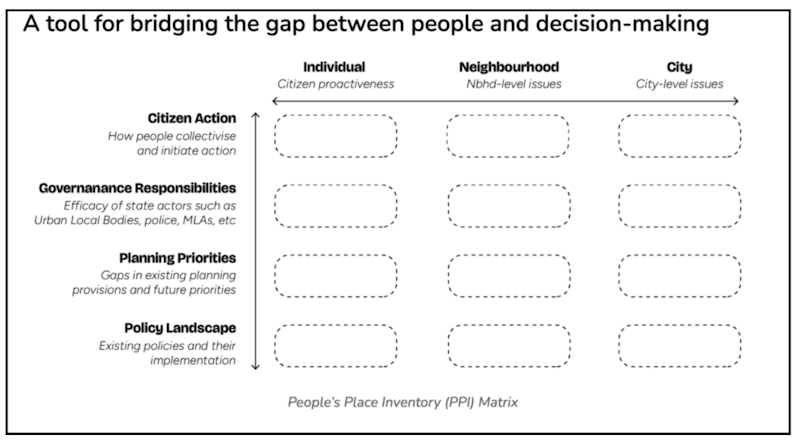
There is also a governance knowledge deficit. Public spaces are not designed by a single authority or department. People need to understand who the space is designed for, who owns it and governs it, who maintains it. Different layers of government do these jobs. This knowledge is critical to engage with the governance structures and for accountability. The other part is a shift in the lens. Most public spaces are currently allocated and designed in a top-down way. We want to flip that paradigm so that the people who use these spaces have a stake in planning and designing them.
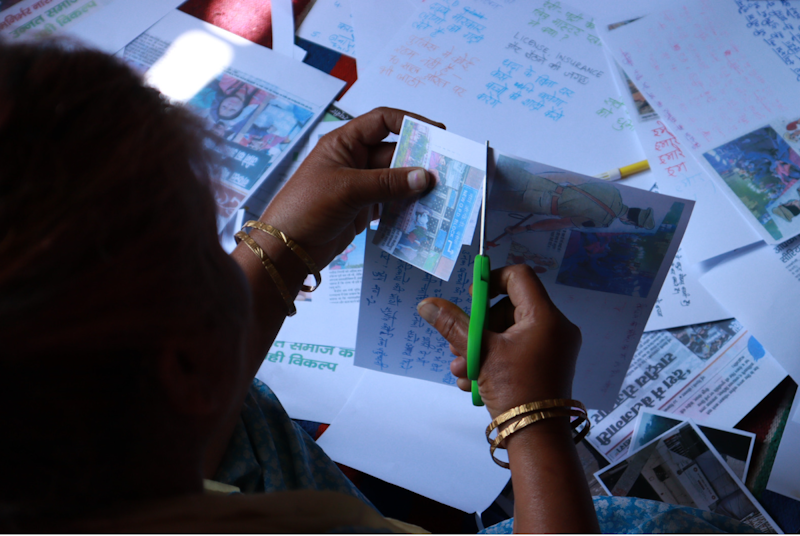
Please tell us about your project “Aao, Jagah Banaye”[1] with informal women workers of Raghubir Nagar co-creating their places of work.
The experience, access, and relationship of informal groups with the city is directly related to the quality of public spaces. Affluent sections of society don’t use buses, bus stops, and metro stations; the working class does. In co-creating Aao, Jagah Banaye, we worked with women informal workers of Raghubir Nagar, predominantly street vendors in the second-hand garment trade. We found they spent more than 15 hours a day moving through public spaces for work. They have a direct stake in defining what the spaces need to be.
We began with conversations that they are migrant workers, but ended with their self-descriptions as frontline environmentalists who prevent discarded/unused garments from going to the landfill. It was a powerful and impactful shift. At the policy level, the Street Vendors Act, 2014, exists but there are several loopholes in its implementation, and vendors remain unaware of the law. So, we ran awareness drives about their rights and how they can safeguard themselves, especially while encountering municipal corporation or police officials. It was also about shifting the gaze on women in the public realm, making space for themselves to earn a livelihood – in itself, an act of rebellion. The Draft Master Plan 2041 (released in 2021) suggested allocation of street vending spaces – I am still reviewing the 2047 Plan – but how much is implemented is a question.
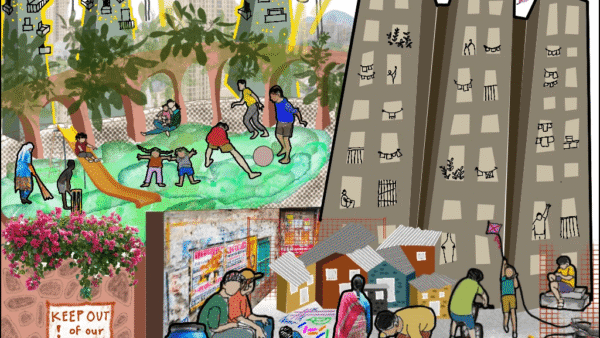
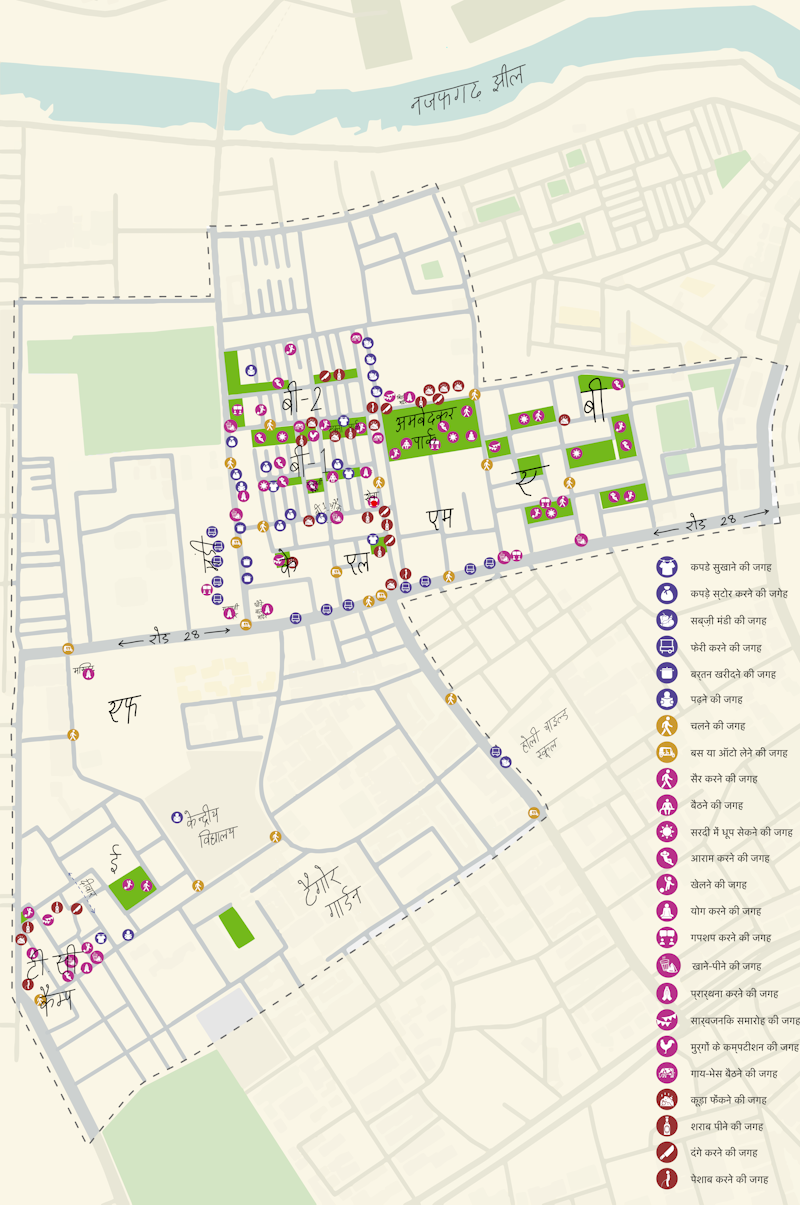
In Raghubir Nagar, every inch of shared spaces outside their homes was used as workspaces – pocket parks to dry clothes, streets to wash and dry clean to give the procured discarded garment during pheri a new lease of life. It was an open street factory-like system unique to the Raghubir Nagar context, not designed by anyone.
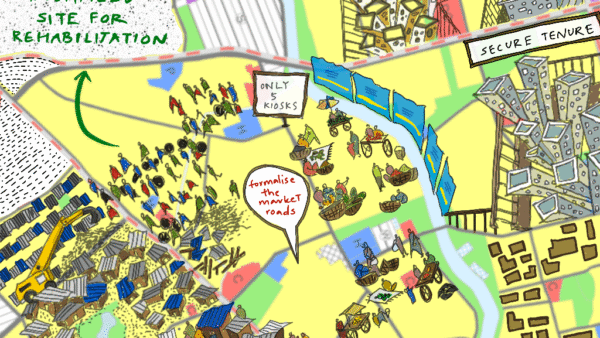
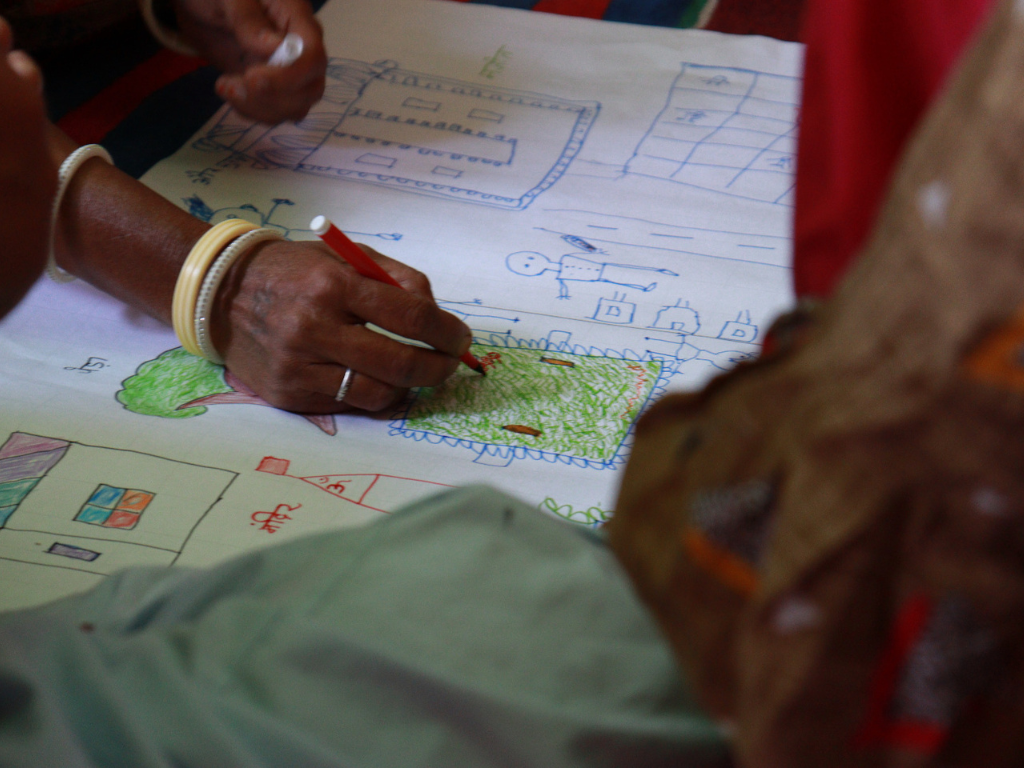
When we asked them their relationship with parks nearby, they said they barely use them due to anti-social activities, and only visit mandirs, masjids and gurdwaras for peace, leisure and safety[2]. They also said the trade spaces were earlier more accessible but, as the city grew, colonies began gatekeeping access, causing a drop in sourcing trips and quantities of procured garments. Their trade is dwindling; heat is at an all-time high and most months are marred by poor air quality. We also did reimagination exercises where women groups spoke about how their neighbourhood could be made more conducive to their work and what spaces they could occupy. Those were creative, ingenious solutions which require policy, planning and governance processes.
How can people be involved in designing common spaces in their neighbourhoods?
When the Draft Master Plan 2041 was circulated in 2021, it was to invite public consultation and citizens’ suggestions. However, because it is a high-level document, it does not engage people with the spatial realities of their everyday lives. Decentralising the planning process was therefore a major demand of the Main Bhi Dilli campaign.
From the 1960s through the 1980s, Delhi had Zonal Development Plans (ZDPs) (operate at zonal scale) and Layout Plans (LAPs) that operated at zonal and micro scale.. These provided a framework for engaging with planning at the level of neighbourhoods and local areas, but such mechanisms have since been largely abolished. Today, there is no spatial planning instrument specifically designed to facilitate discussion and decision-making at the neighbourhood scale. If people want to come together to deliberate on what their neighbourhood should look like, these processes essentially have to be initiated and organised by the people themselves.
‘Engage citizens in the process of planning their neighbourhoods’
Rashee Mehra
Research Consultant, Indian Institute for Human Settlements
An urban geographer by training, Rashee’s work began in the informal settlements of Delhi in 2009 on the issues of housing and allied rights. For over 15 years, she has been part of several non-profit organisations and city-level networks focused on urban inequalities such as housing, urban planning and gender justice. She was associated with an organisation providing non-formal education for at-risk children in informal settlements in Patna and Nalanda. Rashee is currently a researcher at the IIHS School of Human Development.
In the latest Master Plan of Delhi 2047, what has been mentioned about sustainable design, especially for a neighbourhood?
The Delhi Master Plan 2047 mentions local area plans and zonal plans, but doesn’t really relinquish control at the ward level or at the neighbourhood level for participatory sort of planning. This has been one of the critiques of the plan because there is the 74th Amendment, which works to give both budgetary and these kinds of planning powers to urban local bodies but which, in Delhi, is particularly difficult to do because of our unique sort of governing structure.
The plan is not fleshed out; things have been mentioned, but then really not. The plan does not really relinquish control at the city level to go down to the neighbourhood level. If the plan has to be successful, especially with the kind of land pooling exercises that the authorities would like to do, this kind of democratic planning and engaging the citizens in the process of planning their neighbourhoods would have to be done. So the plan does mention it, but only in letter. It does not really relinquish control to the urban local bodies or, say, resident welfare associations or ward-level committees that can come up – they should ideally come up – to do some of these local area planning exercises.
People got together for the Main Bhi Dilli campaign. What was it about and what did it achieve in terms of planning and design for Delhi’s future?
The Main Bhi Dilli campaign was an urban people’s campaign[3] launched to make the Master Plan of Delhi 2041 (MPD-2041) more inclusive and people-centric. It started in 2018, when the National Institute of Urban Affairs (NIUA) was drafting the plan, and we engaged in extensive knowledge exchange and advocacy with the organisation during the drafting stage. It is a loose coalition of civil society organisations, research institutions, individuals and communities that looked at the Master Plan as a very strong document of city planning, especially future urban planning for the city.
There is, of course, a lot of existing critique of the way master planning happens in Indian cities anyway, that it doesn’t really ever understand the informality or the way cities are built. This sort of planning misses very critical steps in looking at how a city is to be shaped and really does not understand the existing city in the present, but tries to look at a future. But it has missed all the steps because there is no real understanding of where the city and its people currently are.
A lot of informal housing, informal livelihoods, questions of gender, disability, age, and sustainability, to a large extent, get left out of the formal planning process because these are treated separately. But they are not in silos; the Master Plan operates in silos. The lived realities of citizens are very much intertwined, you know.
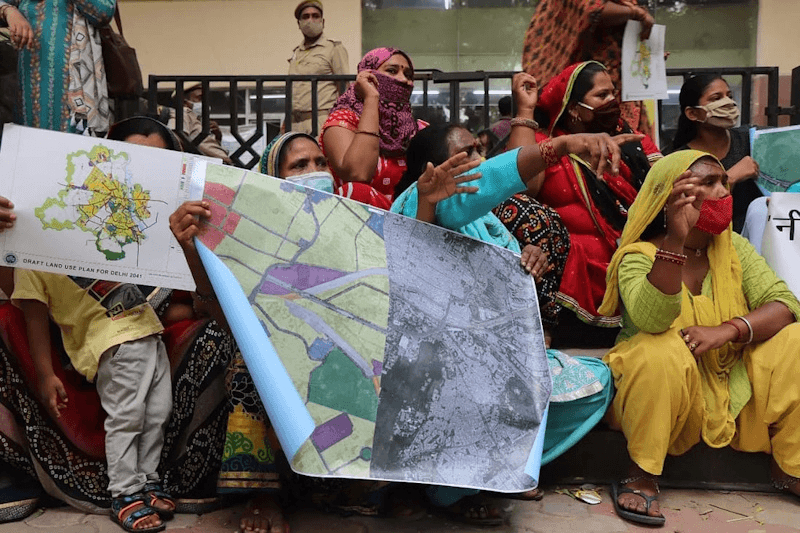
Photo: Shalaka Chauhan
Now that the Master Plan is finally out, what is your assessment of it?
When the draft was out in 2021, we, as a campaign, had put in approximately 25,000 suggestions and objections to the Delhi Development Authority out of a total of about 33,000 final objections and suggestions it received.[5] So, you can imagine how things looked in that draft. Now when we look at the Plan — which we are still going over – it retains the majority of the plan but in some manner does not continue with the draft.
We are looking at constituents and elements that were absolutely missed during the master planning exercise such as informal housing. People who live in bastis, people who are homeless, people who live in resettlement colonies and unauthorised colonies – all of them must also be taken into the planning exercise and the Master Plan.
Our mandate is broadly housing and informal livelihoods like waste workers, domestic workers, construction workers, street vendors. These groups are traditionally left out of the imagination of formal planning; they have always been left out. So, we had asked for a special allocation for Economically Weaker Section (EWS) housing specifically but that allocation is not in the Plan. It sits within other kinds of EWS housing, other development control norms and land pooling schemes, but specific allocations for LIG-EWS housing that the DDA must build on this much land, this percentage of land in the city will go towards it, is not there.
When this is not in the Plan, the demand then is to continuously legalise the bastis, and people create informal housing and there are resettlement colonies made without full planning. Essentially, we are just recreating the problem; the state is recreating the problem for itself. It is bad for the citizens but the state itself is going to get into trouble. There was a plan in 2021 and it was ambitious. It had many of these things but it never got fulfilled.
What do you see as the fundamental problem with the way Master Plans are made in Indian cities?
Master Plans generally have this 20-year run in cities of the Global North, which is what we are always competing with. This is unfortunate. We should not be competing with London, Paris, New York and wherever because Delhi is Delhi and Bengaluru is Bengaluru, and we have our own historical trajectories that we must follow. As an exercise, master planning is very loose and these 20-year plans have generally failed.
In Delhi, when the Master Plan is enforced as a legally binding document, it is allocating and dividing land for critical functions of the city and, in many ways, it is projecting where or what the city will be in the next 20 years. But what or who will be in the city in the next 10-20 years? How do we create land allocations for it? The Master Plan, as a document, has been critiqued a lot in literature, by practitioners and by academicians, because it never really does what it sets out to do.
Our cities are incredibly dynamic, right? COVID lockdown saw thousands of migrants walking back home which changed the population dynamics. But we do not have household-level data in India to plan for all this. So, plans do not really understand the lived realities of people. Many bastis, for example, have come up as informal housing but because the DDA did not fulfil its promise of creating enough EWS housing stock. The current plan says Delhi needs 40 lakh new housing units for the population of 2047 but the question is how are we going to go about doing this. The plan does not answer.
But, all said, it is the Master Plan. Therefore our contention that the city’s informality, which shapes it, really needs to be responded to in the Plan.
Cover Photo and photos in Saleha Sapra’s interview: Aao, Jagah Banaye! co-created with women informal workers of Raghubir Nagar, in collaboration with City Sabha and SEWA Delhi, and supported by Khoj Studios.