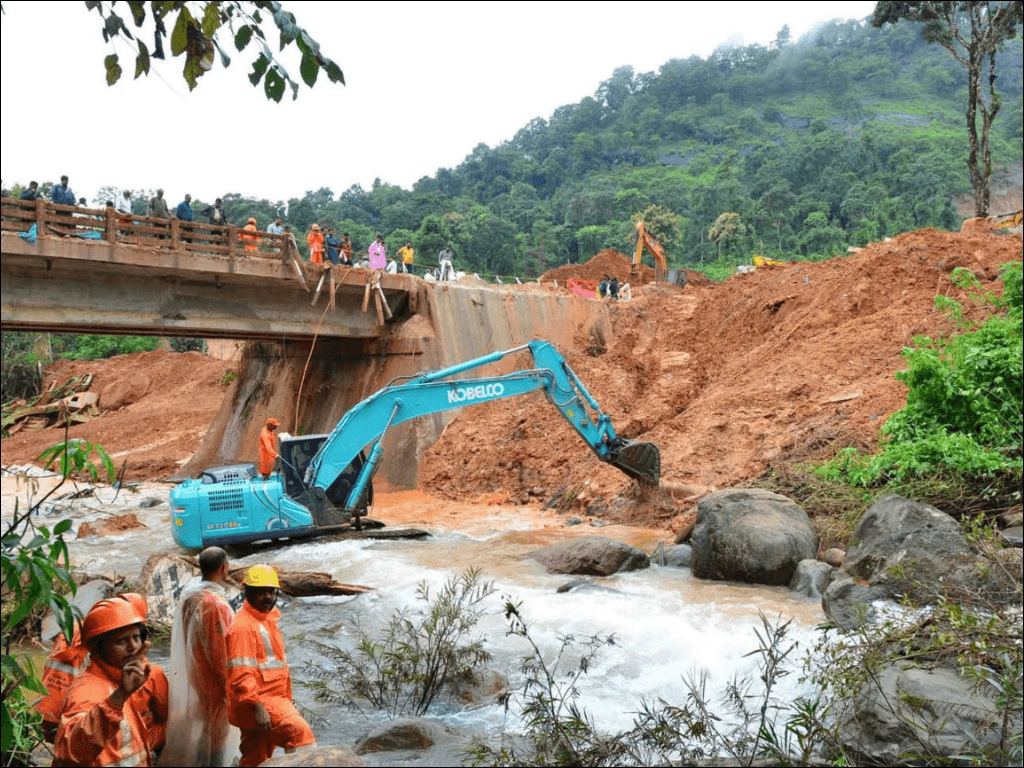

When rain clouds threaten to pour over Meppadi, a plantation town cradled by the Vellarimala hills on the western side of Wayanad district in Kerala, there is utter panic. People rush indoors. Taxi drivers avoid the mountain roads. Workers in coffee and tea estates instinctively look up at the adjacent mountain slopes before hastening the day’s work. They carry lingering memories, perhaps nightmares, of July 30 two years ago when the devastating Chooralmala-Mundakkai landslides claimed more than 400 lives.[1]
That night, entire settlements of small farmers, plantation workers, taxi drivers and small-scale merchants were buried; roads, bridges, buildings, agricultural lands and houses were wiped out within minutes and hundreds of acres of farmland buried. Families that survived it now keep important documents wrapped in plastic pouches, ready to be picked up at a moment’s notice should disaster visit again. Many residents say they no longer sleep peacefully through rain-drenched nights; they are always afraid.
The fear turned real on July 7 this year when a massive landslide struck the under-construction Anakkampoyil-Kalladi-Meppadi twin tunnel at Kalladi, barely six kilometres from Chooralmala. Days of relentless rain had brought tonnes of soil and rock crashing onto the construction site, burying workers and heavy machinery. Eight workers were confirmed dead. The building of the third-largest tunnel road in the country was tainted with blood.
Along with the fear that refused to go away for two years in Wayanad, the rolling highlands of the Western Ghats, key questions too did not fade away. The Kalladi landslide brought them into sharp focus, all over again. Just how much cutting, tunnelling and construction can these mountains absorb, how much engineering intrusion is too much?
The answers matter not only for Wayanad but also for crucial mountain regions across the entire Western Ghats and the Himalayan region where climate change along with the developmental projects — expansion of highways, construction of roads and tunnels, tourism projects — to augment the economy are denuding the ecology to an extent that nature turns hazardous. In these parts, there has been a debate about the twin tunnel but, expectedly, it has been reduced to the old trope of development versus environment. For all its suffering, Wayanad, like other regions, has not learned that sustainable development can be done only with the environment.
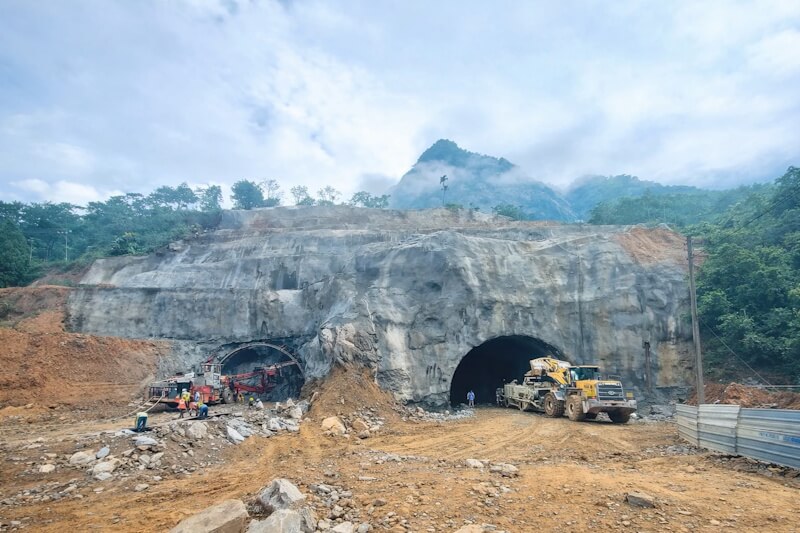
Photo: Wayanad district authority
The tunnel road project
The route to Wayanad usually winds through numerous hairpin bends and narrow roads hugging the mountains. Every bag of coffee destined for exporters, every sack of pepper headed to markets, every tourist travelling to its resorts, every patient referred to hospitals in Kozhikode, and every student leaving for college in the plains has to depend mainly on the prime mountain corridor, the Thamarassery Ghat Road, where some hairpin bends are especially narrow and risky. The ghat is often choked by traffic and prone to landslides and accidents. During the monsoon, closures and long diversions are common.
For decades, the residents’ demand for alternative roads went unheeded on the grounds of ecological conservation. The alignments in the mountains fall in the dense forests of the Wayanad Wildlife Sanctuary, a crucial portion of the environmental hotspot Nilgiri Biosphere Reserve. Eventually, the then CPI(M)-led Pinarayi Vijayan government announced the Rs 2,134-crore Anakkampoyil-Kalladi-Meppadi tunnel project to provide an alternative road to Wayanad. The 8.17-kilometre twin tunnel, part of a four-lane corridor, will reduce the distance between Kozhikode and Meppadi by almost half and slash travel time by nearly 45 minutes. For a district whose economy rests heavily on plantations and tourism, the proposal appeared transformative. But the mountains showed, time and again, that they have a mind of their own.
The Kalladi tragedy is unlikely to bring the twin tunnel project to a close but it should refocus on the plans to test their nature-responsiveness and sustainability. After all, there is no way to build other than by addressing the ecological realities of the fragile mountain landscape at a time of rapid climatic change. Two years ago, and now, extreme precipitation during an unusually heavy monsoon may have triggered the collapse of the mountainside but decades of human-led ecological changes had weakened it long before the mountain gave way.
If Wayanad goes back to building the way it has – cutting and reshaping hill slopes, altering natural drainage channels, streams disappearing beneath – the road connectivity, the construction to support the tourism economy, and the fancy Nordic-style resorts on hill slopes will continue to be vulnerable to the next ‘natural’ disaster or landslide. It will not be entirely natural, either.
The survivors – people and land
Till a decade ago, the onset of the southwest monsoon was something the predominantly agrarian community of Wayanad looked forward to. Rain came bearing the promise of massive coffee blossoms, pepper vines, mountain streams replenished after summer, and thick clouds rolling gently over the undulating mountain ranges. It was also the crucial season when multiple irrigation reservoirs filled to nourish large tracts of plantations, and promised quiet prosperity.
For plantation worker KK Mariyamma, who survived the Chooralmala landslide, rain meant a good harvest but now means fear. “When it starts raining after sunset, nobody sleeps,” she says softly to Question of Cities, “We keep listening to every sound from the hill.” The immense loss suffered by Wayanad has now become central to the debate over the future of one of India’s most ecologically sensitive districts but, in these debates, the threatening infrastructure projects are a given; the damage to the mountains inflicted by these projects is overlooked. The conversion of the old forests into monocrop plantations under tea and coffee majors has also affected the region’s ecology.
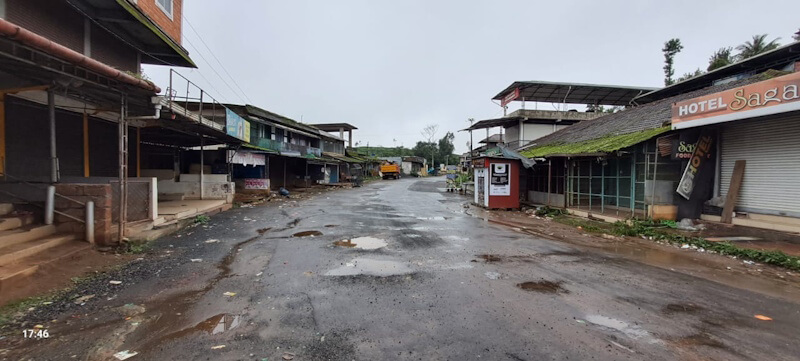
Photo: Ajay Ghosh S
For Wayanad, one of Kerala’s most productive plantation districts and among its most visited tourist destinations, better roads mean lower transport costs for farmers, quicker access to hospitals, safer travel for students and stronger markets for local businesses. Babu Mailampadi, a retired bank employee here involved in environmental advocacy for 30 years, blames the fast-paced urbanisation and illegal constructions and infrastructure expansion for the fragmentation of forests, destabilisation of slopes, and alteration in the natural drainage systems: “The whole of Wayanad is undergoing a massive transformation that its fragile mountain ecosystem was never capable of absorbing.”
If the Chooralmala tragedy changed the way Wayanad receives rain, Kalladi can begin to change the way it looks at development. The debate can no longer be about whether the district needs roads and other infrastructure but whether this can be planned without accounting for the fact that the mountain landscapes are living ecosystems – and demand to be counted in building plans.
Building without a nod to ecology
The highly fragile Vythiri-Lakkidi-Meppadi-Kalpetta corridor, the premier tourist and administrative hub of Wayanad district, has quarries, widened hill roads, resorts, villas, homestays, commercial buildings, shopping complexes, educational institutions and expanding townships. The major driver of this transformation is tourism; resorts account for 62 percent of the total built-up area of tourist accommodation. The construction spurt has been alarming in the landslide-prone Meppadi, a popular hill station where more than 380 new buildings – hotels, resorts, residential structures – are registered every year. Wayanad district has added more than 12,000 concrete structures every year.
The multiple stresses that the built environment and human engineering-led interventions appear manageable individually but, collectively, they have altered the way the landscape behaves, leading to what scientists term as the “cumulative ecological stress”.[2] The accumulated burden of over-construction has gradually destroyed mountains and altered drainage patterns, groundwater movement, vegetation cover, and slope stability – the outcome of constructing without considering ecological reality.
Professor CP Rajendran, one of India’s leading geoscientists, has pointed out that the Western Ghats demand a different approach to infrastructure as “rainfall patterns are fast changing”.[3] These are deeply weathered mountains where rainfall, groundwater, and geology constantly interact; climate change is making the interactions more unpredictable. “Infrastructure projects in the Western Ghats require stricter ecological safeguards. Detailed geological and hydrological investigations must not be reduced to mere formalities. High intensity tunnelling alters stress distribution on hill slopes, creating fractures during extreme rainfall.”
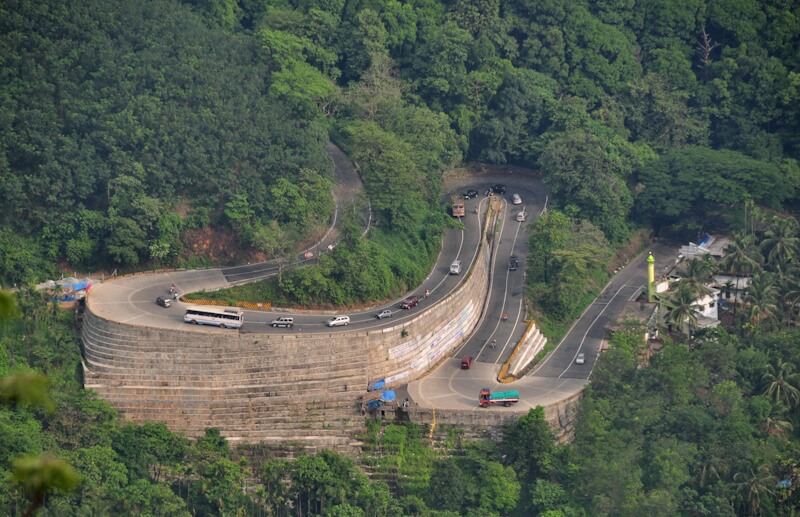
Photo: Wikimedia Commons
Climate scientists are worried about the growing frequency of intense downpours in a few hours. Long before the landslides occurred, the Hume Centre for Ecology and Wildlife Biology, a research institute in Kalpetta, had recorded unusually intense rainfall on vulnerable slopes and warned that the conditions were becoming dangerous. Their study described Chooralmala as a “grey rhino” event, a disaster that was both foreseeable and insufficiently anticipated, says CK Vishnudas, a researcher at the centre, “The lesson extends well beyond one valley.”[4]
Extreme rainfall may trigger a landslide but the scale of destruction depends on the condition of the landscape. Forest loss, slope modification, quarrying, road construction and unregulated development together determine how a mountain responds when nature turns ferocious. Says Mailampadi, “Fragile landscapes like Wayanad have ecological limits; infrastructure development that ignores those limits inevitably turns natural hazards into massive human catastrophes.”
Along the mountain slopes in Wayanad, coffee plantations occupy nearly 1.65 lakh acres, contributing almost four-fifths of Kerala’s production. Pepper, tea, cardamom, ginger, banana, and arecanut sustain thousands of agricultural families with nominal and large-scale land holdings. However, in the last two decades, tourism became the second pillar of the economy; hotels, homestays, restaurants, taxi operators, guides, and countless small businesses spread across towns like Kalpetta, Meppadi, Vythiri, Sulthan Bathery, and Mananthavady.
Tourism has generated employment for thousands of families and reduced dependency on agriculture for some. But it also reshaped the mountains – slopes were levelled for buildings, roads widened, private viewing points made on ridges, swimming pools and landscaped gardens altered the natural drainage where water once flowed freely. Collectively, they put a huge burden on fragile land. And no one knows how much this “cumulative stress” is or what it can trigger.
Wayanad’s tribal communities, whose understanding of these mountains extends across generations, are among those deeply affected by the ecological damage. Manikuttan Paniyan, a young graduate from the Paniya community, says that older people in his village speak of streams that once flowed differently and that “the mountain used to hold the rain but the water now rushes down immediately. We need roads, hospitals and jobs but we don’t want development that makes us afraid of our own hills.”
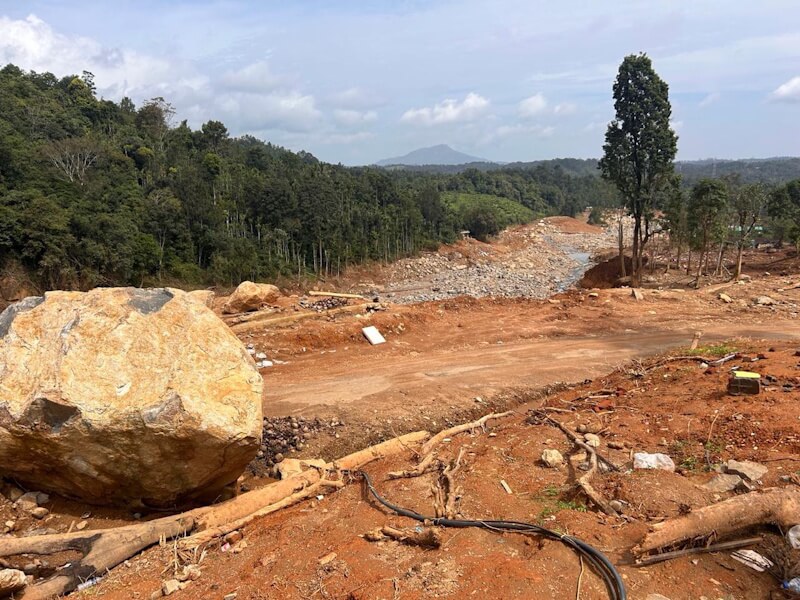
Photo: Ajay Ghosh S
Forging a new ecological equation
Here, the conventional framing of development versus conservation begins to fail; the ecology cannot be seen as an obstacle to development and mountain slopes tunnelled through. The development paradigm must begin to factor in ecological truths that forests regulate water, healthy slopes reduce landslide risks, streams sustain plantations, and only stable mountain ecosystems can continue to support tourism. If the ecology weakens, every economic sector would begin to suffer.
The tunnel debate, therefore, cannot be confined to environmental clearances or Environmental Impact Assessment (EIA) alone. The very system of evaluating EIAs – assessing each proposal as a separate entity and clearing it with some conditions – has to change to examining the cumulative impact of all the projects slated in the same watershed or slope region. Scientists argue[5] that fragile landscapes require different planning and building frameworks altogether and must include carrying-capacity studies, geological investigations which incorporate climate projections, ecological monitoring throughout construction and operation, and, importantly, listen to those who have long lived in these mountains. Farmers notice changes in springs before hydrological reports do. Plantation workers recognise unstable slopes long before engineers arrive. Tribal communities understand seasonal shifts. For them, development cannot come hand in hand with disaster.
Another shift required is for all players – the state government, local authorities, communities, policy makers, think tanks – to accept that nature-based building is the only sustainable way ahead. The future of Wayanad will not be secured by choosing either development or environment but will depend on recognising that the two are inseparable and inter-dependent.
As another monsoon settles over the coffee estates and forests here, life continues much as it has in the last two years. When it rains hard, people look up with trepidation at the mountains. They know that the living mountains have limits. It’s for the governments and planners to realise after two massive landslide tragedies in two years at Chooralmala and Kalladi, that the mountains have roared: we are not simply landscapes waiting to be engineered but living systems whose resilience determines the lives of everyone who calls us home.
KA Shaji is a south India-based developmental journalist specialising in environment and climate change. He regularly writes for The Guardian, Hindustan Times, Mongabay, and Down to Earth, covering topics such as politics, social inclusion, rural development, Dalits, tribals, art, and culture. A postgraduate in Journalism and Mass Communications, Shaji is the recipient of National Media Fellowship from the National Foundation for India for Excellence in Journalism and has also been honoured with Sanskriti National Journalism Award for a series of articles on the agrarian crisis in Wayanad.
Cover photo: Rescue teams search through tonnes of mud and debris after a massive landslide engulfed the Kalladi tunnel construction site in Wayanad on July 7, 2026. Credit: Ajay Ghosh S