
The built environment in cities, the relationship between people and spaces, between people and nature, people’s livelihoods and health are all shaped by planning. But does the existing architecture of planning – top-down, excessively determined by governments and charted out by private think tanks excluding – or not meaningfully including – various groups of people really enable the making of better cities?
Among the groups excluded or not meaningfully included are women, children, and the vast millions of people in informal livelihoods and settlements in our cities. Many of them are marginalised and poor, thrown to the fringes of cities or forced to weather the worst of natural and social stresses, by the way plans are made without accommodating their lives and needs. By this yardstick, planning as an exercise and the plans themselves show great inequity. As income and wealth inequality deepens in cities, and climate-related extreme weather events wreak havoc, the need for more inclusive planning is acutely felt.
In this multi-header interview, Question of Cities speaks to Dr Nandita Shah on how gender concerns can reflect better in urban planning; Aravind Unni on why it is imperative to plan for informal livelihoods and informal settlements; and Natasha Sharma on the need to include children and spaces for them in urban plans.
‘Cities are planned and structured without recognising women’s role’
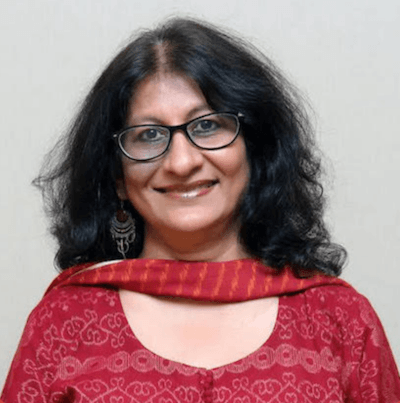
Dr Nandita Shah, women’s rights campaigner and co-founder of Akshara Centre, a women’s rights and gender just organisation, working at various levels to make cities more gender-sensitive.
How do urban planning or building design factor in or ignore gender concerns?
Planning, even after all these decades, doesn’t come with the understanding that women and other genders require to be seen differently, that cities need to be built differently. Even today, during the planning process, it is a struggle to get gender included on the grounds that women are affected differently from men by the same built environment. That’s the reality – this acknowledgement and recognition are not there.
What are the impacts on women because of this gap in planning?
When a city doesn’t plan with women and children as important elements, it doesn’t get built to accommodate their lives even though women constitute 50 percent of the population. Planning usually privileges cars over public transport and walking which are women’s dominant modes of commuting. Similarly, paid work is privileged over unpaid or care work. So, the entire city is planned and structured in ways that do not recognise the women’s role in it.
Children are also similarly excluded. Public playgrounds are getting fewer and fewer. There are also cultural and safety aspects for girls who are not allowed access to some public grounds. When we started asking girls to go to the nearby playgrounds, the boys there complained to the police. So, there’s a sense of male entitlement already. It means the play spaces for girls get reduced. Similarly, care infrastructure is absent.
Cities are struggling with extreme weather events although many cities have Climate Action Plans. How would you describe women’s vulnerability during these events?
What we have realised is that because city planning and design does not include women, they become a neutral element in the climate conversations too; few in these conversations see what’s happening to them, the care responsibilities they carry out during extreme rain or heat, or the informal economy they are in like street vendors, sweepers, waste pickers of whom many are marginalised women. The repercussions of climate change are huge for women, they are also agents of change – both go unrecognised.
In extreme heat, women in high-density cramped houses cannot simply sleep outdoors. During the recent heat wave in Mumbai, we saw many men sleeping in maidans and on the beach; women can’t do that, they struggle inside extremely hot homes which are not ventilated and do not have adequate shading. Similarly, in the monsoon, they are responsible for cleanliness and their access to sanitation is further compromised. The built form does not take all this into account.
An informal settlement such as a chawl or slum sometimes has no windows; slum redevelopment buildings are too close to each other with every house touching the next, poorly constructed buildings with narrow passages, unplanned drainage, and inadequate space. Overall, for women, it’s like going from a horizontal slum to a vertical slum. There’s now evidence that these built forms cause or contribute to tuberculosis and other diseases, including impact on mental health.
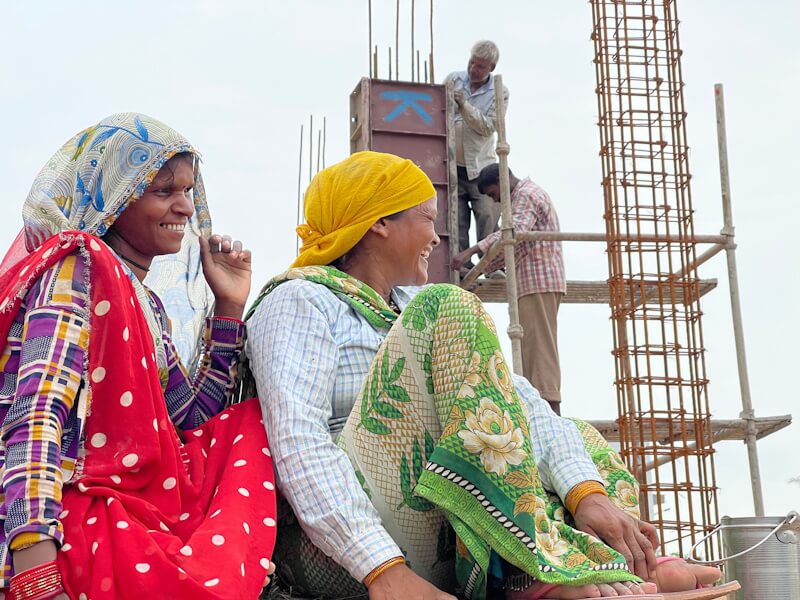
Photo: Pexels
What are the ways forward to bridge the gender gap in planning? How have you or Akshara addressed this?
We have to work in the city at three levels. One, what can we do to change and add things in public infrastructure which is already built. Although there isn’t much, we can ensure that certain services and amenities are re-oriented towards women. For example, bus routes and bus stops can be made gender-friendly. Second, public institutions have to become gender-sensitive; a part of the work is to make institutions respond better to gender concerns. Like, in transport, whether the last-mile connectivity is safe, accessible and inclusive for children, women and people of diverse genders. Thirdly, we should work towards shifting mindsets and changing culture where gender-sensitive cities are seen as essential urban development rather than special privileges. All three aspects need to be worked on together.
We approach the issue in these ways in Akshara too – focus on the public infrastructure work to include gender in Development Plans as we did in Mumbai, campaign to ensure that playgrounds are redesigned or repurposed for women’s needs, work on design issues such as the lowering the walls around these grounds to make them safer. From a gender-responsive perspective, a mixed-use area plan is better than single-zoned as it allows for eyes on the street and the entire area doesn’t become deserted like Bandra Kurla Complex. Akshara works with institutions like partnering the Brihanmumbai Municipal Corporation for its gender resource centre, with transport authorities like Mumbai’s BEST buses to train conductors in gender sensitivity. A major part of our work is around changing the mindset of men to have dialogues with their families, to enable women to access the city in ways that give them opportunities to grow. At present, every city is much smaller for girls and women only because they cannot move freely.
What are some examples of cities which integrated gender into planning?
Vienna, Bogota, Barcelona and Seoul have brought a specific gender lens to city making and added care infrastructure so that women can access it within 15 minutes anywhere. It has positively impacted women’s quality of life and their participation in public life and the workforce. International cities have been able to do this in a holistic manner, beyond making safety provisions and putting in CCTV networks.
In India, there’s work happening around gender safety and transport in Jabalpur, Bengaluru, and Odisha. The issue is the access women have or don’t. In some Indian cities, their access improved because travel costs were reduced or bus rides were made free. When Maharashtra slashed state transport fare by half, the number of women travelling doubled from 9 to 18 lakh a day, but it was scrapped. Our experience is that when we go to authorities with concrete data and plans, they respond better. Change is possible but it’s a long process of continuous work.
Beyond these issues, we should all be deeply concerned that India has one of the lowest participation of women in the workforce. Where will women be in the promised $5 trillion economy? So, providing the physical ecosystem – by planning – for women’s participation is required.
‘There’s re-invisibilisation of informal settlements in planning documents’
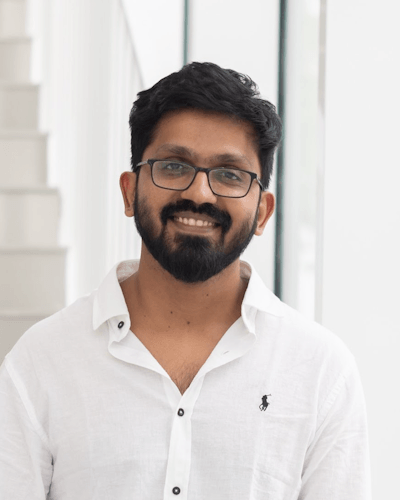
Aravind Unni, urban practitioner, researcher and activist
currently, pursuing a PhD at the Tata Institute of Social Sciences (TISS), Mumbai, focusing on the mobilisations and negotiations of street vendors in Indian cities post the Street Vendors Act 2014
Why and how do urban plans fail workers in the informal sector and people in informal settlements?
Master Plans have traditionally been very technical, top-down documents led by the state, and carry a colonial legacy. In the Town Planning Acts before and immediately after Independence, informality was largely invisible and activities like street vending were criminalised. This carried over into how master plans are prepared. There are two aspects of informality: settlements and livelihoods.
For informal settlements, there was some recognition in the plans of the 1980s and early 1990s. That was the period of sites-and-services schemes and settlement improvement programmes, so plans such as Delhi’s referred to improving them and providing basic services. But from the 1990s, that visibility disappeared. Delhi’s informal settlements are not even properly mapped in the Master Plan. There are hundreds of bastis but there is no clear policy for their improvement. The Draft Master Plan 2041 leaves this largely ambiguous. So what we’re seeing is a kind of ‘re-invisibilisation’. Informal settlements, which had at least some presence in earlier plans, have once again become invisible in planning documents.
What has been the impact on livelihoods of street vendors and other informal workers?
Since the 1990s, and especially after the 2000s, informal employment has grown significantly. At the same time, the Street Vendors Act of 2014 legally recognised street vending and required cities to amend their Master Plans and planning norms accordingly. But in practice, Master Plans have become one of the biggest obstacles to implementing the Act.
Take Delhi as an example. The 1982 Master Plan was quite progressive. It acknowledged the number of street vendors and weekly markets, and made provisions. It reflected an important shift in thinking that informality was not temporary. Ironically, the Draft Master Plan 2041, prepared after the Street Vendors Act, does not even mention it. It makes no serious provisions for accommodating future street vendors, despite the law.
Cities routinely estimate future requirements for housing, roads and infrastructure but they do not do the same for street vendors even though the law requires it. The result is that vendors may receive certificates of vending but they still have nowhere to vend. So, cities continue to prioritise space for cars and parking over informal livelihoods. The same problem extends to waste pickers, domestic workers, and other informal occupations; they barely feature in Master Plans. As long as planning does not reserve space for these livelihoods, conflicts over streets and public spaces will continue.
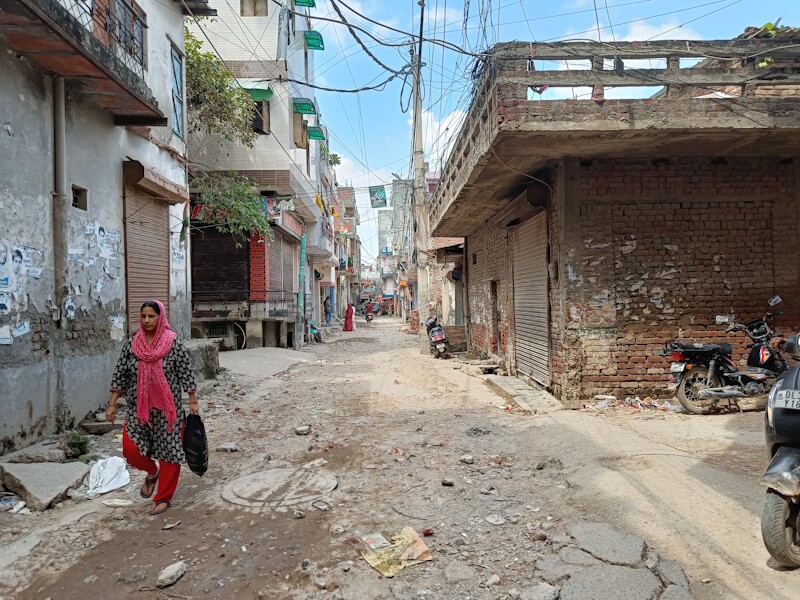
Photo: QoC File
Where do informal workers fit into Climate Action Plans, are their concerns meaningfully incorporated?
In a recent paper[1] I co-authored, we did an analysis of Climate Action Plans of Bengaluru, Mumbai, and Chennai, and examined how informal workers and informal settlements are represented.
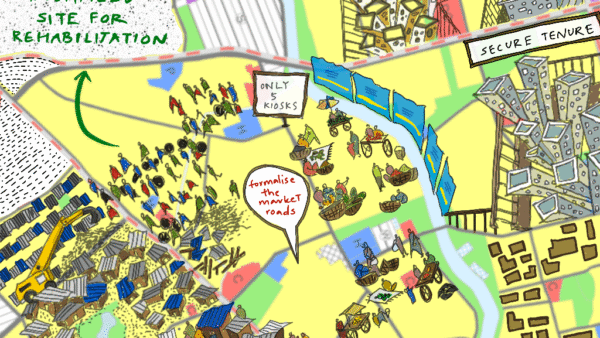
Informal settlements are increasingly marked as high-risk or problematic, which creates the possibility to justify their removal. This is deeply concerning. So, these plans may include dedicated recommendations for informal settlements but they can end up paving the way for evictions and displacement. In Chennai, for example, several plans refer to rehabilitation and relocation from flood-prone areas, but do not specify how this will be implemented.
When it comes to informal workers, there is very little in most Climate Action Plans. Some cities have made progress like Bengaluru has a relatively stronger approach, while Chennai includes some provisions for fish workers. But overall, these measures are scattered, limited, and far from comprehensive.
What the plans miss is the larger picture of informal work in its different forms. There are street workers, outdoor workers, indoor workers, women workers, and men workers. Ideally, the broad spectrum should be represented but none of the plans have that. It’s a key argument we are making – because Climate Action Plans are a precursor to what’s coming, if they don’t have a holistic framework ensuring that marginalised communities and informal workers are meaningfully included, they could do more harm than good. The existing prejudices and biases of the state and bureaucracy can become embedded in the plans which could be dangerous. These plans need a strong social inclusion element.
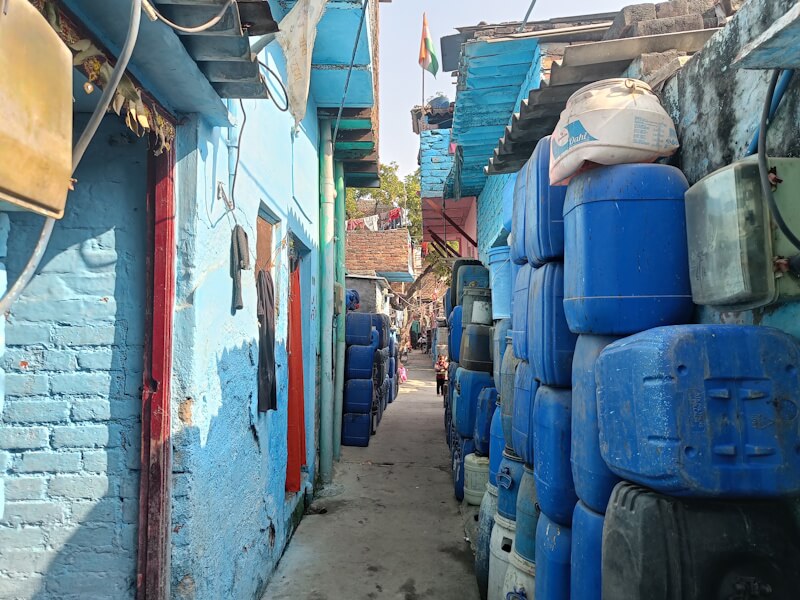
Photo: QoC File
What should change in urban planning, as a whole, from the perspective of informality?
The first point, all of us working on plans argue, is that Master Plans should clearly articulate the reality of informality. A Master Plan is a set of documents — a report, a land use plan, Development Control Regulations or building by-laws. The problem is that the plans may mention informal settlements or livelihoods but there is no land allocated because, in a city, it is politically difficult. The by-laws also rarely acknowledge the informal. The reports should capture this reality; before land use is proposed, the existing land use must be mapped; and the plan must capture informality in all its forms.
Secondly, our demand is to secure land for informal settlements. Right now, settlements are evicted, people are displaced, and the land is put to other uses. In Delhi, where nearly 30 percent of the population lives on probably one percent of land, that’s a serious problem. Mumbai has over 40 percent of its population living on about 8 percent of its land. You see similar patterns in other cities too. Governments can’t keep evicting people simply because the land can be monetised or put to “better” use. A better approach is to improve or redevelop the settlement in situ, depending on the context. These ideas should also translate into Development Control Regulations.
Thirdly, planning treats housing and livelihoods separately but, in poorer working-class households, they’re closely linked and often in the same building or neighbourhood. Regulations should also account for this. For street vendors and other informal workers, the demands are straightforward – like new apartment buildings and hospitals have parking spaces by norm, street vendors should have too. Based on the projected population, vending spaces must be planned for every metro station, hospital, or public amenity; the existing vendors should be accommodated where they already work as far as possible.
‘Built environment manifests in livelihoods and opportunities’
Natasha Sharma, co-founder and festival director of Govandi Arts Festival, which reclaims and transforms the marginalised socio-spatial narrative and infrastructure through arts and culture. She leads the Public Art and Design interventions with the Community Design Agency (CDA).
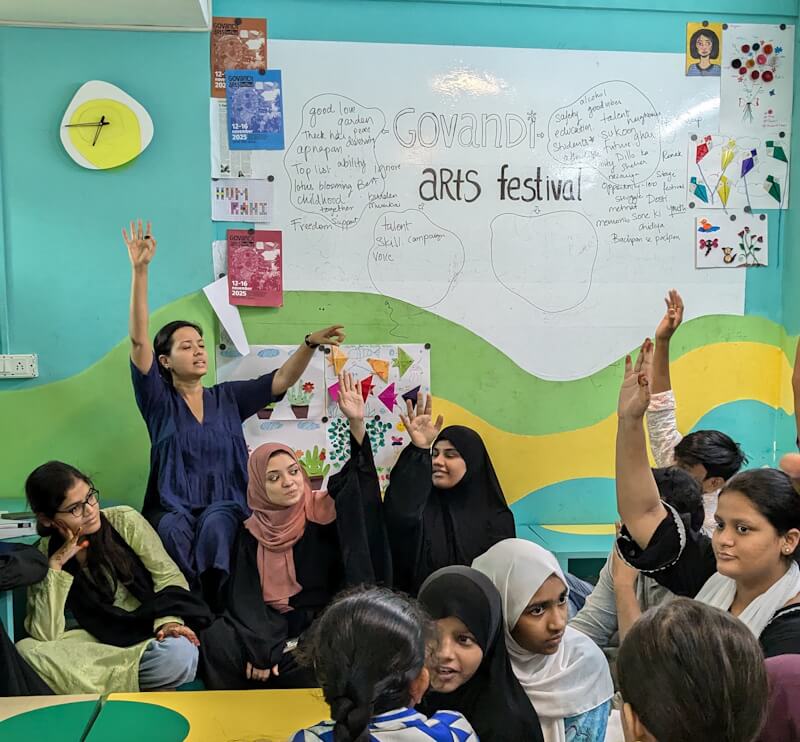
Photo: GAF team
How is an area like Govandi provided for in Mumbai’s plans and climate action?
Govandi is huge. There are different sides of it, one side reaches Mankhurd, Shivaji Nagar, Lallubhai Compound, Baiganwadi. Another side has better, more developed infrastructure with buildings and amenities. All of Govandi falls in the M-East ward of the Brihanmumbai Municipal Corporation (BMC) which also has Asia’s largest dumping ground at Deonar with marginalised neighbourhoods around it. There are slums and dense resettlement colonies. It’s a mix of typologies; definitely an after-thought of planning.
Govandi sits on a wasteland. It’s a long distance from Mumbai’s suburban railway lines means property rates are not high and amenities are not good. It’s one of the areas that the displaced are shifted to – now the government is trying to house the people of Dharavi – so it has ended up with what is infamously heard as “vertical slums”. Specifically in Natwar Parekh compound where we work, the houses receive less sunlight and ventilation, have garbage-filled alleyways, poor quality of air, and lack general accessibility. People rehabilitated here are far away from their workplaces, so it impacts their livelihoods.
They have been put into societies but they are unable to afford the maintenance, because expenditure has increased but income has not. They have to take care of water bills, light bills, maintenance without being trained or having an understanding of how to run societies and federations. They don’t know their neighbours, due to the lottery system of allotment. So, the built environment manifests a lot in their livelihoods and opportunities, also in their mental health and the social fabric. It’s a multi-fold effect of the built environment on people here that I have noticed.
In general, urban planning bypasses gender and children’s concerns. How does that impact their lives?
Women struggle a lot because they don’t have open spaces. Houses have restrictions; there’s little space outdoors. This impacts their health, there are thyroid and TB conversations, also arthritis because they are not walking enough. So, the infrastructure has led to health issues. These problems are inter-connected. This is why we, as a part of intervention here, created community spaces and the Govandi Festival where wellbeing, arts and learning happen through creativity. That’s when we realised that there’s a need for people to come together, feel like they have agency and a space to express their voice. Our intervention is like support to the community and the infrastructure,
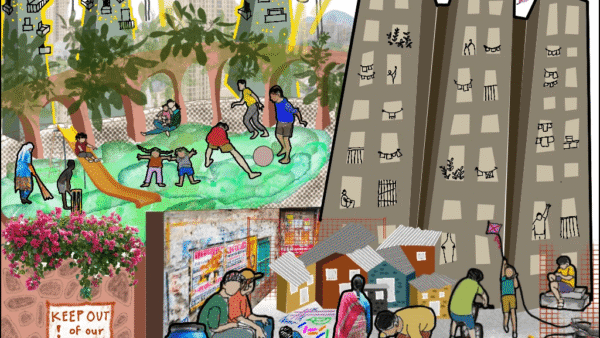
What we, specifically, have learned is that there’s great creativity and perspectives when the city is seen through the children’s eyes. The Govandi Arts is not a one-off event but consistent everyday work of programmes for children. The way children see their cities is they will ask for play space not just for themselves, but for everybody. Why is it that people most impacted by poor infrastructure, have no agency in shaping it?
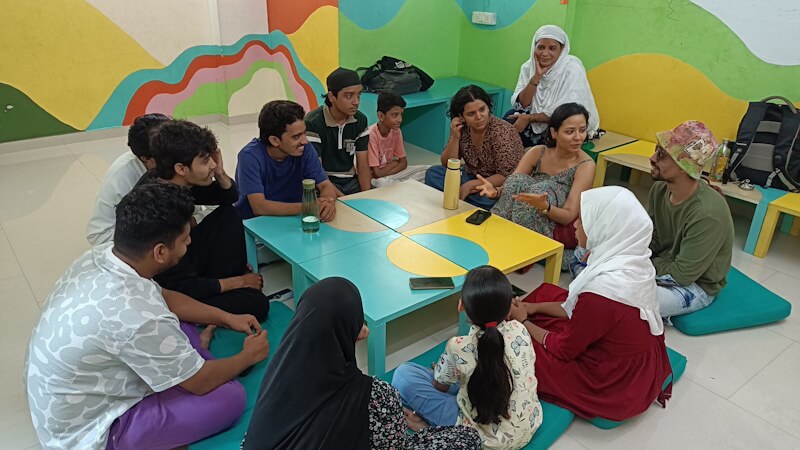
Photo: GAF team
What does planning miss about children?
While rehabilitating people, first look at the number of women, youth, children who will be shifted as intersections too, not just a big number of ‘n’ number of people; build community centres, public spaces, and programmes for them as non-negotiables. Play and open usable spaces are not something you inherit because you come from money, it should be a basic right for all. Plan to turn one or two units of a building into children’s centres. Creative practitioners like us can come and work with the kids. Once spaces are built, it’s difficult to retrofit this, so have it in your plan from the beginning. Then, let’s plan for parks, walking spaces, designated parking lots – these should be non-negotiable.
The sewage and stormwater drainage lines are to also be created better but planning must go beyond those. This is humanising and democratising design and access. We have been doing this to illustrate such practices that centres community needs and wellbeing in developmental practices. The climate crisis is now in the mix; if it’s not accounted for, there will be a collapse. Building proper infrastructure including ventilation, sunlight, air flow, fire exits, and spaces for children, women and senior citizens are part of climate action now but should be done regardless. If spaces are not provided, children don’t know where to go; I have seen kids just climb up walls because their bodies need to.
In the centres, they come for music and rap workshops, theatre, film, game and design workshops; they know people will listen to what they have to say and talk without making it too intellectual or dismissing them. It brings them hope, they feel their perspectives are welcomed and their confidence increases. Having access to a safe community space, run by the community, is important. Planning has to provide it. Without it, their growth, thinking, approaching a problem, and friendships are all affected. For me, these spaces are spaces of care or what I call Ecosystems of Care. Our three community spaces — Ham Raahi, Awaaz, Kitaab Mahal — are full which shows there is a need for them in rehabilitation and redevelopment colonies.
How can the lacunae in planning be made good, who are the stakeholders?
We require state support for funds and planning. If there were state-allocated funds for creating public parks, community centres, and having programmes for creativity and well-being in such neighbourhoods, it would really accelerate the impact and we would feel supported. The other hiccup is that, in the governance structure, it takes a lot of our time to get permissions and it’s unclear who is accountable. But because we have been here for many years now and because of the Govandi Arts Festival, the trust has increased, the BMC and MMRDA know us which helps a lot.
Cover Photo: Pexels