
After months of removing concrete and planting saplings around the iconic Hôtel de Ville in Paris, the 2,500 square metres urban forest was ready in 2025. The 150 trees of local species were planted keeping climate change in mind — oak, hornbeam, honey locust, and Julian’s hackberry are resistant to extreme weather. More than 20,000 plants, including shrubs and ferns, amid the urban backdrop weave nature into the city’s design.
Initiated in late 2024, the project transformed the forecourt of the iconic Hôtel de Ville—a site steeped in history as the seat of municipal governance and a venue for public gatherings—into a lush woodland retreat. The 1,000 square metres of open ground “effectively converts around one-quarter of this historic square into a breathing, forested ecosystem, alive with the throb of nature”.[1]
It replaced other busy concrete squares including the 2,500 square metres opposite the City Hall with 10-metre tall trees, it replaced more than 6,000 parking spots with pedestrian or biking paths and thousands of trees. The city now boasts 531 parks and gardens, two extensive forests (Bois de Vincennes and Bois de Boulogne) and more than 1,00,000 street trees. By this year-end, Paris has committed to planting 1,70,000 trees and adding 100 hectares of public green spaces. It inaugurated a new urban forest on the Place de Catalogne and a 3-hectare park named after Aretha Franklin in the east of Paris. Giving priority to nature over cars and concrete, more than 1.3 hectares of asphalt have been removed to enable streets to be greened and around 6,000 parking spaces have been removed since 2020.[2]
The visionary behind the nature-led transformation of the popular tourist place is Paris Mayor Anne Hidalgo, who was awarded the 2023 ULI Prize for Visionaries in Urban Development, the most prestigious and respected honour in the global land use and development community. Hidalgo “not only made Paris a healthier, more inclusive, and more livable city today but has also transformed the way other cities think about the possibilities of tomorrow,” said Diane Hoskins, ULI Global Chair and Co-CEO of Gensler.
“Her vision of a 15-minute city marked by greater mobility, improved air quality, abundant public spaces, and inclusive housing can teach and inspire the Urban Land Institute and its members to advance the shared mission. For her pursuit of a more inclusive, sustainable, thriving Paris – and her impact beyond the city’s borders – – Mayor Hidalgo is a fitting recipient of the 24th annual ULI Prize.”[3]
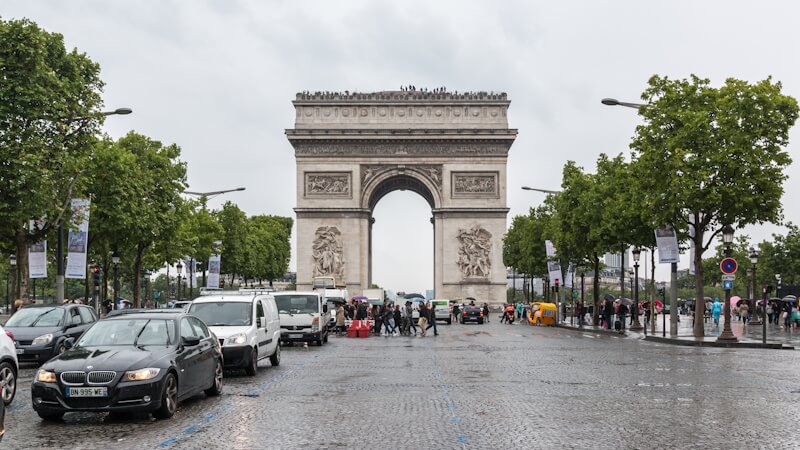
Photo: Wikimedia Commons
The green steps the city took
In 2003, around 15,000 people died in France during a heat wave. This was an alarm that Paris heeded and took steps to prevent such disasters from becoming more common. Through these greening projects, Paris is protecting its citizens, particularly the elderly and those in ill health, from excessive heat.
The urban forest is part of a wider drive to reclaim concrete spaces for nature – a significant move in the time of climate change and extreme weather events. It took more than 10 years of dedicated work and consistent effort to bring about this transformation. In 2015 itself, Paris had added 70 hectares of green infrastructure and rooftop gardens in order to reduce the urban heat island effect.
The outgoing Paris Mayor, Anne Hidalgo, who brought about this green change, has set an example for cities that are intent on building more and turning into concrete jungles. Although there were challenges and criticisms, she was determined to make the city more walkable and bikeable.
The mega green project was achievable by roping in private and institutional partners by signing agreements to open gardens that were inaccessible. This meant more public spaces for people. Paris City Council also identified school playgrounds as important levers: they represent over 70 hectares of area and are equally distributed across the Paris territory.[4] As Paris surface temperature shot up, scientists scrambled to find solutions to rising temperatures and to promote biodiversity in densely populated metropoles with limited open spaces. Paris, the seventh most-crowded large city in the world, lacked abundant parks.[5]
Rooftops comprise a third of the city’s surface, representing a significant untapped resource in dense urban centres. After observing zinc roof overheating for several years, Roofscapes partnered with the City of Paris in 2024 through a research and development procurement. This collaboration with the Department of Ecological Transition and Climate aimed to refine and test Roofscapes’ solutions for adapting Parisian zinc roofs to heatwaves. The Académie du Climat, a new institution launched by Mayor Anne Hidalgo in a repurposed town hall building to serve as a climate change forum, was chosen as the pilot site. Construction was completed between March and May 2024, marking a significant step in urban climate adaptation efforts.
“The 100 sqm pilot project on the Académie du Climat’s roof is designed to monitor various ecosystem benefits. Temperature sensors measure heat transfer impacts, while the project tracks rainwater retention and plant species’ irrigation autonomy to optimise resilience during extreme weather events. Biodiversity surveys focus[6] on spontaneous fauna, especially pollinators, to support resilient ecosystems.[7]
Photo: Wikimedia Commons
The changes
Since 2015, Paris residents have been able to apply for a ‘permit to green’ from City Hall, allowing them to install planters on sidewalks or gardens directly on the ground. Successive urban plans have included the creation of biodiversity spaces, the extension of ecological corridors, the greening of streets, and an increase in trees and shrubs.
Seeds are being planted in undeveloped areas, while seed libraries and community exchanges are multiplying across neighbourhoods. “The Biodiversity Plan 2025 to 2030 takes this commitment further. By the end of the decade, the city aims for 30 percent of Parisian land to be permeable and vegetated. That means large-scale renaturation of streets, squares, rooftops, schoolyards and walls, alongside new community gardens, urban orchards, inner city forests and flower meadows,”[8] says this write-up.
Ahead of the 2024 Olympic Games, the Champs-Élysées, one of the world’s most famous avenues, also saw a major transformation with more trees and wider sidewalks. Reimagined as a “fantastic garden” by 2030, Paris has reduced car lanes and will plant 400 trees around the iconic landmark. These projects will not only increase Paris’s aesthetic appeal but also improve air quality and urban resilience.
Place de la Bastille is one of the seven major squares that have been remodelled. It now has 50 more trees[9] and 7,000 square metres of additional pedestrian space and bike paths. This has given visitors better accessibility to the square’s previously marooned central column, the site of the former Bastille Prison.[10]
After removing 24,000 parking spots in the last six years, the city has plans to do away with tens of thousands more[11] across 500 streets and replace them with bike lanes, sidewalks or greenery. Between 2014 and June 2025, the city planted 2,13,000 trees[12] around schools[13] and along streets, in phases. These “islands of freshness”[14]are places that can provide a cooling respite, whether through tree shade, fountains or within the cool interior of public buildings such as museums.
The impact
An international study[15] conducted by Inserm, the Barcelona Institute for Global Health (ISGlobal) and the London School of Hygiene & Tropical Medicine, found that those districts in Paris with more vegetation have lower risk of death during periods of high heat. The study, published on January 27 in the journal Urban Sustainability,[16] is based on data collected from 2008 to 2017.
Stressing on the importance of developing vegetation in cities, the scientists suggested evenly distributing green spaces among neighbourhoods to protect the health of Parisians as the city faces the effects of climate change.[17]
A total of 1,55,000 trees have been planted and around 63,000 hectares (1,56,000 acres) of new green spaces created, making the capital greener and the air more breathable.[18] The increased vegetation absorbs more carbon dioxide and has improved the air quality of the crowded city.
Photo: Wikimedia Commons
Lessons from other cities that greened
Oslo is the greenest capital in the world by land use as 74 percent of the city is green space. With a dedicated green belt, two-thirds of Norway’s wildlife species, and 95 percent of residents living within 300 metres of a park, Oslo is nature-rich in every aspect. Melbourne is another example of a green and liveable city. With its green roofs, vertical gardens, and stormwater-smart systems, the city’s climate adaptation strategy stands out in the global lineup of green city examples, driven by resilience and design.
Hamburg in Germany has 1,460 public parks and it is working toward a green network that will cover 40 percent of its area by 2034. Hamburg has set an example that even dense port cities can become green oases, connecting landscapes across the city for cycling, recreation and biodiversity.[19]
From the Library of Trees in Milan to the Master Plan for Barcelona’s trees 2017-2037 at the centre of local policies, from green roofs in Copenhagen and Toronto to Seoul’s winding tree paths, cities around the world are finding ways to protect and increase their green cover in innovative ways. China’s planned Forest City may not have taken off but it remains an idea. India’s cities can learn a thing or two from these and more examples featured in this compendium.[20]
However, Hidalgo is reluctant to draw specific lessons from Paris for other cities. “Each city is different, but there are common issues,” she says. “It’s important to have a vision, to know where you want to go and to aim high.[21]
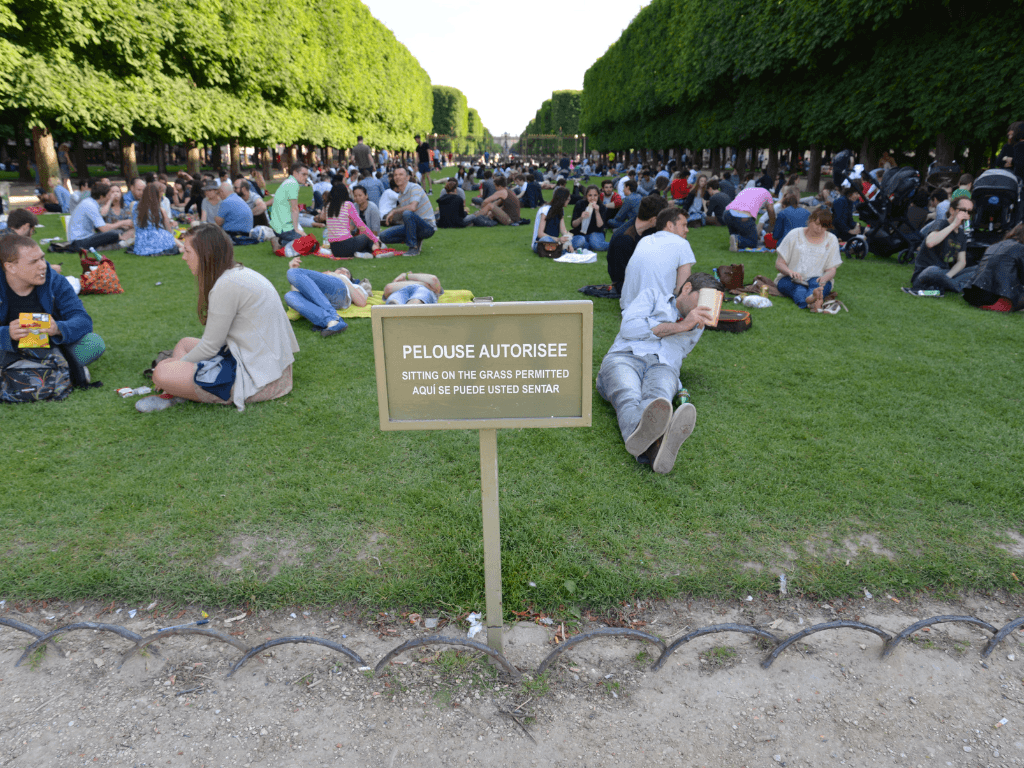
Cover photo: The welcoming Luxembourg Gardens in Paris; Credit: Wikimedia Commons