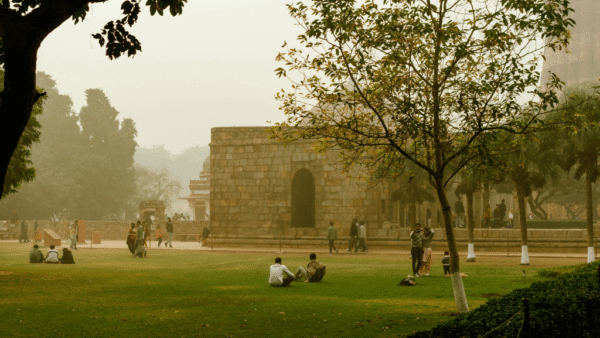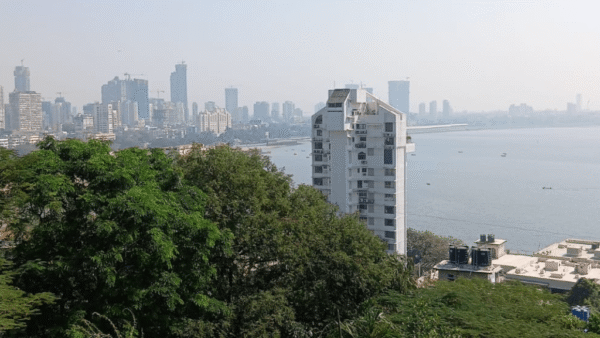

Dear Thrissur and Chennai,
You are my hometown, Thrissur, because I grew up here. My father hails from here but was working outside the state. When we came here, I was 10 years old.
Then, I went away for close to 30 years, most of it spent growing up and working, the longest stint of 20-25 years (with breaks in other places in between), from 1992 to 2018, in Chennai. So, Chennai is where my roots are, and life took me to Hyderabad and West Africa before I returned to Thrissur in 2018.
Thrissur, you were my hometown (not yet declared a city) from 1975 to 1987 and then, during my years outside, I used to come here occasionally to meet parents. When I finally returned to strike roots, in 2018, you had grown to become my home-city. What I find interesting about you, and the stark difference between you and Chennai is, despite the 35 years in between, you have not changed drastically. The old Census data shows that between 2001 and 2011, Thrissur was listed amongst the fast-growing cities in terms of urbanisation. The population has grown exponentially after that too. Thrissur’s urban agglomeration population was 1.8 million in 2011; it is now estimated to be more than 3.5 million.[1]
Your population did not grow exponentially because the city expanded and burgeoned beyond borders. It was basically because many nearby panchayats and semi-urban areas were brought into the urban agglomeration. So, we see a huge population jump on paper but you are essentially the city I used to know. I can still ride a scooter comfortably here and revisit the roads I grew up on which look more or less the same. Kochi, about 75 kilometres, grew rapidly and urbanised differently but you, Thrissur, remained intact.
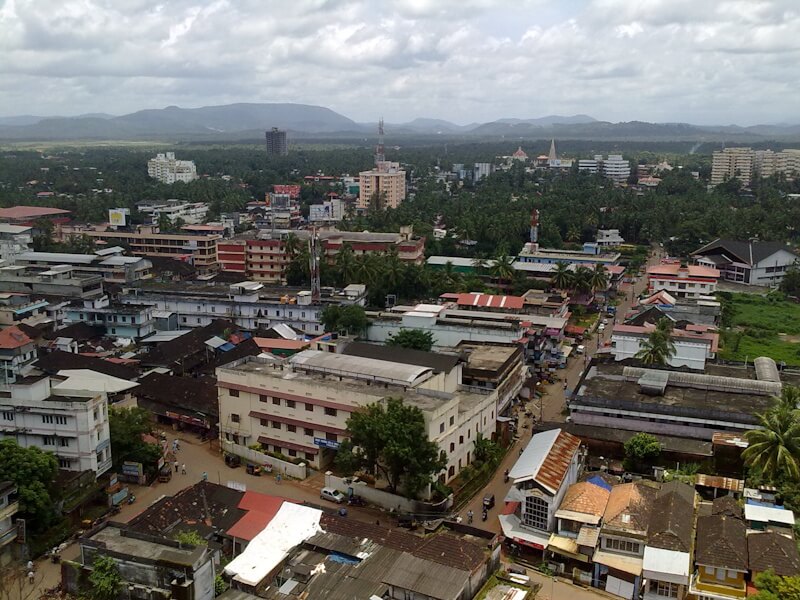
Photo: Wikimedia Commons
The Swaraj Round is still there in the heart of the city, in the circle, inside which is the Vadakkunathan temple and its temple grounds. It was not, and is not, maintained well but we have a public space for large meetings, art events, and cultural events even today. And, in this, you, Thrissur, score over Chennai where public spaces do not exist except for the Marina Beach,[2] the Elliot’s Beach and hardly a few more. There’s a severe shortage of public spaces in Chennai.
So much so, that when Aavin,[3] the largest dairy cooperative by the Tamil Nadu government, started its outlet in front of my apartment complex in Virugambakkam, and the open area around the booth used to get crowded every evening. It turned into the neighbourhood public space. There were not many in the city.
Madras, not Chennai
It was not even Chennai to start with; it was Madras. It transitioned from Madras to Chennai in 1996.[4] That was a transition for me but I am sure this emotion is shared by many; it changed the city. Madras was an idea, Chennai is the reality. Madras had a different vibe altogether. When I now come to you, Chennai, it hits me that this is not the city that I remember from 1992. The city has gone through a huge change, and one of those is the loss of public space.[5]
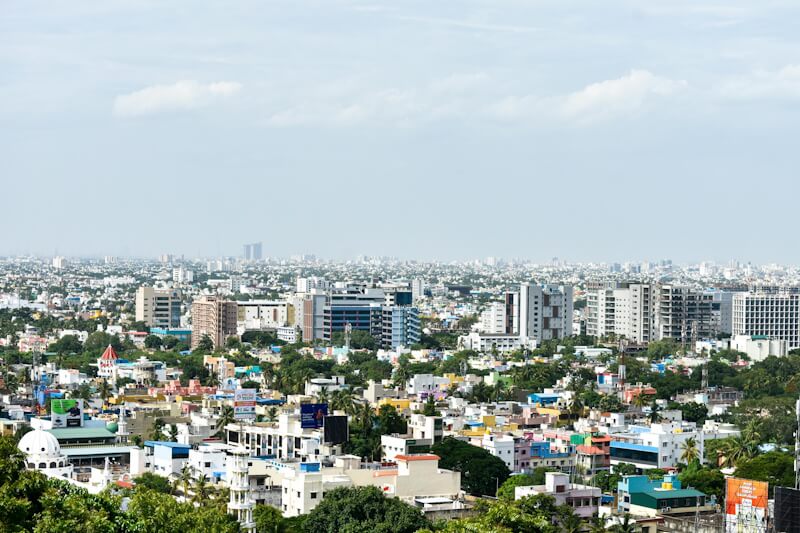
Photo: Pexels
The main public spaces are the Marina Beach and Besant Nagar Beach or the Elliot’s Beach, which citizens have managed to reclaim on Sunday mornings. About your waterways, I cannot say much because the Adyar and Cooum rivers, which flow through you, were polluted and functioned basically as drainage channels in 1992; this has not improved.[6] But, Chennai, I miss your wetlands — the small wetlands that were spread all over the city. Virugambakkam had a lake, and so did Nungambakkam, a few decades ago. The word Bakkam itself means the side of a lake. The lakes have disappeared, but the biggest wetland, the Pallikaranai Marsh,[7] was largely built over and now has software offices and apartment complexes, schools, hospitals, and hotels. The Perungudi garbage dump used to be part of the wetland.[8]
This is a major transition I have seen in Chennai. The wetlands have disappeared and we saw the impact of this decline in natural areas during the devastating floods of December 2015[9] when nature re-conquered or re-captured the wetlands. That is when many people realised that their houses were built on wetlands. The water level was deeper than in surrounding places.
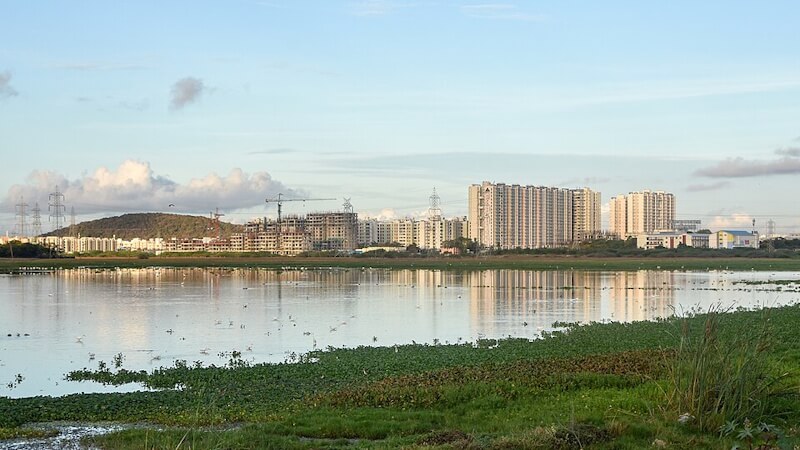
Photo: Wikimedia Commons
Chennai, you have to forgive people because most remain unaware about the natural contours of land or forget them once something has been built over them. Most people are not even aware of the coastal sand dune.[10] If we see the lay of the land, on one side stretches the Bay of Bengal and the coastal city is actually very low, and with a small gradient, it comes towards the sea. But there is a hump there.
We can see the hump on most of the roads, a road rising a little and then descending a bit. That hump is the coastal dune. This has literally disappeared with all the flattening and construction work, making the city more vulnerable to sea level rise and tidal amplitude. The National Institute of Oceanography, in Goa, studied the relative sea level rise in various cities of India. Chennai, you are not in its list because you have not reported a large-scale subsidence but that is not necessarily good news.
The Thrissur-Kochi connect
Thrissur, you have not been discovered yet in the sense of intensive industrialisation and urbanisation. Your Air Quality Index is still very good.[11] The roads are not clogged. The pace is still relaxed. But the state government wants to develop you into “a future city” which, I hope, remains as a proposal.[12]
In 1995-1996, Kerala had two paths to pursue — intensive industrialisation or intensive tourism. The state opted for the second. We have seen the adverse impacts of it in Kochi, Alapuzhaa, and Munnar, all the way down to Varkala and Kumarakom.[13] Thrissur, you have benefited from the good growth so far, not spectacular expansion but good growth, being the satellite city to Kochi. The airport is halfway between Kochi and here. You have been a business centre, 200 years old, but Kochi had the focus. Now the spotlight has come on you.
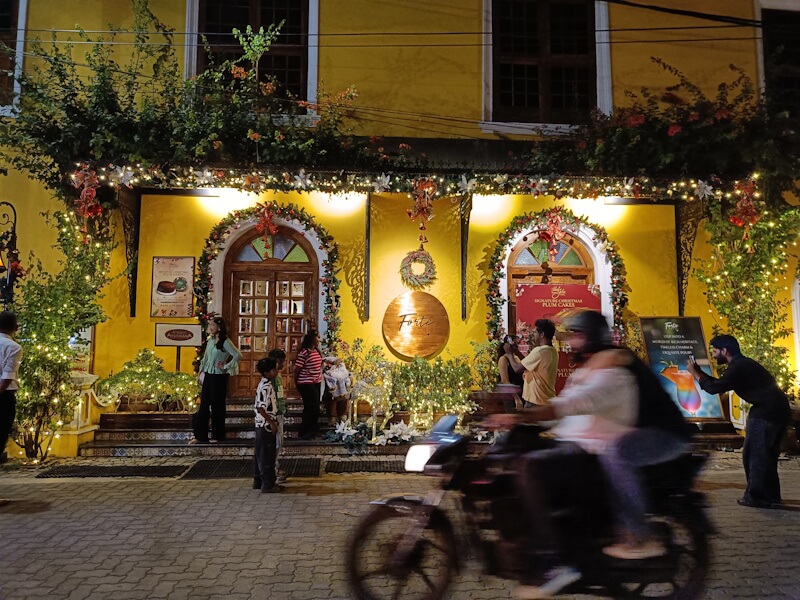
Photo: QoC File
The National Institute of Oceanography study showed two cities with the most land subsidence. Kolkata was at the top because the Hooghly is subsiding due to the excessive extraction of groundwater in the region. The second city is Kochi because Kochi is like a sink. It sits in the Vembanad estuary, barely one-two metres above the sea level – the highest point would be around eight metres – and it shows how flat the city is[14] It is subsiding also because of excess extraction of water, and the destruction of natural coastal buffers such as mangroves.
Thrissur is not like that, and should not become so in the race to urbanise.
Beyond Chennai’s dunes
Chennai, you are sinking; your sand dunes and mangroves are disappearing, so also little patches of coastal vegetation around.[15] They gave you protection. I am also unhappy that you are losing some of the main market places. Indeed, libraries are disappearing because people are not reading physical books. Fortunately a large and fine library – the Anna Centenary Library[16] – was constructed in the Anna University campus and that’s very popular. The footfalls in the Connemara Public Library[17] have declined, but footfalls into these libraries are still vital and growing in Chennai.
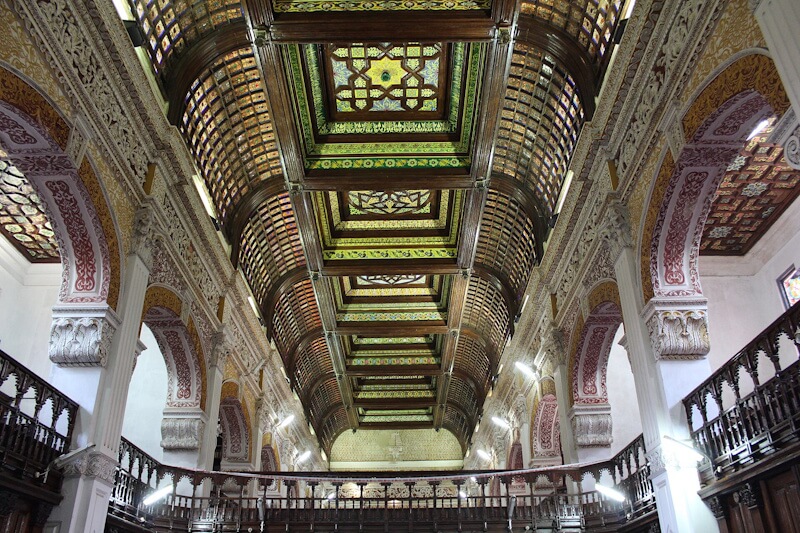
Photo: Wikimedia Commons
It’s the gradual disappearance of your main markets and market places that disturb my sense of the city. The traditional markets of T Nagar and Pondy Bazaar are not the way they used to be; many shops now have branches in every part of the city. This is mainly because of suburbanisation but when markets go, the vibrant and colourful texture of the city erodes too.[18]
Madras always had a strong middle-class intellectuality about it with a conservative outlook because the middle-class was dominated by Tamil Brahmins and their conservativeness. This is changing. Or rather it has changed to an extent. When I moved here in 1992 and felt at home, I would not say “I’m from Madras” but that “Madras is my city.” I took pride in saying so. It showed how deeply I associated with you but, today, I rarely see people having or nurturing that kind of an association with you.
These kinds of people have also disappeared over time. Chennai, this is something I regret—you have become like any other city where people come in search of employment, any city that hosted the software boom and brought people from all over. Like Bengaluru. Chennai is third in this queue after Bengaluru and Hyderabad. The social fabric is now different in many parts, not necessarily better or worse, but different from what the old city you used to be. Madras, or Chennai, changed. You used to be the second-most professional city in India after Mumbai but with calm and peace unlike the commercial capital of India. It’s not like that anymore.
Re-imagining my cities
Thrissur, I re-imagine you, to not go down the Chennai way, not be exponentially different as you urbanise and expand in the residual part of my life here. There will be growth, there will be changes in the built environment, in how the city looks and feels, but some things must not change. The first is the air quality. I want to look up at the Thrissur sky and see the stars like I cannot see them in Chennai or Mumbai. Clean air is very, very precious; I do not want to lose that. Then, Thrissur must retain its languid calm and peace, the quietness that’s in every pore of this place.
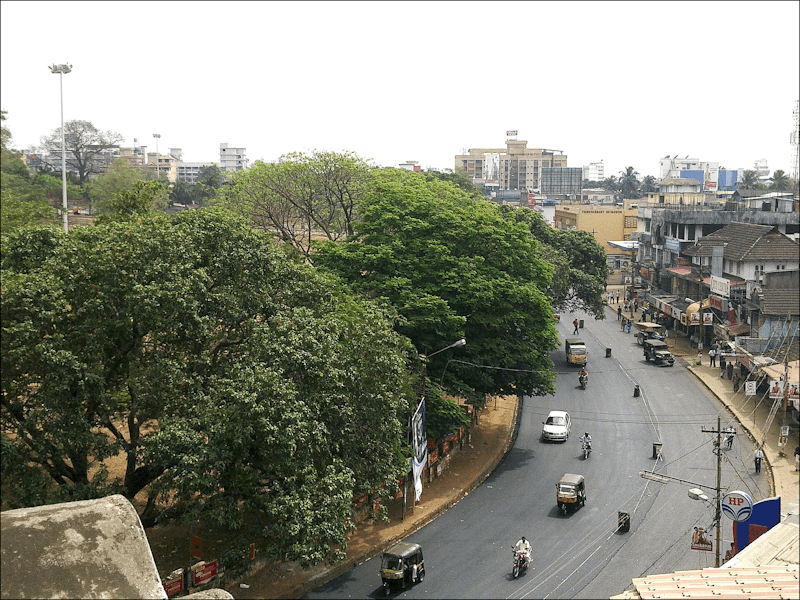
Photo: Wikimedia Commons
Water shortage is the one aspect that worries us all about Thrissur. My father would not have worried about it; I do. The new urban expansion has meant shortage of drinking water. The Kerala High Court had to intervene last June to direct the Kerala Water Authority to take immediate action to address the 2.5 year-long water shortage.[19]
Similarly, studies have shown widespread groundwater bacterial contamination which needs to be tackled before it gets out of hand. The garbage disposal system too requires urgent and sustained attention. Thrissur cannot be dotted with waste lying on the roadside.
How do I re-imagine you, Chennai? It will not be a romance of the past because the city of the old too carried myriad problems and deficiencies. Besides everything else, the city was a bit too rigid for its own good which stymied your growth and expansion. Only the privileged could get things done, feel comfortable here. In the post-liberalisation decades, people have been attracted to cities that offered opportunities as well as certain openness, like Mumbai.
Chennai’s strength was the manufacturing sector. Unlike Bengaluru, you were a manufacturing hub of India. The service sector, imitating Bengaluru, must not diminish this. I re-imagine Chennai as the city of middle-class intellectuality but without stifling opportunities for others. It sounds incongruous but it is not; this is always the urban tension in large cities between preserving its character and changing for the better. There has been the ‘Bangalorefication’ of Chennai in which the software industry broke down certain barriers but it is not nearly enough. Besides, there are new class or caste barriers being drawn, unfortunately.
I will be watching Thrissur closely.
S. Gopikrishna Warrier is the Editorial Director at Mongabay-India. An experienced communicator and journalist, he specialises in communicating complicated environment and science stories in simple language, linking the macro with the micro developments. Having worked with media outlets and the communication wings of international research organisations for more than three decades, he has trained journalists in South Asia on climate change reporting. He has held communication roles in Asia and Africa.
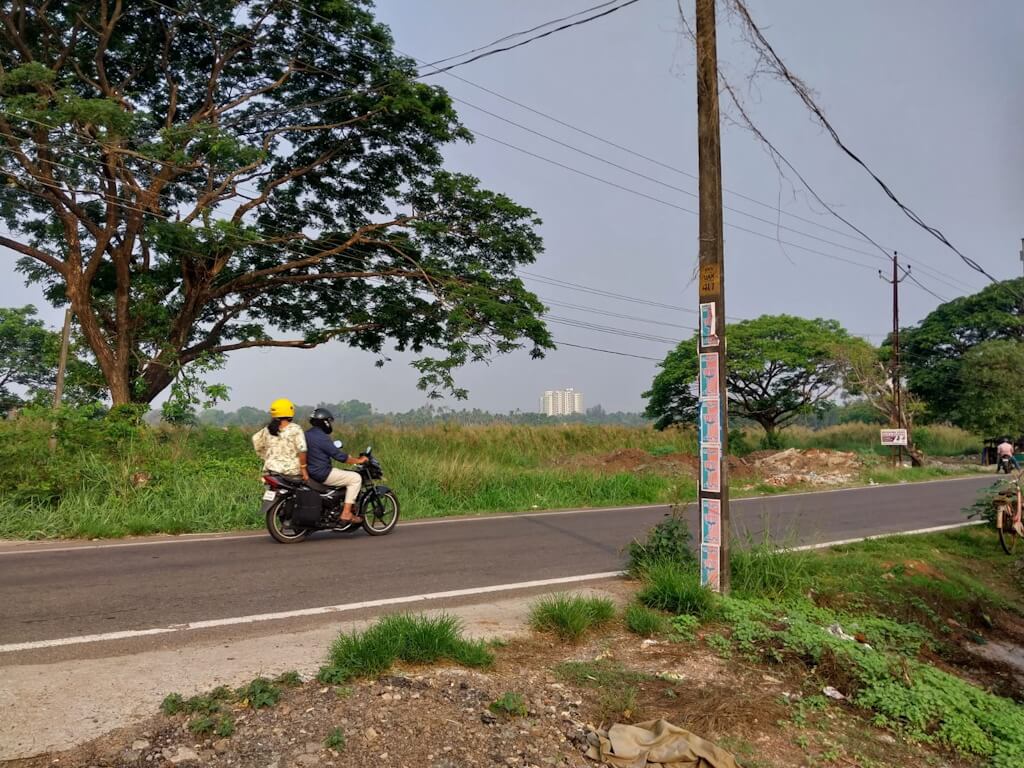
Cover Photo: A view from the outskirts of Thrissur. Credits: S. Gopikrishna Warrier