
Less than 20 kilometres from the Navi Mumbai International Airport, Third Mumbai or Mumbai 3.0 – after Mumbai and Navi Mumbai — is being shaped. It will subsume over 124 villages across Uran, Panvel and Pen tehsils in Raigad district. Spanning across 323.4 square kilometres, this city, formally called Karnala-Sai-Chirner New Town, seeks to turn the predominantly agricultural peri-urban tehsils into yet another city.
There are no surprises about the city. It is imagined with the familiar neoliberal markers of ‘development’ such as curated spaces, skyscrapers, gated communities, flyovers and bridges, malls and more alongside the airport, a port, dedicated freight corridors, integrated metro rail and road network. It has been pegged at Rs 4,000 crore.[1] If the plan unfolds in its entirety, Mumbai 3.0 will be about an hour’s drive from south Mumbai via the Atal Setu – a city built from scratch, Mumbai’s peri-urban finally transformed into a buzzing urban hub.[2]
Across the harbour, north of Mumbai, plans are being made for the Fourth Mumbai extending its footprint across villages, fishing hamlets, and chikoo orchards of Palghar and Dahanu. Abutting and supporting the port at Vadhavan, it seeks to urbanise the 105-107 villages across 512 square kilometres that are now on Mumbai’s northern periphery.
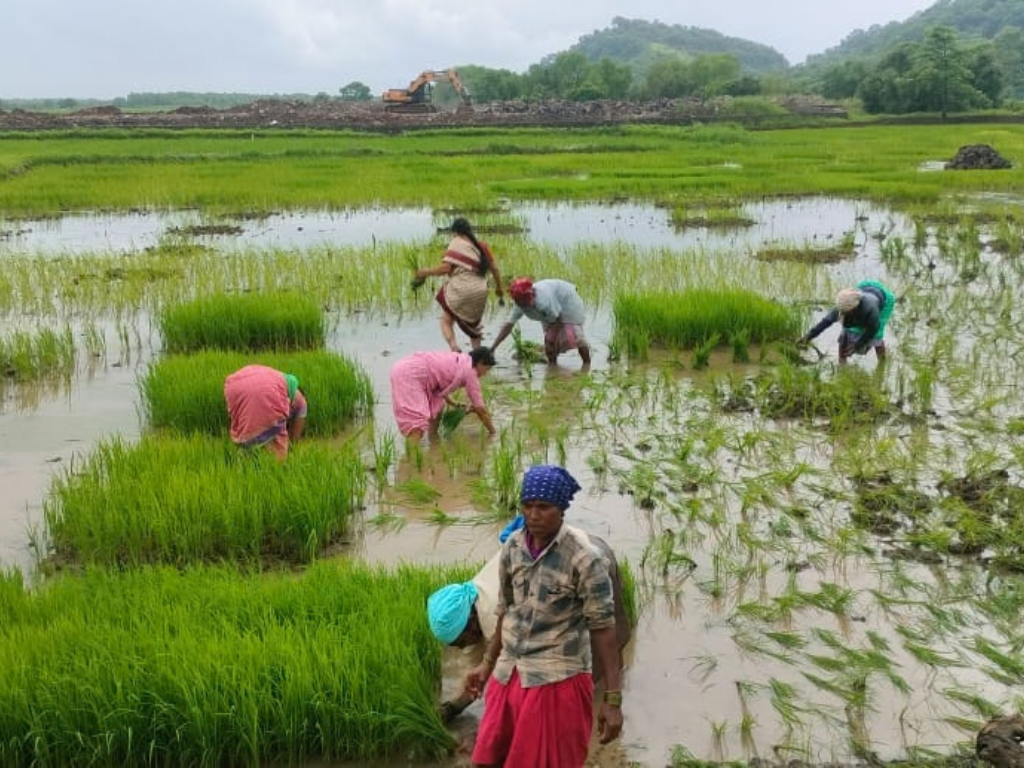
Urbanising the periphery means, on the ground, massive land-use changes accompanied by displacement of the original communities living there, disruption of natural ecology and ecosystems that have been self-sustaining for ages, and a dramatic shift in the landscape with all the trappings of an urban life. Agricultural land becomes the central business district. Rivers and floodplains host airports and buildings. In all of this, which the government and private capital calls transformation, what remains of the people, their land and water?
The uncertainty and definite disruptions have made local folk in the villages marked out for Mumbai 3.0 to join forces and raise protests. Village inhabitants, social activists, environmentalists, young people, politically-affiliated persons, and others find themselves on the same side of the line; a few villagers desire the development for the riches it promises them but most are wary. Question of Cities speaks to a few activists and residents in the resistance mode against Mumbai 3.0.
‘Cities have always encroached on the rights of local dwellers’
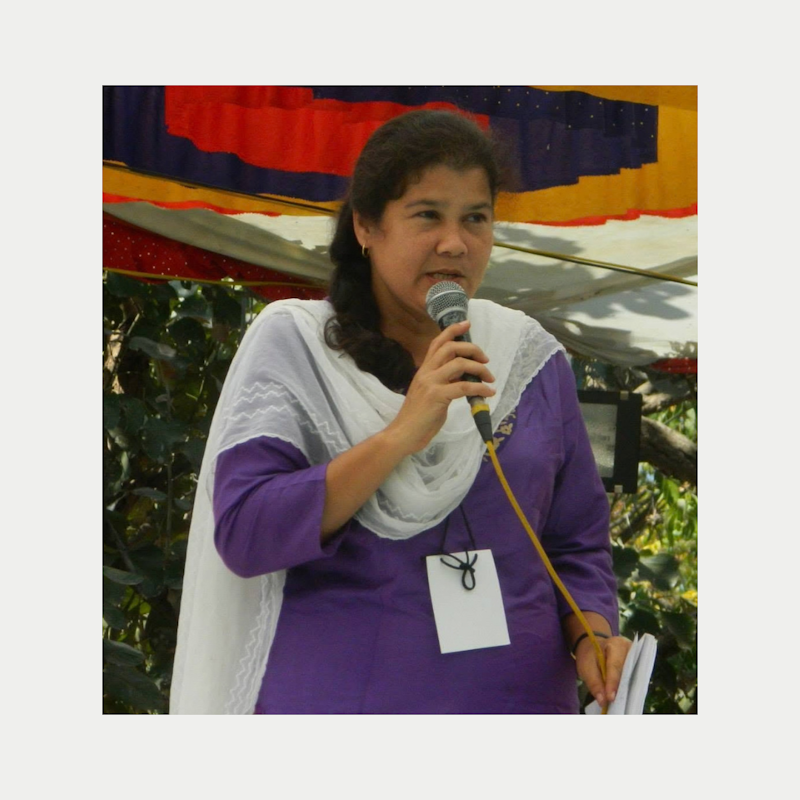
Ulka Mahajan, activist, founder of Sarvahara Jan Andolan
A veteran social activist, Mahajan founded Sarvahara Jan Andolan to fight land sharks and address displacement of people in peri-urban and rural areas. Championing the cause of tribal communities, primarily Katkaris since the 1990s, she played a pivotal role in the movement against the 24,000-acre Maha Mumbai Special Economic Zone which was, finally, cancelled in 2011.
How do you see the Maha Mumbai SEZ and the Third Mumbai plans?
These two are different concepts altogether. In the Maha Mumbai Special Economic Zones (SEZ) project, there was a policy and a pact; the idea was to create export promotion zones which were also supposed to be tax havens. Their so-called objective was to promote manufacturing and increase exports, and employment generation. There was, at least on paper, an assurance of jobs and compensation.
The Nava Nagar project (Karnala-Sai-Chirner or Mumbai 3.0) is not an industrial project and it is not clear how it will generate employment. It is only about creating or settling a new city. This is the first time here that original people of villages are being evicted and displaced for building a new city, that too in one stroke. We see it everywhere in the world that cities have encroached on the rights of local dwellers, but it happened slowly. Here, people are being uprooted, almost thrown away, displacing people whose land it historically is to accommodate people who can afford the new development, infrastructure and amenities.
But it’s not just about people. The new city is completely uprooting entire communities, their ways of life which depend on farming or fishing, and their connection to the ecology and nature. Fishing and agriculture will be affected in a major way. There will be no other respectful opportunity for livelihoods. What will they do? Work as domestic workers or construction workers. What role do they have in this city-making or when the city is made?
This is being designed and developed by the capitalist institutions like the Mumbai Metropolitan Regional Development Authority (MMRDA), which is an autonomous institution but only in name. It is not approachable for farmers, agricultural labourers or common people whose lives are being devastated by its plans for Mumbai 3.0. They can’t even enter the MMRDA building. So, this city is a completely elite idea meant for only a certain exclusive class of people.
If the city is made, after compensating landowners and farmers who have the 7/12 extracts, what will they and others do? Even those without land have been working as agricultural labour or villages function on the strength of old systems of dependent communities like the Bara Balutedar system. Overall, the destruction of employment sources is much, much more than creation of jobs in such projects. The government throws figures of how much employment will be generated but these are not backed by data or real assessments.
We had opposed SEZs too despite the promise of employment opportunities. It has now been proved that it was a flop idea. Despite large-scale land acquisition in places, SEZs did not take shape at all.
The Maharashtra cabinet approved a land acquisition and distribution policy this July for Mumbai 3.0. What is the response on the ground?
I don’t have all the specific details but it was rejected by local farmers here because it only spoke of monetary compensation and some developed plots. Since 1984, the idea has been promoted in this region that 12 percent of the land acquired for projects will be developed and given back to landowners or farmers. Now, it has apparently been increased to 20 or 25 percent.[3] This is easier promised than done. Many of those who lost their lands in the 1980s have still not been given the developed plots. So, now people know what happens; their previous generations fought for those developed plots and, in some cases, the plots were snatched by the land sharks.
What is the situation in these ear-marked villages now?
People are fighting, protesting against the plan. Even though there are meetings happening, political party leaders are not taking cognisance because all of them are involved in this. All the MLAs and MPs in Raigad are from Mahayuti (the ruling alliance of BJP, Shiv Sena, and Nationalist Congress Party). But the people had fought against the SEZ and then too, the political parties were not involved.In the SEZ struggle, except left parties, no mainstream political party was with the farmers and the struggle. People here will bring about the change they want. The difference is that earlier, there were spaces where you could argue, debate, and present what the reality is. Now, there is no space for that.
Governments have always been persistent about their agendas and projects, but they cannot fool people all the time. They were equally hopeful about SEZ but it did not happen. They were hoping for industrial corridors, for which major chunks of lands would be acquired, but that did not happen either. People understand the real game, they are not convinced. There are several farming communities in Pen, Panvel, Uran, Karanja. They are farmers, the police, and agris. It is not easy to take away their lands with repression. Repression is not going to work. It is not easy to repress the local people — there are farmers, kolis (fish workers), salt pan workers, and mainly the agri community, which is militant and committed to protecting their livelihoods.
Are there also people who were part of the SEZ protest who are again coming together?
The SEZ protest started in 2006 and protests went on for the next 4-5 years. Many who participated in those protests have joined the fight now. On September 22, we had a rally at Pen where we demanded that all lands acquired for the SEZ be returned because the project has not happened for almost 15 years now. Since neither the government nor the company have critical possession of the land, it is still in possession of farmers but, on record, it has been acquired. We think the same land would be used for Third Mumbai. Therefore, there is a lot of anger. People say they were fooled then and this Third Mumbai is a new plan.
‘Residents should make the decision about a project or certainly have a voice’
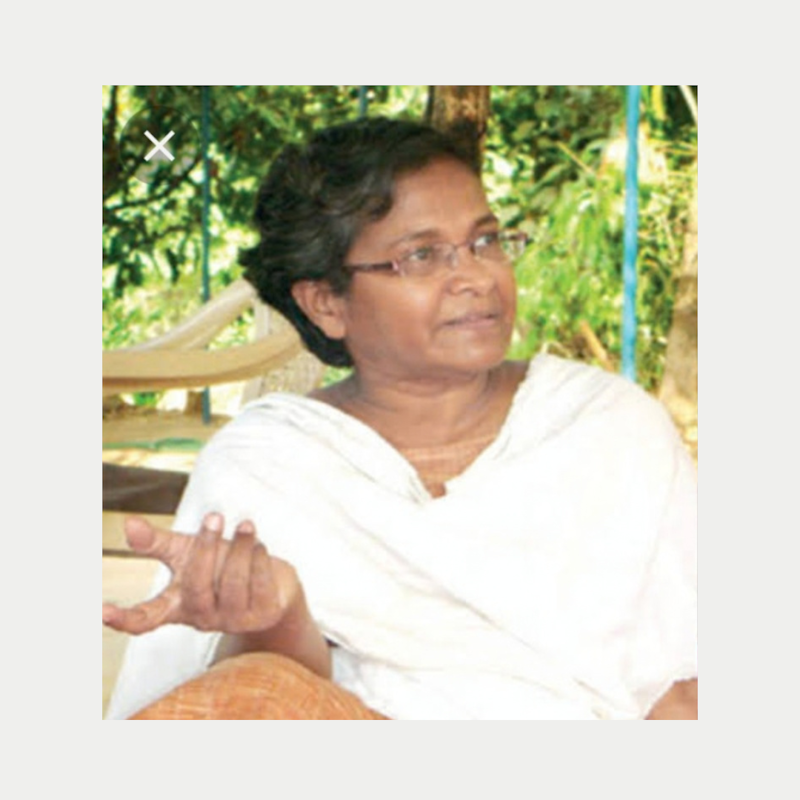 Surekha Dalvi, advocate and land rights activist
A resident of Panvel, 72-year-old Dalvi has been working in the district since 1977. She has been fighting relentlessly on the ground through campaigns and remotely by means of research, collection of data and information for tribal ownership of land in the Konkan region. She is also deeply involved in preserving the ecological integrity of ‘Jal-Jungle-Jameen.
How would you compare the Maha Mumbai SEZ that was halted in 2011 and the current plan?
I have not been active in the field for about two years because of ill health but I have been researching and attending online meetings. What is happening now is making me restless. Even during the Maha Mumbai SEZ fight, collating information was my primary work. I was the ‘Daaru Gola’ (ammunition) and Ulka (Mahajan) was the ‘Toph’ (canon) who was more involved in public meetings. From then to now, what has not changed is this propensity of governments to see people as ‘project-affected’. They must be seen as citizens.
As citizens, they must move beyond asking for rehabilitation or compensation and fight for their democratic rights. They should make the decision about a project or certainly have a voice. Third Mumbai[4] and Fourth Mumbai[5] projects make me wonder about the original, local settlers of Mumbai. There are debates about their population today but there’s no doubt that they have been marginalised.
Navi Mumbai has some parts of Thane and Raigad within it. A total of 95 villages were acquired by the City and Industrial Development Corporation (CIDCO), out of which a few became part of Navi Mumbai. A similar pattern is seen in Vadhavan, Maha Mumbai SEZ and Third Mumbai or KSC New Town, where the process of urbanisation is speeded up deliberately. The steps are usually wada-gaav-shahar-nagar-mahanagar (hamlet-village-town-city-metropolis) but those are missing here.
What is the timeline of the plan for the Raigad region?
CIDCO had made a plan for the Raigad region from 1985 to 2011. After a few years, the Mumbai Metropolitan Region Development Authority (MMRDA) prepared a plan for 1996-2011 in which places like Owala, Panvel, Pen, Karjat, Latur of Raigad district were brought under MMRDA. There was a major backlash from these places. CIDCO is a planning agency appointed by the government but it behaves like the government only. This is how planning of the project itself was divided.
This continues in the Third Mumbai project as well. The Nava Nagar Pradhikaran or New Town Development Authority (NTDA) is the agency now. During the Maha Mumbai SEZ project, they claimed they had found the key to urban development which was to develop a Special Economic Zone for which the planning authority was given governing powers. This means, then and now, the entire democratic process was thrown away.
We see the control over land and water was handed over to the authority or to private companies besides giving them tax exemptions as well. This is a disruption of the very foundation of ‘kaydyacha rajya ani karanvar karbhar’ (Rule of law and tax administration). In the concurrent list, there is a topic of resource control which was only implemented by a few regions. Over and above it all, what I see is that land and people in this region, independent in themselves but seen as peripheral to Mumbai, have been under constant threat. Only the names of agencies change – CIDCO, NAINA, Navi Mumbai, Vadhavan, Smart City, Maha Mumbai SEZ and now Nava Nagar. Every few years, there is a crisis thrown our way.
‘This is not a letter of consent to give away land, it’s a death certificate’
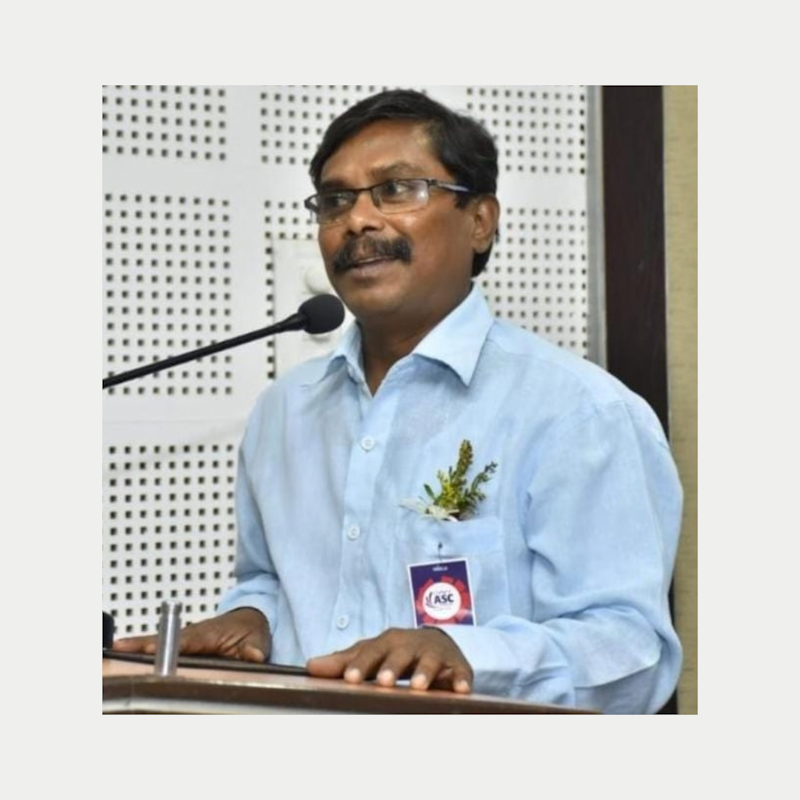 Sanjay Thakur, 60
Akhil Bharatiya Kisan Sabha (ABKS) Raigad secretary, Khopta village, Uran
How do you see the Third Mumbai project and what is the situation in the 124 villages?
When Khopta New Town was first announced, CIDCO was going to develop it; later, in 2005, they announced the SEZ in which 20 villages in Uran, one from Panvel and 24 from Pen (total of 45 villages) were to be subsumed. At that time, the law said that if one needed to enter the SEZ, one would need a permit. Whichever company owned the SEZ would decide who could enter and at what time. Those whose land it originally was would not be welcome. Hence, it was completely unconstitutional. After people opposed the SEZ and fought back, the then Manmohan Singh-led union government rolled back the SEZ in 2010-11.
The little land acquired for it was according to the Land Acquisition Act of 1894 at paltry sums but, despite the project being cancelled for over 15 years, the land taken has not been returned to farmers. In 2013, CIDCO proposed the Khopta New Town project, or Third Mumbai, and with that came the Navi Mumbai airport proposal. All the 270 villages in the surrounding ‘influence’ area of the airport, which were already under CIDCO, were declared Navi Mumbai Airport Influence Notified Area (NAINA). Then, the MMRDA created the 2016-2036 Development Plan, in which all these villages became part of the Mumbai Metropolitan Region (MMR). The region is the same; the development authorities and companies kept changing.
In June 2021, Uran, Panvel, Pen and some parts of Alibaug were declared part of the MMR. Even then, CIDCO and NAINA continued their work until March 2024 when the project was brought under MMRDA. So, 80 villages that were under NAINA and Khopta Nav Shahar were pushed into the MMRDA zone along with some other villages, and a total of 124 were then declared part of Third Mumbai.
What about compensation?
Currently, the Maharashtra government is not bringing into effect the Land Acquisition Act of 2013 because Chief Minister Devendra Fadnavis came up with new rules and regulations for land acquisition. Then, they might as well roll back the Act and revert to the obsolete 1894 Act. Fadnavis’ policy allows for land acquisition through mutual consent through a Sammati Patra or Letter of Consent by the farmers that they would accept the compensation and not move court against the development authority or company.
Mumbai’s bhoomiputra (locals) were pushed out of the city. Whether Agris, Kolis, Karads, Bhandaris or even Muslims, Parsis, all have faced eviction. The original inhabitants have had to move farther and farther away from Mumbai city. Many have reached up to Virar 60 kilometres away. Even today, the situation hasn’t changed. Why doesn’t the government develop the villages or gaothans when it can do these large projects? What happens in this process is that the villages become unauthorised, unrecognised, besides farmland and livelihoods being snatched away. Our houses expand organically without a plan being submitted or seeking permission from the collector; will these now be declared as illegal in the city? Is my village even going to exist? This is a dangerous reality that Ulka tai (Mahajan) and I are informing people about. We tell them that it’s not a Letter of Consent to give away their land but a death certificate.
‘Forceful and monstrous development will destroy this land and its people’
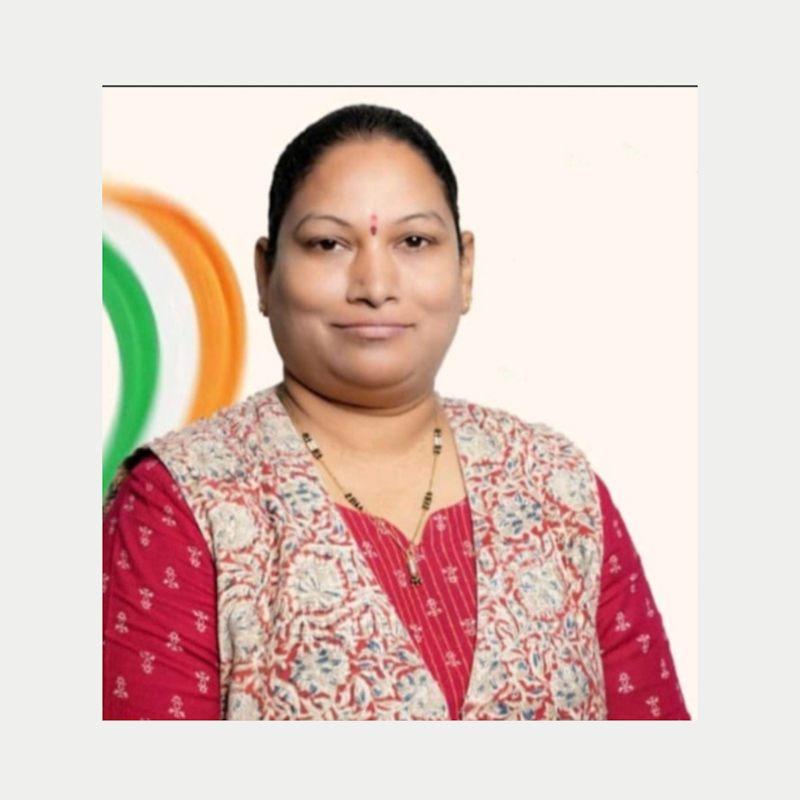 Nanda Mhatre, 43
A native of Kane village and currently living in Pen town, Raigad, Mhatre is from the Congress Party and its frontal organisation, Rajiv Gandhi Panchayati Raj Sangathan (RGPRS). Her focus in Raigad is on local communities and their problems.
How did people know about the Third Mumbai project?
We got the newspaper notification in March 2024 in which they also asked for suggestions and objections. The government should have at least informed the Gram Panchayat, villagers, and farmers in the affected villages. We had to study the notice in detail, do a lot of research, then inform the farmers and prepare the objections. We collected the objections in a month, altogether nearly 17,000 objections, even during the Model Code of Conduct before the 2024 elections but there was no hearing. Through Right to Information (RTI) applications, we got to know that the hearing was not held as all objections were of the same kind. When the New Town Development Authority prepared a report of the objections, it included only some of the favourable ones put in by some organisations, without the farmers’ knowledge. Our entire fight is about not giving up our land at all.
What is the compensation offered?
They have not specified anything but the current rate near Navi Mumbai International Airport is around Rs 7 crore per plot. So, the land here should be more than Rs 200 crore per acre. But they won’t give anything to the farmer, they will just take the land and develop it. The locals need land for their livelihood. The land here is fertile, there is a stream. But rapid development does not last for long. The nature of this development is Balajabri (forceful) and Rakshasi (monstrous).
Are there farmers, locals or others who have a different opinion about the project?
The new generation has learned from the experience of SEZ. At that time, the land was given by farmers in the name of the state’s development, in the belief that if they gave it, they would get a project and their next generation would get employment. But it has been 15 years since then and nothing has happened.
According to the Land Acquisition Act, if land has been acquired for a project and is unutilised for five years, then the land has to be returned to the owners.[5] The law has not been enforced.
For Third Mumbai, the government has started taking control of the land. For years, people have toiled, starved, and taken loans to preserve this land for their children. How will they survive? We say that Mumbai is the home of the kolis. But for them, the ‘home’ villages used to be in Konkan, Raigad, Ratnagiri, and Sindhudurg. If the people of Raigad become a part of Mumbai, say Mumbai 3.0, they will lose their identity.
Nikeita Saraf, a Thane-based architect, illustrator and urban practitioner, is now with Question of Cities. Through her academic years at School of Environment and Architecture, she tried to explore, in various forms, the web of relationships which create space and form the essence of storytelling. Her interests in storytelling and narrative mapping stem from the need to understand people and the methods with which they map the world. Through her everyday practice of illustrating and archiving she intends to explore this further.
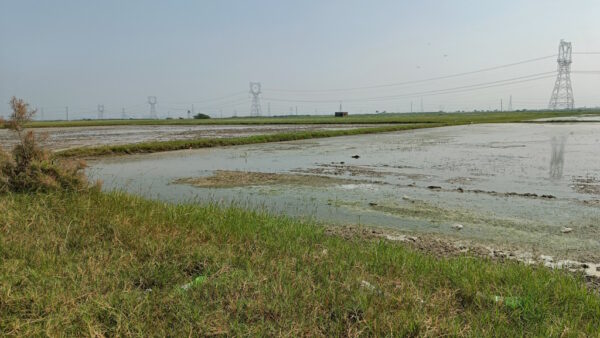
Cover photo: A farmland in Uran taluka, which is under MMRDA; Credit: Sanjay Thakur