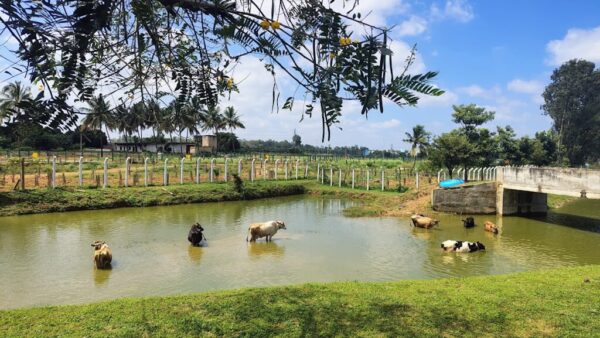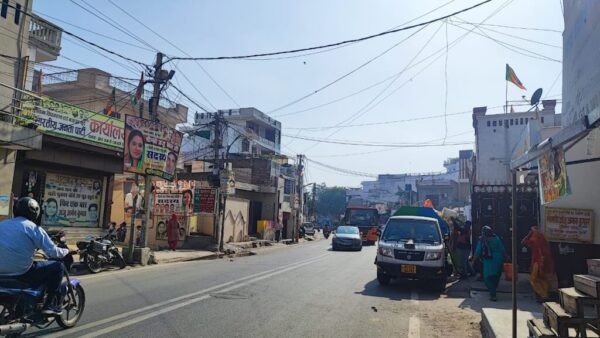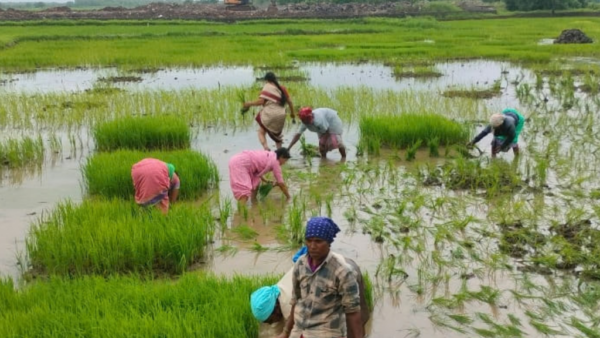
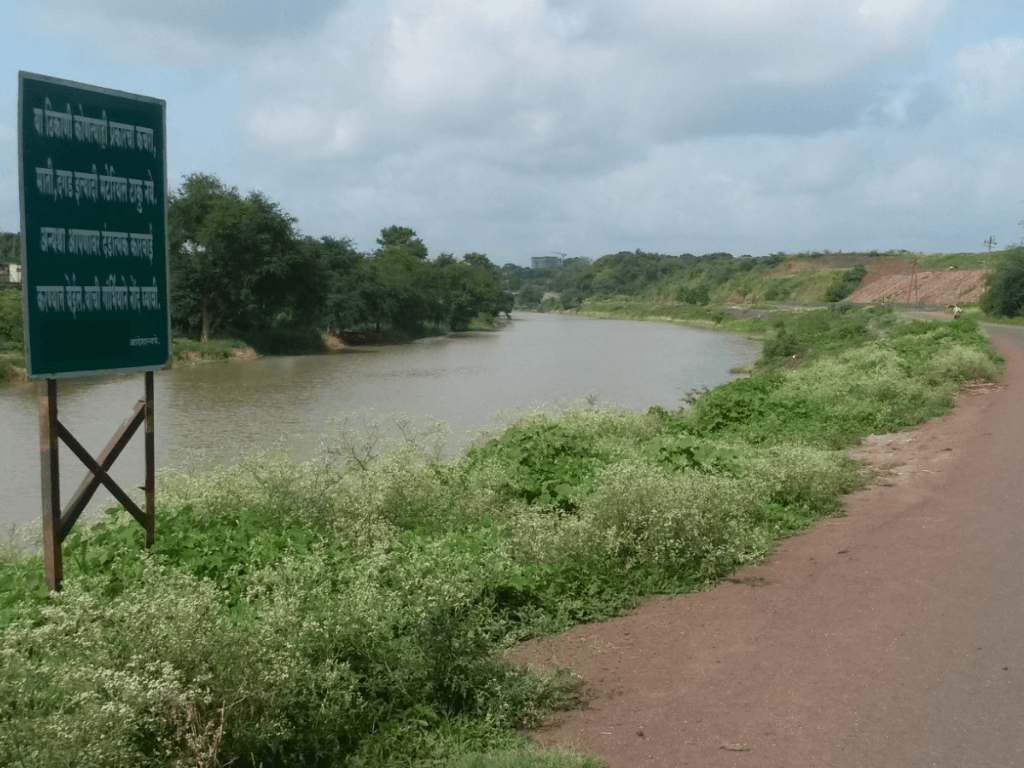

This May, Nashik saw the water supply being shut down every Saturday. It was a rare situation for the city and has happened probably once in 20 years. Barely 20 percent water was left in the dams that supply water to the city. The delayed monsoon did not help. Last year, it had begun raining on May 10 and Nashik had received around 200 millimetres by the month end. This year, even by mid-June, there was hardly 23-25 millimetres of rain.
The water scarcity turned real and scary for a city with a population of nearly 2.3 million. The city’s water reserves are being exhausted which is deeply worrying. One of the reasons for the severe water shortage is the rampant exploitation of groundwater. The other is the lack of respect for the Godavari which has meant unmonitored overuse and reckless construction.
Nashik has benefited from having four watershed areas of the Godavari – the river’s direct catchment which originates in the hills of Trimbakeshwar about 30 kilometres from the city, and the three major tributaries of the Darna originating in the Sahyadris, the Kadva which originates in the Dindori region and drains the eastern and northern parts of Nashik, and the Nandini watershed which is a smaller one that flows into the Godavari’s main channel.
Groundwater concerns
It is not only the surface water but also the groundwater that is of concern, especially during shortages. Nashik’s groundwater has been over-exploited due to the lack of adequate regulation, despite the existence of laws and guidelines of the Central Ground Water Authority. Without active control over the groundwater – who is allowed to draw, how much is allowed in which season and so on – it is entirely up to people who have groundwater sources in their private plots to draw as much water as they want. The city, as a whole, suffers.
It is not that the Nashik Municipal Corporation (NMC) is unaware of this but it has been tardy in enforcing its own rules. In 2015, through the Development Control Regulations, it made rainwater harvesting and groundwater recharge wells mandatory for all residential and commercial buildings on plots of 500 square metres or higher.[1] Four years later, after an order of the National Green Tribunal, these were made mandatory also for large residential housing gated communities, educational institutions and hospitals.
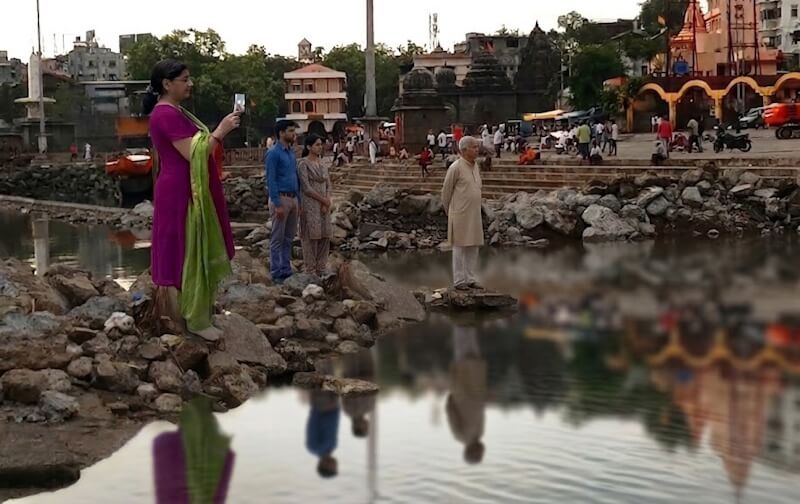
Photo: Dr Prajakta Baste
In 2022, under the Unified Development Control and Promotion Regulations, it mandated that rainwater harvesting and groundwater recharge pits be made functional before statutory certification such as Completion Certificate and Occupation Certificate is issued. In the past few years, the NMC has even offered tax rebates to buildings with functioning systems. Yet, the groundwater level in Nashik has been under deep stress this summer. In areas outside the core city such as Yeola, Sinnar and Niphad, the groundwater level reached critical levels.
Last year also saw a sharp drop in groundwater levels despite a good monsoon preceding it; the drop was worse than in 2023 despite similar monsoon levels in both years, which the Nashik Groundwater Survey and Development Agency attributed to heavy extraction.[2] The extraction, for both domestic and agricultural uses, can be addressed if there are regular and diligent checks by the authorities. Now, if they inspect, it is more to check boxes on paper.
This persuaded people to start the movement called ‘My Water Bank’. Through voluntary work and campaigns, we create awareness about rainwater harvesting and groundwater recharge wells, starting with government and municipal buildings in Nashik because they should be the role models. We tell them that their buildings see high footfalls and people can witness the impact of this work. People should also do their bit to conserve the groundwater and save rainwater.
Immediate measures
To tide over the water shortage, the administration has been developing small streams and tributaries such as Nandini and Vaghadi to fill up the catchment areas. Plantations are being done on the surrounding hills to retain the rainwater and recharge the groundwater. The concern for us residents is about the water supply during the upcoming Simhastha Kumbh Mela 2027. All the three Shahi Snaans are scheduled within 45 days of July-August.
If the rainfall is less than normal this year, then how will the water flow in the Godavari, where is the water for the holy bathing? The concerns are turning serious because of the prevailing water scarcity and the fact that water is already being pumped from a dam which is at a lower level than Trimbakeshwar to allow it flow as the Godavari, which will again be recycled to the dam. This mechanism is going to be useful only for the Kumbh Mela. Who will use this mechanism afterwards? The entire investment in the pipeline of around 25 kilometres, installing the hydraulic system to pump the water upwards and then allowing it to flow through the Godavari shows that Nashik is not properly managing its water resource.
If the rainfall this year is like last year’s, there would be no cause for worry. There would be enough water as reserve quantity storage too. If the low rainfall continues leading to low levels in the dam, how will that be pumped into the Godavari? As citizens who have engaged with the issue, we suggested to government officials, forest authorities, irrigation department officers that they should contour trenches, desilt secondary and tertiary streams and rivulets, and undertake groundwater recharge work to reduce the surface water runoff.
However, the water scarcity situation in Nashik, during the Kumbh Mela or otherwise is not likely to ease unless three things are done. First, recharge groundwater mandatorily through various methods of planning and policy making; neighbourhood open spaces across 200 square kilometres in Nashik – rules require 10 percent open space to be left for a plot of more than one acre – must be left open and not paved over as the administration wants to. Second, protect the tributories flowing through the cities in a natural condition or ecologically friendly construction solutions should be adopted to develop the banks.
Third, demarcate the boundaries of the river and its tributaries, their major drainage pattern, and protect and conserve them in natural state to avoid flash floods. The authorities must stop the cutting of trees because they are needed for water retention and to cool areas during the Urban Heat Island effect. Nashik has considerably expanded its footprint with respect to physical development in the past few years with gated communities and single-plot high-rise residential buildings. There is no count of trees cut for these and no record of the altered drainage patterns. As a result of reduced tree cover and other factors, Nashik is experiencing the Urban Heat Island effect during summer season and flash floods during monsoon.
All this does not mean that the water consumption must not be monitored, but that specific and immediate actions should be taken to conserve the available water and also increase the groundwater level. Cities are the first and largest consumers of water compared to the peripheral urban or rural areas around them.
Godavari’s connection with Nashik
Going by the remains and finds here, this is an ancient connection since the Neolithic times. The Satavahana dynasty rulers, among others, developed Nashik as a trade and cultural centre along the Godavari. There are old Buddhist caves here, the Pandava-era caves before that[3] and traces of the availability of water through the Godavari and its tributaries which forged the water-city relationship. It goes back a long way.
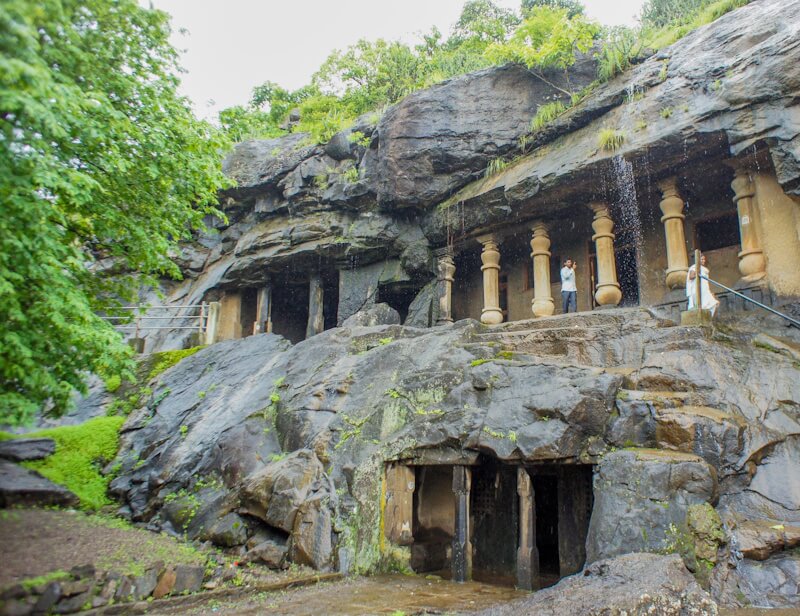
Photo: Wikimedia Commons
Towards the end of the Maratha period, the Peshwas strengthened its identity and visibility. But settlements were not found only on the river banks, except during the Peshwa influence. Traces of settlements have been found near mountains or at their foothills or near the river’s tributaries all within five kilometres radius. The Peshwa era had gaothans. When the British made Nashik the administration headquarters for the north Maharashtra region,[4] the city came to have a great dependency on Godavari for its water needs.
The relationship changed in the last 30-35 years as the population expanded and administrative complexities multiplied. What we have now is not a truthful relationship or a correct association with the river. My study has shown the location of the gaothans, the excavations, also the groundwater and the surface-water relationship. The river is a complete cycle of surface water and groundwater availability. Our ancestors knew this and made water available.
The ancient is the way forward
Aesthetics were secondary for the old settlers; the basic purpose was to make water accessible to those who lived or visited.[5] Their approach was to respect the water source, the river, and so naturally ensured its health. There was obviously no mechanised drawing of water or dams, but an understanding of how the river moved and of its natural bed and floodplains. Why can we not just respect the river and its natural condition? Why can we not revert to traditional wisdom and leave the Godavari to its natural condition?
There are drainage lines across the river and its tributaries; two tributaries – Nandini (Nasardi) and Vaghadi – have been heavily altered for storm water drainage and sewage which, unfortunately, function without a separation. This leads to pollution in the river, as well as floods when it rains heavily and garbage blocks the flow. Then, water is released from the dam upstream of the Godavari which can also flood the city. And there is no provision made for urban storms; the water does not drain at all. Because of large scale impermeable surfaces, boxing of the tertiary streams (nallahs) storm water which used to take 24 hours to flow across five kilometers now reaches the river in 10 hours, leading to floods.
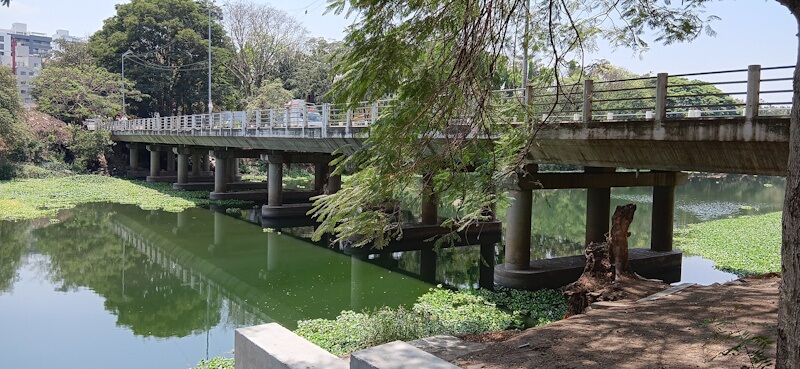
Photo: Nikeita Saraf
All this is the impact of urbanisation and the rising demand for land and water. The management is such that Nashik sees severe water scarcity in summer followed by floods in the monsoon. The authorities have lost the old understanding and approach.
We are working closely with Dr Rajendra Singh, the Magsaysay Award winner for restoring rivers in Rajasthan, to strengthen our approach. The red and blue flood lines have to be clearly marked, as we citizens have strongly recommended to the authorities. These are the breathing lines of the river, the place needs to be defined so that it is not treated merely as developable land. We must respect the land that the river needs and ensure that it is free of construction.
Sadly, our recommendations have not been implemented by the NMC. The officers say that the Development Plan was already prepared and offered excuses such as a road has been planned here, a bridge is necessary there, that part is privately owned and so on. Different excuses but the river’s land has been taken by policy. Around 21 kilometres of the Godavari flows through the city’s municipal limits but 60 percent of the riverbed here has been developed on both sides. And I have seen that residential or commercial developers excavate six-eight metres which affects even the groundwater.
If our recommendations for the river rejuvenation, cleaning the water, groundwater maintenance, marking out no-development zones are not followed, then Nashik’s Zero Water Day – as it happened in Bengaluru – is not far. What heartens me over the 15-16 years of work is that people’s involvement and community participation has grown. People are willing to take a stand, give time, tap into their individual and group networks, visit sites and document, and approach the authorities. We do river-cleaning and plantation drives but the major shift has to come from the authorities.
My training and work, an architect with doctoral studies in water settlements, added to my life-long residency in Nashik to shape an emotional-academic relationship with the Godavari. In 2014, I was given an opportunity to be an expert member on the Godavari Pollution Abatement Committee. The day the river turns healthy, I will see that the committee dissolves. But my work with the Godavari is lifelong, as the river flows.
Prajakta Baste, PhD is an environmental landscape specialist and landscape architect. A Water Resources and Human Settlements expert, she was appointed by the Bombay High Court on the committee to reduce the pollution in Godavari. After completing her PhD in 2014, she has been contributing to the pollution abatement work of the river and working on ‘Chala Januya Nadila Abhiyan’ – an initiative by Maharashtra’s Water Resource Department to protect and rejuvenate 75 rivers. Dr Baste is the Principal of MVP Samaj’s College of Architecture, Nashik.
Cover photo: Prajakta Baste, PhD