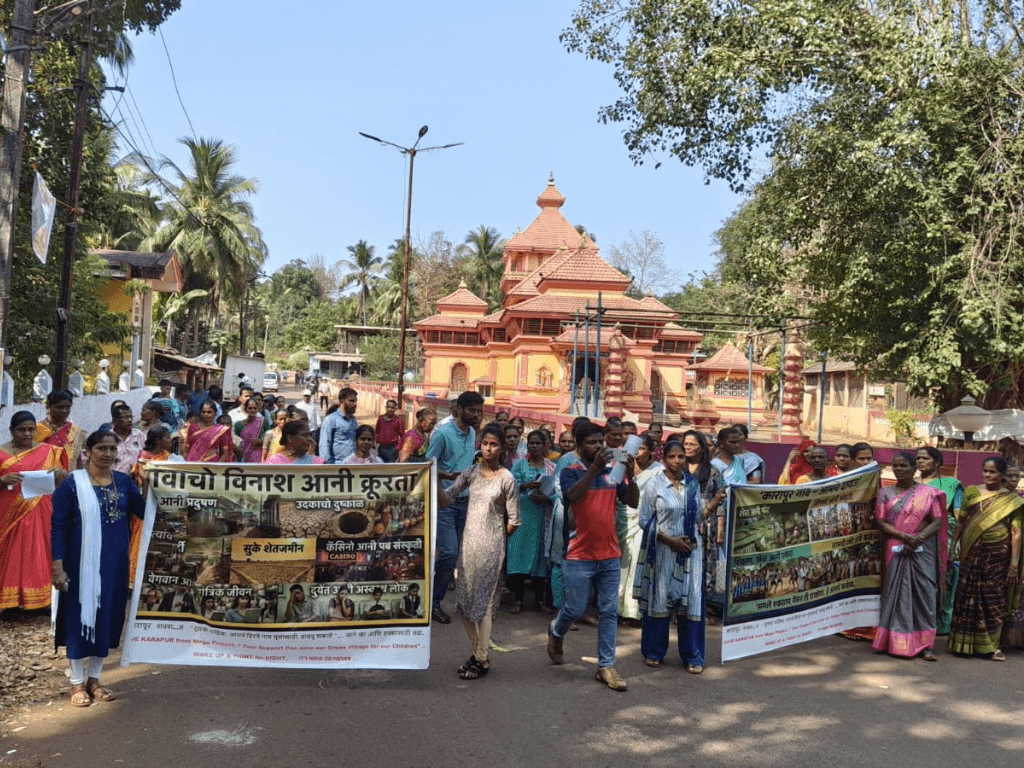

The languid calm of Panaji was broken for a few days in late February as residents of the city and villages gathered at Azad Maidan and made their way to the Town and Country Planning minister Vishwajit Rane’s house in Dona Paula. Not a handful, but thousands. As the stories flooded social media, it became clear that Goans had risen like one in defence of what makes the state special – lush green expanse, tranquil water courses, and its unique cultural mix.
The protesters were challenging Section 39A of the Town and Country Planning (TCP) Act, demanding it be scrapped. It allowed “inadvertent errors” in plans to be unilaterally corrected – a backdoor way to turn land into commercial zones. The protest entered its third day on February 23, the anger built up, and protesters camped outside the minister’s house in an act of resistance. Section 39A, they repeated, would take away their land and forests in the name of development. Introduced in 2024 into the TCP Act of 1974, it authorises the Chief Town Planner to modify land-use zoning in Goa’s Regional and Outline Development Plans.
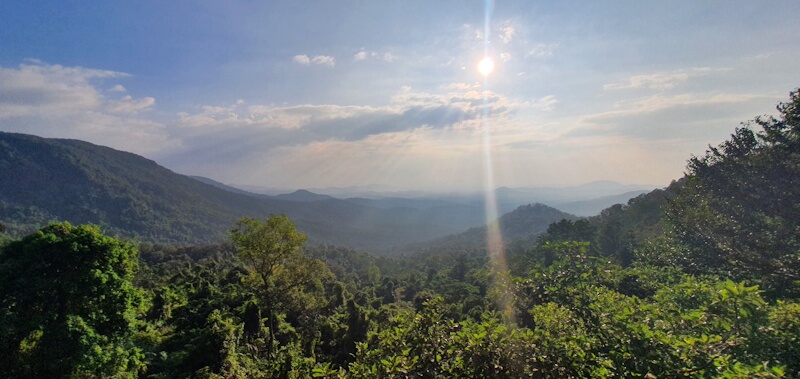
In essence, this means that “green” or “no development” land can be reclassified and opened for construction. Along with a host of moves that made construction of villas and infrastructure projects easier in the past decade, this change further threatens the state’s fragile ecology and natural ecosystems. Goa stands sandwiched between the Western Ghats and the Arabian Sea giving it a unique ecology and the climate that tourists love. However, since 2016-17, successive state governments aligned with the Union government, have legally reclassified an estimated 66,00,000 square metres [1] of ecologically sensitive land across the state including paddy fields, orchards, and no-development zones.
The reclassification has meant a tsunami of construction and real estate development which has alarmed residents and led to protests. These reclassifications, they argue, have turned Goa’s villages and towns into garbage-filled, traffic-congested places with water shortages and rowdy outsiders. The Section 39A protest was arguably among the largest. By an estimate, the converted 66,00,000 square metres equals roughly half of Mapusa, Goa’s fourth-largest city.[2] Section 39A would only make it worse.
Protesters also raised the issue of democracy at work. Land conversion has been done mostly by introducing special provisions, not by discussions and voting in local bodies. Some of the special provisions include the introduction of Section 17(2) in the TCP Act in 2023 besides Section 39A. The Goa bench of the Bombay High Court read down Section 17(2) last year. Protesters believed they had to take matters into their hands on Section 39A to raise the ante. The lesson to draw here is that nothing substitutes action on the ground.
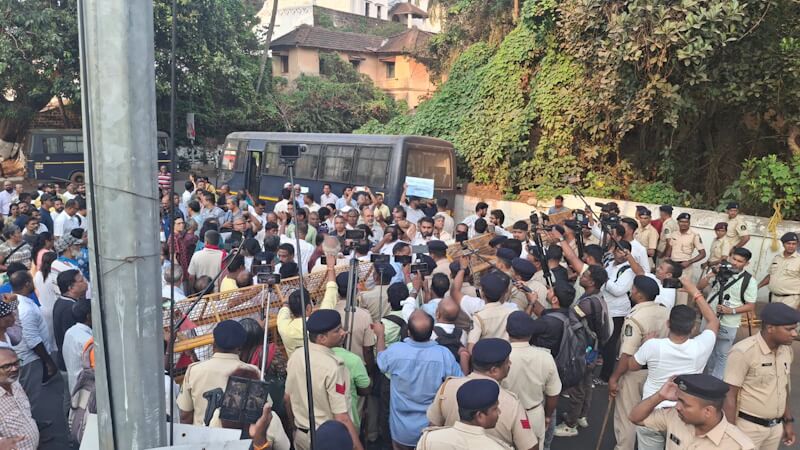
Photo: QoC file
Women at work, MLA on fast
The public protest started on February 20 when villagers from Palem-Siridao went to the TCP office in Panaji, opposing the specific approved zone changes under Section 39A. They refused to leave the premises till the issued orders were revoked. The protesting women slept on the office floor, sofas and chairs that night. It was a signal that this was no gentle agitation. Orders were issued to remove the protesters which escalated the protest. The police allegedly manhandled St. Andre MLA Viresh Borkar of the Revolutionary Goans Party.
Borkar then went on a hunger strike in the open, further fuelling protest actions as new protesters joined, and the action moved to the Azad Maidan. Minister Rane, when asked, told news cameras that he was not bothered about Borkar’s deteriorating health.[3] Thousands of enraged protesters made their way to Rane’s house and camped there for hours. Goa had not seen such determined boots-on-the-ground action in a long time. Finally, the TCP department caved in and issued an order stating that land conversion orders under Section 39A of the TCP Act in St. Andre constituency were suspended with immediate effect.
But this battle was not only about St. Andre alone. Protesters wanted Section 39A scrapped for all of Goa.
Section 39A explained
No one in the government would have expected that the amendment would evoke such strong protest actions. People’s opposition was gradually gathering momentum. It took a while for people to grasp the finer, clever nuances of how the land could be reclassified.
Architect and urban planner Tahir Noronha explained to Question of Cities that Section 39A came with two precursor laws: Section 16B and Section 17(2). Promulgated in 2018, Section 16B allowed the Chief Town Planner to change land use with two caveats — the change shall be in public interest and 60 days of public notice sent to relevant panchayats. After protests and dogged opposition including from within the ruling BJP, it was repealed in 2024. By then, there was a 66.3 percent rise in residential property prices as mapped early last year – an indication of how much higher land had come to be valued.[4]
In 2025, the Goa bench of the Bombay High Court struck down Section 17(2) because “any public policy that has the potential to disrupt the life of a citizen of India must give that citizen an opportunity to comment”. This was a constitutional principle which the Goa government, in its haste to facilitate real estate development, had apparently forgotten. “If a zone gets changed, the lives of the people around it get affected, they have to be heard,” said Noronha.
While reading it down, the HC limited it to correcting typographic errors with public notice; the Goa government appealed in the Supreme Court where it is pending. Section 39A makes public objections possible but also imposes several hurdles. If people want to know about an upcoming project in their vicinity, they have to go to the TCP headquarters in Panjim in person, even if the case is 60 kilometres away in Mandrem; property data and land use change are not displayed or available anywhere. Then, they have to make a second trip to Panaji and submit a written objection at the same office. This enraged people across the state.
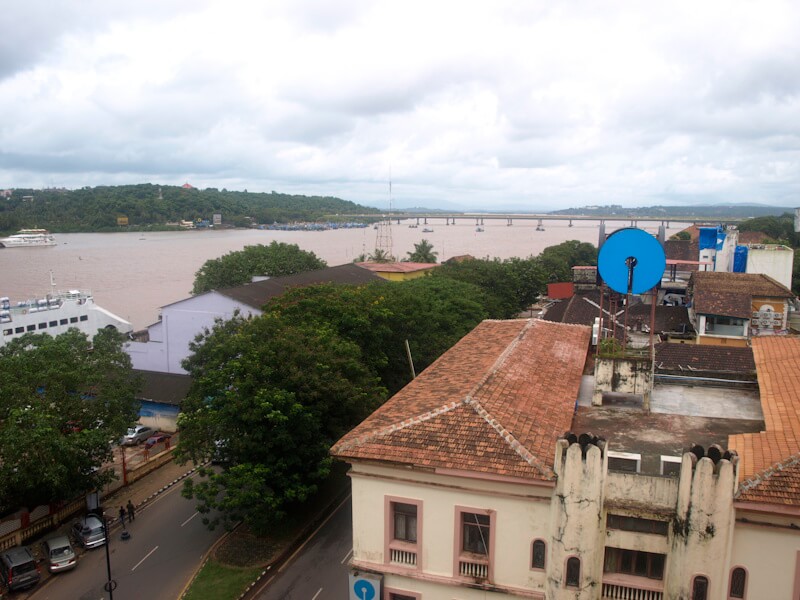
Photo: Wikimedia Commons
Chimbel rises in rhythm
Earlier this year, residents of Chimbel, a village on the outskirts of Panaji, started a 40-day agitation against the proposed Unity Mall and a 17-storey administrative structure ‘Prashasan Stambh’. These, they argued, would damage Toyyar Lake, nearly 100 trees would have to be felled, and tribal families displaced. The projects also threatened the natural drainage systems and water bodies that regulate flooding and groundwater recharge in and around Panaji, they added.[5]
Hunger strikes, marches to the Goa Assembly, and demonstrations at Azad Maidan drew widespread support from opposition parties and environmental groups. The continuous protests by Chimbel residents forced the Goa government to look for new sites for the projects,[6] underscoring the power of persistent community action.
Panaji, Calangute and Palem-Siridao are among the places that became home to protests, all of the action forcing the government to roll back its amendments on land-use. Activist Swapnesh Sherlekar, a strong voice in the Section 39A protests, laments Goa’s transformation which has meant that “land is lost and trees are cut. Goans are emotional people, they love their land and will fight to protect it”.
How city spaces were used
In Panaji, throughout the protest against Section 39A, there was a surge of outraged Goans occupying public spaces, somewhat like the ‘Occupy Wall Street’ in Zuccotti Park in New York in September 2011. As intellectuals remarked then, that collective act changed the entire framework of discussion of the issue. The Goa government, Minister Rane in particular, could not dismiss people’s anger and action.
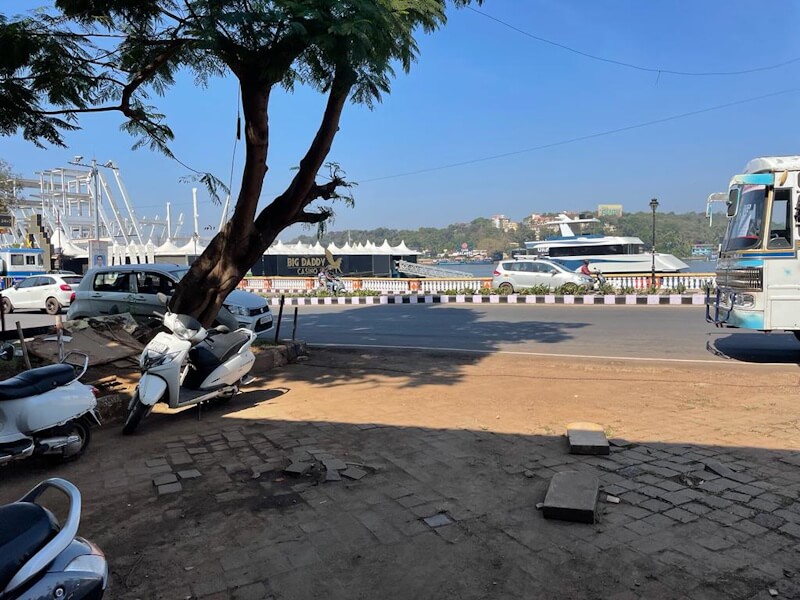
Photo: Wikimedia Commons
Because the action was in Panaji, it went viral too. Reels and videos circulated, including of the fasting Borkar, drawing support for the cause. This was a different Goa that Indians were seeing. There were murmurs of voices against the ‘casino culture’ in Panaji that’s ruining the Mandovi riverfront. On March 14, Justice (retired) Gautam Patel of the Bombay HC praised the 46-day Chimbel struggle, saying “it was heard all the way in Mumbai”. He urged Goans to defend their land and rights, and take to the streets to protect Goa. The former Chief Justice of Allahabad High Court, Justice (retired) Ferdino Rebello also gave a clarion call: ‘Enough is enough’.
Azad Maidan became the focal point. Along with Lohia Maidan in Margao, it had been the site of agitations and demonstrations over the decades. But “the government is happy to keep us in Azad Maidan because we are invisible,” said Noronha. It is when protesters occupied streets and the pavements outside Rane’s house that the impact began to be felt. Streets and outside government offices or ministers’ homes amplify the power of a protest like no other venue does. Even in Goa.
Like recent agitations, this one too used songs and bhajans which resonated with bystanders and social media followers. Activist Abhijeet Prabhudesai called this a mature movement. “Earlier, observers would tell us that our movement will mature the day songs and slogans become part of it naturally. We saw this change during the anti-mining agitation too,” he said. The fight has a clear battleline – communities owning land, fisherfolk, tribals, farmers, artisans on one side; feudal landlords, the state and local governments, builders and real estate brokers, panchayats and courts on the other. “The 39A movement is a part of the larger Goan struggle. All our issues relate to land use change,” he said. And rivers, he might add.
The anti-casino agitation seems to be gathering steam once again in Panaji. Nearly three kilometres of the Mandovi River is dominated by casinos. Residents and environmentalists have been protesting for over 15-16 years. The announcement of a new vessel, with a capacity of 2,000 passengers, sparked a fresh round of protests recently. The water is polluted,[7] locals have complained of noise pollution. Casino tourism taking over Goa is renewing resentment among Goans. The latest protests put the government on the back foot and it assured that the massive vessel “will not enter Mandovi”.
Building networks important
“If we stop accepting or acknowledging our social responsibility, then we will just be party to the destruction. I am playing my role in resistance with the hope that some good will happen,” said Sherlekar, activist for ten years who resigned his job as engineer in 2021. Governments change but the attack on land, forests and rivers continues, many like him found out.
Veteran activists bear this out. Sabina Martins, convener of Goa Bachao Abhiyan who started the movement against the Regional Plan 20 years ago, reminds us that back then too most eco-sensitive zones were shown as settlements with hotels, coffee shops and boutiques set to replace paddy farms. Large protests forced the government to withdraw the plan. The Mollem protests continue.
Author Michelle Mendonça Bambawale termed this “complicated disparity” as villages are still run by panchayats but are becoming urbanised. “Different regions have different problems — mining, land conversion, coastal erosion, casinos, saving tiger reserves. We are all fighting different fights.” But all of Goa’s fights are to preserve the ethos and ecology of the place.
Building networks across villages and professions has become important. For example, Noronha realised that villagers needed guidance to save their land. “When their orchards and paddy fields are converted to commercial zones, we ensure that villagers at least file an objection letter,” he said. The future of Goa’s ecology and the integrity of its land depend on the staying power of protesters, the networks they nourish, and their commitment to struggle because, as many of them lament, “the government is out to destroy Goa, so are the privileged and powerful who see land as a commodity”. The fight seems over every time but the fight has also just begun for Goa.
Shobha Surin, currently based in Bhubaneswar, is a journalist with more than 20 years of experience in newsrooms in Mumbai. An Associate Editor at Question of Cities, she writes about climate change and is learning about sustainable development. She was most recently a Fellow of the Earth Journalism Network working on the issue of Non-Economic Loss and Damage suffered by communities due to climate change in Odisha.
Cover photo: The protest against 39A; Credit: Swapnesh Sherlekar