
Dr BV Subba Rao, Hyderabad-based water management professional with four decades of experience and environmentalist, knows the Musi River better than most. Having worked on water projects abroad and in India, including as chief engineer in the irrigation department of the Andhra Pradesh government, Dr Rao has been a consultant for the past decade in water resources and climate change. He carries wide-ranging experience in rural, urban and industrial watersheds, integrated water resource management, urban lake ecosystems, and groundwater management.
Dr Rao has been studying the water bodies of Hyderabad, including the Musi, as a subject of professional interest, passion, and commitment to the greater public good. His academic record includes a PG Diploma in Advanced Aerial Photo Interpretation from IIT-Bombay and M.Sc in Applied Geology from IIT-Roorkee. A repository of intricate knowledge and history about Hyderabad’s water bodies, Dr Rao brings his inter-disciplinary approach to their conservation and restoration.
Musi is a polluted urban waterway but it is also an ecological system with historical and cultural ties to Hyderabad. Can you reflect on what the river means to the city and how the relationship has changed?
The Musi, like any river, represents a relationship between land and water that goes back beyond recorded time. It’s an umbilical cord. These rivers may not have originating dates but they nurtured civilisations across history. Each river has its own ecological system and geomorphology, and both are fundamental to how cities evolved along their course. They are organic in nature and dynamic in behaviour.
Historically, Hyderabad developed in tune with the Musi’s ecological and geomorphological systems. The city was known for its craftsmanship, from diamond cutting to pearls polishing work; this prosperity was closely linked to the river. The Nawabs too shaped the city with an understanding of the river’s rhythms. Its origins near Vikarabad and Damagundam lie in dense forests rich in medicinal plants and a healthy climate. This geo-bio-climatic diversity at the river’s source has never been fully understood or respected.
How did different communities depend on the Musi and what explains its deterioration?
Communities depended on the river in multiple ways. Traditional medical practices, fishing livelihoods, and a vast network of lakes sustained life along and around the Musi. At one point, there were more than 3,000 lakes in and around the city, like pearls on a necklace, a lake every two square kilometres or so. During the Nizam period, Sir Mirza Ali, the landscape architect behind Musi’s conservation, developed 14 public parks and lakes along its banks as shared civic spaces. These were places of leisure, learning, and social life. Much of that has disappeared.
I remember enjoying my childhood in one of these parks. What we see today is a deep detachment from the water resources that gave birth to our cities. We speak of pollution and foul smells without acknowledging our own role in it. There is no serious effort to educate and sensitise citizens about Hyderabad’s water systems. Without this knowledge, how do we build a sense of belonging? This city transformed from a pearl city to a cyber city but for the ground water and surface water, it is the same city.
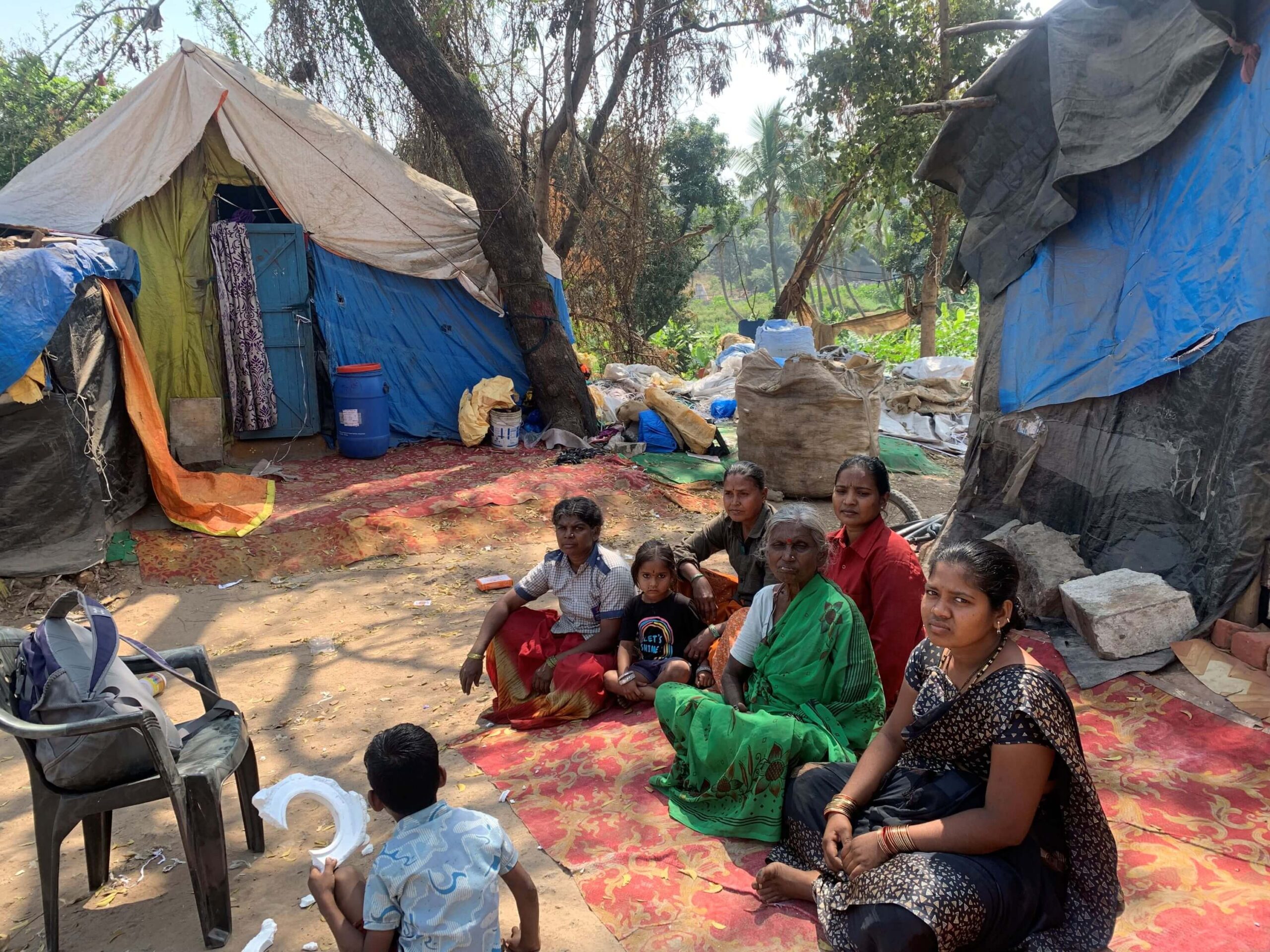
Photo: Shobha Surin
River restoration efforts usually focus on beautification or infrastructure. What are the shortcomings of this approach and what are the alternatives?
See, river restoration cannot be approached in isolation. The river has different phases in its journey from its fast-flowing origins in Vikarabad to its high speed downstream through Bapu Ghat where the two rivers, Esi and Musa, merge to become Musi. It enters the plains, flows for 17 kilometres and merges with the Krishna River at Vardapalli. The Musi has an aggregate length of 250 kilometres and its basin covers about 12,000 square kilometres. Of this, more than 2,000 square kilometres falls under Musi Riverfront Development Corporation Ltd (MRDCL) and around 6,000 square kilometres under Hyderabad Metropolitan Development Authority (HMDA).
The agencies have isolated water management from urban planning. This is the fundamental flaw. Cities and rivers are co-existing systems. When urban growth is done without integrating water conservation, restoration, and management, we cannot achieve meaningful results. Unless water management becomes an integral part of urban planning, any attempt at river rejuvenation will remain superficial.
All urban areas are biologically unproductive. They mainly generate garbage and sewage. And cities are simply not able to manage them in ways that do not affect the river. Because the river has been separated from the development process, everything is contaminated – surface water, groundwater, air are all polluted. You cannot even sit by a water body anymore because it releases methane and sulphur gases. Also, whatever we fail to manage in the city directly impacts agriculture in the downstream city from Uppal to Vadapalli. In some places, the contamination is so severe that cooked rice develops a foul smell within half an hour.
The first thing we must accept is that a river is a living body. It has a life of its own, and it supports other life systems, animals, birds, trees, and human beings. But we treat rivers as inert material and lakes as stagnant masses, not as life-giving, life-supporting systems. There is another critical aspect forgotten. From Vikarabad to Uppal, the river flows along a steep gradient and rolling terrain. During the Nizam period, 22 flood diversion channels were built which diverted surplus floodwater into lakes across villages. That is flood regulation and control, and water reuse – engineering marvels designed 150 years ago. These diversion structures are known as kathwas. Most people don’t know these systems existed and modern engineering has destroyed many of them, including systems like Durgam Cheruvu, which once supplied drinking and irrigation water to Golconda Fort.
Pollution in the Musi stems from untreated sewage, industrial effluents from pharmaceutical and chemical industries. How do you assess the role of the regulators and industrial responsibility?
We need to be honest about responsibility. There are clear regulations requiring industries with hazardous effluents to treat their waste. If this was effective, why would governments need to invest heavily in Sewage Treatment Plants? Till 1946, our drinking water source was the Hussain Sagar Lake. Once industries came up around it, it stopped being the source but we did not learn from this experience.
The Musi restoration efforts begin far downstream, after most of the damage has already been done. The polluting chemical industries which were along the first 56 kilometres have been shifted to Chevella but the river has to be restored. There isn’t even a White Paper on this. The real problem is the lack of convergence between departments and user groups, industries, communities, residential areas. When regulations require industries to treat their effluents, why should the government spend public money on STPs? The government’s real responsibility is regulation, monitoring, and enforcement. Do we have strong mechanisms for that? We don’t.
Everything has been fragmented. Economics, research, and urban planning are all separate. There’s no convergence between municipal authorities, metro waterworks, and urban development bodies. Rivers are not meant to die because of our mistakes, to be sacrificed for reckless urban growth. In the US, building codes vary by zone from lakefronts to upstate regions, based on environmental and planning considerations. In our cities, the same 50-storey building can come up in Chikkadpally (middle-class locality) and in Jubilee Hills (posh locality), with little differentiation in regulation.
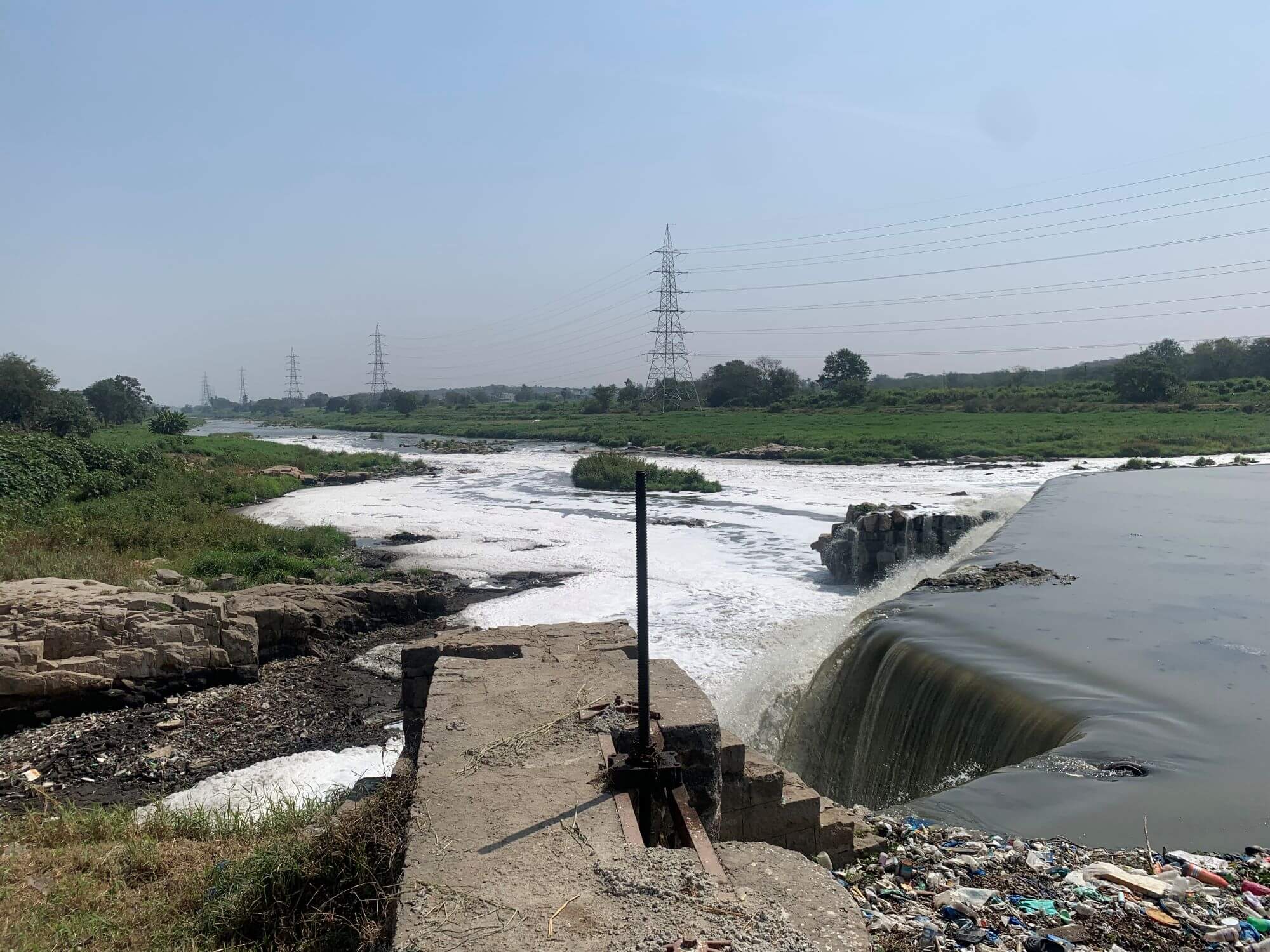
Photo: Shobha Surin
The Musi was not always like this. What does your work and rare collections show about the river, about the city?
I strongly believe that development must be measured through quality of life. People migrate to cities because they believe cities offer a better quality of life but this does not figure anywhere in our development indices. People suffer from respiratory diseases; they are affected by water pollution, our cities generate unmanageable sewage and solid waste, every city from Joshimath to Hyderabad is flooding, and all talk of smart cities is a waste. Urban development must place quality of life as its primary index, not land value or real estate prices. We don’t build cities only to sell and exit them.
Rivers and lakes are not merely resources for us; they are for our children and grandchildren. What are we leaving behind? If we want truly livable cities, we must restore our water systems. That is the foundation of urban life. During the Nizam period, Sir Mirza Ali had designed waterways on the Musi. The river’s course cuts across the city; the city was developed that way. That was the vision. The Nizam allowed timber merchants to operate only in Goshamahal and Mushirabad because timber could float down the river from Afzalganj to Mushirabad. It was a functional, water-based system. Does anyone talk today about reducing traffic by reviving waterways?
We also see very little emphasis on natural solutions in river restoration. There are many biological treatments that don’t require massive engineering structures but the focus is on building 35-40 STPs. Look at Durgam Cheruvu. Within six months of the STP being set up,[1] the load increased because construction around it increased. The lakes here have at least 800 years of recorded history; the river’s history goes back further. Along the Musi, you find megalithic burial sites at Chevella and Boinpalli. This is Hyderabad’s heritage. Had this been Europe or the US, it would have been a major heritage tourism corridor.
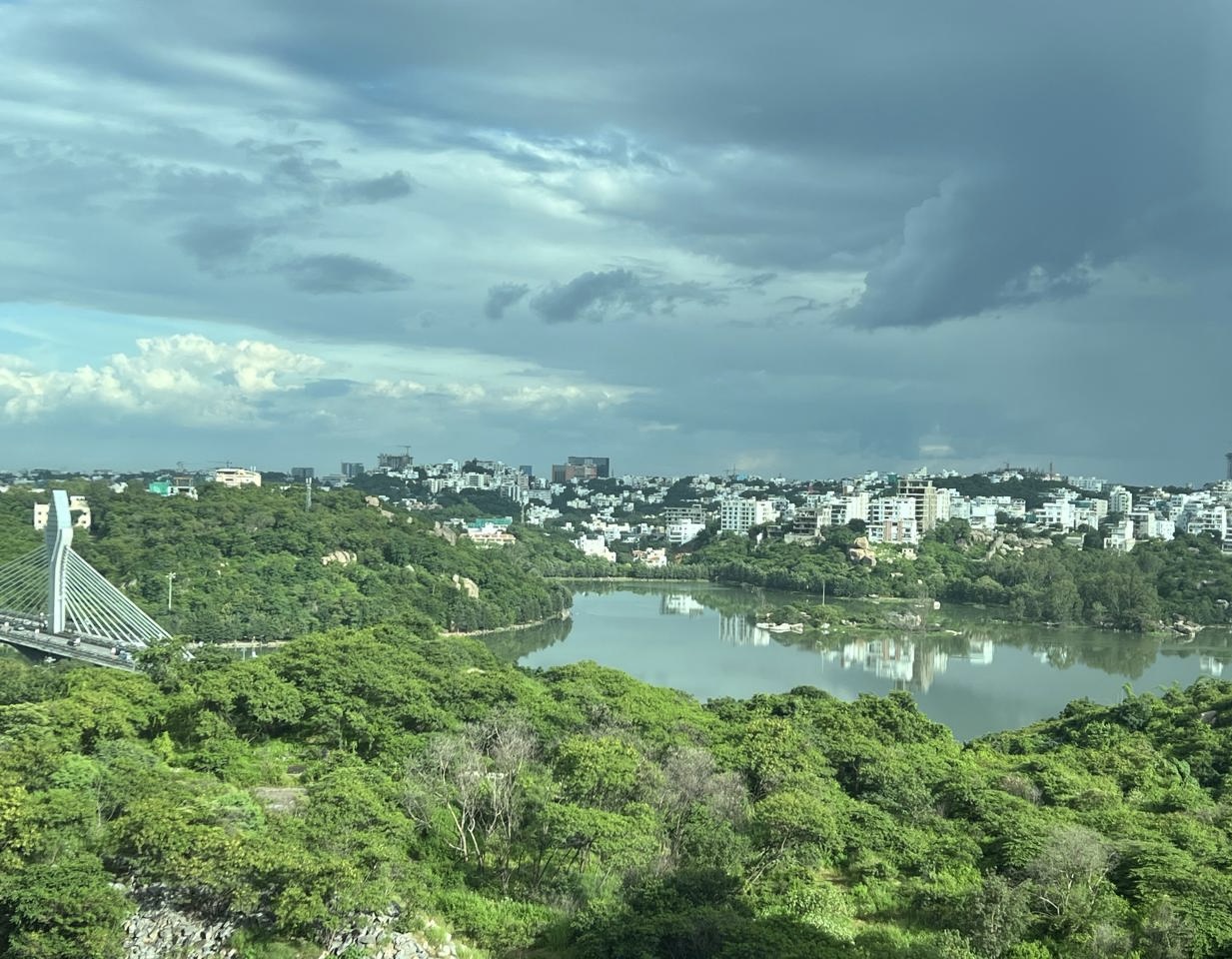
Photo: QoC File
A city’s development must align with the river’s natural systems; we must understand and respect that rivers have distinct phases. Hyderabad that once pioneered participatory development, with thinkers like Robert Chambers at the Administrative Staff College of India, unfortunately, has forgotten the legacy. Where is participatory planning, where are the consultations today? Speak to communities downstream of Uppal. They are struggling to survive because their agricultural lands are contaminated. The river system has to be brought back to life with natural processes, using minimum engineering. We must live with nature, learn from it, and be part of it.
Besides sewage treatment, what needs to be done to restore the ecology of the Musi?
The Musi originates some 60 kilometres away from Hyderabad. The riverfront development is done in the urban stretch, only the middle 55 kilometres of the entire 250 kilometres of the Musi. How is it restoration of the river? This does not give life to the river. The authorities must come out with the physical, hydrological and pollution status of the river from its origin to the confluence.
The riverfront development project wants to put up STPs and so on but what’s needed is a complete status mapping of the river system and a review of the existing treatment plants, both industrial and government. Only after this, an action plan should be made. Many industries claim to have set up treatment plants; their performance is not assessed but the government is merely adding STPs. Instead, bio-engineering techniques should be adopted. Measurable benchmarks of water quality should be set down. And the people along the river should be involved in the natural solutions, river restoration must integrate the livelihoods of the poor.
What do you see as the impact of the riverfront development, on the river and people, and why is it a bad idea?
Primarily, it is not a bad idea but the plan is being adapted from outside Hyderabad and does not match geomorphological, climate and socio-anthropological perspectives. One is, as I said, it’s only talking of the middle part of the Musi without treating the upstream and the downstream. Second, it has planned huge commercial spaces and recreation spaces, but there should be strict building codes and best practices from across the world. Riverfront development must have spatial planning, putting open space and buildings in a harmony, without deteriorating the water quality.
Hyderabad’s building codes were designed 60 years ago and make no difference between different areas. There should be strict building codes near water, like in Singapore where one kilometre from the shore is the first zone with regulated construction. Building codes must be reviewed, revised and designed to fall in line with technology. When a river dries up, there’s encroachment and construction in the floodplains which should not be allowed. Engineers calculate 30 years of rainfall but Musi’s recorded flooding is from 117 years ago; our disaster risk assessment studies must factor this.
Third, how we restore visibility and how people enjoy the river are also important. We have to give the river its due share in terms of space and ecology, and create mechanisms for people’s participation. What makes people visit the riverfront or lakes? People should come and enjoy, the association should trigger some emotional attachment between them and nature. This is a big challenge for riverfront development. Most places are ticketed now. The original Musi riverfront had 14 gardens – all public spaces.
If the government and planners allowed the Musi to lead the building of the city, what kind of a Hyderabad would we look at?
If Musi becomes the centre of development in Hyderabad, it would still be limited to the 55 kilometres of the middle of the river, but it could bring in harmony between the health of the river and urban development. People could be reconnected with the river; there would be an attachment, an emotion, between the people and the river. Prioritising the river will teach and inspire the younger generation to co-exist with nature and open up similar areas that improve the quality of urban life. Urban areas must reconnect with their rivers and water.
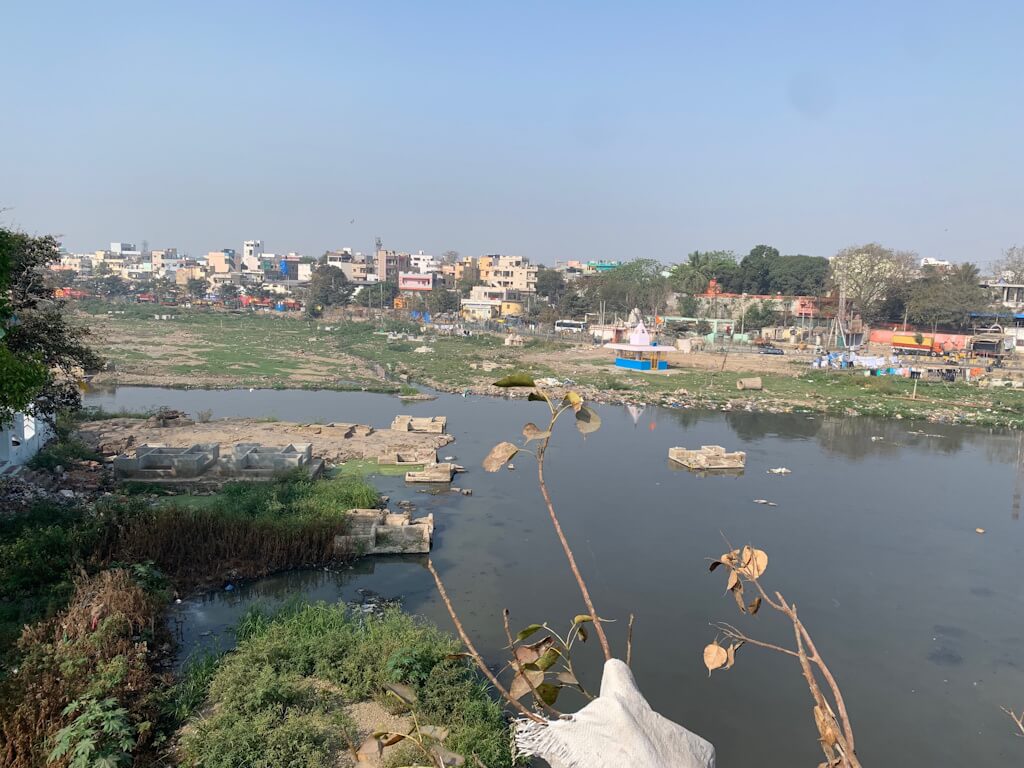
Cover Photo: The Musi along Shivala Ghat Temple; Credit: Shobha Surin