
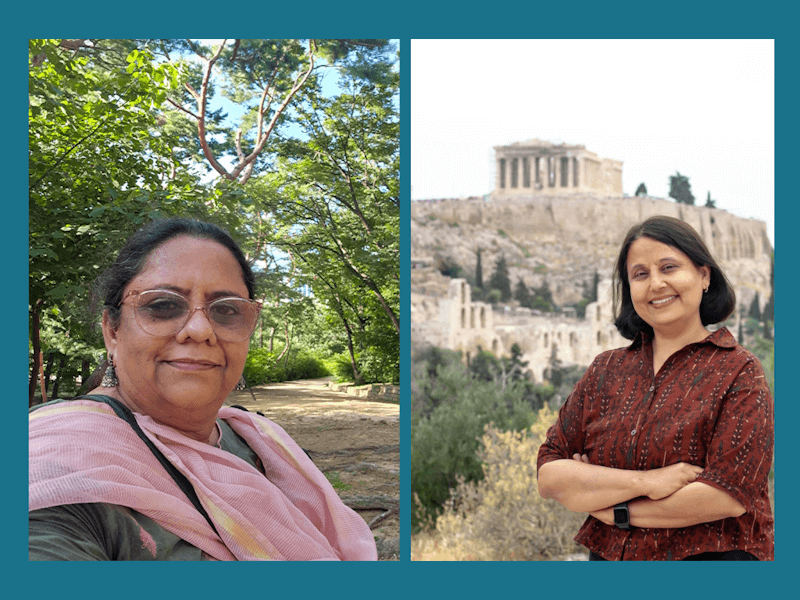
Dr. Reema Bhatia was a UGC Research Fellow for five years, a National Scholarship awardee under the Centre of Advanced Studies, Department of Sociology, Delhi School of Economics, and has received the Distinguished Teacher Award by the University of Delhi. She has completed two innovation projects with a team of 20 students, organised several national and international conferences, guided several short films.
Meeta Kumar specialises in teaching Development Economics and nurtures a keen interest in Economic History. She graduated from Lady Shri Ram College and completed her M. Phil from the Delhi School of Economics in 1994. She has been extensively involved with the organisation of national and international debates, seminars and conferences and certificate courses for students in the college to promote inter-disciplinary perspectives.
In your paper[1] you have argued that the river and the city have grown together, but unequally. Please elaborate.
Meeta: The Delhi model has changed in some ways; in some ways, it hasn’t. Most urban plans, in Delhi or in India, don’t have an ecological perspective. You have a real estate perspective; that’s true of the Yamuna also. You are not looking at the floodplains as a part of the river but as potential real estate. That fundamentally is a problem. That’s what we’ve argued in the paper because the river is a composite ecological entity, it needs its floodplains. If you don’t accept that as the first step, there’s a problem.
The second issue is that all our metros have been growing rapidly and planning has not anticipated this. Urbanisation is inevitable. One can’t keep saying that ‘most of India lives in villages’ because it won’t be true soon. Cities have to make space for growth but we are not doing that. The growth is also not inclusive. Where’s low-cost housing, where’s the infrastructure for it? So, the Delhi model, in many ways, prioritises the middle class.
Reema: Also, the Indian vision of the river has historically been influenced by how the British looked at rivers. We do not understand that Indian rivers are tropical rivers. They will wane and flood, they will meander and change course unlike European rivers. So, when you read the history of how the British developed the Yamuna in terms of how Delhi developed, it’s what we see today – build riverside cafes, have mood lighting, let’s sit on the banks of the river and enjoy the cool breeze, etc. That was the British vision. The only difference was that upstream, on this side of the Yamuna’s banks, you had the British; on the other side, the local population; and on the fringes, the population which was the Indian clerical elite.
There’s this vision of river cafes which we need to break out of because what’s happening is, like Meeta said, the river is not just the river. The river is also the floodplains, which we refer to as the khadar. So you have the Chila Khadar, the Madanpur Khadar, then the Bela Estate, all of that. But where’s Chila Khadar because there is a huge metro station coming up there? Of course, people have turned their backs on the river but the government started it. This concept of constructing on the river bed is not new. This happened even in the 1950s but it has continued. The river is being systematically murdered. Where will the river expand?
I went back to the field after almost five-six years and was shocked to see the full-scale development there. It has become a parking lot for buses. So, the model of development becomes lopsided. We have to recognise that this is a multi-species world we live in which means acknowledging other life on the planet. The river is a living and breathing thing. If we are going to choke it, dam it, do all kinds of construction, build riverside cafes, then we are systematically killing it.
What has happened to people who depend on the Yamuna? What is the idea of the river as shared commons?
Reema: What’s happening is the erosion of the lifestyle of the riparian communities which ebb and flow with the river. We really couldn’t find any riparian communities when we wrote this paper because, for the villagers, the Yamuna is merely a nuisance because it floods. It inundates their fields, takes away their livelihood, and every time it changes course, they lose their fields. The only riparian community I found about five months ago were these small bunch of farmers in Majnu Ka Tila. It is an area near the university where you have the Tibetan colony which has become very powerful over the years; people who have money have opened riverside cafes. The riparian community is fighting for its very existence.
There is a small wall which demarcates the Majnu ka Tila from where the farmers live in temporary houses. These are parts the Tibetans have developed. It’s easy for the farmers to shift upstream when the river floods. They go and live in those parts, return once the water recedes, and eke out a living that they can. But they’re constantly under threat. So, one belt becomes the Majnu ka Tila area, the other is the Chila Khadar, and the Yamuna Pushta area where demolition is happening. People who live with the river are being done away with because the government wants to beautify the river.
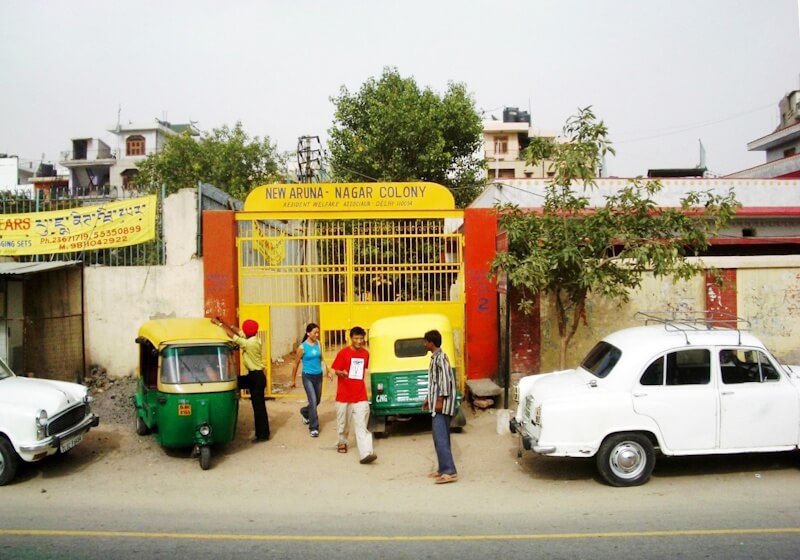
Photo: Wikimedia Commons
Meeta: As Reema was indicating, it’s a part of our colonial heritage to do away with all the rights to areas considered as common property resources. The colonial system assumed that all common property belonged to the state in the western notion of property; so property could either be private or state property, and it is owned. The Indian practice was to think of property in terms of user rights – not ownership rights – of resources like rivers, lakes, forests, mountains which did not belong to anyone in the sense that we understand ‘property’ today. It belonged to everybody, to the community as a whole, and user rights were defined. Grasslands, for example, could be accessed by agriculturists for grazing but others could not.
Now, since the river is state property, it has the right to build on the floodplains. It’s not illegal but it’s not ecologically sustainable – that’s the problem. Since the DDA owns the floodplains, it has the right to construct the Commonwealth Games Village there. This is true of all cities – the Gomti in Lucknow, the Bagmati in Kathmandu, the Ravi in Lahore, the Mula-Mutha in Pune. There’s a pattern – an upstream large dam which restricts the water flow, settlements on the banks of a depleted river, waste dumping, and we get a polluted river.
Reema: The DDA commissioned two studies by the National Environmental Engineering Research Institute (NEERI) in 1995 and 2000 to study the feasibility of building on the river bed. In both, NEERI advised against permanent construction for residential, commercial, recreational or beautifying purposes. The DDA, however, ignored this and followed the suggestions of the Pune-based Central Water and Power Research Station. According to it, 15 percent of the land on the river bed was ‘unviable’ but it was vague on the construction of permanent structures. In 2007, the DDA commissioned another study by NEERI which said that the floodplains area was no longer that since a bund built for the Akshardham temple had reduced it. The DDA interpreted it to mean that the floodplains could be used. It took away people’s communal rights, usage rights. Its left hand does not know what its right is doing. The river belongs to anybody and nobody.
Meeta: The river is not, in Delhi at least, independent of the ridge. The ridge plays a major role in sustaining the river because rainwater during the monsoons will naturally flow down the ridge into the river. But most of these channels have been blocked or paved over when Delhi was built or they have become sewage drains. For example, the drain behind Khalsa. And the Barapullah Nullah was also, actually, a river. A nullah is not a drain; it’s a seasonal river which had water in the rains and then remained dry. Farmers have told us that since the 1950s, the river water is just sewage.
How do policies about the Yamuna reflect the larger questions of exclusion, displacement, and who gets to occupy urban space? What is the interconnectedness?
Meeta: At the end of the day, official policies reflect social priorities. Rivers are not thought of as ecological assets but as property or commercial assets. If we don’t have inclusive urbanisation, if we don’t make space for people who are not privileged, then we will keep getting into a situation because space is contested. People will look for places to settle. They will settle on the banks of the river, they will settle on the ridge. The irony is that most of the violations of the floodplains and of the ridge, in many ways, are sanctioned by the state.
Reema: Various governments, over time, have been building on the floodplains. The villagers are not contaminating the river. They see it as a nuisance because of what the state has done to it causing it to flood their homes. Traditionally, they lived and flowed with the river. The farmers in Jagatpur, their entire cultivation depends upon the flow of the river. So when it floods, they know every year that the land available for cultivation is going to change. Today, there are about 16 of the original families and the fields divided amongst them but keeping in mind that the river is a living and breathing entity, will expand and contract, and come onto the floodplains. The farmers told us so.
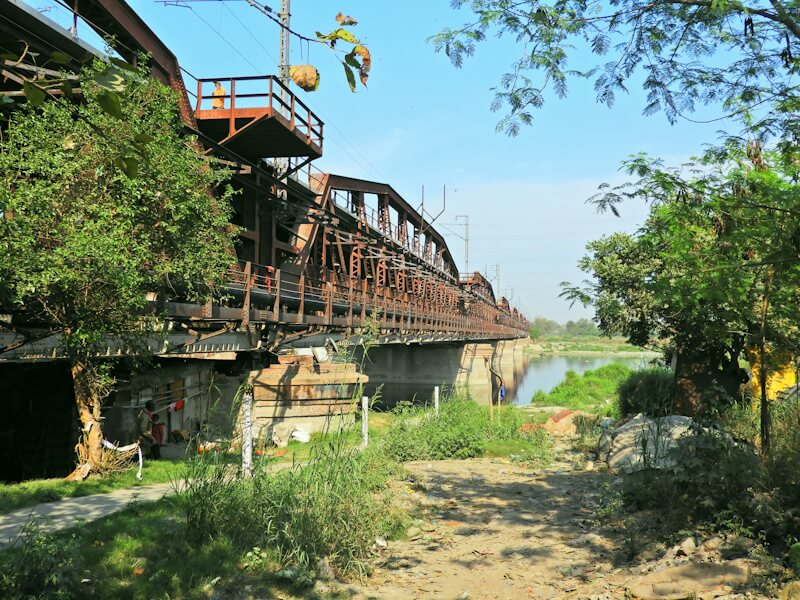
Photo: Wikimedia Commons
How does the river feature in Delhi’s development plans or Master Plan?
Reema: The government just says the river has to be cleaned and beautification has to be done. These are short-term, arbitrary solutions.
Meeta: There is some focus on sewage treatment plants but they are under-funded and inadequate, and many do not function properly. Rethinking sewage disposal is a technological problem and relatively easier to address. What is harder is tackling effluent discharge and groundwater extraction, which require institutional change and political will – both missing for decades. The way Delhi is imagined is like a middle-class, officious, bureaucratic place. Dr. Amita Baviskar has argued that because it’s the national capital, it also has this need for displaying grandeur and, in all of that, the poor and the marginalised are treated like an inconvenience.
Reema: The British have been replaced by the Indian elite; the way they treated the non-elites, we do the same. So, we have not really re-thought that there are different communities along the Yamuna living by different rules. For the time being, like Meeta is saying, technological work like stopping the sewage, monitoring the effluent discharge and groundwater extraction are important. The authorities need to be stricter with violations. I don’t know if the constructions on the Yamuna floodplains can be removed. It’s so easy to remove the Yamuna-Pushta people because they are non-elite. But what about the solid constructions?
There is a policy or plan, then there is implementation. Policy documents sound impressive because they are framed in the language of global agendas of sustainability and multi-species futures. But implementation is where things fall apart. The river is not viewed as a single, living system. Instead, it is fragmented across multiple agencies for administrative convenience. The Jal Board, the DDA, the irrigation department, urban planning bodies, and different state governments control different aspects of the Yamuna. At the very least, there needs to be a single composite authority for river governance. Rivers are our legacy, an ecosystem; not just a piece of land.
How did development change the historical relationship between the Yamuna and the communities living along its banks?
Meeta: Along both the banks of the river, there were fields belonging to villages. When the river receded, people grew crops; once a crop was harvested, the fields were left fallow for the river to flood and fertilise. But in this traditional cultivating pattern, you could only have a couple of crops a year because you had to wait for the river to recede. With the creation of ‘New Delhi,’ most of these lands were acquired and became the property of the DDA or other authorities. In the 1990s, I remember when we crossed the ITO, we could see fields from the bridge. Now, most of the land has been acquired for projects. The new Delhi Secretariat was built on some part of it. On the other side, Akshardham has been built.
Reema: In 1947, when India became newly independent, there was a shortage of food. So at that time, the state actually encouraged people to cultivate land in the Khadar areas. That’s how this became a part of the entire ecosystem.
Meeta: This is a standard part of traditional agricultural practice. Crops like cucumbers, melons, and watermelons were typically grown on riverbeds in the summer; many traditional vegetables were cultivated once the river receded. Over time, the intensity of cultivation changed and the way land was used also shifted. Upstream from places like Jagatpur, for instance, there is extensive flower cultivation now. The heavy use of pesticides and other inputs to protect crops makes agriculture unsustainable; the pesticides and insecticides leach into the soil and the river.
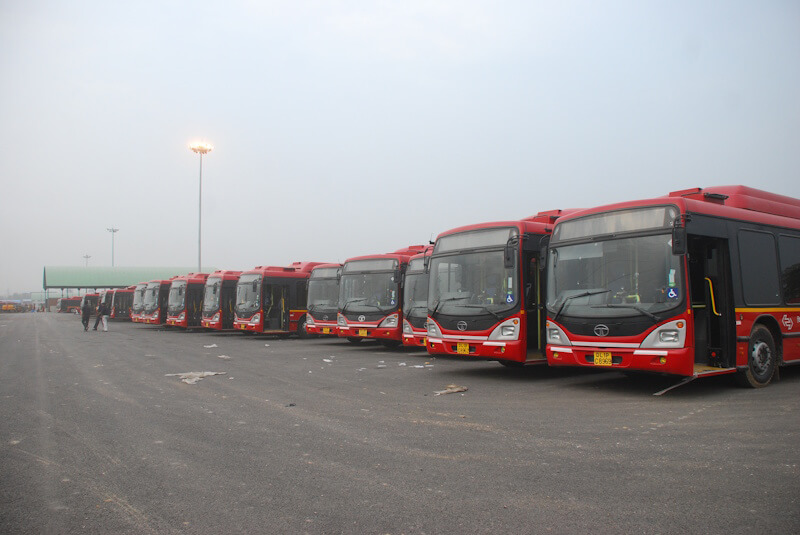
Photo: Wikimedia Commons
The Yamuna Biodiversity Park is showcased as sustainable development and floodplain protection. How do you see that project?
Reema: They have created one biodiversity park; it’s a drop in the ocean. On the one hand, they are creating it but, on the other, constructing on the riverbed. Where is the honesty of intent? Please do not construct a biodiversity park on the river.
Meeta: The biodiversity park is definitely the lesser of two evils but it’s not the solution. One thing we really need to rethink is the full cost and benefit of damming a river. These aren’t just economic costs and benefits; there’s a huge political dimension to it. And you can’t undo history. There used to be a canal that Firoz Shah Tughlaq built, up to what’s now Firoz Shah Kotla, where the Outer Ring Road runs. In old pictures, you see water there. It’s been paved over, turned into a road. The authorities will not undo that road. There are limits to what can be undone.
What is the way ahead?
Meeta: The short-term solutions are clear: better sewage treatment, improved sewage management, fewer effluents entering the river, no more construction, and looking at the idea of dismantling and demolitions in a critical manner. There was a huge slum where the Millennium Bus Depot stands; this is also a part of Yamuna floodplains. The slum was cleared after the Delhi High Court ruled that it was polluting the river but construction went ahead. The Commonwealth Games Village was built on the opposite bank and the Millennium Bus Depot was constructed on the floodplains. Even Yamuna-Pushta has now been reduced to a small area behind Akshardham.
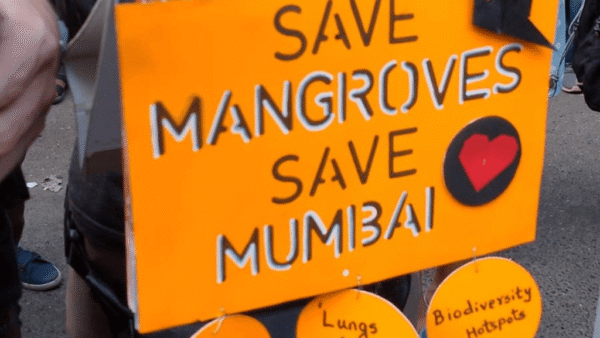
The larger issue is that Delhi needs to accommodate a growing population. One way is to ensure people are not settled along the riverbanks. If they did, then rehabilitate them rather than evict them. This is also where Delhi differs from Mumbai. In Mumbai, slums are visible. In Delhi, there’s a strong desire not to see slums, or consider them inconvenient and inconsistent with the bureaucratic national capital. You do not want poverty on display.