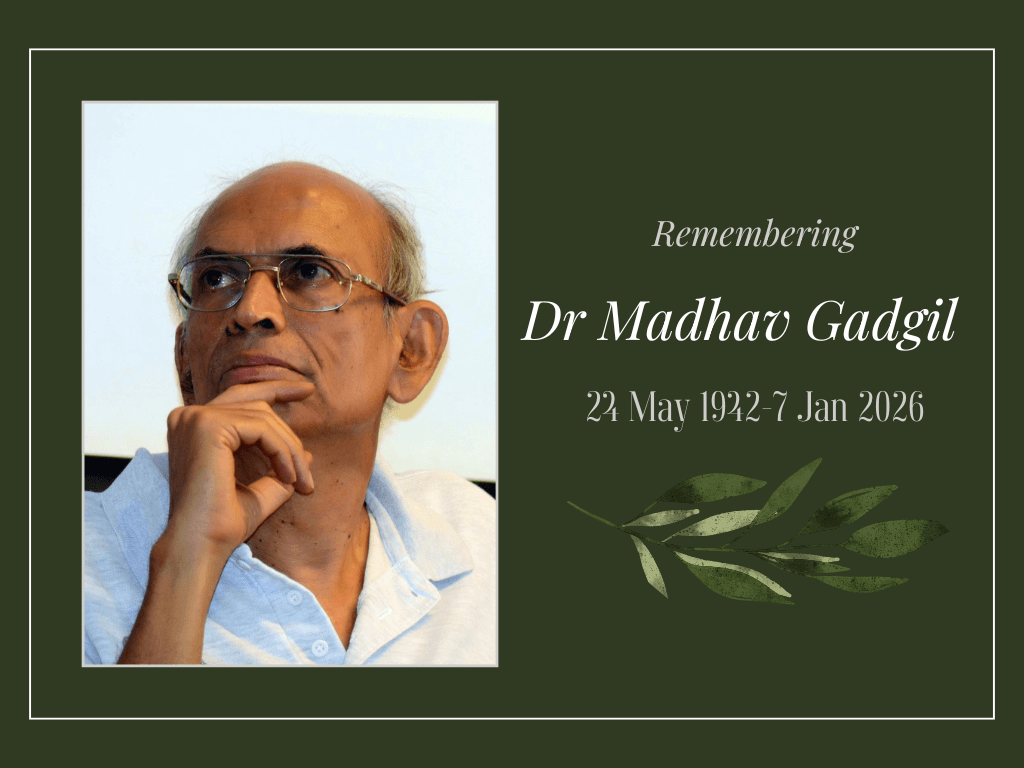

Across disciplines and generations, tributes to Dr Madhav Gadgil poured in on his passing away on January 7. Among India’s foremost and celebrated scientists, ecologists, public intellectuals and scholars. Dr Gadgil embodied more than any other of his peers, the idea and belief that conservation was never a technical exercise but a deeply political question tied to people and their welfare.
Trained as a scientist with a PhD from Harvard University, in 1969, where he studied animal behaviour under the mentorship of the legendary E.O. Wilson and William Bossert, his doctoral work focused on evolutionary approaches to ecology. Decades of fieldwork in India later, Dr Gadgil founded the Centre for Ecological Sciences, a research unit in the prestigious Indian Institute of Science, Bengaluru. Notably, he rejected the elite, top-down models of environmental protection in favour of approaches that treated local communities as part of ecosystems.
Lately, he was best known as the chair behind the path-breaking Western Ghats Ecology Expert Panel report of 2011, which recommended vast no-go areas to be cleared for development, which in turn led to the then government setting up another panel to counter it. Yet, Dr Gadgil’s report remains the lodestar. Throughout, he insisted that decisions about land, forests and rivers must be grounded in evidence, law and democratic consent. Even in his later years, Dr Gadgil remained an unsparing critic of development and argued constantly that environmental damage was as much a failure of democracy as of ecology.
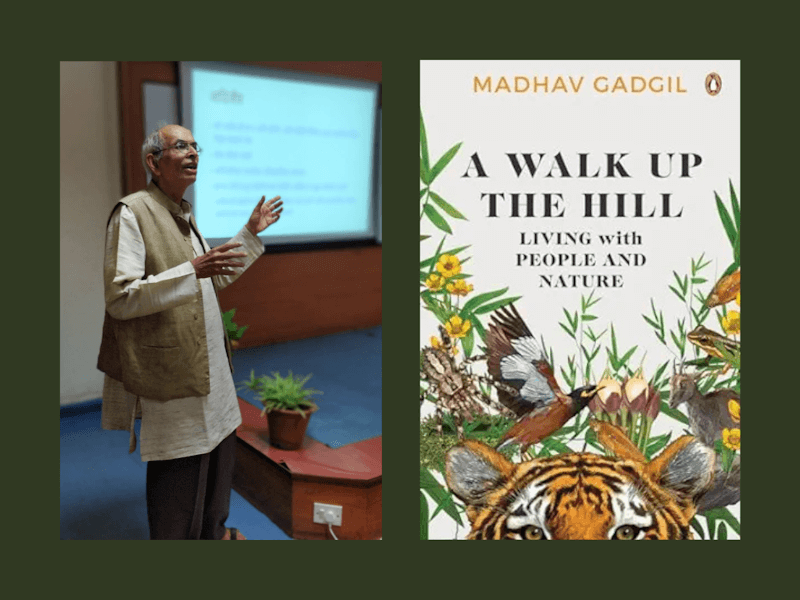
Dr Gadgil was awarded the Padma Shri (1981) and Padma Bhushan (2006), the Shanti Swarup Bhatnagar Prize (1986), the Volvo Environment Prize (2003), the world-renown Tyler Prize for Environmental Achievement (2015), and most recently the UN’s highest environmental honor, the Champions of the Earth Award (2024). Till the end, he remained a scholar sensitive to nature and people, and arguing for more democracy in ecological decisions. This curation brings together an interview with Dr Gadgil and a few of the sterling tributes paid to him since his passing.
Dr Madhav Gadgil’s life in ecology and democracy
In this obituary by Mongabay, environmental journalist and Editorial Director at Mongabay India, S. Gopikrishna Warrier[1] traces Dr Madhav Gadgil’s life and work, from an internationally trained ecologist to a public intellectual who reshaped environmental thinking in India. Dr Gadgil, who died on January 7 at 83, was educated in Pune, Mumbai and Harvard, where he specialised in mathematical ecology. Despite his academic pedigree, he chose not to remain a “purist” scholar, Warrier notes: “Gadgil did not restrict himself to being a purist academic, but also wanted to learn from the field and use his knowledge for the benefit of people and communities. His initial work involved the studying of sacred groves in the Western Ghats, after which he moved to studying forest and environment policies.”
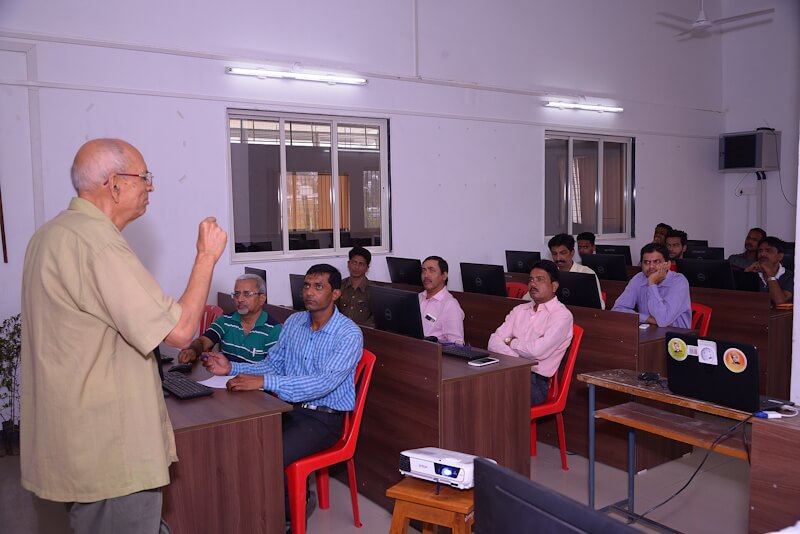
Photo: Wikimedia Commons
Soon Dr Gadgil’s work steadily moved from studying ecological systems to questioning forest and environmental policies. Former environment minister Jairam Ramesh is quoted describing him as a “top-notch academic scientist, a tireless field researcher, a pioneering institution builder, and a great communicator.” A significant section of the tribute focuses on Dr Gadgil’s role as chair of the Western Ghats Ecology Expert Panel. While the panel’s recommendation to designate the Western Ghats as ecological sensitive zones generated intense political opposition, Dr Gadgil consistently argued for conservation through democratic participation. He was also an institution builder, Warrier points out.
Read the full piece here.
Putting people at the heart of nature
In this obituary, Dr Harini Nagendra, ecologist and Director of School of Climate Change and Sustainability at Azim Premji University, remembers Dr Gadgil as a scientist who consistently placed communities at the centre of environmentalism. He is described as India’s foremost ecologist whose work ranged from scientific research to close engagement with conservation policy and grassroots movements.
Dr Gadgil worked across diverse ecological and social settings, she reminds us, from mining affected regions and forest villages to coastal fishing communities, always seeking to connect ecological knowledge with lived realities. She recalls an evocative passage from his memoir A Walk Up the Hill: Living with People and Nature[2], “the purpose of scholarship is not merely to understand, but to deploy that understanding towards action.”
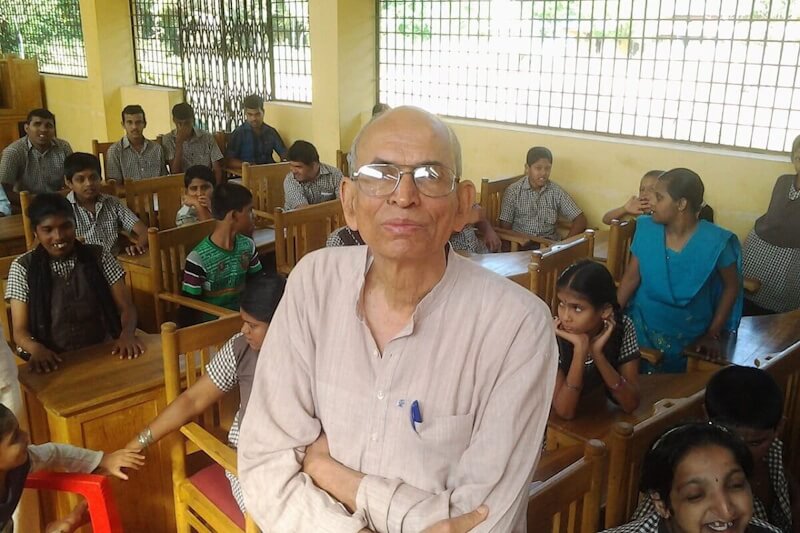
Photo: Wikimedia Commons.
Dr Gadgil is best remembered for chairing the Western Ghats Ecology Expert Panel; his report was instrumental in identifying large parts of the mountain ranges as ecologically sensitive. “The report, which attracted equal volumes of praise and controversy, was never implemented, but much of what Dr Gadgil warned of has come to pass – the unchecked economic exploitation of hillsides, forests, wetlands and rivers has had devastating impacts on the ecology and communities of the people who live in these beautiful mountains,” she writes.
Read the full essay here.
A scientist shaped by the people
Historian and author Ramchandra Guha, writes about Dr Madhav Gadgil as a collaborator and friend whose science was inseparable from questions of justice and democracy. Guha, recalling their days together in an older piece, describes Dr Gadgil as someone with “an abiding concern for social justice; and a profound skepticism of those in power,” which are traits that guided both his research and public interventions. Dr Gadgil and Guha closely collaborated to author two of the most significant books on Indian ecology – This Fissured Land: An Ecology History of India and Ecology and Equity: The Use and Abuse of Nature in Contemporary India. Writing about their joint work, he emphasises Dr Gadgil’s intellectual generosity and egalitarianism, and a person who never shied away from intellectual disagreements.
“We worked and argued as intellectual equals, with me pushing back against his ideas I thought excessively influenced by evolutionary theory, and he challenging my ideas he thought were too dogmatically Marxist,” reminisces Guha. Dr Gadgil’s science, Guha writes, “had benefitted enormously from what he had learned from peasants and pastoralists” and this shaped his insistence on community participation in conservation and forest governance. This commitment also defined his role in the Western Ghats report, which Guha calls, “comprehensive and prescient,” and argues that his recommendations anticipated later ecological disasters.
Read the full essay here.
Remembering the life of a people’s ecologist
In this interview, Mongabay’s S. Gopikrishnan Warrier, speaks to historian Ramachandra Guha about the life and work of the celebrated ecologist. Guha recalls first encountering Dr Gadgil when he was a 24-year-old doctoral student and Dr Gadgil, an established professor. Despite the difference in age and standing, Dr Gadgil welcomed debate and criticism, says Guha. Their intellectual partnership, as mentioned earlier, resulted in two influential books, This Fissured Land: An Ecological History of India and Ecology and Equity: The Use and Abuse of Nature in Contemporary India.
Through personal anecdotes, Guha paints a picture of Dr Gadgil as an egalitarian and interdisciplinary thinker whose ideas have left a lasting imprint on environmental thought in India.
Watch the full interview here.
Cover collage: Remembering Dr Madhav Gadgil.
Photo: Wikimedia Commons