
Mere Shehr,
Every morning, I see you from a running metro—moving from Gurgaon to Delhi, carried inside your metal artery, watching you blur and assemble again. From the carriage window, you come to me in fragments: Glass towers, flyovers, scrub forests clinging to ridges, construction dust rising in the new light.
It is spring now. The days are pleasantly warm, the nights still crisp. Leaves fall lazily from trees even as new blossoms emerge in a riot of red, yellow, and white. The air carries that subtle sweetness of change, and the city seems to breathe differently, balancing the fading winter and the coming summer.
From the metro window today, I was admiring the semal in bloom—Bombax ceiba—its red and orange flowers scattered like embers across your edges. The tree stands leafless and ablaze, announcing the season before most others do. I saw kites perched on branches just beginning to green, a shikra poised atop a building, alert and self-contained, and a green bee-eater cutting cleanly through the morning air. Moringa was in full bloom. Shatoot trees were fruiting. Even at this speed, the city revealed its quieter cycles.
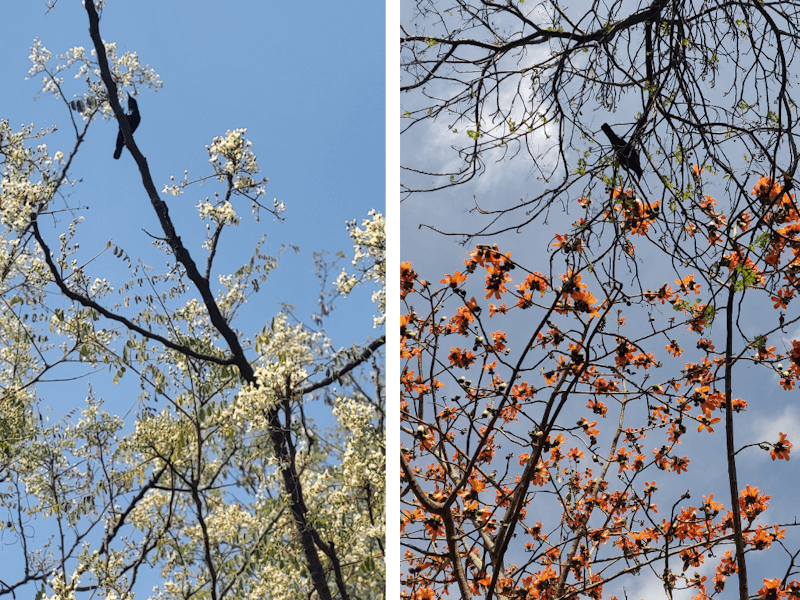
Photo: Nidhi Batra
Just before the train slows at Arjangarh Metro Station, I usually stand closer to the door. When it slides open, even for that brief halt, birdsong enters the compartment from the adjoining stretch of the Delhi Aravalli forest.[1] The chorus is layered and insistent. In that moment, the sound feels like an announcement: We are still here.
I feel privileged that I can feel joy in noticing these non-human species in my shehr, some I recognise, others I observe and meet, inching towards knowing them more.
And then I recall what I read in the newspaper today – the Urban Challenge Fund,[2] freshly launched, like the spring perhaps, for India’s cities. In all its promise and polish, it speaks of leveraging market finance, catalysing private participation, and enabling citizen-centric reforms. It proposes resilient, productive, inclusive, climate-responsive cities—positioning them as drivers of economic growth and competitive advantage.
And I find myself asking you: Can there be no fund for co-existence?
Inclusive, from human perspective
When we say inclusive, can it not mean more than human inclusion? When we say resilient and climate-responsive, can we mean mainstreaming biodiversity, restoring native ecologies, investing in nature-based solutions not as token gestures but as foundational infrastructure? When we say hub of economic growth, can we also question the capitalist tempo that leaves no time to cherish what sustains us?
Resilience, to me, looks like the dhau tree of the Aravallis—Terminalia pendula.[3] In some of the harshest, most degraded landscapes, where soil is thin and moisture scarce, the dhau chooses a different strategy. It does not rush upward. It does not compete loudly for height. It spreads. It grows low and wide, almost like a living carpet, investing quietly in its roots. While other species attempt vertical ambition and fail, the dhau anchors deep and broad into fragile ground, binding soil, resisting erosion, holding rocky slopes together. Not with speed, but with patience. Not with height, but with grip.
It absorbs grazing, fire, and disturbance. It stabilises ecosystems without spectacle. And when pressure eases, it rises—its hardwood becoming a structural backbone for regeneration, allowing moisture to linger, undergrowth to return, biodiversity to reassemble. Its lesson is simple and radical: Endurance is not always loud.
Is this not the kind of resilience our cities should learn from?
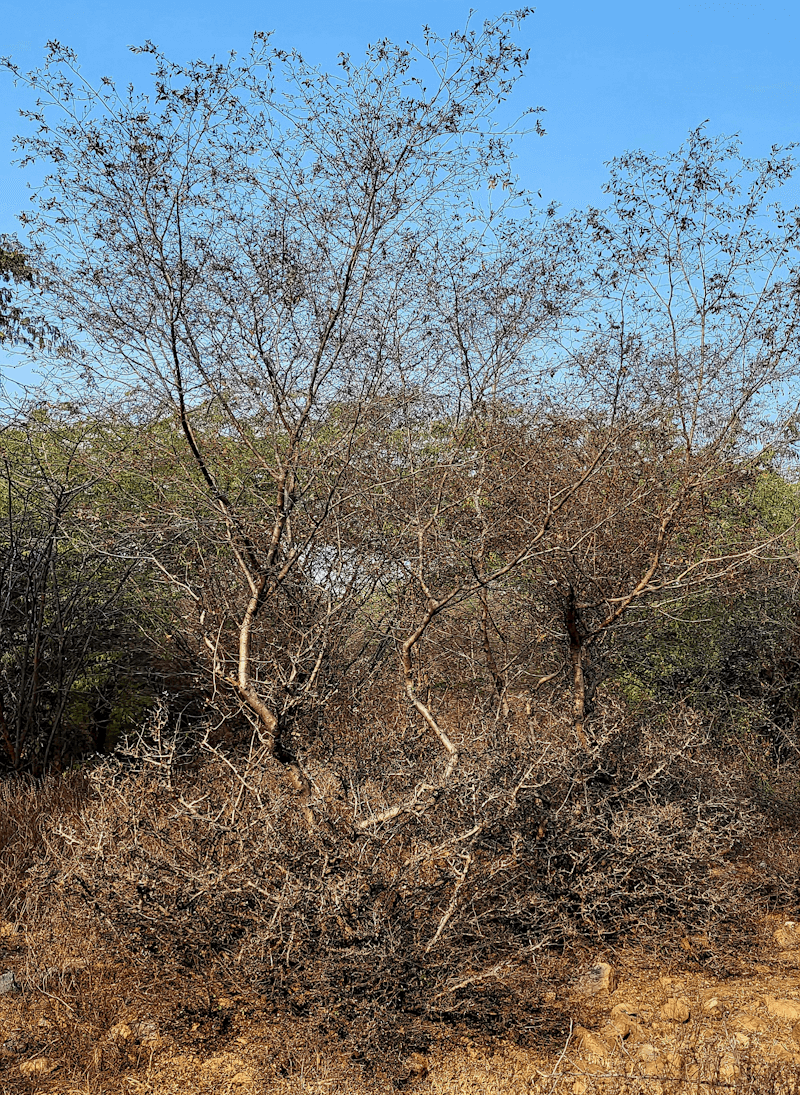
Photo: Nidhi Batra
City as theatre
When we call you a hub of economic growth, can we pause to question the relentless capitalist tempo that shapes you? Could you also be slow? Could you allow joy?
Lewis Mumford, American sociologist and historian, once described cities as the theatre of social action.[4] I hold onto that phrase. A theatre implies witnessing, participation, shared space. But where is our capacity now to pause and be present in that theatre—to watch flowering, fruiting, nesting? To be not only commuters crossing the stage at speed, but attentive participants in a larger ecological performance?
I imagine you differently.
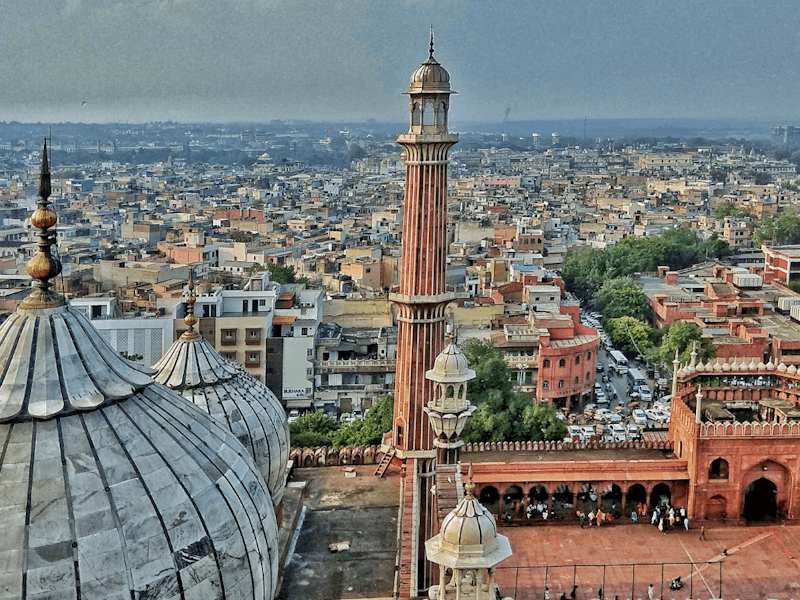
Photo: Wikimedia Commons
I imagine urban forests treated not as vacant land awaiting development, but as living commons—spaces where wildness is allowed complexity. I imagine creeks restored and held as urban wild corridors—places to walk during a lunch break, to hear frogs after rain, to see dragonflies hover above still water. Not drains overwhelmed by sewage and neglect, but breathing edges where soil meets water and life gathers.
I imagine children growing up with trees not as background scenery but as memory anchors. I think of my father returning from morning walks with stained fingers, carrying shatoot cupped in his palms. I remember plucking moringa flowers from the tree in our front yard, watching them turn into swanjineen ki sabzi in the kitchen. Taste, season, tree—each braided into the other. I want children to know that intimacy.
I want them to notice the barrel-shaped eggs of stink bugs laid in neat clusters on the underside of leaves, each with its tiny circular cap. I want them to bend down and watch a dung beetle rolling a ball many times its size, learning persistence from a creature that works without applause. I want adults, too, to reclaim the pleasure of noticing—to see that these small dramas unfold all around us, even now.
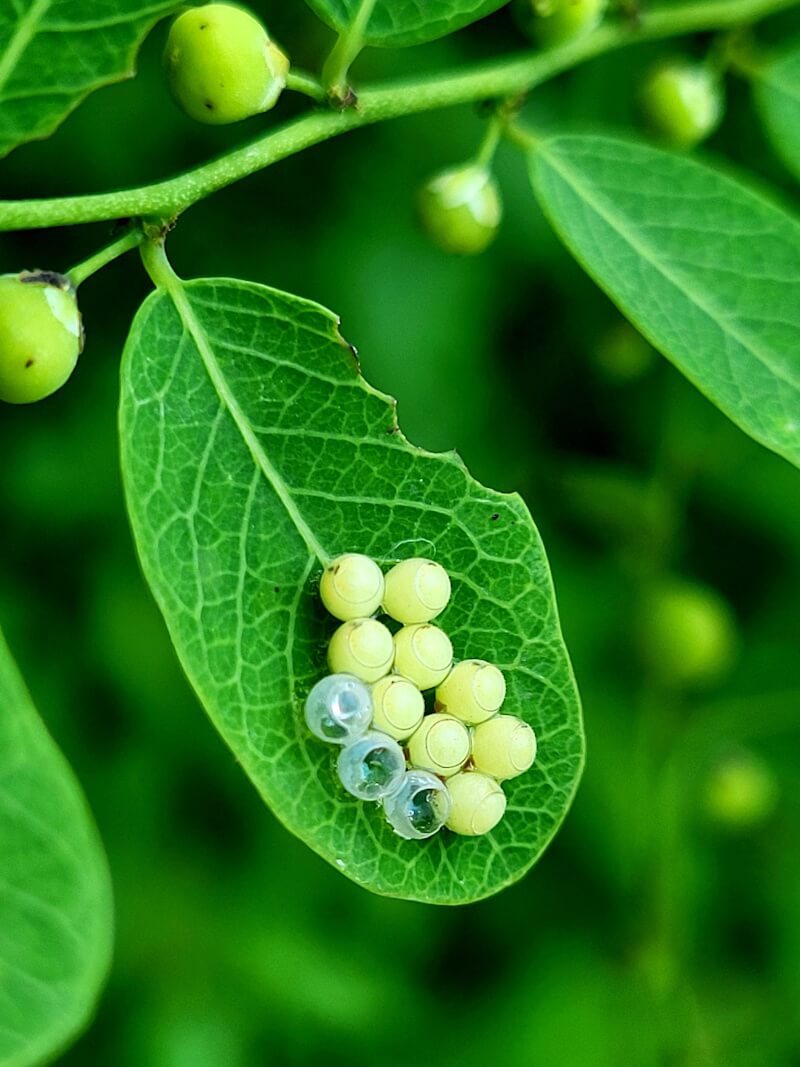
Photo: Nidhi Batra
I long for a city where we remember patterns again. Where we know that semal[5] usually flowers in March—and if it blooms early, we ask why. Where chamrod answers almost every rain with blossoms. Where amaltas sometimes surprises us by flowering more than once. Where the kite’s young appear each January and February with near-clockwork reliability. Where the pitta still chooses the Aravallis each summer, trusting that there is enough undergrowth left for shelter. Where spring carries the flowering of salai and the fruiting of kullu. Where peelu begins to fruit in April and May—and we recognise it when we see it.
In my Siraiki culture, even fruit ripening carries a song: aa chunoñ ral yaar, pīlūñ pakkiyāñ nī ve (Come, my friends, the peelu fruits have ripened)
The Sufi Peelu Pakiyan is not just poetry. It is an ecological memory set to rhythm. It encodes seasonality, abundance, gathering. It reminds us that culture once moved in step with fruiting cycles and flowering cues. But do we see peelu often in our cities now? Do we know how to recognise it? Or have we traded those cues for push notifications and quarterly targets?
Each day I meet you in haste. I measure you in stations crossed, minutes saved, meetings attended. Yet in those few seconds at Arjangarh, when the metro doors slide open and birdsong spills into the carriage, I glimpse another possibility. I glimpse a city that measures success not only in kilometres built or capital leveraged, but in relationships restored.
A city where coexistence is policy, not sentiment.
A city where resilience looks like dhau gripping rock— quiet, patient, enduring.
A city where inclusivity extends to roots, wings, soil, and song.
A city of kinship.
With lots of love,
Nidhi
Nidhi Batra is a Development Practitioner with a background in architecture and environmental urban design and environmental law and policy and is pursuing a Ph.D focused on Urban Commons and the Act of Commoning. Nidhi is the Founder of Sehreeti Developmental Practices Foundation, a collaborative initiative dedicated to sustainable development with a strong emphasis on community participation. Nidhi also serves as Senior Biodiversity Conservation and Blue Economy Portfolio Manager at Agence Française de Développement (AFD). She holds several key positions, including Chairperson of the India Institute of Urban Designers – DNCR, Regional Head of Placemaking India, and WomenLead India Fellow with Vital Voices. She is also a visiting faculty member at architectural colleges in Delhi-NCR.
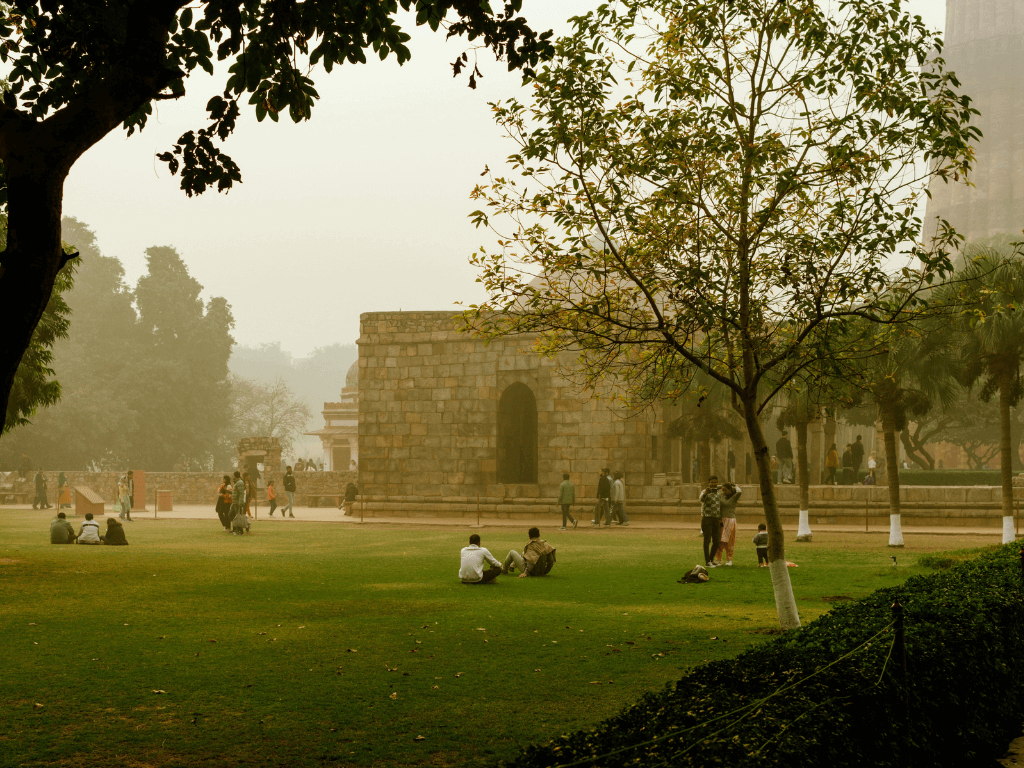
Cover Photo: A view of the Lodhi garden in Delhi. Credits: pexels