
Dear Dehradun,
I write this as a comparatively new arrival but one who has been witness to the enormous changes in you. We first met in 1999. Just thinking about what the city has become, transformed but not for the better, led me to much thought about what it is that constitutes a city.
The city might be humankind’s most iconic invention or creation. But what was it supposed to hold? Do the teeming urban conglomerations with contradictions— chaos and order, wealth and poverty, opportunity and despair, clockwork and disaster, fear and freedom—showcase our greatest fears along with our grandest aspirations? No matter how well-constructed and carefully-imagined, they will become unpredictable, sleazy and shiny, hopeful and despondent.
Is there no better way for us to live, love, laugh, and make a living than what we find in my city today? There’s stupendous architecture, there’s culture, there’s food, and most of all, there’s variety. Of people, of types of people, of places and of experiences. Look at all the best cities of the world and the one thing that connects them all, is that frisson of excitement you get when you step on its streets.
And yet.
A comparison: Need or want?
This letter to you, Dehradun, took me back into spirals of thinking about city life in general and my life in this city, and other cities too where I grew up, where I worked and lived. Now, you are home. So, the thought behind this letter is simple—to try and imagine one aspect of life in this, my home city, which I believe can do with improvement.
There is a dichotomy, is there not, between what you want and what you need? A line when thrill becomes a liability, when comfort beckons more than fun? Some of it is age-related but it is not always the gap between youth and senility. As the city loses its spaces and character, I ask, like Cat Stevens, “where do the children play” and mourn, like Joni Mitchell, that “they paved paradise and put up a parking lot”[1]
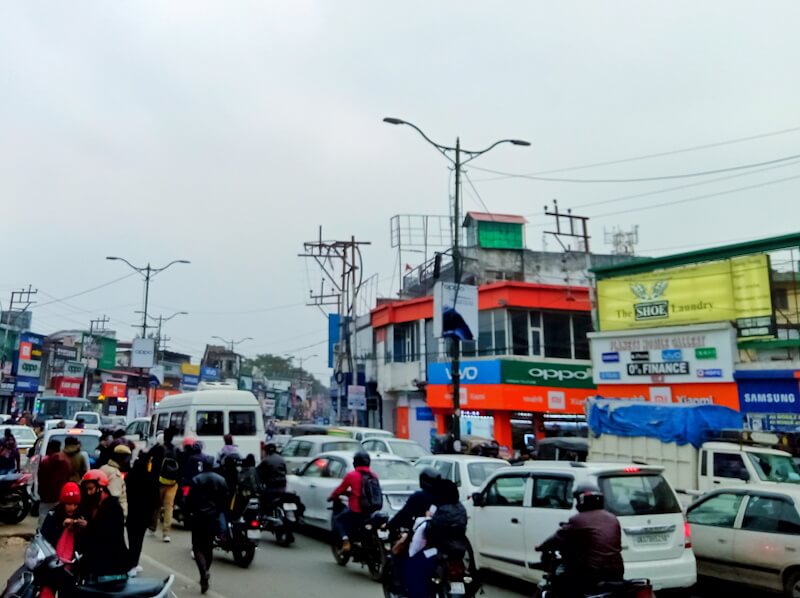
Photo: Wikimedia Commons
But then, it is not only Dehradun; all our cities in India are choking. People cannot breathe because clean air has been sucked out by what’s called ‘development.’ Twenty years ago, we never discussed ‘AQI’ and most of us would not have known that it stood for Air Quality Index. It is now a measure that children track it; they should not have had to. There are now machines available in the market that help us breathe clean air. That was sci-fi stuff for me. That certainly is not – or was not – Dehradun where clean air was taken for granted.
London’s infamous fogs of the 19th century are by now part of Sherlock Holmes mythology. Even Los Angeles managed to clear its smog as we understood the dangers of chlorofluorocarbons (CFCs) to the protective ozone layer of the Earth’s atmosphere. Even that was in the 20th century. Now we’re close to the predictions of the Mad Max series of films: An apocalyptic Earth, where humanity has stretched the planet too far.[2]
You can see how I’ve aged myself with my references to the last century. We knew all about climate change and global warming then. But inconvenient truths did not push us to make things better. Instead, Dehradun careened recklessly ahead, as if somehow assured that naysayers were needlessly terrorising us with their dire warnings. Poor, hazardous, murderous Air Quality Index is our reward—even here, a place once revered for its salubrious climate and bringing people close to nature.
Price of development
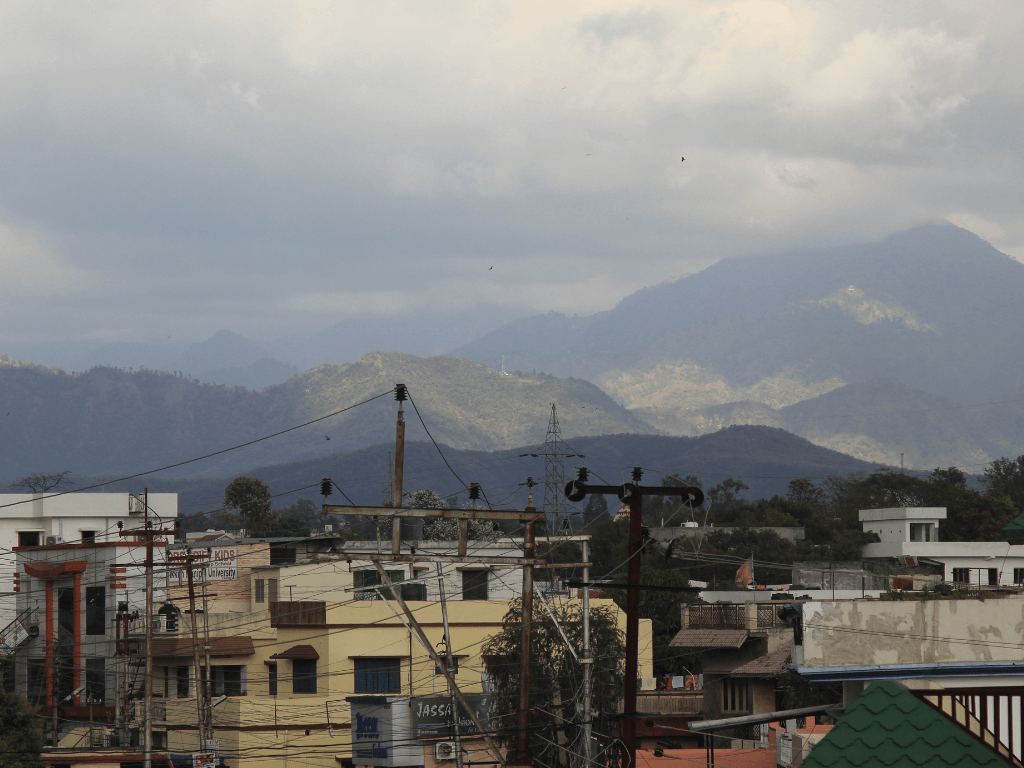
Enough has been said about how Dehradun went from a sleepy hill town to a bursting city with more aspirations than good sense. The conveniences now, it has to be said, are manifold. If one lives on the outskirts as I do, one no longer has to travel 10-15 kilometres to the nearest market for basic supplies. The 10-minute delivery apps will bring everything from a camera tripod to a raw papaya to the doorstep. This, we are told, is development.
But the price of this ‘development’ has been the steady loss of green cover. Dehradun lost 21,303 hectares[3] of its forests due to real estate projects, road expansion, and underground cable laying works; approximately 2,000 trees were felled for the Sahastradhara road widening project[4] while nearly 4,000 were hacked for the Delhi-Dehradun expressway.[5]
Still, Dehradun is at that edge where the city can pull back and revise its approach so that we can continue to live with nature. Cleaner air, lower summer temperatures, more consistent rainfall, and a healthier population would be the obvious gains. Air pollution is now responsible for health costs which amount to about 6 percent of global Gross Domestic Product (GDP), according to World Bank reports.
The thousands of tourists that Dehradun welcomes every year, many of them on their way to Mussoorie and Landour, why do they come here? To escape from the heat and dust of average life in their cities, of course. They come for nature, nature that we too need but seem over-eager to destroy in order to accommodate more and more construction. It is the thin end of madness.
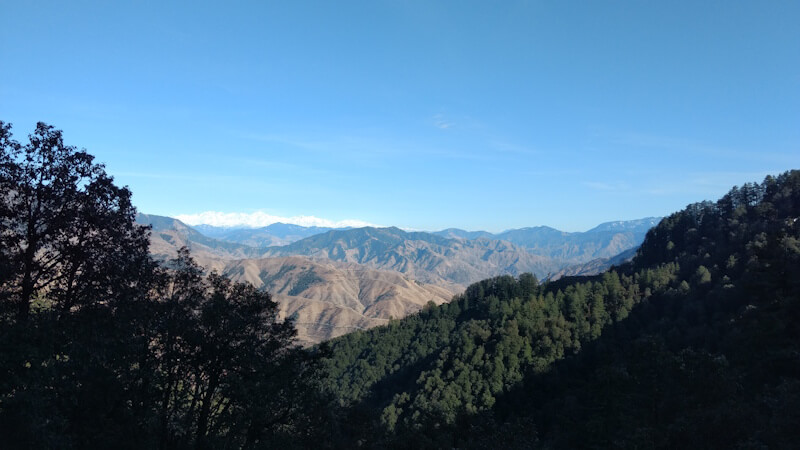
Photo: Wikimedia Commons
What I would wish for Dehradun is a future without air purifiers and lung diseases. With careful thought, I have edged past focusing on the lack of proper roads, pavements, drainage and sewage, effective garbage collection and public transport. And centred on what we have wilfully destroyed, what we took for granted till it was taken away as we watched.
Where are the orchards?
Mention Dehradun to anyone and they usually mention the following: Residential schools, litchi orchards, basmati rice, and bakeries selling rusks and toffees. We still have the schools, more than before. And we have rusks and toffees. What we don’t have any more are litchi orchards[6] and basmati rice.
Because in the rush of ‘development,’ we sacrificed them. Dehradun has added 20 square kilometres of built-up area to its tally in the past 30 years. The flip side of it is the loss of cultivated land and fallow land. Areas like Clement Town in the valley today have dusty trees, the few trees that still stand. The city also managed to get rid of the forest cover—about three square kilometres of dense vegetation. In 2024, the city’s swank new airport terminus was inaugurated but an additional Rs 300 crore was earmarked for expanding the recently refurbished airport by acquiring forest land.[7] The natural corollary to these losses has been both rising temperatures and falling air quality.
Two years ago, around 3,000 people marched through the city to save a few trees which had been marked for the axe. The chief minister wanted the road widened. That summer had been ferocious with temperatures touching 47 degrees Celsius. Do you remember, Dehradun? The urban island heat effect drove temperatures even higher in some areas. The size and scale of the protests led to the government dropping the idea and assuring citizens that the trees were safe. Now, that destructive eye has fallen on the same road project again-–promises forgotten or, perhaps, were never meant to be kept.
We will march again for Dehradun but to what avail? We have to save you, Dehradun, but it’s getting harder and harder. Now the effort has to be manifold. It’s too late just to try and save green cover. We have to also work to create green spaces where there are none—the neighbourhood parks where children can play, where we can all breathe easier. I cannot even use the cliche any more about open areas being the ‘lungs of a city.’ It seems most bizarre that a city in the Himalayan foothills, surrounded by forested mountains, has Air Quality Index numbers touching 300 this year-–that, for the record, is “very unhealthy” and “hazardous”.
And let’s not forget the vagaries of the climate in 21st century global warming— irregular rainfall patterns, long dry spells, melting glaciers, poor snowfall, extreme weather events, and forest fires. Any settlement or city which ignores nature will pay a heavy price in terms of human, animal, infrastructure and ecological losses. And Dehradun will not be an exception.
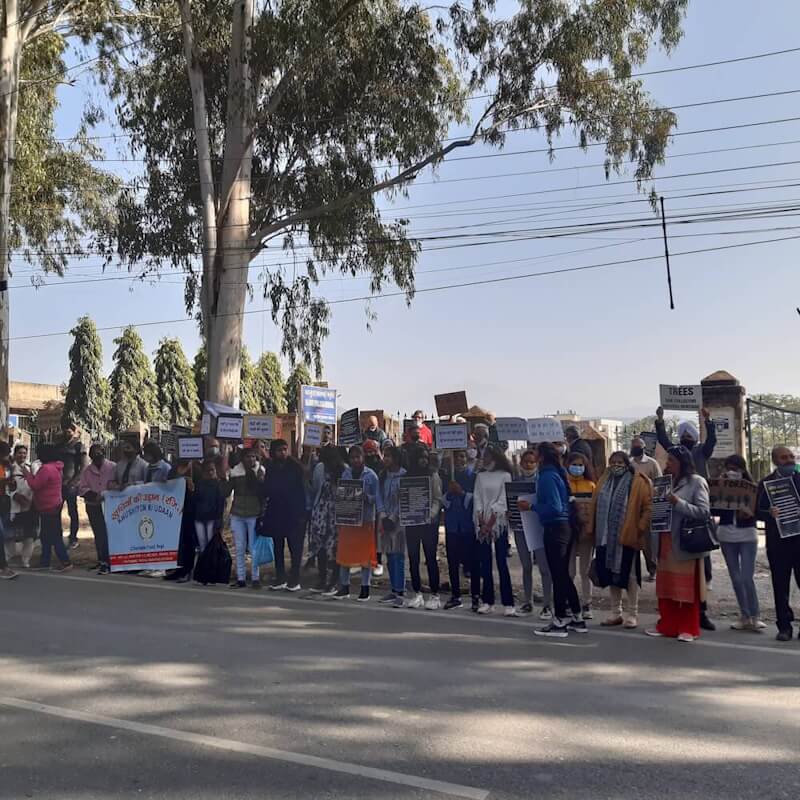
Photo: QoC File
As Dehradun develops, it can follow cities which used urban green cover while fulfilling their dreams. London, for instance, has almost 50 percent green cover across its parks, woodlands, cemeteries and gardens. Dehradun was in a similar space not long ago but we now have a master plan which determines that two percent green cover is enough. That’s a crime. New York, among the most sought-after cities in the world, is on a spree to increase its green cover and it already has a large collection of parks besides, of course, the great Central Park. Seven million trees are not enough for New York’s future; there are plans for more.
Dehradun, we still have time to reset our course. We have the space to create more parks in our already built-up spaces. We have the time to change our rules to suit our health and our natural wealth, to save ourselves from this madness of constant concretisation. We need to save our neighbourhood trees, our tree-lined avenues. We need to create more of them. We need open spaces to recharge our ground water.
And we need to give our children and, all future citizens, a safe city to breathe and play. For them, we must make the time and space to fight for a liveable, breathable city.
Yours lovingly,
Ranjona Banerji
Ranjona Banerji is an independent journalist who writes on the media, politics, gender issues and social trends. She has worked with a number of Indian journals since the mid-1980s, including Bombay Magazine, Mid-Day and DNA in Mumbai. She also worked with the Times of India in Gujarat in the early 2000s. About 10 years ago, she moved to the Himalayan town of Dehradun where she now watches mountains, birds and the hustle of Indian politics and media shenanigans.
Cover photo: Wikimedia Commons