
My dear Bengaluru,
As I write this letter to you, whose water ways and water bodies I have been passionate about, it is February 28 but the India Meteorology Department says summer will begin tomorrow. For the next hundred days at least, water and its scarcity will occupy the minds of many of your citizens. Beware the Ides of March but also remember Mother Kaveri.
Remember that since August 1896, we have been dependent for our municipal water supply on the Kaveri or its tributaries. Though we sit on a ridge line spanning the great divide between the Kaveri River basin and the Dakshina Pinakini River basin,[1] it is the Kaveri basin that we belong to. A great feat of engineering completed in 1972 started to pump water from the river itself from a place called Thorekadanahalli. Now, when the fifth stage is completed, nearly 2,250 million litres will flow into the city.[2] A sixth stage project to bring another 500 million litres has been approved. It is the Kaveri that appears in our taps every day.
Can we make sure that the river basin itself is protected? The forests of the Western Ghats, the hill districts of Kodagu, Hassan, Chikkamagaluru, the tributaries of the Kaveri, the Laxman Teertha, the Kabini, the Hemavathy, the Loka Pavani, the Shimsha all need to flow well and without pollution. Can we draw attention to the urgent need to create a suitable river basin institution within the state to protect this lifeline of ours?
The ‘tanks’ of Bengaluru have such a wonderfully old history.[3] Researchers have been drawing attention to the beautiful inscription stones which our ancestors carved hundreds of years back. Granted that they were built for irrigation purposes, yet they have a significant role in recharging groundwater, cooling the environment, a room for bio-diversity, providing livelihoods for fishers and grass cutters, and welcoming birds from far off places in the world. Can we hasten our efforts in protecting and preserving them?
Taking a watershed, sewer-shed and aquifer-shed approach for each lake, can we make sure that the feeder channels, the Kaluves[4] have no wastewater flowing in them and, then, can the lakes become sewage free? Can the Bengaluru Water Supply and Sewerage Board (BWSSB) ramp up its efforts in replacing old sewage lines and implementing the newer sewage lines such that very little if any untreated sewage flows in the storm-water drains?
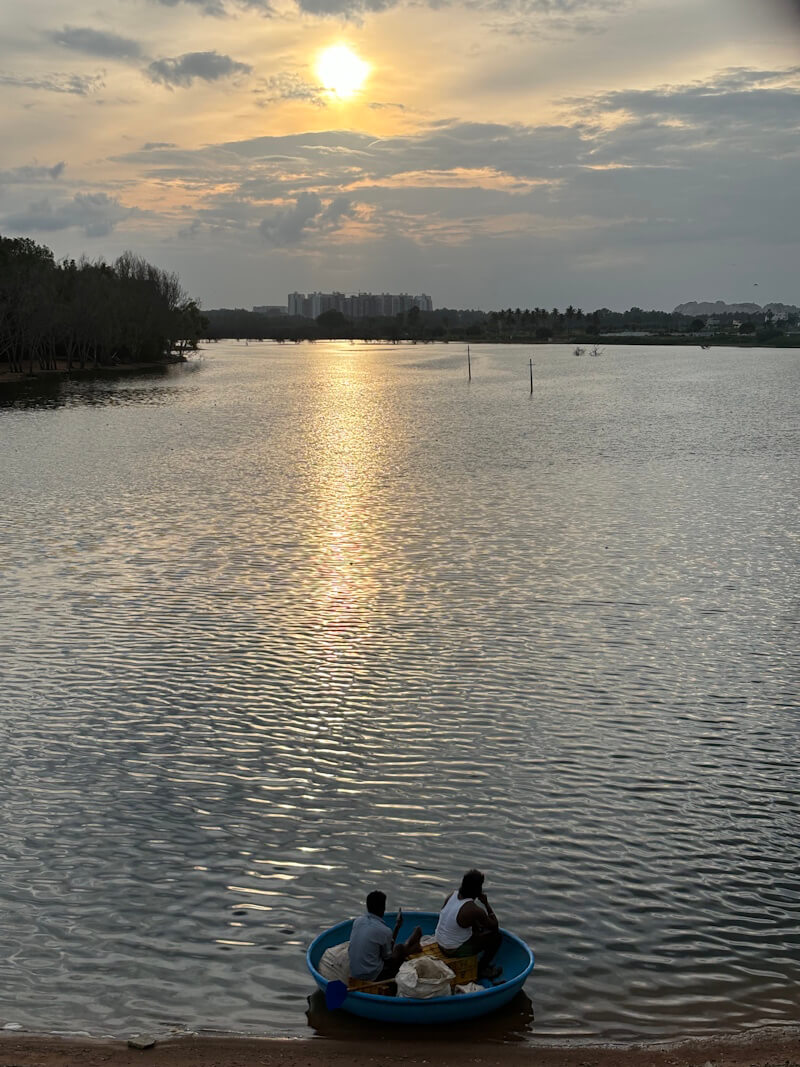
Photo: S. Vishwanath
Beyond lakes revival
Within Bengaluru city limits, there may be 186 lakes[5] but those in the periphery will be crucial to meet the needs of the growing Bengaluru. These lakes such as Bagalur Lake, Muthanallur Lake, Narsapura Lake, and Vemgal Lake will need as much protection as the lakes within the city – and quickly too. The Minor Irrigation Department of the state government is running a very large project of taking treated used water from the wastewater treatment plants of the BWSSB and pumping it to fill nearly 300 lakes outside Bengaluru. Around 40 lakes within the city are being filled with treated used water by the BWSSB itself. This is a good move but needs to be monitored well for water quality and its impact on the shallow aquifer.
The recharge potential of each lake will help the aquifers, particularly the shallow aquifers, and thus benefit the immediate neighbourhoods with more groundwater. If each lake will have community champions taking care of it, and the Municipal Corporations and the BWSSB assisting in improving the quality of the lake water continuously, it will be a good turnaround story for Bengaluru. The city’s water network would have been restored to some extent.
As the lakes themselves are improving, the islands created within the lakes will help bring the painted storks and pelicans in. Can we then imagine the 186 lakes each as Ranganathittu[6] – the bird sanctuary on the Kaveri near Srirangapatna- within the city and at least 500 in the lakes outside the city? This is entirely possible if we design the restoration of lakes not as individual soup bowls but as various ecological zones for birds and plants.
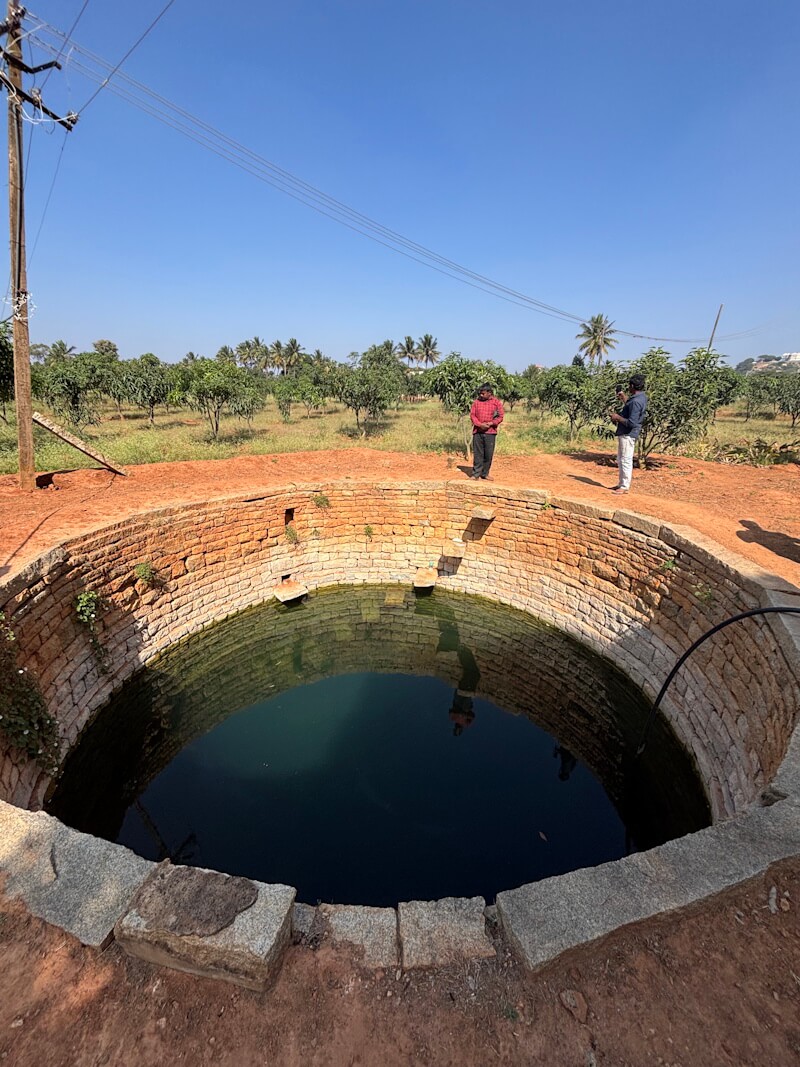
Photo: S. Vishwanath
The connecting channels between the lakes – the Kodi Kaluve- is more challenging to revive and maintain. The K-100 project[7] running from near the Shantinagar bus stand all the way to Bellandur Lake has shown that the drains full of sewage and garbage can be cleaned up and turned into a landscaped walking trail. There is much work to be done but removing a 100 million litres per day of raw sewage flow, cleaning up decades of accumulated silt, and redesigning a neglected space to a citizen-friendly pathway is showing the way to how this can be replicated elsewhere. Can we see the replication of K-100 on say the main Vrishbhavathi river channel and the Dakshina Pinakini channel? I hope we do.
Wells everywhere
The wells of Bengaluru are another treasure which we had forgotten but are now remembering. Before the Kaveri waters, the lakes and the wells were our major sources of domestic water. We had the Kere-Baavi (lake and well) culture. Now that the lakes are being revived and rainwater harvesting is being adopted for both storage and recharging, Bengaluru’s wells too can come back to life and provide supplemental water.
The traditional well-digging community, the Mannu Vaddars[8] with generational knowledge of wells and the process of digging them, have set themselves a goal of digging a million recharge wells and reviving community wells by cleaning them of debris and disinfecting the waters. I wish every one of us in the city participates in this endeavour. If we are building a new house or apartment, we incorporate a recharge well making sure that we channel rooftop rainwater, filter it, store it, and lead the excess into these recharge wells. A million recharge wells will make the city flood-resilient and largely water-secure.
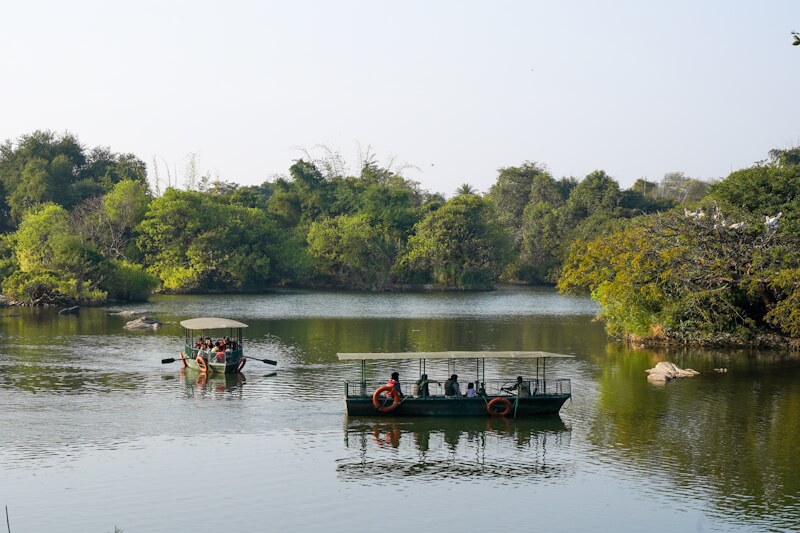
Photo: Wikimedia Commons
From one to all
Bengaluru, each of our homes, apartments, schools, colleges, factories, and work places has access to three taps and four stores. The three taps are water from the Kaveri, rainwater, and treated used water. The stores are soil, wetlands-lakes-rivers, aquifers, and sump tanks.
From the individual small residence to the watershed of a lake, the three taps and four stores can be used wisely and designed well. By controlling the use of the tap through conservative use and demand management, we can make ourselves and a growing metropolis water-secure and resilient. The BWSSB can focus on reducing unaccounted for water, increasing sewage collection and treatment, increasing connections and distribution network, and filling lakes with treated used water. The Greater Bengaluru Authority can coordinate the rejuvenation of stormwater drains and lakes; the Minor Irrigation Department on filling more lakes in the peripheral areas of Bengaluru and monitoring lake water quality. Finally, citizens can focus on rainwater harvesting, recharging of aquifers, and using water judiciously.
I hope that we, the people, will become part of the solutions journey, as we move into the summer and the future. My best wishes to you, a city I call home, the city which makes the best dosas in the entire galaxy.
S Vishwanath, a well-regarded urban planner, was on a committee to frame bylaws for rainwater harvesting in Bengaluru. He is also the founder of Rainwater Club, director of Biome Environmental Solutions, and a trustee of Biome Environmental Trust. He launched the ‘Million Wells’ campaign with the Mannu Vaddar community to rejuvenate Bengaluru’s groundwater table. He is a member of the Technical Committee of the BWSSB.
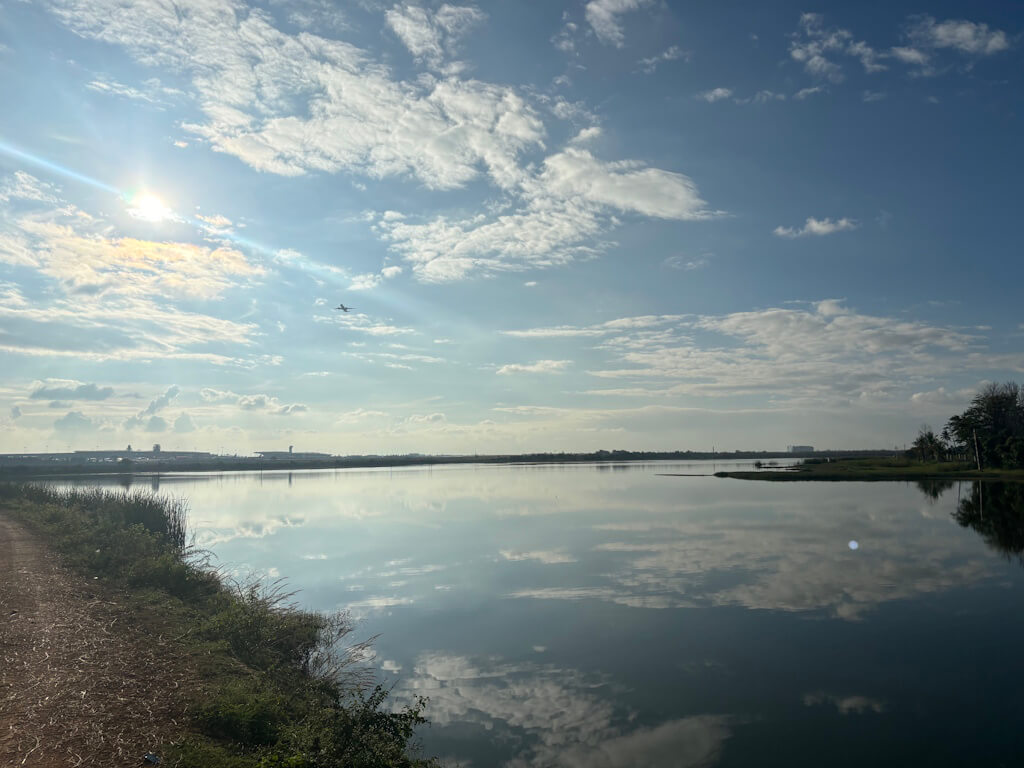
Cover photo: Betta Kote lake next to Bengaluru International Airport. Credit: S Vishwanath