
As cities develop and redevelop at a rapid pace, and the old built environment is made new with more towers and infrastructure projects, the aspect of resettlement or rehabilitation of lakhs of marginalised people displaced in this process, gets little attention. Whether in the mainstream media or public discourse, the focus tends to be on the mega crores invested – the figures in Mumbai going from Rs 20,000 crore for a section of the coastal road to Rs 55,000 crore for a single project (Virar-Alibaur Multimodal).[1]
The missing aspect in these fantastical figures is the human cost – who was displaced, how were they rehabilitated, what does their resettlement look like, how has this improved their lives, and so on. The same questions arise when slums are demolished to make way for buildings. Unfortunately, the resettled are seen as ‘beneficiaries’ who got something valuable for nothing or for a mere pittance, especially in the case of slum or jhuggi-jhopri resettlement.
At its core, resettlement does not even mean full rehabilitation and improved lives for the displaced, but even in the limited sense that it has been implemented, the approach leaves much to desire. It bears repetition that resettlement or rehabilitation colonies in several cities, led of course by Mumbai and Delhi, offer nothing more than small-sized formal housing to the displaced – often without meeting construction, social and environmental benchmarks.
Why, after more than two decades of implementation, resettlement has been below par leads to several inferences based on reported information, on-ground voices in the media (including in Question of Cities[2]), and academic inquiries.
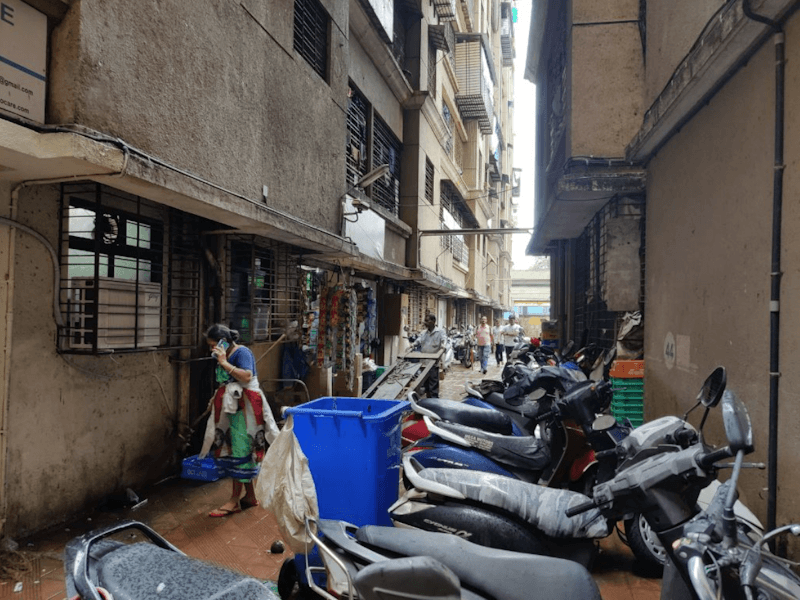
Photo: QoC File
Public investment, private profit, regulatory capture
The primary and fundamental reason stares us all in the face – and it is unlikely that state governments and municipal corporations or housing boards are unaware of this – there has been a structural and elemental disconnect between the basic framework and the purpose of slum rehabilitation schemes. Typically, as in Mumbai’s Slum Rehabilitation Authority (SRA) framework, the stated purpose is to redevelop slum plots so that slum residents can be given better, formal housing while releasing land for constructing for-sale houses to cross-subsidise the former.
Yet, the way it has been implemented over the past 25 years, the investment has come from the state while the lion’s share of profits[3] has been cornered by private builders and real estate corporates. How has this come to be? The land on which slums and jhuggi-jhopris stand is owned by the state government or civic authority; land costs form the highest percentage of costs in any development or redevelopment, estimates range from 40 percent to 60 percent of the total cost. Then, basic infrastructure like roads, water and sanitation services, electricity connections, transport corridors, amenities like schools and hospitals are put in place by the state – at public expense – which constitute an estimated 15-20 percent. It is only the cost of construction of rehabilitation houses that’s borne by the developer or the real estate company.
However, when the redevelopment is completed, developers or real estate companies are required to share barely 20 percent of the profits with the state authorities. Drawing from the several “problematic aspects” of the SRA scheme where builders competed commercially “under the pretext of rehabilitating slum dwellers,” the Supreme Court termed the process “regulatory capture” in July 2024.[4]
The collusion between the state agencies and private developers and real estate corporates has been an open secret; the state must take the first and largest share of the blame for subverting the framework of resettlement and rehabilitation. Though supporters of this framework argue that, in successful projects, eligible slum residents get formal housing and basic amenities without having to pay construction costs, the fact is that the cumulative price that the residents, the state agencies, and the city bear is too high for this framework to make social sense.
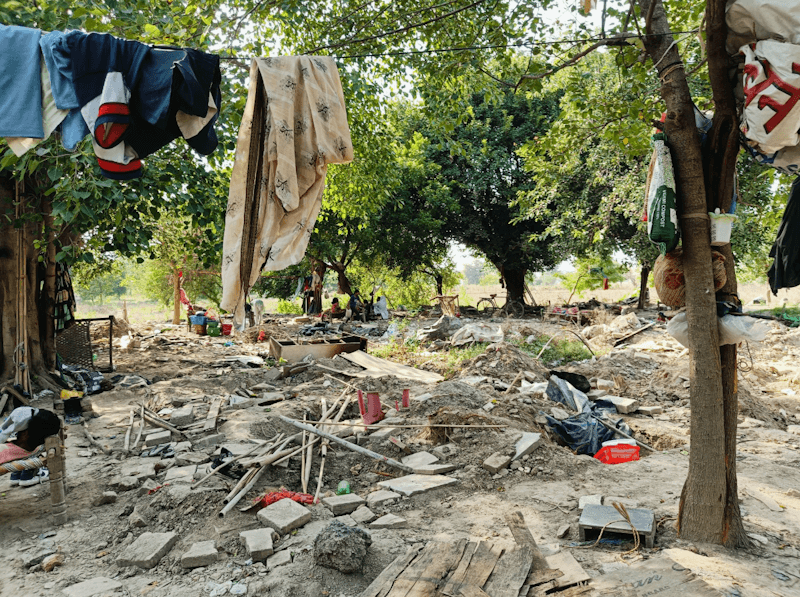
Photo: QoC File
The neoliberal approach “to unlock the economic potential of prime urban land” has, in reality, meant commodification of slum land. Critiquing Mumbai’s experience through Michael Levien’s concept of “dispossession without development,”[5] an analysis by Vidhi Centre for Legal Policy this February showed how the slum rehabilitation policy privileges real estate over residents.[6] Unsurprisingly, agencies like the World Bank, while noting the “failure” of the rehabilitation scheme, have called for the government “to play an active role” as “it remains the central authority”[7] without acknowledging how governments have been on the same side as private developers.
Deliberate poor design and spatial justice
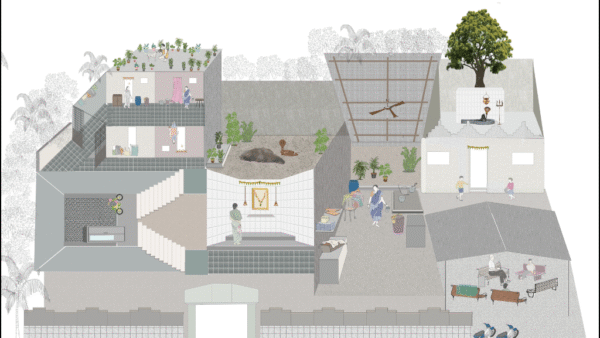
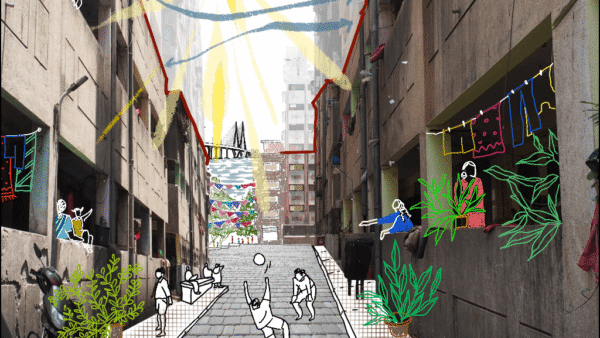
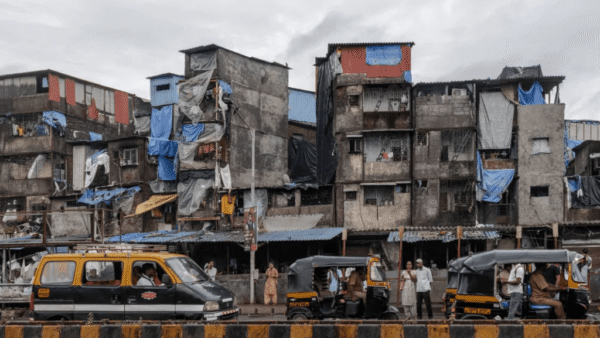
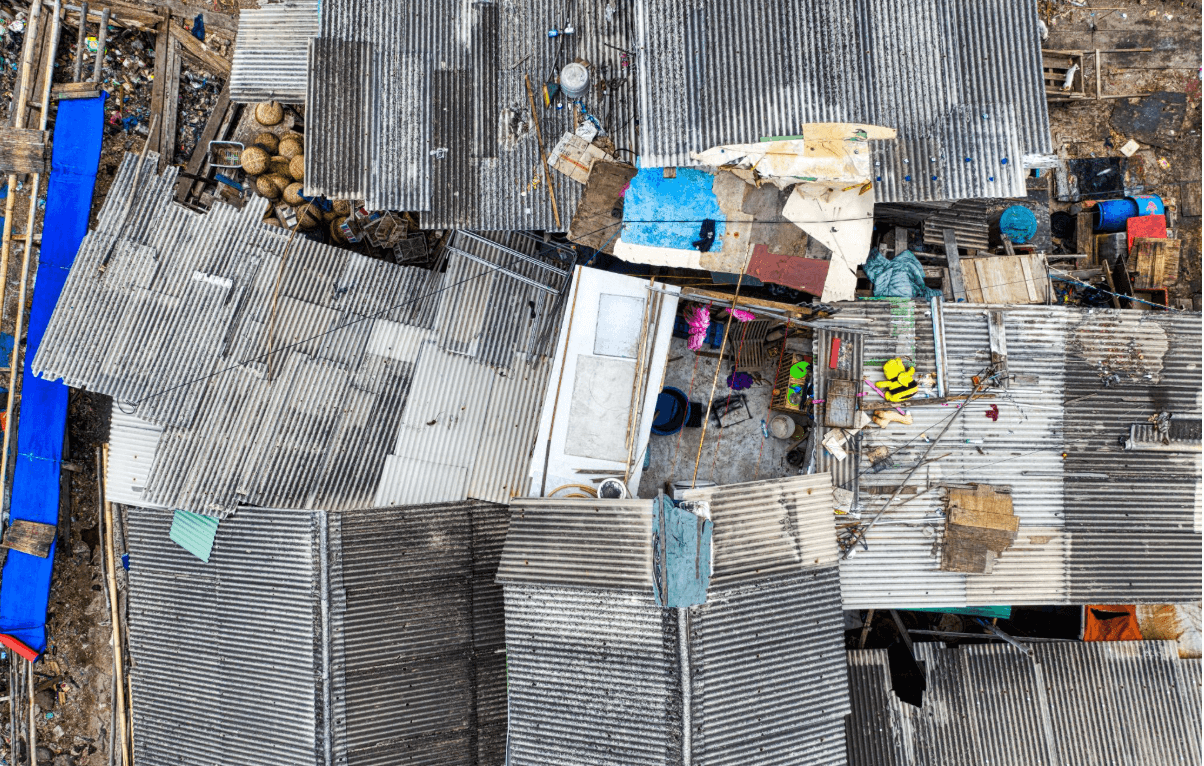
The poor, insensitive design of rehabilitation buildings and the sub-standard construction of most of them have been well documented. The Bombay High Court, of course, termed them “vertical slums”.[8] These buildings and colonies, more often than not, offer few amenities like open spaces, schools, clinics, and recreation areas, exacerbate extreme heat impact, relocate people far away from their workplaces leading to higher monthly spends, break down communities and organic support structures of the slums and jhuggi-jhopris.
“The construction of rehabilitation housing in India is led by developers, leaving the government with relatively little direct oversight over its design and construction,” observed Dr Ronita Bardhan, Cambridge University lecturer in sustainability who researched Mumbai’s SRA in 2017.[9] Like other researchers, she too called for additional guidelines to be adopted and enforced to ensure minimum comfort such as fitting an exhaust fan in every house, improving natural ventilation and light, and providing public space.
The flawed design is not an accident but baked into the framework – if more slum residents are squeezed into a smaller portion of the plot with cheaper materials used in construction, the higher the profits for the developer. What should enrage us is not merely the deliberate poor housing for slum residents but also the stark inequality of space, layout, and quality in the adjacent for-sale buildings, with some of these apartments commanding the top bucks in the city’s real estate market.
How is this spatial justice?
In essence, spatial justice is how public goods, services and infrastructure in cities are allocated and built to mitigate or produce inequalities. It is a non-sequitur that all residents have fair access to housing, basic services and green spaces irrespective of their income, social location, and other factors. Its core principles, as urbanists have argued, comprise distributive fairness, procedural equity in who gets to decide, and recognition of distinct cultures and historical contributions of the residents to creating the neighbourhood. It taps into the “social production of space” that theorists like Henri Lefebvre and others articulated; inequalities can be produced or dismantled by such space.
The deliberate segregation and discrimination of rehabilitation housing undermines the very concept of spatial justice. Slum residents are treated not as full citizens deserving of quality housing and infrastructure but as “beneficiaries” who should be grateful for the sub-standard and poorly-designed houses they get almost free of cost.
Social housing as an alternative
For urban formal housing to be habitable and equitable, India’s governments and city authorities will have to take the concept of social housing more seriously and honestly than they have. Social housing, as internationally accepted, is a wider and all-encompassing concept than public housing; the former includes affordable housing provided by governments, semi-government agencies, NGOs, and public-private partnerships while public housing is mostly produced, owned and distributed by governments.
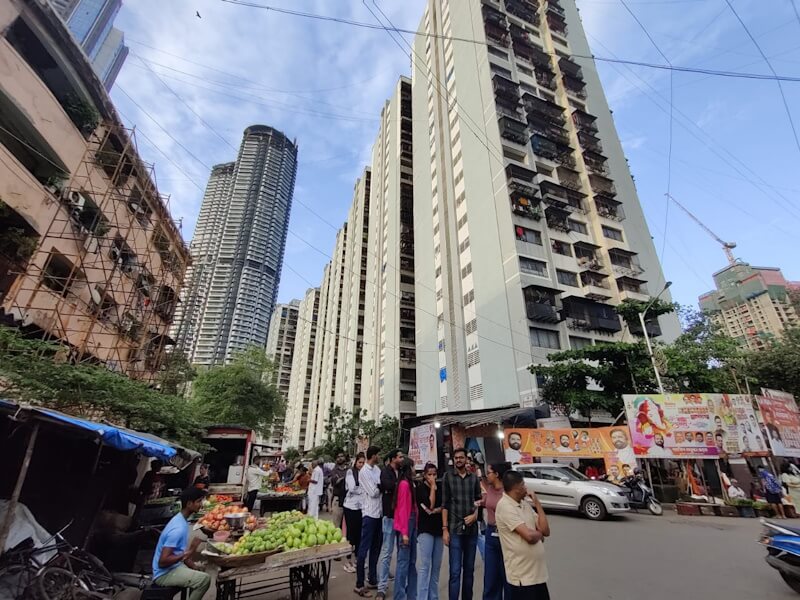
Photo: QoC File
NITI Aayog, in its report of October 2025, estimated that as per global methodology, the deficit of urban formal housing is as high as 40-60 percent in large cities and, in absolute terms, could be 50-70 million units. It underscored a critical point: High-end housing stock has been increasing since 2019 while the affordable segment has witnessed a gradual decline. It compared the multiple definitions of “affordable” to show that, in 2019, nearly 40 percent of urban housing was in this segment while barely 11 percent constituted luxury and ultra-luxury segments. By 2024, the affordable segment had shockingly collapsed to 16 percent of the housing stock produced while the luxury and ultra-luxury segments made up 30 percent of it.[10]
In India’s cities, the scale of what is needed by way of social housing is humongous. Before grappling with the scale, the urgent need is for governments and public agencies to recognise their responsibility to provide social – affordable – housing through their own means and people-oriented mechanisms rather than corral private developers. Sadly, there is hardly any statement or discussion from these on social housing. The concept tends to not even get a reference at the high-profile housing conclaves and symposiums of governments.
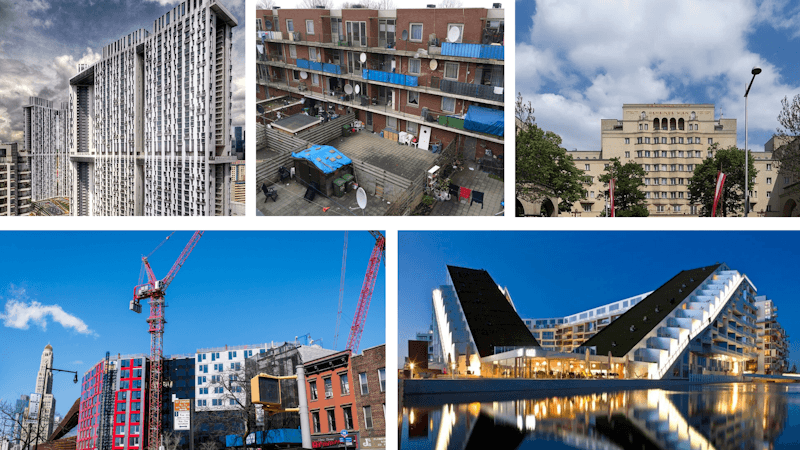
Social housing, in various avatars and models, has been implemented in cities across the world. The highest percentage of social rental housing in any market, around 31 percent, is in The Netherlands; it started off with subsidies in the 1950s through to the 1980s when the housing associations became autonomous, and later became financially viable or independent in the 1990s. Mexico City, Paris, Vienna, Barcelona, Copenhagen, and Los Angeles show how the concept can be adapted to local conditions.[11]
Singapore’s Housing and Development Board rolled out social housing as part of the government mandate. Its Pinnacle Duxton, one of the sought-after projects, is a set of 50-storey high-rise, the two towers connected by skybridges turned into community spaces and recreational areas for residents.[12] The Singapore model has housed roughly 80 percent of residents with a high homeownership rate too; unlike in other countries, it has provided subsidised, quality housing for ownership across classes, not only to low-income earners. And its ethnic integration policy lays down quotas at block and neighbourhood levels for social cohesion.[13]
Photos: Wikimedia Commons, Pexels
The oft-cited international example is Vienna where the city government owns and manages about 2,20,000 social housing units – about 25 percent of the city’s housing stock – primarily for lower-income residents and, since the 1980s, indirectly controls a similar number built and owned by private developers through a mandatory process. The city government owns or buys the land, invites competitive proposals, appoints a jury of experts and residents, and based on its recommendations, allots projects to developers.[14] Other models include the Cantinho do Céu in São Paolo, Brazil, where nearly 44,000 residents were rehabilitated in a decent built environment in one of the most deprived areas of the city, while protecting a key reservoir and its wildlife.[15]
If governments and authorities in India’s cities, especially in Mumbai and Delhi, begin by recognising their responsibility to provide social housing, making it a talisman of sorts, there are various models to be adopted or shaped to suit our conditions. But if urban housing is seen only as a pipeline for private profit, with collusion of state agencies, then the housing question will hang fire for decades to come.
Cover photo: Pexels