
Dear Tinsukia,
Every year, I wait for spring and the arrival of its many flowering trees. The flash of reds, and orange across your streets, of the Palash, Simul, and Krishnachura transforms the city and its streets. But lately, more than these colours, there is a perpetual haze of dust across roads. The unending sound of cars. The trees, gone, in the quest for more roads.
When I moved here in the 1970s, more than a city, you were a thriving town. No wonder about that; you had always been, even before India’s independence, a business centre. Long before you were called Tinsukia, you were known as Bengmara[1] and served as the capital of the Muttock kingdom until the British annexed the region in 1842. During the colonial period, commercial activity rapidly expanded here as the British pushed a regime of exploration and extraction; of tea, coal, crude oil, timber in the surrounding areas.
So, the town grew alongside these industries, and supplied goods, labour and services to adjoining regions. But it was the year 1884 that would drastically change things for you and cement your position as a premier urban agglomeration, as it stands today. That year, the British built the Dibru-Sadiya railway line,[2] the first to be constructed in Assam and solidified Tinsukia’s status as a trade centre. Not only the goods but people came too, from Rajasthan, Bihar, and East Bengal. Migration continued. What we now have is a cosmopolitan city where one hears Hindi as frequently as Bengali or Assamese.
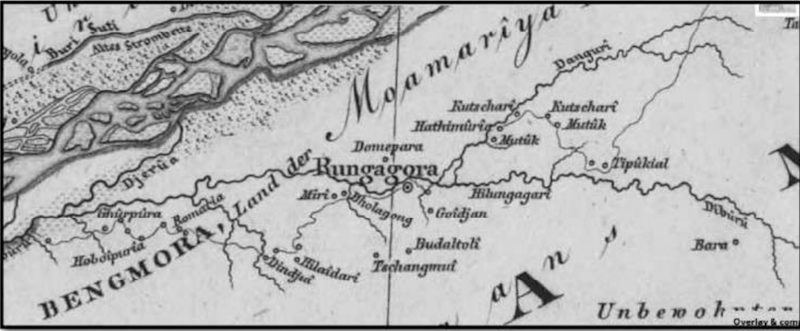
Photo Credits Directorate of Town and County Planning, Government of Assam
I grew up in Naharkatia, an oil town, 30 kilometres away from Tinsukia. The establishment of the Tinsukia sub-divisional court, back in 1973, cemented my migration. I have been here 45 years of my life. Even though the Master Plan of Tinsukia district calls the area where I live, a town, it would be remiss to call you anything but a city. In fact, in 2015, you were considered for India’s Smart Cities Mission.[3] With that, you now carry the usual ailments that cities have generally suffered in our country—broken roads, open drains, a chokehold of traffic, noise pollution, shrinking green spaces, mismanagement of garbage, and a rising Air Quality Index. On a good day now, it is no less than 70; on bad days, it teeters close to 160 which is poor.
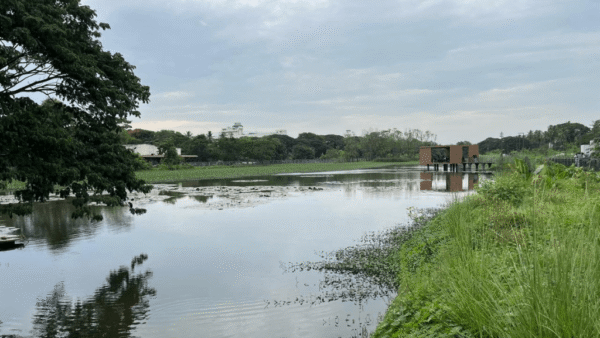
Tinsukia is surrounded by so much green and blue—numerous tea gardens peppered across the district, Guijan Ghat, and the biodiversity hot spots of Dibru Saikhowa National Park, and Maguri Beel (wetland). You are named after the Tinikunia Pukhuri (Triangular Lake), historically a part of the 24 man-made lakes made across the district during the reign of the Muttock kingdom. The lakes offer much respite and remain a treasured blue-green space. You have always carried this dual character—one of the gateway to Upper Assam’s pristine ecology and, also, the second most commercial centre of Assam after Guwahati.
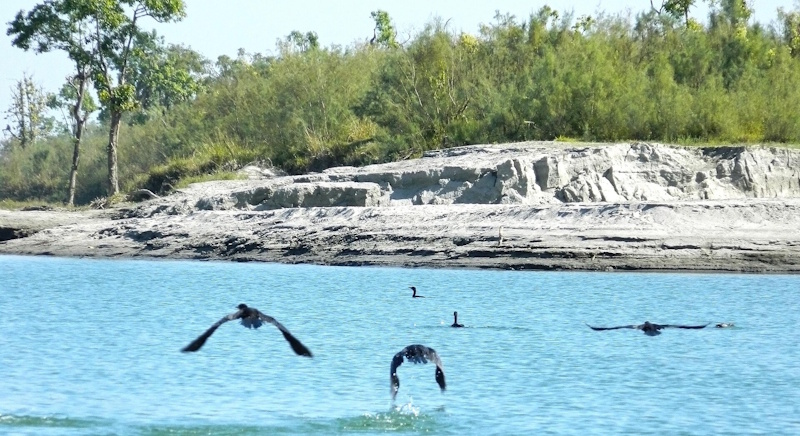
Photo: Wikimedia Commons
Visible effects of urbanisation
Similar to Guwahati, Tinsukia is now reeling under the pressures of urbanisation. This is mostly due to an unplanned system of town-planning that’s less scientific and more reactionary. For the last ten years, the business of construction has been constant. Roads are routinely dug up to lay a telephone cable or a gas pipeline; the lack of coordination between different civic agencies means pipelines are cut during road work, culverts are prepared and left incomplete, and drains get rebuilt repeatedly.
There is no visible coordination between the PwD, the municipality, the gas agencies, or the water supply department, or the telecom companies. This incompetence, and lack of intention is also visible in the city’s larger infrastructural projects. The Dibrugarh-Tinsukia bypass, which was completed in 2020 at a total cost of Rs. 379.32 crore,[4] developed potholes[5] just a year later. And in 2024, four people, including a 7-year old died[6] in a road accident on this bypass because of potholes.
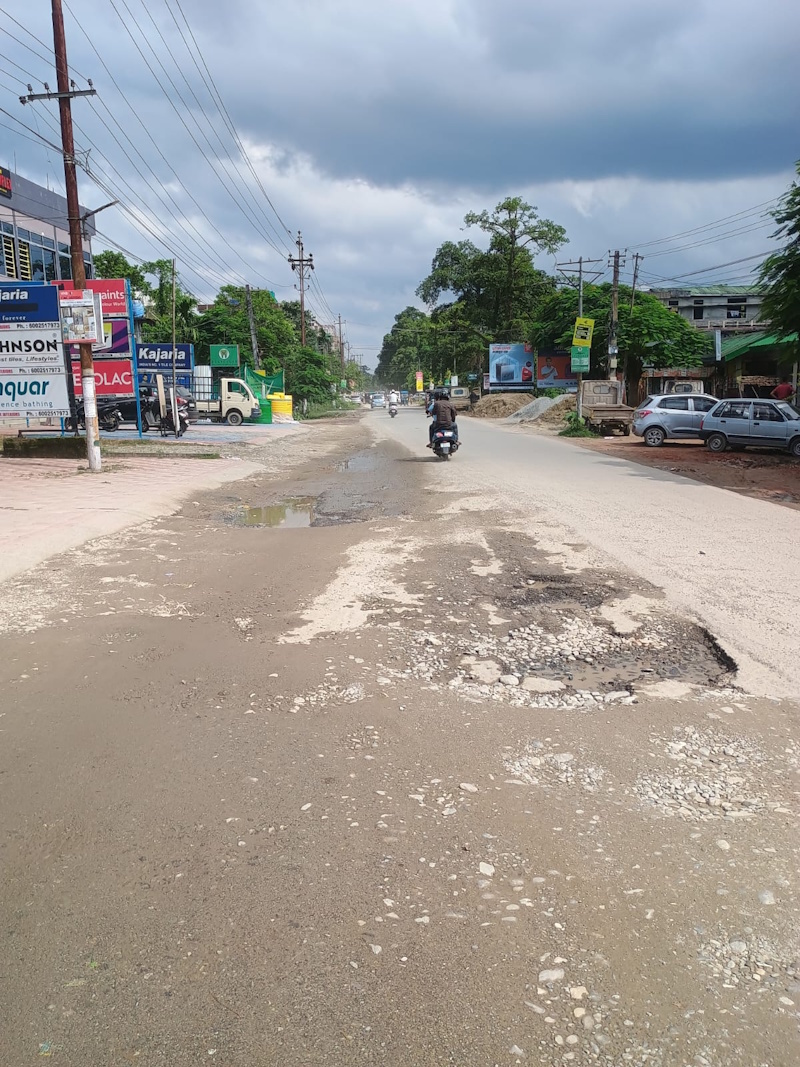
Photo: Ashok Kumar Karmakar
The character of Tinsukia has changed to say the least—in the name of development, there are shopping malls now, a slew of restaurants, and DJ nights. The social character of this city too perhaps might be changing. Since the BJP government has been in power, there have been more raucous celebrations of Hindu religious festivals, even the minor ones, and loudspeakers run through late into the night.
What are the plans?
It is inevitable that, in the last four decades, things had to change. Tinsukia does need development. It has developed positively in many ways—there is better connectivity with other regions now, the Tinsukia Medical College and Hospital was established in 2024, the district library was upgraded. These are all welcome steps towards creating a self-sufficient city. This, however, cannot be divorced from an overall civic planning in the city, which it currently lacks. Your growth, from your pre-colonial roots to now, shows an upward trend of more migration and increased pressure on natural resources. So, planning becomes crucial.
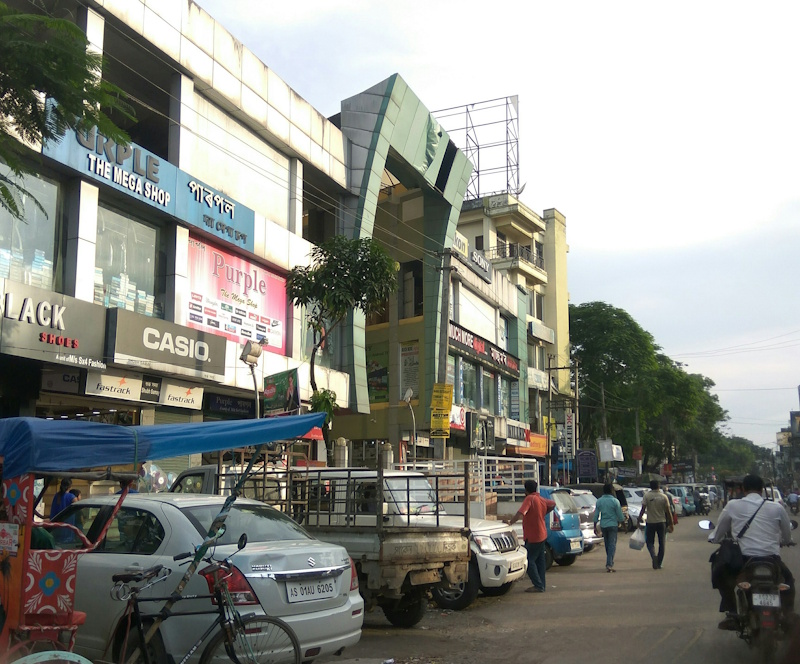
Photo: QoC File
In fact, the Assam government has clear plans to only further the industrial character with the establishment of a plastic park,[7] one of the 10 such parks across the country, which is an industrial zone specifically designed for plastic-related businesses and industries. This park is also to enjoy a 30 percent[8] subsidy on capital expenditure to attract more businesses. While it is being advocated that these parks will promote recycling, one can’t be too sure. At a time when our efforts should be to reduce plastic pollution, we are creating more industries supporting plastic.
This is the modus operandi for the rest of the state as well. Several projects have been approved in the last few years that are at the cost of the state’s ecology. Be it the recent move by the Jorhat government to excavate in Teok’s[9] wetlands that locals are resisting, the 55-Megawatt Ukiam hydropower project[10] on the Kulsi river, or the massive excavation[11] project in Tezpur’s Dhenukhana hills. Closer home, after being denied[12] permissions to drill for oil and gas in the Dibru Saikhowa National Park, the Environment Ministry has approved it given that it is being done for ‘research purposes’.
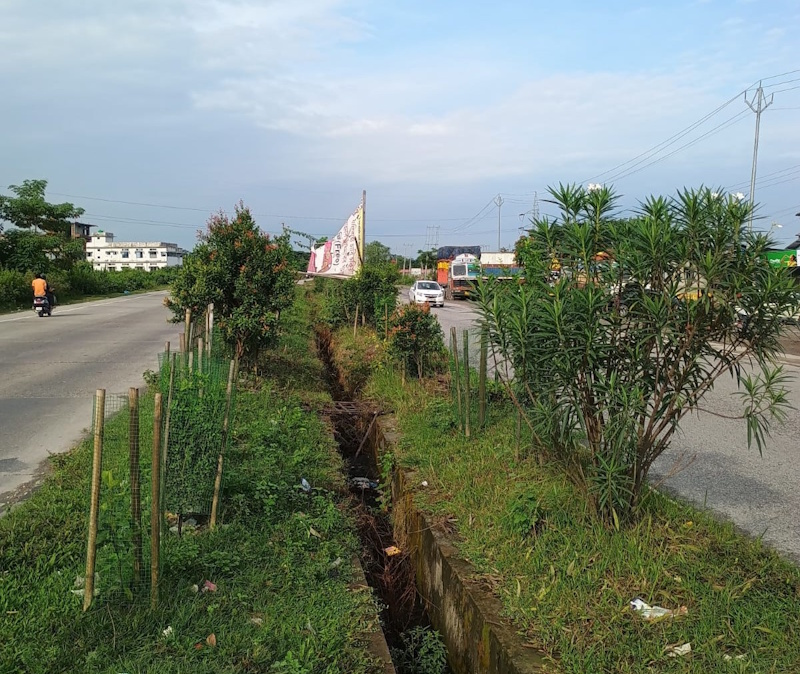
Photo: Ashok Kumar Karmakar
Development should never erase the character of a place, or change it irretrievably at the cost of its ecology and people. It should strengthen it. More than nostalgia, I have concern for you and hope for what you can still become. You deserve thoughtful growth. You deserve systems that work. You deserve shade again.
For now, I will take hope in the remaining Simul and Palash trees in my city, and take comfort in the river fishes and the clearer days, when they arrive.
Ashok Kumar Karmakar is a senior lawyer at the Tinsukia District Court and a citizen environmentalist who has planted hundreds of trees across Tinsukia district.
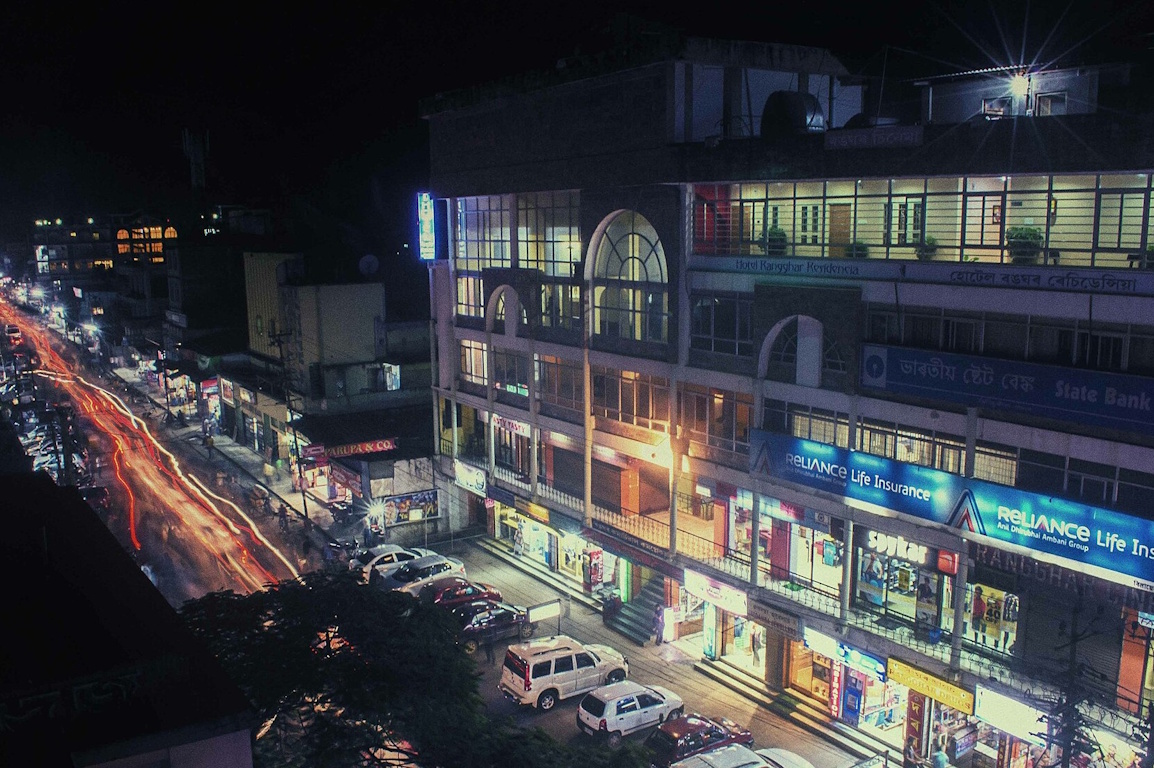
Cover Photo: A view of Tinsukia’s GNB road. Photo: Wikimedia Commons