
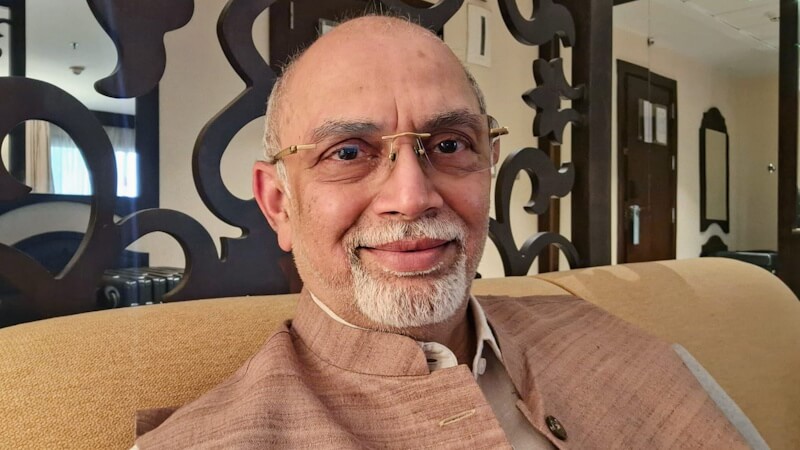
Dr Ravikant Joshi spent over two decades managing finance at the Vadodara Municipal Corporation and for the past two and half decades he has worked in India and abroad analysing finances of municipal bodies and advising them. He is, presently, associated with multilateral agencies, consulting firms, various academic-research institutions and civil society organisations working in the field of urban finance, governance and strategic planning. He has worked in multilateral agencies including USAID, UN-Habitat, the World Bank, Asia Development Bank, and India’s leading institutions such as CRISIL, the National Urban Livelihood Mission of the Union Ministry of Housing and Urban Affairs, and the Indian School of Public Policy. His academic teaching and mentoring span urban project management, governance, and public finance.
In the light of your extensive experience in municipal finances, what are some of the broad trends emerging in the past few years?
The first trend is that the share of municipal finance in India’s Gross Domestic Product (GDP) has remained stagnant at around 1 percent. Even though devolution in absolute terms and percentage terms has increased from the Government of India and state governments, the overall universe of municipal finance has remained stagnant for the past 24 years at 1 or 1.5 percent. This is because a municipal body’s own source revenue growth is very low. Municipal finance or municipal own source revenue is not capturing India’s growth story. As a result, as a whole, municipal finance has remained stagnant and at a very low level.
The second trend is the share of municipal bodies’ own source revenue in their total finance is going down as municipal bodies are not able to revise their rates, nor optimise the resources they hold. Because of all this, thirdly, the dependence of municipal bodies on government grants has increased. Across India, the dependence of municipal bodies is now almost 55-60 percent; in case of smaller municipal bodies, dependence is 80-90 percent on government grants. Government grants and their share in municipal finance have increased. Municipal revenue including government grants are barely able to meet their day-to-day operating expenditure.
Studies show that municipal corporations, including the large ones, are struggling to raise revenues and spend on projects. Mumbai’s municipal corporation has an annual budget of Rs 74,000 crore yet the reliance on government grants is increasing. What are your insights on this?
If we go by the literal meaning of the word, then municipal bodies are not ‘struggling’ because they are not making efforts to raise resources, or optimising their resources by improving tax coverage, or revising–rationalising tax rates and charges, or improving collection efficiency. Tax coverage, collection efficiency, and finally, the tax rate must go up. There is gross inefficiency, colossal inefficiency, in revenue realisation. It’s a fact that they have limited resources but it is also a fact that they are not doing anything about it. So, there is no struggle as such. Struggle would be when they have to increase rates but also have to ensure efficiency and equity, that is they have to ensure that the poor are not taxed adversely. Besides, they are also not cost-efficient. ‘A rupee saved is a rupee generated’ principle needs to be pursued but this does not seem to work in municipal bodies.
In my view, size does not matter. Mumbai, and other cities too, may have colossal budgets but what really matters is the growth rate. Historically, in some of the large municipal bodies, including Mumbai, the per capita income is high so overall size of budget is large but, the last 20 years barring some exceptions show a stagnancy and low growth rate, which means the compound annual growth rate (CAGR) of municipal finance is very low. Their income is growing around the inflation rate or less, but their expenditure is growing at a higher rate, in some cases at double the rate of income. Naturally, there will be a deficit and the municipal body will face financial problems and their dependence on government grants is increasing.
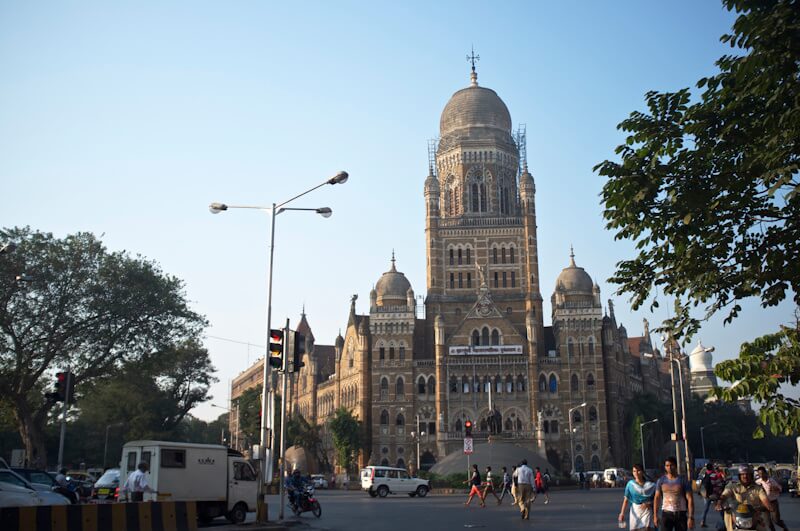
Photo: Wikimedia Commons
In what ways can the financial health of municipal corporations be strengthened and made stable, without them having to depend on governments?
I say again, a rupee saved is a rupee generated. So, there has to be cost efficiency in every way but without compromising quality and service delivery. You cannot go on putting resources into a leaking bucket. Once municipal bodies become cost-efficient, they will have money to improve service delivery. Efficient, quality service delivery creates a willingness in people to accept increases in rates and charges. But, here also, optimising resources is important too. It’s a three-way strategy: first, improve delivery of services; two, improve tax/charge coverage, collection efficiency, and improve revenue efficiency; only then, revise or rationalise the tax structure but keeping the equity aspect at the forefront.
I must say that even after doing all these improvements, municipal bodies will be dependent on state or central governments. There is nothing wrong with it. Across the world, all local bodies or sub-national governments are dependent on higher-level government grants. This is because of a dichotomy – the delivery of services (functional sphere) is the normal pyramid which means the maximum functions and services delivery happen at the local level; on other hand, in the case of public finance, it’s an inverse pyramid which means even if a city does a great job, the lion’s share of the revenue or growth value goes first to the national government, then to the provincial or regional-level government, and municipal bodies get less. That’s the nature of the function-finance relationship between national-regional and local governments, a fundamental thing in public finance, across the world. So, there will be inter-government fiscal transfer, commonly called grants or devolution or financial assistance to municipal bodies.
How do municipal finances influence the implementation of the 74th Amendment which devolves powers to urban local bodies because the understanding is that the powers are meaningless without financial independence?
The 74th Constitutional Amendment did not give powers to local governments; it gave them constitutional status. It ensured they had elected governments; it ensured political representation to all sections and classes including women, but it did not give them functional and financial powers. The availability of finance is most important for every organisation, whether corporate, government, or NGO. So, municipal bodies need to increase their resources. Without money, they cannot fulfil their role, deliver services, or deliver the mandate given to them. As discussed earlier, they need to become efficient to get funds.
Even municipal bodies such as the Brihanmumbai Municipal Corporation with large budgets say they struggle to maintain public services. Mumbai’s BEST bus service and public hospitals are examples of the BMC hiving off its responsibility for lack of funds but urban local bodies exist to provide public services to millions.
Any organisation, more so a government organisation, cannot and should not hive off its public service provision on the pretext of not having enough funds. It goes against the fundamental responsibility of any government which is to provide public services needed for the society and to find adequate resources for it. The municipal body doesn’t have the liberty to say it does not have funds, so it will not do immunisation or provide public health facilities. It has to either raise funds or find alternative ways, to ensure that public services are delivered for which adequate funds are available.
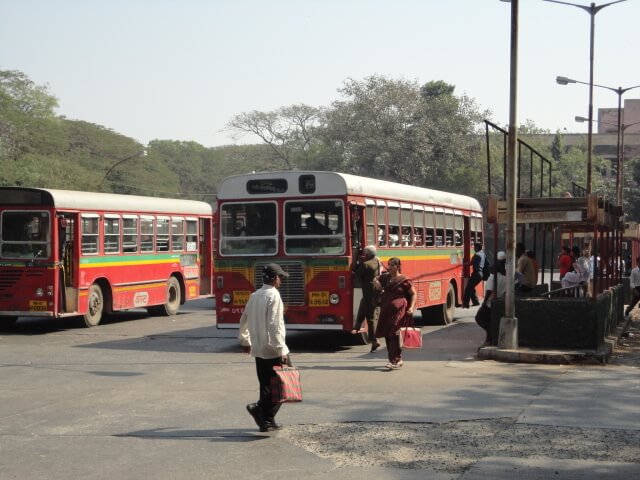
Photo: Wikimedia Commons
In the present, what are the major sources of revenues for large and small urban local bodies in India?
Unfortunately, across India, the major sources are only two –- property tax and user charge but that too has not been in most cities. The issues associated with property tax in India have been elaborated by national and international research studies, even by Central and State Finance Commissions. It is stated that Indian municipal bodies are recovering only 25 percent of their potential property tax. This is important because the charges for municipal services – water, buses, street lights, hospitals – cannot be very high as these are public services. Municipal bodies should recover at least operational costs of these services but they are recovering less than 50, not to talk of capital cost.
Also, it should be noted that all municipal services do not have the potential to recover even full operation cost. For example, services like public health, public transport, gardens and playgrounds, a token amount can be charged but there’s little earning from it. Beside tax and user charges, the third source could be land. There’s a lot of literature on land-based fiscal tools like development charge, premium FSI, TDR etc. but not all land in a city is in the hands of municipal bodies. So, this source is also constrained. Internationally, municipal bodies collect tax on expenditure in the form of local excise – like we had octroi which was subsumed in GST – some cities in the United States even have local income tax. In many countries, tax on tobacco and alcohol, and professional tax, is given to municipal bodies; in India, this is not the case.
What has been the experience of urban local bodies with municipal bonds?Has this fund flow improved governance?
Very few cities in India are capable of raising municipal bonds because it requires a good credit rating; hardly 35-40 of India’s cities have ‘A grade’ credit rating and, of these, only 50 percent have raised a miniscule amount by way of municipal bonds. It has not improved governance or solved their financial flows or improved their financial independence or discipline because the amounts raised are miniscule. In the last 30 years, some 20 municipal bodies together managed to raise only around Rs 4,200 crore. The only silver lining is that these cities which have raised bonds are required to publish their annual accounts, as per SEBI guideline, so public disclosure has improved. Did municipal bonds solve the financial deficit? No. Has their independence improved? No.
Increasingly, Public-Private-Participation (PPP) is seen as a way out of the resource crunch in urban local bodies, and several public services are being eased into the PPP model. How do you think this will impact the services and delivery, especially in housing, health, education?
Every government has constraints of capacity, technology, innovations, finance as it has to deliver many functions and services. Suppose it costs a municipal body Rs 10 per unit to deliver a service but a PPP player can deliver at Rs 8 with technology and efficiency, it’s good, it is rupee saved rupee generated. But PPP is not a funding solution, it is a financing option; it’s being wrongly advocated as such. Municipal bodies can go for PPP to have better service delivery or better efficiency through better technology. But if municipal bodies have capacity or efficiency weakness, then the private sector has equity weakness. So, let the municipal body use its efficiency and maintain equity.
I have always advocated this – good municipal bodies like in Mumbai, Ahmedabad, Surat, Nashik, and Pune can raise funds in the market at a cheaper rate than private players. In our PPP model, the cost of the private player’s finance is more than that of a creditworthy municipal body’, so using private sector finances makes projects costly. We have good examples of PPP at the national and state levels, in big-ticket infrastructure like airports, seaports, and highways; at the municipal level, PPP is not working as they lack funding source, autonomy and technical capacity. If a municipal body wants to do PPP in water supply, it has to give the private player the authority to charge people for the service or pay annuity or cost of delivering service. Municipal bodies need to be strengthened by giving them more funding source, autonomy and technical capacity, then this financing instrument will become feasible. PPP cannot be a primary source of funding.

Photo: Wikimedia Commons
What do you see as the way forward for Maharashtra after the municipal elections?
The elections to all 29 municipal corporations and more than 200 municipalities are done. I would say, they should spend the next three months preparing a five-year development plan to deliver the promises made. The best way is to utilise a capital improvement plan (CIP) with the financial operating plan, prepared with contributions from all – executives, newly-elected members, knowledgeable citizens, academicians, NGO leaders. Prepare a five-year plan – how much water to be provided, which bridges to be constructed, which roads to be developed, what new buildings to be constructed. Then, adopt the plan in the council in a participatory way, discuss what technology will be involved, how much money is required, how it will be raised.
If this blueprint is prepared and reviewed every six months again by councillors, executives, and all stakeholders including citizens, a great change can be made. What we really require, at this moment, is every city undergoing a city envisioning and preparing a five-year plan, and it should become the culture that every time an election happens and a new body forms, they first sit together and prepare a development blueprint for the city.
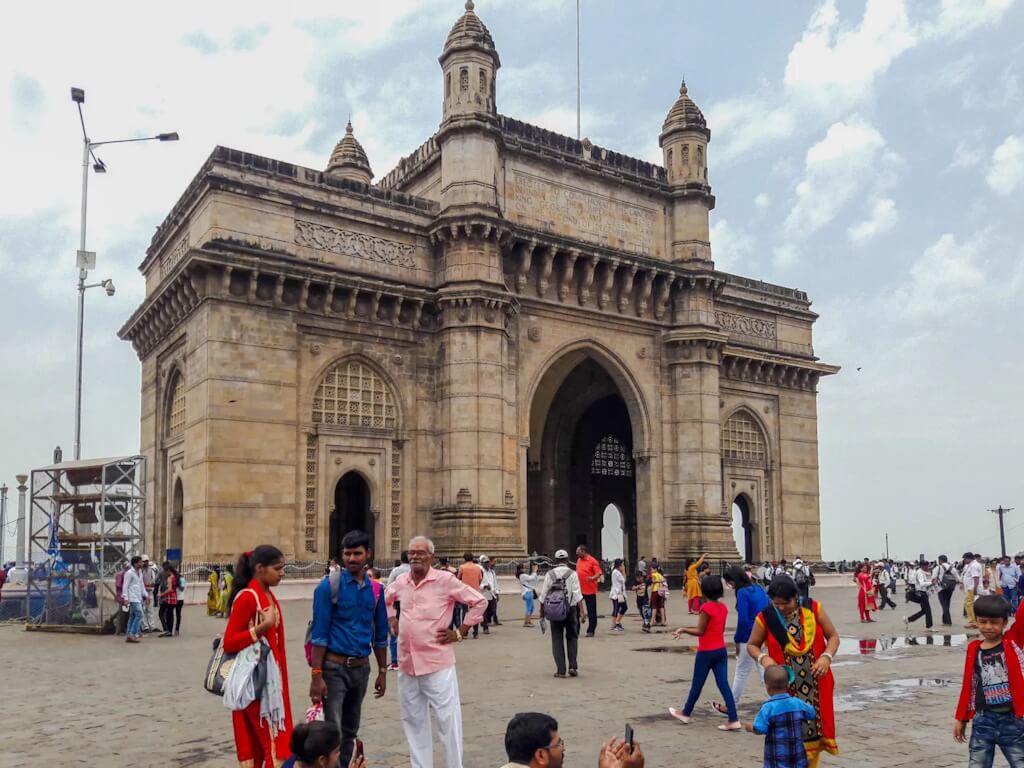
Cover Photo: Gateway of India, Mumbai. Credits: Pexels