
The year 2025 can hardly be remembered for thoughtfulness and compassion it brought to how our cities are built, how their natural areas are protected, and how the trajectory of future urban development was cast. If anything, the year is closing with the disastrous judgments that allow the mighty Aravallis to be sliced and blasted off after they were reclassified as ‘not hills’ and nearly 46,000 of the 60,000 mangroves in Mumbai’s northern tip to be hacked to facilitate the construction of the coastal road. Of course, the Air Quality Index in Delhi and most other cities remained in the ‘severe’ to ‘hazardous’ category for weeks, untimely rain and unprecedented floods swamped cities large and small, and rising heat made life and livelihoods precarious for millions. What do we expect to unfold in our cities in 2026?
At Question of Cities, given our focus on nature and people, we have a short wish-list: Make cities liveable and affordable for all, urgently. This, necessarily, means nature-led development of cities, a structural shift from the build-more model now widely used across cities, centering people in plans, and consciously making neighbourhoods inclusive with people’s participation. You have read us on these and related themes. So, we reached out to people to ask what they would like to see in their cities in the coming year.
‘Put ecology first in governance, communities must play a larger role’
Dr Harini Nagendra, Director, School of Climate Change and Sustainability at Azim Premji University, and acclaimed author, Bengaluru
“It’s a cluster of issues but we are not looking at the role of nature in the city. There’s air pollution because there’s too much traffic and construction, that’s related to all the trees being chopped, the city is focused on private – not public – transport, there are no lakes and trees to absorb the pollutants or reduce the heat, no parks and public spaces in the new parts. It’s all related, essentially the fact is we are not prioritising our lakes, parks, public spaces of nature.”
“Solutions, of course, are a process. Bengaluru has been divided into five zones under the Greater Bangalore Authority. It may be an opportunity and a challenge. But ecologically, Bengaluru can’t be five zones. While there can be more opportunities for local governance, putting ecology first in governance also requires communities to play a larger role in the development around them. On the other hand, if everything is local, how do we account for the fact that lakes and waterways are interconnected, even trees and biodiversity are interconnected, air pollution moves across boundaries. So, we need polycentric or multi-level governance.”
“Simultaneously, you have to strengthen local communities to have a say in community development while ensuring coordination at the highest level. We have ward committees but they are not functioning well or are captured by vested interests. They must have representation across all sections. Perhaps think of, as my economist colleagues have suggested, a National Urban Employment Guarantee Scheme with young graduates working as interns with elected representatives. Over the long term, this would help the city but, in the short term, it’s very difficult.”
‘Struggles for spatial justice, the right to a different kind of a city’
Shweta Wagh, urban conservationist, Associate Professor at the Kamla Raheja Vidyanidhi Institute of Architecture and Environmental Studies (KRVIA), Mumbai
“The main problem facing the city is that it is being shaped by real-estate interests, rather than in the interest of common citizens, and this is exacerbating the divide between better-served and under-serviced parts of the city. Broadly speaking, this problem manifests in four ways—infrastructure projects and planning increasingly prioritise elite interests over basic services and needs of all; large-scale urban renewal in the form of redevelopment with little consideration of the social or ecological consequences or the cumulative impacts on the city’s infrastructure and environment; projects fragmenting urban ecosystems and destroying livelihoods of resource-dependent communities with urban ecosystems not adequately recognised in the city’s development plans; and climate action or environmental protection are piecemeal superficial measures offered as substitutes for deeply inequitable development and large-scale environmental degradation.”
“Mumbai has become an enormous construction site but what is being built serves the interests of real estate and infrastructure promoters rather than people or the environment. The way ahead is firstly to reform the city’s planning system; we need to reinstate the role of planning as “environmental decision-making” that emphasises public goods and public interest. From fisherfolk and Adivasis who are resisting the commodification of their resources, to slum dwellers demanding better quality of life, to citizen groups resisting the privatisation of public goods such as transport, healthcare, and education. These are all struggles for spatial justice and a right to a different kind of city: one that frames new kinds of relationships and claims over the urban commons; one that ensures safe and adequate living conditions for all; where decision-making is participatory and rooted in environmental science; where public land is used to create public goods and amenities; and where access to housing, basic services, and infrastructure is a right, not a privilege.”
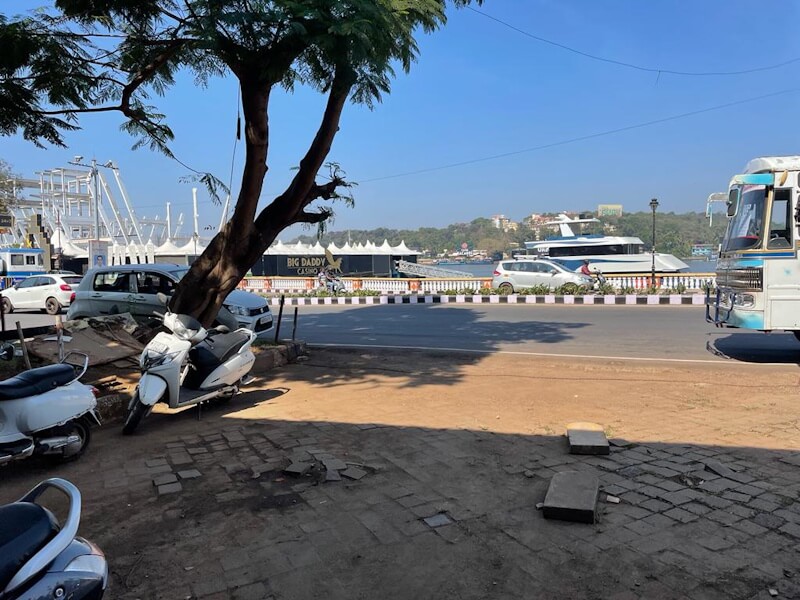
Photo: Wikimedia Commons
‘Protect wetlands, agrarian fields, waterbodies and khazan systems as critical infrastructure’
Tallulah D’Silva, Panjim-based architect and founder of ‘architecture t’
“Panjim has many woes. The loss of tree cover is evident on its spinal 18th June Road and the constant paving of areas like Patto, the casinos are a sore sight, the pollution of Mandovi River where dolphins, mullets and the white-bellied sea eagles struggle to share space is high. Crime and late-night brawls are frequent in the old residential quarter, the old springs are no longer accessible. With the increase in Floor Area Ratio, over-concretisation and spurt of high-rises in low-lying areas have resulted in flooding. Uncollected garbage in corners and the rising number of private cars are choking this once quaint and walkable Pearl of the Orient.”
“Panjim needs empathy. It’s a beautiful coastal city with mangrove forests and the unique khazans (ancient human-made flood management system) on its riverine edges. These living landscapes with saltpans, sluice gates and interconnected saline water channels need to be conserved. A tree policy that can help protect and restore Panjim’s green cover. It will cool the city from the heat island effect and would be a joy for seniors and children. If the casinos are removed and small shuttle boats introduced for locals to commute, the biodiversity of the river will have a chance to renew. This will allow local fishing communities to return to their river for fishing. Outline Development Plans must be drawn to protect wetlands, agrarian fields, waterbodies and khazan systems as critical infrastructure. Limit new roads and promote pedestrianisation. Panjim is small, isn’t that beautiful?”
‘A stronger vision of urban justice is the need of the hour’
Avinash Chanchal, environmental and climate justice campaigner,
presently Deputy Program Director, Greenpeace South Asia, New Delhi
“Delhi faces environmental challenges throughout the year. Missing in these discussions is that Delhi is a city of workers, millions of informal workers and women migrant workers, most without secure housing. They build and sustain the city but remain largely invisible in policy and planning; they are also most exposed to climate impacts. The city is becoming increasingly unequal and unjust. Workers across the city point out that labour laws meant to protect them have been steadily diluted. The earlier versions were inadequate as well.”
“So, what we need is a stronger vision of urban justice – minimum wages, basic livelihood protection, healthcare, public facilities including drinking water, protection in heat and floods. For this, Delhi needs a coordinated and worker-centred approach, not merely advisories issued under GRAP where people are asked to stay indoors, use air purifiers and wear masks which are all inaccessible to the working class. Public health infrastructure must respond to air pollution as a public health emergency.”
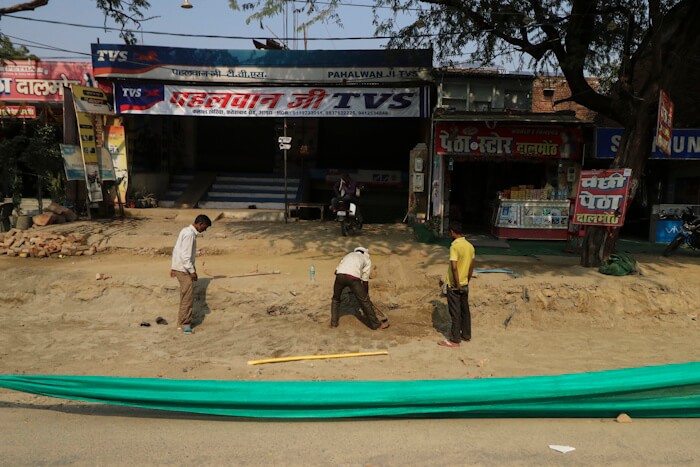
Photo: Wikimedia Commons
‘A holistic urban water policy needed to revive the Yamuna’
Bhim Singh Rawat, South Asia Network on Dams, Rivers and People[1]
“There was hope with the new government, after Prime Minister Narendra Modi hailed it as ‘Yamuna Maiya,’ that the river’s governance would improve. Protecting and restoring the river should not be subject to which party forms the government but should be the constitutional duty of whichever party is in power.”
“Yamuna needs its flowing water back but the government has done exactly the opposite by funding dams upstream to deprive the river of its very essence. Before the monsoon retreated, the river again swelled unusually, reclaiming the parts of its abused and grabbed floodplains, especially behind the riverfront and beautification projects. Crores spent on ‘beautification’ were undone by the river floods but the government is back with the misadventure of floodplain privatisation and commercialisation. This is not the way a river is ‘cleaned’. Instead, we need to have a holistic urban water policy but I fear that the same cycle of events and decisions will unfold next year.”
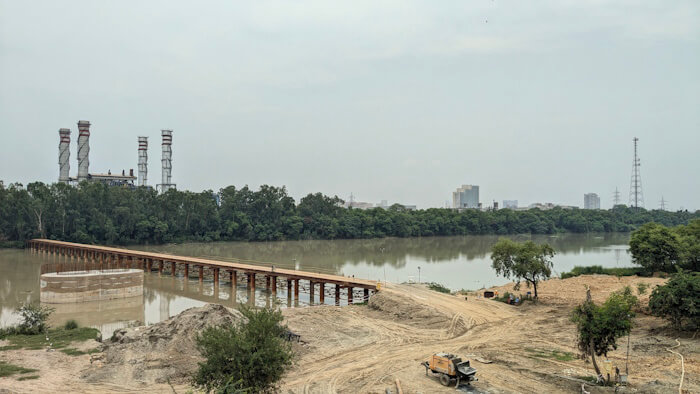
Photo: Umer Ahmed
‘People’s protests and political change needed to protect natural areas’
Stalin D, environmentalist and legal campaigner, Mumbai
“If you look back over the last decade, except the Save Aarey protests, there were hardly any notable agitations by people and the government or its agencies always managed to get away. But it is so encouraging to see that in the later part of 2025, people realised that they were being fooled and have come out on the streets for the environment. This is the first sign that people have woken up and they won’t let the government get away easily. The Aravalli protest is a classic example. The fact is that the Supreme Court opened up the Aravalli and then the government stopped. They have not considered the ecological impacts. So, people have realised that we cannot rely on the courts any longer.”
“When I say the courts, I do not mean all judges; there are many who are strong and committed, willing to uphold the law and the Constitution, but a significant portion of the judiciary today is with the government to destroy the environment. In fact, they are not even giving the chance to find proper mitigation measures. So, in that sense, I am happy that the people have started protesting. Whether the protests will really translate into change of power, that time will tell. Eventually, everything is political. But people’s protest must not lead to governments greenwashing.”
“People have understood correctly that natural areas are being opened up for plunder. Now, Gen Z has easier access to information and realise that they are going to be left holding the baby. So, they want to save it. Political change is needed and people should revolt in larger numbers; by revolt, I mean protest peacefully but make it known to governments that they are custodians, not owners, of natural areas and they should not destroy what does not belong to them.”
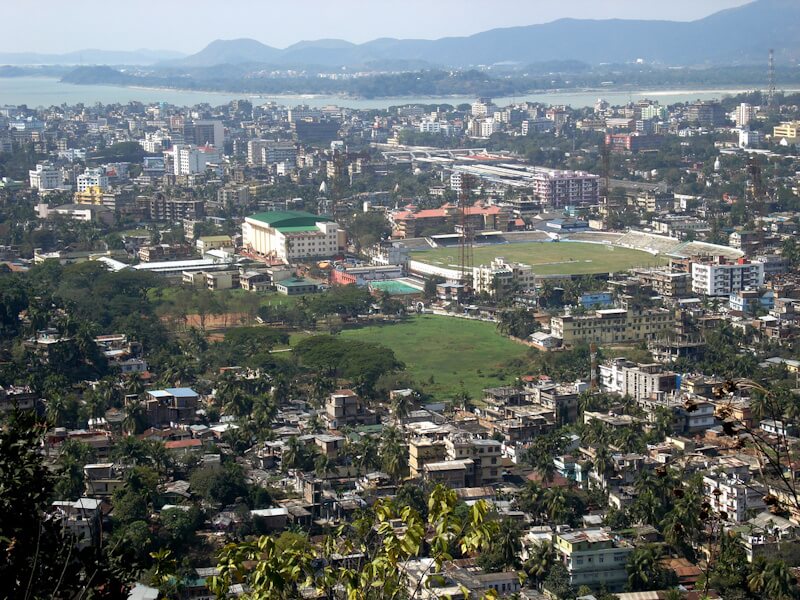
Photo: Wikimedia Commons
‘Rethink urban surfaces, removing concrete, prioritise public transport and data’
Barasha Das, environmental journalist, Guwahati
“Guwahati is described as the gateway to the Northeast. Its planning and development, therefore, must account for the wider region that depends on it. When Guwahati comes to a halt, it disrupts the lives of its residents and thousands of others too. The current governance and planning frameworks do not adequately recognise this responsibility. The city experiences repeated traffic slowdowns every day. A road network of roughly 1,500 kilometres has over 13.38 lakh registered vehicles in which private vehicles account for nearly 85 percent. On the annual flooding, there are two interlinked realities – large parts of wetlands, ponds, and low-lying areas or natural sponges which historically absorbed excess rainwater have been built over; and climate change is reshaping rainfall with increasingly brief but intense rain events resulting in sudden runoff. Today, over 60 percent of Guwahati’s land is built upon and concretised leaving little space for natural absorption which intensifies flooding.”
“Public transport must be given priority. While building a robust and reliable public transport system is a longer-term process, the immediate requirement lies in effective traffic management. Long-term flood mitigation must include modern, well-designed stormwater drainage systems. For immediate relief, relying solely on government-led interventions may not be sufficient; people will have to ease the pressure on the drainage system. Rainwater harvesting and the de-concretisation of open ground can significantly reduce surface runoff; harvested rainwater can be reused. Incorporating rooftop gardens or green roofs can further slow runoff and allow rainwater to replenish groundwater. Guwahati must rethink urban surfaces, removing concrete where feasible and adopting semi-permeable alternatives.”
“Equally important is the need for better data. Rainfall has become increasingly localised. Without neighbourhood-level data, it is difficult to design drainage systems. Expanding the network of weather stations would allow climate adaptation strategies to be grounded in real, city-specific evidence. Finally, city planning must go beyond a limited circle of planners and engineers to include insights into local geography and lived experiences of experts and long-time residents. Creating space for these voices can lead to technically-sound as well as socially-grounded decisions. Investments in sustainable infrastructure and everyday civic discipline could go a long way. Addressing the rising air pollution requires a multi-pronged and carefully-enforced approach of stronger dust-control norms at construction sites and regular monitoring, expanding green cover alongside improved solid-waste management.”
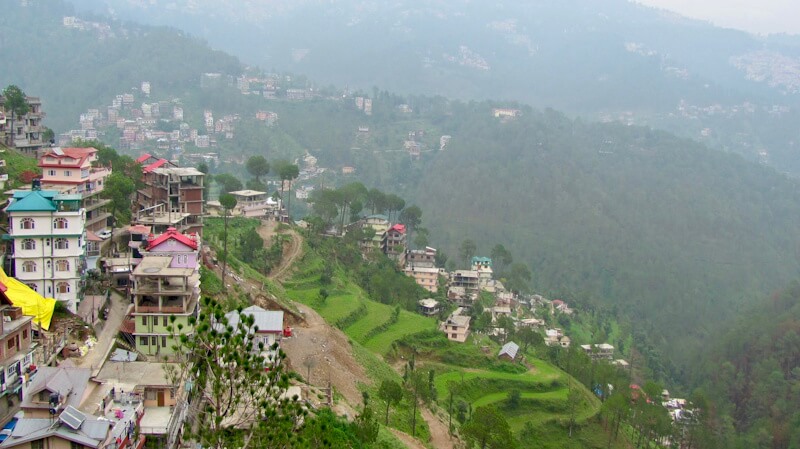
Photo: Wikimedia Commons
‘Shimla must remember that it is a mountain city’
Sonali Gupta, LL.B., Ph.D (UCLA), lawyer and anthropological archaeologist,
Founding-Director and Founding President of the Himalayan Institute of Cultural & Heritage Studies (HICHS)
“Shimla feels like a city in the middle of an identity crisis. Some mornings, if you blur your eyes and ignore the deodars, you could have woken up in an overbuilt Delhi colony that got mistakenly perched on a 45-degree slope labelled as hill station.
The deepest crisis is of water; the springs and catchments that quietly fed Shimla are drying, diverted, or sealed under somebody’s driveway. A hill city cannot treat its water like a metro. Then, there is the ground which no longer feels entirely sure of itself; landslides are not distant spectacles but turn up in living rooms and playgrounds. Reinforced concrete has been poured into almost every ledge, often over nallahs and natural drains. Visually, the town is turning into something like Lego Land on a landslide; green belts have been nibbled away. The colonial core was designed around proportion, views, and sky. Today’s aesthetic is giant, ugly water tanks on roofs crowned with metal spikes so monkeys do not sit.”
“The first solution is more about memory than technology: Shimla must remember that it’s a mountain city, not a plains city on stilts. That means learning to say ‘enough’ before the hillside says it for us. On water, we have to protect and regreen recharge areas, stop building over springs and along nallahs, revive naulas and baoris instead of treating them as quaint photo ops, make rainwater harvesting mandatory and audit every large roof. On land, we need to slam the brakes and adopt genuinely geology led building code, which means no construction on natural drains, clear no-build zones on unstable slopes, and realistic caps on height and density in core and greenbelt areas.
“Tourism has to move from ‘more’ to ‘enough’. A serious carrying capacity policy is needed. Himachal can consciously plan satellite towns with ecology in mind so that Shimla is no longer the only cupboard where every file and festival is stuffed. Heritage and climate action, too often treated as separate, need to work as one. Protecting old neighbourhoods and buildings means also protecting the trees, slopes and drainage patterns that keep them upright. Shimla’s problem is not that it has changed; it’s the illusion that concrete and optimism can override altitude and ecology. Its answers, therefore, lie in restraint. Every time a deodar avenue or an old stone drain survives a plan, we quietly improve our chances in the next extreme rain.”
‘Scrap coastal road plans, halt the destruction of Mumbai’s mangroves’
Natasha Pereira, environmental activist, mangroves campaigner, Mumbai
“I noticed that a lot of people in Mumbai do not know how mangroves are useful or how they protect the city from worse floods. I have experienced this. So, at Carter Road (Bandra) and at Charkop Kandivali, I show pictures of how the city will flood if these 45,675 of the 60,000 mangroves are cut, with High Court permission, for the extension of the coastal road. I also find that people talk a lot but do not come out. Last Sunday, our protest had hardly 20 people but there were so many messages and people talked big on the internet. I would like people of Mumbai to come out like people did in Nashik to protest the hacking of trees in Tapovan for the Kumbha Mela accommodation or in Rajasthan to protect the Aravallis. Hopefully, with awareness, more people should join. We cannot rely on the court to safeguard nature anymore.”
“The proposed cutting of the 45,675 mangroves must be immediately halted and the Versova-Dahisar Coastal Road project must be cancelled. Resources should be used to explore environmentally non-destructive transport solutions. Climate resilience and coastal protection must be prioritised. Similarly, the eco-sensitive zone plan for the Sanjay Gandhi National Park, which will bring more construction at the cost of the forest and waterbodies, must be scrapped. People are fearful about coming to the ground but we have to be fearless now, we cannot be keyboard warriors. If the mangroves and forest go, we cannot recreate the complex web of ecosystem services they provide.”
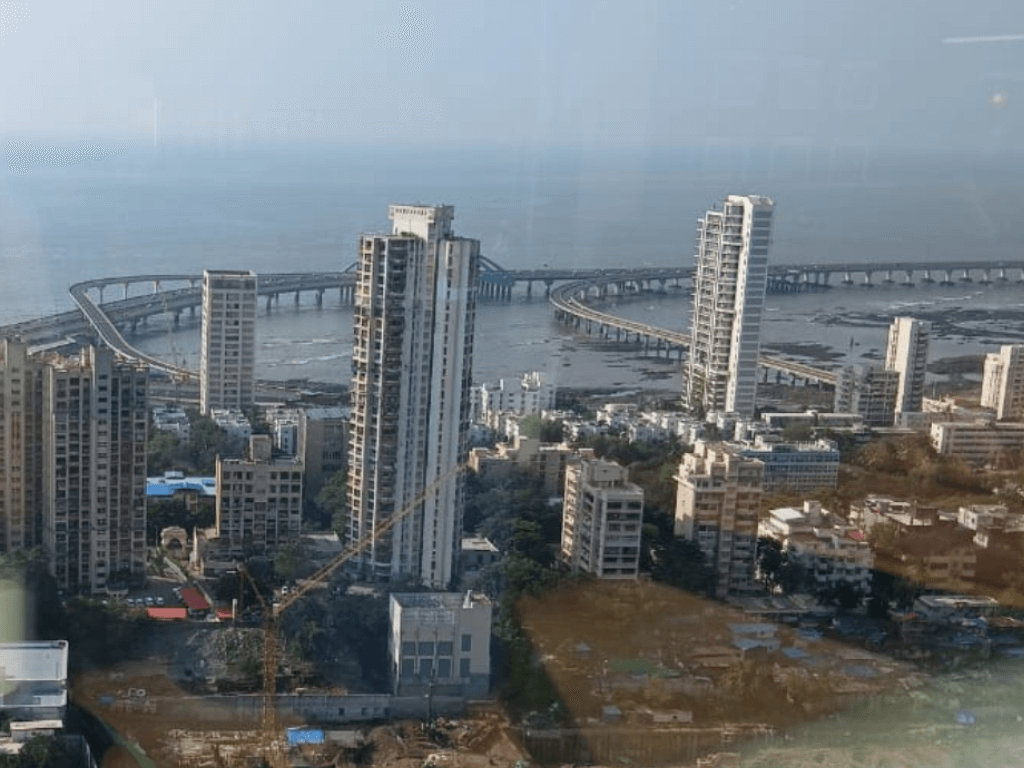
Cover photo: Megaprojects exacerbate the divide between better-served and under-serviced parts of Mumbai. Photo: Nikeita Saraf