
In March, as the days became warmer and the Government of India passed the Transgender Persons (Protection of Rights) Amendment Bill, 2026, several people came out in the streets across the country to protest its provisions. The Bill amended the Act of 2019, moving away from self-identification towards mandatory medical certification; limiting legal recognition for trans individuals; only including communities like kinner, hijra and aravanis; using terms like ‘eunuch.’
The nationwide protests,[1] collectively reflecting the pain and anger felt by trans and queer communities, discussed the urgency of the government to not only have the Bill passed in both Houses of the Parliament but also ensure the President’s assent. The law, as protesters all over India argued, is morally regressive and legally violates the Supreme Court NALSA judgment of 2014[2] which guaranteed the right to self-determination of gender.
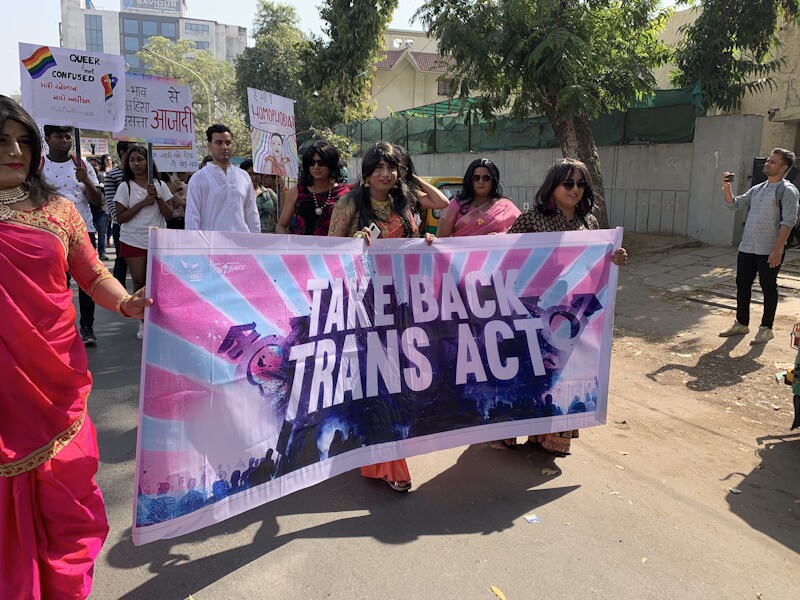
Photo: Saachi D’Souza
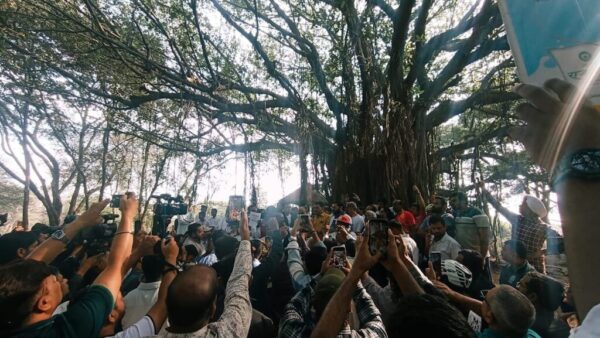
In Panjim, Goa, protesters gathered at Azad Maidan on this issue. But the protesters, whether in Goa or elsewhere, were not just protesting the latest assault by the government; they were also responding to public perception and prejudices about their identities. There is a constant moral panic that positions them as suspicious, even as their most basic needs continue to remain unmet. In Panjim, Goa, as Madhu Gupta, a trans woman, despaired about the oft-made accusation that hijras kidnap children, “Tell me, we don’t have housing, if we had to kidnap, where would we take them?” The remark drew laughter from the crowd but also revealed a pattern shaping public opinion about transgender communities.[3]
The protests made headlines but were unable to stall the Amendment or push back on the government’s intent to amend the Act in ways that hurt trans communities. Yet, the protests did something whose impact may be visible in times to come—they brought transgender, queer persons and allies together in larger numbers, in a fight for collective rights, thus making them, and their fight, more visible in society. Whether the movement reduces hostility or changes perception is yet to be seen, but given that several sitting opposition Members of Parliament made strong statements against the Bill, often citing[4] research by trans activists and scholars, a sliver of change may yet happen.
Why the law is a problem
The Amendment, since its inception in 2019, places the state and its ill-equipped arms, like the medical boards, in a position of great power over trans individuals by creating a system where gender has to be administratively decided and legible instead of being personally determined. The state is meant to recognise a person’s identity and issue proof of it; in this case, the state assumes the power to determine and verify it — a point that legal scholars have repeatedly made. Legal recognition of transgender persons now depends upon district authorities where they must apply.
The law has only intensified the oppressive conditions that trans communities face in their daily lives. As noted by the Human Rights Watch,[5] the revised framework narrows the definitions of transgender identity. It introduces stricter verification mechanisms, which require a recommendation from a medical board before the District Magistrate issues a certificate of identity. Critics argue that this not only undermines self-identification but also expands the number of institutional points at which transgender persons must justify their identity. Commentators[6] warn that the law adds layers of administrative control without strengthening enforceable protections in areas such as housing, employment, and healthcare.
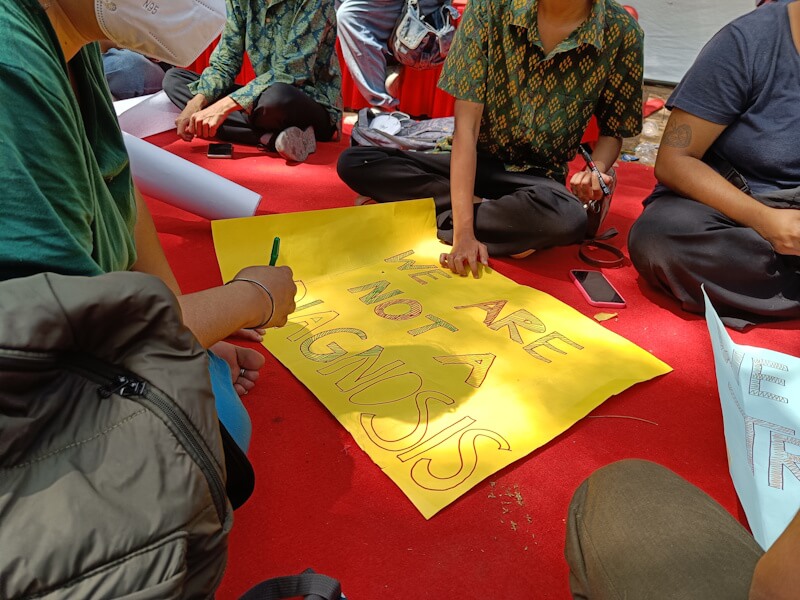
Photo: QoC File
What emerges from these critiques is not only a legal problem but an urban one. The law does not operate in isolation; it is enforced and enacted through the everyday systems of the city—documents, rental agreements, hospital forms, police encounters and more where the transgender communities come into contact with the state apparatus. Each of these becomes a checkpoint. In practice, this means that gender is not simply lived, or even once verified by a medical board, but repeatedly tested and perhaps mocked at.
“A transgender person will have to prove themselves in front of a medical board. Now the truth is, the only way to do that medically is to remove your clothes to show what surgeries you’ve done and what you haven’t. How can you measure someone’s trans-ness this way? How can a District Magistrate decide someone is transgender by looking at them? It is violating,” said[7] Katyayani Saksham in an interview with Khabar Lahariya, who works on digital rights with Internet Freedom Foundation.
On February 27, 2026, a transman studying at SNDT Women’s University won a historic[8] legal battle when the Bombay High Court directed the university to amend his academic records to reflect his current gender identity. Despite having changed his Aadhaar and PAN, the university had refused to do so. The judgment was a big win for transgender people who routinely encounter such hurdles. Certification processes are replete with delays and inconsistencies—not to mention shame—leaving individuals without their identity documents. The law, through stricter verification mechanisms, intensifies the existing gaps.
The impact on life in cities
The effects are mostly felt in housing. Transgender persons across cities have reported being denied rental accommodation due to stigma, perceived immorality, or simply because their documents do not “match”. Many years ago, V, a transgender scholar in Delhi, recounted a year-long battle to find a rental accommodation. In one instance, a broker saw them from afar and refused to walk into the apartment with them because of the narrative that all trans people are prostitutes.
The housing problem has forced many to rely on community networks, including hijra gharanas or informal arrangements with the kindness of friends. These networks have historically provided both economic and social support, but they have also been disrupted by urban redevelopment, rising rents, and policing practices. Activists say that the amendment’s vague references to “inducement” or “influence” would cast suspicion on everyday acts of support towards transgender individuals, potentially exposing not only them but also those who help them.
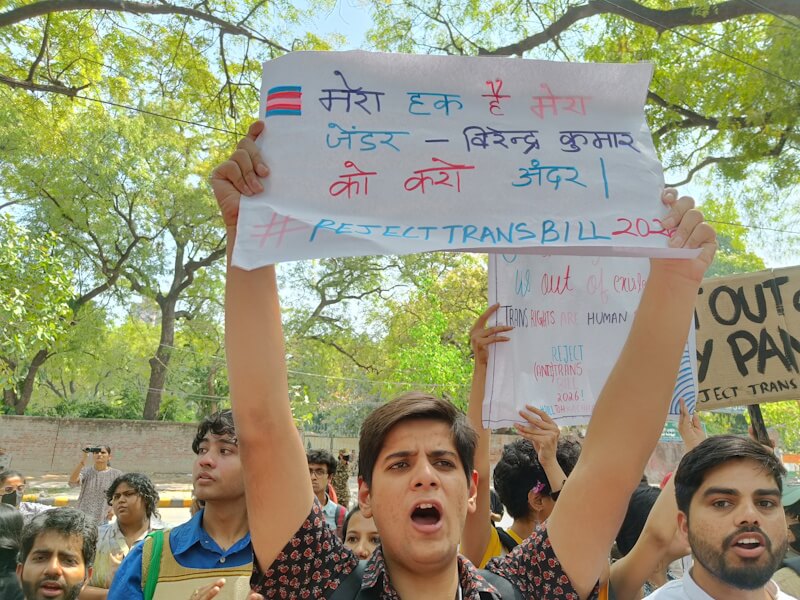
Photo: Qoc File
Madhu Gupta’s question points to the law worsening the structural absence of support. Housing is not a peripheral issue; it is central to the ability to access all other rights but it remains largely unaddressed in the legal framework for trans communities. But it is not the only one.
Urban infrastructure reflects similar exclusions. For instance, most public toilets are mostly designed along binary gender lines, leaving transgender persons to navigate spaces where entry itself can provoke confrontation. Public transport systems operate through informal codes of behaviour that penalise gender non-conformity. The current practices of policing only further reinforce these norms. A recent[9] audit in Bengaluru shows how not a single public toilet that was part of the survey had facilities for transgender users, which forces them into unsafe spaces.
Not unique to transgender individuals, these dynamics affect women, queer people, and others marginalised whose presence in public space is seen as disruptive or transgressive. Though transgender individuals experience gender policing more intensely due to the visibility of gender variance and the lack of institutional protection. The amendment intersects with these conditions by formalising the need for legibility.
When gender must be verified through medical processes or documents, it reinforces the idea that it is fixed, and can be externally validated. This logic goes beyond bureaucratic procedures; it shapes everyday interactions. It informs how landlords assess tenants, how employers evaluate applicants, and how police interpret presence in public space. The city turns into an administrative machine—it is not only a site of movement and interaction but a network of systems in which identity is checked, recorded, and either accepted or rejected.
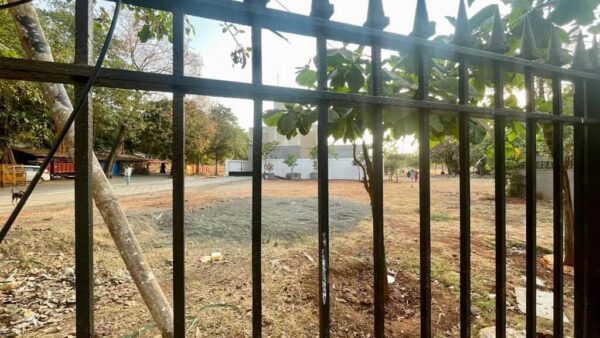
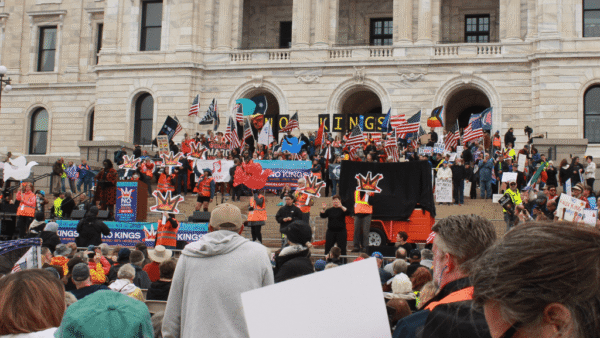
At the same time, cities are also sites where these systems and processes are challenged. The massive agitations against the Amendment were seen in Delhi, Mumbai, and smaller cities like Panjim where protesters voiced their concerns and were heard by some sections at least. The protests occupied the streets, parks, and public squares—spaces where transgender presence is otherwise unwelcome, regulated or marginalised. Occupying them during the protest turned these spaces into expressions of dissent but also spatial interventions for the communities.
Long road ahead
Smita, a Dalit, trans and non-binary individual, recalls an earlier demonstration in 2013 against the criminalisation of homosexuality. During this protest, people gathered had dressed up, and could be seen sharing moments of laughter rather than being outrightly ‘angry.’ This, onlookers found difficult to digest and even remarked, “Yeh kaisa protest hain?”
This captured the discomfort with any kind of protest that does not align with expectations of seriousness or victimhood. They say: “Choosing to show up fully as ourselves, and refusing to be reduced to victims and survivors is a protest too.” This also tests the socially acceptable language and tools of protests of angry slogans, belligerent marches, gravitas with little room for humour and joy.
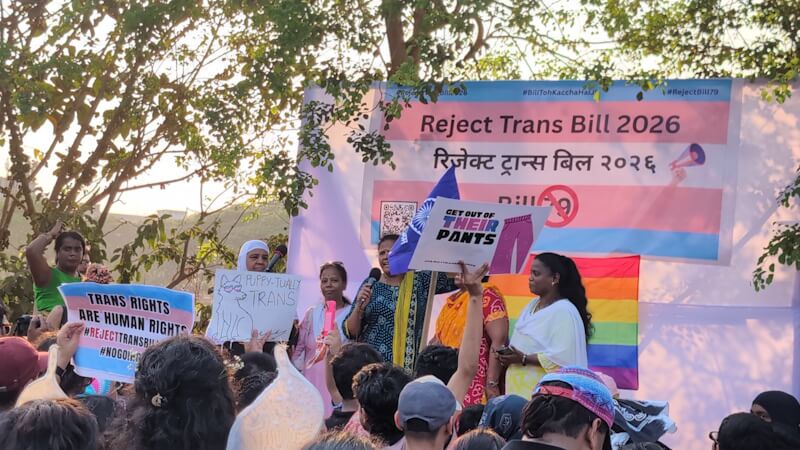
Photo: QoC File?
This highlights the tension between visibility and control in urban spaces. While it is true that cities allow a degree of anonymity, even for transgender persons, and facilitate collectivisation or forming a community, which is not always possible in rural settings, the visibility is also often conditional. Trans communities are only tolerated in specific contexts such as organised events like weddings; in daily urban life, their presence and negotiation with the city remain subject to regulation.
Between the law and lived realities
The Amendment arrives at the critical juncture where the existing systems of exclusion already decide which bodies are more legible, more accountable and more constrained than others. Legally, it has long been argued that rights must be accompanied by structural changes for them to be meaningful. As has been discussed in previous analyses of transgender rights, including commentary in JURIST[10], the tension between constitutional guarantees and trans people’s lived realities is mediated through institutions whose implementation is uneven.
We have seen this in the urban context, where access to rights is shaped by a combination of formal systems and informal practices. The ongoing protests indicate a refusal to separate these dimensions. Protesters on the streets are not only contesting the legal provisions but also the conditions under which they are living, or are condemned to live. They show how laws that increase verification do not necessarily increase access, and how recognition without redistribution of resources, leaves existing inequalities fairly intact.
At this juncture, the crucial question that emerges is not only whether the law recognises transgender persons, but how it positions them within the city’s framework and systems. Does it allow them to move through the city without a constant need to explain or does it increase the number of pain points at which they must, again and again, prove themselves?
For several, the answer lies in everyday experience. Whether it is being asked for additional documents, refusal of entry, or questioned by the authorities, they all create a pattern that is not always and immediately visible to others but is deeply felt in practice. These interactions also shape how the city is experienced, as one that demands constant negotiation. At the protest in Goa, Gupta’s words echo this: The question of material need, also the need to reframe the conversation.
Saachi D’Souza is a writer and editor based in South Goa, working across reportage, essays, fiction, and comics. Her work explores intersections of environment, memory, culture, and identity. She contributes to publications and platforms engaging with contemporary social and political questions. Her practice often moves between storytelling, research, and community-led cultural work.
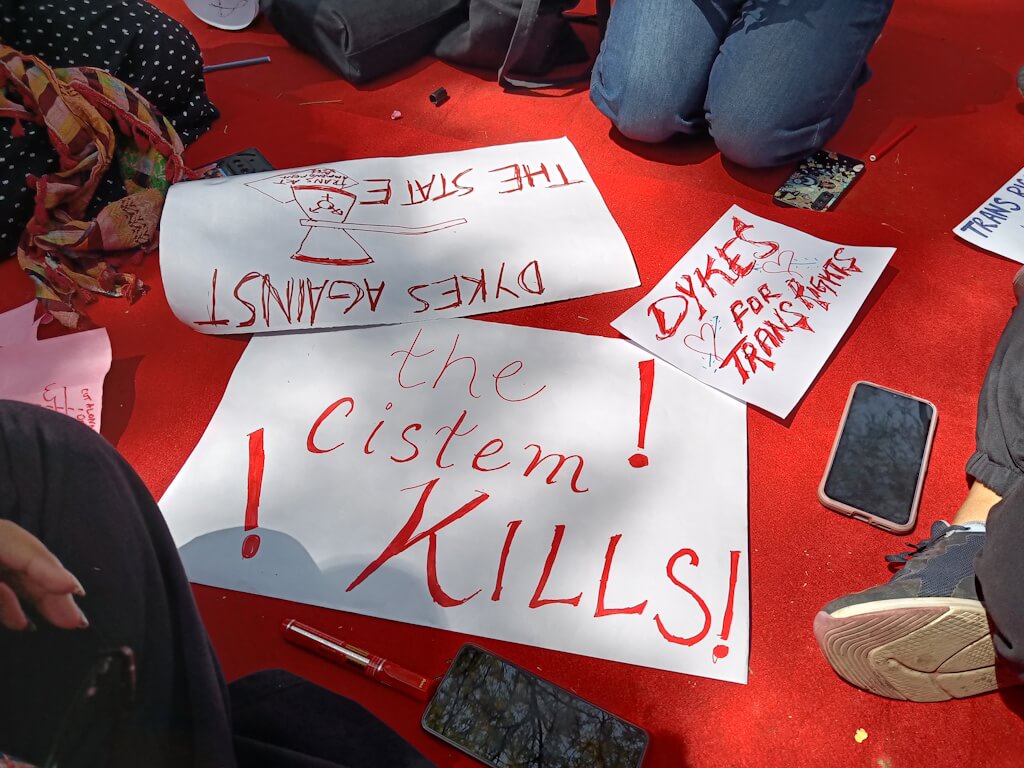
Cover photo: Visuals of posters from a protest for transgender people’s rights.
Photo: QoC File