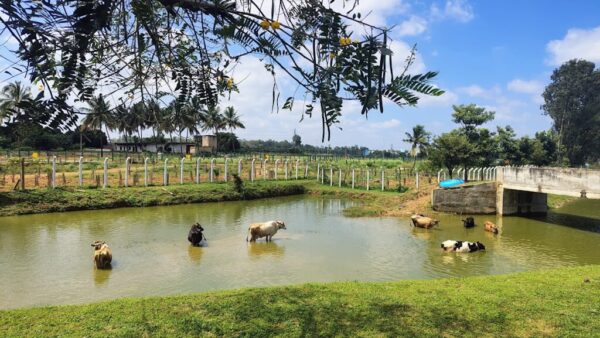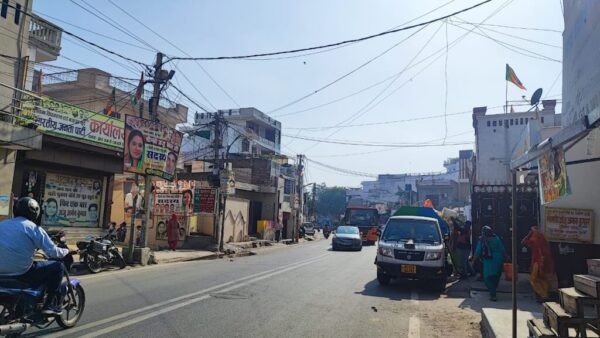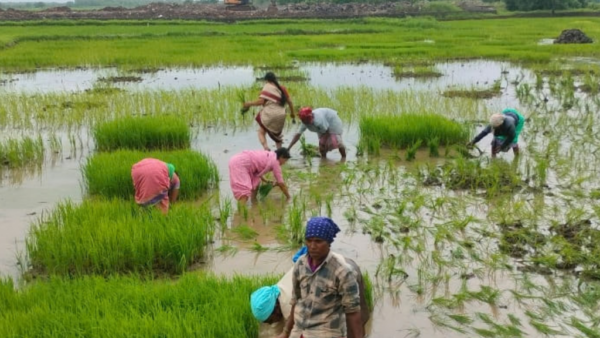


In Delhi’s complex relationship with the Yamuna, the river is seen as a resource or an obstacle. Master plans talk about managing it, channelising it, beautifying it or building riverfront projects, and floodplains marked as vacant land for potential exploitation. It’s a relationship of control rather than coexistence – and invisibilises the people. The interconnectedness between the river and the city is ignored.
The most disregarded are the people who have had a relationship with the Yamuna for decades – farmers, early settlers and traders, boatmen and divers, migrant slum dwellers and daily wagers. Many of them see themselves as custodians of the river — they read its moods and have lived with its floods. In the current framework of development, many of them are termed “illegal,” dispensable in urban planning, and burdensome in the construction of riverfronts, parks and infrastructure projects. Inevitably, evictions and demolitions follow.
Several settlements along the Yamuna like Mayur Vihar[1], Shastri Park[2], Bela Estate[3], Yamuna Pushtra[4] area, Chilla Khadar[5] have been demolished. In July 2024, the Delhi High Court itself ordered[6] the clearance of slums along the Yamuna on the grounds that they pose a threat to the river’s ecology. Ironically, riverfront ‘development’ does not invite the same censure or action. As the Yamuna Action Plans and redevelopment projects run into thousands of crores, the river remains as polluted as ever, but its banks are steadily emptied of people rupturing decades of a close relationship.
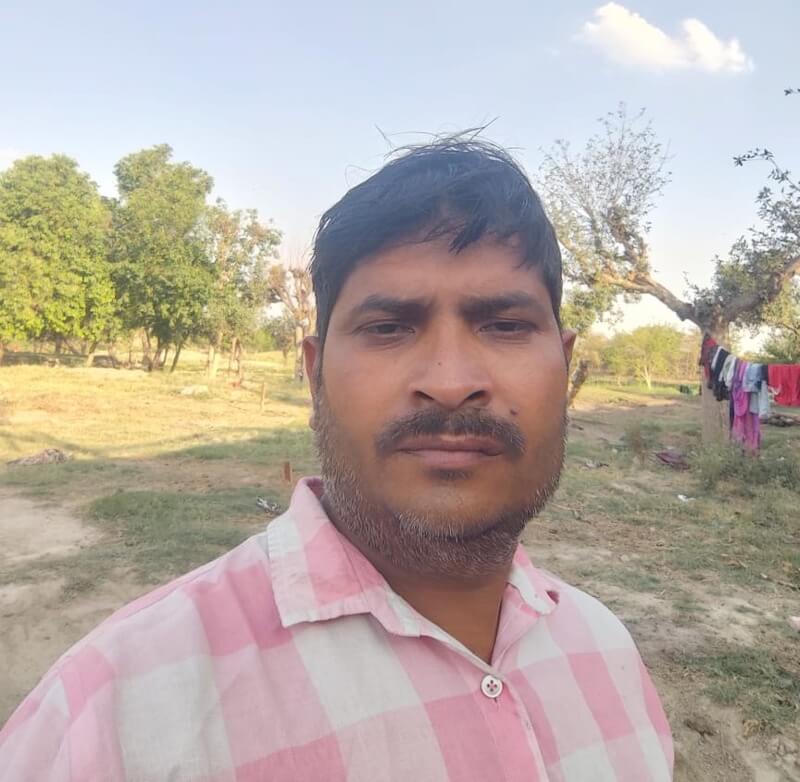
Deepak
Teacher, lived in Yamuna Khadar slum, Mayur Vihar, was Yamuna Khadar Slum Union’s media coordinator
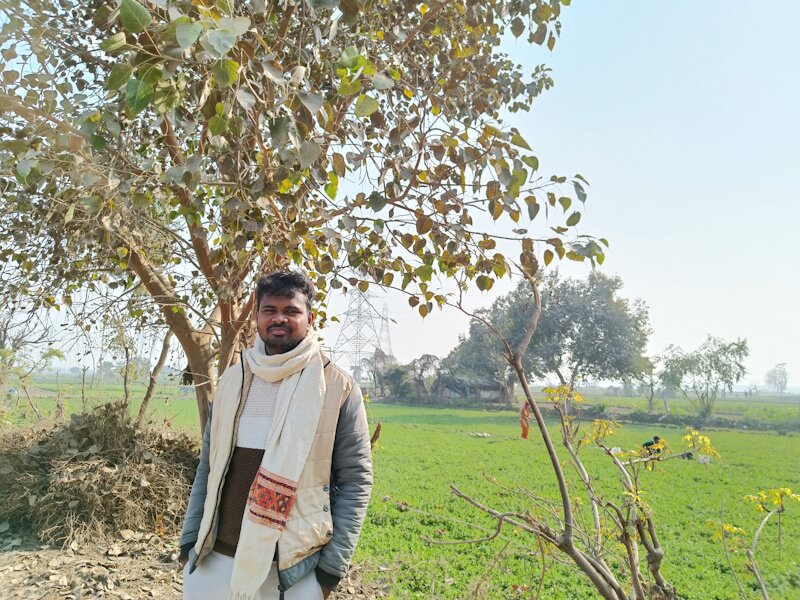
(In 2024, residents of Yamuna Khadar filed a petition[7] in the Delhi High Court seeking resettlement before eviction but the court ruled that the petitioners were not entitled to rehabilitation.)
“I graduated from Jamia and Delhi University, and work with an NGO to teach students. I am preparing for government exams. I run my own organisation, Manav Vikas Foundation. Some of us were running a school called Yamuna Khadar Pathshala with around 300 students up to Classes 11 and 12. We functioned for 6-7 years but it was demolished by the Delhi Development Authority (DDA) last January. We tried relocating it to Chilla but it was too far for the children. Eventually, we ensured that they were all admitted to nearby schools.”
“Farming is done throughout Yamuna Khadar. People are not illegally occupying land. Farmers pay rent and usually get yearly leases. The media calls this ‘illegal occupation’ but, if anyone is at fault, it is the landowners. After Independence, much of this land was turned into long-term patta leases; many were later terminated after giving compensation. Most landowners have taken compensation but still collect rent from farmers.”
“Since the 2024 court order which allowed demolition, people have lost hope. Fighting legal battles requires money; there’s only so much people can do. The government claims crops use polluted Yamuna water. No one does; people use groundwater through borewells. If we used Yamuna water, the crops would not survive, it’s so polluted. Also, the common belief is that slums here are polluting the Yamuna but the pollution comes from industrial waste and drains where sewage treatment plants do not function properly. We have heard that a biodiversity park may be built here. A better solution would be to allow large-scale farming, plant trees to protect both people and the environment. The people living here for decades are the real guardians of this land, they planted most of the trees.”
Sunil Sharma
Priest, Head of Yamuna Ghat Panda Association, Yamuna Bazar

“I am a proper ghatwala, the fifth generation here and my grandson is the seventh. Our family has been here for about 125 years. This is my ghat and also one of Delhi’s historical ghats. Around 1880, the British government built the iron bridge. Even then, this ghat existed. Before that, our ghats were near what is now Rajghat. It’s an ancient place on the Yamuna but after Mahatma Gandhi’s samadhi was built, the name came to be associated with him. The British government settled us here. It took us 20-30 years to secure our rights. In 1930, the government gave permission for 32 ghats, from Nigambodh Ghat to the iron bridge. All the steps and buildings you see today were constructed according to the plans; nothing is illegal.”
“For us, Yamuna is a holy river, Yamuna Maa. Over the decades, it has become a drain. The government has spent huge amounts to clean it but nothing has worked. Jitna paise Yamuna pe kharch kiye, itne mein toh nayi Yamuna aa jati! (What has been spent might have given us a new Yamuna!). Every political party makes promises but no meaningful work has been done. Till the mid-70s, the river had abundant clean water. On Sundays and festivals like Jeth Dussehra and Kartik Purnima, it was almost like a Kumbh Mela with thousands of people. As the Yamuna deteriorated, visitors reduced. Still, people come because Hinduism has 16 sanskars, from birth to death, all connected to rivers and many performed on the ghats. So, livelihoods flourished here but pollution has affected us deeply. Earlier, people also swam and wrestled in the Yamuna. National-level swimmers and wrestlers emerged from here.”
“The aarti at Vasudev ghat, known as Qudsia Ghat till 2024, is popular. It happens mostly on Sundays and Tuesdays, with priests in boats. At this government-run ghat, entry requires a ticket except during the aarti. We are in a legal dispute with the DDA which claims ownership of land but it did not even exist when we were settled here. We have documents including the British government’s approved maps. We want the government to clean the Yamuna and help us during floods. There are three departments in a 50-metre stretch – Flood and Irrigation Department, DDA and MCD – but no one takes responsibility. All the government needs to do is shut the drains.”
Heera Lal
Farm Labourer, Bela Estate
(Bela Estate in East Delhi has faced repeated eviction drives by the DDA since 2006, with significant demolitions of homes and farms in 2022-2023.)
“The first demolition took place in 2006 when the population was dense. At that time, officials said they had removed a jhuggi cluster that had come up along the highway. Back then, there were at least 2 lakh jhuggis between the ITO Bridge and the Loha Bridge. In 2006, people were supposedly rehabilitated and given plots in Bawana. But out of 2 lakh jhuggis, plots were allotted to only about 20,000 and nearly 80 percent of the people left out because their survey was not done or they lacked documents. At that time, farming was also happening here. This land was given to the Delhi Improvement Trust in 1956 which later became part of the DDA. The DDA leased nearly 10,000 acres to farmers.”
“We have gone to court. Many here still live under constant threat of eviction, many are unemployed. Delhi is a metro city where people come from villages to earn a living, yet many are forced to live like this. Where do they go? The farmers here have land documents dating back to 1913. The trees along the Yamuna were planted and nurtured by farmers but, today, they are accused as encroachers. We have met multiple Lieutenant Governors and governments, and are passed between agencies like a football. Officials say a park is planned and we must leave, but there is no rehabilitation policy. We have Aadhaar cards, ration cards, voter IDs, bank accounts, and gas connections. The government got votes from here but now claims the settlement is illegal. Courts listen only to the government, not to us, despite all documents and proof.”
Abhinandan
Boatman, Yamuna Ghat, Yamuna Bazar

“Earlier, thousands came to the ghats every day. Now, very few do. I have been working as a boatman for the last 10-12 years; I can see the change. These days, most come only for shoots. People who came to enjoy nature don’t come anymore. Even photographers say the Yamuna looks completely changed. My work is seasonal. From February through summer, I work as a swimming coach in nearby pools.”
“Neither the government nor our MLA/MP listen to us. We clean the mud ourselves. My uncle spent Rs 20,000 to Rs 30,000 to clear the ghat and expose the stairs. When we approach the authorities, we are sent from one department to another, between the Floods Department, the MCD, and the DDA. You can see how much mud is lying here. When the water level goes down in winter, we remove it ourselves. If the ghat is full of mud, where will people stand? Mud does not pollute the river. It comes and goes; sometimes, forms an island. The Yamuna is a pure river but it’s slowly turning into mud.”
Motram
Farm labourer, Yamuna Khadar, Mayur Vihar

“The DDA has been harassing us for the last 4-5 years. We grow vegetables like radish, spinach, fenugreek, cauliflower and onions. The government claims that crops grown here are harmful because of pollution. But we don’t use the water from the Yamuna. We have borewells. And we consume these crops. If they were unsafe, would we feed them to our own families?”
“There is a Yamuna Khadar Slum Union; it has existed for years but nothing much has changed. There were court cases but no outcome. Evictions happen suddenly, sometimes without notice. People inform each other, sometimes a notice is put up. The government has given compensation to the landowners; they take rent from us and compensation from the government, but we are left with nothing. We are told that this land may be turned into a park and trees planted.”
Neha
Farm labourer, Yamuna Khadar, Mayur Vihar

“When the floods came last year in June-July, everything was washed away. Our jhuggi was broken – the DDA demolished it in the morning, then it rained heavily and the flood came after that. Somehow, we managed to be safe with just the clothes we were wearing. We are still struggling. We have been living here for 10-12 years. My father has lived for nearly 50-60 years. People say the DDA may come again in March and we keep thinking what to do.”
“Our crops were destroyed. Because of the cold, the crops are not growing at all. We are sitting idle. We are thinking of returning to our villages but our children are studying here. If we leave, their education will suffer. We have two children, and my sister-in-law has five. There is a government school nearby where the children study. People are being harassed and facing constant problems. We came here to survive but we endured a lot, we are still enduring. Now we hear that a park may be built here but no one has told us anything clearly, they are not listening to people.”
Ganesh Pandit
Boatman and daily wage earner, Yamuna Ghat

“People find me through social media. I have facilitated film and video shoots here including for Paatal Lok, Jamnapar, Asur and Fukrey. I started with regular boating but, since the last eight years, arranged model shoots, dance and music videos. A photographer named Nimit Nigam shared photos from here that went viral. Photographers started coming, for small shoots, then for pre wedding shoots, model shoots, and food shoots. As the Yamuna became more polluted and fewer worshippers came, shooting crews became the main visitors because of whom tea sellers and hotels got customers, and boating survived. People are now becoming boatmen because they see us earning but this work is not easy. This is dangerous work.”
Rashid
Diver, ITO Chhat Ghat

(The Yamuna’s informal divers work without safety equipment or any official recognition. Despite being routinely called by the police to retrieve bodies from the river, they remain outside the system, their work precarious and home vulnerable to demolition.)
“I earn between Rs 100 and Rs 250 a day. On rare occasions, it goes up to Rs 500. For this, I spend hours wading through the river. People, while worshipping, throw coins into the water which collect along the riverbank over time. I cannot stay in the water for too long because it is very cold, so I gather the coins from the edge. We get different kinds of work. Once, I was asked to help teach children how to swim, but I refused. The boys do not listen to us. We save people’s lives, but the number of such incidents has reduced. Today, more people die in train accidents than in the river.”
Vijay Pal Patel
Farm labourer, Yamuna Khadar

“I have been living here for nearly 60 years. I came from Uttar Pradesh and took up farming here. Earlier, farming gave better returns; the profits are lower now. Rents have increased sharply. Even when farmers earn less, rent is never reduced but landowners keep raising it. Most of this land belongs to the DDA, and because of this, cases have been going on for years. Around 15 years ago, when the bridge was being built, a judge from Delhi visited and the villagers told him that this soil was good only for crops, not for construction. The bridge was built about five years ago and then collapsed, proving our people right.”
“The truth is that this land is meant for agriculture. The government has plenty of land elsewhere for buildings. Here, lakhs of people depend on the vegetables grown. That’s the real value of this place. Yes, the water of the Yamuna is polluted. If people consume it, they will fall sick. If clean water flows, the vegetables can be grown safely. Most of the pollution comes from sewage released by the city. We are only labourers, so any compensation for losses goes to the landowners and they don’t always share. So, when land is destroyed, we are left behind with nothing.”
Vinay
Shop worker, ITO Chhat Ghat

“I come here every week to do prayers and puja at ITO Chhat Ghat. Every Saturday, thousands of people come to worship Bhairon Baba. This place is also associated with Kalka Mai. I work at a water cooler shop, but, no matter what, I come here every week. People come to the Yamuna for their faith; they take ritual dips. For us, the river is a mother, Jamuna Mata. The pollution in the river is not because of the people here but because of the sewer lines and drains that flow into the river. The government has installed turbines to clean the water but we are not sure how effective they really are. When we offer flowers and garlands to the river, it does not pollute the Yamuna. These offerings decompose and the aquatic life consumes them.”
Ankita Dhar Karmakar, Multimedia Journalist and Social Media in-charge in Question of Cities, has reported and written at the intersection of gender, cities, and human rights, among other themes. Her work has been featured in several digital publications, national and international. She is the recipient of the 4th South Asia Laadli Media & Advertising Award For Gender Sensitivity and the 14th Laadli Media & Advertising Award For Gender Sensitivity. She holds a Master’s degree in English Literature from Ambedkar University, New Delhi.
Cover Photo: Siberian gulls migrate to Yamuna Ghat, Yamuna Bazaar. Credit: Ankita Dhar Karmakar