
What would it take for millions of people across India to rise in resistance, wherever they are, and express themselves in the language of defiance on issues that impact their lives such as inflation, unemployment, destruction of the natural habitats and more? Who are the people, the few who gather and raise a voice, and the many who do not protest? Which protests by what kinds of people are heard in the corridors of power and which are ignored, deliberately or otherwise?
These and similar questions demand reflection as protests happen across India. A few seem to influence governments while many face retribution or simply dissipate. In the long arc of time, socio-political research would have to grapple with such questions to understand New India, coax answers out of protest data, shed light on the nuances, and present a cogent understanding. Till then, protesters and engaged observers of protests can attempt an articulation.
Protests have indeed been happening in our towns and cities even if it is not apparent—from Panipat to Surat, employees of large corporations have been demonstrating for their rights;[1] thousands of gig workers have held localised protests against oppressive work conditions;[2] farm workers and anganwadi workers have been making themselves heard repeatedly in different cities;[3] activists and environmentalists have unceasingly drawn attention to the deliberate destruction of the natural environment, protesting the cutting of trees across acres to the Great Nicobar Project,[4] the Vadhavan Port,[5] and the damage to wetlands;[6] academics have voiced their concerns; even, a solitary man has been living atop a mobile tower in Patiala to demand stricter laws against the desecration of Sikh religious objects.[7]
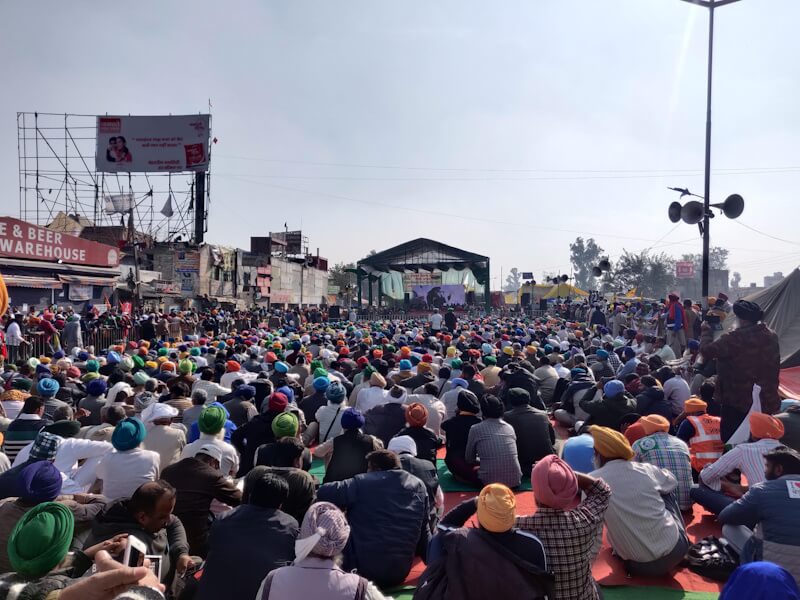
Photo: Wikimedia Commons
These and other protests may have a token presence, if that, in the media and popular discourse. Large sections of the media have erased the difference between news and propaganda to devote resources to the latter. Popular discourse is more obsessed with IPL matches or propaganda-fiction films than the state of affairs in the country, economic and ecological. Still, protests have been happening.
Of course, there are internal conflicts among protesters from differences of opinion, demands, strategies to divided sectoral interests and long-term plans. Even protesters of the same cause are hardly a homogenous lot. But tiding over differences, people have been gathering, collectivising, finding common ground, and articulating their concerns. Their protests have not all landed the same way.
It is fair to assume that given all other factors, the diversity of class, caste and gender among similar diversities, make a difference to the outcome of protests.
The masses, public, citizens
As a sociological description, mass comes from the Industrial Revolution. Among others, Gustave Le Bon, the leading French polymath best known for his work The Crowd: A Study of the Popular Mind, in 1895, described the mass as a collective that is capable of being moved by collective impulses, where the newspapers acted as catalysts in socio-political life leading to the formation of opinions.[8]
‘The public’ is a more specific sociological construct to describe a group of people who may be dispersed but share a common interest and show a range of opinions over an issue. It follows that there is hardly one public opinion. In fact, sociologists like C. Wright Mills articulated the idea of ‘primary publics’ to mean people who are united or allied on a cause with varying opinions about it, and a part of different ‘primary publics’ at the same time in their lives.[9] A doctor is also a taxi user and a parent of school-going children—three ‘primary publics’. The ‘people’ is the most general of terms. And ‘citizens’ legally belong to a nation-state, exercise rights, have freedoms and liberties, and discharge certain responsibilities.
Protests as mass movements are, of course, the most desired and most impactful. Those that are not mass movements, loosely called people’s protests, have many ‘primary publics’ joined in a cause – farmers against the farm laws, women or LGBTQs for gender justice, workers for their rights, environmentalists for the environment, well-heeled activists for their neighbourhoods, doctors for more public and affordable healthcare and so on.
But here’s the crux. They are not all received or perceived with the same gravitas; governments, various authorities, even the courts do not give them the same space or listen to them with equal attention. Which people are allowed to raise their voice, whose voices are heard, which protesters influence policies are determined by the prevailing political economy which, in India, has been lately driven by a mix of privatisation and majoritarianism.
Governments have turned reverse-discriminatory to appease the better-off and private czars, turning cities from manufacturing hubs with working class character to financial-trading centres with gentrification. In this new imagination of cities, the relationship between the political economy and protests is rarely examined.[10]
Mumbai’s examples
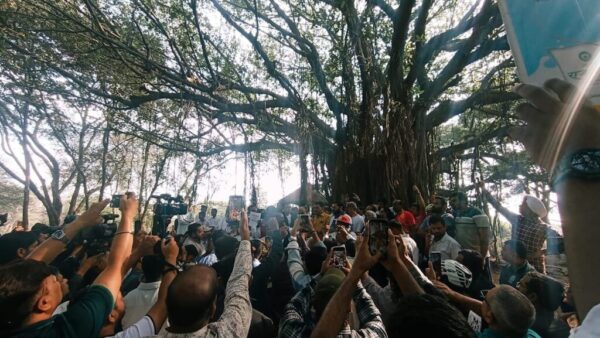
Take recent protests in Mumbai as examples. The Brihanmumbai Municipal Corporation (BMC) indulged campaigners and advocates, mostly well-to-do residents of south Mumbai, in their activism to create the Mumbai Coastal Forest on about 100 acres of land reclaimed from the sea for the coastal road.[11] It was described as a “citizen-led initiative”. Any initiative to introduce or expand green cover must be applauded, of course.
At the other end of the city, campaigners and activists, most of whom would describe themselves as middle-class people with day jobs, joined tribals in the Sanjay Gandhi National Park, to resist the BMC’s disastrous Zonal Master Plan which[12] would open two of the three eco-sensitive zones to construction. It was not ever described as “citizen-led” or an “initiative” to specifically protect 200 acres of the forest and oppose construction in most of the remaining 14,500 acres marked eco-sensitive. Activists had to petition several times, seek meetings, make detailed presentations to the BMC. Still, the Plan was approved in late March.[13]
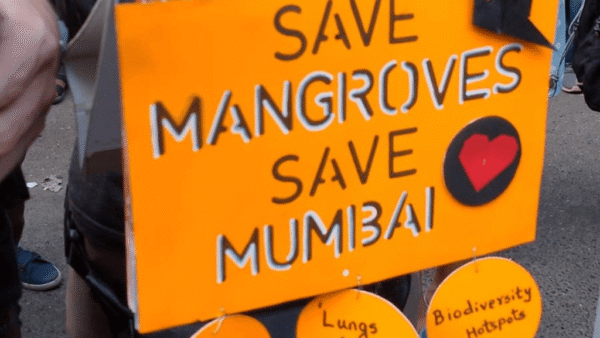
Why one set of campaigners to create a forest were received with warmth while another set protesting to protect the centuries-old natural forest were treated perfunctorily encapsulates the story. The situation is no different in the courts. The Bombay High Court recently slammed the BMC for allowing hawkers to encroach on public land.[14] It approved, without independent assessment, the slashing of 45,675 of the 60,000 mangroves across 256 acres for the Versova-Bhayander coastal road extension – public-funded road for use mainly by private cars.[15] How should the sanctity of the ‘public’ be understood? Similarly, it heard the pleas of upper-middle class residents of Powai to clear a slum in their neighbourhood but rejected the argument of 100 of the 650 families of the slums that they had been living there since 1987.
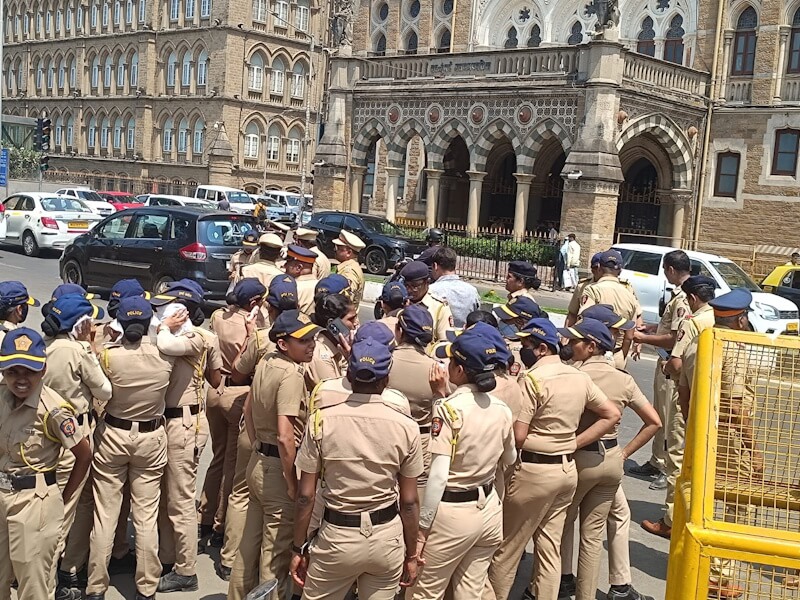
Photo: QoC file
In the imagination of a city as much as in the corridors of power, activists and protesters differ. There exists an implied legitimacy.
Powai residents are ‘citizens,’ their appeal matters. The slum dwellers are ‘encroachers’ whose tiny homes could be demolished in the middle of a raging monsoon.[16] In Delhi too, the High Court allowed or ordered slum demolitions in Madrasi Camp (Jangpura) in June 2025, in the 400-year-old settlement at Barapullah Drain, and earlier at Shakur Basti. Would these have been demolished if they were unauthorised high-rises housing ‘citizens’?
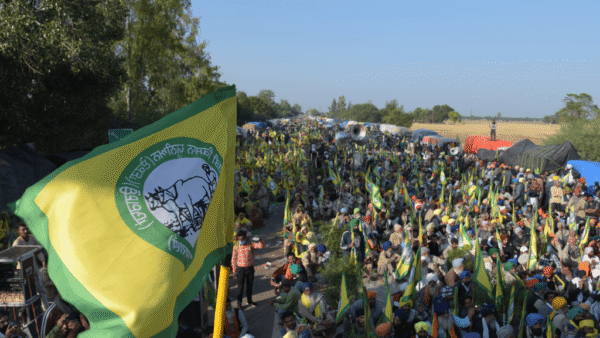
There is possibly an urban-rural fissure too. Remember that thousands of farmers had to march to the borders of Delhi[17] or flood into the heart of south Mumbai’s Azad Maidan for their concerns to be heard by governments.[18] The tribal communities protesting the surreptitious takeover of their land in the Hasdeo Arand forests for mining, from 2011-12 have hardly received support in cities.[19]
Some causes and protesters are clearly more ‘legitimate’ than others.
The force of the numbers
Would the numbers, protests as mass movements, matter? Indeed, massive crowds across different venues, united in a cause and expressing it all at once, carry unparalleled power in sending out a message to those in power. India’s freedom movement and the movement against Emergency are examples; workers’ demonstrations show this time and again. Large numbers matter.
In fact, the number of protests more than tripled between 2006 and 2020; successful protest movements tend to be large, non-violent, diverse, cohesive and occur at opportune times, studies show.[20] Some political scientists like Lisa Mueller, Macalester College in Minnesota, say the world is “experiencing the largest wave of protests in documented history.”
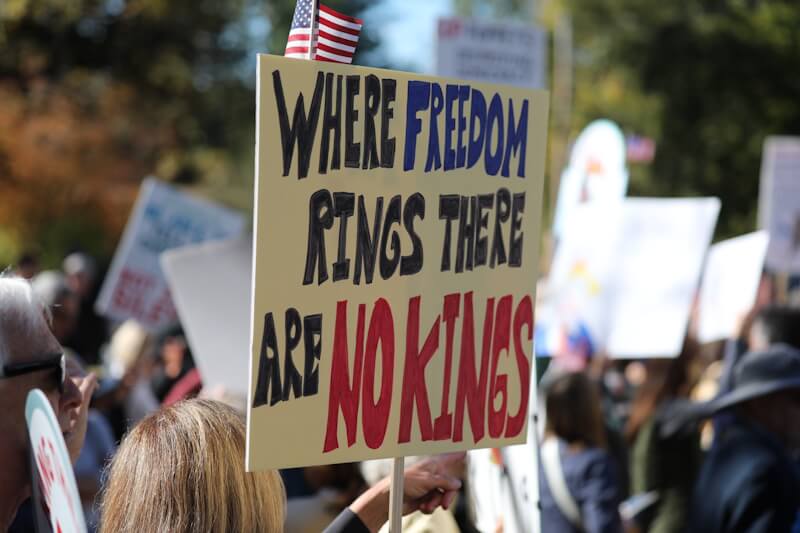
Photo: Wikimedia Commons
On March 28, there were nearly 3,000 to 3,200 protests—the largest in recent years—in the United States.[21] An estimated 9-10 million across cities and small towns flooded streets the same day, protesting the authoritarianism of President Donald Trump and the “war of choice”[22] with Iran, marking the return of the No Kings movement[23]. Two-thirds of the protests happened outside major cities, a nearly 40 percent jump from last June.[24] From iconic actors like Robert De Niro to the everyday people, all took to the streets in their communities. “Outside a high-rise assisted-living center in Chevy Chase, Maryland, elderly people in wheelchairs held signs encouraging passing cars to ‘Resist tyranny,’ ‘Honk if you want democracy’ and ‘Dump Trump,’” reported Reuters.[25]
The massive mass protests does not mean President Trump will end the war or turn more democratic. But it conveyed that many millions of Americans disagree with his decisions and will put their bodies on the streets to let him know that. Such mass protests rise above people’s identities, paper over fissures, and allow a community to take shape even if momentarily. Being in a community, as the axiom goes, means recognising the needs of other people as much as one’s own, and speaking up for everyone irrespective of differences. Because rights must be secured for everyone, justice is meant for all, and the power of a community is more than that of an individual.
As Audre Lorde, the self-described “Black, lesbian, feminist, socialist, mother, warrior, poet” said: “It is not our differences that divide us. It is our inability to recognise, accept, and celebrate those differences.”
The framing, the politics
How protests are treated also depend on how they are framed. Remember the feisty sit-in protest at Shaheen Bagh led by women against the Citizenship Amendment Act in 2019 framed and labelled as “anti-national”?[26] Or students in Delhi treated differently in 2016 and 2026 depending on the causes they advocated?[27]
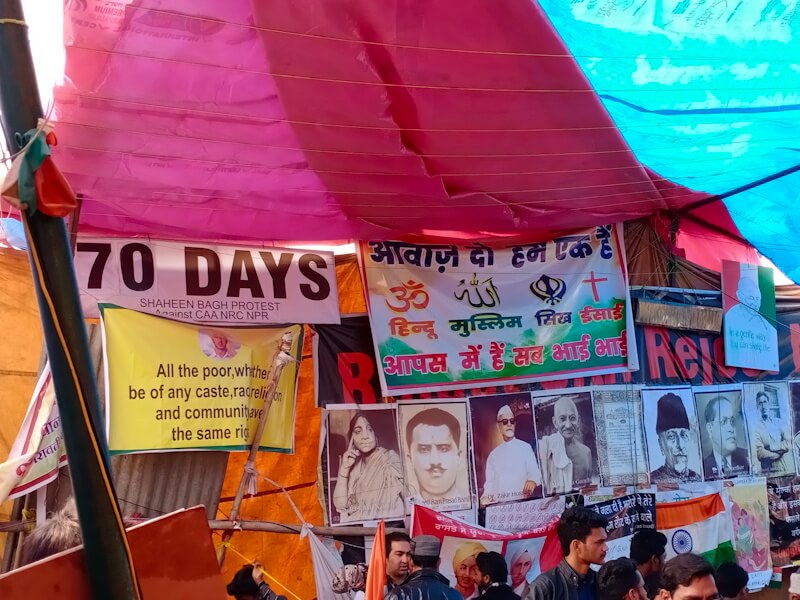
Photo: Wikimedia Commons
In the new imagination of the city, some people and some areas are seen by governments and the judiciary as more significant than the rest. The framing matters because the official response follows that perception. Some protests are welcome; others not so.
Demonstrations such as workers jamming the streets are framed as disruptive to public order or welfare while others such as majoritarian religious processions are perceived more kindly with the local police clearing roads for them.[28] It is difficult to ignore the political context in which protests and movements are framed and labelled. The former are labelled trouble-makers or, worse, anti-development ‘Urban Naxals’ while the latter as desirable defenders of tradition.
This framing and labelling diminishes the power of a protest. People’s protests carry the potential for great transformations; they “trigger critical junctures, producing abrupt changes…some protests – or moments of protest – act as exogenous shocks, catalysing intense and massive waves of contention,” this study[29] found.
Lately, social media has held as much influence as the mainstream or popular media in framing and labelling protests and protesters. Social media and online activism gives the illusion of a movement but the possibility of transformation or “critical juncture” comes from the feet on the ground. Despite the challenges, people have to come together, recognise the politics of exclusion in cities, collectivise and protest for social and environmental justice.
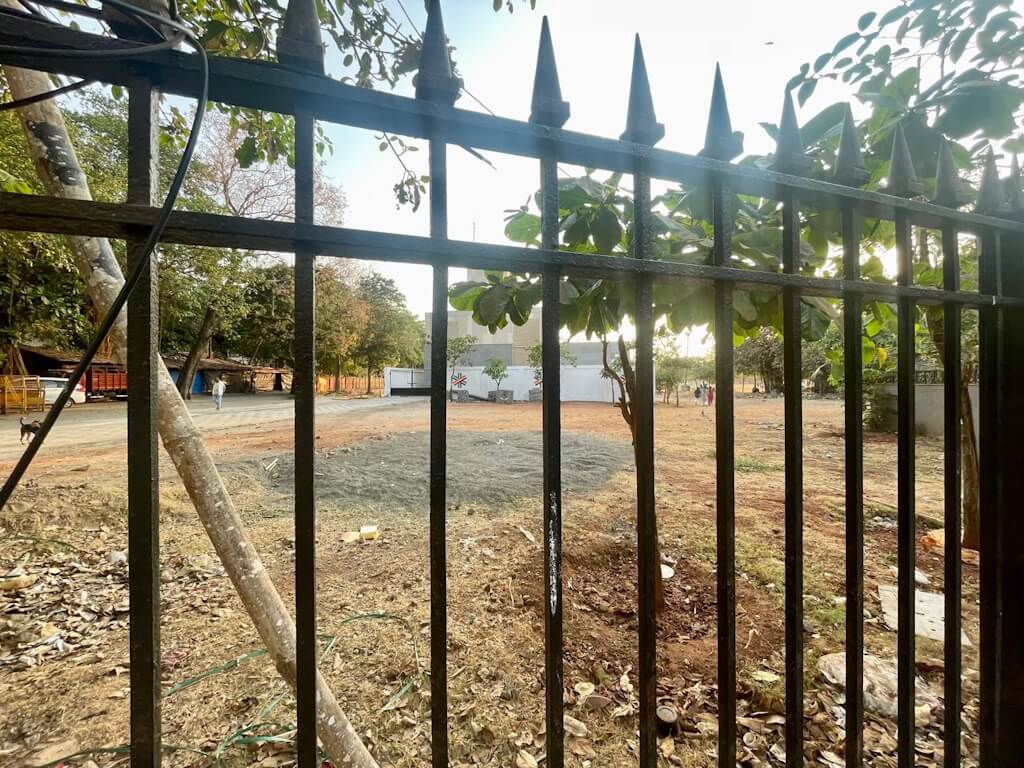
Cover photo: Azad Maidan in Mumbai where protest spaces has been barricaded.
Credit: QoC File