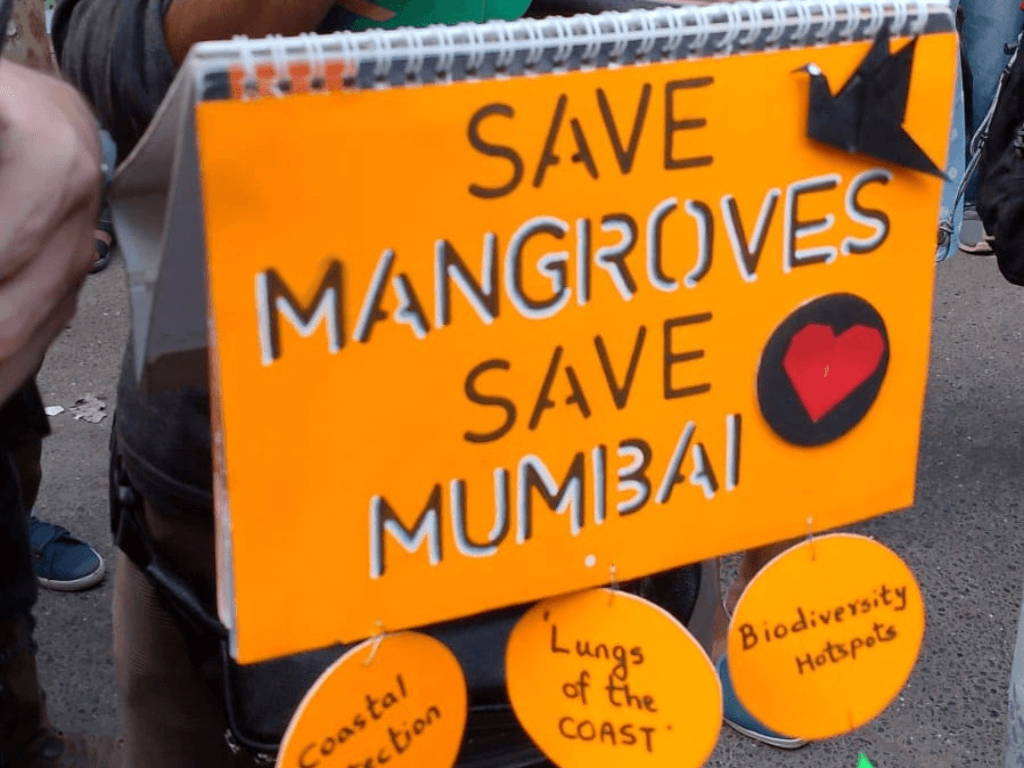

Last Sunday evening, hundreds of people gathered in Versova in Mumbai in a peaceful rally against the planned cutting of mangroves to make way for the Rs 22,000 crore Versova-Bhayandar coastal road extension. The project demands that two-thirds of the 60,000 mangroves across 256 acres will be slashed; 9,000 of them permanently and the rest to be transplanted later. This environmental assault was proposed by the Brihanmumbai Municipal Corporation (BMC) and approved by the Bombay High Court.[1]
Environmentalists know that this means deliberately making the city—especially the western suburbs around Versova-Bhayandar—vulnerable to floods besides destroying irreplaceable bio-diversity.[2] Alarmed by the plan, they and other Mumbaikars across professions and persuasions banded together to build the Save Mumbai Mangroves group. That Sunday, hundreds gathered to sing songs, raise slogans, perform and watch a street play, all to protect the mangroves.[3] And made sure that their voices reached far and wide through a relentless social media campaign.[4] Some of them, armed with studies and official documents, sat with BMC officials to point out lacunae and inconsistencies. “There are alternatives but we are asking why is the road even needed,” asked one. There was no answer.
This is the latest but not the only movement for the environment. Across Mumbai and Thane, groups have been coming together to resist ecological damage brought on by the authorities in the name of development. Millions in Mumbai and Thane see tall towers, broken roads, garbage at street corners and general chaos. Then, there are these others who see the forests, hills, rivers, creeks, lakes, mangroves, salt pans, open areas, and all the abundance that nature has. And strive with every sinew in their bodies to protect it. They use all the tools of resistance that generations have perfected. They challenge the authorities including the Maharashtra government and the powerful municipal corporations, building collectives and networks along the way. From PILs, social media campaigns, human chains, sit-in protests, nature walks, songs and art, they pool in skills and collectivise, forge networks and educate others along the way. They can be aptly called nature’s warriors.
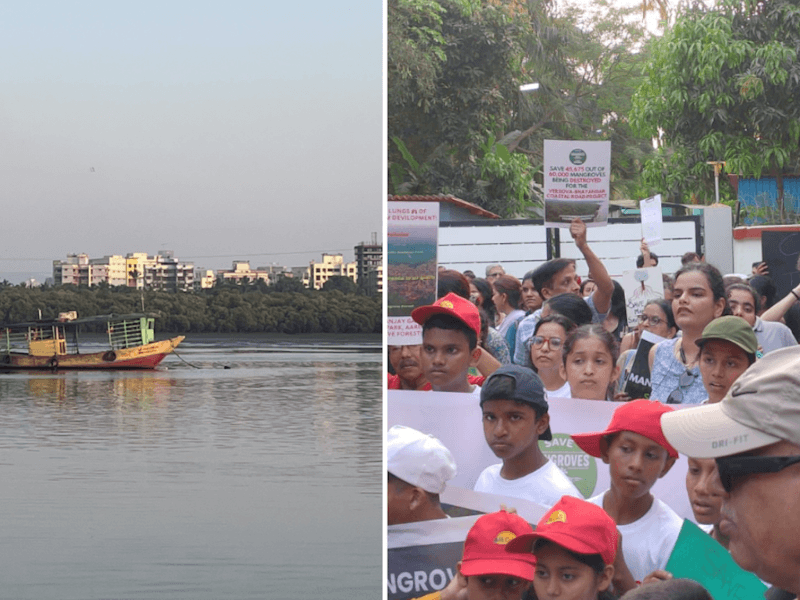
Photo: Save Mumbai Mangroves group
Mumbai has seen spirited action on at least three fronts even as the old environmental battles continue—activists pushed back on the BMC’s plan to open two of the three eco-sensitive zones in the Sanjay Gandhi National Park[5] for construction; 102 architects and planners questioned the plan to construct an underground car park and overground recreation facilities at the Mahalaxmi Racecourse,[6] writing to Chief Minister Devendra Fadnavis and Municipal Commissioner Bhushan Gagrani; and people joined forces for the mangroves. The group fighting to preserve the integrity of Aarey is still at it[7] —silently registering their presence for the greens every Sunday for years.
Thane, usually less on the national radar than Mumbai but no less endowed with natural wealth, has its share of warriors too rising to protect that side of the SGNP.[8] Others have banded for the Yeoor Hills—a verdant range protected legally but has construction, both of slums and plush bungalows. The movement to preserve Thane’s lakes have seen many join hands.[9]
In Navi Mumbai, groups have been fighting for years to preserve the wetlands.[10] And new coalitions are being formed down to Vadhavan where plans for a massive port and related infrastructure threatens the fragile ecology of the Konkan coast.[11] In between, housing activists, student groups and slum dwellers of Jai Bhim Nagar in Powai joined hands to protest the latter’s eviction[12] — a case that brings out, once again, the class tensions in Mumbai where the upper-middle class demands its pavements and ‘clean’ surroundings at the expense of the poor who work and live there.
Each a different issue, different groups, and different parts of the Mumbai Metropolitan Region (MMR) coming together as nature’s warriors to demand answers from the authorities.
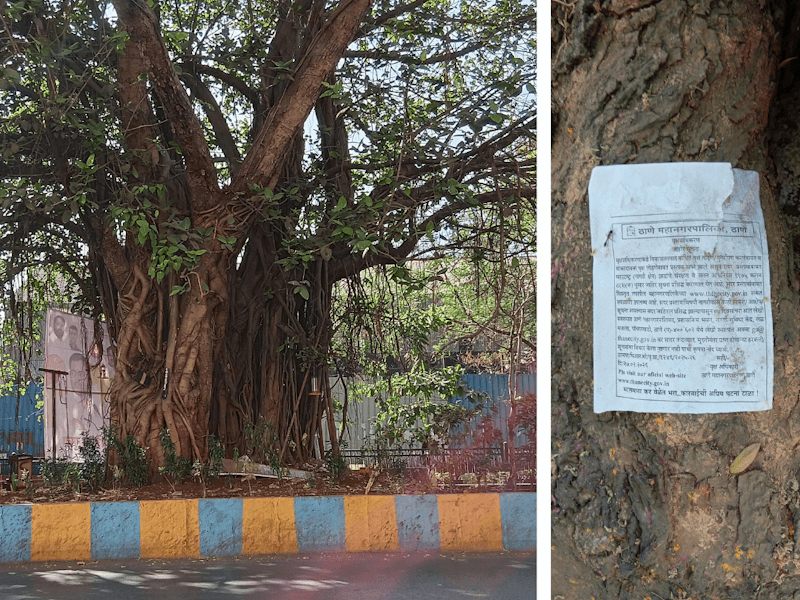
Photo: Nikeita Saraf
Collective energy
Bansari Kothari, 28, chartered financial analyst, is a co-founder of the Save Mangroves Group, active in the on-ground protests, on social media, and in meetings with the authorities. The group also has veterans like GR Vora and doughty fighters like Chandrakant Suvarna whose question elicited a nonsensical response from Maharashtra’s Environment Minister Pankaja Munde that “trees are like soldiers…they sacrifice.”[13] The people-led organically-formed group’s work is backed by research.
Undeterred by the SC’s refusal to intervene in the matter,[14] Kothari remarked: “The need of removing 36,000 mangroves and 9,000 permanently has still not been clearly or transparently established…and does not reflect the ecological reality.” The group, in hundreds, is held together by 30 volunteers working on different fronts including legal, technical, administration, media, and vigilance on ground. Natasha Pereira and Pooja Domadia have been urging residents to join the marches in Kandivali where bulldozers came last month. Officially, there’s no cutting of mangroves, only “diversion” as per the project documents.[15] Says Kothari: “We have a multi-pronged approach. With legal experts, architects, civil engineers, structural engineers, economists, financial analysts, we are trying to counter the project at various levels.”
Nishna Mehta, educator and founder of Nature Narratives,[16] performed a street play on mangroves with volunteers; they plan to have more performances. “Ultimately the goal is to reach communities and housing societies that will be affected, but are either oblivious or don’t know what to do. What we are doing through street play is just a fraction of what the larger process needs to look like.”
Video: Save Mumbai Mangroves Group
Photo: Wikimedia Commons
The fight for life, livelihood
Thane has been grappling with the Tree Authority’s plans to cut or transplant over 3,000 trees for the 29-kilometre Internal Ring Metro project. The project, the authorities claim, will ease congestion when completed by 2029.[17] [18] The Thane Greens Collective group as well as concerned citizens were alarmed, particularly because it cuts through the Yeoor Hills with its forests and Adivasi padas.
The Thane Municipal Corporation (TMC) and luxury hotel owners in the area would love the commerce that it brings but who will bear the ecological cost? With the fight for the SGNP continuing,[19] and suspicious fires recorded along the hills in the past few weeks, the tree-cutting notice added to activists’ anxiety. The TMC invited suggestions and objections but with notices pasted on trees around Upvan Lake, Wagle Estate and outside the Kashinath Ghanekar Natyagruha. Once a city of nearly 30 lakes, forts, and a rich history dating back to the Portuguese, the Maratha empire, and the British, Thane has been developed into a congested grey city of towers and roads with dust, debris, potholes, piles of backfill soil and concrete everywhere. But Thanekars have not given up.
“There are about a dozen heritage trees but they must be under-reporting the number,” says Nishant Bangera, activist and co-founder of the Thane Greens Collective. Along with Rakesh Gholap, Clara Correia, Kailash Anerao and others, he organises tree walks, bird walks, nature trails; the group sends letters to the TMC, files suggestions and objections, and does tree surveys. The group was also a part of people’s movement to save the around 6 acres Kavesar Lake, a natural wetland within the 350-acre township of Hiranandani Estate.[20] “The idea is to not be one-person-led but people-led. We build advocacy and use it to empower more people. I would urge youngsters to join such collectives,” adds Bangera.
Shared solidarity
Not everyone agrees on everything, obviously. Despite their differences, these groups show a shared solidarity on the issue they take up. “There will always be different groups doing different things even on the same issue. If it’s only one group, it remains a campaign; when multiple groups start campaigns organically for the same cause, then it becomes a movement,” says environmental activist Amrita Bhattacharjee, involved with the Aarey movement and Save SGNP for years.
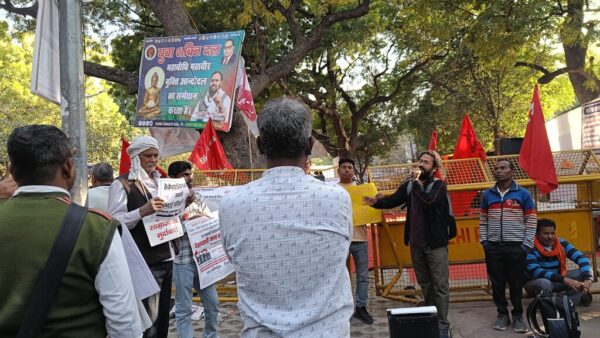
Often, groups extend solidarity by providing logistics or by being present at the place of action. An example is the upcoming protest planned at Chowpatty in Mumbai by members of Communist Party of India (Marxist)[21] and the All India Kisan Sabha against the multi-crore Vadhavan Port project.[22] The movement is primarily led by workers, locals, farmers, tribals and fisherfolk under the banner of the Vadhavan Bunder Virodhi Sangharsh Samiti.
This is not a new struggle but the government’s renewed plans have re-ignited the movement. The Rs 76,220-crore greenfield project will consume 43,171 acres of land and fragile coastal ecosystems.[23] Other projects outside Mumbai-Thane too have alarmed groups in these cities—four dam projects worth Rs 18,842 crore for drinking water to the MMR, and the Poshir and Shilar dam projects near Karjat which pose grave environmental hazards.
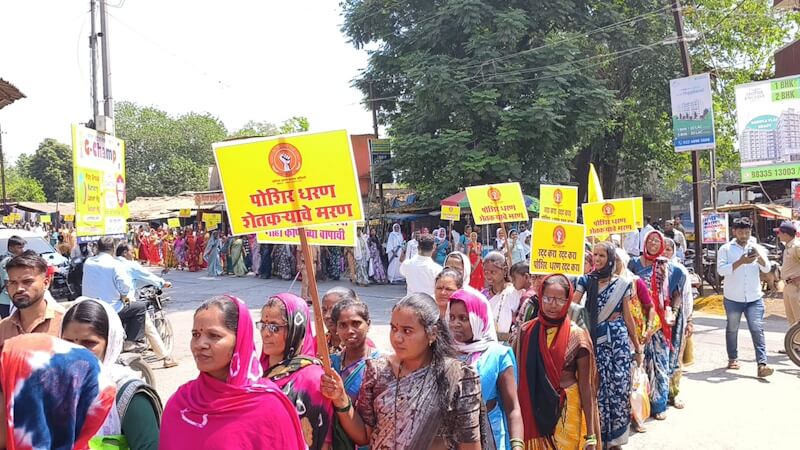
Photo: Satish Patil
The monster of real estate
It is nobody’s case that development should not be undertaken; in fact, many of the environmentalists underscore that they are not against the development projects but raise the question of the comprehensive ecological cost. The nature-people interconnection they see is what pushes them to question and challenge the wanton depletion of forests, green cover, open spaces and mangroves to create land, disturb existing lives and livelihoods like that of the Adivasis, and destroy biodiversity.
What kind of a city do we want, is the question they ask. It’s the multi-crore question that sees no answers coming forth from those in power intent to turn cities into grey wastelands.
Political representatives show little concern. In fact, many of them rarely bother about nature or people after voting is over. Take the Jai Bhim Nagar Bachao Andolan in Powai, Mumbai. Led by students and the affected slum dwellers, the group has been protesting since the slum of 600-650 families was first demolished in June 2024, during the monsoon. The slum has been in Powai since 1987, decades before the area became a well-planned and plush residential one.[24] Ironically, many of the slum dwellers worked as construction labourers building the apartments where live people who now see them as ‘encroachers’.
“We have seen throughout this and similar struggles how the nexus of builders (the Hiranandani group here) and the authorities systematically erode citizenship rights of the working class. At various points, the people’s struggle was weakened by the manipulating political leaders,” says Huma Namal, a student and part of the movement. The judiciary has been of little help. The last of the families were removed in a demolition on March 16. An entire settlement, among the first to live in Powai and build the area, erased.
The hunger for land among the government and private parties means vital ecological assets are being gifted away, again in the name of development. In April last year, the authorities cleared the allocation of 256 acres of salt pan land in Kanjurmarg, Bhandup and Mulund to rehabilitate ‘ineligible’ claimants of the Dharavi redevelopment Project (DRP). Activists keen to protect the wetlands filed PILs but transfer was upheld by the Bombay High Court.[25]
Similarly, the Mahalaxmi Racecourse has been targeted. Under the guise of re-developing it into Central Park, vast areas are planned to be reconfigured for underground parking, banquet halls and indoor sports arena affecting groundwater recharge, rainwater holding capacity, and the vast green expanse. Only some peripheral land is proposed as forests. When the group of 102 architects and planners of the Mumbai Architects Collective wrote to Fadnavis and Gagrani,[26] giving detailed explanations of the impact, there were interventions in the Assembly but the project has not been called off.
Sustenance of a movement
These and other movements have a story to tell. It’s a story of resilience against the failure of elected governments. To many who are content with the grey of the cities or the increasingly toxic air and high heat, these movements seem futile. To those who make the movements, the very act of resisting planned destruction keeps them going. “The real spirit of Mumbai is that so many come together, make space for things that matter like the nature around you,” says Nishna Mehta.
Little achievements help to keep the momentum. Although the metro car shed was constructed in Aarey, the movement spawned awareness and brought together various people in the Aarey Conservation Group, Youth for Aarey, Bombay Catholic Sabha and others. Their ‘Sunday for Aarey’ recently marked its 150th protest.[27] “A movement has to be a combination of on-ground activity, documentation, procedural work, and social media,” says Bhattacharjee who has spent a decade in Aarey movements.
The north-south divide, though, is not lost on the nature warriors. While the more powerful people in south Mumbai run campaigns to make a ‘coastal forest’ on reclaimed land, few of them have extended support or made meaningful contributions to the SGNP or the mangroves causes. Mumbai, unfortunately, stands divided here too—perhaps a clever strategy by governments.
Nikeita Saraf, a Thane-based architect and urban practitioner, works as illustrator and writer with Question of Cities. Through her academic years at School of Environment and Architecture, and later as Urban Fellow at the Indian Institute of Human Settlements (IIHS), she tried to explore, in various forms, the web of relationships which create space and form the essence of storytelling. Her interests in storytelling and narrative mapping stem from how people map their worlds and she explores this through her everyday practice of illustrating and archiving.
Cover Photo: Protests to save Versova mangroves in Mumbai; Credit: Save Mumbai Mangroves group