
Across the Mumbai Metropolitan Region which includes the cities of Mumbai, Thane, and Navi Mumbai, movements and protests have taken root – movements to protect the fragile complex ecology of the cities and protests to stall the authorities from destroying it further in the name of development. At stake is the coastal ecology of the cities with their biodiversity-rich mix of mangroves, wetlands, creeks, lakes and tropical forests; the ecological integrity of areas like the Sanjay Gandhi National Park (SGNP), Thane Creek, and Navi Mumbai wetlands; and the intransigence of the Maharashtra government and municipal corporations to review the projects they have been planned.
The Thane Creek is a Ramsar site housing more than 200 bird species, especially thousands of flamingos every year. The SGNP is a treasure trove of thousands of plant and animal species, and serves Mumbai-Thane as a major carbon sink. Navi Mumbai’s wetlands and mudflats are fragile ecosystems important to the city and used by migratory birds as roosting sites. Plans and projects threaten the ecological integrity of these natural areas. The Aarey[1] has been gradually opened for ‘development’.
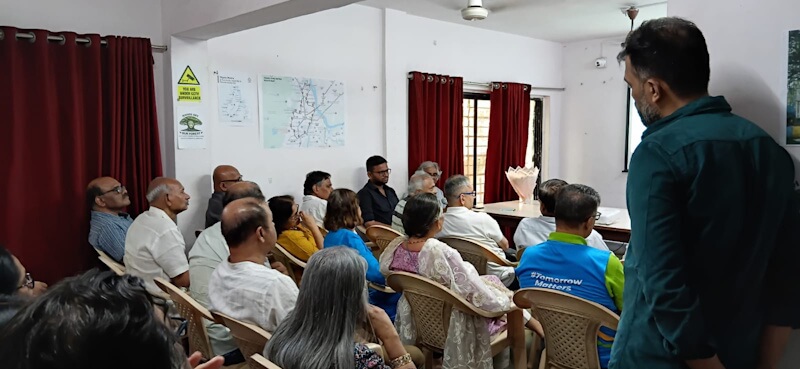
Photo: Nikeita Saraf
Environmentalists, social activists, professionals of various kinds, students and homemakers have all formed groups or coalitions to protect or protest – sometimes both. In Mumbai, protests have regularly happened – the Save Aarey group has continued to meet in the forest-colony every Sunday for five years to stress the need to preserve all of the nearly 3,000 acres of it. Groups and individuals are active but are they being heard, and able to influence policies or changes in plans?
Or are these protests, vital but scattered, each focused on a singular cause it has taken up, unable – or unwilling – to form allyship? Without broad collectives and alliances that can become a mass movement, the authorities will hardly care. From the events unfolding in the past few weeks on mangroves and the SGNP, and on other issues in the last few years, it seems that the state government and the municipal corporations of the cities either ignore the protesters or engage with them in limited ways.
The need for ecological protests
The Save SGNP movement brought together hundreds of people in Mumbai and Thane – the park straddles both cities as well as a part of Palghar, north of Mumbai – to push back on the Brihanmumbai Municipal Corporation’s (BMC) plan to open two of its three eco-sensitive zones to commerce, tourism, and residential enclaves. Thousands of acres of the rich forest were under threat; the BMC’s justification that vast areas of the eco-sensitive zone, which acts as a buffer for the forest, have been ‘encroached’ did not convince the protesters.
From regular demonstrations on both Borivali and Thane sides, nature walks to familiarise people with the park, petitions to the BMC and Thane Municipal Corporation, campaigning for signatures for online petitions, making presentation to the civic bodies on alternatives and the need to cancel the Draft Zonal Master Plan[2] itself, working closely with the Adivasis who have lived in the SGNP for centuries, the groups did all they could while holding down their day jobs and looking after their families.
All in vain, it seems. On March 20, the BMC notified the Plan over-ruling most of the objections that protesters and Adivasis had raised. The Adivasi padas were not even aware of the Plan details as it was published only in English.
What does this mean? Says Yash Marwah of ‘Let India Breathe,’ among those at the forefront of the Save SGNP and Aarey movements: “The authorities have given us even more incentive to protest by sanctioning the Plan. They have shown that they do not care about ecology, let alone our suggestions. We will do a stronger mass mobilisation to show them how much we care.” Easier said than done but it points to the unflagging spirit to keep protesting.
The Save Mumbai Mangroves group too, though shorter in its existence, has faced a similar situation. Despite a spirited fight on several fronts past few weeks – from the courts to the BMC – to preserve the 60,000 mangroves in north Mumbai, nearly 46,000 of which are earmarked to be cut[3] for the Versova-Bhayander coastal road extension, not only is the BMC not listening but has proceeded with the mangrove cutting. The action threatens mangroves and forests up to Palghar where the Vadhavan Port and ‘Fourth Mumbai’ have been planned. If the English-speaking better-off people are protesting the cutting of mangroves in Mumbai, the fisherfolk and Adivasis in Palghar are raising their voice against the port project. They found themselves[4] next to each other at Mumbai’s Azad Maidan on March 23 as both groups, among others, convened during the Maha Rally. Neither had openly supported the other till then; there’s no clarity if they will ally to protect mangroves along the same coast.
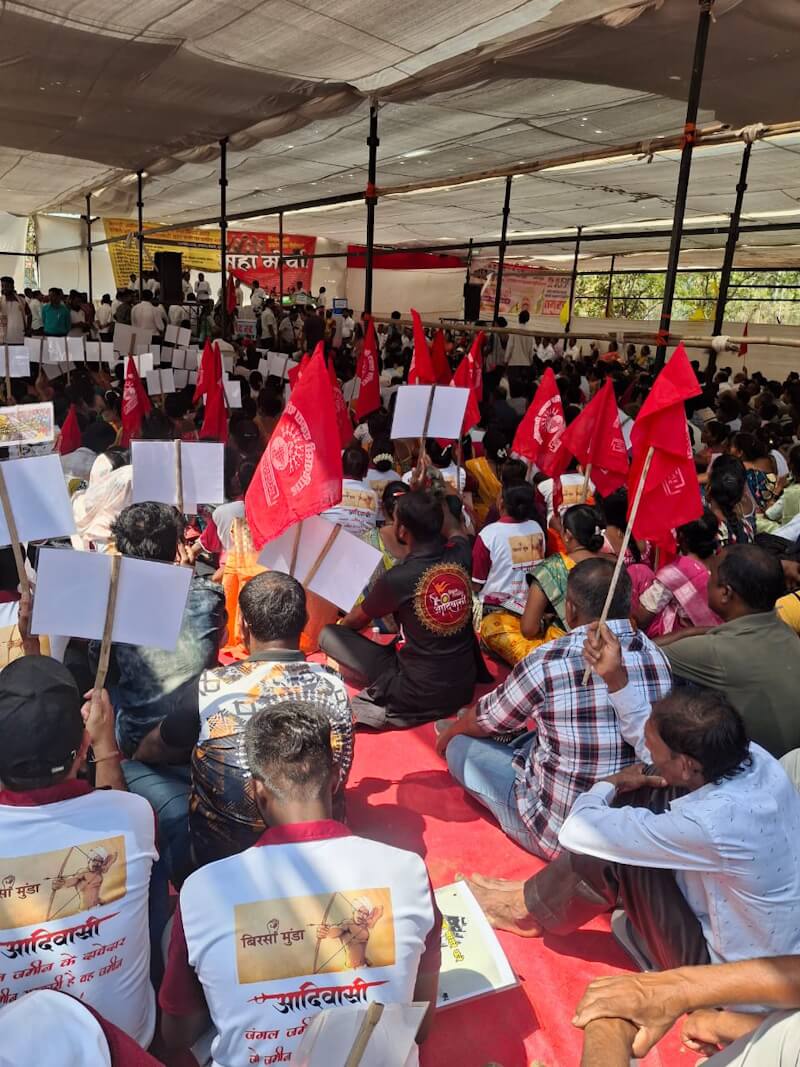
Photo: Yash Marwah
The Thane Greens Collective, a citizen-led group in Thane city, met in end-March to discuss the plan for the Thane Internal Ring Metro project[5] near the Upvan Lake; they tackled the issue of cutting down hundreds of trees. After Maharashtra environment minister Pankaja Munde likened trees to “soldiers who sacrifice” for the motherland, slashing down trees seems to carry less guilt in the government. Given the scale of planned projects – many new roads, tunnel connections, real estate projects – in ecologically sensitive areas like the Yeoor Hills, the Collective has been hard at work. The Draft Zonal Master Plan being sanctioned needs a renewed battle.
There are collectives and individuals struggling with the limited means at their disposal to advocate these causes and bring people together; Thanekars care but have not come to the streets. Activists like Nishant Bangera of Muse Foundation, and citizens like Shreelata Menon, Pooja Kulkarni, Kailash Anerao of the Thane Greens Collective have organised public meetings, met experts, conducted informative sessions, even measured tree girths to verify the tree census, something the Thane Municipal Corporation should have done before starting work.
Six kilometres away in Mulund, the fight is to save salt pan land.[6] Using similar tools of protest, Sagar Devre and his companions have demanded answers from the authorities on why the wetlands are being turned into real estate despite the Supreme Court judgments and laws protecting them. A lawyer, Devre filed a PIL in the Bombay High Court which was dismissed for a typographical error; he challenged it in the SC. The work does not pause. “Residents of Mulund are frustrated with these projects and the Dharavi Redevelopment Project for which the salt pan lands are taken. These are ecologically critical; they act as a natural buffer against floods.”
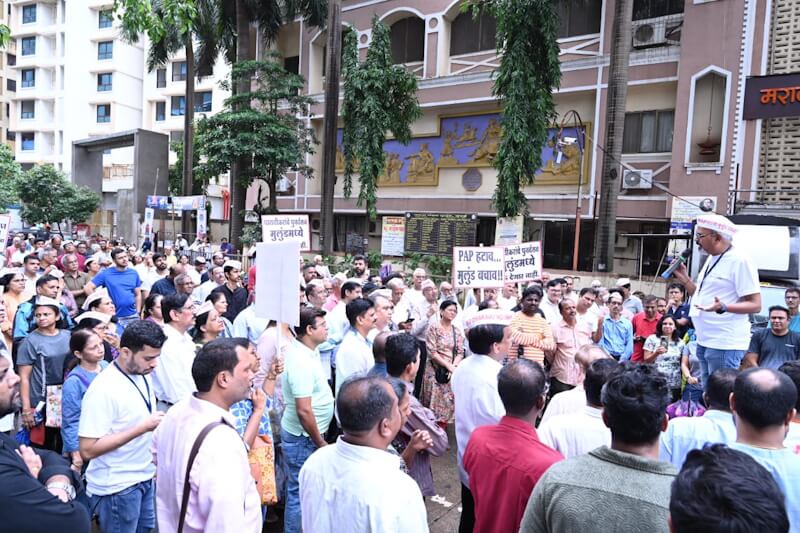
Photo: Sagar Devre
The Navi Mumbai wetlands activism, in which campaigners like BN Kumar, Sunil Agarwal and others fought for years and got a favourable ruling in the SC is still around. The court protected the wetlands but the next steps to secure them on the ground have not yet been taken by the state government; another protest may be called for, they say. In south Mumbai, citizens have banded together to protest the cutting of nearly 390 trees to rebuild the Malabar Hill Reservoir[7] while others there joined forces to get the BMC to build the Mumbai Coastal Forest on 100 acres of reclaimed land.[8]
These groups have used both the traditional feet-on-the-ground tactic, social media outreach, and direct dialogue with the authorities to make them see ecological reason – with varying degrees of success. The Save Mumbai Mangroves group got over 12,000 followers on Instagram in no time, posting on-ground protest photos and reels, platforming celebrities like actors Richa Chadha and Dia Mirza. “It started as a citizen-led movement and is still that, people who have day jobs and do this. The real pressure on authorities comes when people are on the ground but digital campaigns are instrumental in getting them there,” says Bansari Kothari, a co-founder of the Save Mumbai Mangroves group. The SC green-lighting the coastal road extension came as a disappointment to veteran activists[9] but the young protesters are persisting.
Selective outrage and silos
Despite a large canvas of different protests, the authorities seem unconcerned or insensitive. Could it be because there is a lack of strong allyship between different groups, the absence of a coalition or a broad-based collective that speaks in one loud roar to the authorities? Or is it that the people in power are tactfully using the absence of a mass movement to push the projects they claim are in “public interest”? Perhaps, a bit of both.
During the construction of the first phase of the coastal road too, the Kolis who fish in the sea and live off the coast, were not consulted and the impact on them not considered.[10] The scene is the same. Elitism seems built into projects – and some protests too. “We are operating in a bubble right now. Although we did not intend, the Save Mumbai Mangroves is an elitist movement and not very inclusive now,” says Kothari, “This is not a conscious choice. We aim to learn from the Save Aarey movement where the Adivasis, who were directly impacted, were at the forefront.”
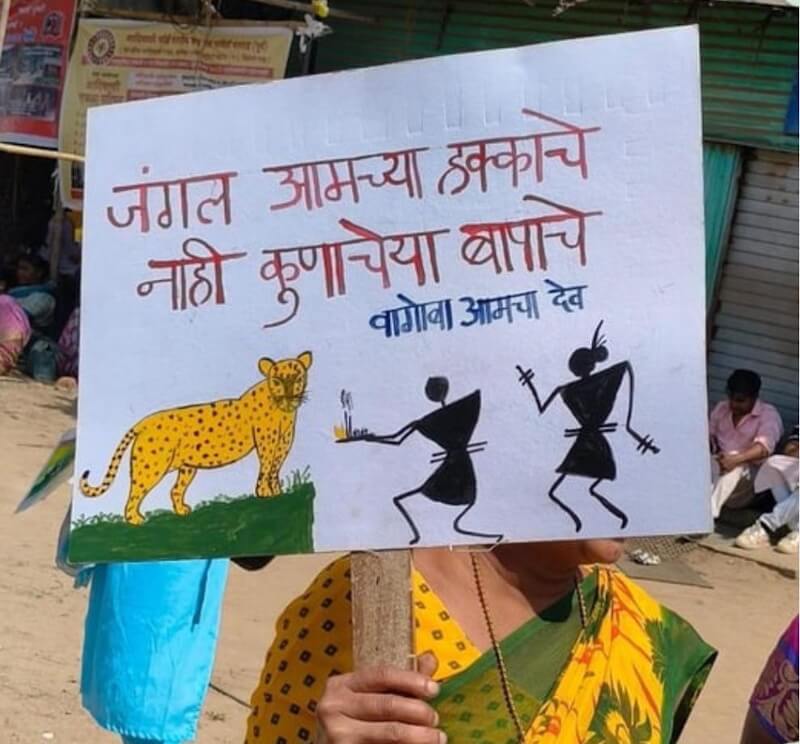
Photo: Yash Marwah
The selectivity is also visible across the north-south divide in Mumbai, even across Mumbai-Thane and Mumbai-Navi Mumbai. The Mumbai Coastal Forest group has hardly been heard lending their considerable might to the Save SGNP or Save Mumbai Mangroves groups. It campaigned hard for 100 acres of the reclaimed 274 acres to be turned into a ‘forest’ and its online campaign fetched 68,450 signatures last year. Its draft plan for the ‘forest’ was presented to residents of south Mumbai, the BMC is on board, and the project may be carried out by The Reliance Foundation.[11]
If the concern is to increase the green cover of the city, why are they not fighting shoulder to shoulder to save the SGNP or the mangroves for all of Mumbai, ask activists in Mumbai’s suburbs. “When people from beyond Mumbai or the north of Mumbai like us were protesting the coastal road itself, for them it was about the view from their balconies being green. We talk about the Agris, Kolis, and Adivasis in our protests who join in too but the others are not used to including them,” says Yash Marwah.
Like him, others protesting in north Mumbai question the selectivity of the coastal forest advocates. The north-south divide is not new to Mumbai. “This divide is not going to be bridged soon but movements are a good way to start bringing people together,” says Nishna Mehta, founder of Nature Narratives, and active in the Save Mumbai Mangroves group performing street plays.
A collective platform?
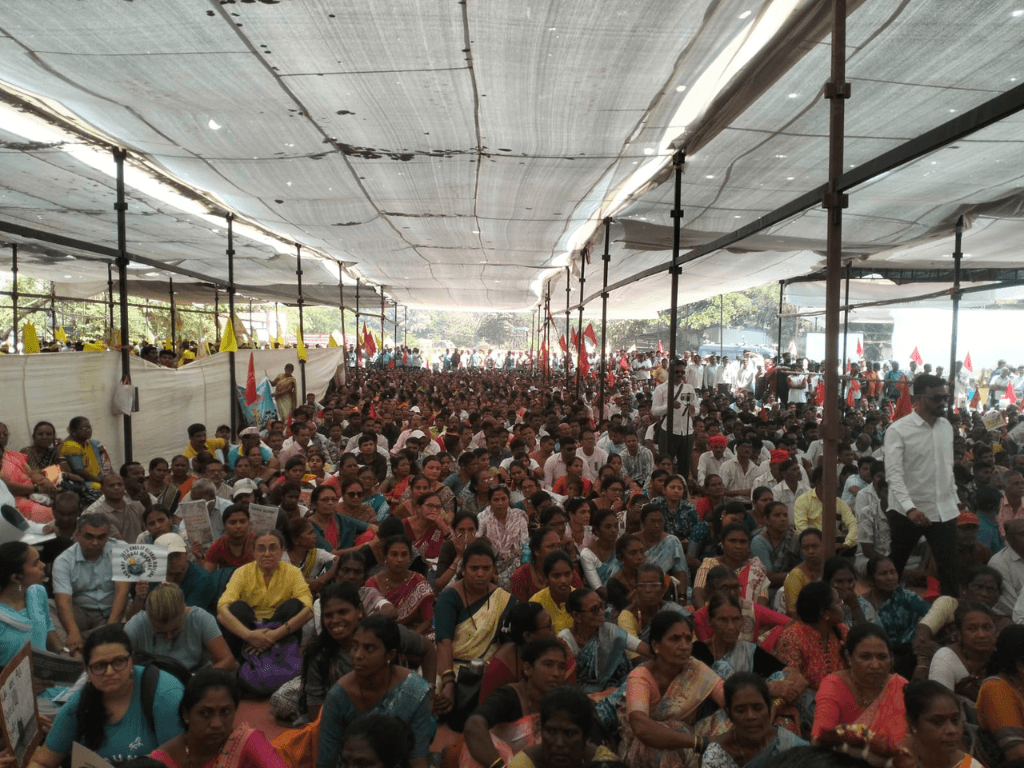
The March 23 protest at Azad Maidan[12] that saw some degree of interaction between groups held a moment of promise. The march called by the Vadhavan Bunder Virodh Samiti and other groups was not allowed by the Mumbai Police. Action was confined only to the Azad Maidan. The tents there eventually swelled as the Koli community came from all across the MMR to join their fraternity from Vadhavan, where protests have raged for decades. It was solidarity across geographies.
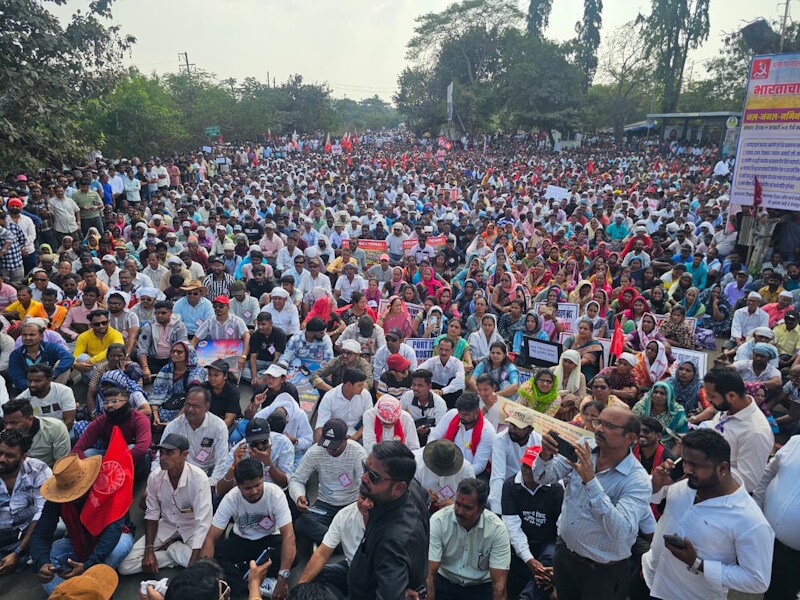
Photo: Vinit Patil
What connects them is displacement due to ecologically-destructive development; the coastal road extension is meant to connect Palghar with Mumbai easily. That’s the grand plan. On the other side, the protests have mostly remained in their own silos, without allying across causes and communities. This also means a lack of sharpness in strategy, something that bothered Pranjal Asha, creative director who was at Azad Maidan. “I am a little disappointed, the rage is missing in the mangroves group. We can’t just say ‘save mangroves’. Who are we protesting against, who are we demanding this from? Why are we not pointing fingers? It’s probably a class thing.”
Azad Maidan being far removed from the seat of the government Mantralaya, though right opposite the BMC headquarters, does not make it easy. “We boast of being a democracy but we can only protest in a corner of Azad Maidan where no one can see or hear us,” rues Stalin Dayanand, co-founder of Vanashakti who has petitioned the Bombay HC and the SC on forest, wetland and mangrove conservation. Adds Meghana AT, a theatre artist whose work merges art, climate, and social justice: “Azad Maidan being fractured into this tiny space you can’t access clearly from the road, made confusing to enter, the police in large numbers watching you enter and exit – all was actually uncomfortable.”
The situation of protest spaces is no better in Thane. The trend of protests has led activists like Shubham Kothari to consider disruptive tactics. “If the government doesn’t like our peaceful protests, then we will cause disruption, block trains and highways,” he says. This is easier imagined than done when it is largely the middle or upper classes who come out to protest on environmental issues; it is the working-class action that disrupted trains and buses in the past.
Even if protesters ally, there’s no guarantee that the authorities will pause and reconsider their plans with an ecological lens.
Nikeita Saraf, a Thane-based architect and urban practitioner, works as illustrator and writer with Question of Cities. Through her academic years at School of Environment and Architecture, and later as Urban Fellow at the Indian Institute of Human Settlements (IIHS), she tried to explore, in various forms, the web of relationships which create space and form the essence of storytelling. Her interests in storytelling and narrative mapping stem from how people map their worlds and she explores this through her everyday practice of illustrating and archiving.
Cover Photo: Mumbai Maha Morch at Azad Maidan. Credit: Yash Marwah