
To Mumbai, I am indebted and grateful for the energy, enthusiasm and a deep sense of engagement that it has always exuberated. This gave me reason and a sense of responsibility, since the 1970s, to do what I could towards building an equal and just environment for all. But I look back now, with a heavy heart and a disturbed mind—those 25 years till the mid-90s were a highly engaging period when rights and the city mattered, not only for me but for many people here—but that city has weathered and worn down, taken away from us.
Why did that Bombay matter? It was because the foundational idea of justice was on our mind, a socio-economic objective to work for; for me, it was spatial too. Because, in the Bombay air, there was an aura of romance about the struggle for equality and justice; because the question of ensuring people’s rights entwined with the happenings in the city; because people’s organisations, movements and collectives were formed around shared interests centered on social and economic justice. It was because rights and rights-based struggles mattered, they showed us the path to a better, more livable, and just city for all.
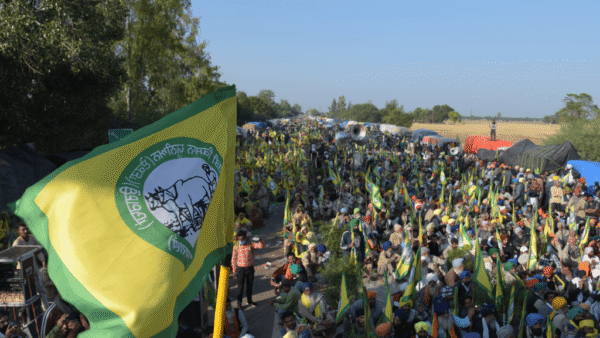
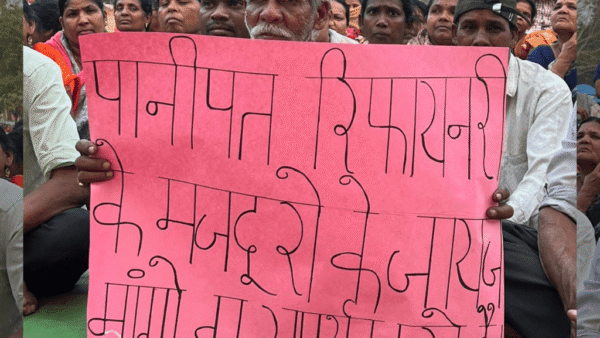
In that Bombay, the idea of associations, unions and collectives dominated social and political landscapes. They nurtured young leadership, educated thousands in ‘ways of seeing’ themselves and the city, and fostered wide public dialogues—sometimes disagreements and fierce debates too but in non-malicious ways. These formed the impetus for many a mass movement—slum dwellers protesting brutal evictions[1] and fighting for land and housing rights, industrial and factory workers for better working conditions and remuneration, school and college teachers demanding participatory management and higher funding for educational institutions, students rising up against corruption and fee hikes, women finding sorority on their issues while also marching against inflation, and environmental movements that were just coming into their own.
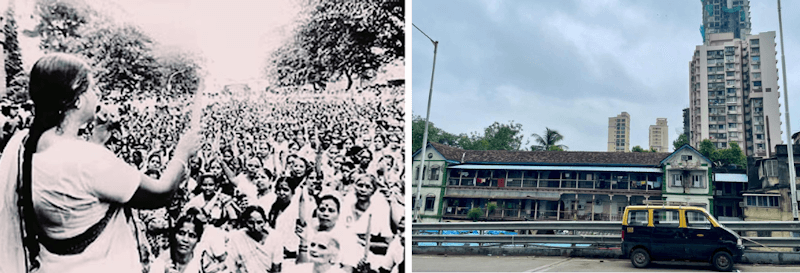
Photo: QoC File
Bombay, you were built to be India’s economic engine, the commercial capital, and this has continued throughout my 50-plus years here. But in that city, your tremendous energy, never-say-die attitude, and admirable work ethic was informed by a powerful sense of collective responsibility, the ideal of the larger common good of the city, a shared sense of not only seats in suburban local trains but across issues and comraderies. This imagination of the city was shared by movements on diverse issues. They often joined forces to advocate and campaign for rights, justice and equality.
Bombay was—and perceived to be—the city of social action, an incredible arena to aspire for freedom and liberation of all people, the site of shared triumphs and travails. Not just a city for a few. We not only lived and worked here, we thought about and fought for the city, we aspired to non-material and lofty ideals. We drew inspiration and ideas from a spectrum of thinkers who had theorised about urbanisation as a way to break down rigid social-rural structures and advocated the “transformative power of cities,” to quote sociologist Lewis Mumford.
For people interested in the margins of the metropolis as much as the metropolis itself, it meant a range of diverse engagements and struggles to associate with, lend one’s skills to, form social contracts with, and work with ideas that influenced us as well as city-making. It was possible for me to be an architect finding feet in the commercial world to be, at the same time, an activist against the wanton slum demolitions, among other causes. One engagement informed the other. This was true of many people in the city. The specialisations and silos, intellectual and political, would come later.
This city has been taken away from us. From us all.
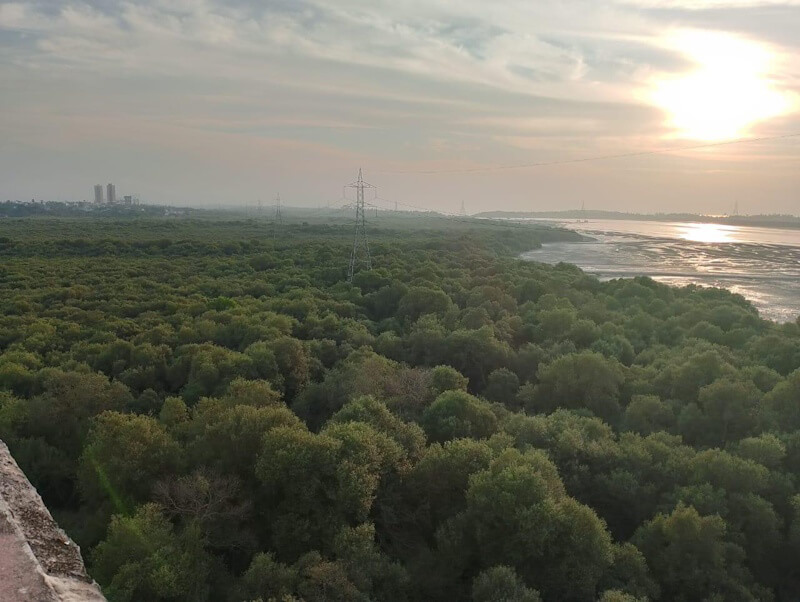
The nature of change
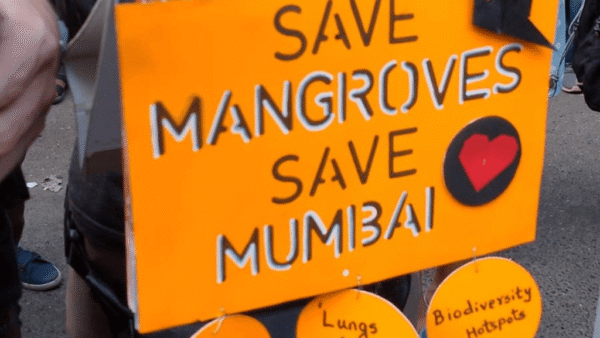
Of course, a city changes as much as every living and breathing entity does, and romanticising the past has little use. But revisiting the old city has a purpose—to recall a side of the city that is eroding if it hasn’t already, to remember that we as the people of Mumbai can be better and do more about our city than it seems possible in today’s atomised, silo-ed space. It has to be we, the people, fighting to retain the oasis that’s the Mahalaxmi Race Course,[2] we have to collectively resist the hacking of 45,675 of the 60,000 mangroves for the coastal road extension,[3] we have to protest the authorities literally gifting away public land to corporates driven solely by the profit motive.
This letter to Mumbai is, then, a reminder to us all that the city can still be the theatre of social and political action.
Bombay turned sharply to the economic right in the early 1990s led by the post-liberalisation and globalisation decisions in India. The nature of the city began to change, slowly but steadily. Thirty years later, we see you, Mumbai, as the leading star of the privatisation mission, reflected in plans and policies, in the way the city has been built. Public spaces have shrunk,[4] in both physical and democratic terms; protests are no longer allowed to reach Mantralaya, the seat of power, but enclosed in a corner of Azad Maidan.[5]
As work became more and more contractual or assignment-based, workers’ associations and unions diminished in number and influence. Other institutions of exchange—cinema clubs, study circles, small libraries, discussion groups which sustained movements and public life—weakened or folded up too. This shrank the opportunity for people to come together, connect across interests and ideologies, form movements and collectives. The questions of rights and justice, the questions of natural areas destroyed in the name of development, paled in the presence of multi-crore gleaming infrastructure projects. Gatherings and actions by a few people brought on the full might of governments—severe and violent action, legal cases and more.
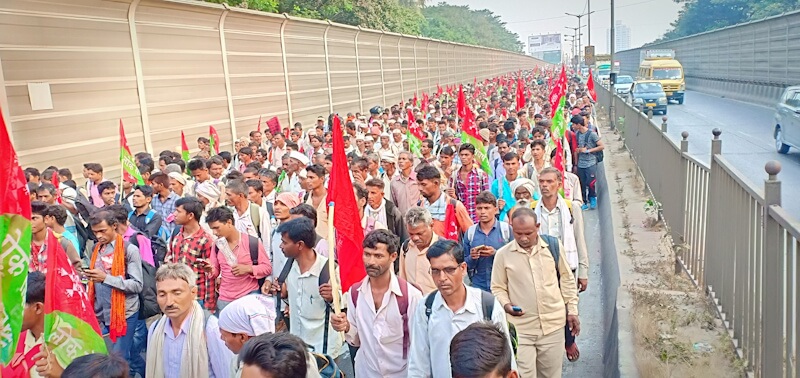
Photo: Wikimedia Commons
Land always carried a premium here from the British era to the post-independence decades. But the past decade has seen, in my considered view, an unprecedented land-grab for and by the powerful in the city. Public land that was leased to industries was turned into private controlled land, as we saw in the textile mills’ land case.[6] Dharavi, where the municipal corporation owns more than 60 percent land,[7] is set to go the same way. Mumbai’s eastern waterfront is being carved up into land parcels for the wealthy and mighty.[8]
It was not just that you went from being Bombay to Mumbai; we saw with pain how your landscape radically transformed from manufacturing-led with a working-class presence to a financial-trading hub with the dominance of the wealthy. Old cohesive neighborhoods were subjected to redevelopment, entire stretches such as Parel-Lalbaug were gentrified,[9] vibrant commercial areas were turned into leisure zones with exclusive restaurants and boutiques and galleries, and wetlands and mangrove-land were turned into commercial hubs like the Bandra Kurla Complex.[10]
The neo-liberalisation has given us a Mumbai few of us recognise.
Who is the citizen?
In the neoliberal city, given the weight and force of the changes, people’s role in city-making has thinned out. The offshoot of neoliberal philosophy, individualization, has reigned supreme, dominating people’s choices, goals, and relationship with the city itself, encouraging a false sense of freedom and focus on material goals. As this phenomenon gathered momentum, pushed by various means of persuasion including political propaganda and mass media, our rights shrank. Collectives and movements have not been as vibrant or even seen as desirable. By and large, Mumbai as a city has become a “de-intellectualised city” to borrow the phrase from the late scholar and editor Dr Aroon Tikekar. To this, I might add de-sensitised and de-politicised ideologically.
In this Mumbai, a new kind of people’s voice from the middle and upper classes has taken centre-stage. These are the “citizens” and their views, ill-informed or reactionary, is the public opinion. Mostly, this reflects a strong sentiment against working-class people despite their inter-dependency. The right to the city has, therefore, become about the upper-class people’s right to traffic-free movement on expensive freeways—ironically built with public funds. It is the middle-class people’s exclusive right to the pavements without recognising the rights of street vendors mandated by law. The right to the city itself is now exclusive. Courts have often recognised this, unfortunately.
The adverse consequences of this change are seen starkly in Mumbai’s social, cultural, economic, and importantly, ecological and environmental spheres. These demand critical interventions by people, preferably in large numbers.
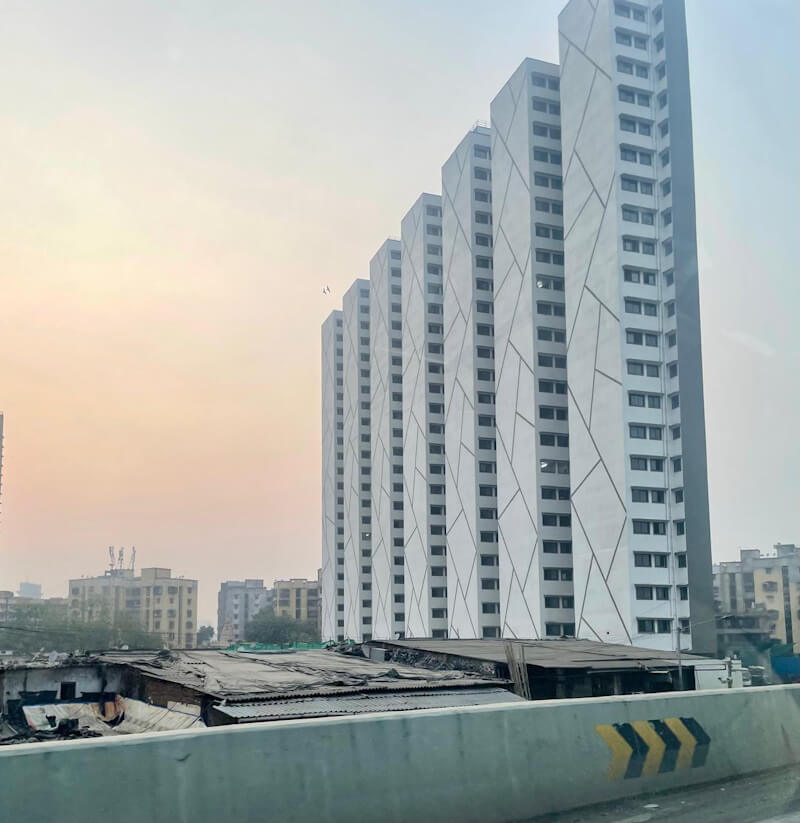
Photo: QoC File.
The disgraceful built environment of a big-bucks city
As the chokehold of finance and related industries tightens its grip over you, Mumbai, especially on your land, inclusive social development for people and sustainability for nature seem bleak. The mega-push towards constructing highways, flyovers atop flyovers, and freeways extract a cost few are willing to acknowledge, let alone debate: the widespread destruction of your vast and complex natural areas from forests and hillocks to wetlands, mangroves and creeks.
On the one hand, this sharpens the scale and extent of the climate crisis bringing more floods, high temperatures, heat-island effect, toxic air and water pollution to everyone’s doorstep, though unequally. On the other hand, most of the big-bucks infrastructure and mega building complexes are inaccessible to the large majority. Essential life-improving projects such as affordable public transport systems, public healthcare and education, open-access recreation and social housing, and above all, a healthy environment that we spoke of as rights have now become privileges—affordable and accessible to a few.
The old and discarded principle of trickle-down-benefits continues to be used by governments to promise a better tomorrow in Mumbai when the evidence shows that little has actually trickled down to common people in the past few decades. Slum rehabilitation scheme has only led to, what the Bombay High Court, called “vertical slums”[11] with untenable densities and worse living conditions than before even as swanky super-luxurious apartments shine at a stone’s throw from these. The alienation—people to people, people with the city—was never this deep.
Bombay had planning; Mumbai does too. There are now more plans than ever, often sector-wise or subject-wise such as the climate action plan and the Development Plan. The issue is not that Mumbai grew in unplanned ways. In fact, I see that there has been a planned and deliberate way to build the city so that the majority of people are divided amongst themselves—either in ghettos or gated complexes—and are divorced from natural areas around them. Plots of land being redeveloped with complete disregard for trees and the neighbourhood, jostling high-rises without open spaces, streets that are available for car parking but not for public use, barricades and walls across the new constructions—this is the new landscape.
In this, gradually, rights and justice seem distant from people’s lives even as romantic ideals. Yet, the struggles to reclaim Mumbai for all its people and the damaged-depleted ecology must continue in new ways. We must somehow carry the hope for change, locate it in the mobilisation of the marginalised and excluded people, support or start struggles for a sustainable and more democratic city. I am reminded here of the poignant lines by Kaifi Azmi, poet-lyricist-political thinker and, a son of this city:
Aaj Ki Raat Bahut Garam Hawa Chalti Hai
Aaj Ki Raat Na Neend Aayegi
Hum Sub Uthen, Main Bhi Uthun, Tum Bhi Utho
Koi Khidki Isi Deewar Mein Khul Jayegi
(Tonight, a very hot wind is blowing,
Tonight, there will be no sleep on the footpath.
Let us all rise—I should rise, you should rise,
A window will open in this very wall.)
PK Das is an urban planner, architect and activist with more than four decades of experience. He has been working to establish a close relationship between his discipline, urban ecology and people through a participatory planning process. He has received numerous awards including international ones for his work in revitalising open spaces in Mumbai, rehabilitating slums and initiating participatory planning process. He is also a trustee in the Participatory Urban Design and Development Initiative (PUDDI), and a founder of Question of Cities.
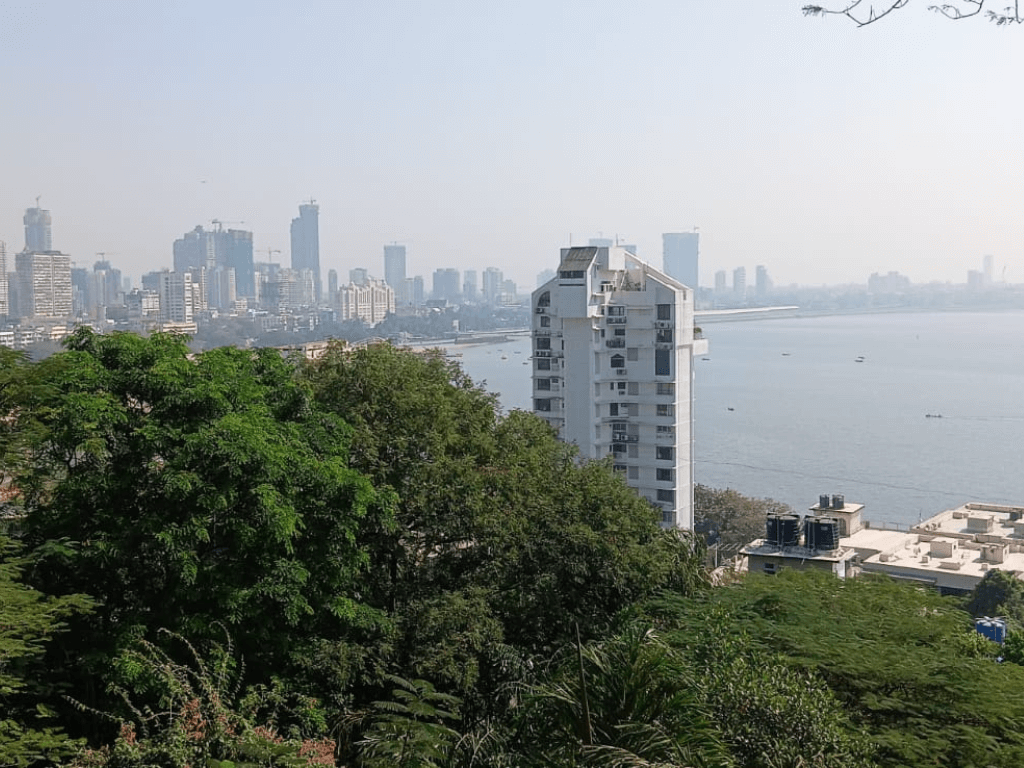
Cover Photo: A view of South Mumbai coastline from atop Hanging Gardens.
Credit: Nikeita Saraf