
“Aisa lagta hain ki ab bas dukaane ban gayi hain ki aap aayiyein, aap apna ek mudda lijiye, aur do ghanta baithiye, aapko ek kona de diya jayega, woh bhi permission ke sath. (It seems now that there’s a shopping complex, you come, you raise your issue and sit for two hours, you will be given a corner and that too with official permission)”
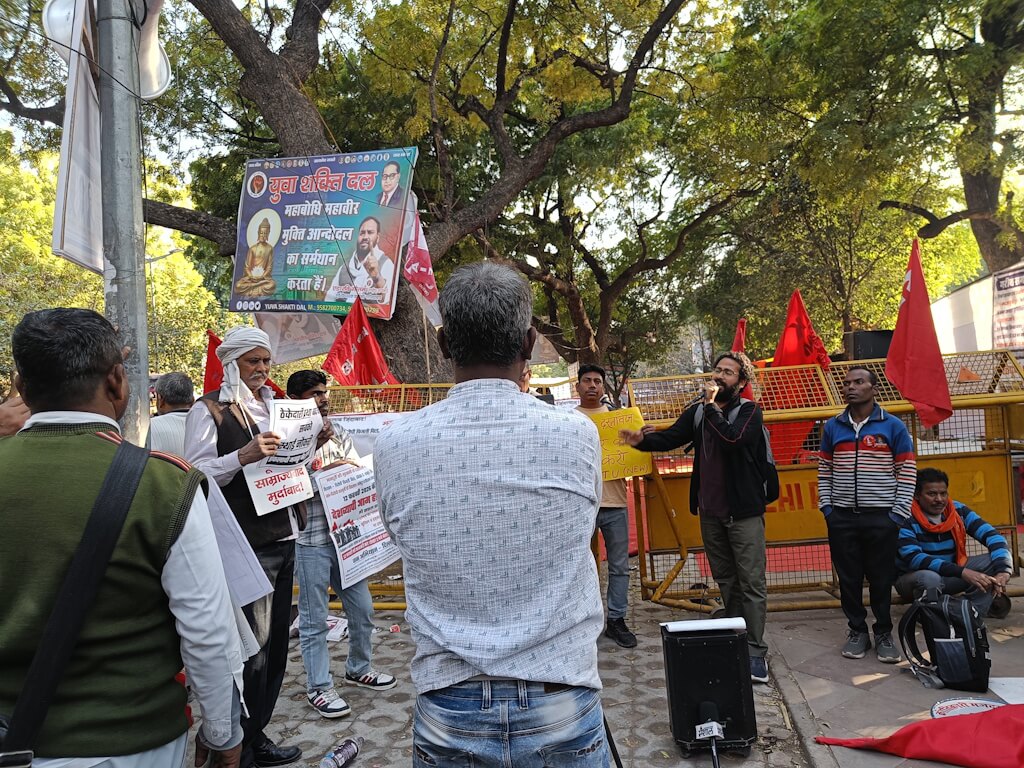
This is Anita Kapur speaking about protesting in Delhi lately. Kapur, as the founder of Shahri Mahila Kaamgar Union, is a veteran protester; she should know. Jantar Mantar is now the city’s designated protest site, the action neatly tucked away behind barricades, under careful police watch. Groups of protesters arrive here with placards and banners, and with police permission, occupy some space for a fixed duration. If the very purpose of protests is to signal something significant to those in power, then that does not happen.
Protests have not been stopped but, in subtle sinister ways, they are being made invisible if not entirely illegal. The democratic right has not been snatched away, like during the Emergency, but rendered hollow.
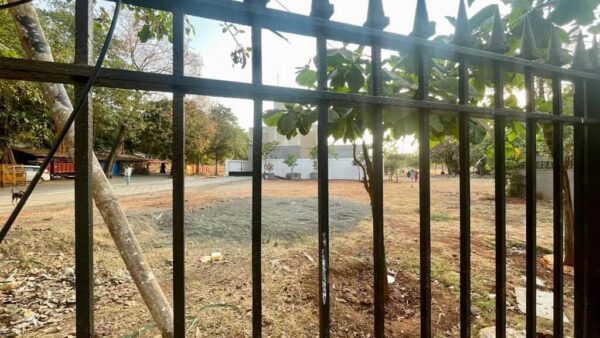
This invisibilisation is afoot not only in the national capital but in almost every city. Be it protests being confined to Bengaluru’s Freedom Park based on a High Court ruling, to corners of Azad Maidan in Mumbai, or the Rajaratnam Stadium in Chennai, they are away from centres of power and public attention. Delhi, naturally, most represents this trend.
Though Jantar Mantar is centrally located, the protest spots have been restructured in ways that protests are easy to dismiss, where the government need not bother, and protesters have no interaction with the public. Besides heavy police barricades, this designated spot is tucked away since 2018[1] from major roads, does not interrupt the traffic, and can be used only between 10am and 5pm. For activists who have been organising here for decades, Jantar Mantar was only the starting point. “From Jantar Mantar, you marched up to Patel Chowk, ran rallies, and processions reached all the way to the roundabout in front of the Parliament,” recounts Sohail Hashmi, heritage conservationist and social activist.
Other places too reflect the containment and invisibilisation—Ram Leela Maidan, ITO, India Gate, outside the Parliament, outside the SC, and once upon a time even in the Boat Club. Protests unfolded here once; now it is hard to even get permission to protest here. Kapur recalls that, in 1998, the group had protested outside the then slum commissioner Manjit Singh’s office. Even the Nirbhaya protests[2] in 2012 spilled over from India Gate. Protests used to be a routine part of democracy, she says. Adds Hashmi, “Each new government makes it a little more difficult to protest. In the last 12-13 years, it has just become impossible.”
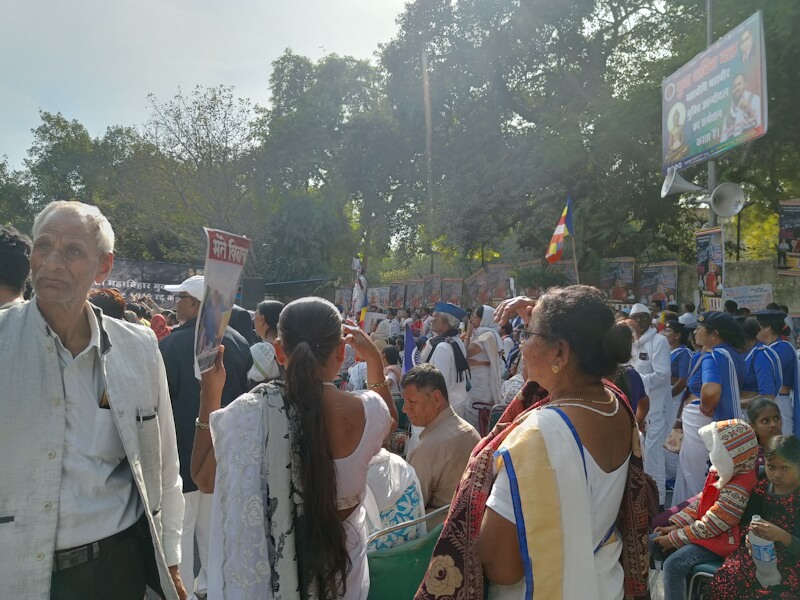
Photo: QoC File
A similar pattern is seen across university spaces too. In 2017, the Delhi High Court ruled[3] that there cannot be protests within 100 metres of the Administrative Block in the Jawaharlal Nehru University (JNU). In Delhi University (DU) recently, protests were banned[4] for a month. “Jantar Mantar is now isolated,” says Abha Dev Habib, Secretary of Democratic Teachers Front (DTF). “People don’t even realise something is happening there.”
The controlled, manageable form of protesting, activists say, is against the ethos of what resistance is meant to be, which is to hold institutions accountable, make governments uncomfortable, demand justice and enforce rights. But it wasn’t always like this.
When protesting was central to citizenship
In the 1970s, people’s protests were accepted as legitimate. They took many forms; street plays were a part of the repertoire of protesters. Hashmi, a part of the Safdar Hashmi Memorial Trust (SAHMAT), recalls the first public performance by the Jan Natya Manch (JANAM) had happened at a public rally of trade unions in Delhi. “During the Emergency, Mrs Indira Gandhi brought amendments to the Industrial Disputes Act which, among other things, put curbs on trade union activity but she couldn’t get it through the Parliament. The same Bill was introduced by the Janata Party government,” he recalls.
This brought trade unions together, honed by their spirited opposition to the Emergency. Under the All-India Convention of Trade Unions banner, JANAM’s first play, Machine, was performed at a rally attended by nearly 50,000 people, says Hashmi. The 13-minute play[5] drew from a labour struggle at a Ghaziabad factory, where six workers were killed after demanding basic facilities. Those in attendance included government officials, he adds, “There was a recognition in the government that this is the people’s right.”
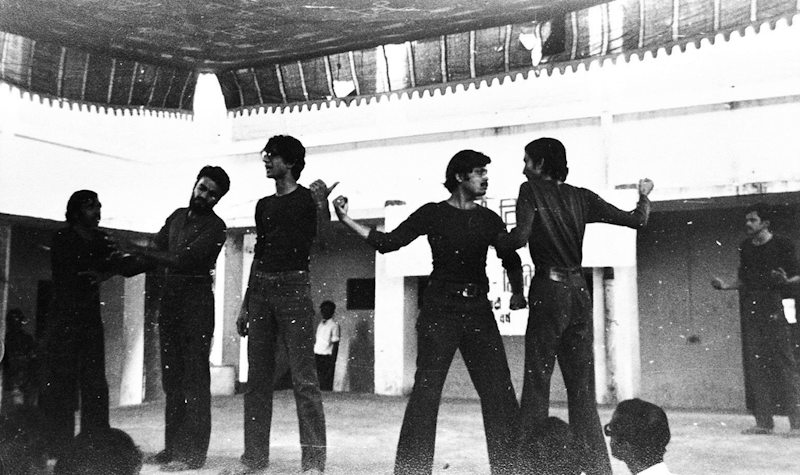
Photo: Jan Natya Manch
For Kapur too, those decades represented a different India. She was inspired by renowned activist Aruna Roy to join the RTI movement before becoming a trade unionist. She remembers yatras in groups across North India and finally arriving in Delhi. “We were even provided security by the police,” she says. Unthinkable now. She represents a generation of active citizens for whom protesting was a natural expression of people’s grievances and demands. “Woh jo mahaul tha hum abhi kalpana bhi nahi kar sakte (That atmosphere cannot even be imagined now),” she sighs.
Besides the stricter drawing of boundaries of what and how protests can unfold, there is a reshaping of the public consciousness using fear of retribution. Exemplars are made of people; this holds back many. Some like Hashmi persist. “It has reached a stage where a cop came to us, a group I was leading on a heritage walk about the history of Connaught Place six years ago and threatened to arrest all 20 of us for violating Section 144 of the Indian Penal Code. I explained it was only a walk. Right at that moment, there was a full-fledged procession of people waving saffron flags in the inner circle of CP.”
Protests behind covers
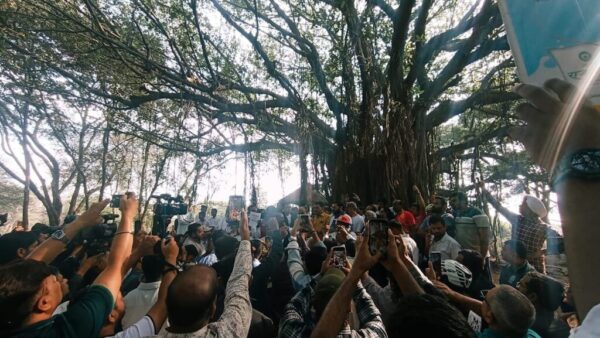
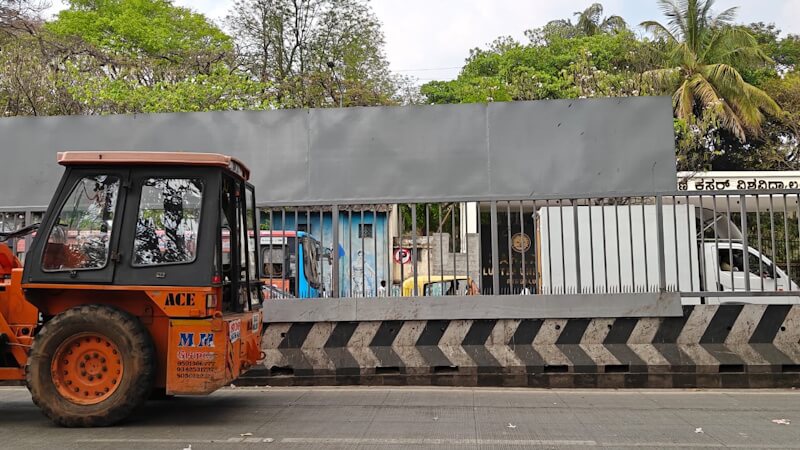
Bengaluru also has a designated protest space: Freedom Park. Vinay Sreenivasa, a lawyer associated with the Campaign for the Right to Protest in Bengaluru, recalls how earlier protests used to be spread across the city—at Town Hall, Maurya Circle, Mysore Bank Circle and outside institutions like the Bruhat Bengaluru Mahanagar Palike office, the Labour Department, and transport offices. It changed in 2022, with the Licensing and Regulation of Protests, Demonstrations and Protest Marches (Bengaluru City) Order, 2021[6] which designated Freedom Park as the primary protest site. The move, Sreenivasa says, has reshaped how the city mobilises.
Phone: Vinay Sreenivasa
“Freedom Park is cut off. Nobody really sees what’s happening there,” he says, “Unless there are 400-500 people, it doesn’t make an impact. Earlier, even 20-25 people at Mysore Bank Circle would make a statement. By pushing protests to a place where no one sees them, they’re effectively made invisible.”
Take the case of Marina Beach in Chennai. For decades, it was one of the city’s most visible protest sites, drawing large gatherings in the 1970s.[7] The seven-day Jallikattu protest in 2017 was impactful because it happened in Marina, says photojournalist from Chennai, Akhila Easwaran. In 2018, after the Madras High Court barred protests.[8] Two other major spots in Chennai were the Chepauk Stadium and Valluvar Kottam. “For the past five years, protests in Chepauk haven’t happened as they used to,” says Easwaran, who has covered more than fifty protests in the city. Few protests now take place in Valluvar Kottam too. “It is the heart of the city and gets attention but now most protests are shifted[9] to Swami Sivananda Salai as the designated spot,” she says.
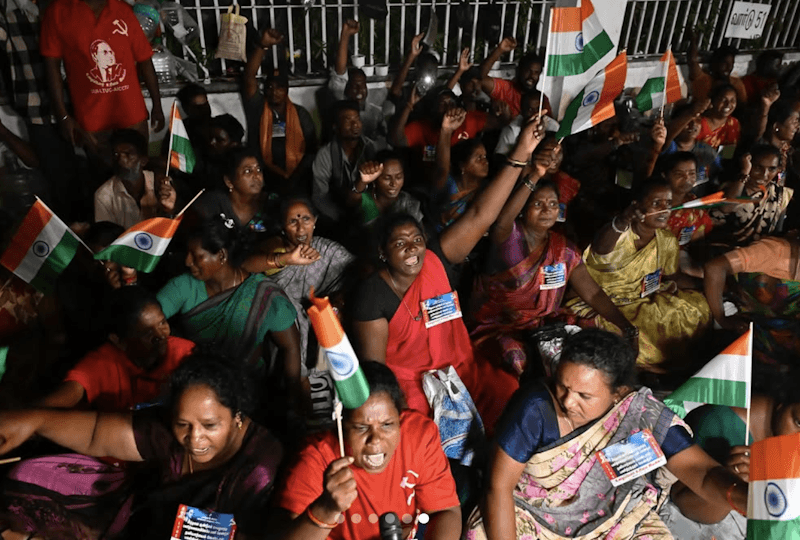
Photo: Akhila Easwaran
In Mumbai too,[10] the Bombay High Court directed that protests be limited to Azad Maidan; now they are contained in its obscure corners. Earlier, demonstrations wound their way across key areas in south Mumbai, gathered at the iconic Hutatma Chowk or Kala Ghoda (now an arts precinct) and made their way to Mantralaya where the government sits. Hasina Khan, feminist activist, says it is difficult now to even take out a rally to commemorate International Working Women’s Day, let alone a protest. “We couldn’t get permission for a protest in the heart of what used to be a protest area,” says Khan.
Like many in Mumbai, she too is concerned about the Maharashtra Special Public Security Bill 2024, which threatens[11] fundamental rights on the grounds of national security. The Bill aims to prevent[12] the “resurgence of ‘urban naxal’ activity” but it is a way to stifle dissent, says Khan. “Gandhi, Ambedkar, and other freedom fighters stood for rights, for sangharsh. That space is finished.”
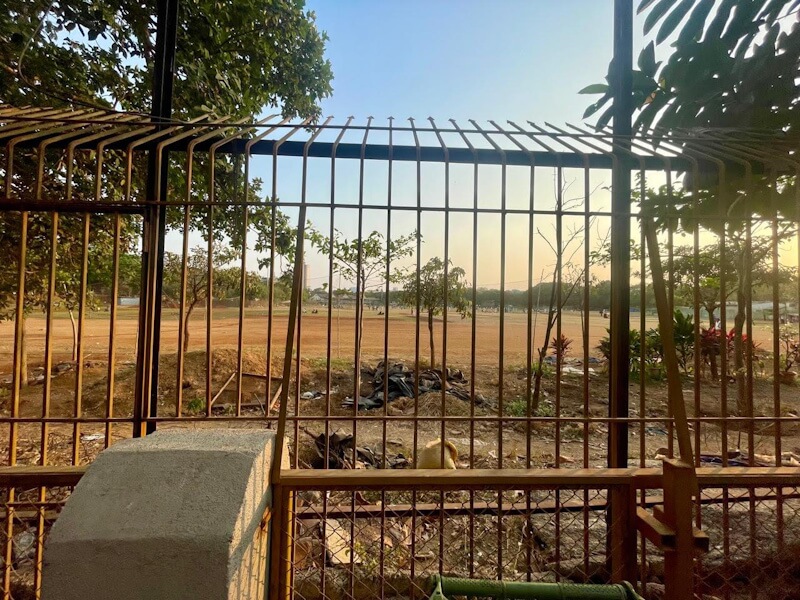
Photo: QoC File
The turning points, the city as space
In their book, “Cities and Protests: Perspectives in Spatial Criticism”,[13] Mamta Mantri and Anoop Kumar write how the motive of a protest is to disturb “prescribed” norms of everyday life; to unsettle the socio-cultural and political aspects of a city space so that the protesters’ voices are heard. “Sanctioning a protest site restricts this attribute of protest and exhibits the government’s intrinsic undemocratic nature, which doesn’t allow for the transgression of space,” they write.
This is echoed by Akash Bhattacharya, historian and trade unionist affiliated with AITUC. “Protests played an important role in sustaining the culture of dissent; they were seldom disruptive. Dissent wasn’t as criminalised as it is today.” The shift to containing protests, he suggests, lies in how more disruptive forms of mobilisation played out; as protests became forceful, they invited stricter control. There are two turning points, in his understanding.
First, the years between 2015 and 2020 when the Occupy UGC[14] movement saw hundreds of students camp outside the University Grants Commission, spread to other cities. It brought together students from universities—Jamia, DU, JNU, AUD—who were not politically connected. “Before this, JNU politics was relatively isolated,” he notes. Hokkolorob[15] (Kolkata), the FTII protests[16] (Pune), Pinjra Tod[17] (Delhi), the protests against Rohit Vemula’s[18] institutional murder, the JNU Sedition[19] protests, and other student movements signalled determined political expression by students—always a worry for governments. Second, the anti-CAA protests in Delhi which spilled to several cities and pockets—the most prominent being Shaheen Bagh—demonstrated people’s power.
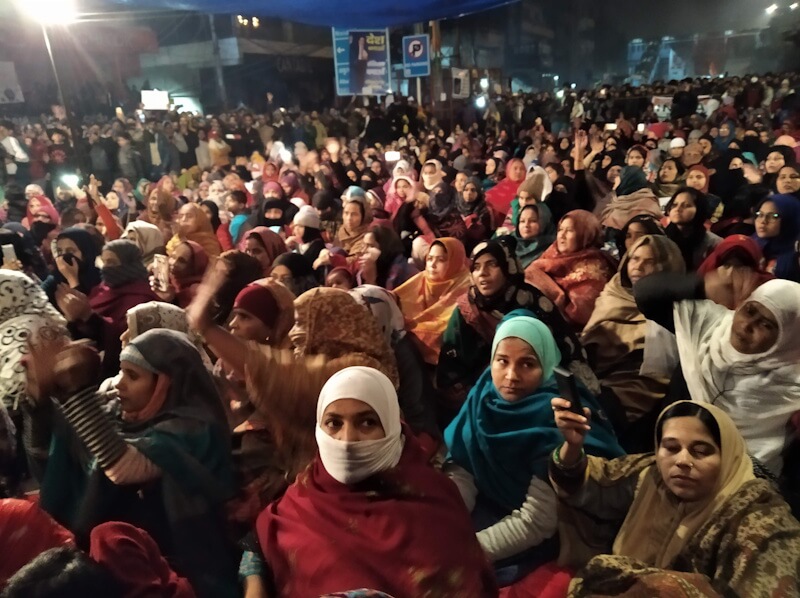
Photo: QoC File
The idea of city streets as protest spaces was always crucial; this is disappearing from people’s idea of a city. Dr Kaiwan Mehta, architecture theorist and an educator, notes how roads and public spaces are imagined only as consumables. “You consume it as traffic or somewhere to shop. But it is not imagined simply for a citizen to be.” Spaces matter; their shrinking is crucial too.
The crackdown[20] and arrests,[21] coupled with the pandemic that followed, changed the socio-political atmosphere. “Now, people are arrested even if you protest air pollution,” rues Habib. The barricading and diminishing of public places have had an impact, say several activists. Informal gatherings at Delhi’s Boat Club and Mumbai’s Kala Ghoda that turned into demonstrations, for example, are now passe. Surveillance, including through smart phones, has raised the stakes for many too.
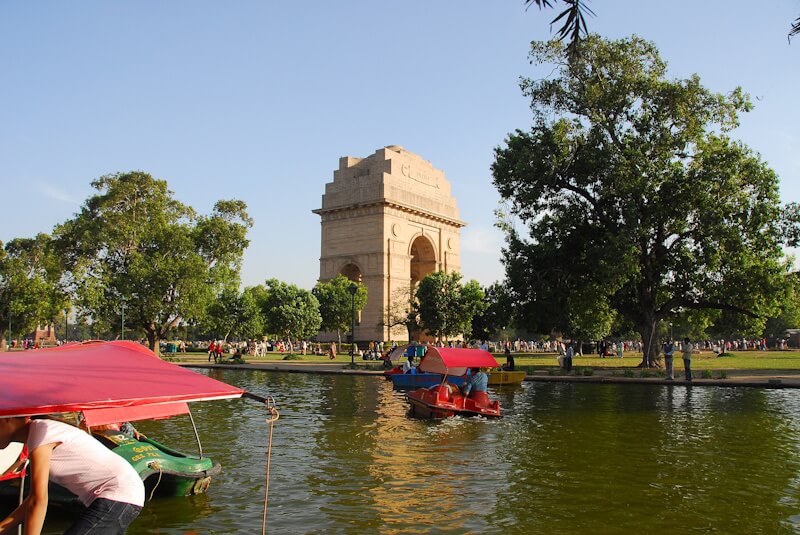
Photo: Wikimedia Commons
While some are barricaded, others have turned commercial. “Places that were once discussion hubs like the India Coffee House terrace or tea stalls behind Indo-Global Society of Social Service have shut down or become harder to use,” shares Kapur. The India Gate lawns, a celebrated public place, were transformed after the Central Vista Redevelopment[22] in 2021, with visitors no longer allowed[23] to sit. Architect Nidhi Batra notes this reflects a move away from ‘commoning,’ where spaces are collectively used and negotiated, towards tighter control.
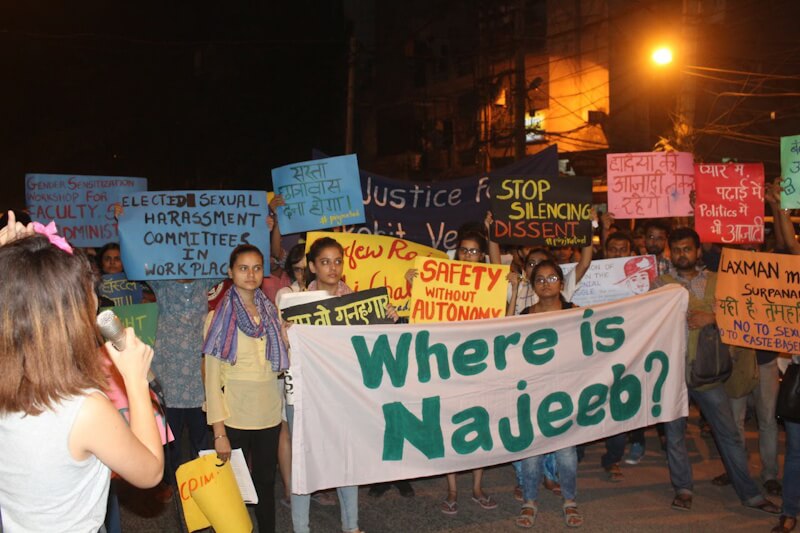
Photo: QoC File
In Mumbai, architect and public spaces campaigner Alan Abraham points to a steady shrinking of accessible public space. “Most of the open spaces are becoming more and more privatised,” he says, noting how the city offers barely 0.87 square metres of open space per person, well below the WHO’s recommended minimum of 9 square metres. Even spaces that appear public are increasingly restricted. The promenade at Bandra Reclamation, constructed with public funds and used for protests, has remained gated for years now.
New avenues
For veteran trade unionist and researcher Meena Menon, the trend means rethinking how protests take shape under constraint. “As a social movement, we need to find new ways to protest,” she says, recalling the Emergency years when “we couldn’t protest at all. We can’t depend only on designated protest spaces.” Menon points to the growing role of digital platforms and social media as a part of newer methodologies shaping dissent in India.
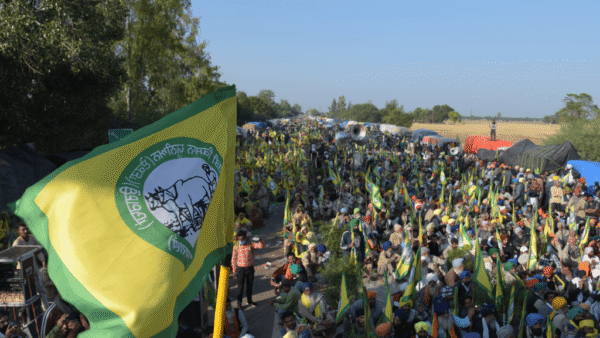
This was visible during the anti-CAA and farmers’ protest when social media became the alternative platform to the mainstream media to document and sustain the movements as well as reach the public. Content shared on Facebook, YouTube, Instagram and WhatsApp by independent online publications helped balance the government propaganda. These recorded the anti-CAA movement and helped it travel far beyond the immediate locations, observed Niloshree Bhattacharya here.[24] During the farmers’ protest too, protesters published their own bi-weekly in Gurumukhi and Hindi called Trolley Times,[25] to counter the mainstream media’s maligning.
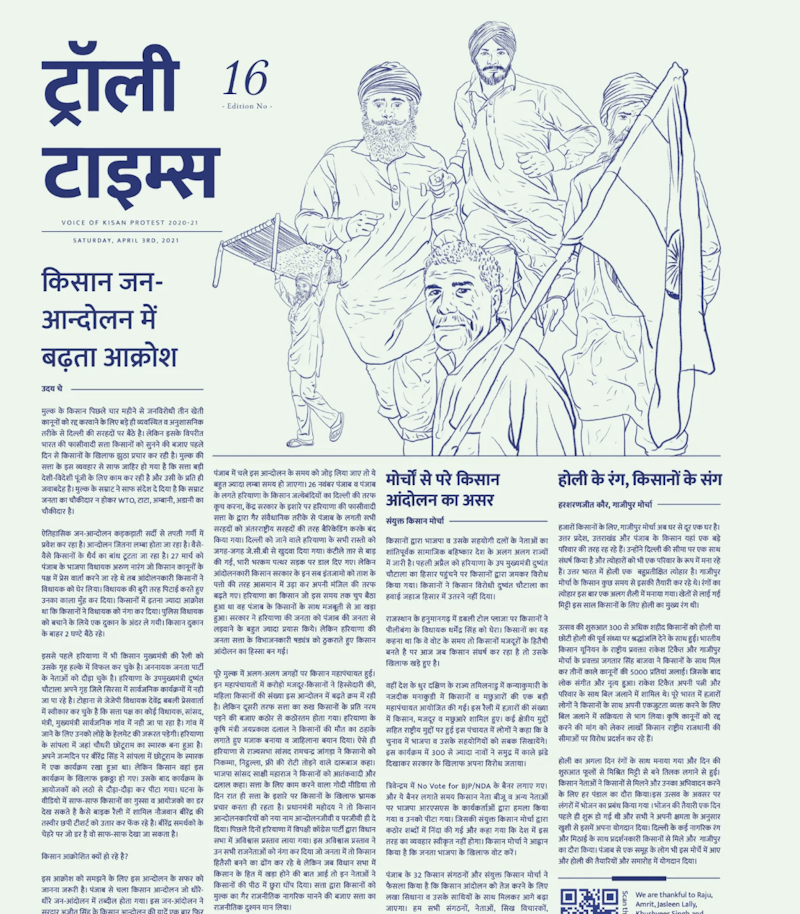
Photo: Trolley Times
Social media helped connect refinery workers across geographies from Panipat to Barauni and Surat, QoC documented here.[26] Mobilisation through social media can be effective but organising has to happen beyond that, says Bhattacharya. “Any strong movement requires face-to-face contact, trust-building. This, in turn, needs public spaces, parks, streets, street corners where people can gather.”
For Menon, this point in protest history does not feel hopeless. It’s a part of a long trajectory in how social movements evolve, she says, recalling a time in Mumbai when the mill workers’ protest drew public support, a collective event that the city engaged with. This, she says, shifted in the post-globalisation years with the rise of a middle-class less patient with disruptions and less connected to such struggles. But it may well be changing again. As economic pressures deepen, there may be a renewed need for protest. “People are losing jobs in droves, now they feel the need for protest spaces too,” she says. As Kapur says, times always change, even for protesters.
Ankita Dhar Karmakar, Multimedia Journalist and Social Media in-charge in Question of Cities, has reported and written at the intersection of gender, cities, and human rights, among other themes. Her work has been featured in several digital publications, national and international. She is the recipient of the 4th South Asia Laadli Media & Advertising Award For Gender Sensitivity and the 14th Laadli Media & Advertising Award For Gender Sensitivity. She holds a Master’s degree in English Literature from Ambedkar University, New Delhi.
Cover Photo: Visuals from a protest in Delhi’s Jantar Mantar near police barricades. Photo: QoC File