
Eviction from slum settlements and jhuggi-jhopri (JJ) clusters has meant displacement for lakhs in Delhi over the years. This should have also meant resettlement and rehabilitation – a new home and a sense of belonging. In government records, resettlement has been carried out in many cases while some are not eligible for it. The latter has been contested, rightly so, but what of the former? Why are resettlement colonies not fit to be called homes, and how can they be reimagined?
India’s national capital that is often talked about as a palimpsest with seven layers of history has had, in the spatial sense, at least three identifiable waves of evictions and resettlement, after the Slum Areas (Improvement and Clearance) Act of 1956 – first in the 1960s, then in the following decade which peaked during the Emergency (1975-77), and the third in the 2000s.[1] Since 1990, Missing Basti, the archive created by academics and activists, recorded nearly 300 forced evictions.[2]
The resettlement that followed evictions has shown disturbing patterns. First, the location is far away from the city. Delhi has, at the last count, around 55 resettlement sites[3], two-thirds of which wereset up by 1985-90. The Delhi Development Authority (DDA) had established 44 resettlement colonies by 1977 under what is now called the Old Plan Scheme of JJ Resettlement. But as urban planners-researchers Mukta Naik and Swati Janu pointed out in 2020: “Mapping these colonies before and after 1990 reveals how the poor have continually been pushed out to the ever-expanding periphery of the city”.[4]
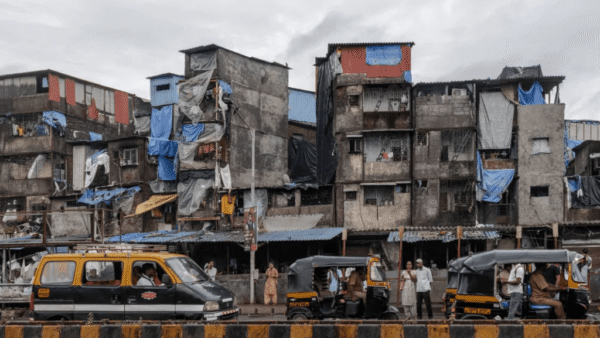
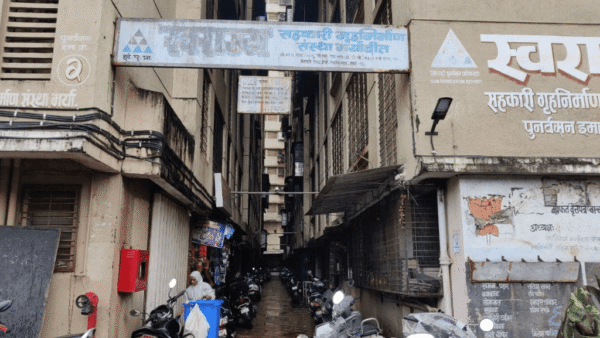
Second, not only are the locations far away, the displaced who were ‘given’ these homes have found them to be unliveable with small and cramped layouts, stacks of flats of poor design, lack of basic services and infrastructure. Some resettlement colonies such as those in Bhalswa and Narela are now ghost towns. If rehabilitation is meant to restore people’s Right to the City, the architecture of resettlement colonies denies the conditions necessary to exercise it. To improve resettlement – physically, spatially, socially – the built form of the colonies has to be reimagined. Architects, planners, and activists that Question of Cities spoke to have suggestions for how people can be housed better, and how the designs can be improved upon.
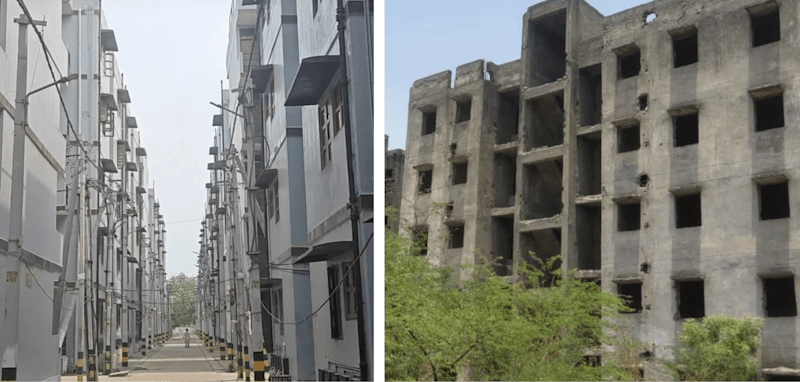
Photo: Akbar Ali, Basti Suraksha Manch
The marginalised in the peripheral
From the early days of resettlement, the pattern of peripherality is unmistakably continued. After the evictions in 2010 in preparation for the Commonwealth Games, slum residents were sent to 11 resettlement sites[5] in the north, west, and northwest of Delhi such as Savda Ghevra, Bawana, Holambi Kalan, Pappan Kalan, Rohini and Narela.
Ahead of the G20 summit in September 2023, the DDA carried out 49 demolitions, “reclaiming 230 acres of land”, as the Parliament was informed.[6] Many were done without notice or arrangements for resettlement[7] forcing thousands to find shelter on the outskirts of the city.
Far away from the city means disruption in or loss of jobs and work, additional expenses on travel, long and hard commutes. Resettlement sites like Savda Ghevra, on the outer northwestern edge of Delhi near the Tikri border, have residents from 20 kilometres away ( Tagore Garden) or 44 kilometres away (Lakshmi Nagar), and were forced to live without roads, shops, and other civic services.[8] On paper, it is starkly different. The Delhi Slum & JJ Rehabilitation and Relocation Policy (2015)[9] laid down that in situ rehabilitation was to be provided to JJ bastis within a radius of five kilometres unless in exceptional circumstances. The latest Delhi Slum and Jhuggi Jhopri Relocation and Rehabilitation Policy, 2026[10] improves it, mandating relocation within a 0-3-kilometre radius.
If it is followed with integrity, sites like Savda Ghevra can be avoided but planners and activists say it is rarely followed. Despite the policy, in September, more than 700 families from three JJ clusters of BR Camp, DID Colony, and Masjid Camp were evicted[11] and allotted homes in Savda Ghevra, nearly 50 kilometres away; the JJ land was needed to strengthen defence facilities, the government told the Delhi High Court. People resisted moving because their livelihoods are in central Delhi.
Ironically, the first resettlement colonies of the 1960-70s were located more centrally, within 20 kilometres of Connaught Place.[12] The peripheralisation is more recent. The in situ or nearby resettlement remains a hard-won achievement, after years of struggle by slum communities and housing activists, and it touches on the critical issues of land equity in cities – who gets to live where. Reimagining resettlement, at a fundamental level, calls for inclusivity rather than packing off the marginalised to the peripheries.
Making rehabilitation liveable, not ghost towns
Close on the heels of peripheralisation is the issue of poor design and sub-standard construction of the resettlement colonies, and the lack of basic services. This has turned a few of them like the housing complexes in Bhalswa[13] or Narela[14] into ‘ghost towns’ despite all efforts.
Aap Ka Awaas,[15] which offers hybrid solutions for mass housing construction, has worked on several clusters of DDA flats in the resettlement colonies at Bawana and Narela built in 2008-10 for families displaced from the Yamuna Pushta. The walls here are dry-stacked, prefabricated blocks, and the roofs are precast beams and planks. The buildings do not show signs of distress, unlike the ones in Savda Ghevra.
“Yet, no one really lives there,” points out Aviral Sinha, an architect who is Head of Design and Strategy at the organisation. Satellite and street imagery from March 2026 shows guards around the colonies but the windows do not have clothes drying, parked vehicles are absent, and so is movement of people. In short, no signs of life. “The issue is not the building material. It is the policy and the services around the building,” explains Sinha, recalling how a resident, a rickshaw driver, did not want to climb up four floors and preferred his rickshaw instead.
The ‘ghost towns’ show a critical lacuna in the resettlement process – the adoption of the European and Soviet mass housing models rather than reflecting the needs of the displaced. Those models, Sinha points out, came with high-speed rail and public transport which are lacking in Bawana and Narela. Adds Sukrit Nagpal, a research consultant at the Indian Institute for Human Settlements, resettlement should be as close to the original settlement as possible “without the displaced losing their livelihoods and social networks” and their economic activities being jeopardised.
Reimagining resettlement, at the second level, calls for making the entire process more participatory so that the displaced are able to reflect their needs and aspirations, the resettlement becomes less disruptive and more meaningful for them, offering a better quality of life. The present process is not only insufficient but also non-democratic.
What constitutes a re-imagined site?
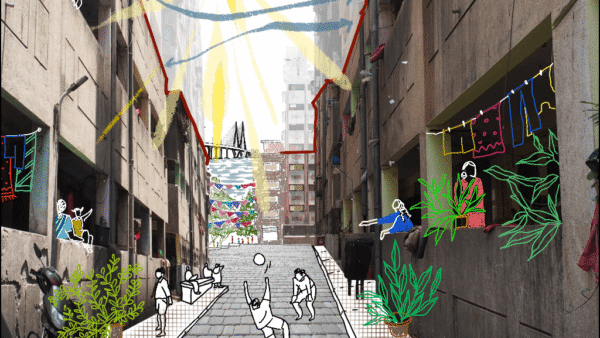
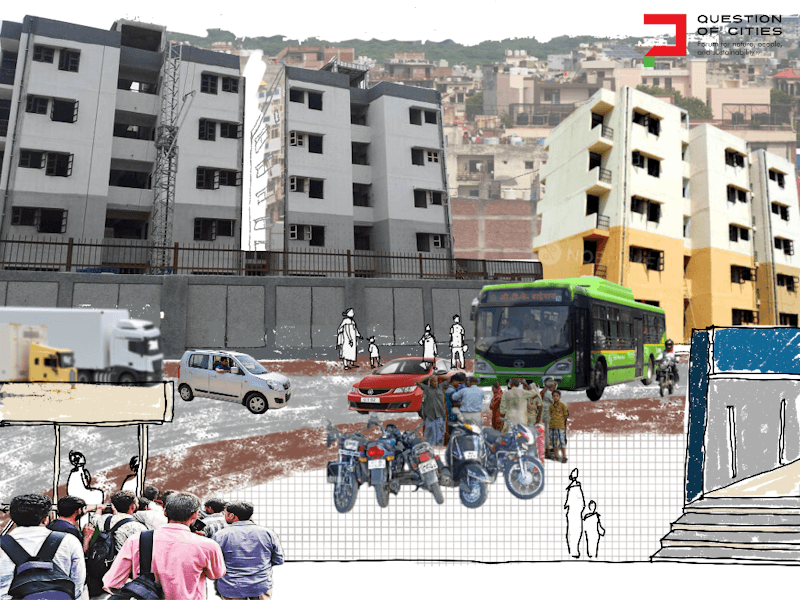
The third aspect of reimagining resettlement appears to be interconnecting in situ development with low-rise housing and strong connectivity. Swati Janu, an architect and founder of Social Design Collaborative[16], who works on housing rights, calls for going back to board with the basics.
In situ resettlement
“The first principle is that resettlement must be within five kilometres or in situ, if possible. Otherwise, people are displaced not just from homes but also from their livelihoods. Then, there’s design. When people are allotted tight multi-storey flats, their relationship with the street and commons is removed, especially for livelihoods linked to cattle or in Kathputli Colony, huge puppets. In flats of 220-250 square feet, there’s no space for this work. Then, the flats should, at the very least, have ventilation and light.”
Kathputli Colony, in west Delhi, was marked for in-situ rehabilitation[17] in the Delhi Master Plan of 2021 as an alternative to a far-away relocation. It was demolished in 2014 for redevelopment based on Mumbai’s Slum Rehabilitation Authority (SRA) model in a three-way deal between the DDA, residents, and a private developer, Raheja Developers.[18] More than a decade[19] later, the displaced are still in transit camps. “They have no clear date to get permanent homes. Even the policy says that people are not supposed to be in transit camps for more than two years,” explains Janu.
Where there is political and administrative will, it can be done as Kalkaji extension shows. The rehabilitation was completed in 2022 and 3,024 flats[20] were given to those displaced from Bhoomiheen Camp JJ cluster within the five-kilometre radius. Each allottee had to pay Rs 1.24 lakh. Many reported to be largely satisfied[21] with the one-bedroom-hall-kitchen flats with balconies, drainage system, and lifts, though water scarcity and poor maintenance persist here[22]. “The way resettlement was handled in Kalkaji was partially successful; it followed the norms of in situ rehabilitation,” says Nagpal.
Low-rise housing
This vertical built form where resettlement buildings are stacks of small flats is far from realistic. “Many livelihoods don’t fit a vertical built form,” observes Nagpal, “Where does a carpenter keep his wood and tools, or a street vendor park her cart? On the seventh floor? Resettlement housing has to be designed around how people earn, not just where they sleep.”
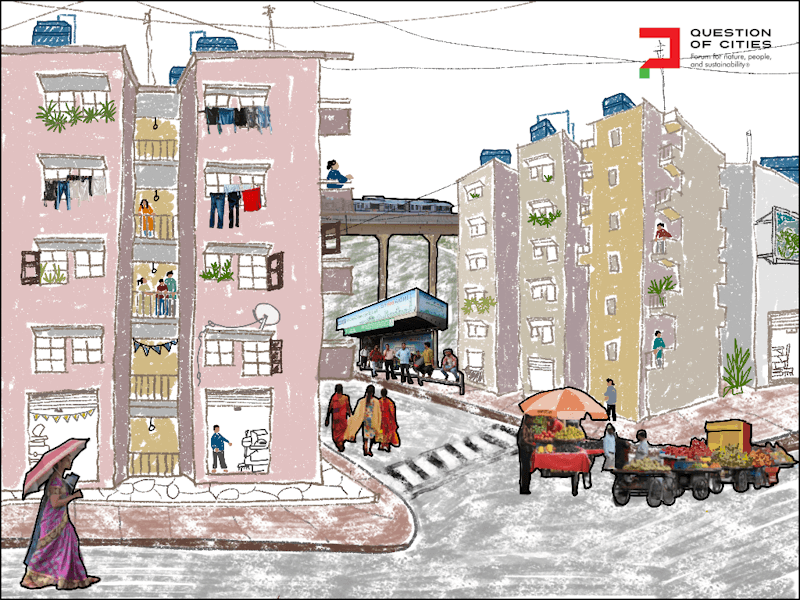
Low-rise buildings with open spaces around them, preferably a central courtyard that serves also as a community space, is the way out. The reimagination has to extend to meet the needs of the people who are supposed to live in these colonies. There cannot be a one-size-fits-all approach with standard designs and layouts for all the colonies, drawn up without involvement of the potential residents.
Space cannot be standardised as per models made in a government office. Neelesh Kumar, member of the Delhi Housing Rights Task Force, says, “Earlier, they used to give plots and people built their houses themselves; now they give a 1BHK flat. The Molarband resettlement colony in Badarpur has G+3 structures. That was the preferred model.”
Strong connectivity
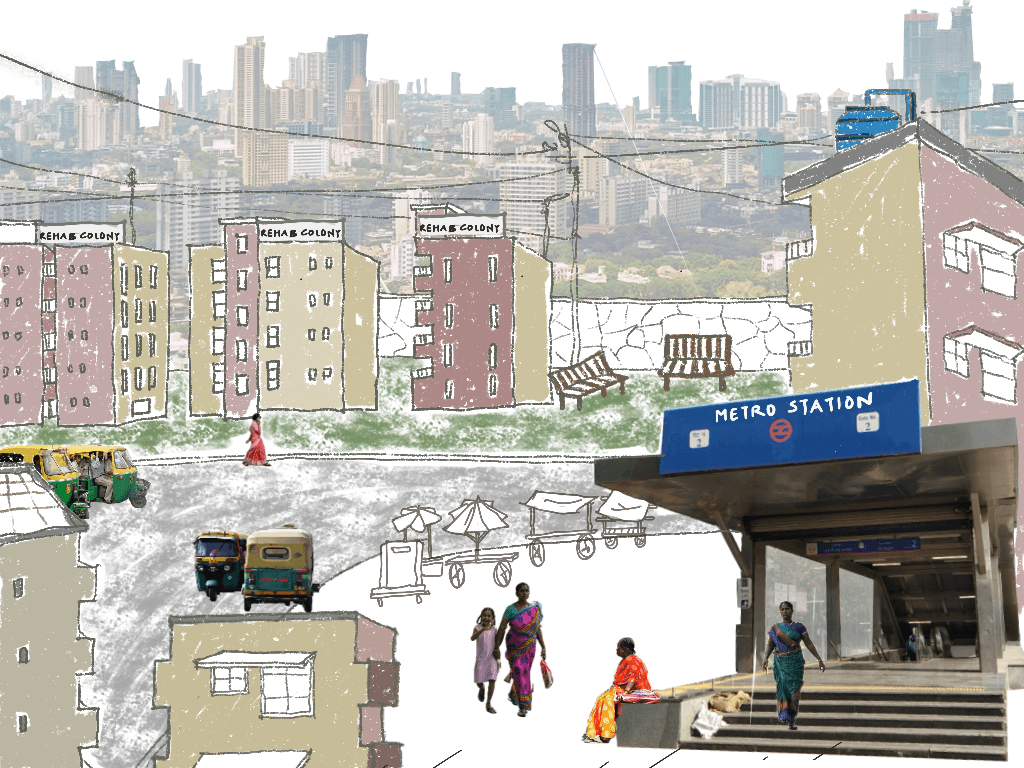
A robust, multi-modal, public transport connectivity is a must in all resettlement colonies but especially so in the far-flung ones. This can mean, for many of the displaced, the difference between assured livelihood and economic uncertainty.
In the Molarband colony, where slum residents from AIIMS were moved 18 kilometres away, the metro and bus connectivity has helped. “Badarpur, due to its metros and buses, has a good transit connection,” Kumar points out. Similarly, the displaced from Khori Gaon were resettled in Dabua Colony, Faridabad, a part of Delhi-NCR, where transport connectivity saved the day. “It is 17 kilometres away from their original homes but people have been able to keep their livelihoods intact,” he adds.
Conclusion
A template Nagpal recommends for housing rights for informal settlements is Odisha’s transformative JAGA Mission[23], where instead of evicting slum dwellers from nearly 3,000 slums in Bhubaneswar, the state government offered tenurial security by giving people the land (jaga) titles.
In addition to the Delhi-specific policies, international covenants lay down guidelines for the resettlement of displaced or evicted slum residents. Resettlement, the UN charters say, should be the last resort and carried out with basic principles. The Universal Declaration of Human Rights (1948) and the International Covenant on Economic, Social and Cultural Rights (1966) recognised the right of everyone to a standard of living including adequate food, clothing and housing, and the first Special Rapporteur on Adequate Housing (2007) defined the human right to adequate housing, as: “The right of every woman, man, youth and child to gain and sustain a safe and secure home and community in which to live in peace and dignity.”[24]
There is no dearth of conceptual basis to ensure that the displaced in India’s national capital are resettled in line with these international covenants. What is required is the political will to reimagine that resettlement can be vastly better than it has been in the past 60 years.
Ankita Dhar Karmakar, Multimedia Journalist and Social Media in-charge at Question of Cities, has reported and written at the intersection of gender, cities, and human rights, among other themes. Her work has been featured in several digital publications, national and international. She is the recipient of the 4th South Asia Laadli Media & Advertising Award For Gender Sensitivity and the 14th Laadli Media & Advertising Award For Gender Sensitivity. She holds a Master’s degree in English Literature from Ambedkar University, New Delhi.
All illustrations by Nikeita Saraf