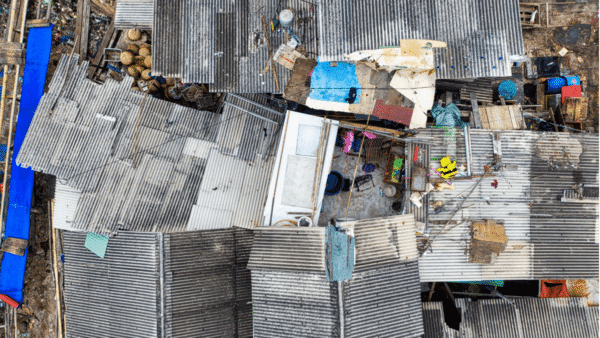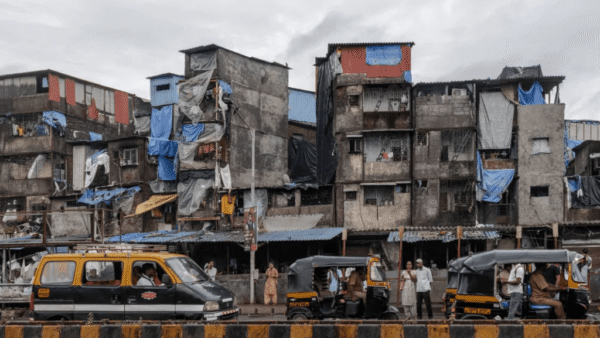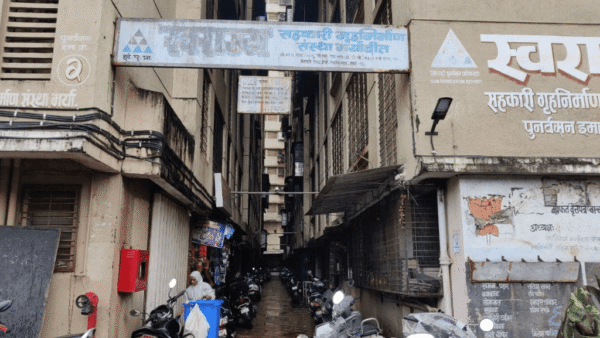

Cities grow through cycles of displacements. People on margins are consistently displaced to make space for infrastructure, housing stock, expansions, enterprise or to accommodate gentrification. The experience of shifting homes brings in a strange feeling of placelessness. The settled social networks and memories of the place and people get ruffled. The unfamiliarity of the new house, new area and neighbours makes one feel “unhomely”.
Dislocation, therefore, produces a feeling of being “out of place”. This is perhaps at its most acute amongst people living in transit camps, or houses allotted by the government or its agencies for a short period of time, ideally until their rehabilitation house is built. Estimates are that nearly 22,000 families are living in Mumbai’s transit camps, most of them tied to Maharashtra Housing and Area Development Authority (MHADA); in one case, 256 families have been in transit camps for 40 years and in the High Court for water and sanitation.[1]
This essay looks closely at the practices of place making and (be)longing in transit camps in Mumbai. (Be)longing suggests the practices that help people establish ‘belongingness’ and, simultaneously, emphasises the longing and the hope among the residents of the transit camps of better days and their own home. The forced waiting, often in an undesirable place, produces a tensioned landscape of temporariness and settling. How then does ‘settling’ take place? This essay’s ethnographic approach attempts to critically investigate the ways in which people living in transit camps – Pratiksha Nagar in Sion and Bimbisar Nagar in Goregaon – re-establish the sense of ‘belongingness’ that is essential for one to dwell.
The study delves into the everyday practices of people to comprehend the logic of appropriating forms through softening, corroding, overlapping, and transgressing. These physical alterations in forms are initiated by making micro-claims, micro- negotiations, and creating micro public spaces. Along with these, there exists a non-physical or metaphysical realm which plays an integral role in establishing the notion of belonging and producing a habitat.
Comprehending the transit camps
The very concept of a transit camp is temporary accommodation. Historically, the term has been associated with soldiers or refugees — people displaced due to war, violence, or natural disasters. The Latin term “castrum (pl:castra)” is associated with the military in the Roman Republic and the Roman Empire. It means a fort or camp that included large legionary fortresses, smaller forts for cohorts or for auxiliary forces, temporary encampments like huts and tents, and “marching” forts. It was designed to house soldiers and protect equipment and supplies when they were not fighting or marching. Transit camps were also confined spaces for prisoners.
The form of transit camp was always imagined as a temporary structure that can be easily dismantled. Some of the camps were the size of a town, some were fenced, guarded and highly monitored while others allowed freedom of movement. These were always built for a category of people, not for a single resident. The “camp” is a complex term to define; various kinds of spaces for temporary accommodation are associated with it. There’s not a definite nature or spatial configuration to it.
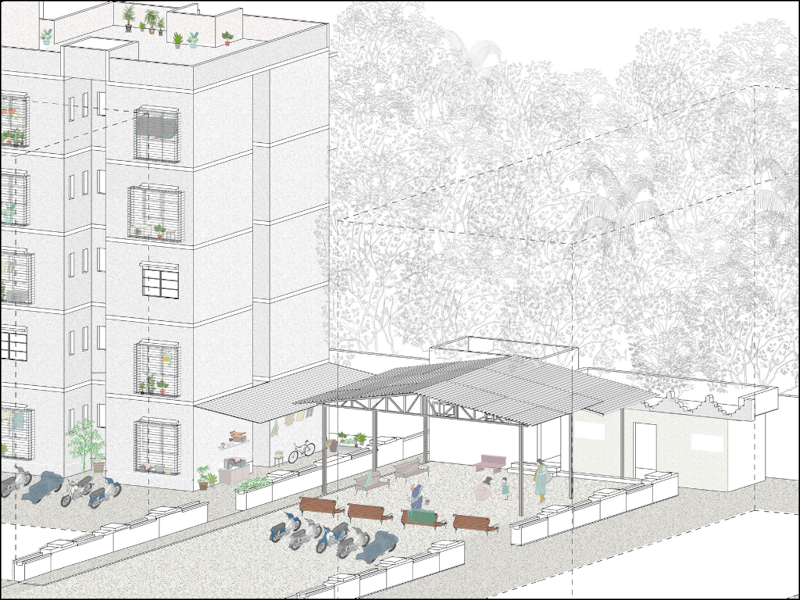
In the transit camps under study, built by the state authorities for the residents of dilapidated buildings, the people are neither refugees nor militants, but commoners displaced in the process of redevelopment. They keep on shuffling, interchanging, and emptying the transit houses as and when their housing is rebuilt or redeveloped. The transit camps are temporary accommodation. Residents pay a small amount as maintenance. This is the basis of the MHADA model. The areas that the authorities choose for transit camp are mostly in suburban Mumbai such as Goregaon, Sion, Ghatkopar, Mulund and so on – but in margins, not prime locations. The spatial configurations of these buildings are quite monotonous and do not offer any variety of spaces. The mundane building configurations accompanied by the longing to return ‘home’ takes a toll on the physical and mental well-being of the people here.
There is a transitory notion to it all. The similarity in both the historical and contemporary landscapes of transit camps is the longing to return home and, simultaneously, re-establish ‘belongingness.’ The camps generate a spatiality of being trapped; a person can be stuck in a transit camp due to political, legal or institutional delays and conflicts. Even though the camps are for temporary accommodation, their existence is not short-lived. The camps also create a subtle segregation between the transit residents and the surrounding population.
Politics of inhabitation and marginalisation
Bimbisar Nagar lies along the Western Express Highway in Mumbai’s northern suburb of Goregaon. The transit camps were set up around 1975. Earlier, the camps were baithi chawls structures. After the 2000s, they underwent redevelopment and a new configuration of the camps came into being. The transit camp buildings are a single G+4 structure without lifts, with a 180-square foot area of a house.
A similar pattern has been observed in Pratiksha Nagar transit camp, where baithi chawls were redeveloped to G+4 and G+7 built forms with 180 square feet and 225 square feet respectively. Pratiksha Nagar has more than 75 transit camp buildings. It was known as Nehru Garden in 1970-80s; when it came to light that people had been living there for 20 years, it was renamed Pratiksha Nagar; pratiksha means ‘to wait’ in Marathi.
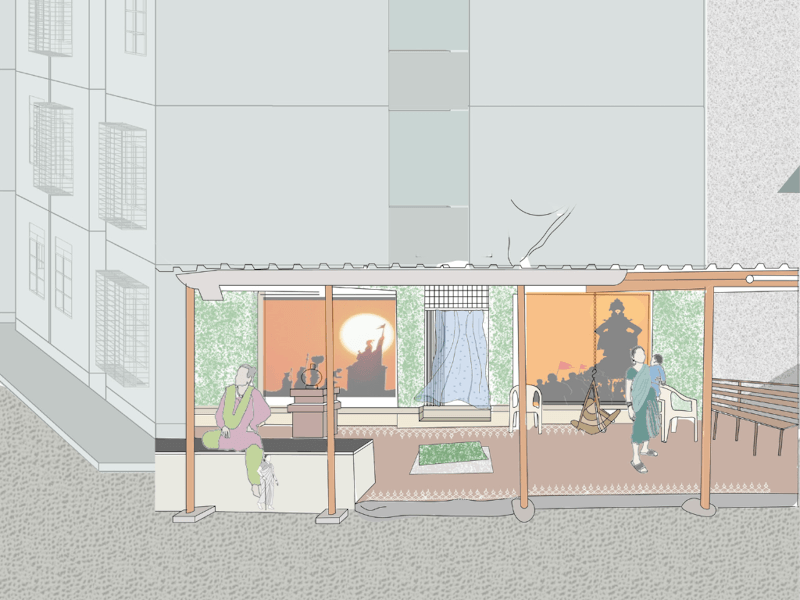
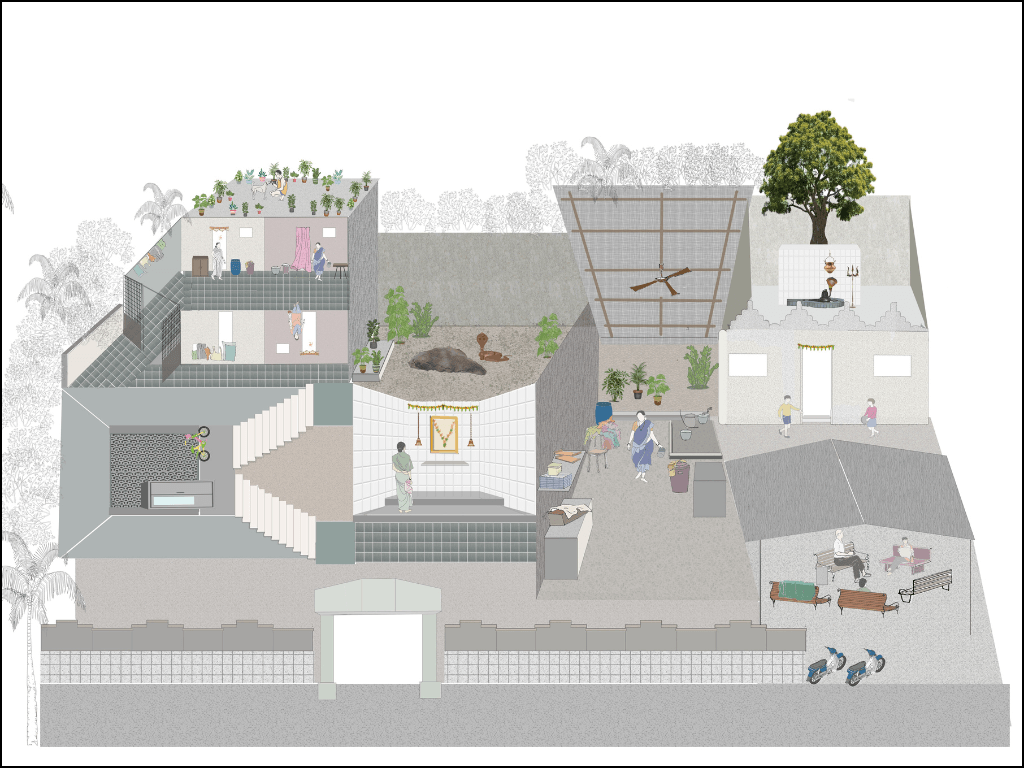
People in both places have found their own ways of appropriating spaces to establish a sense of belonging. In the transit camps that were a mere series of buildings, people unknowingly developed common places for everyday practices, gatherings, social interactions and so on. In Bimbisar Nagar, there’s a metal shed built at one end of the road along with a temple, which brings many people every day from the neighborhood. The spatiality of the shed allows the possibility of chance encounters and space for group activities and festivities.
Similarly, in Pratiksha Nagar, one can see corrugated sheet roofs added at the entrances of buildings. This soft addition of a sloping roof converts the entry space into a verandah, which is then adorned with swings, chairs, rangoli, and a tulsi vrundavan. This extended verandah becomes a place for evening tea, night talks, weekend meet-ups. People establish certain practices to form an association with different places of the transit camp neighbourhood. Such practices, depending upon the possibilities that the built form offers, are common across transit camps in Mumbai.
The idea of home extends into these common spaces, which create a sense of community, and this is where people dwell; they don’t just inhabit spaces. In the essay, Building Dwelling Thinking, German philosopher Martin Heidegger explicitly differentiates the terms dwelling and inhabiting. Human beings inhabit various spaces but dwell only in particular spaces. He also states that “the act of dwelling is not only a physical act but more than that, a mental realm. Some physical aspects of space or objects can lead to mental peace and, in turn, to dwell. Space makes a place happen.”
The idea of “place” refers to the distinctive character of space, the surrounding or a built environment, states Christian Norberg-Schulz, Norwegian architect and author. Place, along with the physical geographies, is an accrual of the social, the psychic, the empirical, the cultural, and the historical construct. Places have attributes, material culture, memories, and a spirit or a soul. When thousands of people are assigned to transit camps that are, in reality, the margin spaces of the city, their marginalisation gets further entrenched.
People in transit camps try to bring the material characteristics of their existing homes and neighbourhoods in the transit camps, and rewire their lost networks, associations through appropriations. The act of appropriation happens at various scales — from the self, to the house, the corridors, the built form, to the neighborhood. The act of making rangolis, planting tulsi, negotiating and defining the corridor spaces through objects, creating small temples, building friendships, trusts, solidarities are the ways of creating a sense of belongingness and making a space livable not only physically but mentally as well as emotionally.
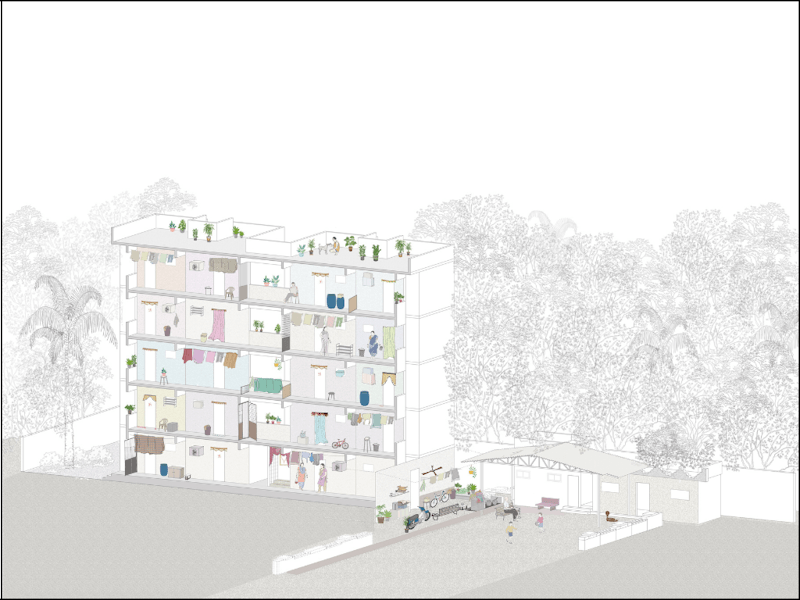
The long wait for own homes
“Majhe ghar ikde nahiye, majha ghar amchya area madhe ahe. (This is not my home, it is in our area).”
Despite this recreated (be)longingness, life in transit camps is driven by the hope of resettling in their own homes and former neighbourhoods. There is a longing, a temporality, observed in residents here.
People make small alterations to thrive. Some try to escape the transit camp life by constantly visiting their old neighbourhoods. Many find it difficult to settle and feel ‘out of place’. There are instances where at least one generation has passed away waiting and longing for their homes. The act of dislocation is voluntary yet involuntary. The place they lived in had shaped them; in transit homes, people try to shape the place they have to live in. If their resettlement buildings are not built in time, the transit camps become places of frustration, a trap.
Shelter is a basic requirement of humans but it cannot be a mere box for residing. The idea of owning a house also mobilises the logic of selling, renting, renovating, and so on. The physical aspects of belonging are underscored by the mental and emotional sense of one’s place – the landscape, the environment, and the networks of people. Trying to recreate it all in transit camps is the intangible realm of resettlement or rehabilitation that is often neglected in the face of more utilitarian logic. But the built environment of transit camps must be addressed because Mumbai, where a massive redevelopment process is underway, might have large numbers condemned to transit camps.
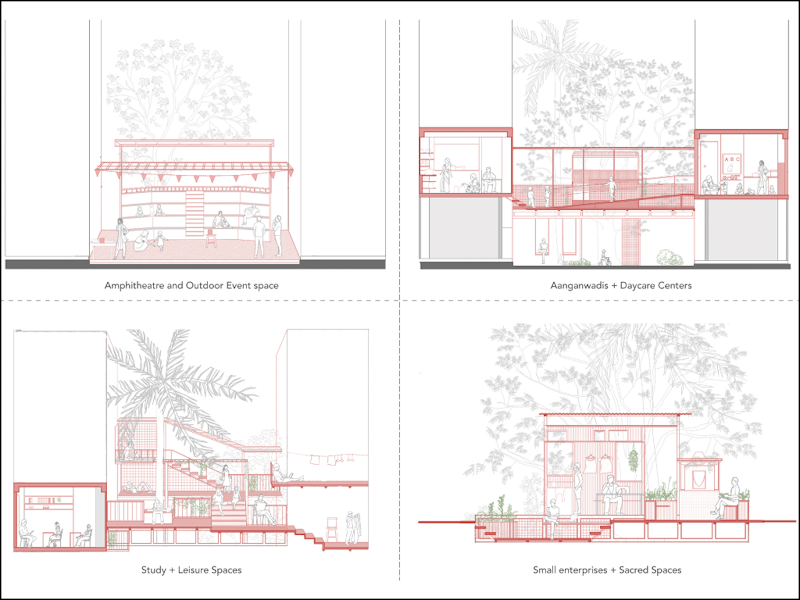
How to rethink the built form of transit camps?
The transit camps lack social and common spaces for people in the public realm. In order to make up for these gaps, residents begin to appropriate the available spaces within and around built forms. The design and adjunct infrastructure too hardly fulfil the minimum benchmarks or building guidelines of the National Building Code.
The intervention or change must begin with the very design of the transit camps; they are not meant to house soldiers or prisoners as in the earlier days and should not look or feel like places of punishment for the people who are assigned to them. The current carpet areas of transit houses range between 180- 225 square feet, which are inadequate for comfortable habitation. Even if it is temporary accommodation, the transit camp houses should be larger than this with adequate space for an average nuclear family.
Then, the physical design should be integrated with support infrastructure which should be non-negotiable. This includes spaces such as libraries, day care centres, study spaces, community centers, healthcare centers, leisure spaces and so on. These shared amenities could address some of the gaps in the physical neighbourhood while providing opportunities for social interaction and community engagement. The home then spills over to the outside and helps to generate a ‘community’, strengthen social networks, and elevate the sense of belonging even in a transit camp.
In the housing tier of Mumbai, transit camp houses rarely occupy the attention or command the budgets that they should. This must change so that people can lead better lives – even in temporary housing.
Aditi Kawade is an architect and writer based in Mumbai. She graduated from the School of Environment and Architecture, Mumbai, where her dissertation explored ideas of belonging and urban displacement. She is interested in exploring the intersections of design, research, and everyday life. With a sensitive and empathetic outlook, she approaches writing as a way to observe, question, and make sense of the world around her.
All illustrations: Aditi Kawade