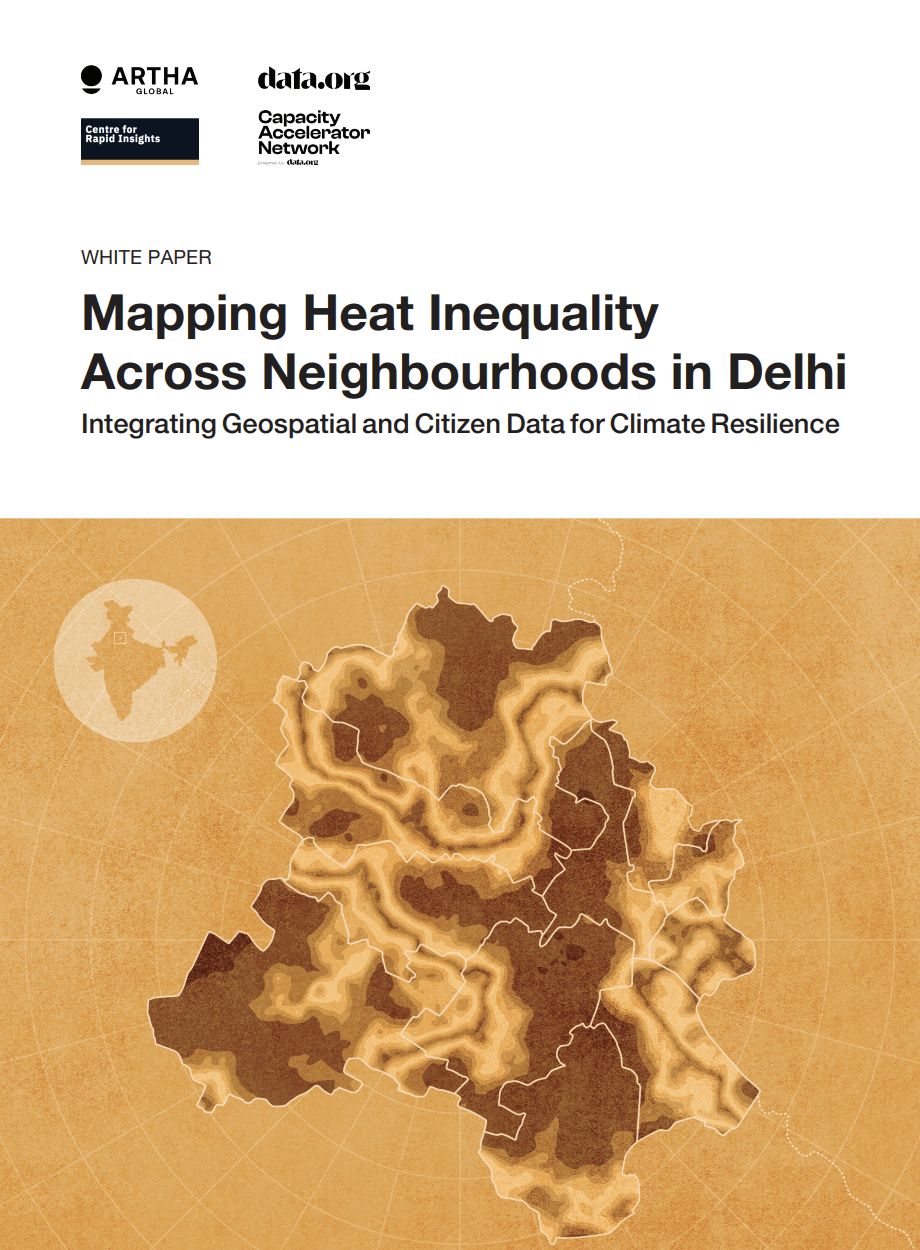
Mapping Heat Inequality Across Neighbourhoods in Delhi Integrating Geospatial and Citizen Data for Climate Resilience
Summary
This white paper published in 2026 examines how heat is experienced across Delhi’s neighbourhoods and how these experiences vary across socio-economic groups. Through their findings the paper argues that neighbourhood designs can influence heat exposure. Areas with higher tree cover experience lower temperatures; even a slight increase in greenery helps in cooling and mitigating heat.
The findings show that adding 8 percent more green cover can cool Delhi neighbourhoods by 1°C but its effects are unequal. Areas with higher tree cover experience noticeably lower temperatures, with even modest increases in greenery, thus delivering stronger cooling benefits, than the warming effects which are associated with built up areas. The paper further states how households with air conditioners report better sleep, lower rates of heat-related illness, and fewer work disruptions, during extreme heat, as opposed to lower-income households.