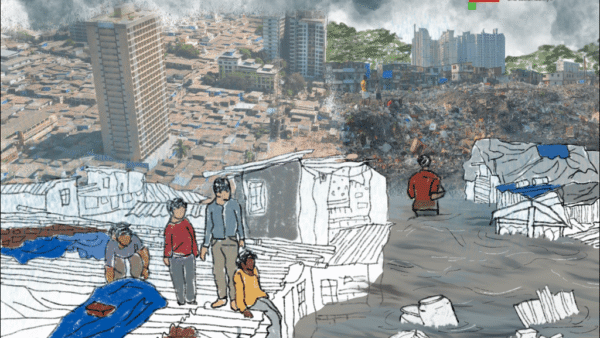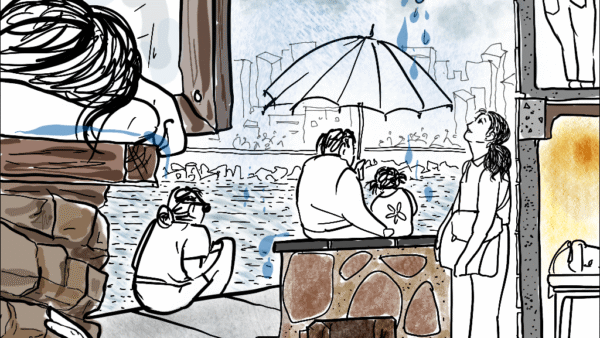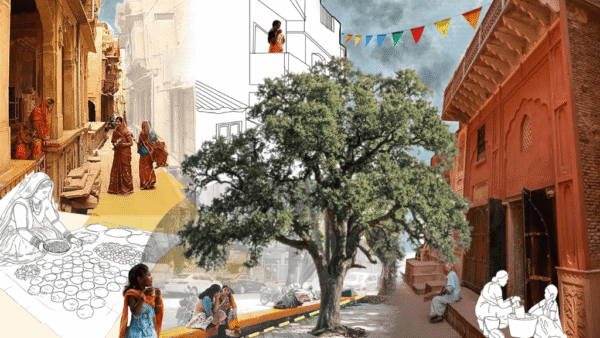


Climate change is already shaping our well-being. It affects mental health, spreads infectious diseases, disrupts work, damages food supplies and forces families to leave their homes because of conflict, hunger or flooding. Well-being[1] refers to everything that enables people to live healthy, safe and meaningful lives.
It includes physical and mental health, access to food, clean water, hygiene and income, as well as work, leisure, culture and education. It also involves personal safety, freedoms, trust in institutions and how people feel about their own lives. Environmental quality, biodiversity and the degree of inequality in society are part of well-being too. Climate change touches every one of these areas.
Our new study[2], written with René Kleijn of Leiden University, examined the many ways climate change affects well-being and assessed whether these impacts are reflected in the climate policy models that guide global decision-making. These models are large computer simulations that explore how society and the economy might change under different climate and policy scenarios. Policymakers use them to test “what-if” questions, such as introducing a carbon price or expanding renewable energy, before making real decisions.
We found that although researchers have documented a wide range of climate-related harms, very few of these factors appear in the most influential models used by governments and international agencies. Newer experimental models do include well-being, but these are not the ones shaping today’s climate policies.
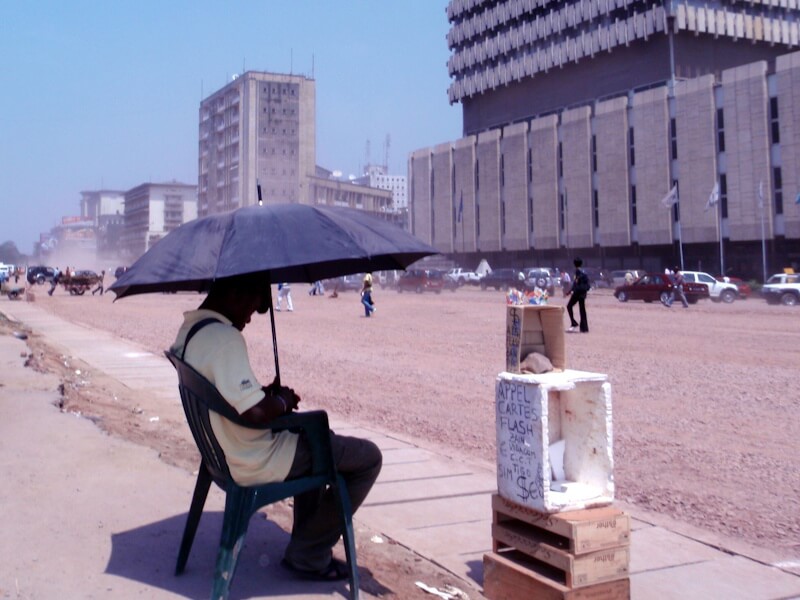
Photo: Wikimedia Commons
This gap matters because climate policy models influence real-world choices. For example, the International Energy Agency’s modelling informs energy investments.[3] The models used by the Intergovernmental Panel on Climate Change (IPCC), the UN’s scientific advisory body, have shaped global interest in bioenergy with carbon capture[4] and storage[5], sometimes at the expense of rapid emissions cuts.
If well-being is not represented, the benefits of climate action will be undervalued because the models cannot account for them.
Research from more than one hundred institutions through the Lancet Countdown[6] – one of the world’s leading annual assessments of how climate change is already impacting human health – shows that heat is now responsible for around 5,50,000 deaths each year. This is 63 percent more than in the 1990s. Four out of five heatwave days today would not have occurred without climate change.
Rising temperatures are changing the nature of work. In 2024,[7] 640 billion potential working hours were lost in sectors such as agriculture and construction because conditions were too hot to work safely. This represents more than $1 trillion US dollars (£755,725,000) in lost income.
Heat and drought threaten global food systems as well. According to Lancet Countdown projections,[8] if the planet warms by 2°C, around 500 million more people could face food insecurity within the next two decades. If warming reaches 3.6 degrees Celsius by the end of the century, the number could rise to 1.1 billion. These estimates do not yet include the effects of sea-level rise, damaged infrastructure, agricultural pests or reduced nutrient content in crops.
None of these impacts – heat deaths, lost working hours, or rising food insecurity – are systematically included in the major climate policy models used today. That means decisions about climate action may be overlooking some of the most important human consequences. Failing to cut emissions costs lives and livelihoods but climate action protects both.
Why climate models still miss well-being
Despite extensive research, most climate policy models ignore impacts on well-being. When it is included, it is often measured in narrow economic terms that miss what matters most to people. Yet many areas have already been studied in ways that could be incorporated into models. Research has quantified the damage from diseases such as malaria, diarrhoea and cardiovascular illness, as well as mental health conditions including depression and suicide.
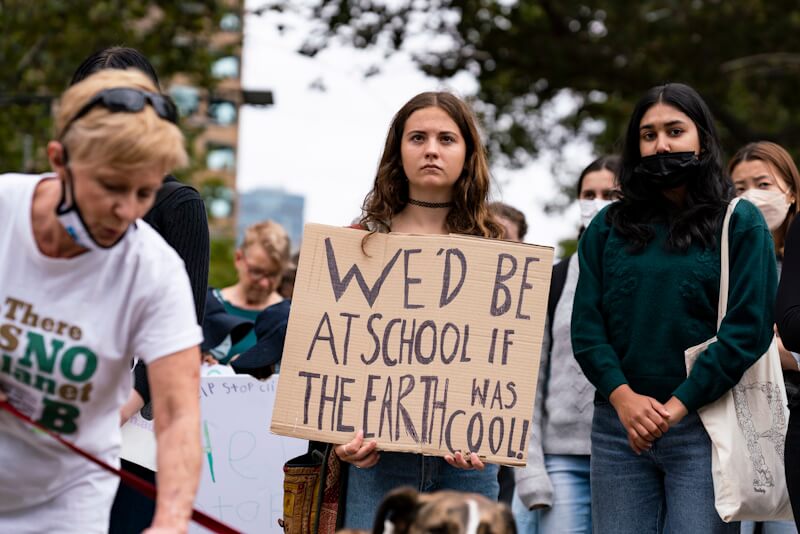
Photo: Wikimedia Commons
For example, a large systematic review[9] examined the link between extreme heat and worsening mental health, including hospitalisations for psychiatric conditions.
Other work shows how climate change affects worker productivity, leisure, conflict, migration, air quality and biodiversity. Studies have demonstrated[10] clear connections between rising temperatures and reduced labour productivity, and between[11] climate change and biodiversity loss, with implications for human health and food systems. These issues are central to people’s lives and should be represented in policy modelling.
Some areas have been explored in research but still cannot be included in climate policy models because they lack the numerical data needed for modelling. These areas include education, cultural heritage,[12] subjective wellbeing (how people evaluate and feel about their own lives), and governance.
Some reviews[13] describe how climate change affects these aspects of life. However, they also emphasise that these impacts remain difficult to quantify in consistent, comparable ways, which is why they are not yet represented in most climate models.
Inequality must be part of the picture
Climate change does not affect everyone equally. Women, children[14] and older adults are often more exposed. Evidence from the United Nations[15] and global health research shows that these groups face higher mortality and displacement risks during climate-related disasters.
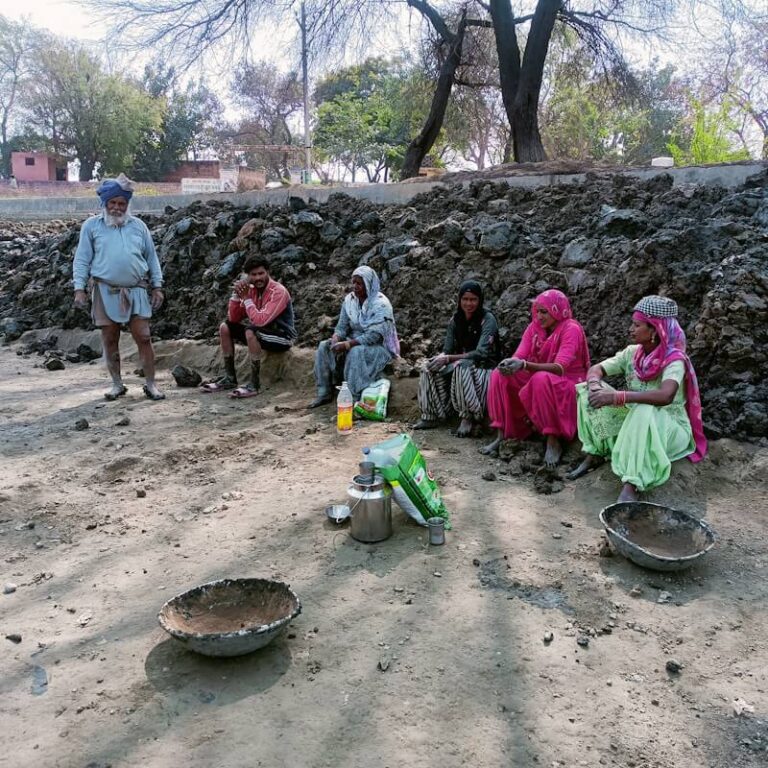
Photo: Wikimedia Commons
Some people face greater risks because they do not have safe housing, live in regions already experiencing extreme heat, work outdoors or lack the financial resources to prepare for future impacts. People who contributed least to climate change often face the most severe consequences, particularly in regions with limited means to adapt. This pattern is described extensively in literature on climate vulnerability and justice, such as the 2026 Global Climate Risk Index.[16] Almost no climate policy model includes these inequalities.
Climate change is not only about emissions and temperature limits. It affects how people live, work, eat, breathe, learn and feel. When models ignore well-being, they underestimate the benefits of climate action and overlook the true costs of inaction. To create climate policy that reflects real human lives, well-being needs to move from the margins to the centre of modelling efforts.
Climate action is not only an environmental necessity. It is an investment in global health, safety, dignity and fairness.
Inge is a PhD researcher at the Institute of Environmental Sciences (CML) of Leiden University (the Netherlands). Her PhD is part of the WISE Horizons project funded by Horizon Europe. The project supports shifting focus from GDP to Sustainable Inclusive Well-being, aiming to create indicators to replace GDP, accounts to replace the System of National Accounts, and models to replace macro-economic modelling. Inge’s subject is the relationships between the environment and well-being and how these could be included in models. She has studied the impact of climate change on well-being and the impact of the top 10 percent consumers on planetary boundaries. Before starting her PhD, Inge worked for the Dutch Ministry of Infrastructure and Environment, among others, on integrating “broad prosperity” into policymaking. Inge holds a BSc from University College Utrecht where she majored in chemistry and earth and environmental sciences.
Paul Behrens is an author and academic at the Oxford Martin School. His popular science book, ‘The Best of Times, The Worst of Times: Futures from the Frontiers of Climate Science’ (Indigo Press, 2020) describes humanity’s current trajectory and possible futures in paired chapters of pessimism and hope, on topics including the economy, energy, land and food. His research and writing has appeared in scientific journals and media outlets such as The New York Times, Scientific American, Politico, Nature Sustainability, Nature Energy, Nature Food, PNAS and the BBC. He and his team won the inaugural Frontiers Planet Prize.
Rutger Hoekstra has nearly 20 years of experience working on the quantification of value, well-being and sustainability from an academic, government, statistical and business perspective. He is the author of ‘Replacing GDP by 2030’. He is currently Associate Professor at the Institute of Environmental Studies (Leiden University) and a fellow of the Wellbeing Economy Alliance and ZOE Future Fit Economies. Rutger has worked with/for the United Nations, OECD, World Bank, European Commission, European Central Bank, various ministries, NGOs and large companies to create better metrics for society. He was the co-chair of the UN-ECE/OECD/Eurostat Task Force which developed the Conference of European Statisticians Recommendations on Measuring Sustainable Development and also worked for the Dutch Parliament as an expert for the Commission for Broader Measures of Well-being.
This piece has been republished from The Conversation under the Creative Commons Licence.
Cover photo: Hunter Scott on Unsplash, CC BY-SA