
While we ponder on the existence of the past in our neighborhood, we also levy designs for the future through our architecture. So, the essential issue in urban architecture is one that concerns the built environment at large in terms of the urban setting; of yesterday and today, today and then, tomorrow. This setting is perceived through the sense of sight primarily. It is then a matter of the urban aesthetic. Witnessed from the public realm, it has the potential to form a visual image or identity of the place.
Aesthetics, in common parlance, is often about character and expression, or in a layman’s term, style. Style is where the building may exhibit features or a particular architecture aesthetic, period of construction and such. However, style is often considered, though erroneously, as one of the most important attributes in noting the history of architecture. The manner of style to the site has to stand true to its time in architectural terms. As noted by Danish architect P.V. Jensen-Klint, “style is created by the material, the subject, the time and the man.” A living site must be seen according to its needs of the time and over time.
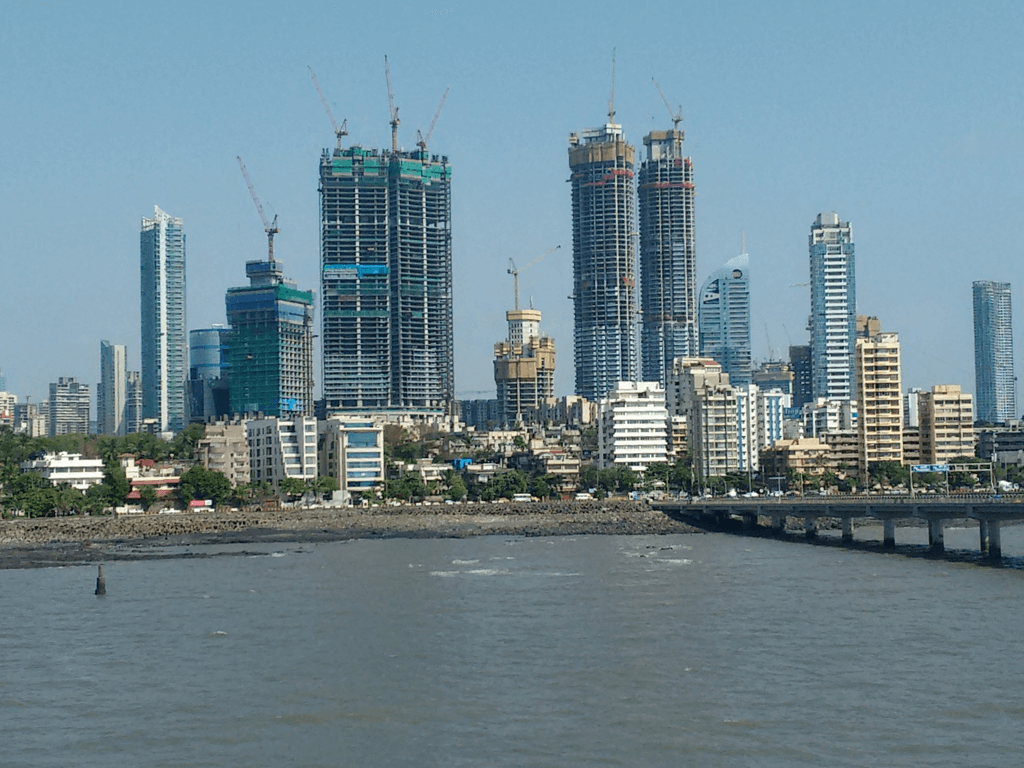
However, with increase in population of the urban agglomerations, and without an aesthetic vision, it can lead to deterioration in the visual quality of the built environment. The decay that is immediately evident in the conflict of built form, rising with individual preferences, which are anonymous to their neighbors. Likewise, chaos, analogous to the complexity of a functioning city is also visually seen in its cluttered public realm. Take the case of Mumbai, a city often seen as a development policy benchmark by other cities.
Not before long, the settlement of Mumbai was a sleepy hamlet scattered over seven small islands. Not too far from today, this spreading metropolis will be ever more populated. With limited land area, the rapid pace of technological progress and infinite air space to build tall, it is not a distant, unattainable goal. However, in the midst of this futuristic thought lies a query. The current Development Plan (DP-2034) and Development Control and Promotion Regulations (DCPR-2034) ensure that these measures get quantified. But what about the qualities that exist in this city?
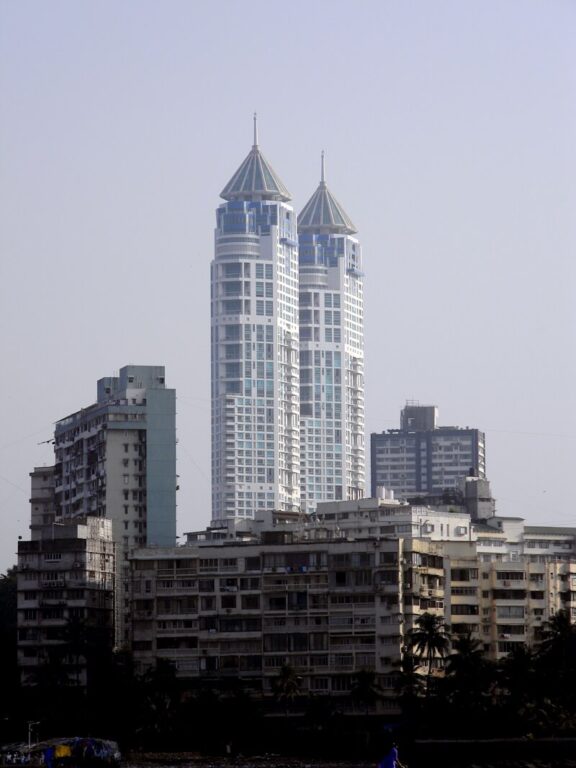
Photo: Wikimedia Commons
Mumbai and Delhi – two approaches to architectural aesthetics
Mumbai citizens are aware of the city’s colonial and earlier built legacy, when a draft Heritage Regulation in 1991 was notified with a list, and later finalised with deletions and additions in 1995. This was updated with a new draft in 2012 and reviewed around 2017 for finalisation. To operate the heritage list, an Advisory Panel, known as the Mumbai Heritage Conservation Committee (MHCC), was appointed to look into the proposals of the sites. In most individually listed items, the scope begins with the identified building and ends at that too; it has the reference point of the past. The MHCC seemingly operates unilaterally with just one hand – that the past is sacrosanct.
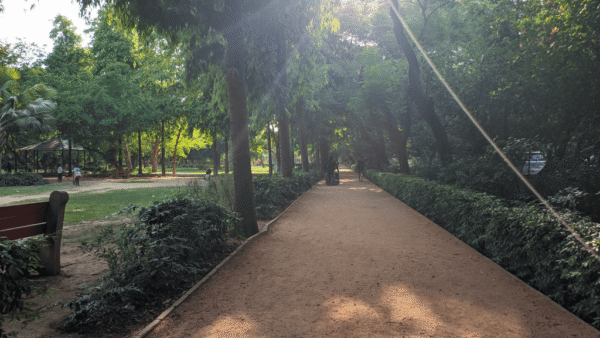
In relative terms, take New Delhi as a case study. New Delhi’s awareness of urban design also opened the doors for architecture in the context of its immediate environment at the human scale. It was conceived to appoint a committee that would guide and advise to improve the quality of built form in urban areas. This called for the formation of the Delhi Urban Arts Commission (DUAC) which was introduced in the Delhi Master Plan of 1962-82. The DUAC must not be confused with the Mumbai Urban Arts Committee, where the former plays a wider responsibility as a Commission, while the latter was a committee limited to advising on art installations in public spaces.
The DUAC is constituted under the Delhi Urban Arts Commission Act of 1973, whose main purpose is “to preserve, develop and maintain the aesthetic qualities of urban design.” Thus, the DUAC’s objective is clear enough to state that the scope was not limited to only the past. It was set up to intervene in all aspects of the built and natural environment – the past, present and future mattered. What urban areas like Mumbai and other such metropolitan cities require is a judgment in all fairness of what should be retained, restored, renewed, reconstructed, revitalised in the realm and for “public purpose”.
While Mumbai’s MHCC dwells around an existing older base, the Delhi DUAC stretches to control the visual quality of development in both the old and new areas of the city. The immediate success of either of these Committees depends on their level of involvement to the proposals received. In Mumbai’s MHCC, it should hence be relatively easy. But to compare the representation of our time in the long term, it is Delhi’s DUAC that can cause a positive difference – for it controls the design contribution of today’s buildings in scale and architectural aesthetics.
In Mumbai, the MHCC also does control today’s architecture, but in the listed and identified sites and precincts – that too with an emphasis on preservation and maybe retention or restoration of yesterday’s creation. This situation therefore, limits its scope for implementation, stifles probable judgment and cannot serve a permanent need. With MHCC approval, some heritage listed buildings have been allowed demolition and compelled reconstruction to visually resemble the original in available conventional materials, thereby building fakes, wiping out authenticity and regressing the element of time. There is no public knowledge till the demolition ball wrecks the original listed building.
On the other hand, the Delhi DUAC has been comparatively successful. It also offers a qualitative input to the urban man-made environment in a wider manner. The Delhi DUAC gives its aesthetic approval for large schemes like District Centres, Commercial Complex, the High Court, Gated Enclaves at the macro level and locations of artefacts like fountains, memorials and such in public spaces at the micro scale. Visit the website of the DUAC and note the various guidelines, controls and master plans prepared for different sites and situations in a contextual manner.
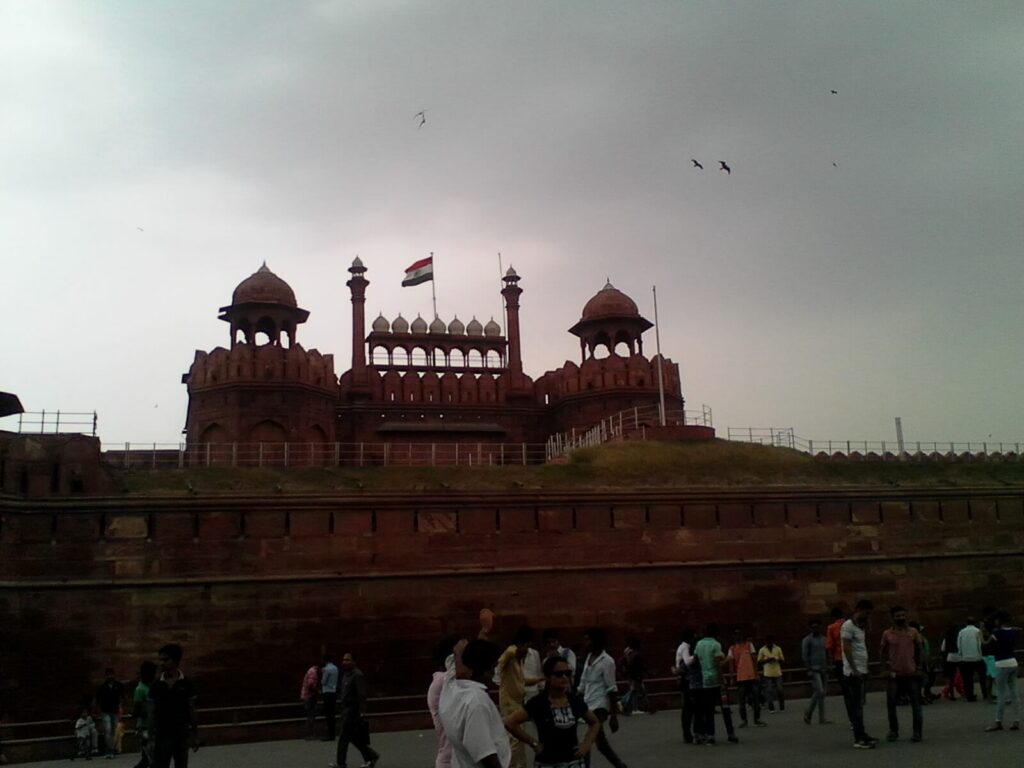
Photo: Wikimedia Commons
The elitism versus public purpose
To enable acceptable new development on any site with a “public purpose”, the Delhi Urban Art Commission approach would sensibly dwell on aesthetics of every proposal from the public viewpoint, without prejudice of its heritage status as a self and its immediate surroundings. It would ensure that the design suited the aspect of the present time, thereby avoiding fakes and imitations. In Mumbai, even with the MHCC, there are no unbiased and democratic guidelines for the heritage precincts. Guidelines to control the form, scale and character to retain the visual quality while also allowing new development to consume the potential as per DP-2034 and DCPR-2034, to prevent an opportunity loss for the owner. In the absence of financial support, as a consequence, Mumbai’s heritage movement has taken an elitist route, for those who can afford it, flaunt it.
The Delhi DUAC works with both hands while the Mumbai MHCC’s self-decided scope is to operate with just one hand – that of the past. The heritage list, lawfully protects the listed item but without a fiscal policy, these sites become private liabilities. All such movements begin with the people, and end with the law. To have started the heritage movement using the law, and over three decades now, if a visual inventory is made of what was listed and what stands in place of the original listed site today, the writing is on the wall – the beginning of the end.
Having said that, the Maharashtra government has recently, on March 28 this year, taken the initiative to form an Urban Design Cell (UDC) each for 421 planning authorities across the state, including 28 municipal corporations and 234 municipal councils, to achieve an aesthetic quality in image building of the settlement.
Future with the Urban Design Cell
Now, with the UDC being initiated, there is an opportunity to work with both, the past in the present, and the present in the future. The UDC must look for guidelines towards heritage setting, precincts and advise on other proposed projects, particularly public schemes and large layouts to ensure an acceptable aesthetic sensitivity for design and good manners in architecture viz. one that respects its adjoining context. As a case reference then, Delhi has set an example that is working on similar goals for over five decades.
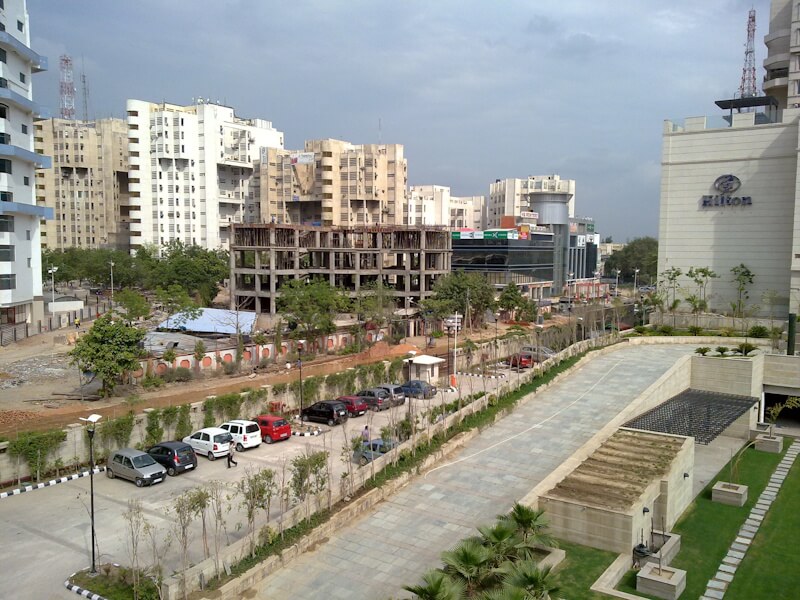
Photo: Wikimedia Commons
However, there is a note of caution in the composition of UDC members. The identification seems to belie the title “Urban Design Cell”. It reads like a committee of persons holding positions in public bodies but not exactly the profession as designers with an ‘aesthetic point of view’ through their work. To clarify, the “Cell” must be part of the Planning body, working to enable the Development Plan to be implemented in the public realm at ground level, to human scale, with the user in mind. And for “Urban Design”, it is essential to add positions for “Principal Urban Designer” and qualified associates with expertise in environment design, landscape architecture, urban conservation, habitat studies/sociologist, real estate management, and other relevant allied disciplines.
Nonetheless, UDC is a beginning and it must be keenly watched. The functioning must be transparent, impartial, with integrity and be professionally responsible. To begin with, if the Brihanmumbai UDC is smart, first notify that all “public purpose” projects must be decided through open competitions to ensure that the best designs get noticed. For, if the scope of our approving bodies itself is unidirectional, lacks proactive measures, provides closed door decisions on the projects, claims authority and allows demolition of listed sites, we can never keep alive the creations of yesterday for today and not also build anything worthy of today, for tomorrow.
In isolation occasionally, some designed buildings hold much admiration but the architects still need to be made aware of the environmental context. The aspect of a civic sense in the prevailing visual culture of urban society is often absent. The challenges of multiple governance mechanisms further complicate the current scenario. Development Guidelines for heritage precincts and areas of collective aesthetic quality are not in place. Conventional zoning follows the Master Plan or Comprehensive Plan and Zoning Map viz. the Development Plan (DP) process.
Form-Based Code and the quality of life
As a suitable option for our existing built environments that have aesthetic appeal, comfort and safety in the quality of life (QoL), there is potential to apply Form-Based Code (FBC). The FBC studies the existing fabric and draws out Urban Design Guidelines and Architectural Controls, that maintain QoL and allow permissible development.
In short, the FBC approach is visionary, illustrative and regulates both scale and aesthetics. Unlike the one-size-fits-all DCPR and the conventional compartmentalisation of land-uses in the DP, the FBC can foster the familiar aesthetic by using physical form as the organising principle for the development. As the name implies, Form-Based Codes focus on form – the relationship of buildings to one another and with the public realm.
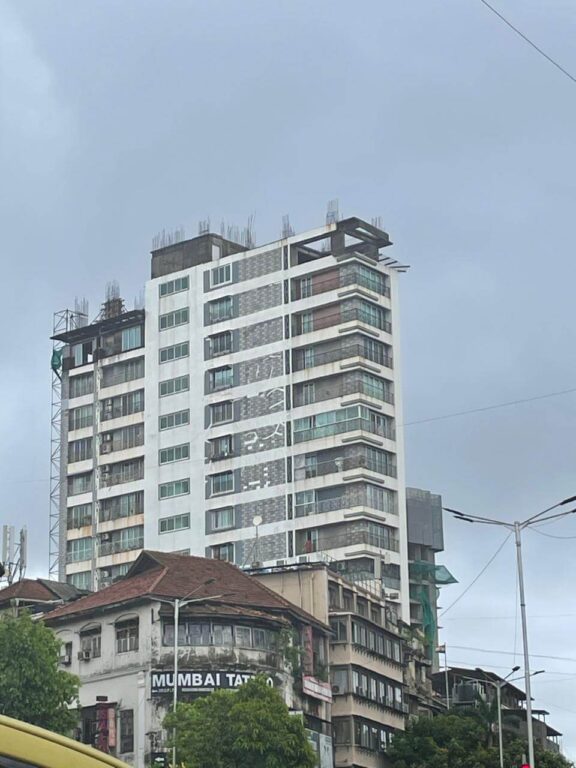
Photo: QoC File
The Greater Mumbai context is largely heterogeneous in terms of land situation and sizes, population and types of development, from erstwhile settlements like villages to planned layouts and unorganised or informal squatting. Till now, conventional zoning practices are being adopted. However, with the introduction of heritage precincts, which seem to be decided on the values of homogeneity in terms of association – sharing a relevant or common use, scale – form or built volume and expression – identity or aesthetic character, the FBC may be suitably adapted for such areas. It is also essential to keep in view the plot sizes and shape and hence, FBC may not be effective in organic layouts, historic or otherwise.
To reiterate, Mumbai needs a single entity that oversees the aesthetics of architecture and arts with sensitivity to the surviving past and sensibility for an awaited future. One body that shall track the city’s direction at all moments of time, not just the past, but also the present and compose a vision for the city’s future with a foresighted approach. The scope of this entity shall include the scales of new large-scale development in all public and private projects including infrastructure and micro level interventions like sculptures and Sushobhikaran Kaya Palat or beautification in the public realm.
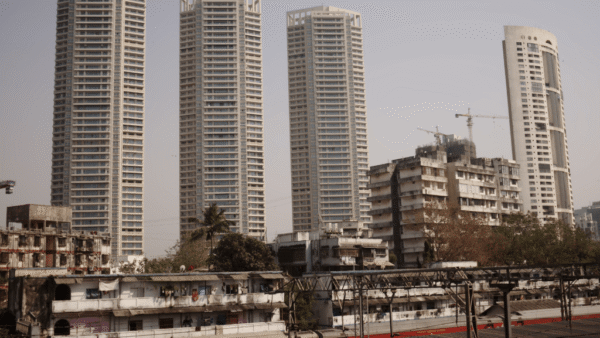
If Mumbai is to be smart, all “public purpose” projects must be decided through open competitions in terms of participation and making the choice democratically, to ensure that the appropriate aesthetic designs get selected. Else, as seen today, is Mumbai aping its past aesthetic, ignoring the present potential and thus losing out on an imaginative future? As development seems to have become a numbers game, and the city’s redevelopment giving rise to shoulder-touching towers, resembling closely spaced dominoes but with a skyline vying to outdo each other.
Selected reading
- Trystan Edwards, Good and Bad Manners in Architecture, Philip Allan & Co, London, 1924
- Barr, Jason M., Cities in the Sky: The Quest to Build the World’s Tallest Skyscrapers, Scribner, 2024.
- Braddell Darcy, How to Look at Buildings, Methuen & Co. Ltd., London, 1932.
- Buchanan, P., Facing up to facades, Architects Journal, 188, 21-56, 1988.
- Carmona, M., Heath, T., Oc, T. and Tiesdell, S., Public places – urban spaces: the dimensions of urban design, Architectural Press, Oxford, 2003.
- Jencks, Charles, Skyscrapers – Skycities, Rizzoli, 1980.
- Lynch, K., What Time Is This Place? MIT Press, Cambridge, Mass., 1972.
- Rasmussen, S. E., Experiencing Architecture, The M.I.T. Press, Cambridge, 1959.
- Tiesdell, S., Oc, T. and Heath, T., Revitalising Historic Urban Quarters, Oxford: Butterworths, 1996.
- Willis, Carol, Form Follows Finance: Skyscrapers and Skylines in New York and Chicago, Princeton Architectural Press, 1995.
- Wolfgang Herrmann (Introduction and Translation), In What Style Should We Build – The German Debate on Architectural Style (by Heinrich Hubsch et al 1828 to 1847), The Getty Center for the History of Art and the Humanities, 1992.
- Brihan Mumbai Municipal Corporation website
- Delhi Urban Art Commission website
Harshad Bhatia is an urban designer, architect, author and an academic. From June 2023, he is Design Chair at VESCOA (Vivekanand Education Society’s College of Architecture), Mumbai. Views expressed are without prejudice and his own.
Cover Photo: Mumbai city skyline. Credit: Wikimedia Commons